Diagnostics Market Size and Growth 2026 to 2035
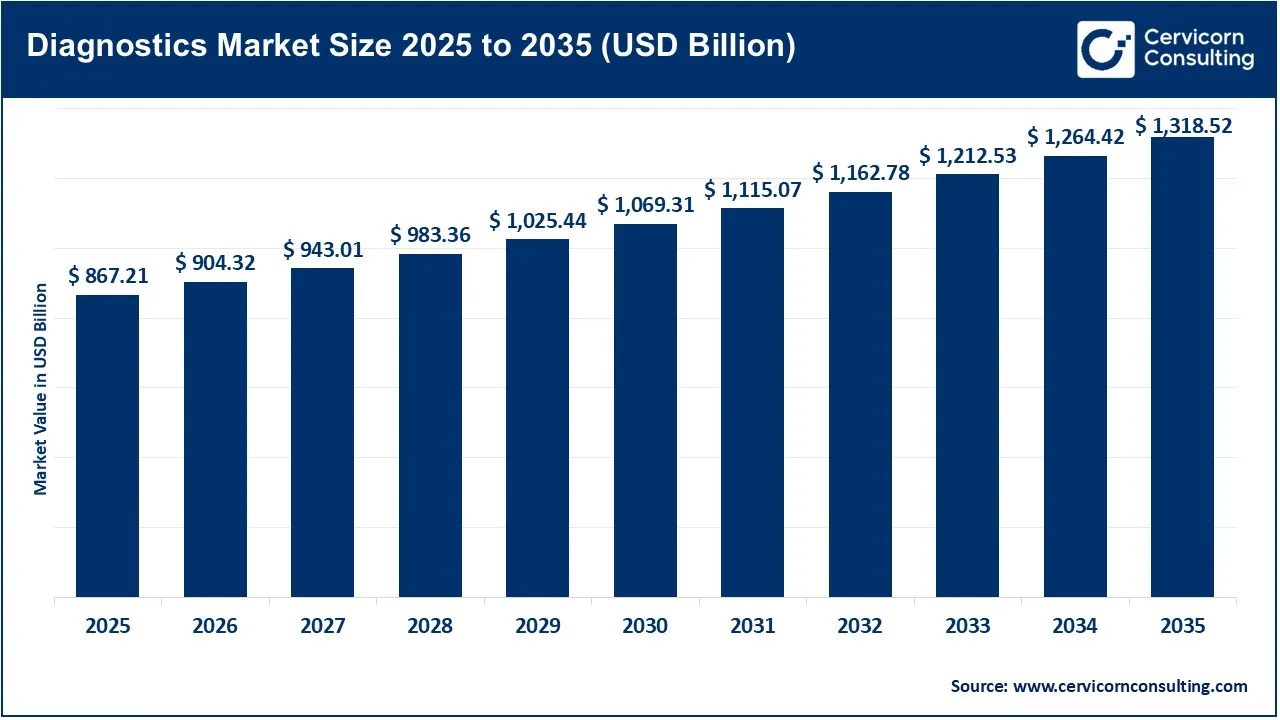
The global diagnostics market size was valued at USD 867.21 billion in 2025 and is expected to reach around USD 1,318.52 billion by 2035, exhibiting a compound annual growth rate (CAGR) of 4.3% over the forecast period from 2026 to 2035. The diagnostics market is primarily driven by the rising global burden of chronic and infectious diseases, coupled with increasing demand for early and accurate disease detection. According to the World Health Organization, noncommunicable diseases (NCDs) account for approximately 43 million deaths annually, representing nearly 75% of all global deaths, creating sustained demand for advanced diagnostic solutions across oncology, cardiology, diabetes, and infectious disease testing. In addition, the world's aging population is accelerating diagnostic utilization, as older adults require more frequent screening and disease monitoring. Governments are also expanding preventive healthcare initiatives and national screening programs for cancer, cardiovascular diseases, and infectious diseases, further increasing the adoption of laboratory diagnostics, molecular testing, and diagnostic imaging technologies.
Another major growth factor is the rapid integration of digital technologies, including artificial intelligence (AI), molecular diagnostics, automation, and next generation sequencing (NGS), which are significantly improving diagnostic speed, sensitivity, and clinical decision-making. AI-powered diagnostic tools can enhance image interpretation, reduce reporting time, and improve workflow efficiency in hospitals and diagnostic laboratories. Increasing investments in precision medicine and companion diagnostics are also fueling demand for genomic and biomarker-based testing, particularly in oncology and rare disease diagnosis. Furthermore, the expansion of point-of-care testing (POCT), home-based diagnostics, and decentralized healthcare models is improving accessibility to diagnostic services, especially in emerging economies, supporting sustained market expansion across both developed and developing healthcare systems.
Report Highlights
- North America dominated the diagnostics market with a 39.8% share, driven by advanced healthcare infrastructure, high testing volumes, and rapid adoption of molecular diagnostics.
- Asia-Pacific held a 23.6% market share and remained the fastest-growing region, driven by expanding healthcare infrastructure and increasing government healthcare investments.
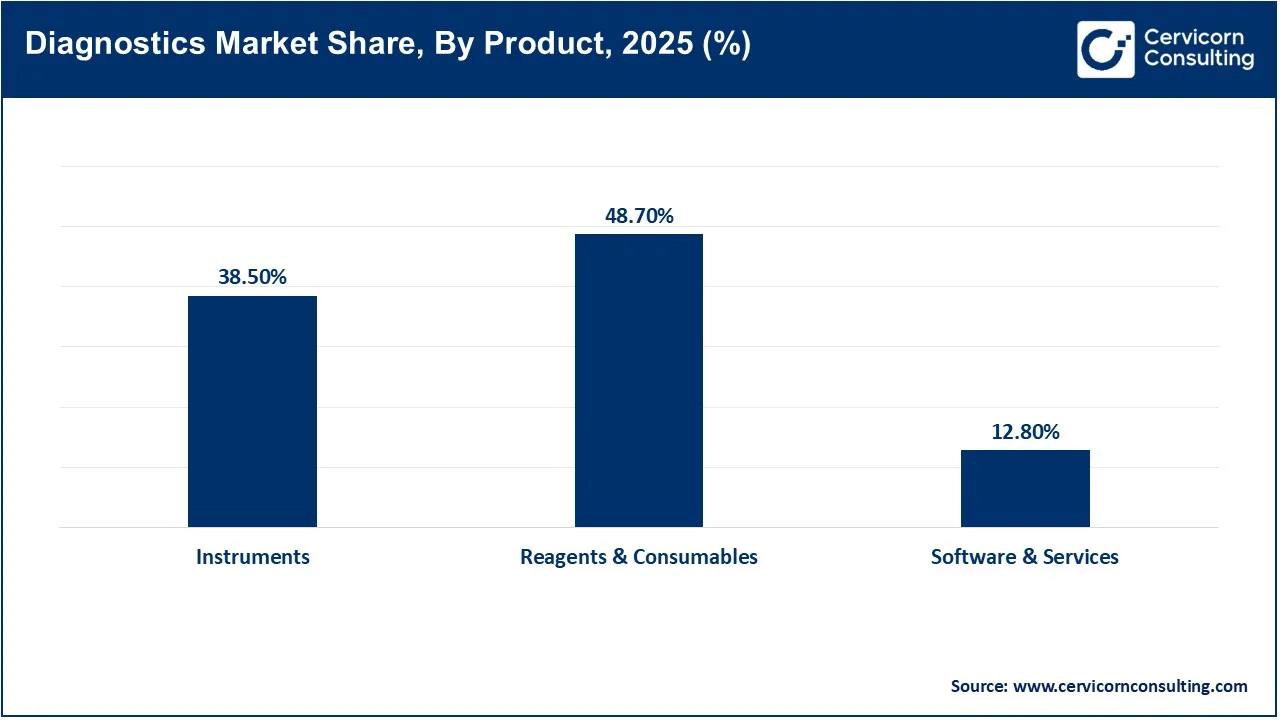
- Reagents & Consumables held the largest product share at 48.7%, supported by recurring demand from hospitals and diagnostic laboratories for routine testing.
- Clinical Chemistry accounted for 24.6% of the market, owing to increasing chronic disease prevalence and widespread preventive health screening across healthcare facilities.
- Infectious Diseases led the application segment with a 29.4% share, fueled by growing demand for rapid pathogen detection and public health surveillance.
- Hospitals captured the highest end-user share of 42.3%, supported by comprehensive diagnostic services, advanced laboratory infrastructure, and large patient volumes worldwide.
What are Diagnostics?
Diagnostics refer to the medical tests, technologies, and procedures used to detect, identify, monitor, and predict diseases or health conditions by analyzing patient samples such as blood, urine, tissue, or through imaging techniques like X-ray, MRI, and CT scans. They play a critical role throughout the healthcare continuum by enabling early disease detection, guiding treatment selection, monitoring therapeutic outcomes, and supporting preventive healthcare. Modern diagnostics encompass in vitro diagnostics (IVD), molecular diagnostics, diagnostic imaging, point-of-care testing, genetic testing, and AI-assisted diagnostic solutions, helping clinicians make faster and more accurate medical decisions while improving patient outcomes.
Benefits of Diagnostic Services
- Enables early disease detection: According to the World Health Organization (WHO), early diagnosis significantly improves survival rates for many diseases, including cancer and tuberculosis, by allowing timely treatment initiation.
- Supports accurate clinical decision-making: It is estimated that nearly 70% of medical decisions are influenced by laboratory diagnostic test results, despite laboratory testing accounting for only a small portion of total healthcare spending.
- Reduces healthcare costs: Early diagnosis and preventive screening help avoid expensive late-stage treatments and hospitalizations, lowering overall healthcare expenditure for providers and patients.
- Improves chronic disease management: More than 537 million adults worldwide are living with diabetes, making routine diagnostic monitoring essential for controlling disease progression and preventing complications.
- Strengthens infectious disease surveillance: Rapid molecular and point-of-care diagnostic tests enable faster identification of pathogens, reducing disease transmission and improving outbreak response capabilities.
- Advances personalized medicine: Companion diagnostics and genomic testing help identify patients most likely to benefit from targeted therapies, improving treatment effectiveness while minimizing unnecessary adverse effects.
Diagnostics Market Dynamics
Market Drivers
1. Rising Burden of Chronic and Infectious Diseases
The increasing prevalence of chronic diseases and recurring infectious disease outbreaks is a major driver for the diagnostics market. Additionally, the growing incidence of diabetes, cardiovascular disorders, cancer, and respiratory diseases has increased the demand for early diagnosis, routine monitoring, and personalized treatment, driving the adoption of advanced laboratory diagnostics, molecular testing, and imaging technologies across healthcare systems.
2. Growing Adoption of Molecular Diagnostics and AI-Based Technologies
Rapid technological advancements in molecular diagnostics, next-generation sequencing (NGS), artificial intelligence (AI), and automation are transforming diagnostic workflows. AI-assisted imaging and laboratory automation improve diagnostic accuracy, reduce turnaround times, and enhance clinical efficiency. Furthermore, precision medicine initiatives continue to boost genomic testing demand. According to the National Human Genome Research Institute, the cost of sequencing a human genome has fallen from nearly USD 100 million in 2001 to less than USD 600, making advanced molecular diagnostics increasingly accessible for routine clinical applications.
Market Restraints
1. High Cost of Advanced Diagnostic Systems
The high capital investment required for advanced diagnostic equipment, including MRI systems, molecular analyzers, and next-generation sequencing platforms, remains a significant restraint, particularly in developing countries. In addition to equipment costs, healthcare providers must invest in maintenance, software upgrades, laboratory infrastructure, and skilled personnel. These financial barriers limit adoption among small hospitals and diagnostic laboratories, slowing market penetration despite increasing demand for advanced diagnostic technologies.
2. Stringent Regulatory and Compliance Requirements
Diagnostic products must undergo rigorous clinical validation and regulatory approval processes before commercialization, increasing development costs and delaying product launches. Regulatory agencies require extensive evidence of safety, effectiveness, and quality, particularly for molecular and AI-based diagnostic solutions. Additionally, manufacturers must continuously comply with evolving quality standards, post-market surveillance, and cybersecurity requirements, creating operational challenges and extending product development timelines across global markets.
Market Opportunities
1. Expansion of Point-of-Care and Home-Based Diagnostics
The growing preference for decentralized healthcare is creating significant opportunities for point-of-care (POC) and home-based diagnostic testing. According to the International Diabetes Federation, approximately 589 million adults worldwide are living with diabetes, increasing demand for convenient self-monitoring and rapid diagnostic solutions. Advances in portable diagnostic devices, digital health platforms, and connected biosensors are enabling faster disease detection outside traditional laboratory settings while improving patient accessibility and healthcare efficiency.
2. Increasing Investments in Precision Medicine
Precision medicine is creating substantial growth opportunities for the diagnostics market by driving demand for companion diagnostics, biomarker testing, and genomic analysis. Governments, healthcare providers, and pharmaceutical companies continue investing heavily in personalized treatment approaches to improve therapeutic outcomes. The expanding use of genetic testing in oncology, rare diseases, and inherited disorders is encouraging diagnostic manufacturers to develop highly targeted assays that support individualized treatment selection and disease risk prediction.
Market Challenges
1. Shortage of Skilled Laboratory Professionals
The increasing complexity of molecular diagnostics, genomic testing, and AI-assisted diagnostic systems has intensified the need for highly trained laboratory professionals. However, many countries continue to experience shortages of qualified clinical laboratory scientists and molecular pathology specialists. Workforce limitations reduce laboratory capacity, delay test reporting, and hinder the effective implementation of advanced diagnostic technologies, particularly in rural and resource-constrained healthcare settings.
2. Data Security and Interoperability Issues
The rapid digitalization of diagnostics has increased concerns regarding patient data security, privacy, and interoperability between healthcare information systems. AI-enabled diagnostic platforms and cloud-based laboratory information systems generate vast amounts of sensitive medical data that require robust cybersecurity protection. Additionally, inconsistent data standards across hospitals, laboratories, and electronic health record systems complicate seamless information exchange, limiting the full potential of integrated and data-driven diagnostic healthcare.
Diagnostics Market Regional Analysis
The diagnostics market is segmented by region into North America, Europe, Asia-Pacific, Latin America, and LAMEA. Here is a brief overview of each region:
Why North America Leads the diagnostics market?
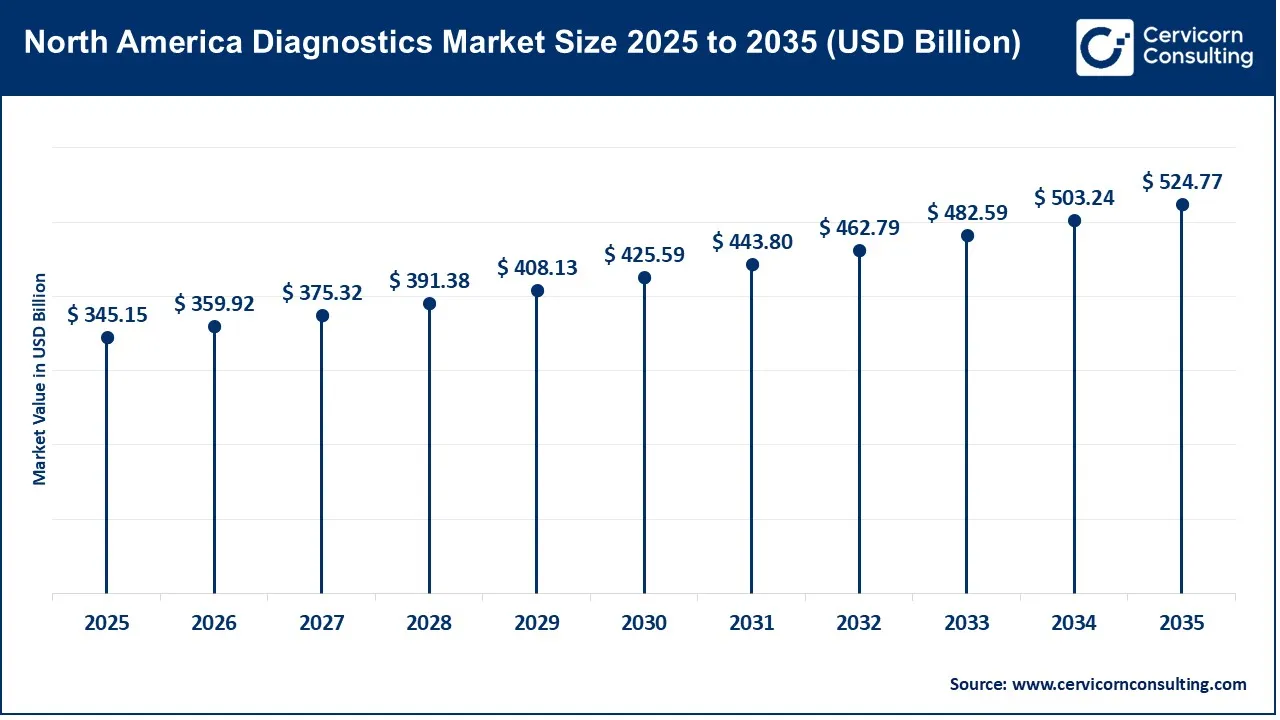
The North America diagnostics market size reached at USD 345.15 billion in 2025 and is forecasted to surge USD 524.77 billion by 2035. The North America is leading the market, supported by advanced healthcare infrastructure, high healthcare expenditure, and widespread adoption of innovative diagnostic technologies. The region benefits from strong investments in molecular diagnostics, artificial intelligence (AI)-enabled diagnostics, next-generation sequencing (NGS), and laboratory automation. The growing prevalence of chronic diseases, increasing emphasis on preventive healthcare, and expanding precision medicine initiatives continue to fuel demand for advanced diagnostic solutions. Furthermore, favorable reimbursement policies, a well-established regulatory framework, and the presence of leading diagnostics manufacturers contribute significantly to regional market expansion.
United States: High healthcare spending, expanding molecular diagnostics, and widespread adoption of AI-powered diagnostic technologies continue driving market growth.
- The United States spends approximately 17% of its GDP on healthcare, supporting continuous investments in advanced diagnostic equipment, laboratory automation, and precision medicine initiatives.
- More than 129 million Americans are living with at least one major chronic disease, creating sustained demand for clinical chemistry, molecular diagnostics, immunodiagnostics, and diagnostic imaging services.
- The country remains a global leader in genomic medicine, with increasing adoption of next-generation sequencing, companion diagnostics, and AI-assisted pathology across hospitals and reference laboratories.
Canada: Growing preventive healthcare programs, expanding laboratory modernization, and increasing genomic medicine investments support market growth.
- Canada continues to strengthen nationwide cancer screening and chronic disease prevention programs, increasing demand for laboratory diagnostics and early disease detection services.
- The country is expanding investments in genomics research, precision medicine, and digital health infrastructure, enabling broader adoption of molecular diagnostics and personalized healthcare.
Why is Asia-Pacific (APAC) experiencing the fastest growth for the diagnostics market?
The Asia-Pacific diagnostics market size was estimated at USD 204.66 billion in 2025 and is predicted to surpass around USD 311.17 billion by 2035. The Asia-Pacific market is experiencing the fastest growth due to expanding healthcare infrastructure, increasing healthcare expenditure, and a rapidly growing patient population. Rising prevalence of chronic and infectious diseases, improving access to healthcare services, and government initiatives promoting early disease detection are accelerating demand for advanced diagnostic solutions. The region is also witnessing significant investments in molecular diagnostics, laboratory automation, and digital healthcare. Growing medical tourism, increasing adoption of point-of-care testing, and expanding domestic manufacturing capabilities further strengthen the market across emerging economies.
China: Large patient population, strong healthcare investments, and expanding domestic diagnostics manufacturing continue driving market growth.
- China accounts for more than 18% of the world's population, generating substantial demand for clinical laboratory testing, molecular diagnostics, and diagnostic imaging.
- The country continues to expand healthcare infrastructure under the Healthy China 2030 initiative, increasing access to advanced diagnostic technologies across urban and rural healthcare facilities.
- China is strengthening its domestic in vitro diagnostics (IVD) manufacturing industry while increasing investments in AI-enabled diagnostics, genomics, and precision medicine to reduce dependence on imported diagnostic products.
India: Rising chronic disease prevalence, expanding diagnostic laboratory networks, and government healthcare initiatives support rapid market growth.
- India is home to over 1.4 billion people, creating one of the world's largest markets for diagnostic testing and preventive healthcare services.
- Government programs such as Ayushman Bharat are improving access to affordable diagnostic services by expanding healthcare coverage and strengthening primary healthcare infrastructure.
- Rapid growth of organized diagnostic laboratory chains, increasing awareness of preventive health checkups, and rising adoption of digital pathology, molecular diagnostics, and point-of-care testing continue to accelerate market expansion across the country.
Why is Europe experiencing steady growth in the diagnostics market?
The Europe diagnostics market size was accounted for USD 246.29 billion in 2025 and is forecast to hit around USD 374.46 billion by 2035. The Europe market is experiencing steady growth, supported by well-established universal healthcare systems, increasing demand for early disease detection, and continuous investments in advanced diagnostic technologies. Rising prevalence of chronic diseases, an aging population, and expanding cancer screening programs are driving the adoption of molecular diagnostics, immunodiagnostics, and clinical chemistry testing. The region also benefits from strong research collaborations, widespread laboratory automation, and increasing implementation of artificial intelligence and digital pathology, while stringent quality standards ensure high diagnostic accuracy and patient safety.
Germany: Advanced healthcare infrastructure, strong diagnostics manufacturing, and growing precision medicine initiatives continue driving market growth.
- Germany has one of Europe's largest healthcare markets, with health expenditure exceeding 12% of GDP, supporting widespread adoption of advanced laboratory diagnostics and imaging technologies.
- The country is a leading hub for diagnostics manufacturing and life sciences research, fostering continuous innovation in molecular diagnostics, clinical chemistry, and laboratory automation.
United Kingdom: Expanding NHS diagnostic capacity, increasing genomic testing, and digital healthcare transformation support market growth.
- The National Health Service (NHS) continues to expand community diagnostic centers to improve early disease detection and reduce diagnostic waiting times across England.
- Through Genomics England and the NHS Genomic Medicine Service, the UK is increasing the adoption of whole-genome sequencing and precision medicine for cancer and rare disease diagnosis.
Diagnostics Market Share, By Region, 2025 (%)
| Region |
Revenue Share, 2025 (%) |
| North America |
39.8% |
| Europe |
28.4% |
| Asia-Pacific |
23.6% |
| LAMEA |
8.2% |
LAMEA Diagnostics Market Trends
The LAMEA diagnostics market was valued at USD 71.11 billion in 2025 and is anticipated to reach around USD 108.12 billion by 2035. The LAMEA market is witnessing steady growth owing to improving healthcare infrastructure, increasing government healthcare expenditure, and rising awareness of early disease diagnosis. The growing prevalence of diabetes, cardiovascular diseases, cancer, and infectious diseases is accelerating demand for laboratory testing, molecular diagnostics, and point-of-care solutions. Additionally, expanding private healthcare networks, increasing investments in hospital modernization, and international collaborations to strengthen diagnostic capacity are supporting market growth across Latin America, the Middle East, and Africa.
Brazil: Expanding diagnostic laboratory networks, increasing chronic disease burden, and growing healthcare investments continue driving market growth.
- Brazil has the largest healthcare market in Latin America, creating strong demand for clinical laboratory testing, diagnostic imaging, and molecular diagnostics.
- The rising prevalence of diabetes, cardiovascular diseases, and cancer is increasing the need for preventive screening and routine diagnostic services across public and private healthcare facilities.
Saudi Arabia: Healthcare transformation initiatives, growing precision medicine adoption, and expanding hospital infrastructure support market growth.
- Under Vision 2030, Saudi Arabia is making substantial investments in healthcare infrastructure, digital health, and advanced diagnostic technologies to improve healthcare accessibility and quality.
- The increasing burden of chronic diseases, particularly diabetes and cardiovascular disorders, is driving demand for clinical chemistry, immunodiagnostics, and molecular testing.
Diagnostics Market Segmental Analysis
The diagnostics market is segmented into product, diagnostic type, application, end user, and geography.
Product Analysis
Reagents & Consumables dominate the diagnostics market due to their recurring demand across clinical laboratories, hospitals, and diagnostic centers. Unlike instruments, reagents are consumed with every diagnostic test, creating continuous revenue streams for manufacturers. The growing volume of blood tests, molecular diagnostics, immunoassays, and infectious disease screening further strengthens demand. Increasing laboratory automation and expanding preventive healthcare programs are also driving the routine use of high-quality reagents, making this segment the largest contributor to overall market revenue.
Software & Services is the fastest-growing segment, fueled by increasing adoption of artificial intelligence, cloud-based laboratory information systems, digital pathology, and workflow automation. Healthcare providers are investing in integrated diagnostic platforms to improve efficiency, reduce reporting time, and enhance clinical decision-making. The rising use of AI-assisted image analysis, remote diagnostics, and data analytics, along with growing digital transformation initiatives across healthcare facilities, is accelerating demand for advanced diagnostic software and managed diagnostic services worldwide
Diagnostic Type Analysis
Clinical Chemistry holds the largest market share owing to its widespread use in routine health screening and chronic disease management. Tests measuring glucose, cholesterol, kidney function, liver enzymes, and electrolytes are performed daily in hospitals and diagnostic laboratories. The increasing prevalence of diabetes, cardiovascular disorders, and kidney diseases, combined with regular preventive health checkups, continues to support high testing volumes, making clinical chemistry the leading diagnostic category globally.
Diagnostics Market, By Diagnostic Type, 2025 (%)
| Diagnostic Type |
Revenue Share, 2025 (%) |
| Clinical Chemistry |
24.6% |
| Immunodiagnostics |
21.8% |
| Molecular Diagnostics |
16.4% |
| Hematology |
11.2% |
| Microbiology |
9.3% |
| Histopathology |
7.2% |
| Coagulation |
5.8% |
| Others |
3.7% |
Molecular Diagnostics is the fastest-growing segment due to increasing adoption of PCR, next-generation sequencing (NGS), and genomic testing for precision medicine. The growing demand for rapid detection of infectious diseases, cancer biomarkers, and inherited genetic disorders is driving market expansion. Advances in companion diagnostics, personalized medicine, and declining sequencing costs are encouraging healthcare providers to integrate molecular testing into routine clinical practice, significantly boosting segment growth.
Application Analysis
Infectious Diseases account for the largest market share due to the high global burden of bacterial, viral, and parasitic infections requiring rapid diagnosis. Continuous testing for respiratory infections, tuberculosis, hepatitis, HIV, and healthcare-associated infections generates substantial diagnostic demand worldwide. Government surveillance programs, antimicrobial resistance monitoring, and the expansion of molecular and rapid testing technologies further strengthen this segment's leadership across developed and emerging healthcare markets.
Diagnostics Market, By Application, 2025 (%)
| Application |
Revenue Share, 2025 (%) |
| Infectious Diseases |
29.4% |
| Oncology |
24.1% |
| Cardiology |
16.5% |
| Diabetes |
14.2% |
| Neurology |
7.3% |
| Others |
8.5% |
Oncology is the fastest-growing application segment as healthcare systems increasingly emphasize early cancer detection and personalized treatment strategies. Rising cancer incidence worldwide has accelerated the adoption of biomarker testing, liquid biopsy, companion diagnostics, and genomic sequencing. Advances in precision oncology, targeted therapies, and AI-assisted pathology are improving diagnostic accuracy while increasing demand for sophisticated cancer diagnostics, making oncology one of the fastest-expanding applications in the diagnostics market.
End User Analysis
Hospitals dominate the diagnostics market because they perform a broad range of diagnostic procedures, including laboratory testing, imaging, emergency diagnostics, and specialized disease screening. Large patient volumes, comprehensive diagnostic infrastructure, and access to advanced equipment enable hospitals to conduct high-throughput testing across multiple clinical departments. Continuous investments in integrated diagnostic platforms and multidisciplinary care further reinforce hospitals as the leading end-user segment.
Diagnostics Market, By End User, 2025 (%)
| End User |
Revenue Share, 2025 (%) |
| Hospitals |
42.3% |
| Diagnostic Laboratories |
34.8% |
| Physician Offices & Clinics |
10.9% |
| Academic & Research Institutes |
7.1% |
| Home Care |
4.9% |
Diagnostic Laboratories are the fastest-growing end-user segment due to increasing outsourcing of laboratory testing by hospitals and physician clinics. Growing demand for specialized molecular diagnostics, genetic testing, high-throughput automation, and cost-effective testing services is expanding laboratory capacities worldwide. Independent laboratory networks are investing heavily in advanced technologies, digital pathology, and automated analyzers to improve operational efficiency, turnaround times, and diagnostic accuracy, supporting rapid market growth.
Diagnostics Market Top Companies
Recent Developments
- In June 2026, Roche launched the Axelios next-generation gene sequencing platform, marking its entry into the long-read sequencing market. The platform is designed to deliver near real-time genomic analysis with longer DNA and RNA reads, strengthening Roche's position in precision medicine and molecular diagnostics while challenging established sequencing technologies.
- In April 2026, Siemens Healthineers showcased new innovations in automated hematology and hemostasis workflows during the International Symposium on Technical Innovations in Laboratory Hematology (ISLH 2026). The company highlighted integrated laboratory automation solutions designed to improve workflow efficiency, testing accuracy, and laboratory productivity.
- In 2026, Thermo Fisher Scientific continued expanding its life sciences and diagnostics portfolio through the planned completion of its acquisition of Clario, strengthening its clinical research, endpoint data management, and digital diagnostic capabilities. The acquisition enhances Thermo Fisher's position in precision medicine and decentralized clinical trials.
Market Segmentation
By Product
- Instruments
- Reagents & Consumables
- Software & Services
By Diagnostic Type
- Clinical Chemistry
- Immunodiagnostics
- Molecular Diagnostics
- Hematology
- Microbiology
- Coagulation
- Histopathology
- Others
By Application
- Infectious Diseases
- Oncology
- Cardiology
- Diabetes
- Neurology
- Others
By End User
- Hospitals
- Diagnostic Laboratories
- Physician Offices & Clinics
- Academic & Research Institutes
- Home Care
By Geography
- North America
- Europe
- Asia-Pacific
- LAMEA