Precision Medicine Market Size and Growth 2026 to 2035
The global precision medicine market size was valued at USD 120.58 billion in 2025 and is estimated to reach around USD 522.85 billion by 2035, growing at a compound annual growth rate (CAGR) of 16.15% during the forecast period 2026 to 2035. The precision medicine market is experiencing robust growth driven by factors such as increasing prevalence of chronic diseases, advancements in genomics and biotechnology, rising demand for personalized treatments, and growing healthcare infrastructure. Additionally, the expanding application of artificial intelligence (AI) and machine learning (ML) in drug discovery, along with greater collaboration between pharmaceutical companies and research institutions, is significantly contributing to the market's growth.
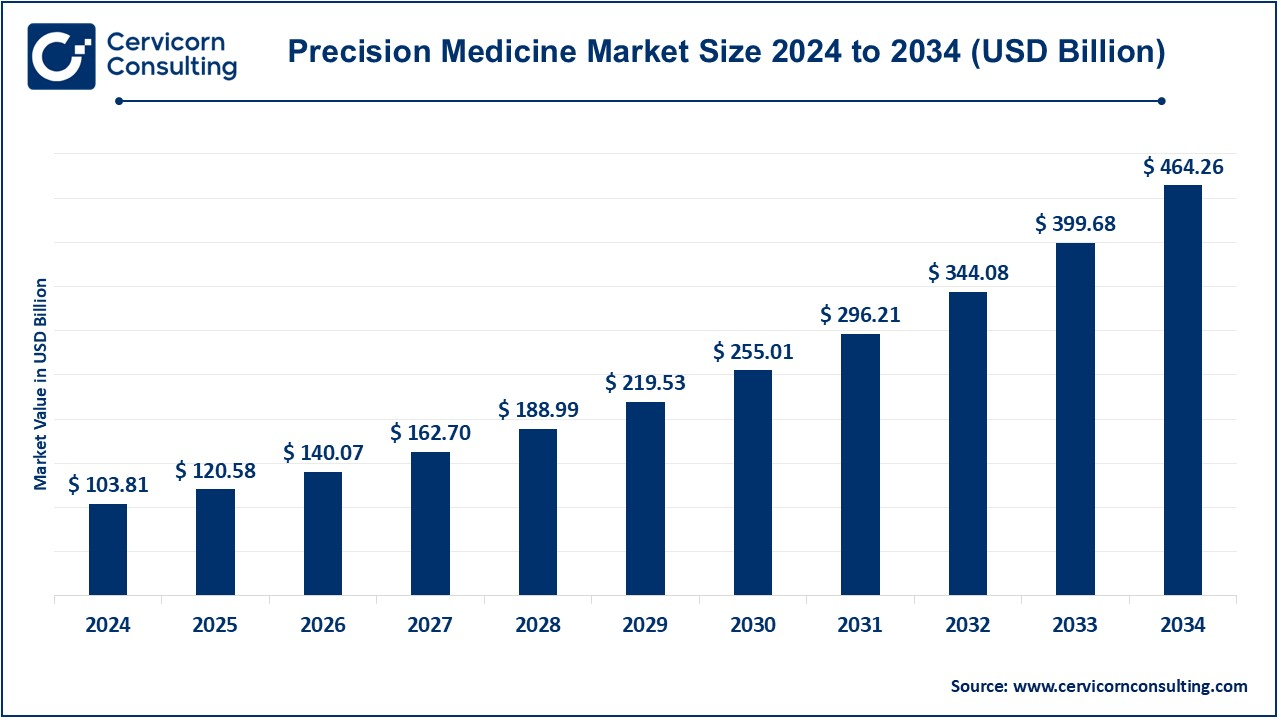
Precision medicine is the new approach toward health care; in this case, the treatment of medicine is delivered based on specific characteristics of individual patients, including genetic, environmental, and lifestyle determinants. Precision medicine stands in stark contrast to the old-fashioned "one-size-fits-all" model and has the intent to provide better therapeutic and intervention responses for a certain patient. Precision medicine uses the advances in genomics, biotechnology, and data analytics to achieve the precise diagnosis of diseases, proper prediction of potential risks, and selection of relevant treatments to improve patient outcomes and minimize adverse effects.
Report Highlights
- By Region, North America dominated the precision medicine market with a 53.20% revenue share in 2025, supported by robust healthcare infrastructure, extensive adoption of genomic technologies, substantial investments in precision therapeutics, and the strong presence of leading biotechnology and pharmaceutical companies.
- Europe accounted for around 23.60% of the market share, driven by increasing implementation of personalized healthcare initiatives, favorable regulatory frameworks, and growing investments in advanced diagnostics and targeted treatment approaches.
- By Application, the therapeutics segment led the market with a 79% revenue share in 2025, fueled by the rising adoption of targeted therapies, expanding use of biomarker-guided treatments, and increasing demand for personalized interventions across oncology, rare diseases, and chronic health conditions.
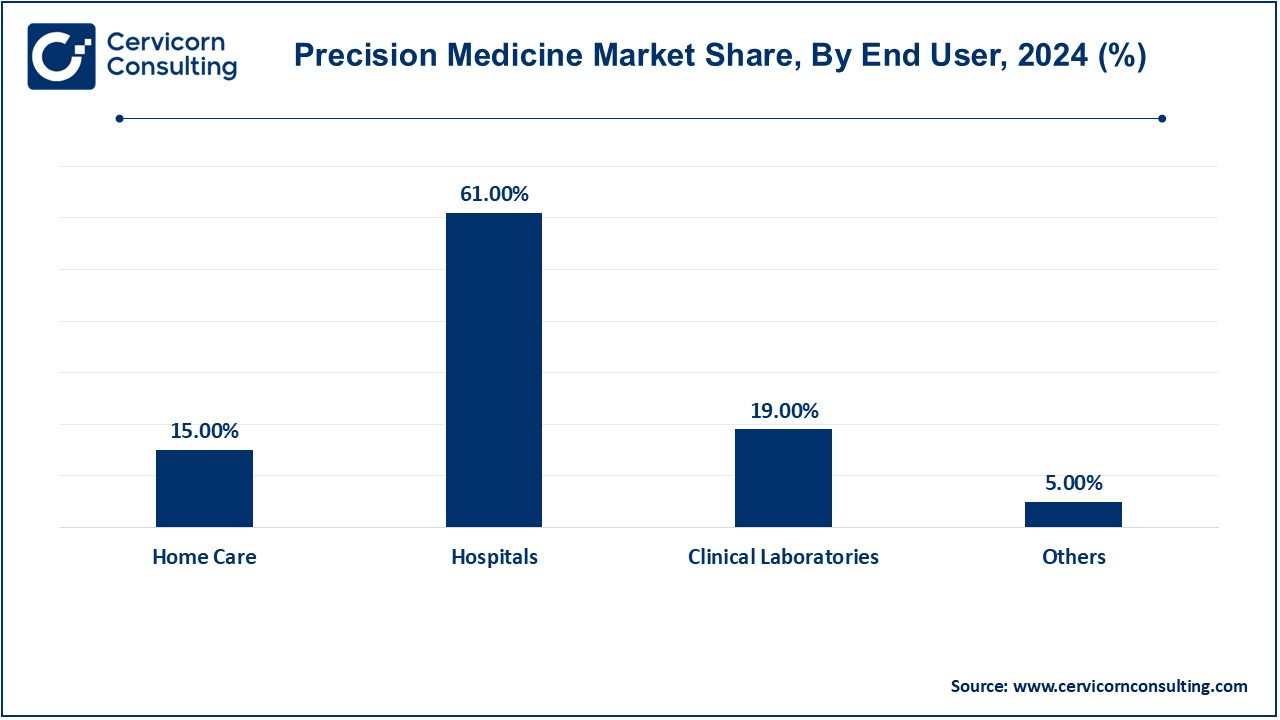
- By End User, the hospitals segment held the largest revenue share of 61% in 2025, owing to the widespread integration of precision medicine programs, advanced diagnostic capabilities, access to specialized treatment facilities, and growing utilization of personalized therapies in clinical settings.
Growth Factors
- Advancements in Genomic Research: The great strides in genomic research have allowed for the identification of biomarkers that are associated with various diseases, especially cancers. This has resulted in more targeted treatment plans, hence better patient outcomes. More about this is an understanding of genetic elements affecting diseases and how precision medicine offers better-targeted and highly effective therapies aligned with the very unique genetic makeup of each individual, thus minimizing the side effects of the therapies and assuring a higher success rate in treatment.
- More Investment in R&D: Investment in R&D in precision medicine, mainly from the government and pharmaceutical firms that have more money through venture capitals, is what is driving this technology forward. Funding gives an advantage for the discovery of advanced therapies, improved diagnostic tools, and new drugs-all of which offer factors for precision medicine to be able to have a more extensive range of impact in different medical areas, such as cancer, cardiovascular diseases, and genetic disorders.
- AI and Big Data: Integration Artificial Intelligence with big data Analytics would revol at process of Precision Medicines, Those are to complement the categories for analysis large size datasets helping well in Predicted outcome in care, The well-suited therapeutic options in them, It shall work on refinished diagnosis in higher accuracy precision using sophisticated algorithms used from AI to determine the actual possible care delivered without delay improving, patient results outcome at the bottom end, ultimately delivering efficiency while attaining that precision in HealthCare Services.
Market Trends
- Artificial Intelligence and Machine Learning: AI and machine learning are rebooting precision medicine as it has a precision potential in diagnostics and treatment plan settings, with that being very fine for the preparation of new medicines. The use of machine learning in analyzing patient's information makes for sharper inferences based on genetic patterns including therapeutic results to be learned more in real time while advancing future versions of precision medicine.
- Biomarker-based diagnostics: In precision medicine, biomarkers are increasingly being used in the early detection of diseases. These biomarkers relate to genetic mutations and protein markers responsible for some diseases. This is very crucial for an accurate diagnosis and hence the right treatment that would further help to provide the best possible care for patients.
- Expansion of Genetic Testing Services: Availability and affordability of services have enabled access to genetic testing are the keys to the expansion of precision medicine. This would enable doctors and patients to diagnose more patient-specific treatment through genetic profiles. Expansion of genetic testing services for healthcare professionals will help them develop targeted therapies and prevention strategies.This is the revolutionisation of healthcare.
Report Scope
| Area of Focus |
Details |
| Market Size in 2026 |
USD 140.07 Billion |
| Expected Market Size in 2035 |
USD 522.85 Billion |
| Projected CAGR 2026 to 2035 |
16.15% |
| Dominant Region |
North America |
| Fastest Growing Region |
Asia-Pacific |
| Key Segments |
Application, Technology, Product, Route of Administration, Drugs, End-user, Region |
| Key Companies |
F. Hoffmann-La Roche Ltd., Siemens, Janssen Global Services, LLC, Illumina, Inc., Quest Diagnostics Incorporated, 23andMe, Inc., NeoDiagnostix, Myriad Genetics, Medtronic, GE Healthcare, Abbott, QIAGEN |
Market Dynamics
Market Drivers
- Advancement in Cancer Biology in Developed Regions: Advances in cancer biology have affected the precision medicine market to a great extent, mainly in developed regions where it has sufficient research and health care infrastructure. Researchers have been able to advance their knowledge of cancer at the molecular as well as at the genetic level, identifying key mutations and biomarkers for the development of cancer. This allows targeted therapies that might be more efficaciously utilized in specific forms of cancers without causing much harm to other healthier cells. So, the whole new revolution that is happening for cancer treatment now revolves around precision medicine, bringing patients tailored care relevant to their specific genetic makeup.
- Portfolio of Precision Medicine Drugs: The greatest growth driver for the market is the expanding portfolio of precision medicine drugs. The pharmaceutical companies are spending more in creating drugs that are tailored to a specific genetic profile, ensuring that the treatment will target and be more effective. These drugs, for example, encompass the targeting of genetic mutations that cause cancer or rare diseases, thereby embodying personalized methods of tackling the root cause of a disease.The introduction of these more accurate drugs in the market is resulting in the rise of precision medicine solutions in increasing numbers, as this is treating the patient in the most efficient way with zero side effects and is thus aiding health care professionals.
- Rising Adoption of Gene Therapy: Gene therapy-treatment or prevention of diseases through modification or manipulation of genes-is an important driving factor behind the precision medicine market. With increased knowledge of genetics, gene therapies are being developed to focus on the genetic disorders like certain cancers, inherited diseases, and viral infections. With increasing adoption of gene therapy, it is opening the scope of precision medicine that can offer highly customized treatments for diseases by treating at the genetic level. In short, growing interest in gene therapies is most probably going to spur the market more for offering new possibilities toward medical breakthroughs.
Market Opportunities
- Precision Oncology: There is a high opportunity in the precision medicine market in terms of demand for precision cancer treatment. Where genomic data continues to build, treatments can be programmed to be responded to on an individual genetic profile of a patient, maximizing effect and lessening side effects. Precise oncology significantly improves the patient's outcome. It is a competitive platform for those companies and organization portfolios focusing on innovation in cancer treatment.
- Expansion into Rare Diseases: High hope for precise medicine in rare diseases mainly, since they are much complex, treating such diseases are less or no existence in the therapeutic options.Further developments in genomics can also design certain treatments accordingly. This advancement of precision will introduce new openings into the medical and pharmaceutical domain and will explore and expand avenues to cater towards patient populations.
- Rising Patient Demand for Tailor-made Medication: It is an increasing trend of having personalized healthcare supported by the higher demand of personalized treatments from a patient. An increasing number of patients are taking higher control over managing their health-care needs, raising the demand in genetic testing for biomarker based diagnostics and precise drug treatments so that the markets of precision medicine evolve.
Market Restraints
- High Costs of Precision Medicine: Precision medicine involves everything from personalized treatments, diagnostics, and therapies. Such factors can be quite costly and are associated with expensive procedures involving genetic testing, drug development, and specialized medical care. These services can pose a challenge for many patients and the stringent costs of implementing precision medicine on a larger scale in prohibiting its adoption in most areas, especially the low-income regions.
- With scarce trained professionals and specialized: In areas of genetics and genomics or personalized treatments, healthcare systems across the world remain unable to put precision medicine to scale. Scarcity or lack of needed knowledge prevents more effective deployment as well as integration for personalized care in regions with the fewest and least number of specialized professionals in attendance.
Market Challenges
- High implementation cost: Precision medicine includes many factors, namely, genetic tests, drugs manufactured according to requirement, medical infrastructure, the whole cost that goes into putting the concept is high. Its nature requires lots of high-technology requirements; only specialists' assistance will serve; thus it would be problematic to gain access from such a method by small service providers or inpatients without cover.
- Technological Barriers in Low-income Regions: Most of the developing regions do not have advanced technologies that can be used for precision medicine, such as gene sequencing and bioinformatics tools. The costs of purchasing these technologies are very high, and the infrastructure in such regions is minimal, which makes the implementation of precision medicine in low-income regions not possible.
Regional Analysis
The precision medicine market is further geographically analyzed under five key regions : North America, Europe, Asia-Pacific, and LAMEA (Latin America, Middle East, and Africa). Here's a detailed description of each
Why is North America hit maximum portion of the precision medicine market?
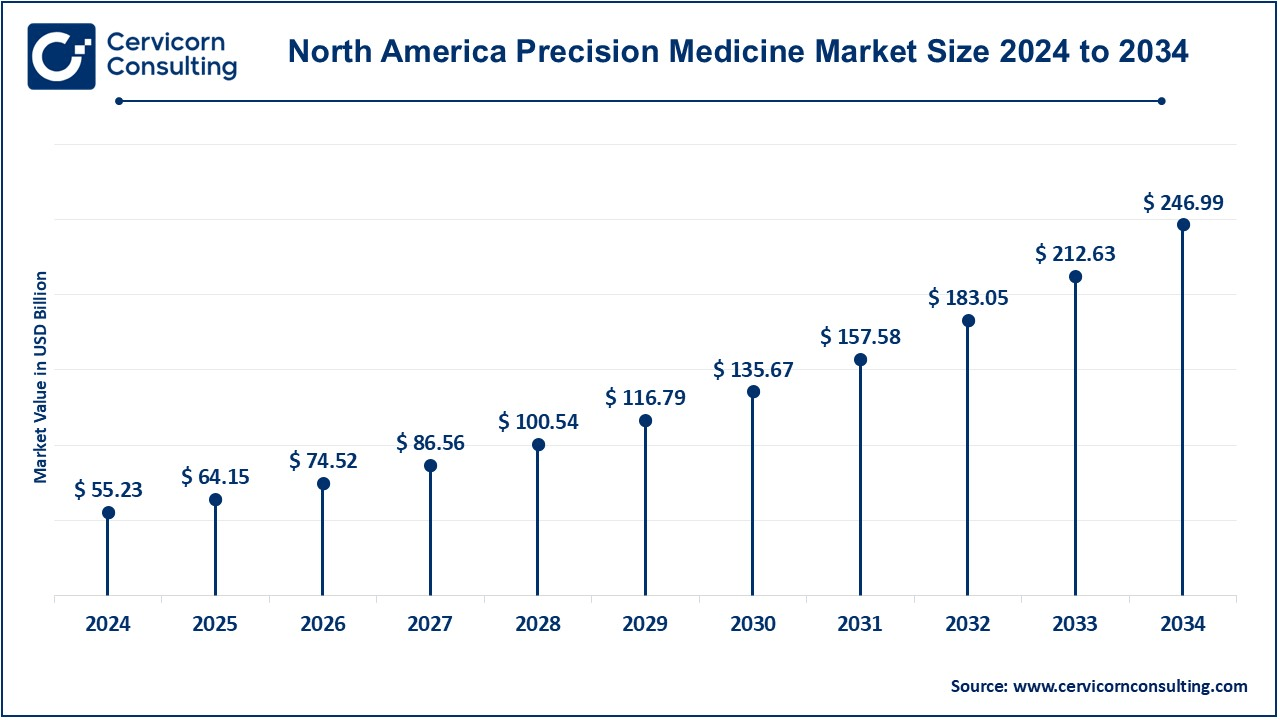
The North America precision medicine market size was valued at USD 64.15 billion in 2025 and is estimated to reach around USD 278.16 billion by 2035. North America, the country in question being the US, shows the maximum portion of the market. This is attributed to highly developed healthcare infrastructure, high health-care spending, and significant research and development investments. The U.S. has a vast number of leading healthcare companies, academic institutions, and biotechnology firms operating in genetic testing, biomarker research, and personalized drug development. The adoption of precision medicine in the treatment of cancer, cardiovascular diseases, and rare genetic disorders increases the growth of the market in the region. Regulatory support by the FDA along with the number of FDA-approved precision medicine therapies also supports the market.
Europe Precision Medicine Market Trends
The Europe precision medicine market size was valued at USD 28.46 billion in 2025 and is estimated to reach around USD 123.39 billion by 2035. Europe is one of the most advanced regions, because of the efforts in research and development and sound healthcare infrastructure of the region. Germany, UK, and France are the best in genetic tests and personalized medication, with Government initiatives to focus on innovation through healthcare. This would make the European Union more devoted to personalized medicine, especially with initiatives such as the European Reference Networks (ERNs). On the other hand, the diverse regulatory frameworks and economic constraints of a few countries could hinder the market expansion in the region as a whole.
Why is Asia-Pacific grow significantly in the precision medicine market?
The Asia-Pacific precision medicine market size was valued at USD 22.79 billion in 2025 and is estimated to reach around USD 98.82 billion by 2035. The Asia-Pacific region is projected to grow significantly, due to rising health care investments, prevalence of chronic diseases, and research on genetic discoveries. It has China, Japan, and India leading in its expansion as countries, developing infrastructures, and a booming biotechnology sector. Key drivers for this are advanced health care systems in Japan and China's increased investment in genomics and biotechnology research. The main drivers behind customized treatments include the expansion of middle-class populations in emerging economies, particularly in India and China, who also happen to boast a better health-conscious population.
Precision Medicine Market Revenue Share, By Region, 2025 (%)
| Region |
Revenue Share, 2025 (%) |
| North America |
53.20% |
| Europe |
23.60% |
| Asia-Pacific |
18.90% |
| LAMEA |
4.30% |
LAMEA Precision Medicine Market Trends
The LAMEA precision medicine market size was valued at USD 5.18 billion in 2025 and is estimated to reach around USD 22.48 billion by 2035. Growth in the LAMEA market has been slow. This is because of the weak economy and not so well-established healthcare infrastructure as compared to other regions. Increasing interest in precision medicine is seen in certain parts of Latin America and in parts of the Middle East: government initiatives and private investment already drive genetic testing, cancer therapies, and personalized treatments. In Africa, genetic diseases receive more attention and effort at improving overall health outcomes, but access and affordability issues remain a prominent concern.
Segmental Analysis
Application Analysis
Diagnostics: Precision medicine diagnostics encompasses a range of testing procedures used to identify specific biological markers in patients so that treatment may be adjusted accordingly. This encompasses a wide range of diagnostic tests that are used for the identification of genetic mutations, biomarkers, or patterns of a particular disease, thus enabling more accurate, individualized health care decisions.
Genetic Tests: Precision medicine, through genetic tests, determines a patient's inherited condition, predispositions, or diseases; hence, how physicians can collaborate with the patient on differentiated treatments based on one's genetic composition. These genetic tests may outline risks or a drug response because of the nature of the disease.
Precision Medicine Market Revenue Share, By Application, 2025 (%)
| Application |
Revenue Share, 2025 (%) |
| Diagnostics |
21% |
| Therapeutics |
79% |
Biomarker-based tests: Such biomarker-based tests examine the biomarker to know disease presence or any progression to an advanced disease form or lack of response in diseases. The development of precision medicine finds a high involvement of biomarkers especially in chronic cases like cancers and cardiovascular-related.
Esoteric Tests: Esoteric tests are specialty testing used for diagnosis of rare conditions or complex clinical conditions that generally are not a part of common everyday clinical practice. These tests highly informative, specific treatment can thus be given to a patient afflicted with a distinctive or hard to identify disease.
Other Tests: These are other tests that would be included as opposed to those identified earlier but highly significant in the landscape of precision medicine. Ranging from among some of the new, emerging or exploratory tests, which serve toward solutions to care and a newly designed therapy.
End User Analysis
Hospitals: The Hospitals segment has dominated the market in 2025. Advanced diagnostic equipment, personalized treatment plans, and more are applied to patient care. The use of genetic and biomarker-based tests is provided for through hospitals, and this ensures that treatment approaches become customized, especially in oncology, cardiology, and rare diseases.
Diagnostic Laboratories: Diagnostic laboratories do genetic, biomarker, and esoteric tests, which are very important in precision medicine. These give diagnosis of specific health conditions, mutations of genes, and potential responses of drugs that help in prescribing drugs according to the needs of patients.
Others: These are broad categories of all other end-users. Such include research institutes, pharmaceutical firms, and clinics, among others. All these make tremendous contributions to the implementation of precision medicine. They conduct studies, clinical trails, and product development towards advancement in personalized approaches to health care.
Precision Medicine Market Top Companies
Recent Developments
- In May 2024, Atara Biotherapeutics submitted a Biologics License Application (BLA) to the U.S. FDA for tabelecleucel (tab-cel), proposing it as a standalone treatment for Epstein-Barr Virus-Positive Post-Transplant Lymphoproliferative Disease (EBV+ PTLD) in adults and children aged 2 years and older who have received at least one prior therapy. For solid organ transplant recipients, prior therapy usually involves chemotherapy when appropriate. Currently, no FDA-approved treatments exist for this specific condition.
- In May 2024, Dragonfly Therapeutics, Inc., a biotechnology company focused on developing novel immunotherapies, announced a clinical collaboration with Merck (known as MSD outside the U.S. and Canada). This partnership aims to evaluate DF9001, Dragonfly's Epidermal Growth Factor Receptor (EGFR) immune engager, in combination with Merck’s anti-PD-1 therapy, KEYTRUDA (pembrolizumab), in patients with advanced solid tumors expressing EGFR.
Market Segmentation
By Application
- Diagnostics
- Genetic Tests
- Direct to Consumer Tests
- Esoteric Tests
- Others
- Therapeutics
- Pharmaceuticals
- Oncology
- Respiratory Diseases
- Skin Diseases
- CNS Disorders
- Immunology
- Genetic Diseases
- Others
- Medical Devices
- Others
By Technology
- Genomics
- Bioinformatics
- Big data analytics
- Biomarker detection
- High throughput screening
- Others
By Product
- Consumables
- Instruments
- Services
By Route of Administration
By Drugs
- Alectinib
- Osimertinib
- Mepolizumab
- Aripiprazole Lauroxil
- Others
By End-user
- Home Care
- Hospitals
- Clinical Laboratories
- Others
By Region
- North America
- APAC
- Europe
- LAMEA