AI in Digital Pathology Market Size and Growth 2026 to 2035
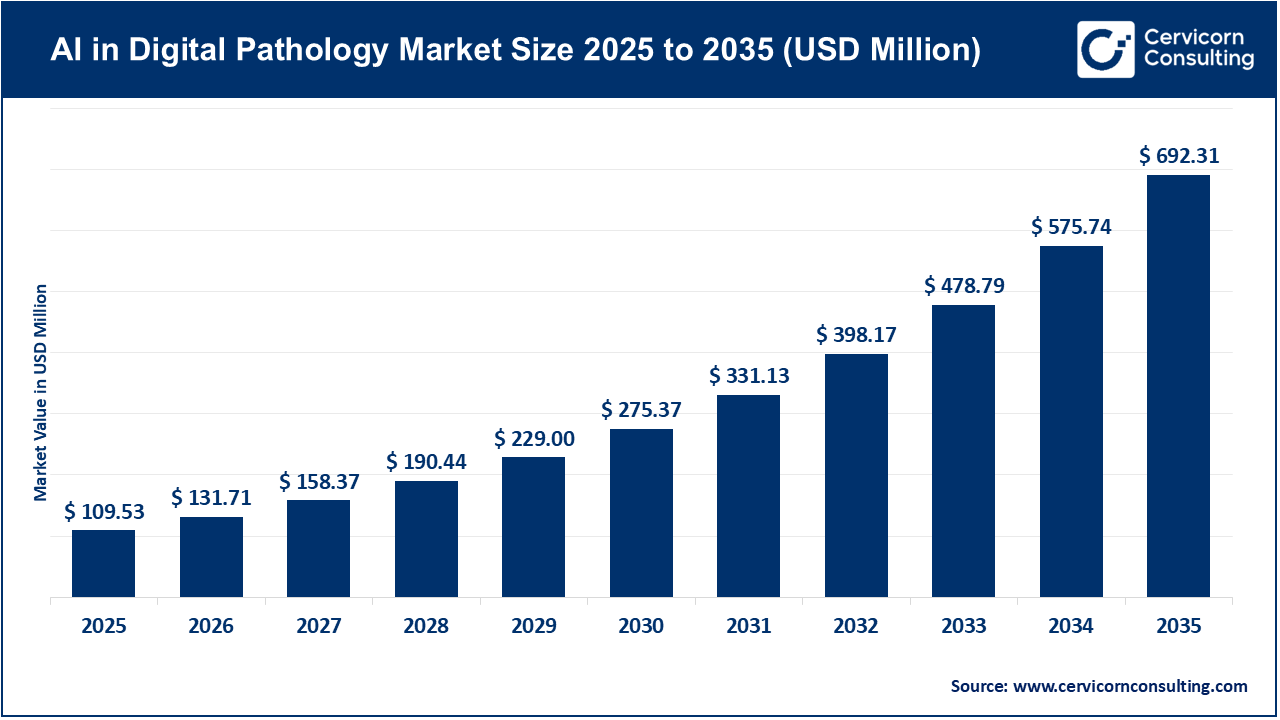
The global AI in digital pathology market size was valued at USD 109.53 million in 2025 and is expected to be worth around USD 692.31 million by 2035, exhibiting at a compound annual growth rate (CAGR) of 20.2% over the forecast period from 2026 to 2035. The growth of the AI in digital pathology market is largely attributed to the increasing need for faster and more accurate diagnostic workflows, as well as the ongoing digitization of pathology laboratories. Traditional glass-slide pathology remains labor-intensive and is often affected by inter-observer variability. Recent studies show that manual review in laboratories can result in 30-40% variability in diagnostic interpretation, especially in oncology cases. The integration of whole-slide imaging (WSI) with AI-based image analysis is helping to reduce subjectivity and improve consistency in slide interpretation. Currently, more than one-third of pathology labs worldwide have adopted digital slides, indicating a significant move toward digital platforms that enable AI-driven analysis, collaboration, and remote consultation.
The shortage of trained pathologists, combined with a rising disease burden such as cancer, is another important factor driving the AI in digital pathology market. In developed healthcare systems, the pathologist workforce is aging, with over 20% expected to retire in the next decade, while the number of cases continues to increase each year. AI-powered digital pathology solutions are being adopted to address this gap by providing automated triage, pre-screening, and quantitative analysis, which allows pathologists to concentrate on more complex cases. The use of AI-driven platforms also supports telepathology and centralized review, making expert diagnostics more accessible in underserved areas. The growing adoption of cloud technology, better integration with laboratory information systems (LIS), and more regulatory approvals for AI-based pathology tools are expected to further support the expansion of these solutions in clinical, pharmaceutical, and research environments.
Report Highlights
- North America leads the market with a 42.2% share, supported by strong FDA approvals and early digital pathology adoption.
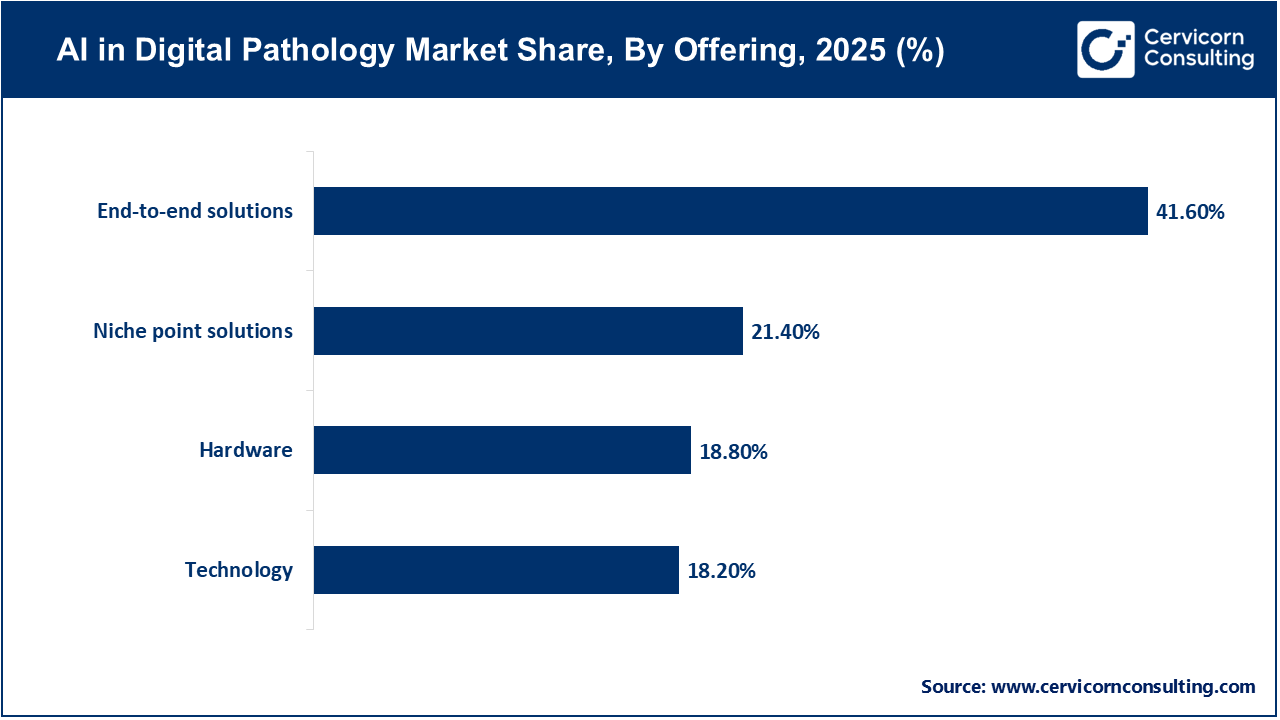
- End-to-end solutions dominate by offering, holding 41.6% market share, as labs prefer integrated AI platforms over standalone tools.
- CNN-based models are the most widely used, accounting for 56.3% of the neural network segment due to their reliability in image analysis tasks.
- Image analysis is the largest functional segment with a 34.8% share, driven by demand for automated tumor detection and biomarker quantification.
- Disease diagnosis and prognosis remains the top use case, capturing 44.7% of the market, as AI becomes part of routine pathology workflows.
- Hospitals and reference laboratories lead end-user adoption with a 49.5% share, driven by high case volumes and efficiency needs.
Rising Cancer Burden Amplifies Demand in the AI in Digital Pathology Market
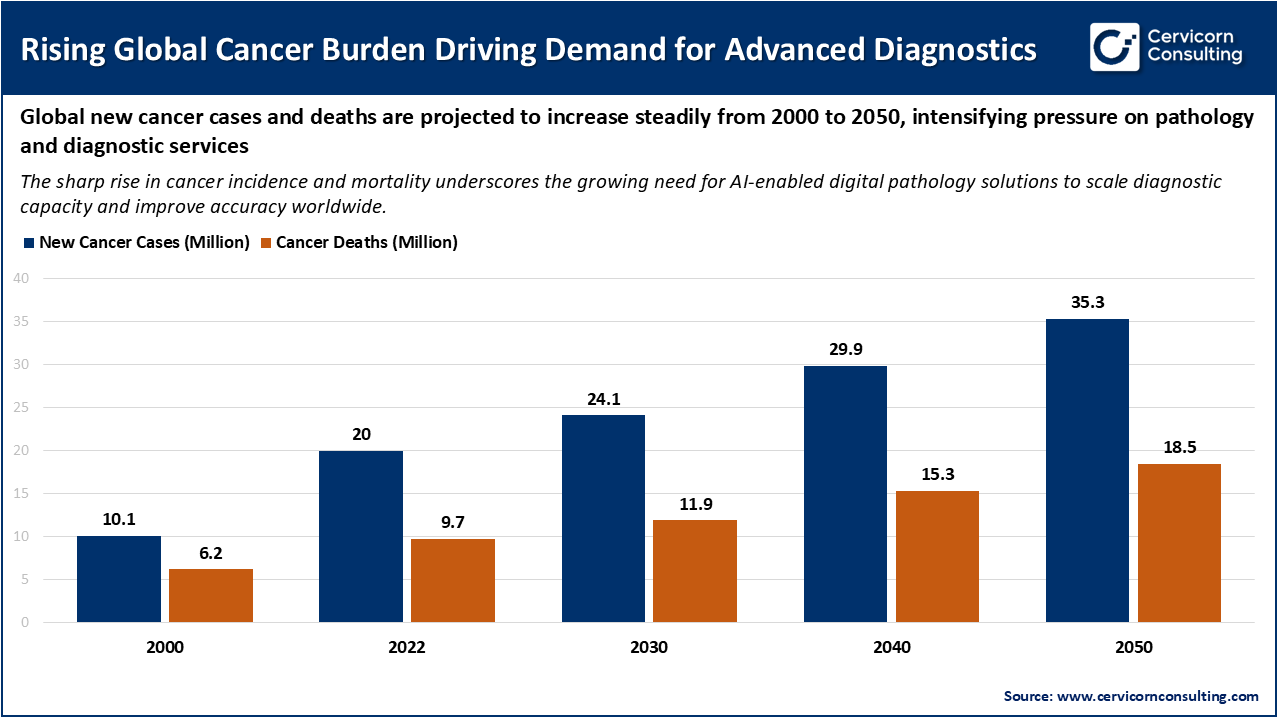
The increasing number of cancer cases is a major factor driving the growth of the AI in digital pathology market. As the global healthcare system faces more pressure to improve diagnostic capacity and accuracy, the need for advanced solutions is rising. Recent data from the World Health Organization shows that new cancer cases are expected to grow from about 20 million in 2022 to over 35 million by 2050, which is an increase of around 77%. This growth is mainly due to an ageing population, population growth, and higher exposure to risk factors like tobacco use and obesity. As cancer cases rise, the number of biopsy samples and slides that need to be analyzed also increases. This puts more strain on pathology resources and creates a strong demand for AI-based digital pathology tools that can process large volumes of samples and help reduce turnaround times.
Certain cancers with high incidence rates add to the growing diagnostic workload and increase demand for digital pathology solutions. For instance, breast cancer had about 2.3 million new cases in 2022, and its incidence is rising by about 3% each year. Lung cancer had around 2.2 million new cases in 2020 and is still the leading cause of cancer death worldwide. Many cancer types require precise and consistent interpretation because of subtle differences in tissue appearance. As a result, AI-powered digital pathology platforms are being used more often to help pathologists by automating detection, measuring biomarkers, and supporting clinical decisions. The combination of rising case numbers and a shortage of trained pathologists in many areas highlights the need for scalable AI solutions. This trend is expected to drive further growth in the market.
Recent Developments in Single-Use Filtration Technologies
- Adoption of advanced single-use assemblies for final filtration processes in commercial biopharmaceutical production.
- Major pharmaceutical companies like GSK and Roche implementing single-use filtration assemblies in final fill steps to enhance sterility and efficiency.
- Increased use of single-use systems in cell and gene therapy and vaccine manufacturing to reduce contamination risk and improve flexibility.
- Development of pre-sterilized, high-capacity disposable filters that support automated bioprocessing workflows and reduce manual interventions.
- Growing interest in sustainable single-use materials and designs to address environmental concerns associated with disposable systems.
Recent Major Milestones
1. Ibex Medical Analytics Receives FDA 510(k) Clearance for AI Pathology Tool
In early 2025, Ibex Medical Analytics received FDA 510(k) clearance for its Prostate Detect AI-powered digital pathology solution, which supports pathologists in identifying small and rare prostate cancers in biopsy tissue. This regulatory achievement is significant because only a few AI pathology tools have been authorized for clinical use in the United States. By obtaining this clearance, Ibex addresses a major barrier to adoption, as regulatory approval and clinical trust are essential for integrating AI into healthcare. These clearances confirm the clinical value of AI algorithms, encouraging healthcare providers to adopt AI-enabled workflows and supporting the integration of these technologies into routine diagnostics.
2. Aiforia Obtains IVDR Certification and Launches Multiple CE-IVD AI Models
In February 2025, Aiforia Technologies obtained In Vitro Diagnostic Regulation (IVDR) certification in Europe and launched three new CE-IVD marked AI models for breast and prostate cancer diagnostics. This achievement increases the availability of clinically validated AI models across Europe, where IVDR compliance is required for clinical use. By expanding its portfolio of regulatory-cleared products, Aiforia is reducing barriers for pathology labs and supporting the integration of AI into digital pathology workflows. This is especially important in oncology diagnostics, where there is a strong demand for accurate and automated image analysis.
3. Aiforia Launches Next-Generation AI Technology Platform
In December 2025, Aiforia advanced its technology by launching a next-generation AI platform that uses Vision Transformer architecture and a proprietary Foundation Engine. This new platform increases processing speed and efficiency in training and analyzing whole-slide images. Such technological progress expands the ability of AI tools to manage different tissue types and complex patterns, which improves performance, scalability, and interoperability. These factors are important for encouraging health systems to move from pilot projects to large-scale adoption of AI in digital pathology.
4. Expansion of Roche’s Digital Pathology Open Environment with Multiple AI Algorithms
In late 2024, Roche Diagnostics expanded its Digital Pathology Open Environment by integrating more than 20 advanced AI algorithms from eight collaborators to support cancer research and diagnostics. This development creates an ecosystem where multiple AI tools are available through a single workflow, making it easier for laboratories to integrate these solutions and increasing their clinical value. By offering a suite of validated tools for tasks such as tumor detection and biomarker quantification, this approach supports the broader adoption of AI in digital pathology and strengthens the case for large-scale digitization in the field.
Report Scope
| Area of Focus |
Details |
| Market Size in 2026 |
USD 131.71 Million |
| Market Size in 2035 |
USD 692.31 Million |
| CAGR from 2026 to 2035 |
20.2% |
| Dominant Region |
North America |
| Fastest Growing Region |
Asia-Pacific |
| Key Segments |
Offering, Neural Network, Function, Use Case, End User |
| Key Companies |
Aiforia Technologies, Akoya Biosciences, Ibex Medical Analytics, Paige, PathAI, Proscia, Indica Labs, Roche Diagnostics, Visiopharm, AIRA Matrix, Deep Bio, OptraScan |
Market Dynamics
Market Drivers
- Surge in AI-Enabled Telepathology and Digital Adoption: The growth of the AI in digital pathology market is significantly driven by the adoption of AI-enabled telepathology and digital workflows. As remote slide review and expert collaboration become more common, diagnostic accuracy is improving. The ability to share whole-slide images across institutions has expanded rapidly, which is particularly important in areas where access to specialists is limited. The integration of telepathology with AI is enabling pathology laboratories to enhance operational efficiency and reduce turnaround times for complex diagnostic cases. This trend is expected to remain a key factor supporting market expansion.
- Demand for Precision Medicine and Advanced Image Analysis: The increasing demand for precision diagnostics, particularly in oncology, is a major factor driving the adoption of AI in digital pathology. AI algorithms are now providing quantitative image analysis that supports tailored therapeutic decisions, including tumor subtyping and biomarker scoring. Recent data shows that in 2024, software made up more than half of the AI pathology market value, largely due to the widespread use of image analysis tools that enable precision workflows. This indicates a broader movement toward AI solutions that improve diagnostic sensitivity and specificity, meeting the clinical need for personalized treatment strategies.
Market Restraints
- High Implementation and Infrastructure Costs: One of the main restraints for the AI in digital pathology market is the high cost associated with implementing the necessary infrastructure. This includes whole-slide scanners, high-performance servers, and AI software licenses. Although slide scanners are among the fastest-growing segments in digital pathology, their deployment requires significant capital investment. As a result, smaller laboratories with limited resources may find it difficult to adopt AI workflows on a large scale. This cost barrier is likely to slow the overall market penetration, especially in emerging and mid-sized healthcare settings.
- Regulatory and Interoperability Challenges: Although an increasing number of AI tools are receiving regulatory clearances such as CE-IVD and FDA approvals, the regulatory environment remains complex and varies significantly between regions. By mid-2025, approximately 50 digital pathology AI models had obtained CE clearance in the EU. However, interoperability between digital pathology systems and hospital EHR or LIS infrastructures is inconsistent, which makes seamless deployment in multi-site clinical workflows challenging. The ongoing need for standardized frameworks and data exchange protocols continues to limit the pace of clinical adoption.
Market Opportunities
- Expansion in Emerging Regions with Rising Healthcare Investment: Emerging markets, especially in the Asia Pacific region, are creating significant growth opportunities for the AI in digital pathology market. This is supported by rising healthcare spending, digital health initiatives, and a growing prevalence of chronic diseases. Strategic collaborations, such as the 2024 partnership between Lunit and AstraZeneca to develop AI-driven pathology tools for lung cancer mutation prediction, demonstrate how industry partnerships are expanding AI capabilities and applications across different regions. Increased investment in research and development from both government and private sectors in these areas is expected to improve local digital pathology infrastructure and clinical AI readiness, further driving market growth.
- Integration with Precision Oncology and Drug Development: There is an increasing opportunity for AI pathology platforms to be integrated into precision oncology and pharmaceutical research and development processes. These platforms enable high-throughput image analysis for biomarker discovery and patient stratification in clinical trials. The rapid adoption of AI in pathology for drug discovery, which is currently one of the largest application areas, positions the market to benefit from the expansion of pharmaceutical R&D pipelines that depend on detailed histopathological insights for new therapies. Such integration is also likely to encourage new commercial partnerships between technology providers and biopharmaceutical companies.
Market Challenges
- Workforce Adaptation and Skill Gaps: A major challenge facing the AI in digital pathology market is the need to upskill pathology staff and incorporate AI tools into established diagnostic workflows. Pathologists are required to adapt to digital platforms and develop trust in AI-generated results. However, existing skill gaps and resistance to change can slow the adoption of these technologies. This issue is further complicated by persistent shortages of trained specialists in many regions. While AI tools are intended to help address these shortages, they cannot fully replace human expertise without comprehensive training and effective change management programs.
- Data Privacy, Governance, and Ethical Risks: The significant amount of patient data needed to train and operate AI models brings up important concerns regarding data privacy, governance, and ethical use. Regulatory frameworks for AI in healthcare are still developing, and recent setbacks related to data protection in broader AI applications highlight the challenges of ensuring secure and compliant use of sensitive health information in digital pathology workflows. Addressing these risks will require strong policies, standardized consent procedures, and transparent governance structures.
AI in Digital Pathology Market Regional Analysis
The AI in digital pathology market is segmented into North America, Europe, Asia-Pacific, and LAMEA. Here is a brief overview of each region:
North America AI in Digital Pathology Market: Driven by regulatory approvals & large hospital digitization
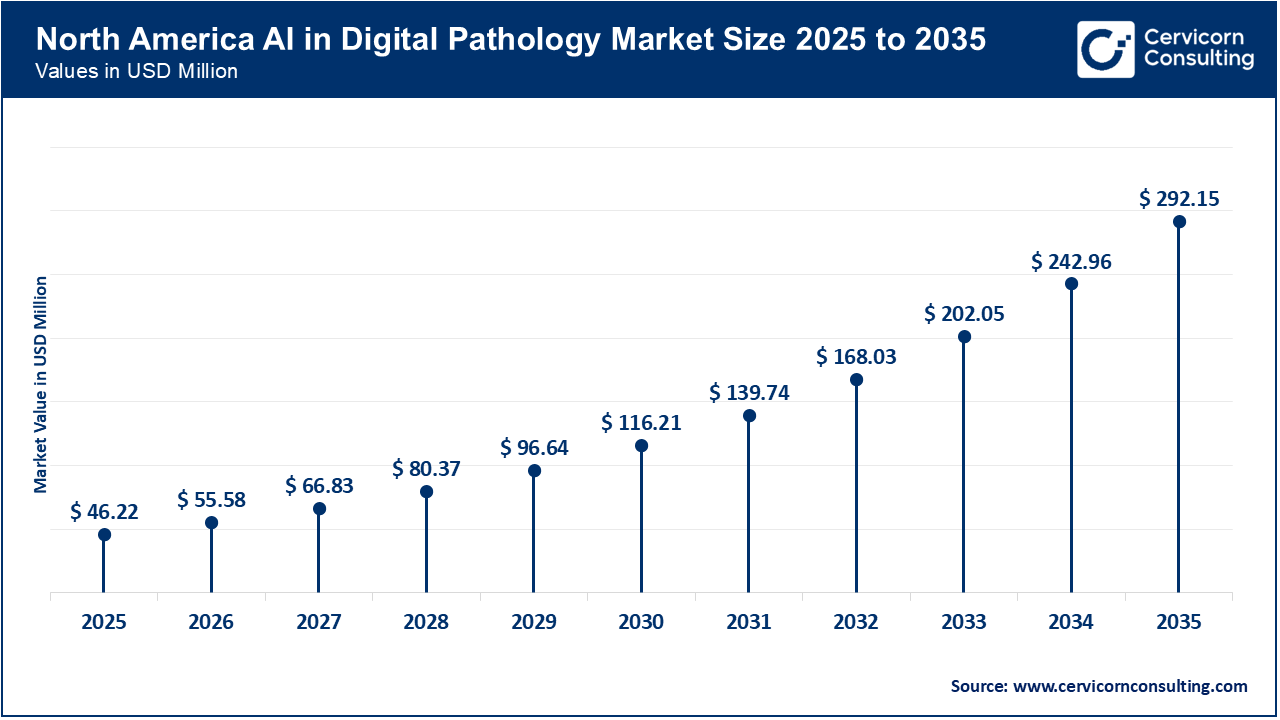
The North America AI in digital pathology market size was valued at USD 46.22 million in 2025 and is expected to be worth around USD 292.15 million by 2035. The North America is experiencing growth due to a dynamic regulatory environment and increasing digitization in large hospitals and reference laboratories. The approval of AI pathology tools by the U.S. FDA, such as Ibex Medical Analytics’ Prostate Detect, is building confidence among buyers by demonstrating clinical utility and safety. As a result, health systems are more willing to invest in scanners, AI platforms, and integration projects, which is accelerating the adoption of these technologies.
Recent Developments:
- Ibex Medical Analytics: FDA 510(k) clearance for Prostate Detect (early 2025).
- Paige and scanner partners: added FDA-cleared workflows and scanner compatibilities, expanding clinical deployment options.
Asia-Pacific (APAC) AI in Digital Pathology Market: Driven by national digital health plans & regulatory sandboxes
The Asia-Pacific AI in digital pathology market size was estimated at USD 24.53 million in 2025 and is forecasted to surpass around USD 155.08 million by 2035. In the Asia-Pacific region, the growth of AI in digital pathology is supported by government digital health programs and regulatory pathways that promote local testing and deployment. Rapid modernization of hospitals in China, Japan, and India is also contributing to this trend. National initiatives, such as China’s Healthy China and precision medicine programs, along with Japan’s regulatory sandbox for medical AI, are making it easier for both domestic and global vendors to launch pilot projects and expand commercial deployments and partnerships.
Recent Developments:
- China: large-scale digital health investment tied to national plans (reported large funding and infrastructure pushes for precision medicine/digital health).
- Japan: active regulatory sandbox framework and adaptive guidance accelerating medical AI trials and limited market testing.
Europe AI in Digital Pathology Market: Driven by regulatory harmonization (IVDR) and CE-IVD rollouts
The Europe AI in digital pathology market size was reached at USD 30.45 million in 2025 and is projected to hit around USD 192.46 million by 2035. In Europe, the enforcement of IVDR and the increase in CE-IVD-marked digital pathology AI solutions are supporting market growth. When vendors achieve IVDR or CE-IVD status, such as Aiforia’s recent certifications, it reduces uncertainty across different countries. This helps pathology laboratories transition from pilot projects to routine diagnostic use and encourages hospitals and networks to make platform-level purchases.
Recent Developments:
- Aiforia: obtained IVDR certification and launched several CE-IVD AI models for breast and prostate diagnostics (Feb 2025).
- Broader EU activity: rising number of CE-marked pathology AI products and ecosystem initiatives supporting clinical integration.
AI in Digital Pathology Market Share, By Region, 2025 (%)
| Region |
Revenue Share, 2025 (%) |
| North America |
42.2% |
| Europe |
27.8% |
| Asia-Pacific |
22.4% |
| LAMEA |
7.6% |
LAMEA (Latin America, Middle East & Africa) AI in Digital Pathology Market: Driven by telepathology partnerships & centralized lab modernization
The LAMEA AI in digital pathology market was valued at USD 8.32 million in 2025 and is anticipated to reach around USD 52.62 million by 2035. In the LAMEA region, growth is being driven by telepathology projects and commercial partnerships that address shortages of specialists and differences in access to pathology services. Modernization in this region often follows key partnerships and national pilot programs instead of large-scale investments. Collaborations between AI vendors and major private healthcare networks help create reference laboratory use cases, which can then be expanded into multi-site rollouts across the region.
Recent Developments:
- PathAI + Rede D’Or (Brazil): announced a strategic partnership to deploy AI-powered pathology across Brazil’s largest integrated private network (Feb 2025).
- Academic/government studies and early national assessments in Brazil and parts of LATAM documenting pilot digital pathology programmes and highlighting barriers (cost, connectivity) and opportunities.
AI in Digital Pathology Market Segmental Analysis
The AI in digital pathology market is segmented into offering, neural network, function, use case, end user, and region.
Offering Analysis
The AI in digital pathology market is currently led by end-to-end solutions. This is largely because healthcare providers are seeking comprehensive platforms that can integrate image acquisition, AI analysis, data management, and workflow orchestration within a single system. By adopting these solutions, hospitals and reference laboratories are able to address interoperability challenges that often arise between scanners, LIS, PACS, and AI algorithms. This is particularly important for larger institutions where seamless integration is essential. Vendors that provide platform-based models are seeing benefits such as recurring subscription revenues, increased customer retention, and the ability to scale across different pathology subspecialties.
AI in Digital Pathology Market Share, By Offering, 2025 (%)
| Offering |
Revenue Share, 2025 (%) |
| End-to-end solutions |
41.6% |
| Niche point solutions |
21.4% |
| Technology |
18.2% |
| Hardware |
18.8% |
The hardware is experiencing the fastest growth in the market. This trend is primarily due to the rapid digitization of pathology laboratories around the world. The adoption of whole-slide scanners, high-resolution imaging systems, and high-capacity storage infrastructure has become essential for hospitals and laboratories that are moving away from traditional glass slides. As a result, there has been a significant increase in upfront investments in these technologies. The decreasing costs of scanners, improvements in scan speed, and enhanced image quality are making the transition to digital pathology more feasible, especially for mid-sized and regional laboratories.
Neural Network Analysis
CNNs are the leading neural network architecture in the market, mainly because they are highly effective for analyzing high-resolution histopathology images. Their reliability in tasks such as tumor detection, segmentation, grading, and biomarker quantification has been well established. Most AI pathology tools that have received clinical validation and regulatory approval are based on CNNs, which demonstrates their robustness and consistent performance on structured image datasets. The widespread availability of pre-trained CNN models and comprehensive validation studies further supports their adoption, making them easier to implement and optimize for clinical applications. As a result, CNNs continue to be the preferred choice in both diagnostic and research settings.
AI in Digital Pathology Market Share, By Neural Network, 2025 (%)
| Neural Network |
Revenue Share, 2025 (%) |
| Convolutional Neural Networks (CNNs) |
56.3% |
| Generative Adversarial Networks (GANs) |
18.7% |
| Recurrent Neural Networks (RNNs) |
9.4% |
| Others |
15.6% |
Generative Adversarial Networks (GANs) and other advanced neural network architectures, such as transformers and foundation models, are currently the fastest-growing segment in the market. This growth is driven by the increasing demand for more advanced AI capabilities in pathology. These models are being adopted for applications like stain normalization, synthetic data generation, virtual staining, and addressing challenges related to data scarcity and variability between laboratories. Their potential to enhance model generalization and reduce the need for manual annotation makes them valuable for expanding AI solutions to new regions. With ongoing improvements in computational power and explainability, the adoption of these advanced architectures is projected to increase further in the coming years.
Function Analysis
Image analysis is the leading function in digital pathology because it directly improves diagnostic efficiency and consistency. By automating tasks like cell counting, tumor boundary identification, and biomarker assessment, AI-based image analysis reduces turnaround times and minimizes differences between observers. This is especially important in oncology, where accurate measurement affects treatment choices. Since image analysis provides clear productivity benefits, it remains the main area where AI is first adopted in digital pathology.
AI in Digital Pathology Market Share, By Function, 2025 (%)
| Function |
Revenue Share, 2025 (%) |
| Image Analysis |
34.8% |
| Diagnostics |
19.6% |
| Workflow Management |
13.2% |
| Data Management |
9.8% |
| Predictive Analytics |
8.6% |
| Clinical Decision Support Systems (CDSS) |
7.4% |
| Automated Report Generation |
3.5% |
| Quality Assurance Tools |
3.1% |
Predictive analytics and clinical decision support systems are expanding rapidly as AI moves beyond basic analysis to deliver practical clinical insights. These systems use histopathology data along with clinical and molecular information to predict how diseases may progress, the risk of recurrence, and how patients might respond to treatment. The rising need for precision medicine and value-based care is increasing the demand for AI tools that help with prognosis and treatment planning, not just image review. As regulatory bodies become more open to AI-based decision support, this segment is expected to grow even faster.
Use Case Analysis
Disease diagnosis and prognosis represent the largest segment in the use-case analysis, mainly because routine clinical diagnostics make up the majority of pathology workloads. The integration of AI-enabled digital pathology has led to improvements in diagnostic accuracy, standardization, and efficiency, especially in high-burden diseases like cancer. These advancements have made AI tools essential for modern pathology laboratories. Hospitals focus on these applications since they have a direct impact on patient outcomes, operational processes, and adherence to clinical quality standards. Consequently, diagnostic use cases continue to receive the highest levels of investment and deployment in the market.
AI in Digital Pathology Market Share, By Use Case, 2025 (%)
| Use Case |
Revenue Share, 2025 (%) |
| Disease Diagnosis & Prognosis |
44.7% |
| Drug Discovery |
28.9% |
| Clinical Workflow |
18.1% |
| Training & Education |
8.3% |
Drug discovery is currently the fastest-growing use case, with pharmaceutical and biopharmaceutical companies adopting AI-driven pathology in their research and development activities. The use of AI allows for high-throughput analysis of tissue samples during preclinical studies and clinical trials, which supports biomarker discovery, patient selection, and assessment of trial endpoints. The increasing focus on personalized therapies and companion diagnostics is also driving the need for advanced pathology analytics in drug development. As a result, partnerships between AI technology providers and pharmaceutical companies are playing a significant role in advancing innovation and increasing adoption in this area.
End User Analysis
Hospitals and reference laboratories are the leading end users in the digital pathology market, as they process most diagnostic pathology cases and are under increasing pressure to improve efficiency due to workforce shortages. The adoption of AI-enabled digital pathology allows these institutions to handle higher case volumes, shorten reporting times, and support remote consultations. Large reference laboratories, in particular, are early adopters of advanced AI solutions because automation and scalability are essential for their operations. Their significant purchasing power and operational scale make them the main contributors to market revenue.
AI in Digital Pathology Market Share, By End User, 2025 (%)
| End User |
Revenue Share, 2025 (%) |
| Hospitals & Reference Laboratories |
49.5% |
| Pharmaceutical & Biopharmaceutical Companies |
32.1% |
| Academic & Research Institutes |
18.4% |
Pharmaceutical and biopharmaceutical companies are currently the fastest-growing end-user segment. This growth is driven by increased R&D investment and the growing importance of tissue-based biomarkers in drug development. The use of AI in digital pathology enables standardized and reproducible analysis across multiple trial sites, which helps reduce variability and speed up development timelines. As regulatory agencies become more receptive to AI-derived endpoints, pharmaceutical companies are expanding their use of digital pathology from research into later stages of clinical development. This trend is leading to long-term, high-value collaborations between AI solution providers and drug developers.
AI in Digital Pathology Market Top Companies
Recent Developments by Major Companies
- In December 2025, Aiforia Technologies introduced a new AI technology platform that uses Vision Transformer architecture and a proprietary Foundation Engine. This development is aimed at improving the scalability and performance of image analysis for various pathology tasks. The upgraded platform offers stronger learning capabilities, allowing for faster training and analysis of whole-slide images. This is an important step for the company, as it supports wider use of AI in high-volume clinical and research settings and encourages deeper integration of digital pathology workflows.
- In January 2026, Ibex Medical Analytics expanded its biopharma business by extending its AI pathology platform to support early biomarker development and translational research. This expansion moves the company beyond clinical diagnostics and into preclinical and clinical trial support. It also sets the stage for future companion diagnostic programs and increases the value of Ibex’s platform for biopharmaceutical partners who want to use AI in drug development.
Market Segmentation
By Offering
- End-to-end solutions
- Niche point solutions
- Technology
- Hardware
By Neural Network
- Generative Adversarial Networks (GANs)
- Convolutional Neural Networks (CNNs)
- Recurrent Neural Networks (RNNs)
- Others
By Function
- Image Analysis
- Diagnostics
- Workflow Management
- Data Management
- Predictive Analytics
- Clinical Decision Support Systems (CDSS)
- Automated Report Generation
- Quality Assurance Tools
By Use Case
- Drug Discovery
- Disease Diagnosis & Prognosis
- Clinical Workflow
- Training & Education
By End User
- Pharmaceutical & Biopharmaceutical Companies
- Hospitals & Reference Laboratories
- Academic & Research Institutes
By Region
- North America
- APAC
- Europe
- LAMEA