Cell Culture Market Size, Growth, Forecast 2026 to 2035
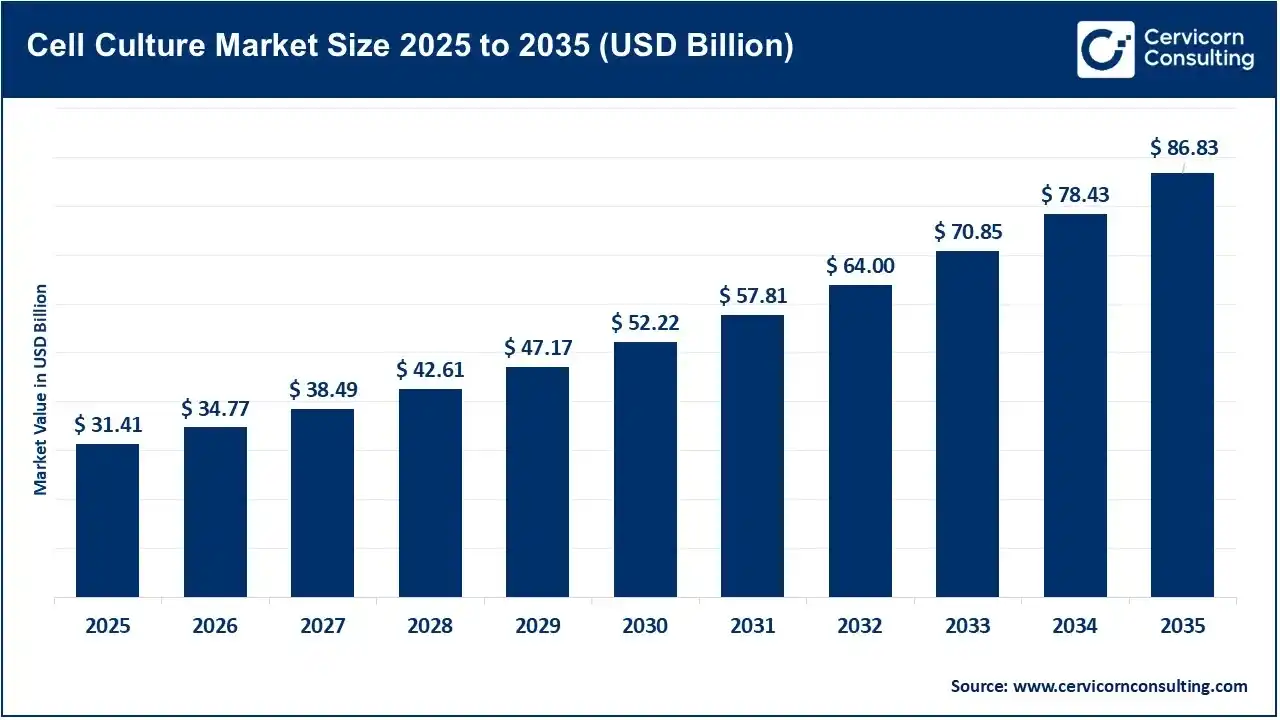
The global cell culture market size was estimated at USD 31.41 billion in 2025 and is expected to be worth around USD 86.83 billion by 2035, reflecting a compound annual growth rate (CAGR) of 10.7% over the forecast period from 2026 to 2035. The cell culture market is primarily driven by the expanding production of biologics, monoclonal antibodies, recombinant proteins, vaccines, and advanced cell-based therapies. Cell culture is a fundamental manufacturing platform for many biological products, increasing demand for culture media, sera, reagents, bioreactors, and single-use systems.
Report Highlights
- By Region: North America held 39.8% share, supported by advanced biopharmaceutical infrastructure, strong research capabilities, biotechnology innovation, and expanding advanced therapy development.
- By Product: Consumables dominated the Cell Culture Market with 68.4% share, supported by recurring demand for media, reagents, sera, and disposable products.
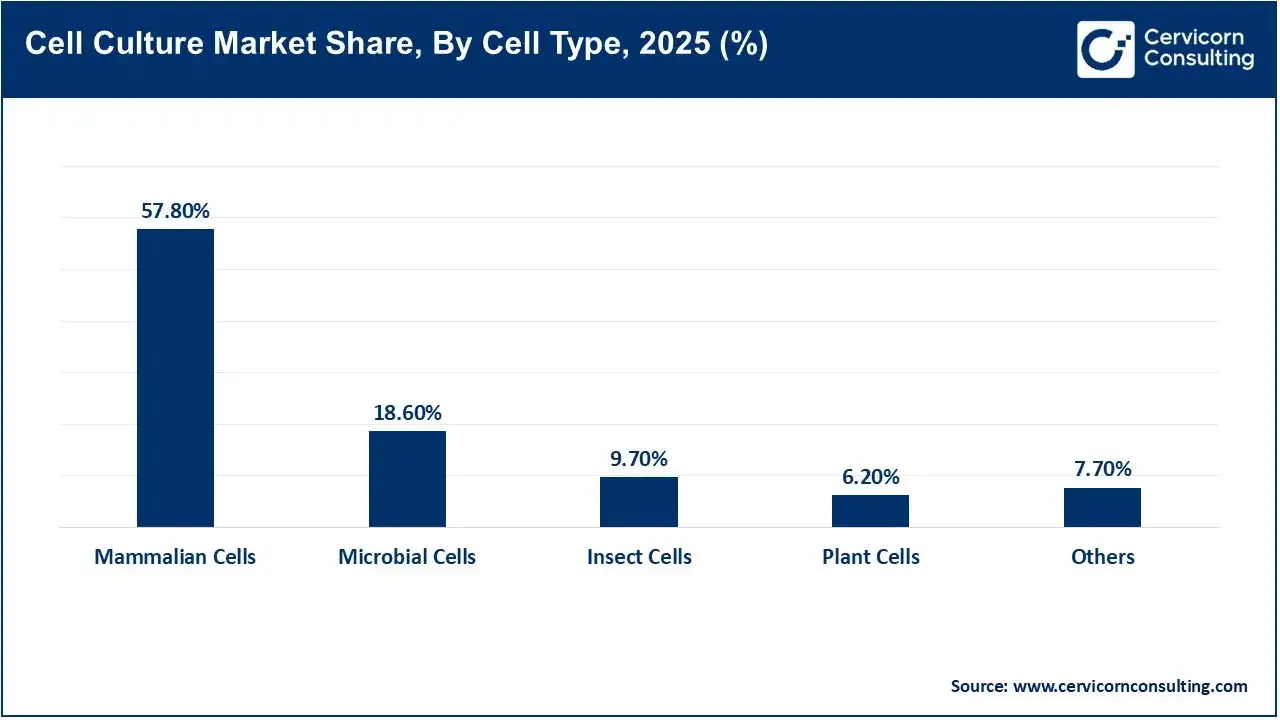
- By Cell Type: Mammalian Cells accounted for 57.8% share, driven by their extensive application in biologics, vaccines, monoclonal antibodies, and recombinant proteins.
- By Application: Biopharmaceutical Production led with 42.6% share, supported by expanding biologics manufacturing, vaccine production, biosimilars, and therapeutic protein development worldwide.
- By End User: Pharmaceutical & Biotechnology Companies dominated with 45.7% share, owing to extensive cell culture utilization across research, development, and biomanufacturing.
- Growth Opportunity: Tissue Engineering & Regenerative Medicine held 7.4% share, with growing organoid, stem cell, 3D culture, and regenerative therapy applications.
- Emerging End User: CDMOs represented 11.7% share, supported by increasing outsourcing of biologics, vaccines, cell therapies, and gene therapy manufacturing.
What is a Cell Culture?
Cell culture is a laboratory technique used to grow and maintain cells outside their natural biological environment under carefully controlled conditions, including appropriate temperature, pH, nutrients, gases, and sterility. Cells derived from humans, animals, plants, or microorganisms are maintained in specialized culture media containing nutrients and growth-supporting components. Cell culture is widely used in biopharmaceutical production, vaccine and monoclonal antibody manufacturing, cancer research, drug discovery, stem cell research, regenerative medicine, toxicity testing, and cell and gene therapy development. Modern approaches include traditional 2D cultures, suspension cultures, high-density bioreactor systems, and advanced 3D models such as spheroids and organoids.
Cell Culture Market Key Statistics
- The FDA's Center for Drug Evaluation and Research approved 50 novel drugs in 2024, illustrating the continuing pace of pharmaceutical innovation, while the FDA maintains an expanding portfolio of licensed cellular and gene therapy products.
- Growing investments in biopharmaceutical manufacturing, alongside greater adoption of serum-free and chemically defined media and scalable bioreactor systems, are further increasing cell-culture requirements across pharmaceutical companies, biotechnology firms, and CDMOs.
- Another major growth factor is the rising burden of cancer and other chronic diseases, which is accelerating research in oncology, regenerative medicine, stem cells, personalized medicine, and cell and gene therapies.
- According to the WHO, approximately 20.6 million new cancer cases and nearly 10 million cancer deaths occur annually, with new cases projected to approach 35 million annually by 2050.
- Earlier IARC estimates indicated this represents roughly a 77% increase from about 20 million cases in 2022. This growing disease burden is encouraging pharmaceutical and academic organizations to expand cell-based drug screening, disease modeling,
- toxicity testing, vaccine development, and therapeutic research, thereby supporting sustained demand for advanced 2D and 3D cell culture technologies, automated culture platforms, and high-throughput cell-based assays.
Recent Milestones
| Date |
Company |
Recent Milestone |
| September 2025 |
FUJIFILM Biosciences |
Commercially launched BalanCD HEK293 Perfusion A Medium, designed for high-density suspension HEK293 cultures and scalable AAV and lentiviral-vector production for gene therapies. |
| July 2025 |
Sartorius AG |
Launched the Incucyte CX3 Live-Cell Analysis System, combining confocal fluorescence imaging with real-time analysis of 3D cell cultures across up to six microplates simultaneously. |
| May 2025 |
Corning Incorporated |
Showcased new Configurable Assemblies for Closed Systems alongside CellSTACK, HYPERStack, CellCube and Ascent fixed-bed bioreactor solutions for scalable cell-culture manufacturing. |
| May 2025 |
FUJIFILM Biosciences |
Presented the Oceo Rover, an automated single-use system for on-demand powdered cell-culture media and buffer hydration aimed at improving bioprocessing efficiency and consistency. |
| February 2025 |
Thermo Fisher Scientific |
Highlighted its DynaSpin Single-Use Centrifuge for high-density cell-culture harvesting, targeting reduced filtration requirements and improved operational and facility efficiency. |
| February 2025 |
Corning Incorporated |
Highlighted advanced 3D cell-culture solutions, including spheroids, organoids and tissue models, for drug discovery, cancer research, toxicity screening and high-throughput applications. |
Cell Culture Market Dynamics
Market Drivers
1. Rising Demand for Vaccines and Biopharmaceutical Production
Growing vaccine requirements and expanding biologics manufacturing are increasing demand for cell culture media, reagents, bioreactors, and related consumables. In 2024, approximately 115 million infants globally received at least one DTP-containing vaccine dose, while about 109 million completed all three doses. Large-scale vaccine production frequently depends on controlled cell-based manufacturing platforms, supporting continued investments in high-density cultures, serum-free media, single-use technologies, and scalable bioreactors to improve manufacturing efficiency and production consistency.
2. Growing Biomedical Research Investment
Increasing government and institutional funding for biomedical research supports greater utilization of cell culture technologies across drug discovery, disease modeling, cancer research, and regenerative medicine. The U.S. National Institutes of Health reported USD 35.3 billion in competing and noncompeting research grants during FY2025, while its total FY2025 appropriation reached USD 48.5 billion. Such substantial research funding encourages laboratories to expand experimental capabilities, supporting demand for specialized media, cell lines, culture vessels, incubators, analytical instruments, and advanced 3D culture platforms.
Market Restraints
1. High Contamination and Quality-Control Risks
Cell culture processes are highly sensitive to microbial contamination, cross-contamination, and variability in biological raw materials, requiring stringent sterile processing and quality controls. FDA guidance highlights risks associated with human- and animal-derived manufacturing materials, including adventitious-agent transmission, lot-to-lot consistency, and material identity. Managing these risks requires extensive testing, validated cleanrooms, trained personnel, and monitoring systems, increasing operating costs. These requirements can particularly restrict adoption among smaller laboratories and biotechnology companies with limited infrastructure and quality-management resources.
2. Complex Regulatory Requirements for Cell-Based Products
Companies using cell culture for advanced therapies face increasingly detailed regulatory requirements concerning manufacturing consistency, safety testing, clinical development, and post-approval monitoring. During 2024–2026, the FDA issued or listed multiple guidance documents addressing cellular and gene therapies, including genome editing, safety testing, clinical-trial design, and post-approval safety and efficacy data collection. Meeting these evolving requirements can lengthen development timelines and require substantial investments in documentation, process validation, analytical testing, and GMP-compliant manufacturing, potentially constraining smaller market participants.
Market Opportunities
1. Growing Adoption of Organoids and Human-Relevant Models
The transition toward human-relevant preclinical testing creates significant opportunities for advanced 3D cell cultures, organoids, and engineered tissue models. In April 2025, the FDA announced plans to reduce, refine, or potentially replace certain animal-testing requirements for monoclonal antibodies and other drugs, explicitly encouraging approaches including cell lines and organoid toxicity testing. This regulatory shift could accelerate adoption of sophisticated cell culture platforms for toxicity assessment and drug screening, creating opportunities for suppliers of specialized media, matrices, culture vessels, imaging systems, and automation technologies.
2. Expansion of Cell and Gene Therapy Applications
Continued regulatory approvals of advanced therapies create opportunities for specialized cell culture technologies supporting viral vectors, stem cells, and therapeutic cell manufacturing. In March 2026, the FDA approved Kresladi, the first gene therapy for severe Leukocyte Adhesion Deficiency Type I, for eligible pediatric patients. Increasing development of such therapies creates demand for high-performance media, closed culture systems, single-use bioreactors, automated cell-processing technologies, and scalable manufacturing solutions capable of maintaining cell viability, reproducibility, and product quality.
Market Challenges
1. Scaling Cell Culture from Laboratory to Commercial Production
Translating cell culture processes from research laboratories into reproducible commercial manufacturing remains technically challenging because cells respond sensitively to changes in nutrients, oxygen, shear forces, temperature, and culture conditions. The challenge becomes increasingly important as global immunization programs require enormous manufacturing capacity; WHO reported that its 2023–2025 Big Catch-Up initiative delivered more than 100 million vaccine doses to approximately 18.3 million children across 36 countries. Manufacturers therefore require robust scale-up strategies while maintaining consistent quality and productivity.
2. Reproducibility and Safety of Biological Raw Materials
Maintaining consistent cell growth and product quality across batches remains challenging when culture processes incorporate human- or animal-derived materials. Variations in serum, growth supplements, and other biological components can influence cell behavior and manufacturing reproducibility. FDA guidance specifically identifies material qualification, lot-to-lot consistency, identity, and adventitious-agent risks as important considerations for cell and gene therapy manufacturing. Consequently, manufacturers must strengthen supplier qualification, testing, traceability, and process controls while transitioning toward chemically defined and animal-component-free media where technically feasible.
Regional Analysis
Why does North America dominates the cell culture market?
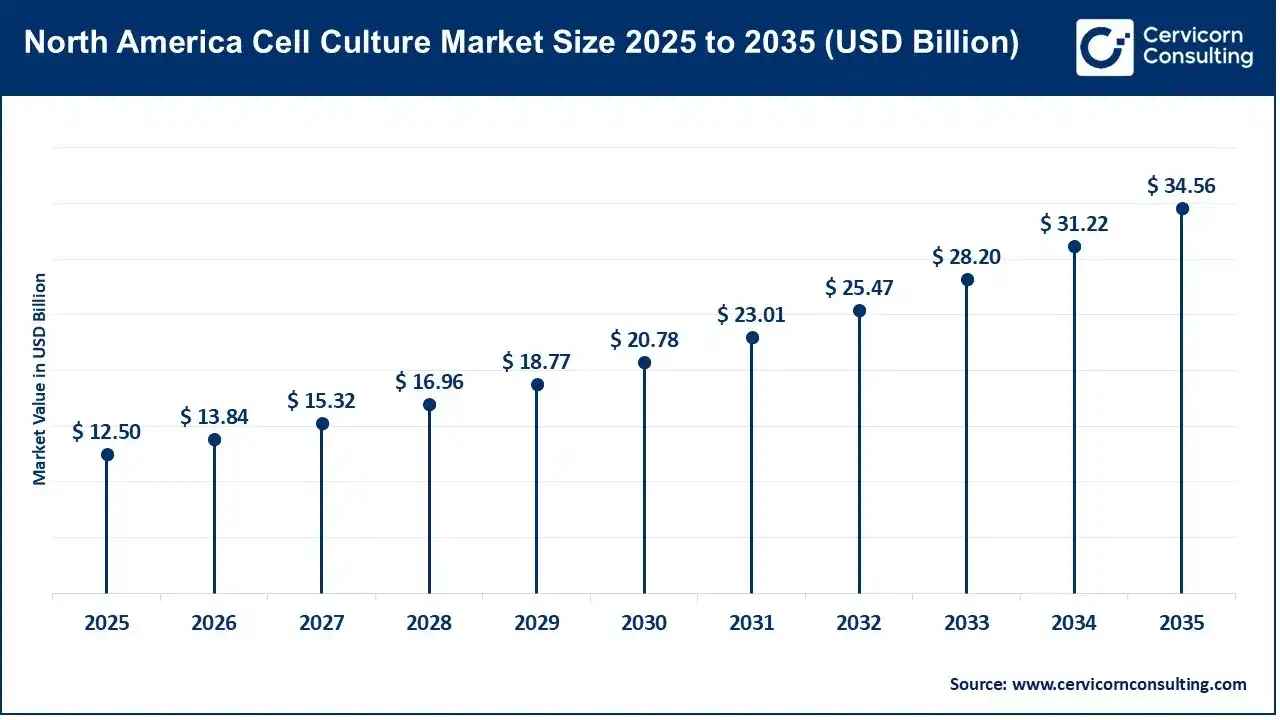
The North America cell culture market size was estimated at USD 12.50 billion in 2025 and is predicted to exceed around USD 34.56 billion by 2035. North America dominated the market owing to its well-established biopharmaceutical industry, extensive biomedical research infrastructure, growing production of biologics and vaccines, and rapid development of cell and gene therapies. The region benefits from widespread adoption of advanced cell culture media, single-use bioreactors, automated cell-processing systems, 3D cultures, organoids, and high-throughput screening technologies.
Major companies such as Thermo Fisher Scientific, Danaher Corporation, Corning Incorporated, and Bio-Rad Laboratories maintain significant operations across the region. Increasing investment in regenerative medicine, personalized therapeutics, cancer research, and biomanufacturing capacity further supports demand. Strong collaboration among pharmaceutical companies, biotechnology startups, academic institutions, research hospitals, CDMOs, and government agencies is accelerating commercialization of innovative cell-based technologies and strengthening North America's position in the global market.
United States Cell Culture Market Analysis:
- U.S. biopharmaceutical companies invested an estimated USD 103 billion in research and development during 2024, supporting drug discovery and advanced biological research requiring cell culture technologies.
- The U.S. National Science Foundation estimated that U.S. R&D expenditure reached approximately USD 940 billion in 2023, highlighting the country's substantial research and innovation ecosystem.
- The National Cancer Institute received approximately USD 7.22 billion in funding for FY2025, supporting cancer research where cell lines, organoids, and other cell culture models are extensively utilized.
Canada Cell Culture Market Analysis:
- Canada's federal government has committed more than CAD 2.2 billion across 40 projects under its Biomanufacturing and Life Sciences Strategy since 2021, strengthening domestic research and manufacturing capabilities.
- Canada invested CAD 80 million through the Strategic Innovation Fund toward a new Roche Global Pharma Technical Development site in Mississauga, representing an overall project investment of more than CAD 480 million.
- Canada's Stem Cell Network received CAD 30 million over three years starting in 2024–25, supporting stem cell and regenerative medicine research and development, areas that depend heavily on advanced cell culture platforms.
Why is Asia-Pacific expected to experience strong growth in the cell culture market?
The Asia-Pacific cell culture market size was valued at USD 7.73 billion in 2025 and is forecasted to record at USD 21.36 billion by 2035. Asia-Pacific is expected to experience strong growth, supported by expanding biopharmaceutical manufacturing, rising biotechnology research, increasing vaccine and biosimilar production, and development of cell and gene therapies. China, Japan, India, South Korea, and Australia are strengthening domestic biomanufacturing capabilities while pharmaceutical companies and CDMOs expand production facilities across the region.
Growing adoption of mammalian cell culture, single-use bioreactors, chemically defined media, automated culture systems, organoids, and 3D cellular models is improving research and manufacturing capabilities. Government initiatives supporting biotechnology, regenerative medicine, pharmaceutical innovation, and domestic manufacturing are further strengthening the regional ecosystem.
Lower manufacturing costs in several Asian countries, expanding skilled scientific talent, and collaborations between universities, biotechnology startups, pharmaceutical manufacturers, and global life-science companies are also accelerating adoption of advanced cell culture products.
China Cell Culture Market Analysis:
- China's share of global early-stage drug development programs increased from roughly 8% in 2015 to 32.3% in 2024, reflecting the country's rapidly expanding biopharmaceutical innovation pipeline.
- China-origin early-stage drug development programs increased from approximately 829 in 2015 to 6,145 in 2024, strengthening demand for cell-based research, screening, and bioprocessing technologies.
- Licensing and partnership deals between global pharmaceutical companies and Chinese biotechnology firms reached approximately USD 68.7 billion in 2025, demonstrating growing international interest in China's biotechnology ecosystem.
India Cell Culture Market Analysis:
- India's bioeconomy reached approximately USD 165.7 billion in 2024, reflecting rapid expansion of biotechnology, biopharmaceuticals, diagnostics, vaccines, and related life-science industries.
- India had approximately 10,075 biotechnology startups in 2024, compared with only a few hundred a decade earlier, expanding the potential customer base for laboratory and cell culture technologies.
- India's BioE3 Policy is promoting high-performance biomanufacturing and establishing biomanufacturing and bio-AI hubs, supporting future demand for advanced cell culture, fermentation, and bioprocessing infrastructure.
Europe Cell Culture Market: Driven by Strong Pharmaceutical R&D and Growing Biologics Development
The Europe cell culture market size was accounted for USD 8.61 billion in 2025 and is projected to hit around USD 23.79 billion by 2035. Europe represents a significant market, supported by its established pharmaceutical and biotechnology industries, extensive academic research network, advanced biologics manufacturing capabilities, and growing development of cell and gene therapies. Germany, the United Kingdom, France, Switzerland, and other European countries maintain strong ecosystems for monoclonal antibodies, vaccines, recombinant proteins, regenerative medicine, organoids, and advanced therapeutic research. Demand is increasingly supported by adoption of serum-free and chemically defined media, single-use bioreactors, automated cell processing, and 3D cell culture platforms. European pharmaceutical companies invested approximately EUR 55 billion in R&D during 2024, demonstrating the region's substantial commitment to medicine development and supporting demand for laboratory and bioprocessing technologies.
Germany Cell Culture Market Analysis:
- Germany remains one of Europe's major pharmaceutical research and manufacturing centers, supporting extensive utilization of mammalian cell culture, bioreactors, media, reagents, and laboratory technologies.
- European pharmaceutical R&D expenditure increased from approximately EUR 27.8 billion in 2010 to EUR 46.2 billion in 2022, with Germany forming an important part of the region's pharmaceutical innovation ecosystem.
- Germany's government institutions spent the equivalent of approximately 0.06% of GDP on medical and health sciences R&D in 2021, highlighting substantial public support for biomedical research.
United Kingdom Cell Culture Market Analysis:
- The UK government recorded approximately GBP 20.4 billion in net R&D expenditure during 2024, increasing 11.6% compared with 2023 and strengthening the country's broader scientific research ecosystem.
- UK businesses performed approximately GBP 9.3 billion of pharmaceutical R&D in 2024, representing around 17% of total business R&D expenditure, supporting substantial demand for cell-based research technologies.
- Approximately 1,400 UK life sciences companies identified R&D as their primary activity in 2023/24, including 32% of biopharmaceutical companies, reinforcing the country's strong customer base for advanced cell culture products.
Cell Culture Market Share, By Region, 2025 (%)
| Region |
Revenue Share, 2025 (%) |
| North America |
39.8% |
| Europe |
27.4% |
| Asia-Pacific |
24.6% |
| LAMEA |
8.2% |
LAMEA Cell Culture Market: Driven by Expanding Vaccine Production and Increasing Biotechnology Investment
The LAMEA cell culture market was valued at USD 2.58 billion in 2025 and is anticipated to reach around USD 7.12 billion by 2035. The LAMEA market is developing steadily, supported by expanding vaccine and biopharmaceutical production, strengthening biomedical research capabilities, growing pharmaceutical localization, and increasing government investment in biotechnology infrastructure. Brazil represents a major biotechnology and vaccine-production hub in Latin America, while Saudi Arabia, the UAE, and South Africa are strengthening life-sciences and pharmaceutical capabilities across the Middle East and Africa.
Increasing research involving biologics, vaccines, diagnostics, regenerative medicine, and biosimilars is supporting demand for culture media, reagents, cell lines, bioreactors, and laboratory equipment. Government efforts to reduce dependence on imported medicines and establish domestic manufacturing capacity are creating opportunities for cell culture suppliers. Partnerships involving research institutes, universities, public laboratories, pharmaceutical manufacturers, and international biotechnology companies are also facilitating technology transfer and development of regional biomanufacturing expertise.
Brazil Cell Culture Market Analysis:
- Brazil announced BRL 1.7 billion in 2025 for strengthening public health laboratories under the Novo PAC, representing around 20 times the investment previously allocated to comparable initiatives.
- Brazil's national industrial strategy aims to increase domestically produced medicines, vaccines, medical devices, and related healthcare requirements from around 42% currently to 70% by 2033.
- The Brazilian government announced approximately BRL 450 million in 2025 across initiatives supporting mRNA technologies, biopharmaceuticals and other strategic health technologies, including creation of the country's first RNA technology competence center.
Middle East Cell Culture Market Analysis:
- Saudi Arabia's biotechnology development strategy emphasizes vaccines, biomanufacturing, genomics, and bio-agriculture, with the country seeking to establish itself as a regional biotechnology hub and ultimately a global biotechnology leader.
- Growing localization of pharmaceutical and biotechnology production across Gulf countries is encouraging development of laboratory infrastructure, advanced therapeutic research, and biologics manufacturing capabilities.
Segmental Analysis
Product Analysis
The consumables segment dominated the cell culture market, holding 68.4% share in 2025; supported by the recurring requirement for culture media, sera, reagents, supplements, and disposable culture vessels throughout research and commercial manufacturing workflows. Unlike capital equipment, consumables require continuous replenishment during cell expansion, experimentation, and biopharmaceutical production. Growing biologics manufacturing, vaccine development, stem cell research, and adoption of serum-free and chemically defined media further strengthen demand. Increasing utilization of single-use consumables also supports contamination control, operational flexibility, and efficient bioprocessing.
Cell Culture Market Share, By Product, 2025 (%)
| Product |
Revenue Share, 2025 (%) |
| Consumables |
68.4% |
| Equipment |
31.6% |
The consumables segment is expected to register the fastest growth, driven by increasing cell-based research, expanding biopharmaceutical production, and greater adoption of disposable bioprocessing technologies. Pharmaceutical manufacturers are increasingly using specialized media formulations, supplements, single-use bags, culture vessels, and reagents optimized for high-density cell growth and advanced therapies. Rising demand for animal-component-free and chemically defined media is further encouraging product innovation. Expansion of cell and gene therapy manufacturing will additionally increase recurring consumption of specialized cell culture materials.
Cell Type Analysis
The mammalian cells segment dominated the cell culture market with 57.8% market share in 2025, because these cells are extensively used for producing complex biological therapeutics, including monoclonal antibodies, recombinant proteins, vaccines, and advanced therapies. Mammalian cell systems provide appropriate protein folding and post-translational modifications that are difficult to achieve through simpler expression platforms. Chinese hamster ovary cells remain particularly important for commercial biologics manufacturing. Growing therapeutic protein pipelines, biosimilar development, and investments in large-scale mammalian cell production facilities continue strengthening the segment's market position.
The mammalian cells segment is expected to witness the fastest growth, primarily due to increasing development of biologics, cell therapies, gene therapies, and personalized medicines requiring sophisticated cellular production platforms. Advances in cell-line engineering, high-density culture methods, perfusion technologies, and optimized media formulations are improving productivity and scalability. Pharmaceutical companies are also expanding mammalian cell-based manufacturing capacity for therapeutic antibodies and recombinant proteins. Increasing use of human-derived cellular models in drug screening and disease research further accelerates demand for mammalian culture technologies.
Application Analysis
The biopharmaceutical production segment dominated the cell culture market with 42.6% share in 2025 owing to extensive utilization of cultured cells for manufacturing monoclonal antibodies, vaccines, recombinant proteins, biosimilars, and other biological medicines. Commercial biologics production requires large quantities of culture media, supplements, bioreactors, and downstream-compatible cell culture systems. Expansion of biologics manufacturing facilities and increasing outsourcing to specialized manufacturers further support demand. Continuous improvements in upstream processing, perfusion culture, single-use systems, and high-yield cell lines are strengthening cell culture's importance across commercial biopharmaceutical manufacturing operations.
Cell Culture Market, By Application, 2025 (%)
| Application |
Revenue Share, 2025 (%) |
| Biopharmaceutical Production |
42.6% |
| Drug Discovery & Development |
16.8% |
| Cancer Research |
11.5% |
| Stem Cell Research |
8.7% |
| Tissue Engineering & Regenerative Medicine |
7.4% |
| Diagnostics |
5.8% |
| Toxicity Testing |
4.1% |
| Others |
3.1% |
The tissue engineering and regenerative medicine segment is expected to experience the fastest growth, driven by expanding research into tissue repair, organ regeneration, engineered tissues, and personalized therapeutic approaches. Advanced cell culture platforms enable researchers to grow stem cells, organoids, spheroids, and complex three-dimensional tissue structures that more closely replicate human physiology. Increasing adoption of biomaterials, scaffolds, bioprinting, and specialized culture media is improving tissue engineering capabilities. Growing translational research and development of regenerative therapies are creating substantial opportunities for advanced culture technologies.
End User Analysis
While holding 45.7% share in 2025, pharmaceutical and biotechnology companies segment dominated the cell culture market due to extensive utilization of cell culture throughout drug discovery, biologics development, vaccine manufacturing, toxicity testing, and commercial therapeutic production. These companies maintain significant cell culture infrastructure and routinely purchase media, reagents, disposable systems, bioreactors, and analytical equipment. Growing pipelines of monoclonal antibodies, recombinant proteins, biosimilars, and advanced therapies are sustaining demand. Increasing investment in automated and scalable bioprocessing technologies further reinforces pharmaceutical and biotechnology companies as the leading end-user category.
Cell Culture Market, By End User, 2025 (%)
| End User |
Revenue Share, 2025 (%) |
| Pharmaceutical & Biotechnology Companies |
45.7% |
| Academic & Research Institutes |
18.9% |
| Hospitals & Diagnostic Laboratories |
9.6% |
| Contract Research Organizations (CROs) |
10.8% |
| Contract Development & Manufacturing Organizations (CDMOs) |
11.7% |
| Others |
3.3% |
The contract development and manufacturing organizations segment is anticipated to grow the fastest, supported by increasing outsourcing of biologics, vaccines, cell therapies, and gene therapy manufacturing by pharmaceutical and biotechnology companies. CDMOs provide specialized infrastructure, technical expertise, process development, scale-up, and commercial production capabilities without requiring drug developers to establish dedicated manufacturing facilities. Increasing complexity of advanced biologics is encouraging greater reliance on external manufacturing partners. Consequently, CDMOs are expanding single-use bioreactor capacity, flexible manufacturing facilities, and advanced cell culture capabilities to serve diversified therapeutic pipelines.
Cell Culture Market Top Companies
Recent News
- In March 2026, Sartorius introduced a genetically engineered CHO (Chinese Hamster Ovary) host cell line designed to improve cell line development efficiency. The new platform demonstrated up to a two-fold increase in protein expression and up to a three-fold increase in productivity, enabling faster biologics manufacturing and more efficient production of monoclonal antibodies and recombinant proteins.
Market Segmentation
By Product
- Consumables
-
- Cell Culture Media
- Classical Media
- Serum-Free Media
- Specialty Media
- Sera
- Fetal Bovine Serum
- Other Animal Sera
- Reagents
- Growth Factors & Cytokines
- Cell Dissociation Reagents
- Transfection Reagents
- Other Reagents
- Equipment
- Bioreactors
- Incubators
- Centrifuges
- Cell Culture Vessels
- Biosafety Cabinets
- Cryopreservation Equipment
- Other Equipment
By Cell Type
- Mammalian Cells
- Microbial Cells
- Insect Cells
- Plant Cells
- Other Cell Types
By Application
- Biopharmaceutical Production
- Monoclonal Antibodies
- Vaccines
- Recombinant Proteins
- Cell & Gene Therapy
- Drug Discovery & Development
- Cancer Research
- Stem Cell Research
- Tissue Engineering & Regenerative Medicine
- Diagnostics
- Toxicity Testing
- Others
By End User
- Pharmaceutical & Biotechnology Companies
- Academic & Research Institutes
- Hospitals & Diagnostic Laboratories
- Contract Research Organizations (CROs)
- Contract Development & Manufacturing Organizations (CDMOs)
- Others
By Geography
- North America
- Europe
- Asia-Pacific
- LAMEA