AI in Oncology Market Size, Growth, Forecast 2026 to 2035
The global AI in oncology market size reached USD 3.24 billion in 2025 and is expected to be worth around USD 34.81 billion by 2035, exhibiting a compound annual growth rate (CAGR) of 26.8% over the forecast period from 2026 to 2035.
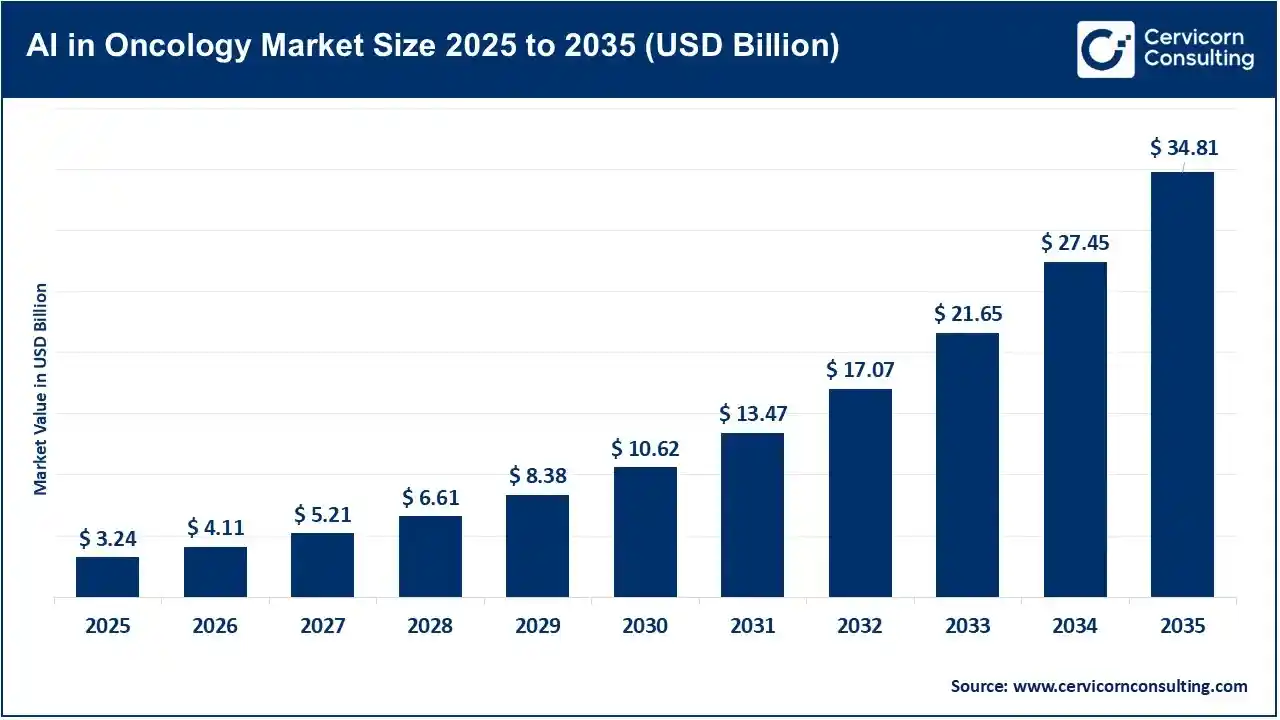
The growth of the AI in oncology market is primarily driven by the increasing global cancer burden and the urgent need for earlier, faster, and more accurate diagnosis. According to the U.S. National Cancer Institute (NCI), approximately 2.04 million new cancer cases and 618,120 cancer-related deaths are expected in the United States in 2025 alone, while the number of cancer survivors is projected to increase from 18.1 million in 2022 to 26 million by 2040. As healthcare providers face growing diagnostic workloads, AI-powered solutions are being increasingly deployed for medical imaging, digital pathology, genomics, and predictive analytics to improve diagnostic accuracy and reduce time to treatment. AI algorithms can rapidly analyze large volumes of imaging and clinical data, enabling earlier cancer detection and more personalized treatment planning, which is accelerating adoption across hospitals, cancer centers, and diagnostic laboratories.
Another major growth factor is the rapid advancement of precision oncology supported by favorable regulatory initiatives, expanding clinical validation, and increasing investments in AI-enabled drug development. The U.S. FDA established its Oncology Artificial Intelligence Program to promote the safe integration of AI into oncology drug development and regulatory review, encouraging broader industry adoption. Simultaneously, AI is transforming pathology, radiology, biomarker discovery, clinical trial matching, and treatment response prediction by integrating multimodal datasets such as medical images, genomic profiles, and electronic health records. Government agencies and research organizations are also investing in AI benchmark development to improve the reliability and clinical validation of AI models, further strengthening confidence among healthcare providers and pharmaceutical companies. These technological advancements, combined with the growing availability of cancer datasets and high-performance computing infrastructure, continue to drive the expansion of AI across the oncology care continuum.
Report Highlights
- North America led the AI in Oncology market with 42.8% share, driven by advanced healthcare infrastructure, precision oncology adoption, and strong government AI investments.
- Software dominated the component segment with 68.4% market share, supported by widespread adoption of AI-powered imaging, pathology, and clinical decision support platforms.
- Cloud-based deployment accounted for 56.8% market share, owing to scalable computing, secure data management, and growing cloud-enabled oncology AI applications.
- Machine Learning & Deep Learning held 46.9% market share, driven by extensive use in cancer detection, predictive analytics, personalized treatment, and diagnostics.
- Breast Cancer represented 28.8% market share, supported by increasing AI-assisted mammography screening, digital imaging adoption, and early cancer detection initiatives globally.
- Medical Imaging & Diagnostics captured 30.9% market share, fueled by rising adoption of AI for radiology, pathology, and automated cancer diagnosis workflows.
- Hospitals & Cancer Centers dominated with 52.6% market share, driven by increasing implementation of AI across diagnosis, treatment planning, and patient management.
What is AI in Oncology?
Artificial Intelligence (AI) in oncology refers to the application of advanced technologies such as machine learning, deep learning, computer vision, and natural language processing to improve cancer prevention, detection, diagnosis, treatment planning, drug discovery, and patient monitoring. AI systems analyze vast volumes of medical images, pathology slides, genomic data, electronic health records, and clinical trial information to identify cancer patterns, predict treatment responses, support precision medicine, and assist clinicians in making faster and more accurate decisions. By enhancing diagnostic accuracy, optimizing personalized therapies, and accelerating oncology research, AI is becoming an integral component of modern cancer care across hospitals, diagnostic laboratories, and pharmaceutical companies.
Recent Milestones
| Date |
Organization |
Milestone |
Market Significance |
| May 2026 |
Artera, Inc. |
The FDA granted 510(k) clearance to ArteraAI Breast, an AI-powered digital pathology software for breast cancer prognosis. |
Strengthened the commercialization of AI-based pathology tools for breast cancer risk assessment and personalized treatment decisions. |
| January 2026 |
AstraZeneca |
AstraZeneca acquired Modella AI to integrate foundation AI models into oncology drug discovery, biomarker identification, and clinical development. |
Expanded the use of generative AI in precision oncology and accelerated AI-driven drug development pipelines. |
| May 2025 |
U.S. FDA |
The FDA completed its first AI-assisted scientific review pilot and announced agency-wide deployment of AI tools for regulatory reviews. |
Increased confidence in AI adoption across oncology research and is expected to accelerate evaluation of innovative cancer therapies. |
| May 2025 |
Roche |
Roche received FDA Breakthrough Device Designation for its AI-driven digital pathology companion diagnostic for non-small cell lung cancer (NSCLC). |
Reinforced the growing role of AI-powered companion diagnostics in precision oncology and targeted therapy selection. |
AI in Oncology Market Dynamics
Market Driver
1. Rising Global Cancer Burden and Demand for Early Diagnosis
The increasing incidence of cancer worldwide is a primary driver of the AI in oncology market. According to the World Health Organization (WHO), there were 20.6 million new cancer cases and nearly 10 million cancer deaths annually, with global cases projected to reach almost 35 million by 2050. This growing disease burden is creating significant demand for AI-powered diagnostic tools that can improve early cancer detection, pathology analysis, radiology interpretation, and personalized treatment planning, enabling healthcare providers to manage larger patient volumes more efficiently.
2. Expanding Adoption of AI in Precision Oncology and Drug Development
The rapid integration of AI into precision oncology, biomarker discovery, and oncology drug development is accelerating market growth. The U.S. FDA established its Oncology Artificial Intelligence Program to support AI-enabled regulatory science and drug development, reflecting increasing confidence in AI applications. AI is now widely used to analyze multimodal datasets including genomic, imaging, pathology, and clinical information, helping clinicians improve treatment selection while reducing development timelines for targeted cancer therapies and companion diagnostics.
Market Restraint
1. Limited Availability of High-Quality and Standardized Clinical Data
AI model performance depends heavily on access to diverse, high-quality clinical datasets, yet fragmented healthcare systems and inconsistent data standards remain major obstacles. Many hospitals store imaging, pathology, genomic, and electronic health record data in incompatible formats, limiting algorithm generalization across institutions. The lack of standardized, annotated oncology datasets increases model bias and validation costs, slowing regulatory approvals and reducing clinician confidence in deploying AI solutions across routine cancer care and multicenter healthcare networks.
2. Regulatory, Ethical, and Explainability Challenges
The deployment of AI in oncology requires rigorous clinical validation, regulatory compliance, and transparent decision-making before widespread adoption. Many deep learning algorithms operate as "black-box" systems, making their predictions difficult for clinicians to interpret. Since oncology treatment decisions directly affect patient survival, healthcare providers demand explainable AI supported by extensive clinical evidence. These stringent regulatory requirements increase development costs and extend commercialization timelines despite continuous technological progress.
Market Opportunity
1. Growing Adoption of Digital Pathology and AI-Based Companion Diagnostics
The rapid digitization of pathology laboratories and increasing use of companion diagnostics present substantial opportunities for AI vendors. AI algorithms can identify subtle tumor characteristics, quantify biomarkers, and support personalized therapy selection with greater consistency than conventional manual assessment. Rising adoption of whole-slide imaging, molecular diagnostics, and precision medicine initiatives by hospitals, pharmaceutical companies, and research institutions is creating strong demand for AI platforms capable of improving diagnostic efficiency and accelerating targeted cancer treatment decisions.
2. Expanding AI Adoption in Emerging Healthcare Markets
Emerging economies across Asia-Pacific, Latin America, and the Middle East offer significant growth potential as governments invest in digital health infrastructure and cancer screening programs. According to WHO, Asia accounted for over 50% of global cancer cases in 2024, highlighting the need for scalable diagnostic technologies. Cloud-based AI solutions can help address shortages of oncologists and pathologists by improving diagnostic accuracy, supporting remote consultations, and enabling more efficient cancer care delivery in underserved regions.
Market Challenge
1. Shortage of Skilled AI and Oncology Professionals
Successful implementation of AI requires multidisciplinary expertise spanning oncology, pathology, radiology, data science, and clinical informatics. However, healthcare systems face shortages of both cancer specialists and AI professionals capable of deploying and maintaining advanced analytical platforms. A recent global assessment projects a 100 million healthcare workforce shortfall by 2050, including major shortages in diagnostic personnel, limiting the pace of AI implementation despite increasing technological availability.
2. Integration with Existing Clinical Workflows and IT Infrastructure
Integrating AI platforms into existing hospital information systems, imaging platforms, pathology workflows, and electronic health records remains a significant operational challenge. Many healthcare organizations continue to rely on legacy IT infrastructure that lacks interoperability with modern AI applications. Achieving seamless workflow integration requires substantial investments in software modernization, cybersecurity, clinician training, and interoperability standards, slowing enterprise-wide adoption even as AI capabilities continue to improve.
Regional Analysis
The AI in oncology market is segmented by region into North America, Europe, Asia-Pacific, Latin America, and LAMEA. Here is a brief overview of each region:
Why does North America dominates the AI in oncology market?
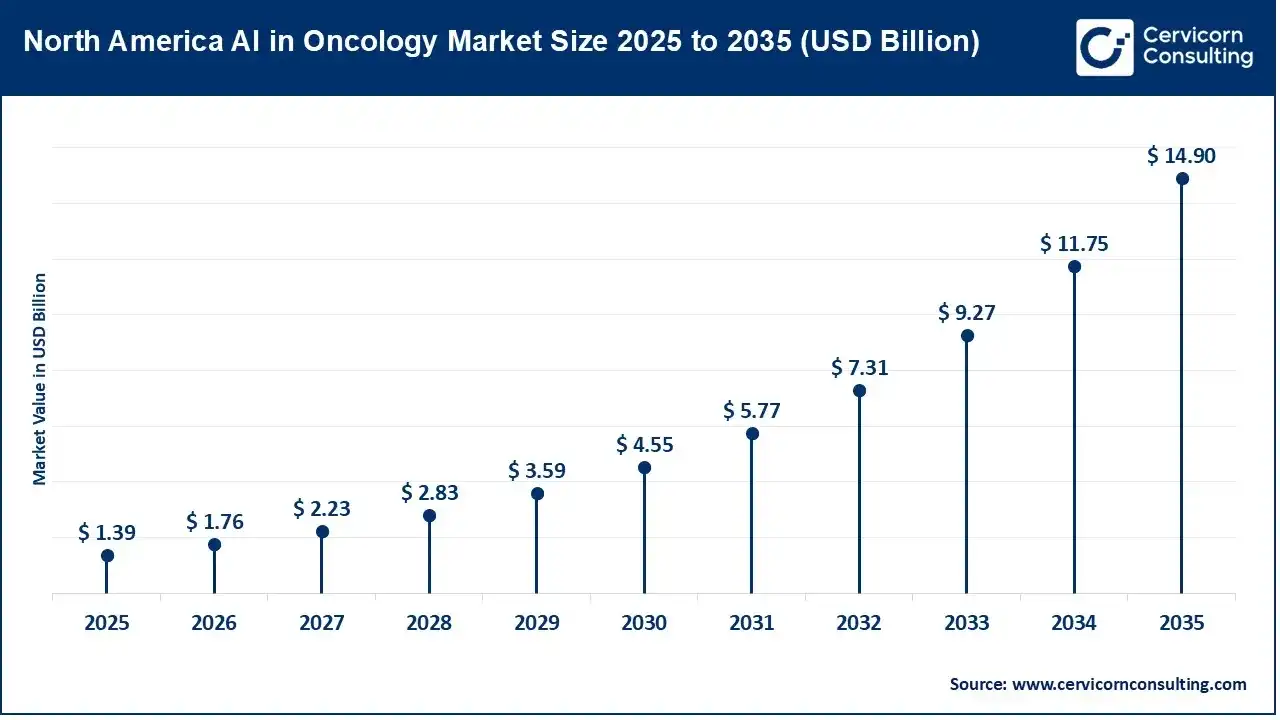
The North America AI in oncology market size was valued at USD 1.39 billion in 2025 and is expected to record USD 14.90 billion by 2035. North America dominates the market owing to its advanced healthcare infrastructure, widespread adoption of artificial intelligence in clinical practice, strong presence of leading AI and medical technology companies, and substantial investments in precision oncology. The region benefits from a highly developed digital health ecosystem, extensive implementation of electronic health records, and growing use of AI-powered radiology, pathology, genomics, and clinical decision support systems. Government agencies including the U.S. National Cancer Institute (NCI), National Institutes of Health (NIH), and the U.S. Food and Drug Administration (FDA) continue supporting AI innovation through research funding, regulatory initiatives, and clinical validation programs. Increasing collaborations among healthcare providers, biotechnology companies, pharmaceutical firms, and AI developers are accelerating the deployment of AI across cancer screening, diagnosis, treatment planning, drug discovery, and personalized medicine, reinforcing North America's leadership in the global AI in oncology market.
United States: Precision Oncology Leadership, AI-Driven Cancer Diagnostics, and Strong Federal Research Investments Drive Market Growth
- According to the National Cancer Institute (NCI), the United States is expected to record approximately 2.04 million new cancer cases and 618,120 cancer-related deaths in 2025, creating significant demand for AI-powered cancer screening, imaging, pathology, and precision oncology solutions.
- The U.S. Food and Drug Administration (FDA) established the Oncology Artificial Intelligence Program, supporting the evaluation and responsible adoption of AI technologies in oncology drug development, clinical research, and regulatory science, accelerating commercialization of AI-enabled cancer solutions.
Canada: National AI Leadership, Expanding Digital Health Infrastructure, and Growing Precision Medicine Programs Support Market Expansion
- Canada became the first country to introduce a national Artificial Intelligence Strategy and continues expanding AI adoption through the Pan-Canadian Artificial Intelligence Strategy, supporting research, commercialization, and healthcare innovation, including oncology applications.
- The Canadian Cancer Society estimates that 247,100 Canadians were diagnosed with cancer in 2024, increasing the need for AI-assisted diagnostics, digital pathology, radiology, and personalized treatment planning across the country's healthcare system.
Why is Asia-Pacific witnessing the fastest growth in the AI in oncology market?
The Asia-Pacific AI in oncology market size was estimated USD 1.02 billion in 2025 and is predicted to surpass around USD 11 billion by 2035. The Asia-Pacific AI in oncology market is witnessing the fastest growth, driven by the region's rapidly increasing cancer incidence, expanding healthcare digitization, and rising investments in artificial intelligence and precision medicine. Countries including China, Japan, South Korea, India, and Australia are accelerating the adoption of AI-powered medical imaging, digital pathology, genomic analysis, and clinical decision support systems to improve early cancer detection and treatment outcomes. Government-backed AI strategies, increasing healthcare expenditure, expanding electronic health record adoption, and collaborations between hospitals, research institutes, and technology companies are fostering innovation across oncology. The growing availability of cloud computing infrastructure, large patient datasets, and national cancer control programs further supports the deployment of AI solutions throughout the region, positioning Asia-Pacific as the fastest-growing market for AI in oncology.
China: National AI Strategy, Expanding Cancer Care Infrastructure, and Large Clinical Data Ecosystem Drive Market Growth
- According to the International Agency for Research on Cancer (IARC), China accounts for approximately 4.8 million new cancer cases annually, the highest globally, creating substantial demand for AI-powered cancer screening, medical imaging, pathology, and precision oncology solutions.
- Under the New Generation Artificial Intelligence Development Plan, China continues investing heavily in AI innovation across healthcare, encouraging the integration of artificial intelligence into medical imaging, hospital digitalization, and cancer diagnosis while strengthening collaboration between technology companies and healthcare providers.
Japan: Advanced Medical Imaging, Precision Medicine Programs, and AI Healthcare Innovation Accelerate Market Expansion
- Japan reports approximately one million new cancer cases every year, making cancer the country's leading cause of death and driving strong demand for AI-assisted early diagnosis, radiology, pathology, and personalized cancer treatment.
- The Japanese government is advancing healthcare digitalization through its Society 5.0 initiative and national AI strategy, promoting the adoption of artificial intelligence, electronic health records, and data-driven healthcare across hospitals and research institutions.
Why Europe holds a significant share in the AI in oncology market?
The Europe AI in oncology market size was accounted for USD 0.63 billion in 2025 and is forecasted to grow around USD 6.75 billion by 2035. Europe holds a significant share, due to its well-established healthcare systems, robust cancer research ecosystem, and increasing adoption of artificial intelligence across medical imaging, digital pathology, and precision oncology. The region benefits from coordinated initiatives under the European Beating Cancer Plan, substantial investments in genomics and digital health, and growing collaboration among hospitals, research institutes, pharmaceutical companies, and AI developers. The implementation of the European Health Data Space (EHDS) and increasing use of AI-enabled clinical decision support systems are facilitating secure health data sharing and accelerating innovation in cancer diagnosis and treatment. Rising demand for personalized medicine, supportive regulatory frameworks for trustworthy AI, and expanding deployment of AI-powered imaging and pathology platforms continue to strengthen Europe's position in the global AI in oncology market.
Germany: Strong Cancer Research Infrastructure, AI-Enabled Diagnostics, and Digital Healthcare Investments Drive Market Growth
- Germany records approximately 500,000 new cancer cases annually, making oncology one of the country's highest healthcare priorities and driving increasing adoption of AI for medical imaging, pathology, and precision cancer diagnosis.
- Through the German National Decade Against Cancer and the Digital Healthcare Act (DVG), Germany is expanding investments in digital health technologies, electronic health records, and AI-assisted clinical decision support to improve cancer detection and treatment outcomes.
United Kingdom: NHS AI Adoption, National Genomics Programs, and Cancer Screening Innovation Accelerate Market Expansion
- The National Health Service (NHS) continues integrating AI into radiology, pathology, and cancer screening programs to reduce diagnostic waiting times and improve early cancer detection across the country.
- According to Cancer Research UK, there are approximately 385,000 new cancer cases diagnosed each year in the UK, creating sustained demand for AI-powered diagnostic imaging, digital pathology, and precision oncology solutions.
AI in Oncology Market Share, By Region, 2025 (%)
| Region |
Revenue Share, 2025 (%) |
| North America |
42.8% |
| Asia-Pacific |
31.6% |
| Europe |
19.4% |
| LAMEA (Latin America, Middle East & Africa) |
6.2% |
Why is LAMEA experiencing steady growth in the AI in oncology market?
The LAMEA AI in oncology market was valued at USD 0.20 billion in 2025 and is anticipated to be reach around USD 2.16 billion by 2035. The LAMEA AI in oncology market is experiencing steady growth, supported by increasing cancer incidence, government-led healthcare modernization, and expanding adoption of artificial intelligence in medical imaging and diagnostics. Countries across the region are investing in digital health infrastructure, electronic health records, telemedicine, and AI-assisted clinical decision support to address shortages of oncology specialists and improve early cancer detection. Growing partnerships between governments, healthcare providers, academic institutions, and global technology companies are accelerating the implementation of AI-powered oncology solutions. Rising awareness of precision medicine, expanding access to advanced diagnostic technologies, and national cancer control strategies are further strengthening market development across the LAMEA region.
Brazil: Rising Cancer Burden, National Digital Health Strategy, and Expanding Oncology Infrastructure Drive Market Growth
- According to Brazil's National Cancer Institute (INCA), the country is expected to record approximately 704,000 new cancer cases annually during 2023–2025, increasing demand for AI-powered cancer screening, diagnostic imaging, pathology, and precision oncology solutions.
- Brazil continues implementing its National Digital Health Strategy (2020–2028) to strengthen healthcare interoperability, electronic health records, and digital healthcare services, creating favorable conditions for AI integration across oncology care and hospital networks.
Saudi Arabia: Vision 2030 Healthcare Transformation, AI Investments, and Smart Hospital Development Accelerate Market Expansion
- Under Saudi Vision 2030, the government is investing heavily in healthcare digitalization, artificial intelligence, and smart hospital infrastructure to improve cancer diagnosis, precision medicine, and patient outcomes across the Kingdom.
- The Saudi Data and Artificial Intelligence Authority (SDAIA) and the Ministry of Health are promoting AI adoption through national digital health initiatives, supporting the integration of AI into medical imaging, pathology, and clinical decision support systems for oncology.
AI in Oncology Market Segmental Analysis
The AI in oncology market is segmented into component, deployment, technology, cancer type, application, end user, and geography.
Component Analysis
The software segment dominates the AI in oncology market due to its central role in medical image analysis, digital pathology, clinical decision support, radiomics, and predictive analytics. AI software platforms enable healthcare providers to process large volumes of imaging, genomic, and clinical data with greater speed and diagnostic accuracy than conventional methods. Continuous advancements in machine learning algorithms, cloud-based analytics, and AI-powered workflow automation, coupled with increasing regulatory approvals for clinical AI software, have strengthened software's leadership across hospitals, cancer centers, and pharmaceutical research organizations.
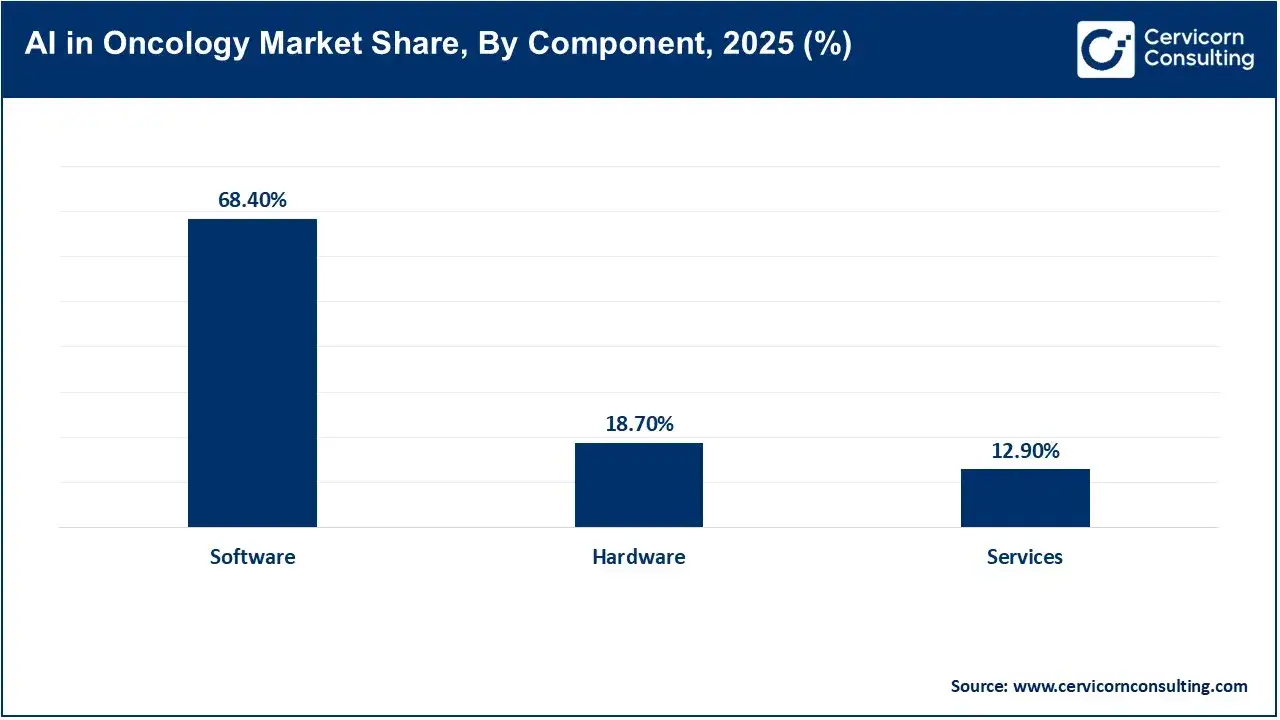
The services segment is expected to register the fastest growth as healthcare providers increasingly require AI implementation, system integration, model validation, training, consulting, and maintenance services. Hospitals and research institutions often lack in-house AI expertise, creating strong demand for specialized deployment and managed services. Growing adoption of enterprise AI platforms, increasing investments in digital transformation, and the need for continuous algorithm updates and regulatory compliance are accelerating the expansion of professional and managed AI services across oncology care.
Deployment Analysis
The cloud-based deployment segment dominates the market owing to its scalability, cost efficiency, and ability to process massive oncology datasets remotely. Cloud platforms support real-time collaboration between hospitals, diagnostic laboratories, and research organizations while enabling continuous AI model updates without extensive local infrastructure. The increasing use of cloud computing for medical imaging, genomic analysis, and AI-assisted clinical workflows has significantly accelerated adoption, particularly among multi-site healthcare providers seeking flexible and secure data management solutions.
AI in Oncology Market, By Deployment, 2025 (%)
| Deployment |
Revenue Share, 2025 (%) |
| Cloud-based |
56.8% |
| On-premise |
29.6% |
| Hybrid |
13.6% |
The hybrid deployment segment is projected to witness the fastest growth as healthcare organizations seek to balance cloud scalability with on-premise security and regulatory compliance. Hybrid architectures allow sensitive patient data to remain within hospital infrastructure while leveraging cloud resources for advanced AI model training and analytics. Increasing cybersecurity concerns, evolving healthcare regulations, and growing demand for flexible deployment strategies are encouraging hospitals and pharmaceutical companies to adopt hybrid AI environments for oncology applications.
Technology Analysis
Machine Learning & Deep Learning represent the largest technology segment because they form the foundation of modern AI applications in oncology. These algorithms enable automated tumor detection, cancer classification, pathology image interpretation, treatment response prediction, and biomarker discovery. Their ability to continuously improve through exposure to large clinical datasets has significantly enhanced diagnostic precision and personalized treatment planning, making machine learning the core technology adopted by healthcare providers, research institutes, and pharmaceutical companies.
AI in Oncology Market, By Technology, 2025 (%)
| Technology |
Revenue Share, 2025 (%) |
| Machine Learning & Deep Learning |
46.9% |
| Computer Vision |
22.4% |
| Natural Language Processing (NLP) |
13.5% |
| Predictive Analytics |
10.6% |
| Others |
6.6% |
The Computer Vision segment is anticipated to experience the fastest growth due to increasing adoption of AI-assisted medical imaging and digital pathology. Advanced computer vision algorithms accurately analyze CT, MRI, PET, mammography, and whole-slide pathology images, helping clinicians detect tumors earlier and improve diagnostic consistency. Rapid digitization of pathology laboratories, expanding imaging datasets, and growing regulatory approvals for AI-powered imaging software continue to accelerate adoption across oncology diagnostics and precision medicine applications.
Cancer Type Analysis
Breast cancer dominates the AI in oncology market owing to its high global prevalence and widespread implementation of AI-assisted mammography screening and diagnostic imaging. AI solutions improve lesion detection, reduce false-positive findings, and support radiologists in identifying cancer at earlier stages. Extensive government screening initiatives, increasing adoption of digital breast imaging technologies, and ongoing development of AI-powered diagnostic tools have further strengthened the leadership of breast cancer applications within oncology AI solutions.
AI in Oncology Market, By Cancer Type, 2025 (%)
| Cancer Type |
Revenue Share, 2025 (%) |
| Breast Cancer |
28.8% |
| Lung Cancer |
21.4% |
| Colorectal Cancer |
12.6% |
| Prostate Cancer |
11.8% |
| Hematologic Cancers (Leukemia & Lymphoma) |
9.3% |
| Liver Cancer |
6.7% |
| Brain Cancer |
4.5% |
| Others |
4.9% |
Lung cancer is projected to be the fastest-growing segment due to rising adoption of AI for low-dose CT screening, pulmonary nodule detection, and treatment planning. Early identification of lung cancer significantly improves patient survival, increasing demand for highly accurate AI-powered imaging solutions. Expanding national lung cancer screening programs, advances in deep learning algorithms, and growing integration of AI into thoracic radiology workflows are driving rapid growth in this segment.
Application Analysis
Medical Imaging & Diagnostics holds the largest market share because imaging remains the primary method for cancer detection, staging, and treatment monitoring. AI significantly improves the interpretation of CT, MRI, PET, mammography, and pathology images while reducing diagnostic variability and reporting time. Continuous improvements in image recognition algorithms, increasing imaging volumes, and growing regulatory approvals for AI-enabled diagnostic software have reinforced this segment's dominance across hospitals and diagnostic imaging centers.
AI in Oncology Market, By Application, 2025 (%)
| Application |
Revenue Share, 2025 (%) |
| Medical Imaging & Diagnostics |
30.9% |
| Cancer Screening & Early Detection |
18.5% |
| Treatment Planning & Personalized Medicine |
14.2% |
| Drug Discovery & Development |
10.8% |
| Digital Pathology |
9.1% |
| Clinical Decision Support |
6.7% |
| Radiation Oncology |
4.2% |
| Clinical Trial Matching & Patient Stratification |
2.8% |
| Patient Monitoring & Outcome Prediction |
1.8% |
| Others |
1.0% |
The Drug Discovery & Development segment is expected to witness the fastest growth as pharmaceutical companies increasingly use AI to identify therapeutic targets, discover biomarkers, optimize clinical trials, and accelerate oncology drug development. AI substantially reduces research timelines by rapidly analyzing genomic, molecular, and clinical datasets while improving candidate selection. Rising investments in precision oncology and strategic collaborations between biotechnology companies and AI developers continue to expand this high-growth application area.
End User Analysis
Hospitals & Cancer Centers account for the largest market share due to their extensive use of AI across cancer diagnosis, treatment planning, pathology, radiology, radiation oncology, and patient management. These institutions generate large volumes of multimodal clinical data that enable AI-assisted decision-making and personalized care. Increasing investments in digital healthcare infrastructure, integrated oncology information systems, and advanced imaging technologies continue to strengthen AI adoption across major healthcare facilities worldwide.
AI in Oncology Market, By End User, 2025 (%)
| End User |
Revenue Share, 2025 (%) |
| Hospitals & Cancer Centers |
52.6% |
| Pharmaceutical & Biotechnology Companies |
17.8% |
| Diagnostic Laboratories |
15.4% |
| Academic & Research Institutes |
8.4% |
| Contract Research Organizations (CROs) |
3.6% |
| Others |
2.2% |
Pharmaceutical & Biotechnology Companies are expected to record the fastest growth as AI becomes increasingly important in oncology drug discovery, biomarker identification, precision medicine, and clinical trial optimization. These organizations leverage AI to analyze genomic and molecular datasets, improve patient stratification, and enhance treatment response prediction. Growing investments in AI-driven research, expanding partnerships with technology providers, and increasing focus on targeted cancer therapies are accelerating adoption throughout the pharmaceutical industry.
AI in Oncology Market Top Companies
Recent Developments
- In May 2026, Tempus AI, Inc. launched the next-generation Lens platform, expanding its agentic AI capabilities for oncology drug development by integrating multimodal clinical data, oncology foundation models, and AI-driven scientific workflows. The platform accelerates biomarker discovery, clinical trial optimization, and precision oncology research across pharmaceutical and biotechnology companies.
- In June 2025, PathAI, Inc. expanded collaborations with leading biopharmaceutical companies to advance AI-powered digital pathology and biomarker discovery, strengthening precision oncology diagnostics and accelerating companion diagnostic development for cancer clinical trials.
- In March 2025, SOPHiA GENETICS SA enhanced its cloud-based multimodal analytics platform by integrating genomic and clinical data interpretation capabilities for oncology, enabling faster precision medicine decisions and improving cancer biomarker analysis across hospital networks.
Market Segmentation
By Component
- Software
- Hardware
- Services
By Deployment Mode
- Cloud-based
- On-premise
- Hybrid
By Technology
- Machine Learning & Deep Learning
- Natural Language Processing (NLP)
- Computer Vision
- Predictive Analytics
- Others
By Cancer Type
- Breast Cancer
- Lung Cancer
- Prostate Cancer
- Colorectal Cancer
- Brain Cancer
- Hematologic Cancers (Leukemia & Lymphoma)
- Liver Cancer
- Others
By Application
- Cancer Screening & Early Detection
- Medical Imaging & Diagnostics
- Digital Pathology
- Radiation Oncology
- Treatment Planning & Personalized Medicine
- Clinical Decision Support
- Drug Discovery & Development
- Clinical Trial Matching & Patient Stratification
- Patient Monitoring & Outcome Prediction
- Others
By End User
- Hospitals & Cancer Centers
- Diagnostic Laboratories
- Pharmaceutical & Biotechnology Companies
- Academic & Research Institutes
- Contract Research Organizations (CROs)
- Others
By Geography
- North America
- Europe
- Asia-Pacific
- LAMEA