Specialty Care Market Size and Growth 2026 to 2035
The global specialty care market size was valued at USD 176.82 billion in 2025 and is expected to be worth around USD 562.78 billion by 2035, exhibiting a compound annual growth rate (CAGR) of 12.8% over the forecast period from 2026 to 2035.
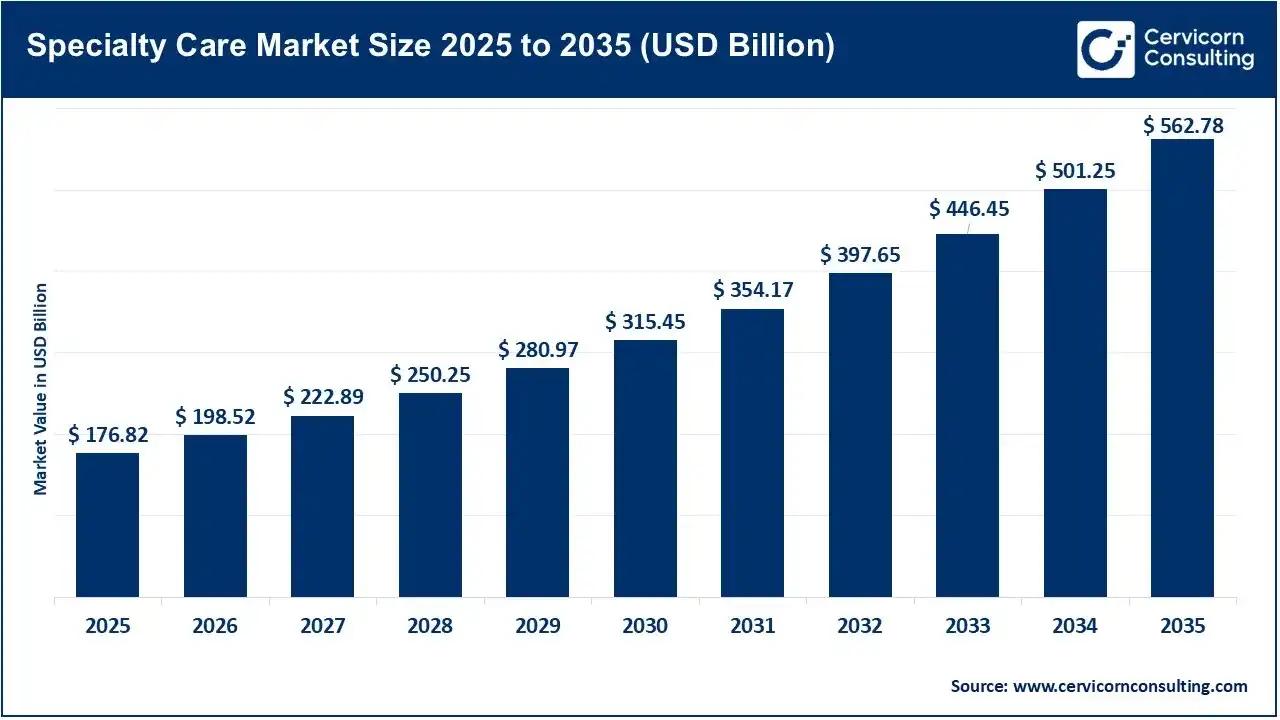
The specialty care market is primarily driven by the rising global burden of chronic diseases and the rapidly aging population, both of which are increasing the need for specialist consultations, advanced diagnostics, and long-term disease management. According to the World Health Organization (WHO), noncommunicable diseases (NCDs) caused 43 million deaths in 2021, accounting for 75% of all non-pandemic-related deaths worldwide, with cardiovascular diseases responsible for 19 million deaths and cancers for 10 million deaths. Simultaneously, the global population aged 60 years and above is projected to increase from 1.1 billion in 2023 to 1.4 billion by 2030, significantly expanding the patient pool requiring specialized medical care in cardiology, oncology, neurology, nephrology, and other advanced clinical disciplines.
Another major growth factor is the increasing complexity of patient care and the expansion of specialized healthcare infrastructure supported by digital health technologies. OECD data indicates that more than one-third of adults across member countries live with a long-standing health condition, while 82% of primary care users aged 45 years and older have at least one chronic disease and 52% live with two or more chronic conditions, driving demand for multidisciplinary specialty care. Furthermore, the OECD projects that the annual number of new NCD cases will increase by 31% between 2026 and 2050, while multimorbidity prevalence is expected to rise by 75%, encouraging healthcare providers to invest in specialty clinics, integrated care pathways, tele-specialty services, precision medicine, and AI-enabled clinical decision support to improve patient outcomes and operational efficiency.
Report Highlights
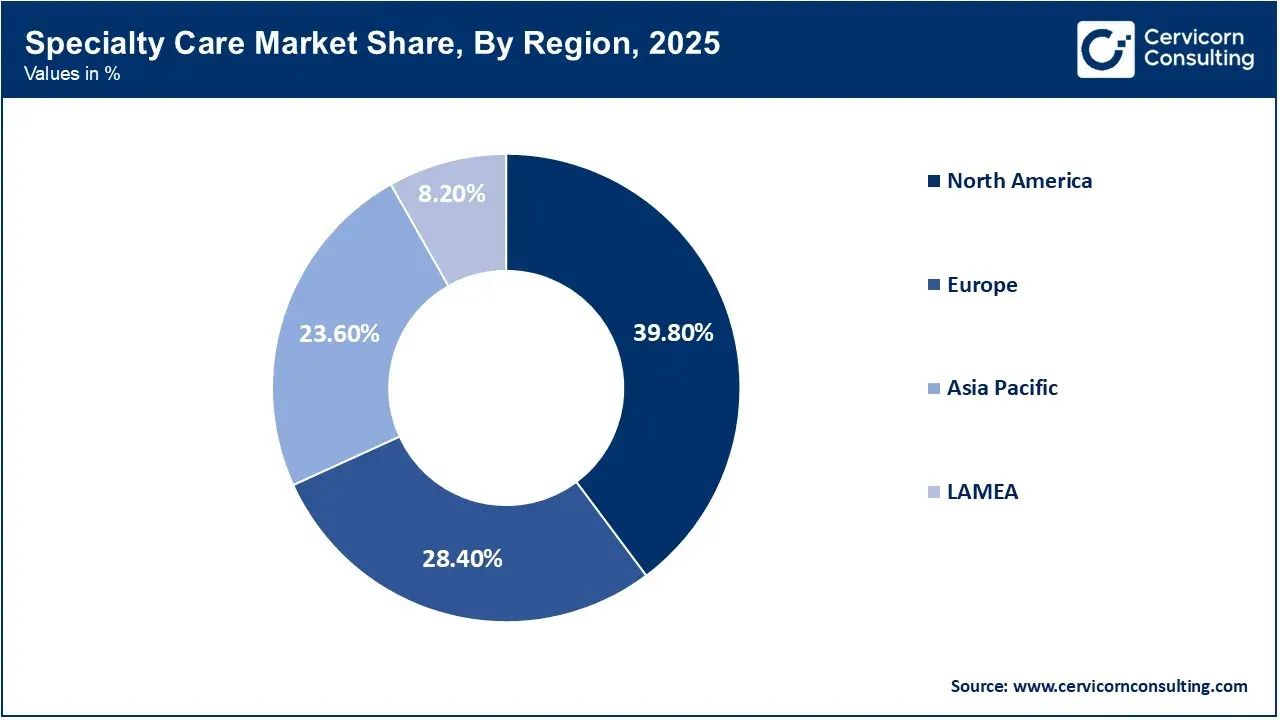
- North America captured an estimated 39.8% market share, supported by advanced healthcare infrastructure, high healthcare expenditure, and extensive specialty physician networks.
- Cardiology dominated the specialty care market with an estimated 18.7% share, driven by rising cardiovascular disease prevalence and increasing demand for specialized cardiac treatments.
- Oncology is the fastest-growing specialty segment, supported by increasing cancer incidence, precision medicine adoption, and expanding investments in comprehensive cancer care centers.
- Hospital-Based specialty care accounted for an estimated 46.9% market share, owing to advanced infrastructure, multidisciplinary expertise, and availability of complex treatment services.
- Diagnosis & Consultation held an estimated 34.2% market share, reflecting increasing referrals, advanced diagnostic technologies, and growing demand for early disease detection.
What is Specialty Care?
Specialty care refers to healthcare services provided by medical professionals with advanced expertise in a specific field of medicine for diagnosing, treating, and managing complex or chronic health conditions. These services are typically delivered by specialists such as cardiologists, oncologists, neurologists, orthopedic surgeons, nephrologists, gastroenterologists, and pulmonologists in hospitals, specialty clinics, ambulatory care centers, or through telehealth platforms. Patients are generally referred to specialty care providers by primary care physicians when they require advanced diagnostics, specialized procedures, or long-term disease management beyond routine medical care.
Recent Milestones
| Date |
Company |
Recent Milestone |
Market Impact |
| August 2026 |
KKR & Medicover |
KKR acquired Medicover's India hospitals business for USD 1.39 billion, strengthening investment in specialty hospital networks across India. |
Accelerates consolidation and expansion of specialty healthcare infrastructure. |
| July 2026 |
Texas Children's Hospital |
Completed a USD 200 million expansion of its Pavilion for Women, increasing high-risk maternal and neonatal specialty care capacity by over 20%. |
Expands advanced specialty services and referral capabilities. |
| July 2026 |
Ram Manohar Lohia Hospital (India) |
Announced commissioning of a INR 400 crore super-specialty block with new specialty clinics and dialysis services. |
Improves access to tertiary and super-specialty healthcare in India. |
| July 2026 |
U.S. News & World Report |
Released the 2026–2027 Best Hospitals rankings, recognizing leading institutions across 14 specialty care disciplines. |
Encourages quality improvement and competition among specialty care providers. |
| January 2026 |
AIIMS Kalyani |
Inaugurated advanced facilities including a Cardiac Cath Lab, Radiation Oncology, Trauma & Emergency Medicine, and digital hospital systems. |
Strengthens public-sector specialty care capacity and advanced treatment access. |
Specialty Care Market Dynamics
Market Drivers
1. Rising Burden of Cancer and Rare Diseases Driving Specialist Demand
The increasing prevalence of cancer, autoimmune disorders, neurological diseases, and other complex conditions is significantly boosting demand for specialty care services. According to the World Health Organization, approximately 20 million new cancer cases and 9.7 million cancer-related deaths were recorded globally in 2022, while nearly 1 in 5 people will develop cancer during their lifetime. The growing need for multidisciplinary treatment, precision diagnostics, and long-term disease management is encouraging healthcare providers to expand specialty hospitals, oncology centers, and advanced clinical services.
2. Growing Healthcare Expenditure and Digital Care Integration
Increasing investments in healthcare infrastructure and digital technologies are strengthening specialty care delivery worldwide. OECD countries spent an average of 9.3% of GDP on healthcare in 2024, while teleconsultations represented approximately 13% of all doctor consultations in 2023, reflecting the rapid integration of virtual specialist services. Investments in electronic health records, AI-assisted diagnostics, remote patient monitoring, and interoperable care platforms are improving access to specialist consultations, enhancing clinical efficiency, and enabling coordinated management of patients with complex medical conditions.
Market Restraints
1. Shortage of Specialist Physicians and Healthcare Workforce
A shortage of trained specialists and healthcare professionals continues to limit timely access to specialty care, particularly in rural and underserved regions. OECD data indicates that only 59% of patients with chronic conditions reported receiving well-coordinated care across healthcare providers, highlighting workforce and care integration gaps. Increasing demand for specialty consultations is outpacing the availability of experienced physicians, resulting in delayed diagnoses, extended referral times, and uneven distribution of specialized medical expertise across healthcare systems.
2. High Out-of-Pocket Costs and Unequal Access
The high cost of specialty consultations, advanced imaging, biologic therapies, and surgical interventions remains a major barrier to patient access. Across 28 OECD countries, around 3.4% of the population reported unmet medical care needs in 2024 due to affordability, waiting times, or geographic barriers. Limited insurance coverage for specialized procedures and high treatment expenses disproportionately affect low-income populations, reducing healthcare utilization and creating disparities in access to advanced specialty services.
Market Opportunities
1. Expansion of Precision Medicine and Personalized Treatment
Rapid advances in genomics, biomarker testing, and precision medicine are creating significant opportunities for specialty care providers. Personalized treatment approaches enable specialists to tailor therapies according to a patient's genetic profile, improving treatment effectiveness while reducing adverse events. Increasing adoption of molecular diagnostics, companion diagnostics, and targeted therapies across oncology, cardiology, and rare disease management is encouraging hospitals and specialty clinics to invest in advanced laboratory capabilities and multidisciplinary clinical programs, supporting higher-quality patient outcomes.
2. Growth of Integrated Specialty Care Networks
Healthcare providers are increasingly developing integrated specialty care networks that connect hospitals, specialty clinics, diagnostic centers, rehabilitation facilities, and telehealth platforms. Coordinated care models improve referral efficiency, reduce duplicate testing, and enhance patient experience across complex treatment pathways. Growing adoption of digital referral systems, remote specialist consultations, and collaborative care programs creates opportunities for healthcare organizations to expand specialty services while improving operational efficiency, continuity of care, and long-term disease management.
Market Challenges
1. Long Waiting Times for Specialist Consultations
Growing patient demand and limited specialist availability continue to create long waiting times for consultations and elective procedures. OECD assessments identify specialist waiting times as a persistent challenge across many healthcare systems, affecting timely diagnosis and treatment for chronic and complex diseases. Delays can lead to disease progression, increased healthcare costs, and poorer clinical outcomes, making capacity expansion and efficient referral management critical priorities for specialty care providers.
2. Fragmented Care Coordination Across Multiple Providers
Patients receiving specialty care often require services from multiple clinicians, hospitals, laboratories, and rehabilitation providers, making care coordination increasingly complex. Poor interoperability between healthcare information systems and inconsistent communication among providers can result in duplicated diagnostics, medication errors, and fragmented treatment pathways. Addressing these coordination challenges requires standardized digital health infrastructure, interoperable electronic medical records, and stronger collaboration across multidisciplinary specialty care teams.
Regional Analysis
The specialty care market is segmented by region into North America, Europe, Asia-Pacific, Latin America, and LAMEA. Here is a brief overview of each region:
Why does North America dominate the specialty care market?
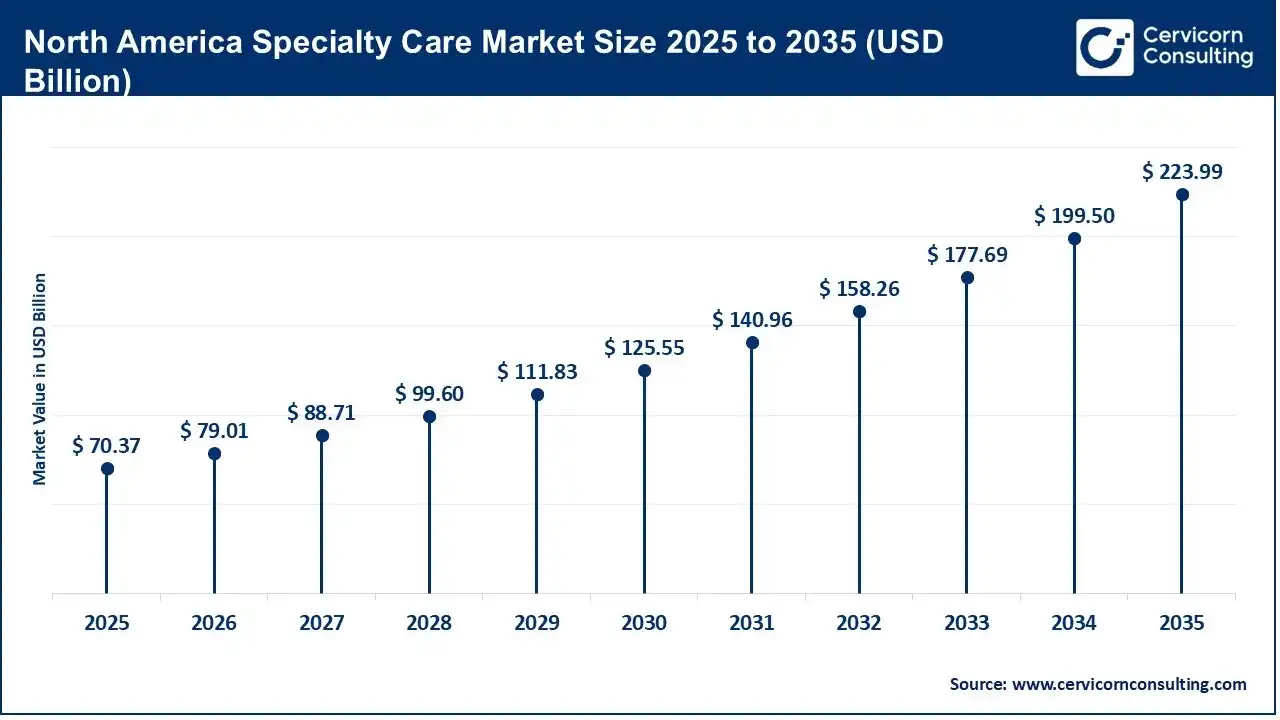
The North America specialty care market size was valued at USD 70.37 billion in 2025 and is forecasted to grow USD 223.99 billion by 2035. North America dominates the market owing to its highly developed healthcare infrastructure, strong network of specialty hospitals and physician groups, widespread adoption of advanced medical technologies, and high healthcare expenditure. The region benefits from extensive availability of specialized services across cardiology, oncology, neurology, orthopedics, gastroenterology, and other clinical disciplines supported by integrated healthcare systems and value-based care models. Rapid adoption of precision medicine, robotic-assisted surgery, AI-enabled diagnostics, digital health platforms, and tele-specialty care continues to improve patient outcomes and operational efficiency. Strong reimbursement frameworks, increasing investments by private healthcare providers, and continuous government support for chronic disease management, medical research, and healthcare innovation further reinforce North America's leadership in the global specialty care market.
United States: Extensive Specialty Healthcare Network, Rising Chronic Disease Burden, and High Healthcare Spending Accelerate Market Growth
- According to the Centers for Disease Control and Prevention (CDC), 6 in 10 U.S. adults live with at least one chronic disease, while 4 in 10 have two or more chronic conditions, significantly increasing demand for specialty services across cardiology, endocrinology, nephrology, pulmonology, oncology, and neurology.
- The Centers for Medicare & Medicaid Services (CMS) reported that U.S. healthcare expenditure reached approximately USD 4.9 trillion in 2023, representing nearly 17.6% of GDP, supporting continued investments in specialty hospitals, ambulatory specialty centers, advanced diagnostics, robotic surgery, and multidisciplinary clinical care.
Canada: Universal Healthcare Coverage, Expanding Specialty Programs, and Digital Health Investments Support Market Expansion
- According to the Canadian Institute for Health Information (CIHI), Canada's total health expenditure is projected to exceed CAD 372 billion in 2024, reflecting continued investments in hospitals, specialty physician services, advanced diagnostics, and digital healthcare infrastructure. The country is also expanding virtual specialty consultations, electronic referral systems, and precision medicine initiatives, strengthening care coordination and improving access to specialist services across urban and remote communities.
Why is Asia-Pacific experiencing the fastest growth in the specialty care market?
The Asia-Pacific specialty care market size was estimated at USD 41.73 billion in 2025 and is expected to hit around USD 562.78 billion by 2035. The Asia-Pacific market is experiencing the fastest growth due to expanding healthcare infrastructure, rising prevalence of chronic and lifestyle-related diseases, increasing healthcare expenditure, and improving access to specialized medical services. Governments across the region are investing heavily in tertiary hospitals, specialty clinics, cancer centers, cardiac institutes, and digital healthcare infrastructure to meet growing demand for advanced medical care. The rapid adoption of telemedicine, AI-assisted diagnostics, robotic surgery, precision medicine, and electronic health records is enhancing specialist care delivery. Growing medical tourism, expanding private healthcare networks, aging populations, and favorable healthcare reforms are further accelerating the development of specialty care services across major Asia-Pacific economies.
China: Expanding Tertiary Healthcare Network, Aging Population, and Healthcare Modernization Drive Market Growth
- China continues to strengthen its specialty care ecosystem through substantial investments in tertiary hospitals, specialty medical centers, and digital healthcare infrastructure. According to the National Bureau of Statistics of China, the country's population aged 65 years and above exceeded 220 million in 2024, creating significant demand for cardiology, oncology, neurology, orthopedics, and geriatric specialty services. Under the Healthy China 2030 strategy, the government is expanding high-quality medical resources, promoting regional medical centers, and accelerating the adoption of AI, telemedicine, and precision medicine to improve access to specialized healthcare across urban and rural regions.
India: Rising Chronic Disease Burden, Healthcare Infrastructure Expansion, and Government Health Initiatives Support Market Expansion
- India is emerging as one of the fastest-growing specialty care markets, supported by increasing investments in multispecialty hospitals, specialty clinics, and advanced diagnostic facilities. According to the Ministry of Health and Family Welfare, the Ayushman Bharat–Pradhan Mantri Jan Arogya Yojana (PM-JAY) has authorized over 8 crore hospital admissions since its launch, substantially improving access to tertiary and specialty healthcare services. Simultaneously, the expansion of private hospital chains, increasing adoption of robotic-assisted surgery, tele-specialty consultations, and growing investments in cancer, cardiac, nephrology, and neurology centers are strengthening India's position as a major regional hub for specialty healthcare and medical tourism.
Why does Europe hold a significant share of the specialty care market?
The Europe specialty care market size reached at USD 50.22 billion in 2025 and is projected to hit around USD 159.83 billion by 2035. Europe holds a significant share, owing to its well-established universal healthcare systems, extensive network of specialty hospitals, growing elderly population, and strong focus on high-quality specialized medical services. The region benefits from widespread adoption of advanced diagnostics, minimally invasive procedures, precision medicine, robotic-assisted surgery, and integrated digital health platforms. Government-funded healthcare systems continue investing in cancer centers, cardiovascular institutes, neurological care, and multidisciplinary specialty services to improve patient outcomes. Additionally, cross-border healthcare collaboration, increasing clinical research, and expanding tele-specialty care are strengthening Europe's specialty care ecosystem and supporting long-term market growth.
Germany: Strong Hospital Infrastructure, High Healthcare Spending, and Advanced Specialty Services Drive Market Growth
- Germany remains one of Europe's leading specialty care markets due to its extensive hospital network, highly skilled specialist workforce, and advanced medical technology adoption. According to the Federal Statistical Office (Destatis), healthcare expenditure reached approximately EUR 500 billion in 2023, reflecting continued investments in specialized hospitals, advanced diagnostics, and tertiary care services. Germany is also expanding precision medicine initiatives, robotic-assisted surgery, comprehensive cancer centers, and digital health applications under the Digital Act (Digital-Gesetz), improving access to high-quality specialty care while strengthening coordination between hospitals, specialists, and outpatient providers.
United Kingdom: NHS Modernization, Expanding Specialty Care Capacity, and Digital Health Adoption Support Market Expansion
- The United Kingdom continues strengthening specialty care through ongoing modernization of the National Health Service (NHS), increasing investments in community diagnostic centers, surgical hubs, and specialist treatment facilities. According to NHS England, more than 3.5 million diagnostic tests are performed every month, supporting earlier detection and specialist management of complex diseases. The NHS is also accelerating the adoption of virtual outpatient consultations, electronic referrals, AI-assisted diagnostics, and integrated care systems to reduce waiting times, improve access to specialist services, and enhance care coordination for patients with chronic and complex medical conditions.
LAMEA Specialty Care Market Trends
The LAMEA specialty care market was valued at USD 14.50 billion in 2025 and is anticipated to reach around USD 46.15 billion by 2035. The LAMEA market is witnessing steady growth due to increasing investments in healthcare infrastructure, expanding private hospital networks, and rising demand for specialized treatment of cardiovascular diseases, cancer, diabetes, and neurological disorders. Governments across Latin America, the Middle East, and Africa are strengthening tertiary healthcare facilities, specialty clinics, and digital health ecosystems to improve access to advanced medical care. The growing adoption of telemedicine, AI-assisted diagnostics, robotic surgery, and precision medicine, coupled with increasing medical tourism and healthcare reforms, is further supporting the expansion of specialty care services throughout the region.
Brazil: Universal Healthcare System, Growing Private Hospital Networks, and Rising Chronic Disease Burden Support Market Expansion
- Brazil represents the largest specialty care market in Latin America, supported by its universal healthcare system (SUS) and rapidly expanding private healthcare sector. According to the Brazilian Institute of Geography and Statistics (IBGE), adults aged 60 years and above accounted for approximately 15.6% of Brazil's population in 2024, increasing demand for cardiology, oncology, nephrology, orthopedics, and other specialty services. Continued investments in specialty hospitals, diagnostic imaging centers, telehealth platforms, and public-private healthcare partnerships are improving access to specialized care while supporting the country's growing medical tourism and advanced treatment capabilities.
Saudi Arabia: Vision 2030 Healthcare Transformation and Expanding Specialty Hospital Capacity Drive Market Growth
- Saudi Arabia is rapidly expanding its specialty care sector under the Vision 2030 healthcare transformation program through investments in specialized hospitals, medical cities, and digital health infrastructure. According to the Ministry of Health, the Kingdom had over 500 hospitals by 2024, with continued expansion of specialized cardiac, oncology, neuroscience, and transplant centers. The country is also accelerating healthcare privatization, AI-enabled healthcare solutions, and integrated care models while attracting private investment to improve access to advanced specialty services and reduce dependence on overseas treatment.
Segmental Analysis
The specialty care market is segmented into specialty type, care setting, service type, and geography.
Specialty Type Analysis
Cardiology dominates the specialty care market due to the high global prevalence of cardiovascular diseases (CVDs), which require continuous specialist consultations, diagnostic imaging, interventional procedures, and long-term follow-up care. The World Heart Federation estimates that cardiovascular diseases affect over 620 million people globally, making them the leading cause of morbidity and mortality. Growing adoption of minimally invasive cardiac procedures, remote cardiac monitoring, AI-assisted diagnostics, and dedicated heart centers further strengthens cardiology's leading position within specialty healthcare services.
Specialty Care Market Share, By Specialty Type, 2025 (%)
| Specialty Type |
Revenue Share, 2025 (%) |
| Cardiology |
18.7% |
| Oncology |
16.4% |
| Neurology |
10.3% |
| Orthopedics |
12.8% |
| Gastroenterology |
8.4% |
| Endocrinology |
7.1% |
| Nephrology |
6.2% |
| Pulmonology |
5.8% |
| Dermatology |
5.4% |
| Rheumatology |
3.9% |
| Others |
5.0% |
Oncology is expected to witness the fastest growth owing to rising cancer incidence, expanding precision medicine, and increasing adoption of immunotherapy and targeted therapies. Healthcare providers are investing heavily in comprehensive cancer centers equipped with genomic testing, molecular diagnostics, and multidisciplinary treatment programs. Growing use of personalized medicine, advanced radiotherapy, robotic surgery, and companion diagnostics is transforming cancer care while improving survival outcomes. Increasing clinical trials and rapid approvals of innovative oncology treatments continue to accelerate demand for specialized oncology services worldwide.
Care Setting Analysis
Hospital-based specialty care accounts for the largest market share because hospitals provide comprehensive infrastructure for advanced diagnostics, emergency care, complex surgeries, intensive care, and multidisciplinary specialist collaboration. Tertiary and quaternary hospitals remain the primary destination for managing severe cardiovascular diseases, cancer, neurological disorders, organ transplants, and trauma cases. Their ability to integrate specialized physicians, imaging technologies, laboratories, and critical care units within one facility makes hospital-based specialty care the preferred setting for complex medical treatments.
Specialty Care Market, By Care Setting, 2025 (%)
| Care Setting SegmentCare Setting |
Revenue Share, 2025 (%) |
| Hospital-Based Specialty Care |
46.9% |
| Specialty Clinics |
24.6% |
| Ambulatory Surgery Centers (ASCs) |
11.2% |
| Physician Offices |
9.8% |
| Home-Based Specialty Care |
3.6% |
| Tele-Specialty Care |
3.9% |
Tele-specialty care is projected to be the fastest-growing care setting due to expanding digital health infrastructure and increasing demand for remote specialist consultations. Virtual consultations improve access for patients living in rural and underserved regions while reducing travel time and healthcare costs. The growing integration of telemedicine with wearable monitoring devices, electronic health records, and AI-assisted clinical decision support enables specialists to deliver follow-up care, chronic disease management, and second opinions efficiently, supporting continued expansion of tele-specialty healthcare services.
Service Type Analysis
Diagnosis and consultation represent the largest service segment because every specialty care pathway begins with specialist evaluation, clinical assessment, diagnostic testing, and treatment planning. Rising prevalence of chronic diseases and increasing referrals from primary care physicians continue to drive demand for specialist consultations. Advanced diagnostic technologies including MRI, CT imaging, molecular diagnostics, pathology, and AI-assisted clinical decision support further strengthen this segment by enabling accurate disease detection and personalized treatment planning across multiple medical specialties.
Specialty Care Market, By Service Type, 2025 (%)
| Service Type |
Revenue Share, 2025 (%) |
| Diagnosis & Consultation |
34.2% |
| Surgical Services |
24.8% |
| Chronic Disease Management |
16.7% |
| Diagnostic Imaging & Laboratory Services |
11.5% |
| Rehabilitation & Follow-up Care |
7.1% |
| Preventive & Screening Services |
5.7% |
Chronic disease management is anticipated to experience the fastest growth as healthcare systems increasingly focus on continuous, coordinated care for patients with multiple long-term conditions. Integrated care programs combining specialist consultations, digital monitoring, medication management, rehabilitation, and telehealth services are improving patient outcomes while reducing hospital admissions. The growing emphasis on value-based healthcare, personalized treatment pathways, remote monitoring technologies, and multidisciplinary care teams is significantly expanding demand for specialized chronic disease management services across cardiology, endocrinology, pulmonology, and nephrology.
Specialty Care Market Top Companies
Segments Covered
By Specialty Type
- Cardiology
- Oncology
- Neurology
- Orthopedics
- Gastroenterology
- Endocrinology
- Nephrology
- Pulmonology
- Dermatology
- Rheumatology
- Others
By Care Setting
- Hospital-Based Specialty Care
- Specialty Clinics
- Ambulatory Surgery Centers (ASCs)
- Physician Offices
- Home-Based Specialty Care
- Tele-Specialty Care
By Service Type
- Diagnosis & Consultation
- Surgical Services
- Chronic Disease Management
- Rehabilitation & Follow-up Care
- Diagnostic Imaging & Laboratory Services
- Preventive & Screening Services
By Geography
- North America
- Europe
- Asia-Pacific
- LAMEA