AI in Life Science Market Size and Growth 2026 to 2035
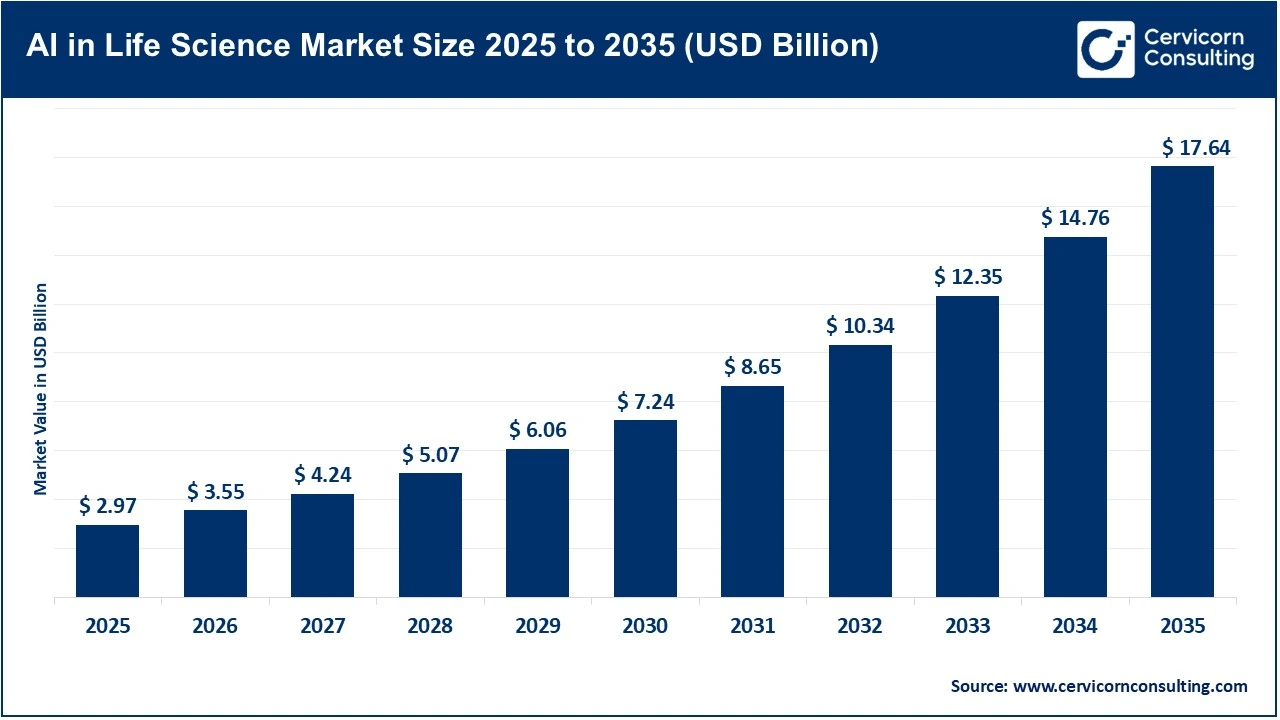
The global AI in life science market size was valued at USD 2.97 billion in 2025 and is expected to surpass around USD 17.64 billion by 2035, exhibiting a compound annual growth rate (CAGR) of 19.5% over the forecast period from 2026 to 2035. The growth of the AI in life sciences market is being strongly driven by the rising need to accelerate drug discovery, clinical trials, and precision medicine while reducing the high costs and long timelines associated with traditional R&D. Pharmaceutical companies increasingly use AI to identify drug targets, predict molecular behavior, and optimize candidate selection, helping reduce failure rates in early-stage development. According to a 2024 industry survey, 81% of organizations are already using AI in at least one drug development program, demonstrating broad adoption across life sciences workflows. In addition, Bain research found that 46% of pharmaceutical companies are using AI to identify disease targets, while 54% have automated biomedical literature review solutions, highlighting how AI is improving research productivity and scientific decision-making.
Another major growth factor is the expanding availability of biological datasets, including genomics, electronic health records, biomarker data, and real-world evidence, which significantly improves AI model accuracy. Growing investments by pharmaceutical and biotech firms in digital transformation are further boosting adoption. Industry studies indicate that 95% of pharmaceutical companies are investing in AI capabilities, and nearly 80% of life sciences professionals are already applying AI in drug discovery activities. AI is also increasingly being deployed to optimize clinical trial recruitment, automate regulatory documentation, and improve diagnostic accuracy, creating measurable efficiency gains across the life sciences value chain.
Report Highlights
- North America dominated the global market with a share of 46.2%, supported by strong pharmaceutical R&D spending, advanced biotechnology ecosystems, FDA-backed AI initiatives, and widespread adoption of AI in drug discovery and precision medicine.
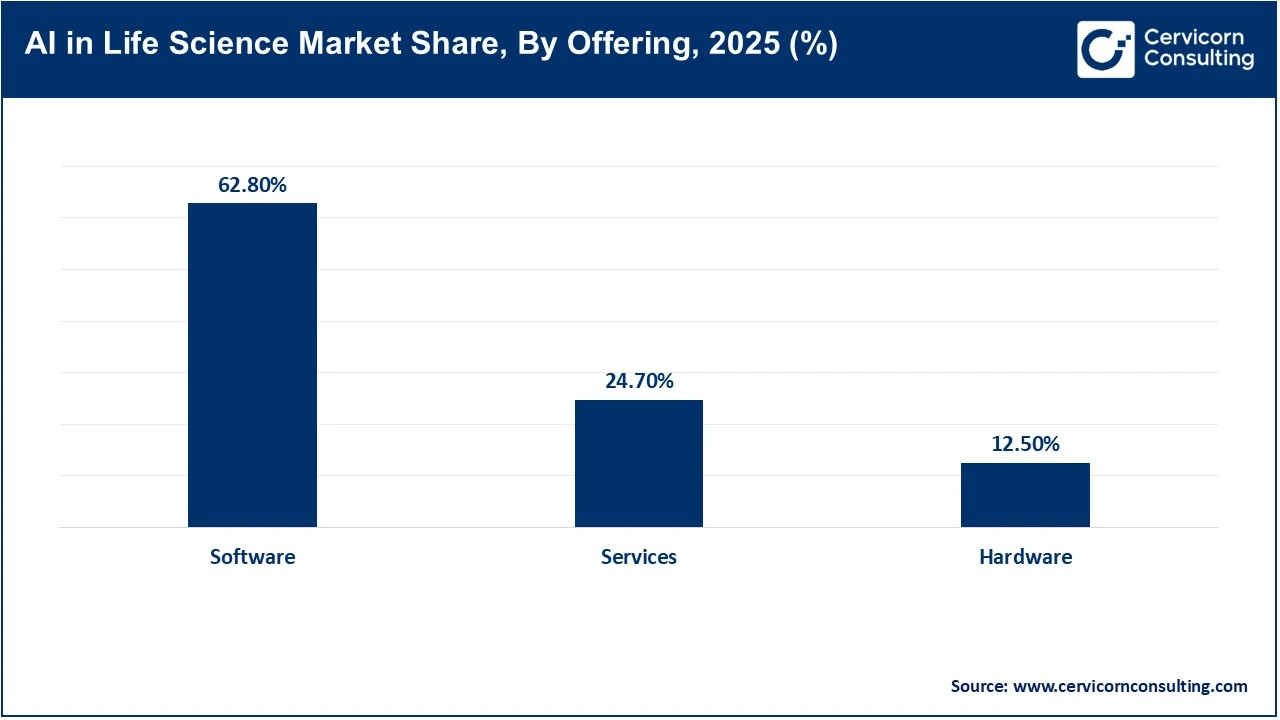
- Software led the offering segment with 62.8% share, owing to extensive deployment of AI platforms for drug discovery, predictive analytics, biomarker identification, and clinical data management.
- Cloud/On-Demand dominated deployment models with 68.4% market share, as life sciences organizations increasingly preferred scalable, cost-efficient, and high-performance computing environments for AI applications.
- Predictive Analytics held the largest analytics type share at 38.6%, driven by its strong use in disease prediction, clinical trial success forecasting, drug candidate screening, and patient risk stratification.
- Drug Discovery represented the largest application segment with 31.4% share, supported by growing demand to reduce pharmaceutical R&D timelines, improve molecule screening, and accelerate therapeutic development.
- Pharmaceutical and Biotechnology Companies dominated the end-user segment with 52.6% share, reflecting increasing investments in AI-driven R&D, computational biology, genomics, and precision medicine initiatives.
What is AI in Life Science and Its Applications
Artificial Intelligence (AI) in Life Sciences refers to the use of advanced technologies such as machine learning, deep learning, natural language processing (NLP), and predictive analytics to improve research, drug development, diagnostics, and healthcare outcomes across the life sciences industry. AI helps life science organizations, including pharmaceutical, biotechnology, and medical research companies, analyze large and complex biological datasets, automate repetitive processes, and generate faster, more accurate scientific insights. By processing genomics data, clinical records, molecular structures, and biomedical literature, AI enables researchers to reduce development timelines, improve decision-making, and increase operational efficiency.
Major applications of AI in life sciences
| Application Area |
Description |
Key Use Cases |
| Drug Discovery and Development |
AI accelerates identification of drug candidates and predicts molecular interactions to reduce research timelines. |
Drug target identification, molecule screening, toxicity prediction, compound optimization |
| Clinical Trial Optimization |
AI improves efficiency and success rates of clinical trials through predictive analytics and automation. |
Patient recruitment, trial design, risk prediction, protocol optimization |
| Medical Diagnosis and Imaging |
AI assists in detecting diseases and interpreting medical images with improved accuracy. |
Disease diagnosis, pathology analysis, radiology imaging, early disease detection |
| Precision and Personalized Medicine |
AI analyzes patient-specific genetic and health data to create tailored treatments. |
Personalized therapies, treatment recommendations, precision oncology |
| Genomics and Biomarker Discovery |
AI processes large genomic datasets to identify disease markers and genetic patterns. |
Biomarker identification, gene sequencing analysis, disease risk prediction |
| Biotechnology and Bioprocessing |
AI optimizes biological manufacturing and production processes. |
Protein engineering, biologics manufacturing, process optimization |
FDA RTOR-Enabled AI Biomarker Approvals Accelerating Market Adoption
The increasing use of the FDA’s Real-Time Oncology Review (RTOR) pathway for AI-enabled biomarker and companion diagnostic approvals is significantly driving the AI in life sciences market by shortening regulatory timelines and accelerating commercialization of precision medicine solutions. RTOR allows the FDA to review oncology-related submissions before complete application filing, enabling faster approval of AI-powered diagnostic tools that identify biomarkers for targeted therapies. This has encouraged pharmaceutical and biotech companies to invest more heavily in AI-based pathology, genomics, and predictive analytics platforms to support oncology drug development and patient stratification. Faster approvals reduce time-to-market for biomarker-driven therapies, strengthen confidence in AI-based clinical decision systems, and improve collaboration between drug developers and diagnostic companies, ultimately expanding the adoption of AI across drug discovery, diagnostics, and personalized medicine.
Some of the key factors of this growth
- RTOR has reduced review timelines by several months compared with conventional oncology review pathways, helping speed up patient access to precision therapies.
- The FDA approved dozens of oncology drugs and supplemental indications through RTOR, reflecting growing regulatory trust in accelerated evidence-based evaluations.
- Nearly 30–40% of oncology drugs now incorporate biomarker-based patient selection, increasing demand for AI-powered genomic and pathology analysis tools.
- Oncology accounts for a major share of AI-driven companion diagnostic development, with AI increasingly used to analyze imaging, tissue pathology, and molecular biomarkers for targeted treatment selection.
Recent Major Milestones
1. FDA’s 2025 Draft Guidance for AI in Drug Development
A major recent milestone in the AI in life sciences market is the FDA’s January 2025 draft guidance on the use of AI for regulatory decision-making in drug and biological product development. The guidance introduces a risk-based credibility framework for validating AI models used in clinical research, safety, efficacy, and quality assessments. This initiative reduces regulatory uncertainty for pharmaceutical and biotech companies, encouraging broader adoption of AI tools in drug discovery and clinical trials. By creating clearer compliance pathways, the FDA is helping companies confidently invest in AI-enabled biomarker identification, predictive toxicology, and trial optimization, which is accelerating commercialization of AI-driven life science solutions.
2. Google DeepMind’s Isomorphic Labs Advancing AI-Designed Drugs to Human Trials
Google DeepMind subsidiary Isomorphic Labs reached a major milestone by advancing toward human trials of AI-designed drugs, leveraging AlphaFold-based molecular prediction technologies. The company also secured substantial external investment to expand AI-led drug development partnerships with major pharmaceutical firms. This development validates AI’s ability to move beyond theoretical research into real-world therapeutic development, encouraging increased venture funding and strategic collaborations across pharma and biotech. As more AI-originated molecules enter clinical pipelines, confidence in AI-assisted R&D is rising, stimulating market demand for predictive biology and computational drug discovery platforms.
3. Bristol Myers Squibb’s Enterprise-Wide AI Deployment with Anthropic
In 2026, Bristol Myers Squibb announced deployment of Anthropic’s Claude AI platform to more than 30,000 employees across research, clinical development, and regulatory functions. This represents one of the largest enterprise-level AI implementations in life sciences, integrating AI into drug discovery, clinical data analysis, and medical documentation workflows. Such large-scale adoption demonstrates growing industry confidence in generative AI for scientific operations and is driving competitors to accelerate digital transformation strategies, increasing enterprise spending on AI software, cloud infrastructure, and life science-focused AI applications.
4. UK Government’s Life Sciences Sector Plan Integrating AI and Genomics
The UK government’s 2025 Life Sciences Sector Plan marked a major public-sector milestone by prioritizing AI, genomics, and personalized medicine to modernize healthcare and accelerate biomedical innovation. The initiative emphasizes embedding AI into diagnostics, preventive healthcare, and digital clinical systems while improving access to genomic datasets for research. Government-backed AI integration strengthens public-private partnerships, boosts funding for biotech innovation, and builds stronger infrastructure for AI-enabled precision medicine, directly supporting market expansion by increasing adoption opportunities for AI vendors in diagnostics, genomics, and therapeutic development.
Regional Analysis
The AI in life science market is segmented by region into North America, Europe, Asia-Pacific, Latin America, and LAMEA. Here is a brief overview of each region:
North America AI in Life Science Market: Driven by Expanding AI-Based Drug Discovery, Strong Biopharmaceutical R&D Investments, and Supportive Regulatory Ecosystem
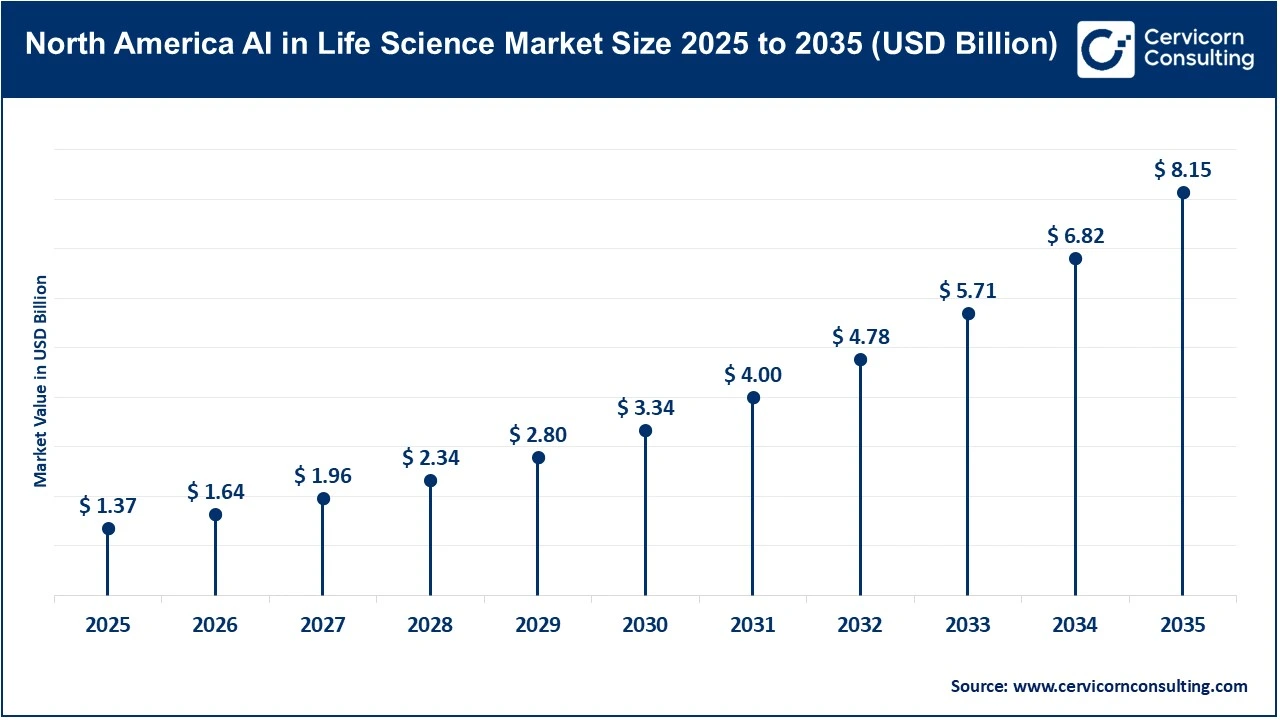
The North America AI in life science market size was valued at USD 1.37 billion in 2025 and is predicted to exceed around USD 8.15 billion by 2035.
The North America market is highly advanced, supported by strong pharmaceutical and biotechnology research activity, rising adoption of AI-driven drug discovery platforms, and favorable regulatory developments for precision medicine and digital health technologies. The region is witnessing increasing demand for AI applications in genomics, clinical trial optimization, medical imaging, and biomarker discovery as pharmaceutical companies seek to reduce development timelines and improve R&D productivity. Growing investments in generative AI, computational biology, and cloud-based analytics platforms are further accelerating market expansion.
United States: Strong pharmaceutical innovation, expanding FDA support for AI in drug development, and leadership in biotechnology continue driving market expansion.
- The U.S. accounts for nearly 45% of global pharmaceutical sales, reinforcing its position as the largest adopter of AI-enabled drug discovery and clinical development technologies.
- The FDA approved more than 950 AI/ML-enabled medical devices by 2025, with a significant concentration in healthcare diagnostics and life science applications, reflecting growing trust in AI-assisted technologies.
- The U.S. biopharmaceutical industry invests over USD 100 billion annually in R&D, creating substantial demand for AI tools in target discovery, molecular modeling, and clinical trial optimization.
- More than 55% of global biotech companies are headquartered or actively operating in North America, supporting strong regional innovation and commercialization of AI-driven life science solutions.
Canada: Expanding AI governance initiatives, strong academic AI research, and increasing biotech adoption support market growth.
- Canada invested CAD 2.4 billion through the Pan-Canadian Artificial Intelligence Strategy and AI innovation initiatives, strengthening AI deployment across healthcare and biomedical research.
- The country ranks among the top 10 globally for AI research output, with major hubs in Toronto, Montreal, and Vancouver contributing to genomics and life science innovation.
- Canada’s life sciences sector contributes over CAD 100 billion to GDP, encouraging growing adoption of AI for diagnostics, drug development, and digital therapeutics.
- More than 1,900 biotechnology and life sciences companies operate across Canada, expanding opportunities for AI integration in research and precision medicine.
Asia-Pacific (APAC) AI in Life Science Market: Driven by Expanding Biopharmaceutical Manufacturing, Rising Healthcare Digitalization, and Government-Led AI Initiatives
The Asia-Pacific AI in life science market size was accounted for USD 0.63 billion in 2025 and is forecasted to grow around USD 3.76 billion by 2035. The Asia-Pacific market is experiencing rapid growth, supported by expanding pharmaceutical and biotechnology industries, increasing healthcare digitalization, and strong government investments in artificial intelligence and precision medicine. Countries across the region are increasingly adopting AI for drug discovery, genomics, medical diagnostics, and clinical trial optimization to address growing healthcare burdens and improve research efficiency. Rising demand for personalized medicine, expanding biopharmaceutical manufacturing capabilities, and increasing partnerships between technology firms, research institutions, and healthcare providers are further accelerating market growth.
China: Strong government-backed AI strategy, expanding biotechnology investments, and leadership in genomics research continue driving market expansion.
- China’s AI industry surpassed RMB 700 billion (USD 95+ billion) in 2025, with healthcare and life sciences identified as strategic national priorities for AI adoption.
- The country accounts for one of the world’s largest pharmaceutical and biotechnology markets, supported by increasing use of AI in drug screening, molecular modeling, and genomics-based precision medicine.
- China produces over 20% of global clinical trials, creating strong opportunities for AI-powered patient recruitment, trial monitoring, and predictive analytics.
Japan: Advanced healthcare infrastructure, strong pharmaceutical R&D, and growing adoption of AI-based diagnostics support market growth.
- Japan has one of the largest pharmaceutical markets globally, with annual pharmaceutical expenditures exceeding USD 100 billion, increasing demand for AI in drug discovery and clinical research.
- More than 28% of Japan’s population is aged 65 or older, driving adoption of AI-powered diagnostics, precision medicine, and patient monitoring technologies to manage chronic diseases.
India: Expanding biotech ecosystem, increasing AI healthcare adoption, and growing clinical research activity are fueling market growth.
- India’s biotechnology industry is projected to surpass USD 150 billion, creating growing demand for AI in drug discovery, bioinformatics, and bioprocessing applications.
- The country conducts one of the highest volumes of generic pharmaceutical production globally, encouraging AI adoption to optimize manufacturing and R&D efficiency.
Europe AI in Life Science Market: Driven by Strong Biopharmaceutical Research, Expanding Precision Medicine Initiatives, and Supportive AI Regulations
The Europe AI in life science market size reach at USD 0.81 billion in 2025 and is expected to hit around USD 4.83 billion by 2035. The Europe market is growing steadily, supported by strong pharmaceutical research capabilities, increasing adoption of precision medicine, and favorable regulatory frameworks for ethical and trustworthy AI deployment. The region is witnessing rising use of AI in drug discovery, genomics, diagnostics, and clinical trial optimization as pharmaceutical and biotechnology companies seek to reduce development costs and improve treatment outcomes. Growing investments in biomedical innovation, increasing collaborations between research institutes and technology firms, and expanding digital health infrastructure are further strengthening market growth.
Germany: Strong pharmaceutical manufacturing, expanding AI healthcare innovation, and leadership in industrial biotechnology continue driving market expansion.
- Germany accounts for one of the largest pharmaceutical markets in Europe, with pharmaceutical revenues exceeding EUR 60 billion annually, supporting strong demand for AI-based R&D solutions.
- The country hosts more than 800 biotechnology companies, increasing AI adoption in drug discovery, genomics, and bioprocess optimization.
- Germany’s healthcare digitization initiatives and AI investments are accelerating deployment of AI-powered diagnostics and personalized medicine applications.
United Kingdom: Strong biotech ecosystem, genomics leadership, and government-backed AI healthcare strategies support market growth.
- The UK life sciences sector contributes over GBP 100 billion annually to the economy, creating substantial opportunities for AI-driven innovation in pharmaceuticals and diagnostics.
- The UK Biobank contains health and genomic data from over 500,000 participants, supporting AI-based biomarker discovery and precision medicine research.
- The government has increased investments in AI for healthcare through NHS and life sciences modernization programs, accelerating adoption in diagnostics and drug development.
AI in Life Science Market Share, By Region, 2025 (%)
| Region |
Revenue Share, 2025 (%) |
| North America |
46.2% |
| Europe |
27.4% |
| Asia-Pacific |
21.3% |
| LAMEA |
5.1% |
LAMEA (Latin America, Middle East & Africa) AI in Life Science Market: Driven by Expanding Healthcare Digitalization, Growing Pharmaceutical Investments, and Government-Led AI Modernization Initiatives
The LAMEA AI in life science market was valued at USD 0.15 billion in 2025 and is anticipated to reach around USD 0.90 billion by 2035. The LAMEA market is gradually expanding, supported by increasing healthcare digitalization, rising pharmaceutical manufacturing investments, and growing adoption of AI technologies in diagnostics, genomics, and drug research. Governments across the region are increasingly investing in AI-driven healthcare modernization to improve disease management, research efficiency, and access to precision medicine. Growing clinical trial activity, rising chronic disease burden, and increasing partnerships between healthcare institutions, biotech firms, and technology providers are further accelerating market growth.
Brazil: Strong pharmaceutical market, expanding clinical research activity, and rising AI healthcare adoption continue driving market expansion.
- Brazil represents the largest pharmaceutical market in Latin America, with pharmaceutical revenues exceeding USD 30 billion annually, supporting increasing adoption of AI in drug development and diagnostics.
- The country accounts for a significant share of Latin America’s clinical trials, creating opportunities for AI-powered patient recruitment and trial optimization solutions.
- Brazil’s growing investments in healthcare digitalization and genomics research are strengthening demand for AI-based precision medicine applications.
Saudi Arabia: Government-led AI strategy, healthcare transformation investments, and biotechnology expansion support market growth.
- Under Vision 2030, Saudi Arabia is investing billions of dollars in AI, biotechnology, and healthcare modernization, accelerating life sciences innovation.
- The country is rapidly expanding digital healthcare infrastructure, increasing adoption of AI in diagnostics, genomics, and patient data analytics.
- Government-backed programs are supporting precision medicine and genomic sequencing initiatives, strengthening demand for AI-powered healthcare tools.
Segmental Analysis
The AI in life science market is segmented into offering, deployment model, analytics type, application, end user, and geography.
Offering Analysis
The software segment dominates the AI in life sciences market due to its extensive use in drug discovery, clinical data analysis, medical imaging, genomics, and predictive modeling. Pharmaceutical and biotechnology companies increasingly deploy AI software platforms to process large biological datasets, automate workflows, and improve decision-making across R&D and commercialization stages. The rising demand for cloud-based AI algorithms, digital pathology tools, and machine learning platforms for biomarker identification further strengthens software leadership, as organizations prioritize scalable and cost-efficient AI solutions over physical infrastructure investments.
The services segment is expected to witness the fastest growth as life sciences companies increasingly require AI consulting, integration, validation, implementation, and managed services to support digital transformation. Many pharmaceutical firms lack in-house AI expertise, leading to growing reliance on third-party service providers for customized model development and regulatory compliance support. The rapid expansion of generative AI, data management needs, and outsourced AI-based research activities is accelerating demand for professional and support services across drug development and clinical operations.
Deployment Model Analysis
The cloud/on-demand segment dominates the market because life sciences companies increasingly prefer scalable computing power, flexible storage, and real-time collaboration capabilities. AI applications in genomics, molecular simulation, and clinical trial analytics require massive computational resources that cloud platforms can efficiently provide. Cloud deployment also enables seamless integration of datasets across multiple research sites while reducing IT infrastructure costs. Growing partnerships between pharmaceutical firms and cloud technology providers further reinforce this segment’s market leadership.
AI in Life Science Market, By Deployment Model, 2025 (%)
| Deployment Model |
Revenue Share, 2025 (%) |
| Cloud / On-Demand |
68.4% |
| On-Premise |
31.6% |
The cloud/on-demand segment is also the fastest-growing due to rising demand for remote access, AI-as-a-service models, and high-performance computing in drug discovery. Cloud deployment supports faster AI model training, collaborative research, and integration with advanced analytics tools, which are critical in precision medicine and clinical trial optimization. Additionally, increasing investments in healthcare digitalization and secure cloud environments are encouraging life sciences organizations to shift from traditional on-premise systems toward flexible cloud ecosystems.
Analytics Type Analysis
The predictive analytics segment dominates the AI in life sciences market as companies increasingly use AI to forecast disease progression, predict drug responses, identify high-potential compounds, and optimize clinical trial outcomes. Predictive models improve efficiency by reducing trial failures and helping researchers identify treatment opportunities earlier in development. Strong adoption in precision medicine, biomarker discovery, and patient risk stratification further drives the segment, making predictive analytics one of the most commercially valuable AI applications in life sciences.
AI in Life Science Market, By Analytics Type, 2025 (%)
| Analytics Type |
Revenue Share, 2025 (%) |
| Predictive Analytics |
38.6% |
| Descriptive Analytics |
26.1% |
| Prescriptive Analytics |
21.8% |
| Generative AI |
13.5% |
The generative AI segment is emerging as the fastest-growing category due to its transformative impact on drug discovery, protein design, medical writing, and biomedical research. Pharmaceutical companies increasingly utilize generative AI to simulate molecular structures, generate synthetic biological data, and accelerate target identification processes. The technology also improves productivity in regulatory documentation and literature reviews. Rising enterprise adoption, heavy investment from biotech firms, and expanding use cases in scientific innovation are fueling rapid segment growth.
Application Analysis
The drug discovery segment dominates the market owing to the growing need to reduce pharmaceutical R&D costs and shorten drug development timelines. AI technologies help identify molecular targets, predict compound interactions, optimize lead candidates, and reduce failure rates during early-stage research. Pharmaceutical and biotech firms are heavily investing in AI-driven drug discovery partnerships to improve research productivity and therapeutic innovation. The segment’s dominance is reinforced by increasing adoption of computational biology and precision drug development techniques.
AI in Life Science Market, By Application, 2025 (%)
| Application |
Revenue Share, 2025 (%) |
| Drug Discovery |
31.4% |
| Medical Diagnosis and Imaging |
21.7% |
| Clinical Trials Optimization |
15.3% |
| Precision and Personalized Medicine |
13.8% |
| Biotechnology and Bioprocessing |
10.2% |
| Patient Monitoring and Real-World Evidence |
7.6% |
The precision and personalized medicine segment is projected to grow the fastest as healthcare shifts toward individualized treatment approaches based on genetic, clinical, and biomarker data. AI enables advanced genomic analysis and predictive modeling to tailor therapies for specific patient populations, particularly in oncology and rare diseases. Increasing use of companion diagnostics, biomarker-driven treatments, and genomic sequencing technologies is accelerating adoption, while growing patient demand for targeted healthcare solutions further supports expansion.
End User Analysis
Pharmaceutical and biotechnology companies represent the dominant end-user segment because they are the largest investors in AI technologies for drug discovery, clinical development, biomarker analysis, and regulatory processes. These organizations increasingly deploy AI to improve R&D productivity, reduce operational costs, and accelerate time-to-market for therapies. Strategic collaborations between biotech firms and AI technology providers, combined with rising investments in computational biology and precision medicine, continue to strengthen this segment’s leadership position.
AI in Life Science Market, By End User, 2025 (%)
| End User |
Revenue Share, 2025 (%) |
| Pharmaceutical and Biotechnology Companies |
52.6% |
| Contract Research Organizations (CROs) |
20.8% |
| Healthcare Providers |
15.1% |
| Academic and Research Institutes |
11.5% |
The contract research organizations (CROs) segment is expected to grow at the fastest pace as pharmaceutical companies increasingly outsource clinical trials and research functions to reduce costs and improve efficiency. CROs are rapidly integrating AI for patient recruitment, trial monitoring, predictive analytics, and protocol optimization to enhance service capabilities. Growing complexity in drug development and rising demand for faster clinical outcomes are pushing CROs to adopt advanced AI technologies, driving significant market expansion.
Top Companies
Recent Developments
- In June 2025, IQVIA launched new AI agents for life sciences and healthcare powered by NVIDIA technology, designed to automate workflows, accelerate insights, and improve clinical and commercial decision-making. The development strengthens IQVIA’s AI-driven ecosystem for pharmaceutical R&D, clinical trials, and healthcare analytics, supporting faster adoption of agentic AI across life sciences.
- In September 2025, Oracle launched an AI Center of Excellence for Healthcare, aimed at helping healthcare and life sciences organizations accelerate AI adoption across research, clinical, and operational workflows. The initiative enhances Oracle’s cloud-based AI ecosystem for life sciences data management, predictive analytics, and digital transformation.
Market Segmentation
By Offering
- Software
- Services
- Hardware
By Deployment Model
- Cloud / On-Demand
- On-Premise
By Analytics Type
- Descriptive Analytics
- Predictive Analytics
- Prescriptive Analytics
- Generative AI
By Application
- Drug Discovery
- Medical Diagnosis and Imaging
- Clinical Trials Optimization
- Biotechnology and Bioprocessing
- Precision and Personalized Medicine
- Patient Monitoring and Real-World Evidence
By End User
- Pharmaceutical and Biotechnology Companies
- Contract Research Organizations (CROs)
- Academic and Research Institutes
- Healthcare Providers
By Geography
- North America
- Europe
- Asia-Pacific
- LAMEA