
The global green hydrogen market size was valued at USD 12 billion in 2025 and is expected to be worth around USD 227.56 billion by 2035, growing at a compound annual growth rate (CAGR) of 34.21% from 2026 to 2035.
The green hydrogen market is poised for significant expansion as countries and industries prioritize decarbonization to meet climate goals. Several factors, including rising environmental awareness, government policies supporting clean energy, and advancements in renewable energy technologies, are driving the demand for green hydrogen. Countries like Germany, Japan, and the United States are investing heavily in green hydrogen production and infrastructure, with major industries in steel, chemicals, and transportation exploring its potential as an alternative fuel source. Additionally, the increased focus on carbon reduction targets has led to the development of new projects and collaborations between energy companies and technology providers to scale green hydrogen production. As the technology for electrolysis continues to mature, costs associated with producing green hydrogen are expected to decrease significantly. This trend is further supported by increasing investments in renewable energy projects and research into more efficient electrolyzer designs.
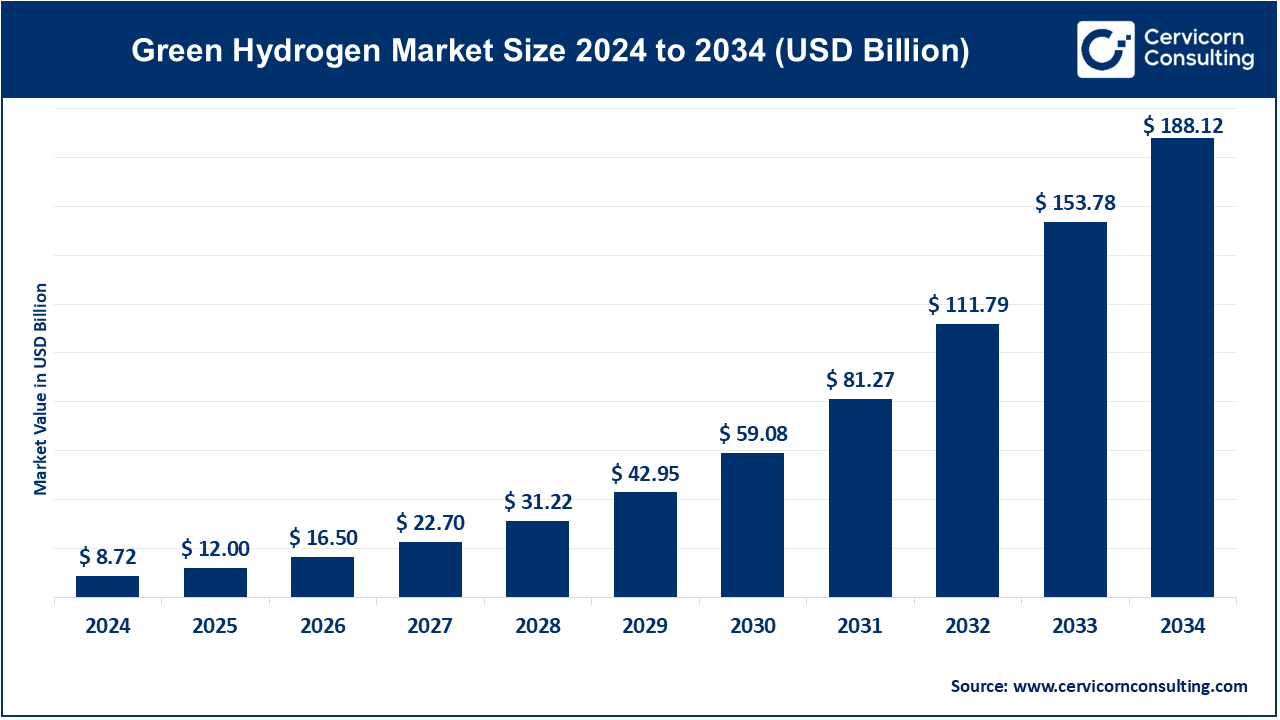
Green hydrogen refers to hydrogen produced using renewable energy sources such as wind, solar, and hydropower. Unlike traditional hydrogen production, which often relies on fossil fuels (like natural gas) and emits CO2, green hydrogen is generated through a process called electrolysis. This process involves using electricity from renewable sources to split water molecules (H2O) into hydrogen (H2) and oxygen (O2). The key advantage of green hydrogen is its sustainability, as it produces no greenhouse gas emissions when created and used. Green hydrogen can play a critical role in decarbonizing industries like transportation, manufacturing, and power generation, helping reduce reliance on fossil fuels and mitigate climate change.
Report Scope
| Area of Focus | Details |
| Market Size in 2026 | USD 16.5 billion |
| Market Size in 2035 | USD 227.56 billion |
| Market Growth Rate | CAGR of 34.21% from 2026 to 2035 |
| Largest Region | Europe |
| Fastest Growing Region | North America |
| Segment Covered | By Technology, Application, End-Use, Regions |
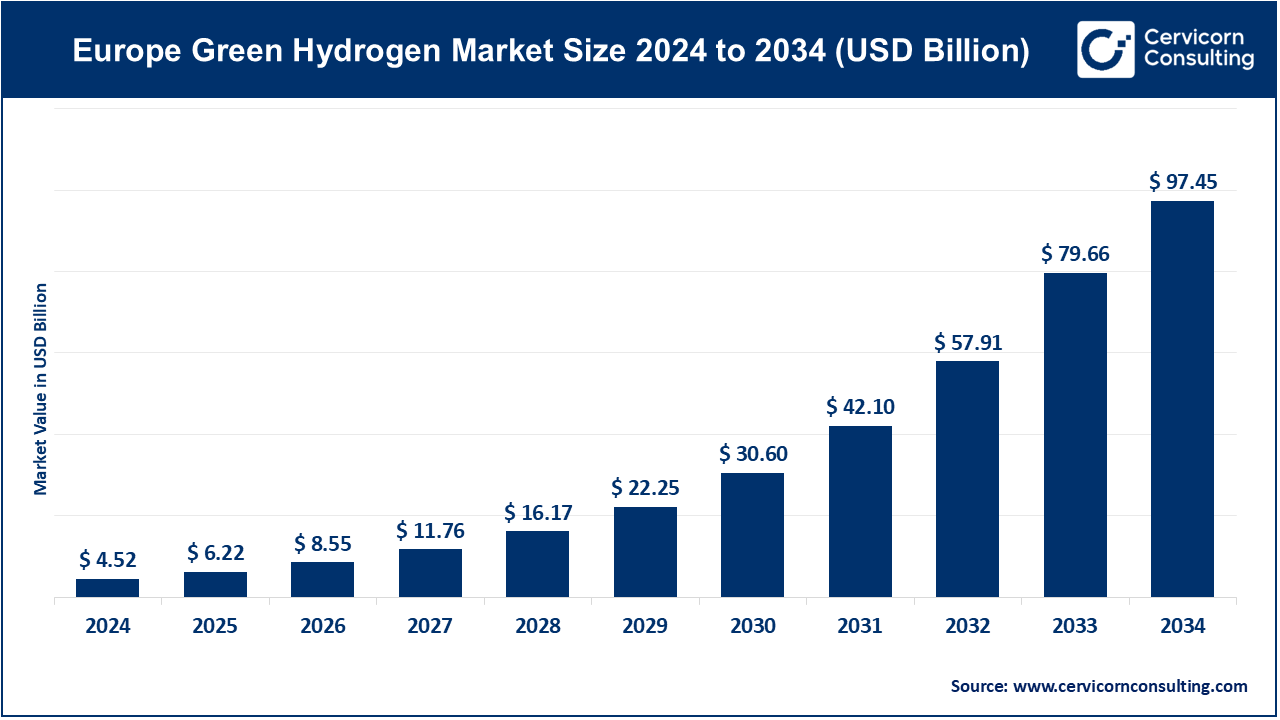
The European market for green hydrogen was worth US$ 6.24 billion in 2025 and increase to US$ 118.33 billion by 2035, giving Europe the largest hydrogen market worldwide. Strong climate policies, robust regulations, substantial funding and large commitments make it one of the key global hydrogen players. The European Union has integrated hydrogen into its decarbonisation strategy for its difficult to decarbonize sectors like steel, chemicals, shipping and aviation with significant investment in hydrogen production hubs, cross border pipelines and the industrial use of hydrogen.
Germany, the Netherlands, Spain and France are leading efforts on infrastructure and industrial partnerships and developing corridors for hydrogen imports from regions like the Middle East and North Africa. Increasingly strict regulations, coherent regional strategies and public-private cooperation is helping Europe retain the leading position in the global green hydrogen market.
Valued at USD 1.92 billion in 2025 and growing to USD 36.41 billion by 2035, the North America green hydrogen market is one of the fastest growing in the world. This is due to the ambitious climate policies, significant tax credits and quickly developing hydrogen infrastructure the region is employing, in an effort to decarbonise the power, heavy industry and transportation sectors.
The United States is leading the charge in driving the growth of the market regionally. In introducing the Inflation Reduction Act (IRA) in 2022 which implemented one of the world's highest hydrogen production tax credits (up to USD3/kg green hydrogen), hydrogen production has been made economically viable on a large scale for the first time.
Since the announcement of the IRA, trillions of dollars worth of green hydrogen projects have been announced in Texas, California, and along the Gulf Coast. The U.S is also implementing hydrogen hubs to link renewable generation with hydrogen production and consumption.
Asia Pacific green hydrogen market was valued at $2.76 billion in 2025 and is predicted to reach $52.34 billion by 2035. It has been largely investing into green hydrogen so that it can be ensured of the energy security, reducing the dependency of fossil fuels import and supporting rapidly growing industrial sectors.
Japan and South Korea have established their hydrogen sector as one of the pillar strategies to ensure long term security. Both countries imports almost all of the fossil fuels and look forward to use the hydrogen sector as their energy security strategy while Australia is emerging as the largest global supplier of green hydrogen to the other economies such as Asia and Europe due to large solar and wind power resources to create such mega projects, also the government has allocated considerable funding for such initiatives and has made international collaboration too.
China is growing its hydrogen sector at large speed as it has a clean energy goal. Hydrogen is to be implemented into industrial sector's de-carbonization and for vehicles in heavy transport and also energy storage. China has planned to implement huge solar and wind power installations in western part of country which would be accompanied by huge hydrogen plants to store the excessive renewable power.
Key Asia Pacific Government initiatives:
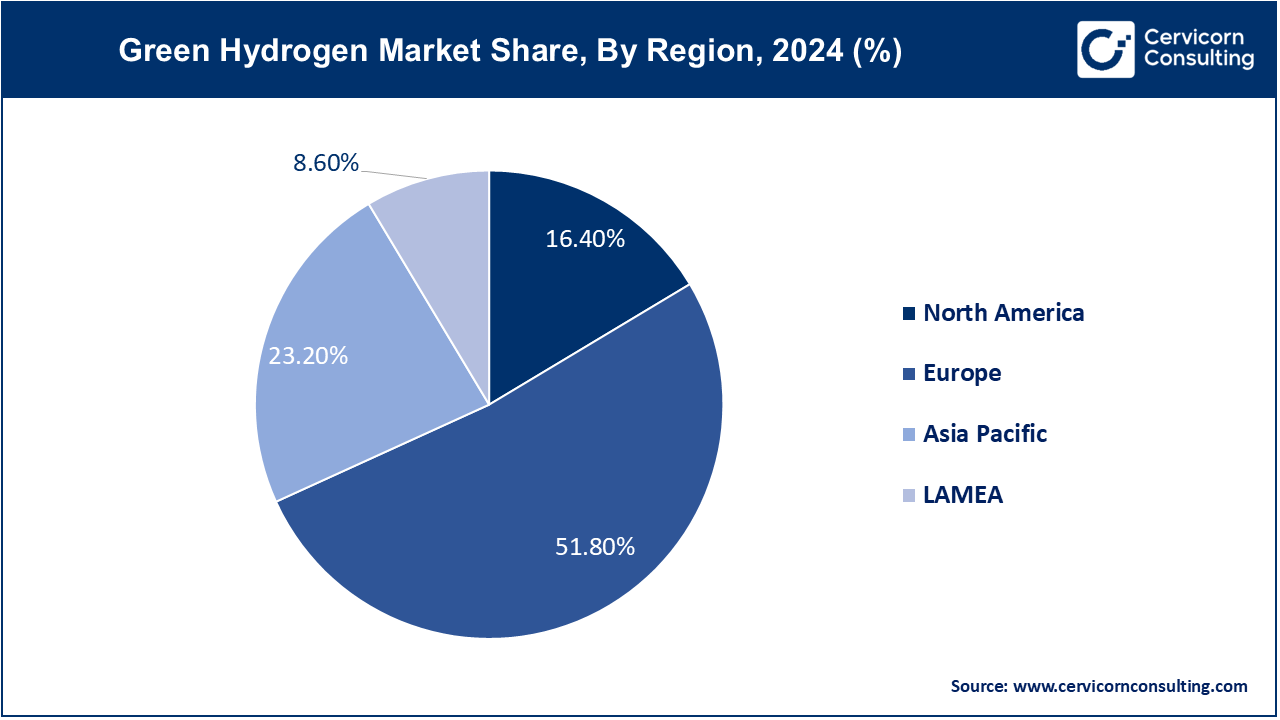
LAMEA accounted a 8.6% of the market share in 2025 and is set to be a leading global green hydrogen supplier in the near future, due to a number of countries that boast of some of the best wind and solar resources in the world, that provide natural cost advantages to produce cheap green hydrogen, these include: Chile with world-class solar energy from the Atacama Desert and strong wind energy from Patagonia that are positioning it to be one of the leading exporters of hydrogen; Saudi Arabia through hydrogen is attempting to diversify its economy with its investments on large-scale projects integrated with renewable energy projects. South Africa is developing its hydrogen sector to boost its mining, industrial and export markets.
Alkaline Electrolyzer: The Alkaline electrolyzers segment has captured market share of 25.11% in 2025. Alkaline electrolyzers use an alkaline electrolyte solution (typically potassium hydroxide) to split water into hydrogen and oxygen. They are known for their reliability and long operational lifespan. In this market alkaline electrolyzers are seeing trends towards cost reduction through improved materials and manufacturing processes, making them competitive for large-scale industrial applications and renewable energy integration.
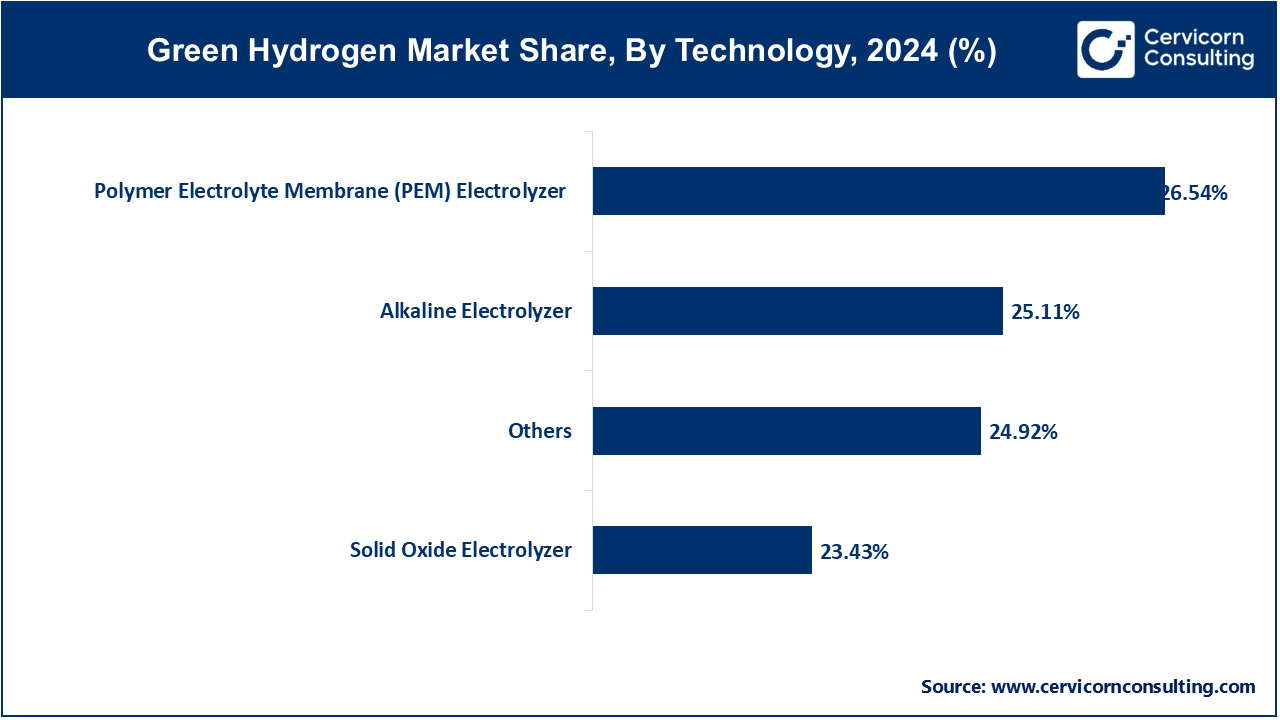
Polymer Electrolyte Membrane (PEM) Electrolyzer: The PEM electrolyzer segment has covered market share of 26.54% in 2025. PEM electrolyzers employ a solid polymer electrolyte membrane to facilitate proton exchange during electrolysis. They operate at lower temperatures and pressures compared to alkaline electrolyzers, offering advantages in efficiency and responsiveness to fluctuating electricity inputs. In this market, PEM electrolyzers are trending towards compact designs and enhanced efficiency, catering to applications requiring flexibility and rapid response times.
Others: The others segment has accounted market share of 24.92% in 2025. Other electrolyzer technologies, such as Solid Oxide Electrolysis Cells (SOECs), are also emerging in the green hydrogen market. SOECs operate at high temperatures and can directly convert steam into hydrogen, potentially achieving higher efficiencies and integration with industrial processes. Research focuses on reducing costs, increasing durability, and expanding their applicability in both stationary and mobile hydrogen production systems.
Power Generation: The power generation segment has registered market share of 36.3% in 2025. Green hydrogen is increasingly used in power plants to generate electricity through fuel cells, offering a clean energy alternative to fossil fuels. This application is witnessing growth as countries aim to integrate renewable sources more effectively into their energy mix, enhancing grid stability and reducing greenhouse gas emissions.
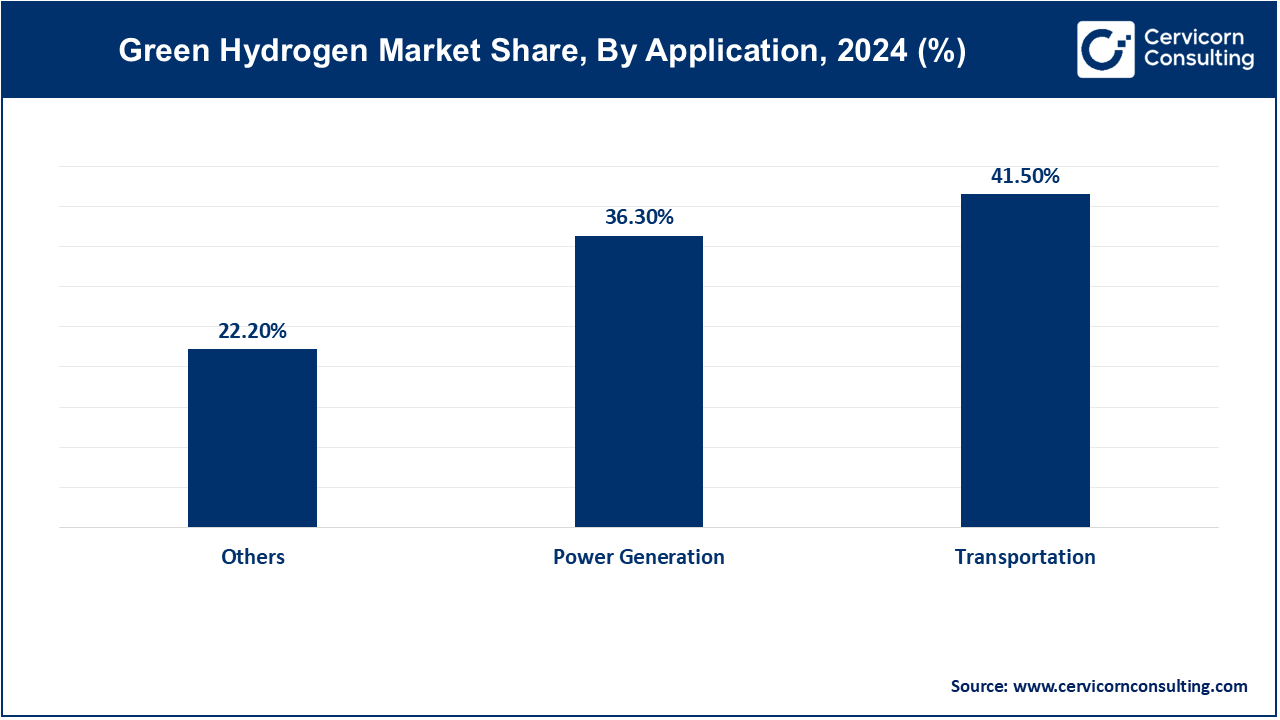
Transport: The transport segment has garnered market share of 41.5% in 2025. In transportation, green hydrogen powers fuel cell vehicles, providing zero-emission mobility solutions with fast refueling times. The transport sector is seeing increasing investment in hydrogen infrastructure, particularly for heavy-duty vehicles and fleets, as governments and companies prioritize decarbonization of the transportation sector.
Industry Energy: Used as a clean fuel and feedstock in industries like chemicals, steel, and refineries, green hydrogen reduces carbon emissions in industrial processes. It enables industries to meet stringent environmental regulations and sustainability targets, driving adoption despite initial infrastructure and cost challenges.
Heating: Green hydrogen is utilized in residential and commercial heating systems, offering a renewable alternative to natural gas. This application is gaining traction in regions with established hydrogen infrastructure and supportive policies aimed at reducing carbon emissions from heating.
Others: The others segment has measured market share of 22.2% in 2025. Green hydrogen finds applications in energy storage, grid stabilization, and as a feedstock for synthetic fuels and chemicals, contributing to overall decarbonization efforts across various sectors. Its versatility and potential for sector coupling make it a promising solution for achieving climate goals while diversifying energy sources.
Automotive: Green hydrogen is increasingly used in fuel cells for zero-emission vehicles, offering a sustainable alternative to fossil fuels and addressing concerns over air quality and greenhouse gas emissions. The automotive sector is witnessing growing investments in hydrogen fueling infrastructure and advancements in fuel cell technology to enhance efficiency and range.
Chemical: In the chemical industry, green hydrogen serves as a sustainable feedstock for the production of ammonia, methanol, and other key chemicals. This application reduces the carbon footprint associated with chemical manufacturing processes, aligning with global sustainability goals and driving innovation in hydrogen production technologies.
Petroleum Refinery: Within petroleum refining, green hydrogen plays a crucial role in desulfurization processes and upgrading heavy crude oils. By replacing traditional hydrogen sources derived from fossil fuels, green hydrogen enables refineries to produce cleaner fuels while reducing emissions and complying with stringent environmental regulations.
Power and Energy: Green hydrogen is utilized for energy storage and generation, facilitating the integration of renewable energy sources like wind and solar into the grid. This application addresses the intermittency of renewables by providing a reliable energy storage solution and supports grid stability, making it a key enabler of the transition to a low-carbon energy system.
Industrial: Industries such as metallurgy, electronics, and glass production utilize green hydrogen as a clean energy source for various processes. Its high energy density and versatility make it suitable for replacing fossil fuels in energy-intensive industrial applications, contributing to emissions reduction efforts and enhancing operational sustainability.
Others: Emerging applications of green hydrogen include residential heating and grid balancing services. As technologies advance and costs decline, green hydrogen is expected to find new applications in sectors seeking to decarbonize their operations and reduce reliance on conventional energy sources. These developments are expanding the market's versatility and driving broader adoption across diverse industries.
By Technology
By Application
By End-Use
By Region
Chapter 1 Market Introduction and Overview
1.1 Market Definition and Scope
1.1.1 Overview of Green Hydrogen
1.1.2 Scope of the Study
1.1.3 Research Timeframe
1.2 Research Methodology and Approach
1.2.1 Methodology Overview
1.2.2 Data Sources and Validation
1.2.3 Key Assumptions and Limitations
Chapter 2 Executive Summary
2.1 Market Highlights and Snapshot
2.2 Key Insights by Segments
2.2.1 By Technology Overview
2.2.2 By Application Overview
2.2.3 By End-Use Overview
2.3 Competitive Overview
Chapter 3 Global Impact Analysis
3.1 COVID 19 Impact on Green Hydrogen Market
3.1.1 COVID-19 Landscape: Pre and Post COVID Analysis
3.1.2 COVID 19 Impact: Global Major Government Policy
3.1.3 Market Trends and Opportunities in the COVID-19 Landscape
3.2 Russia-Ukraine Conflict: Global Market Implications
3.3 Regulatory and Policy Changes Impacting Global Markets
Chapter 4 Market Dynamics and Trends
4.1 Market Dynamics
4.1.1 Market Drivers
4.1.1.1 Industrial Demand for Clean Alternatives
4.1.1.2 Advancements in Hydrogen Infrastructure
4.1.2 Market Restraints
4.1.2.1 High Production Costs
4.1.2.2 Limited Technological Maturity
4.1.3 Market Opportunity
4.1.3.1 Cross-Sector Collaboration
4.1.3.2 Decentralized Energy Systems
4.1.4 Market Challenges
4.1.4.1 Scaling Up Production
4.1.4.2 Regulatory and Policy Uncertainty
4.2 Market Trends
Chapter 5 Premium Insights and Analysis
5.1 Global Green Hydrogen Market Dynamics, Impact Analysis
5.2 Porter’s Five Forces Analysis
5.2.1 Bargaining Power of Suppliers
5.2.2 Bargaining Power of Buyers
5.2.3 Threat of Substitute Products
5.2.4 Rivalry among Existing Firms
5.2.5 Threat of New Entrants
5.3 PESTEL Analysis
5.4 Value Chain Analysis
5.5 Product Pricing Analysis
5.6 Vendor Landscape
5.6.1 List of Buyers
5.6.2 List of Suppliers
Chapter 6 Green Hydrogen Market, By Technology
6.1 Global Green Hydrogen Market Snapshot, By Technology
6.1.1 Market Revenue (($Billion) and Growth Rate (%), 2024-2033
6.1.1.1 Alkaline Electrolyzer
6.1.1.2 Polymer Electrolyte Membrane (PEM) Electrolyzer
6.1.1.3 Solid Oxide Electrolyzer
6.1.1.4 Others
Chapter 7 Green Hydrogen Market, By Application
7.1 Global Green Hydrogen Market Snapshot, By Application
7.1.1 Market Revenue (($Billion) and Growth Rate (%), 2024-2033
7.1.1.1 Power Generation
7.1.1.2 Transport
7.1.1.3 Industry Energy
7.1.1.4 Heating
7.1.1.5 Others
Chapter 8 Green Hydrogen Market, By End-Use
8.1 Global Green Hydrogen Market Snapshot, By End-Use
8.1.1 Market Revenue (($Billion) and Growth Rate (%), 2024-2033
8.1.1.1 Automotive
8.1.1.2 Chemical
8.1.1.3 Petroleum Refinery
8.1.1.4 Power and Energy
8.1.1.5 Industrial
8.1.1.6 Others
Chapter 9 Green Hydrogen Market, By Region
9.1 Overview
9.2 Green Hydrogen Market Revenue Share, By Region 2025 (%)
9.3 Global Green Hydrogen Market, By Region
9.3.1 Market Size and Forecast
9.4 North America
9.4.1 North America Green Hydrogen Market Revenue, 2024-2035 ($Billion)
9.4.2 Market Size and Forecast
9.4.3 North America Green Hydrogen Market, By Country
9.4.4 U.S.
9.4.4.1 U.S. Green Hydrogen Market Revenue, 2024-2035 ($Billion)
9.4.4.2 Market Size and Forecast
9.4.4.3 U.S. Market Segmental Analysis
9.4.5 Canada
9.4.5.1 Canada Green Hydrogen Market Revenue, 2024-2035 ($Billion)
9.4.5.2 Market Size and Forecast
9.4.5.3 Canada Market Segmental Analysis
9.4.6 Mexico
9.4.6.1 Mexico Green Hydrogen Market Revenue, 2024-2035 ($Billion)
9.4.6.2 Market Size and Forecast
9.4.6.3 Mexico Market Segmental Analysis
9.5 Europe
9.5.1 Europe Green Hydrogen Market Revenue, 2024-2035 ($Billion)
9.5.2 Market Size and Forecast
9.5.3 Europe Green Hydrogen Market, By Country
9.5.4 UK
9.5.4.1 UK Green Hydrogen Market Revenue, 2024-2035 ($Billion)
9.5.4.2 Market Size and Forecast
9.5.4.3 UK Market Segmental Analysis
9.5.5 France
9.5.5.1 France Green Hydrogen Market Revenue, 2024-2035 ($Billion)
9.5.5.2 Market Size and Forecast
9.5.5.3 France Market Segmental Analysis
9.5.6 Germany
9.5.6.1 Germany Green Hydrogen Market Revenue, 2024-2035 ($Billion)
9.5.6.2 Market Size and Forecast
9.5.6.3 Germany Market Segmental Analysis
9.5.7 Rest of Europe
9.5.7.1 Rest of Europe Green Hydrogen Market Revenue, 2024-2035 ($Billion)
9.5.7.2 Market Size and Forecast
9.5.7.3 Rest of Europe Market Segmental Analysis
9.6 Asia Pacific
9.6.1 Asia Pacific Green Hydrogen Market Revenue, 2024-2035 ($Billion)
9.6.2 Market Size and Forecast
9.6.3 Asia Pacific Green Hydrogen Market, By Country
9.6.4 China
9.6.4.1 China Green Hydrogen Market Revenue, 2024-2035 ($Billion)
9.6.4.2 Market Size and Forecast
9.6.4.3 China Market Segmental Analysis
9.6.5 Japan
9.6.5.1 Japan Green Hydrogen Market Revenue, 2024-2035 ($Billion)
9.6.5.2 Market Size and Forecast
9.6.5.3 Japan Market Segmental Analysis
9.6.6 India
9.6.6.1 India Green Hydrogen Market Revenue, 2024-2035 ($Billion)
9.6.6.2 Market Size and Forecast
9.6.6.3 India Market Segmental Analysis
9.6.7 Australia
9.6.7.1 Australia Green Hydrogen Market Revenue, 2024-2035 ($Billion)
9.6.7.2 Market Size and Forecast
9.6.7.3 Australia Market Segmental Analysis
9.6.8 Rest of Asia Pacific
9.6.8.1 Rest of Asia Pacific Green Hydrogen Market Revenue, 2024-2035 ($Billion)
9.6.8.2 Market Size and Forecast
9.6.8.3 Rest of Asia Pacific Market Segmental Analysis
9.7 LAMEA
9.7.1 LAMEA Green Hydrogen Market Revenue, 2024-2035 ($Billion)
9.7.2 Market Size and Forecast
9.7.3 LAMEA Green Hydrogen Market, By Country
9.7.4 GCC
9.7.4.1 GCC Green Hydrogen Market Revenue, 2024-2035 ($Billion)
9.7.4.2 Market Size and Forecast
9.7.4.3 GCC Market Segmental Analysis
9.7.5 Africa
9.7.5.1 Africa Green Hydrogen Market Revenue, 2024-2035 ($Billion)
9.7.5.2 Market Size and Forecast
9.7.5.3 Africa Market Segmental Analysis
9.7.6 Brazil
9.7.6.1 Brazil Green Hydrogen Market Revenue, 2024-2035 ($Billion)
9.7.6.2 Market Size and Forecast
9.7.6.3 Brazil Market Segmental Analysis
9.7.7 Rest of LAMEA
9.7.7.1 Rest of LAMEA Green Hydrogen Market Revenue, 2024-2035 ($Billion)
9.7.7.2 Market Size and Forecast
9.7.7.3 Rest of LAMEA Market Segmental Analysis
Chapter 10 Competitive Landscape
10.1 Competitor Strategic Analysis
10.1.1 Top Player Positioning/Market Share Analysis
10.1.2 Top Winning Strategies, By Company, 2024-2025
10.1.3 Competitive Analysis By Revenue, 2024-2025
10.2 Recent Developments by the Market Contributors (2025)
Chapter 11 Company Profiles
11.1 Air Liquide
11.1.1 Company Snapshot
11.1.2 Company and Business Overview
11.1.3 Financial KPIs
11.1.4 Product/Service Portfolio
11.1.5 Strategic Growth
11.1.6 Global Footprints
11.1.7 Recent Development
11.1.8 SWOT Analysis
11.2 Linde plc
11.3 Hydrogenics Corporation
11.4 ITM Power
11.5 Nel ASA
11.6 McPhy Energy
11.7 Plug Power
11.8 Ballard Power Systems
11.9 FuelCell Energy
11.10 Siemens Energy