Continuous Glucose Monitoring Devices Market Size, Growth, Forecast 2026 to 2035
The global continuous glucose monitoring devices market size is recorded at USD 15.10 billion in 2026 and is expected to be worth around USD 52.37 billion by 2035, registering a compound annual growth rate (CAGR) of 14.9% over the forecast period 2026 to 2035.
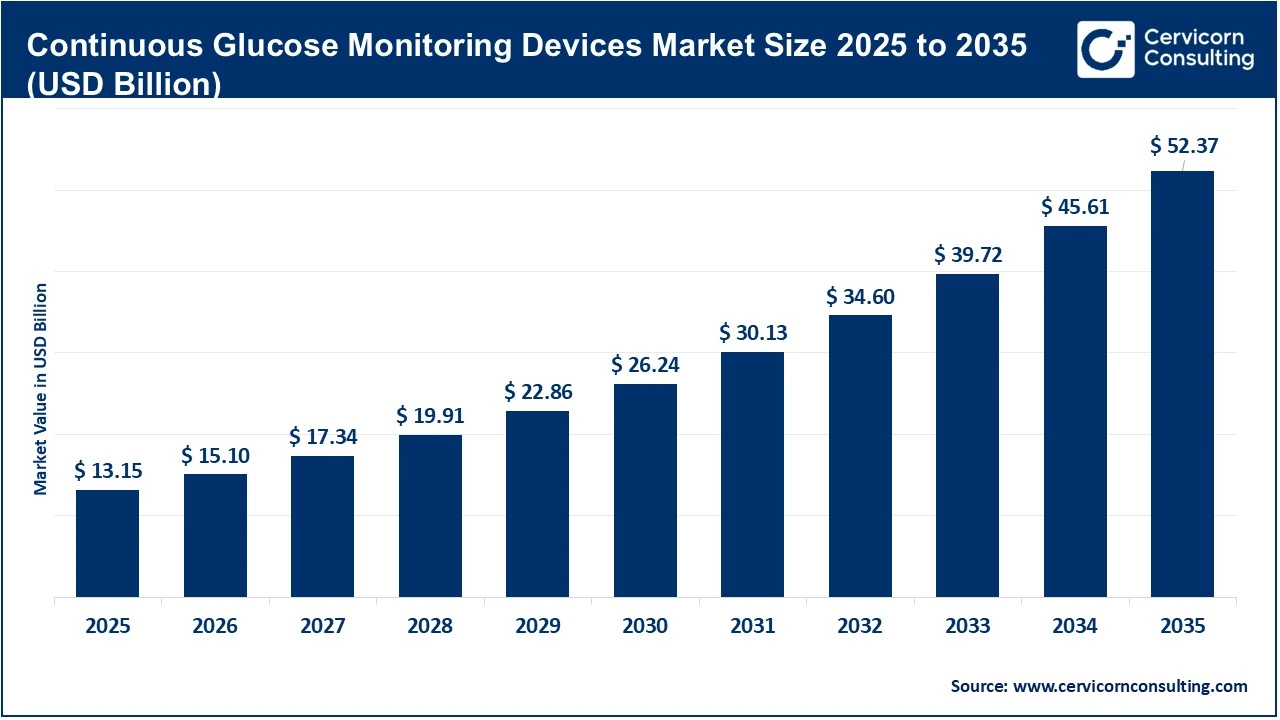
The continuous glucose monitoring (CGM) devices market is primarily driven by the rapidly increasing global burden of diabetes and the growing need for real-time glucose management. According to the International Diabetes Federation, approximately 589 million adults aged 20–79 were living with diabetes worldwide in 2024, and this number is projected to reach 853 million by 2050, creating substantial demand for advanced glucose monitoring technologies. Unlike traditional finger-prick testing, CGM devices provide continuous glucose readings, trend analysis, and hypoglycemia alerts, enabling better glycemic control and reducing diabetes-related complications. Clinical evidence has consistently shown that CGM use improves HbA1c levels, increases time in range, and supports more effective diabetes self-management, thereby accelerating adoption among both healthcare providers and patients.
Another major growth factor is the rapid advancement of wearable sensor technology, smartphone connectivity, cloud-based data sharing, and integration with insulin pumps and automated insulin delivery systems. Expanding reimbursement policies, regulatory approvals for over-the-counter CGM devices, and increasing awareness of preventive diabetes care are making these systems accessible to a broader patient population. Adoption is also expanding beyond Type 1 diabetes, with research indicating that around 12.3% of people with Type 2 diabetes currently use CGM systems, while utilization continues to rise among insulin-treated patients. Furthermore, the increasing preference for home-based disease management, telehealth, and AI-enabled diabetes analytics is strengthening long-term demand for connected CGM platforms across developed and emerging healthcare markets.
Report Highlights
- North America dominated the continuous glucose monitoring devices market with 43.8% share, driven by advanced healthcare infrastructure, reimbursement support, and high diabetes prevalence.
- Sensors accounted for 52.6% of the market due to recurring replacement demand, superior accuracy, and continuous technological advancements in wearable glucose monitoring.
- Real-Time Continuous Glucose Monitoring (rtCGM) captured 68.4% market share, supported by real-time alerts, insulin pump integration, and improved diabetes management outcomes.
- Bluetooth-enabled connectivity led with 63.5% market share, driven by seamless smartphone integration, remote monitoring capabilities, and widespread digital health adoption.
- Type 1 diabetes represented 56.8% market share because continuous glucose monitoring remains the standard of care for intensive insulin therapy.
- Home care settings held 49.2% market share as patients increasingly preferred convenient, continuous, and remote glucose monitoring outside hospital environments.
What are Continuous Glucose Monitoring Devices?
Continuous Glucose Monitoring devices are wearable medical systems that continuously measure glucose levels in the interstitial fluid beneath the skin throughout the day and night. A typical CGM system consists of a small sensor inserted under the skin, a transmitter that wirelessly sends glucose data, and a receiver or smartphone application that displays real-time glucose readings, trends, and alerts for high or low blood sugar levels. Unlike conventional finger-stick blood glucose testing, CGM devices provide continuous insights into glucose fluctuations, enabling proactive diabetes management, improved treatment decisions, and better long-term glycemic control. These devices are widely used by individuals with Type 1 Diabetes and Type 2 Diabetes and are increasingly integrated with insulin pumps and automated insulin delivery systems to support personalized diabetes care.
Benefits of Continuous Glucose Monitoring Devices
- Improves glycemic control: Studies show CGM use reduces HbA1c by approximately 0.32–0.38 percentage points compared with traditional self-monitoring methods.
- Increases Time in Range (TIR): Meta-analyses report that CGM increases Time in Range by around 7.9%, equivalent to about 114 additional minutes per day within the recommended glucose range.
- Reduces hypoglycemia: Real-time CGM significantly decreases the duration and frequency of hypoglycemic episodes through predictive alerts and continuous monitoring.
- Provides 24/7 real-time monitoring: CGM devices automatically record glucose values every few minutes, allowing users to identify glucose trends without frequent finger-prick testing.
- Enhances insulin therapy: Integration with insulin pumps and automated insulin delivery systems enables more precise insulin dosing and improves overall diabetes management
- Supports remote patient monitoring: Cloud connectivity allows caregivers and healthcare professionals to securely access glucose data, facilitating telehealth consultations and timely clinical interventions.
- Improves long-term outcomes: Clinical studies have reported HbA1c reductions ranging from 0.25% to 3.0% and Time in Range improvements of 15%–34% in various patient populations using CGM technologies.
Continuous Glucose Monitoring Devices Market Dynamics
Market Drivers
1. Rising Global Diabetes Burden
The growing prevalence of diabetes is the primary driver of the continuous glucose monitoring devices market. The increasing incidence of Type 1 and Type 2 diabetes, coupled with rising obesity and aging populations, has significantly increased the demand for continuous, real-time glucose monitoring solutions. CGM devices enable better glycemic control, early detection of glucose fluctuations, and reduced diabetes-related complications, making them an essential component of modern diabetes management.
Estimated Number of Adults Living with Diabetes by Region (2024 vs. 2050)
| Region |
2024 (Million) |
2050 (Million) |
| North America & Caribbean |
56.2 |
68.1 |
| Europe |
65.6 |
72.4 |
| Middle East & North Africa |
84.7 |
162.6 |
| Southeast Asia |
106.9 |
184.5 |
| Central & South America |
35.4 |
51.5 |
| Africa |
24.6 |
59.5 |
| West Pacific |
215.4 |
253.8 |
2. Advancements in Wearable and Connected Healthcare Technologies
Rapid innovations in wearable biosensors, smartphone integration, cloud connectivity, and AI-powered glucose analytics are accelerating CGM adoption. Modern CGM systems offer longer sensor wear periods, improved accuracy, predictive glucose alerts, and seamless integration with insulin pumps and digital health platforms. These technological improvements enhance patient convenience and support remote patient monitoring through telehealth. The expansion of reimbursement programs and increasing physician confidence in connected diabetes management solutions are further strengthening market growth across developed and emerging healthcare systems.
Market Restraints
1. High Device and Sensor Costs
Despite increasing adoption, the high cost of CGM devices remains a major barrier, particularly in low- and middle-income countries. Users must replace disposable sensors every 10–15 days, resulting in substantial recurring expenses in addition to the initial cost of transmitters and receivers. Limited insurance coverage and out-of-pocket payment requirements restrict adoption among many diabetes patients, especially those with Type 2 diabetes. Cost sensitivity continues to limit penetration in several emerging healthcare markets.
2. Limited Reimbursement and Healthcare Access
Many developing countries continue to have limited reimbursement policies for CGM systems, restricting access despite proven clinical benefits. While reimbursement has expanded in North America and parts of Europe, coverage remains inconsistent across Asia, Africa, and Latin America. Studies from India indicate that CGM adoption remains relatively low due to affordability challenges, inadequate physician awareness, and limited patient education, slowing broader market expansion.
Market Opportunities
1. Expansion into Type 2 Diabetes and Preventive Care
A significant growth opportunity lies in expanding CGM adoption among individuals with Type 2 diabetes, prediabetes, and metabolic disorders. Since more than 90% of diabetes cases worldwide are Type 2 diabetes, expanding clinical guidelines and reimbursement for these patients could substantially increase device utilization. Growing consumer interest in personalized nutrition, metabolic health tracking, and preventive healthcare is also creating new opportunities for over-the-counter and wellness-focused CGM products.
2. Growth of AI-Driven Digital Diabetes Management
The integration of artificial intelligence, cloud analytics, and remote patient monitoring platforms presents a major opportunity for CGM manufacturers. AI-enabled systems can analyze continuous glucose data to generate personalized treatment recommendations, predict hypoglycemic events, and improve clinical decision-making. The rapid adoption of telehealth and digital healthcare ecosystems is increasing demand for connected CGM platforms that support long-term remote diabetes management and improve patient outcomes.
Market Challenges
1. Data Accuracy and User Adherence
Although CGM technology has improved significantly, maintaining sensor accuracy during rapid glucose fluctuations and ensuring consistent user adherence remain ongoing challenges. Sensor calibration requirements, occasional signal interruptions, skin irritation, and premature sensor detachment can affect data reliability and patient satisfaction. Addressing these issues is essential for sustaining physician confidence and encouraging long-term adoption across broader patient populations.
2. Regulatory and Interoperability Complexities
Manufacturers face increasing challenges in meeting evolving regulatory standards while ensuring interoperability between CGM systems, insulin pumps, mobile applications, and hospital information systems. Compliance with cybersecurity, patient data privacy regulations, and digital health standards requires continuous investment in software validation and product development. Differences in regulatory approval pathways across countries can also delay product launches and global commercialization strategies.
Continuous Glucose Monitoring Devices Market Regional Analysis
The continuous glucose monitoring devices market is segmented by region into North America, Europe, Asia-Pacific, Latin America, and LAMEA. Here is a brief overview of each region:
Why has North America held the largest share of the continuous glucose monitoring devices market?
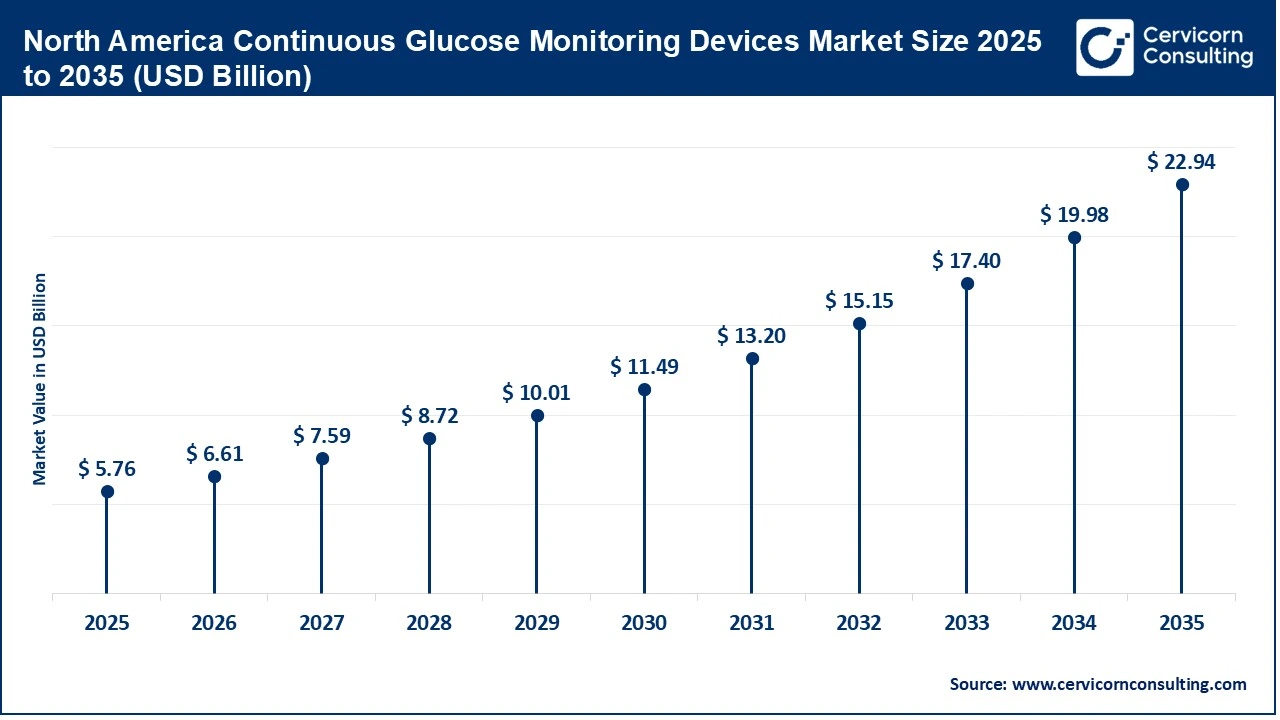
The North America continuous glucose monitoring devices market size was estimated at USD 15.10 billion in 2025 and is projected to surpass around USD 52.37 billion by 2035. The North America market dominates the global industry due to the region's high diabetes burden, advanced healthcare infrastructure, favorable reimbursement policies, and strong adoption of wearable medical technologies. The increasing prevalence of Type 1 and Type 2 diabetes, coupled with growing awareness of continuous glucose monitoring benefits, has significantly accelerated market expansion. Integration of CGM systems with insulin pumps, smartphone applications, artificial intelligence (AI), cloud-based analytics, and remote patient monitoring platforms has further strengthened adoption across home healthcare and clinical settings. Continuous product innovations, supportive regulatory approvals from the U.S. Food and Drug Administration (FDA), expanding insurance coverage, and increasing investments in digital diabetes management continue to position North America as the leading regional market.
United States: High Diabetes Prevalence, Broad Insurance Coverage, and Rapid Technological Innovation Continue to Drive Market Leadership
- The United States has approximately 38.4 million people living with diabetes, representing about 11.6% of the population, while nearly 98 million adults have prediabetes, creating substantial demand for continuous glucose monitoring technologies.
- U.S. healthcare expenditure exceeded USD 4.9 trillion, accounting for approximately 17.6% of GDP, supporting large-scale investments in advanced diabetes care, wearable medical devices, and digital health technologies.
- The U.S. Food and Drug Administration (FDA) has accelerated approvals for next-generation CGM systems, including over-the-counter devices, improving accessibility and expanding adoption beyond intensive insulin users.
Canada: Growing Diabetes Burden, Expanding Digital Healthcare Programs, and Increasing Reimbursement Support Fuel Market Growth
- More than 3.7 million Canadians are currently living with diagnosed diabetes, while millions more are affected by prediabetes, increasing demand for advanced glucose monitoring technologies.
- Canada continues to strengthen digital healthcare through nationwide initiatives promoting electronic medical records (EMRs), virtual healthcare, remote patient monitoring, and interoperable digital health systems, supporting broader CGM adoption.
Why is Asia-Pacific experiencing the fastest growth in the continuous glucose monitoring devices market?
The Asia-Pacific continuous glucose monitoring devices market size was reported at USD 2.58 billion in 2025 and is forfecasted to hit around USD 10.26 billion by 2035. The Asia-Pacific market is experiencing the fastest growth globally, fueled by the rapidly increasing prevalence of diabetes, improving healthcare infrastructure, expanding health insurance coverage, and rising awareness of advanced diabetes management technologies. The region accounts for the world's largest diabetic population, with countries such as China and India leading in diabetes cases. Increasing investments in digital healthcare, smartphone connectivity, telemedicine, wearable medical devices, and AI-enabled disease management platforms are accelerating CGM adoption. Furthermore, favorable government initiatives, improving affordability of flash glucose monitoring systems, and expanding access to diabetes care in emerging economies continue to strengthen regional market growth.
China: World's Largest Diabetes Population and Strong Digital Healthcare Ecosystem Drive CGM Adoption
- China has approximately 148 million adults living with diabetes, the highest number globally, creating substantial demand for continuous glucose monitoring devices.
- The Chinese government is expanding the Healthy China 2030 initiative, promoting chronic disease management, digital healthcare, and early diabetes diagnosis.
- China has one of the world's largest digital health ecosystems, supported by widespread smartphone adoption, AI-powered healthcare platforms, and rapid expansion of telemedicine services.
India: Rapidly Growing Diabetes Burden and Expanding Digital Health Initiatives Support Market Growth
- India has approximately 89.8 million adults with diabetes, making it the country with the second-largest diabetic population worldwide.
- The Government of India continues expanding digital healthcare through the Ayushman Bharat Digital Mission (ABDM), promoting electronic health records, digital health IDs, and integrated healthcare services.
Why Europe experiencing the steady growth in the continuous glucose monitoring devices market?
The Europe continuous glucose monitoring devices market size is expanding from USD 3.73 billion in 2025 to over USD 14.87 billion by 2035. The Europe market is experiencing steady growth, supported by the increasing prevalence of diabetes, well-established healthcare infrastructure, expanding reimbursement coverage, and rising adoption of connected diabetes management technologies. The region benefits from strong government support for chronic disease management, widespread implementation of digital health solutions, and increasing use of wearable medical devices. Integration of CGM systems with insulin pumps, smartphone applications, cloud-based monitoring platforms, and telemedicine services is enhancing patient outcomes while reducing diabetes-related complications.
Germany: Strong Healthcare Spending, Broad Reimbursement, and High Diabetes Burden Drive Market Leadership
- Germany has approximately 9 million adults living with diabetes, making it one of Europe's largest diabetes care markets and creating strong demand for continuous glucose monitoring devices.
- The country's statutory health insurance system provides broad reimbursement for CGM devices among eligible patients, significantly supporting market adoption.
United Kingdom: Expanding NHS Access and Digital Health Programs Accelerate CGM Adoption
- The United Kingdom has more than 5.8 million people living with diabetes or prediabetes, increasing demand for advanced glucose monitoring technologies.
- The National Health Service (NHS) continues expanding access to continuous glucose monitoring devices, particularly for individuals with Type 1 diabetes and eligible Type 2 diabetes patients.
Continuous Glucose Monitoring Devices Market Share, By Region, 2025 (%)
| Region |
Revenue Share, 2025 (%) |
| North America |
43.8% |
| Europe |
28.4% |
| Asia-Pacific |
19.6% |
| LAMEA |
8.2% |
LAMEA Continuous Glucose Monitoring Devices Market Trends
The LAMEA continuous glucose monitoring devices market was valued at USD 1.08 billion in 2025 and is anticipated to reach around USD 4.29 billion by 2035. The LAMEA market is experiencing steady growth due to the rising prevalence of diabetes, improving healthcare infrastructure, expanding health insurance coverage, and increasing awareness of advanced glucose monitoring technologies. Rising investments in digital healthcare, telemedicine, wearable medical devices, and chronic disease management programs are encouraging the adoption of CGM systems across the region. Government initiatives to strengthen diabetes screening and treatment, coupled with increasing smartphone penetration and improving access to connected healthcare solutions, are creating favorable opportunities for market expansion despite affordability challenges in several emerging economies.
Brazil: Growing Diabetes Burden and Expanding Digital Healthcare Infrastructure Support Market Growth
- Brazil has approximately 16.6 million adults living with diabetes, making it one of the largest diabetes markets in Latin America.
- The Brazilian government continues to expand investments in primary healthcare, chronic disease management, and digital health services to improve diabetes diagnosis and treatment.
Saudi Arabia: High Diabetes Prevalence and Vision 2030 Healthcare Reforms Accelerate CGM Adoption
- Saudi Arabia has approximately 4.4 million adults living with diabetes, with one of the highest diabetes prevalence rates in the Middle East.
- The Saudi Vision 2030 healthcare transformation program is driving investments in digital health, telemedicine, artificial intelligence, and connected medical devices.
Continuous Glucose Monitoring Devices Market Segmental Analysis
The continuous glucose monitoring devices market is segmented into component, product type, connectivity, diabetes type, end user, and geography.
Component Analysis
The sensors segment dominates the continuous glucose monitoring devices market because they are the core consumable component responsible for continuously measuring glucose levels. Every CGM system requires regular sensor replacement, typically every 10–15 days, creating recurring demand and generating the largest share of market revenue. Continuous improvements in sensor accuracy, wear duration, and miniaturization have further strengthened adoption. The launch of longer-lasting sensors with enhanced precision and reduced calibration requirements has reinforced the segment's leadership across both personal and clinical diabetes management applications.
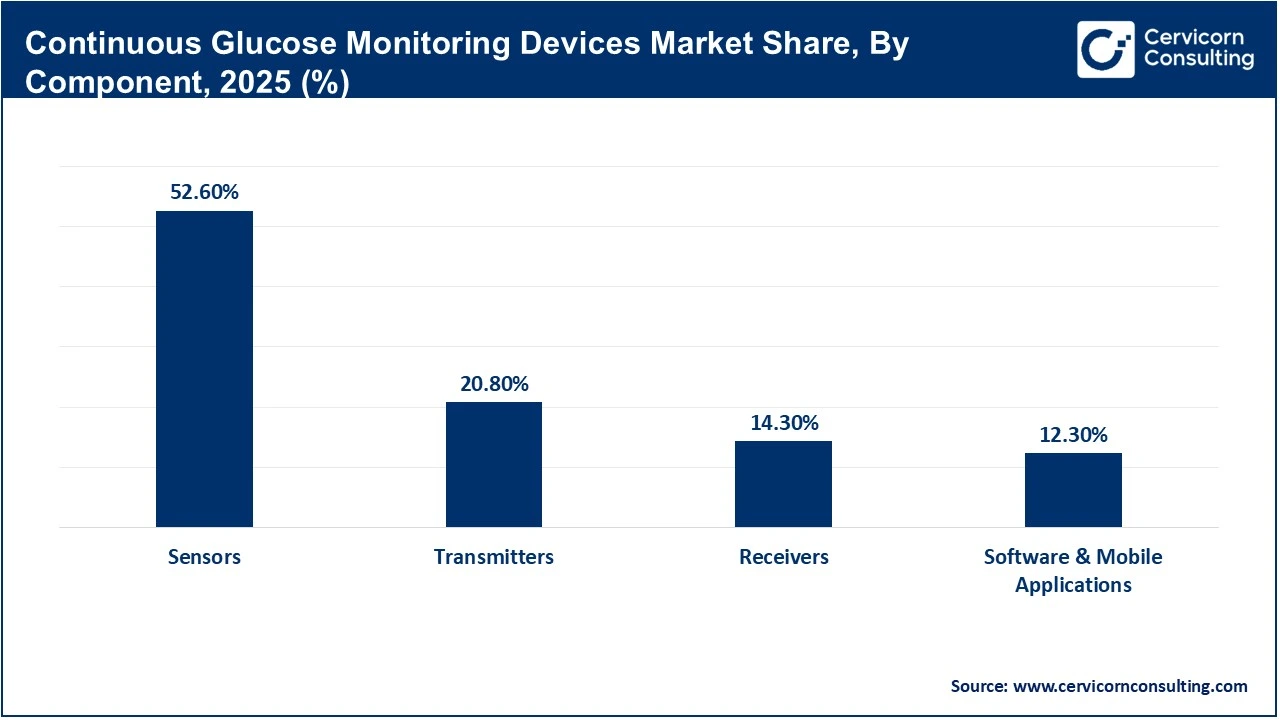
The software & mobile applications segment is expected to witness the fastest growth due to increasing digitalization in diabetes care and the integration of artificial intelligence, cloud computing, and smartphone connectivity. Mobile applications provide real-time glucose visualization, predictive analytics, remote monitoring, and seamless data sharing with healthcare providers. Growing adoption of telehealth, personalized treatment recommendations, and automated insulin delivery systems is accelerating demand for advanced digital platforms. Continuous software updates and interoperability with wearable devices further support rapid expansion of this segment.
Product Type Analysis
The real-time continuous glucose monitoring (rtCGM) segment holds the largest market share because it provides continuous glucose readings, predictive alerts, and immediate notifications for hypoglycemia and hyperglycemia. These capabilities enable better glycemic control and improve clinical outcomes, making rtCGM the preferred option for patients requiring intensive insulin therapy. Widespread reimbursement support, strong physician recommendations, and integration with insulin pumps and automated insulin delivery systems have significantly increased adoption, particularly among individuals with Type 1 diabetes.
Continuous Glucose Monitoring Devices Market, By Product Type, 2025 (%)
| Product Type |
Revenue Share, 2025 (%) |
| Real-Time Continuous Glucose Monitoring (rtCGM) |
68.4% |
| Intermittently Scanned Continuous Glucose Monitoring (isCGM) / Flash Glucose Monitoring |
31.6% |
The intermittently scanned continuous glucose monitoring (isCGM) or flash glucose monitoring segment is projected to grow at the fastest rate due to its affordability, ease of use, and expanding accessibility. Flash CGM systems eliminate routine finger-stick testing while offering accurate glucose readings through a simple scan. Their lower cost compared to real-time CGM has encouraged adoption among patients with Type 2 diabetes and in emerging markets. Increasing availability of over-the-counter products and expanded reimbursement policies continue to accelerate market growth
Connectivity Analysis
The Bluetooth-enabled segment dominates the market owing to its widespread compatibility with smartphones, insulin pumps, smartwatches, and digital health applications. Bluetooth technology enables continuous wireless transmission of glucose data without requiring additional hardware, improving user convenience and supporting remote patient monitoring. Most commercially available CGM systems incorporate Bluetooth connectivity because of its low power consumption, reliable performance, and seamless integration into digital healthcare ecosystems. Growing demand for connected healthcare devices continues to strengthen this segment's market leadership.
Continuous Glucose Monitoring Devices Market, By Connectivity, 2025 (%)
| Connectivity |
Revenue Share, 2025 (%) |
| Bluetooth Enabled |
63.5% |
| NFC (Near Field Communication) |
23.1% |
| Wi-Fi/Cloud Connected |
13.4% |
The Wi-Fi/Cloud Connected segment is expected to register the fastest growth as healthcare providers increasingly adopt remote patient monitoring and cloud-based diabetes management platforms. Cloud connectivity enables automatic synchronization of glucose data, allowing physicians, caregivers, and family members to access patient information in real time from any location. Growing adoption of telemedicine, artificial intelligence-based analytics, and population health management solutions is driving demand for cloud-enabled CGM systems. These capabilities improve long-term disease management and personalized clinical decision-making.
Diabetes Type Analysis
The Type 1 diabetes segment accounts for the largest share of the CGM market because continuous glucose monitoring is considered a standard component of intensive insulin therapy. Patients with Type 1 diabetes require frequent glucose monitoring to reduce hypoglycemic events and optimize insulin dosing. Clinical guidelines strongly recommend CGM use in this population due to its demonstrated improvements in HbA1c levels, time in range, and overall diabetes management. High reimbursement coverage and integration with insulin pumps further reinforce this segment's dominant position.
Continuous Glucose Monitoring Devices Market, By Diabetes Type, 2025 (%)
| Diabetes Type |
Revenue Share, 2025 (%) |
| Type 1 Diabetes |
56.8% |
| Type 2 Diabetes |
35.4% |
| Gestational Diabetes |
4.2% |
| Prediabetes & Others |
3.6% |
The Type 2 diabetes segment is anticipated to experience the fastest growth due to the rapidly increasing prevalence of the disease worldwide and expanding clinical acceptance of CGM among insulin-treated and high-risk patients. Improved reimbursement policies, declining device costs, and growing awareness of personalized diabetes management are encouraging broader adoption. Healthcare providers increasingly recognize the value of continuous glucose data in optimizing therapy, improving patient adherence, and reducing long-term complications, creating substantial growth opportunities for this segment.
End User Analysis
The home care settings segment dominates the continuous glucose monitoring devices market because most patients use CGM systems for long-term self-management outside hospital environments. Wearable CGM devices provide continuous glucose monitoring while supporting independent disease management, improving patient convenience and reducing healthcare visits. Increasing adoption of remote patient monitoring, smartphone-connected devices, and telemedicine has further strengthened home-based diabetes care. The growing preference for personalized, continuous, and convenient monitoring solutions continues to maintain the leadership of this segment.
Continuous Glucose Monitoring Devices Market, By End User, 2025 (%)
| End User |
Revenue Share, 2025 (%) |
| Home Care Settings |
49.2% |
| Hospitals |
27.8% |
| Specialty Diabetes Clinics |
13.9% |
| Ambulatory Surgical Centers (ASCs) |
5.1% |
| Diagnostic Centers |
4.0% |
The specialty diabetes clinics segment is projected to witness the fastest growth due to increasing referrals for advanced diabetes management and personalized treatment planning. These clinics utilize CGM technologies for therapy optimization, insulin titration, patient education, and long-term disease monitoring. Rising diabetes prevalence, greater availability of certified diabetes specialists, and increasing integration of digital health platforms are driving demand for CGM systems in specialized care settings. Expanding multidisciplinary diabetes management programs further support the rapid growth of this end-user segment.
Continuous Glucose Monitoring Devices Market Top Companies
Recent Developments
- In June 2025, Abbott introduced its fourth-generation FreeStyle Libre sensor featuring integrated ketone monitoring, expanding diabetes management capabilities beyond glucose tracking.
- In April 2025, the U.S. FDA approved the Dexcom G7 15-Day Continuous Glucose Monitoring System for adults with diabetes, extending sensor wear time and improving patient convenience.
- In July 2025, Medtronic received CE Mark approval to expand indications for its MiniMed™ 780G system to children aged two years and older, pregnant individuals, and insulin-treated Type 2 diabetes patients.
Market Segmentation
By Component
- Sensors
- Transmitters
- Receivers
- Software & Mobile Applications
By Product Type
- Real-Time Continuous Glucose Monitoring (rtCGM)
- Intermittently Scanned Continuous Glucose Monitoring (isCGM) / Flash Glucose Monitoring
By Connectivity
- Bluetooth Enabled
- NFC (Near Field Communication)
- Wi-Fi/Cloud Connected
By Diabetes Type
- Type 1 Diabetes
- Type 2 Diabetes
- Gestational Diabetes
- Prediabetes & Others
By End User
- Hospitals
- Home Care Settings
- Specialty Diabetes Clinics
- Ambulatory Surgical Centers (ASCs)
- Diagnostic Centers
By Geography
- North America
- Europe
- Asia-Pacific
- LAMEA