Biofertilizer Market Size and Growth Factors 2026 to 2035
The global biofertilizer market is set to expand from USD 2.85 billion in 2025 to about USD 7.53 billion by 2035, growing at a 10.20% CAGR over the forecast period 2026 to 2035. The biofertilizer market is changing rapidly due to changes in precision farming, new sustainable production systems, and developments in microbial technology. With agriculture opting for more sustainable and efficient systems for nutrient management, there is growing demand among farmers and producers for more customized, precision solutions relative to soil and crops. Enhanced productivity with environmental sustainability is the new challenge for manufacturers adopting biotechnological advancements like microbial strain manipulation, automation, and soil data analytics. These innovations transform the understanding and management of soil fertility, nutrient supply, and crop resilience.
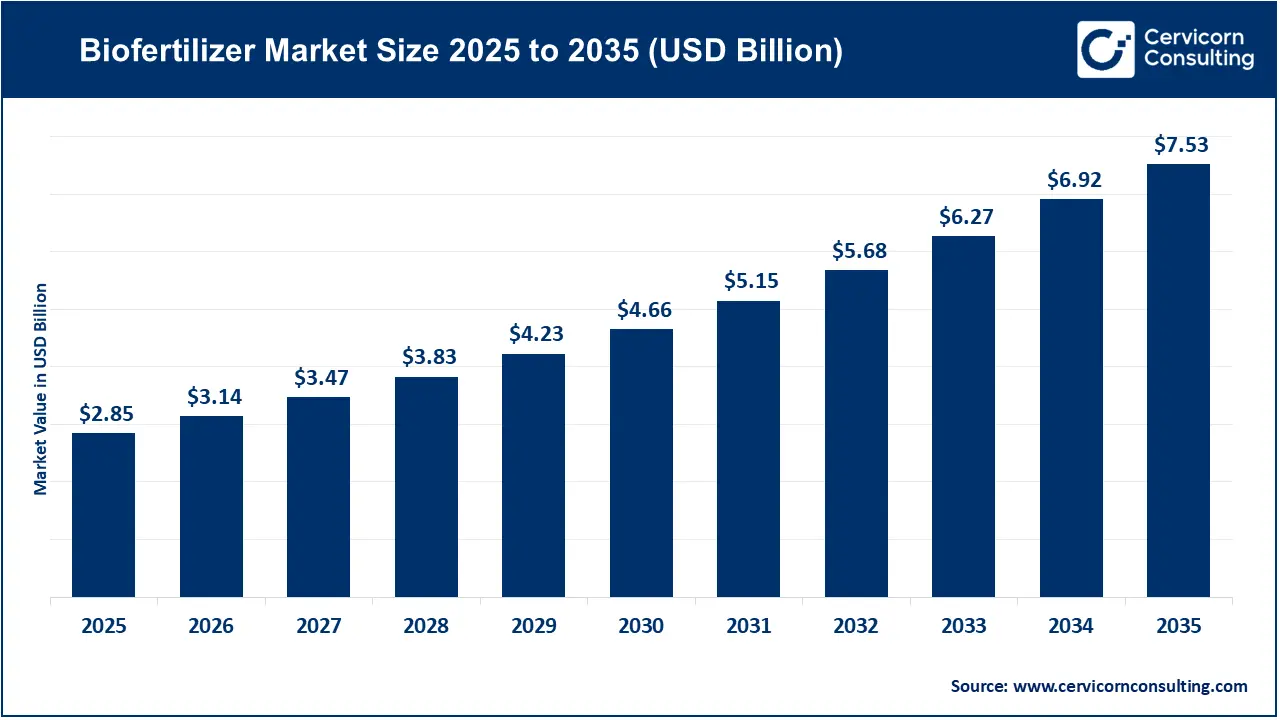
The fusion of the principles of 3D bioprinting, synthetic biology, and environmentally friendly packaging materials opens new frontiers in the formulation and the delivery of biofertilizers. New technologies such as CRISPR strain editing, biocapsules for controlled release, and embedded smart sensors for biofertilizers enhance sustainability, efficiency, and accessibility. The increasing need to meet environmental, social, and governance (ESG) goals and reduce the use of chemical fertilizers fuels the position of biofertilizers in regenerative agriculture. The sustainable and precision growth of biofertilizers promises to transform the regenerative agriculture space and the future of global food production.
Report Highlights
- By Region, North America accounted for approximately 39.5% of the market in 2025, supported by strong R&D capabilities, growing adoption of sustainable farming practices, advanced microbial formulations, and government initiatives promoting organic agriculture.
- By Microorganism Type, Rhizobium captured around 40.2% of the market in 2025, driven by its effectiveness in nitrogen fixation, particularly for legumes and cereals. Its use in seed and soil treatments helps improve crop productivity while reducing reliance on chemical fertilizers.
- By Application Mode, Seed Treatment held approximately 48.1% of the market in 2025, as microbial seed coating promotes early colonization, improves germination, and enhances crop vigor while providing farmers with a cost-effective application method.
- By Crop Type, Cereals & Grains accounted for approximately 41.0% of the market in 2025, supported by their extensive cultivated acreage and increasing use of nitrogen-fixing and phosphate-solubilizing biofertilizers to improve crop yields.
Market Trends
- Smart Biofertilizers Integrated with IoT Sensors: The biofertilizer industry is rapidly developing smart biofertilizers with IoT-enabled technology. These innovations allow farmers to real-time assess soil nutrient levels, microbial activity, and moisture to improve crop yields. In June 2024, AgriSmart Technologies (Netherlands) unveiled an IoT-based biofertilizer capsule that pH and moisture sensitive and variable nutrient released. This advanced biofertilizer capsule is a major step toward data-driven and sustainable farming, proofing the integration of precision farming and biontech to improve efficiency.
- CRISPR-Based Microbial Engineering: The use of CRISPR-Cas9 technology and microbial engineering to biofertilizer is a game changer. This technology allows the construction of advanced microbial strains with even greater nitrogen fixation, phosphate solubilization and drought tolerance. In September 2023, BioAgri Insights (U.S.) reported CRISPR-modified microbial biofertilizers that increased crop yield efficiency by 30% during pilot field trials. Such trends indicate the market's expansion toward personalized microbial offerings and align to the world vision of regenerative and chemical-free farming.
Report Scope
| Area of Focus |
Details |
| Market Size in 2026 |
USD 3.14 Billion |
| Estimated Market Size by 2035 |
USD 7.53 Billion |
| Expected CAGR 2026 to 2035 |
10.2% |
| Dominant Region |
North America |
| Highest Growth Region |
Asia-Pacific |
| Key Segments |
Product, Crop Type, Microorganism Type, Technology, Material, Distribution Model, End Use, Application, Region |
| Key Companies |
Novozymes, Lallemand Inc., National Fertilizers Limited, Gujarat State Fertilizers & Chemicals Ltd., Rizobacter Argentina S.A., Koppert Biological Systems Inc., Symborg, T. Stanes and Company Limited, BioConsortia, Kula Bio |
Market Dynamics
Market Drivers
- Global Push for Sustainable Agriculture: The growth of value on sustainability and compliance with ESG (Environmental, Social, and Governance) regulations is one of the reasons for the surge in the use biofertilizers. Governments and bio-based fertilizers advocates state that use of bio-fertilizers combat soil degradation and lessen carbon emissions. The Food and Agriculture Organization (FAO) in December 2023 started the campaign for the “Soil Health Restoration Program” and suggested that countries with microbial solutions. The environmental and soil-health policies increase investments in biofertilizers.
- Advancements in Biotech and Fermentation Technology: The advancements in the fermentation and bioprocessing technologies encourages production of biofertilizers at a rapid rate. The new tech encourages cultivation of high microbial density with minimal resource use. BioGrow Labs (India) in April 2024 announced that next-generation fermentation systems reduced production costs by 25%, biofertilizers are within the reach of smallholder farmers. This technological advancement has triggered R&D and commercial output in the Asia-Pacific and European region immensely.
Market Restraints
- Limited Shelf Life and Storage Sensitivity: While biofertilizers are increasingly sought after and are becoming increasingly more common, there are still challenges that they face. For instance, there are challenges that include the storage and transportation of biofertilizers, which are caused by temperature and humidity affecting the stored biosystems. In March 2024, a University of Nairobi study presented research that claimed there was a 40% drop in microbial efficacy when exposed to high temperatures over a sustained period. The challenges that come with transportation and storage of biofertilizers pose a serious limitation to providing biofertilizers in tropical countries where most parts have no cold-chains.
- Low Farmer Awareness and Adoption Barriers: In many developing economies, farmers remain hesitant to adopt biofertilizers due to limited awareness and lack of field-level training. In May 2024, India’s Ministry of Agriculture reported that less than 20% of farmers were using microbial fertilizers regularly. Without appropriate education that included training and demonstration projects, uneven market penetration across the world will remain problematic.
Market Challenges
- Standardization and Quality Control: The lack of global quality standards for microbial inoculants remains problematic. When there are variations of microbial counts with different strains, inconsistent performance is the result. The European Biofertilizer Federation (EBF) documented that in October 2023 the lack of unified standards for certification is something that will damage the safety and microbial efficacy of the biofertilizer produced. It is important for farmers and investors to have quality control in their products in order to create systems of trust.
- Regulatory Complexity Across Regions: The commercialisation of biofertilisers faces challenges due to differences in regulatory frameworks between countries. For instance, the European Union (EU) demands boring and in-depth strain documentation while other territories do nothing of the sort. A World Bank agriculture policy review in February 2024 reported that new product approvals were stalled by inconsistent regulations for up to 18 months. Such delays hinder the rate of innovation and the expansion of new markets.
Market Opportunities
- Integration with AI-Powered Precision Agriculture Platforms: New growth potentials are being unlocked by the synergy that biofertilizers and AI-powered precision farming tools are providing. By using predictive analytics and satellite imaging to analyze soil data, farmers can determine the most efficient times to apply microbial inputs. A July 2024 collaboration between AgroNext (Israel) and EcoSoil Systems (India) to create a drone-based microbial fertilizer application model was a first in many ways. It was a first in demonstrating sustainable farming and redefining farming efficiency, and it was a first in showing the power of technological integration.
- Public-Private Collaborations for Sustainable Farming: The biofertilizer industry is being transformed because of the strategic collaborations between governments, research institutions, and agri-tech companies. In January 2025, for example, Kenya’s BioAgriTech, collaborating with the African Soil Restoration Initiative to deliver region-specific microbial blends for drought-prone soils, is a first of many to come. Such collaborations will deliver scalable, sustainable and locally tailored agricultural solutions that address the climate resilience goals of the international community.
Regional Analysis
The biofertilizer market is segmented into several key regions: North America, Europe, Asia-Pacific, and LAMEA (Latin America, Middle East, and Africa). Here’s an in-depth look at each region.
Why does North America hold the highest share in the biofertilizer market?
- The North America biofertilizer market size was valued at USD 1.13 billion in 2025 and is expected to hit around USD 2.97 billion by 2035.
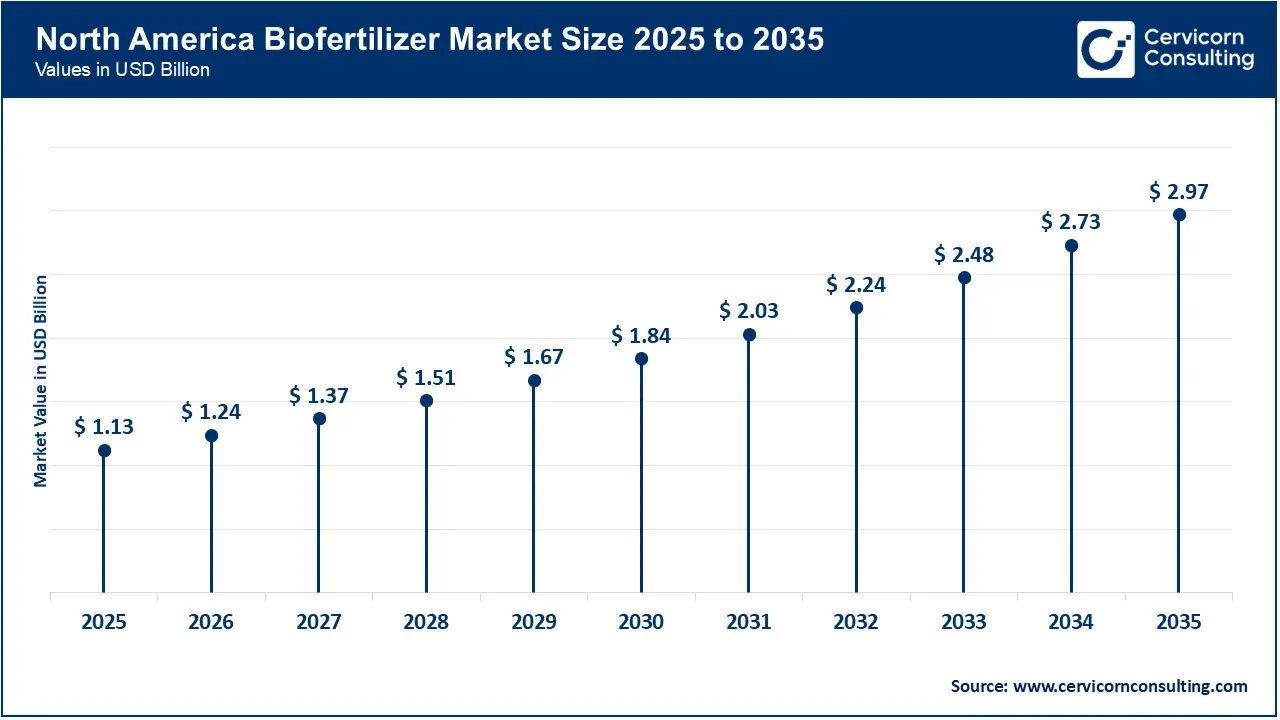
The development of the market continues with the increase of research and development and adoption of sustainable farming. In June 2023, the AgriTech Solutions launched liquid Azotobacter for rice paddies which enhances soil health and boosts yield. Canada is working on developing biofertilizers in granular and encapsulated forms. The Growth is driven by the trend of Organic Farming, and ESG initiatives. North America is becoming the center of advanced biofertilizers.
What are the growth factors of Europe biofertilizer market?
- The Europe biofertilizer market size was estimated at USD 0.66 billion in 2025 and is forecasted to hit around USD 1.75 billion by 2035.
The growth of the market in this region is mainly due to the implementation of stringent environmental laws and the rising demand for organic farming. In July 2023, BioGrow Labs of Germany tested phosphate-solubilizing granules which led to increased corn yields and reduced the need for chemical fertilizers. France and the Netherlands are developing microbial consortia and controlled release forms. The increase of EU policies leads to the growth of sustainable farming. Europe is the leader in biofertilizer innovation.
Why is Asia-Pacific exhibiting rapid growth in the biofertilizer market?
- The Asia-Pacific biofertilizer market size reached USD 0.72 billion in 2025 and is expected to surpass around USD 1.91 billion by 2035.
The growth in this region is attributed to rapid urbanization and increase food demand. The region is also supported by the government. In October 2024, EcoSoil Systems (India) launched Rhizobium-coated seeds which improves germination and yield. Japan and China are looking into biofertilizers and foliar fertilizers. South Korea is combining biofertilizers with precision farming. The region is known for innovative and cost-effective solutions.
Market Revenue Share, By Region, 2025 (%)
| Region |
Revenue Share, 2025 (%) |
| North America |
39.50% |
| Europe |
23.20% |
| Asia-Pacific |
25.40% |
| LAMEA |
11.90% |
LAMEA continue to grow steadily
- The LAMEA biofertilizer market was valued at USD 0.34 billion in 2025 and is anticipated to reach around USD 0.90 billion by 2035.
Countries in emerging markets continue to grow steadily because of their focus on sustainability, particularly in farming. In April 2024, Brazil's NaturaAgro tested phosphate granules on soybeans and was able to increase soybean productivity. Mexico and Saudi Arabia are investing in biofertilizers made from microbes. South Africa is collaborating with universities on Mycorrhizal products. International partnerships are helping develop innovative Mycorrhizal products.
Segmental Analysis
Crop Type Analysis
Based on crop type, the market is segmented into cereals & grains, fruits & vegetables, plantation crops and others. The cereals & grains segment has captured highest revenue share in 2025.
Market Revenue Share, By Crop Type, 2025 (%)
| Crop Type |
Revenue Share, 2025 (%) |
| Cereals & Grains |
41.00% |
| Fruits & Vegetables |
27.30% |
| Plantation Crops |
23.10% |
| Others |
8.60% |
Technology Analysis
Conventional Fermentation: Cultivating microbes in batch or fed-batch systems remains the traditional and most widely adopted method in biofertilizer production. Its simplicity and scalability make it ideal for many small and medium scale farms. In March 2024, BioGrow Labs (India) optimized Rhizobium cultivation using this method. They improved microbial survival while reducing contamination, allowing farmers to receive dependable seed and soil treatments. This approach also reduced costs while production and quality remained consistent. In biofertilizer manufacturing, conventional fermentation has baseline technology status and continues to be widely used.
Advanced Fermentation / Continuous Bioreactors: Continuous fermentation systems are the most advanced technology and automate much of the production cycle, which aids in decreasing human error. As such, they are able to maintain a steady microbial population while also increasing yield. In July 2024, AgriTech Solutions (U.S.) implemented continuous bioreactors for phosphate-solubilizing bacteria and was able to cut production time by 30%. This advancement bolstered quality control during production and improved the biofertilizer field efficacy. As a result, large scale commercial farms gained access to high-performance biofertilizers. Continuous fermentation technology is becoming widely used in modern production facilities.
CRISPR-Based Microbial Engineering: CRISPR technology allows precise edits to microbial genomes to improve nitrogen fixation and stress tolerance. This technology is used to develop high-yield and resilient strains. BioAgri Insights (Europe) launched CRISPR-modified Azotobacter strains in trial runs and increased wheat yield by 25% in September 2023. This reduces dependence on chemical fertilizers and rapid R&D is in advanced crop-specific formulations. Biofertilizers developed via CRISPR technology are the next best inputs in precision agriculture.
Encapsulation/Controlled Release Technology: Encapsulation extends the microbial lifespan and encapsulated formulations reduce the number of applications needed. Microbial survival is extended to controlled dispensing of nutrients to crops. In February 2024 EcoSoil Systems (India) released shelf stable encapsulated Bacillus biofertilizers which improved soil colonization and plant growth. Farmers made fewer applications which reduced costs and labor. Encapsulation is becoming crucial to sustainable agriculture and high-value crops.
Application Analysis
Seed Treatment: Biofertilizers are directly applied to seeds for microbial colonization and chemical seed treatment. This is an early microbe-to-plant contact for improved nutrient uptake and germination. AgriSmart Technologies improved germination by 15% in coated soybeans treated with Rhizobium in May 2024. This resulted in increased early crop vigor. Reports from farmers indicate that the plants were healthier and chemical fertilizers were reduced. This offers cost-effective seed treatment for smallholder farms.
Soil Treatment: The use of Biofertilizers on soil enhances microbial diversity and makes nutrients readily available. This results in stronger root systems and greater potential for high yields. In June 2024, BioGrow Labs demonstrated that phosphate-solubilizing biofertilizers increased corn yield by 20% in field trials. Treatment of the soil improves long-term soil health and fertility. It also minimizes reliance on synthetic fertilizers. This method is being adopted on large-scale farms for sustainability on an increasing basis.
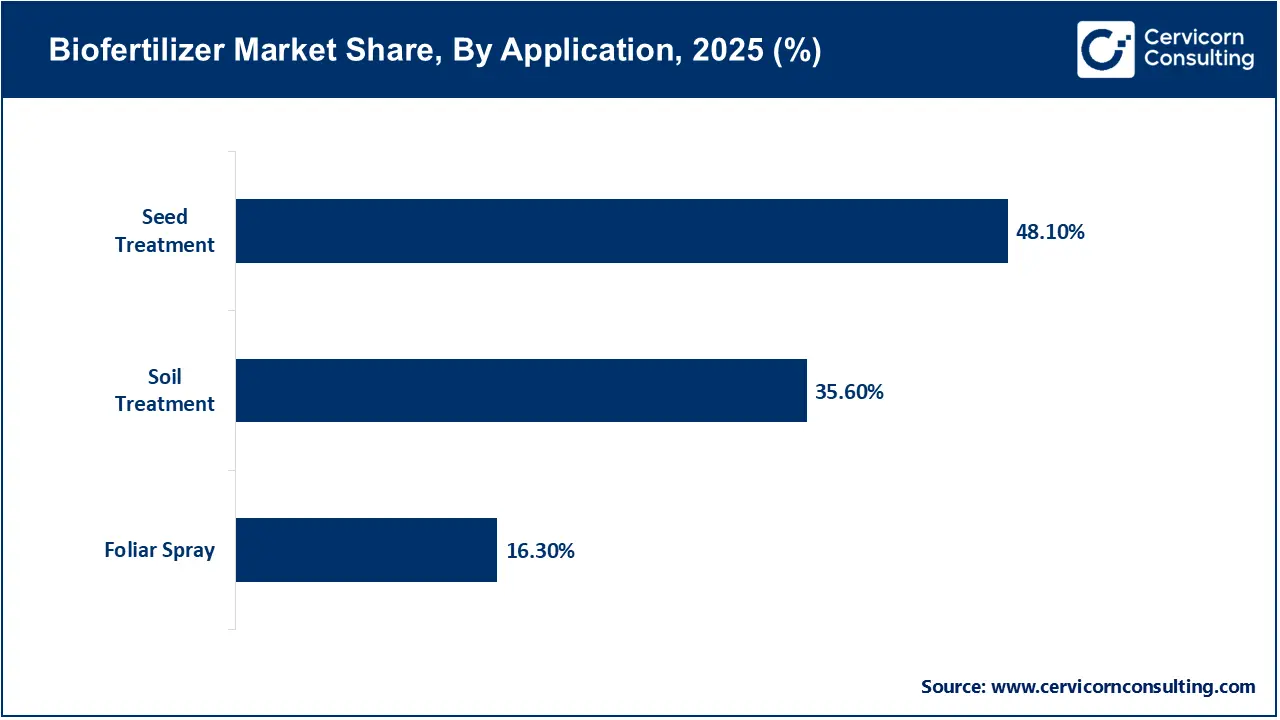
Foliar Spray: Biofertilizers in this form are used to improve the vigor of a plant and are applied on top of the soil and seed treatments. This method is used when rapid absorption of nutrients is needed. In August 2023, AgriNext (Israel) applied Bacillus sprays to tomato crops, reducing fertilizer run-off and enhancing growth. This method is used during stressful conditions on the crops as it ensures that the nutrients are readily available to the plants. This procedure is aimed toward high-value horticultural crops.
Material/Formulation Analysis
Liquid Biofertilizers: To facilitate easier and even application, the biofertilizers in this form are protected in a microbial liquid suspension for faster activation and enhanced microbial survival. In April 2024, EcoSoil Systems launched liquid Azotobacter for rice paddies, improving root colonization and plant growth. These are preferred for use in irrigation systems and for spraying. This reduces the labor needed and application costs. The use of liquid biofertilizers in precision agriculture for liquid suspension is done widely.
Carrier-Based / Powdered Biofertilizers: Microbes are embedded in solid carriers like peat, compost, or lignite for stability. These powders allow easier storage and transport. In July 2023, BioGrow Labs introduced Rhizobium powders for pulses, maintaining microbial viability for six months. Powders release microbes gradually in soil. They are ideal for smallholder and large-scale farms. Carrier-based forms improve shelf life and field effectiveness.
Granular / Encapsulated Biofertilizers: Granules or encapsulated forms protect microbes and provide controlled nutrient release. They extend shelf life and reduce application frequency. In January 2024, AgriTech Solutions launched phosphate biofertilizer granules with 90-day field efficacy. Farmers applied fewer doses while achieving higher crop productivity. Granular biofertilizers are particularly suitable for long-duration crops. Encapsulation ensures efficiency and sustainability in nutrient delivery.
End Use Analysis
Farmers: Farmers directly apply biofertilizers to improve soil fertility and crop yields. They benefit from cost savings and reduced chemical inputs. In March 2024, Indian smallholder farmers adopted Azotobacter-coated seeds, reporting higher yields and healthier crops. This promoted sustainable practices at the field level. Farmers gained better soil health and crop resilience. Direct use ensures immediate productivity impact.
Commercial Growers and Agribusinesses: Large-scale producers focus on cost reduction and consistency improvement through the use of biofertilizers, combining them with precision agriculture systems. For instance, in June 2024, a U.S. corn farm used 500 acres of land for liquid biofertilizer application and achieved 18% higher yields. This also helped depend less on chemical fertilizers. Large-scale growers operational efficiency improvements and the commercial adoption of biofertilizers helps in passing certification standards for sustainable practices.
Research Django: Agri-Tech Labs or Research institutes focus on testing, developing novel microbial strains, and biofertilizer formulations while ensuring crop and soil safety and efficacy. For instance, in September 2023, the University of Nairobi, in collaboration with local startups, began trialing Mycorrhizal biofertilizers under drought conditions, which rapidly enhanced local adaptation and expedited regulatory approval. Labs also serve as the innovation engine for precision agriculture, for which R&D drives innovation, creating new biofertilizer products for the market.
Distribution Model Analysis
Direct Sales (B2B): Suppliers sell biofertilizer products directly to commercial farms and agribusinesses to guarantee bulk delivery and tailored formulations. BioAgriTech, for instance, initiated a direct sales model to Europe in February 2024 for a faster fulfillment and higher quality end products. Direct sales in B2B model empower the economic interdependence of suppliers and farmers while cutting down intermediaries, hence lowering the overall cost. This model of direct sales is most preferred on large scale applications.
Distributor and Dealer Networks: EcoSoil Systems support their dealers by helping them develop their networks in rural regions and distributing small packs to smallholder farmers in order to complete the last mile. This method supports accessibility and marketing assistance. In March 2024, EcoSoil Systems expanded its dealer networks in 10 Indian states and improved the field-based technical support provisions. Trust-building at the retail network level is important, and at that stage assistance on appropriate application is important. Wider adoption is facilitated by the dealer network.
Online Platforms / E-commerce: Biofertilizers are sold online for personalized and direct delivery. This channel caters to urban and tech-savvy growers. In May 2024, AgriNext sold customized microbial blends via e-commerce portals to rooftop gardeners. Online sales offer convenience and real-time ordering. Consumers access tailored solutions quickly. Digital platforms expand reach beyond traditional markets.
Biofertilizer Market Top Companies
Recent Developments
- In September 2024, KRIBHCO and Novonesis have formed a long-term partnership to introduce advanced biosolutions for Indian agriculture, beginning with the launch of ‘KRIBHCO Rhizosuper’, an innovative mycorrhizal biofertilizer powered by Novonesis’ proprietary LCO promoter technology. This new biofertilizer uses a unique combination of endomycorrhizal species and signaling molecules to improve crop yield, nutrient uptake, and soil quality, addressing critical challenges facing Indian farmers such as poor soil carbon and erratic weather. The collaboration aims to promote sustainable agriculture by reducing dependence on chemical fertilizers, enhancing plant and soil health, and leveraging the combined expertise and distribution strengths of both companies for broad impact across India.
Market Segmentation
By Product
- Nitrogen Fixing
- Phosphate Solubilizing
- Other Products
By Crop Type
- Cereals & Grains
- Fruits & Vegetables
- Plantation Crops
- Others
By Microorganism Type
- Rhizobium
- Azotobacter
- Mycorrhizae
By Technology
- Conventional Fermentation
- Advanced Fermentation/Continuous Bioreactors
- CRISPR-Based Microbial Engineering
- Encapsulation/Controlled Release Technology
By Material
- Liquid Biofertilizers
- Carrier-Based/Powdered Biofertilizers
- Granular/Encapsulated Biofertilizers
By Distribution Model
- Direct Sales (B2B)
- Distributor and Dealer Networks
- Online Platforms / E-commerce
By End Use
- Farmers
- Commercial Growers and Agribusinesses
- Research Django
By Application
- Seed Treatment
- Soil Treatment
- Foliar Spray
By Region
- North America
- APAC
- Europe
- LAMEA