Autoinjectors Market Size and Growth 2026 to 2035
The global autoinjectors market size reached at USD 104.13 billion in 2025 and is expected to be worth around USD 563.50 billion by 2035, exhibiting a compound annual growth rate (CAGR) of 18.4% over the forecast period from 2026 to 2035. The autoinjectors market is primarily driven by the rapid global expansion of biopharmaceutical production, which increasingly relies on advanced filtration technologies to ensure product safety and quality. The shift from chemical synthesis to biological expression systems requires specific filtration processes to protect the structural integrity of sensitive proteins and vaccines. Biological agents are more susceptible to degradation under thermal and chemical conditions than small molecules and are often validated through membrane filtration. Additionally, the growing burden of chronic diseases will continue to drive the large-scale production of monoclonal antibodies and recombinant proteins, all of which rely on high-throughput membrane systems.
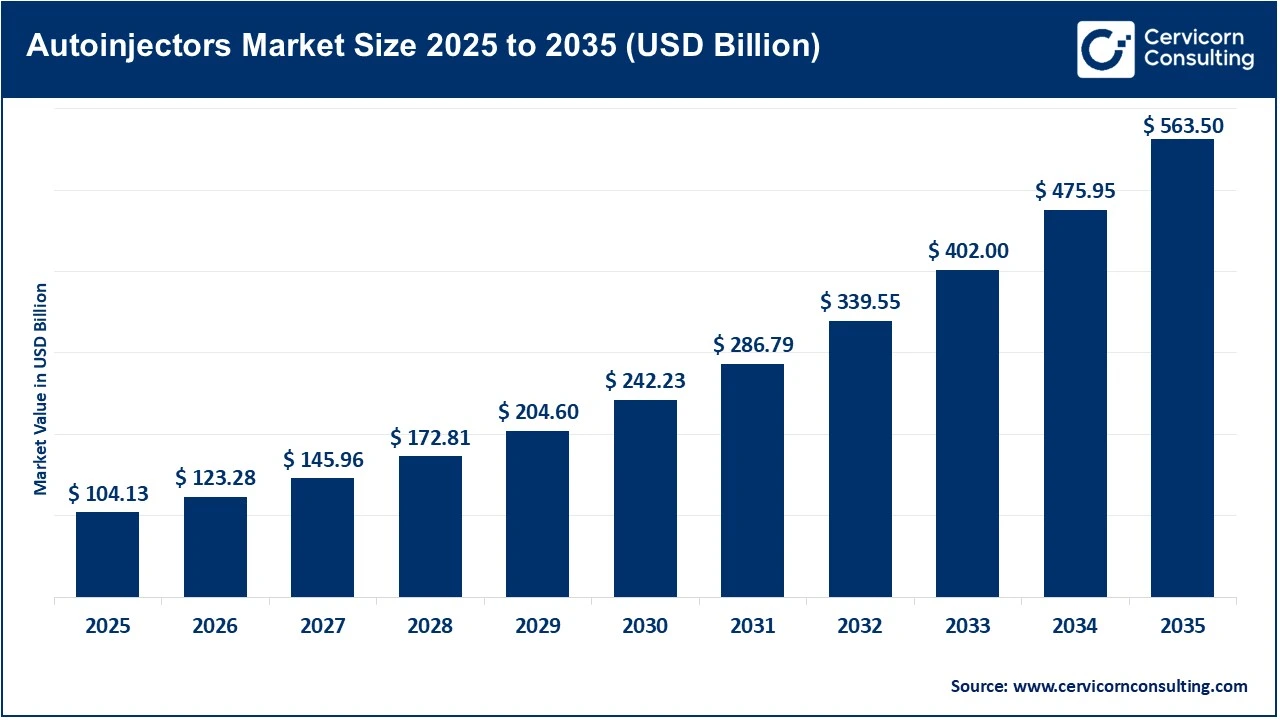
Regulatory frameworks and the transition towards advanced manufacturing practices are also significantly contributing to market growth. Regulatory authorities such as the FDA and EMA mandate strict compliance with sterile filtration and viral clearance requirements, particularly in biologics and injectable drug production, where even minimal contamination is unacceptable. Furthermore, a “zero-contamination” threshold is no longer an aspiration but a requirement for market entry, forcing manufacturers to invest in validated filtration. At the same time, the industry is witnessing a shift towards continuous manufacturing and process intensification, where filtration is integrated directly into production workflows to enhance efficiency and reduce costs.
Report Highlights
- By Region, North America dominates the regional segment, capturing around 43% of the global autoinjector market, mainly due to advanced healthcare infrastructure and growing preference for home-based treatment solutions.
- By Usage, the disposable autoinjector systems dominate the market, accounting for nearly 58% of the market, driven by convenience, reduced contamination risk, and rising adoption of single-use injection devices.
- By Drug Type, the biologics segment representing approximately 54% of the market, owing to rising demand for injectable biologic therapies in chronic and autoimmune disease treatment.
- By Technology, the automatic autoinjectors dominate the market, capturing around 61% of the market, due to improved ease of use, accurate dosing, and growing adoption among elderly and home care patients.
- By Therapy Area, the diabetes segment accounting for nearly 29% of the market, driven by the increasing diabetic population and growing demand for self-administered insulin therapies.
- By Therapy Area, the Multiple Sclerosis is the fastest-growing segment with around 14% share, primarily due to rising prevalence and expanding use of biologic injectable therapies.
- By End User, the home care settings segment capturing highest share of 54%, owing to increasing patient preference for self-administration.
- By End User, the hospitals & clinics are the fastest-growing segment with nearly 30% share, mainly driven by increasing administration of specialty biologics.
Emergence of Digital Connectivity and Smart Monitoring Features Driving the Market Growth
The emergence of advanced digital connectivity and smart monitoring features is a significant trend in the autoinjector market. Modern smart autoinjectors increasingly integrate Bluetooth connectivity, sensors, and microprocessors to automatically record medication details, including dosage, injection time, and date of administration. This information can be transmitted to smartphone applications or cloud-based platforms, enabling both patients and healthcare providers to monitor treatment adherence in real time.
The growing adoption of digitally connected autoinjectors is improving patient engagement and supporting better disease management through enhanced monitoring capabilities. In addition, these technologies provide valuable real-world data for pharmaceutical companies and healthcare stakeholders, particularly in clinical trials and patient support programmes.
What is an autoinjector?
Autoinjectors are devices designed to deliver a single, pre‑set dose of medicine subcutaneously with minimal steps. Each autoinjector contains a pre‑filled container and is ready to use, eliminating the need for dose preparation, cartridge handling, or repeated setup. With intuitive operation, clear feedback, and ergonomic design, autoinjectors are intended to be easy to use, even for patients new to medical devices. This makes self‑injection more accessible, reliable, and suitable for treatment at scale, particularly as therapies shift towards home‑based care.
Top 5 Trends and Technologies
- AI-Driven Quality Inspection Systems: AI-enabled inspection technologies enhance the accuracy of manufacturing defect detection by more than 90% during device production.
- Home-Based Self-Administration Solutions: Self-injection therapies can reduce treatment-related healthcare costs by up to 50% compared with hospital-based administration.
- Bluetooth-Enabled Drug Delivery Platforms: Connected drug delivery systems improve therapy compliance tracking efficiency by nearly 40% through mobile health integration.
- Sustainable Reusable Injector Solutions: Reusable injector platforms can reduce medical plastic waste generation by approximately 60% over long-term treatment cycles.
- Needle-Free Injection Technologies: Needle-free delivery systems can reduce perceived injection-related pain by nearly 70%, improving patient comfort and acceptance.
Report Scope
| Area of Focus |
Details |
| Market Size in 2026 |
USD 123.28 Billion |
| Market Size in 2035 |
USD 563.50 Billion |
| CAGR 2026 to 2035 |
18.40% |
| Dominant Region |
North America |
| Fastest Growing Region |
Asia-Pacific |
| Key Segments |
Usage, Drug Type, Technology, Therapy Area, End-user, Region |
| Key Companies |
Novo Nordisk, Eli Lilly and Company, AbbVie, Amgen, Sanofi, AstraZeneca, Becton, Dickinson and Company (BD), Ypsomed AG, SHL Medical, Owen Mumford, Phillips-Medisize, Teva Pharmaceutical Industries, Johnson & Johnson, Gerresheimer AG, Viatris |
Recent Major Milestones
1. Regulatory Approval and New Product Launches.
Regulatory approvals and new product launches remain major growth drivers for the autoinjectors market. The regulatory landscape has increasingly focused on advanced drug delivery systems capable of supporting high-volume administration for metabolic health therapies, particularly amid the sharp rise in prescriptions for GLP-1 agonists. In mid-2024, the FDA approved several high-capacity, multi-dose autoinjector platforms for obesity treatment indications. Following these approvals, prescription volumes for therapies such as Wegovy and Mounjaro increased by nearly 30%, underscoring the critical role of autoinjector technologies in supporting market expansion. These developments mark a significant achievement for the pharmaceutical industry in scaling drug-delivery technology and addressing unprecedented global demand for weight-management and diabetes treatments.
2. Corporate Partnerships and Manufacturing Scale-Up
Corporate partnerships and manufacturing expansion have emerged as major milestones shaping the autoinjector market's growth. Pharmaceutical companies are increasingly entering into long-term strategic collaborations with specialized device manufacturers and distribution partners to strengthen supply chain resilience and meet rising demand. In late 2024, a leading pharmaceutical company announced a partnership valued at approximately USD 1.2 billion with a device manufacturer to double autoinjector production capacity by 2026. This development reflects a broader industry trend in which autoinjector devices are treated as critical strategic assets rather than secondary packaging components.
3. Government Initiatives and Public Health Policy Changes
Government initiatives and evolving public health policies are playing an essential role in the adoption of autoinjectors. Healthcare systems across several countries are promoting self-administration solutions to reduce hospital burden and improve long-term chronic disease management. In Europe, governments such as the UK have introduced initiatives to encourage the use of self-injection devices for chronic care, thereby reducing pressure on hospital infrastructure and healthcare staffing. In addition, these initiatives contributed to an approximately 10% increase in the adoption of self-injection devices within the public healthcare sector during 2024–2025.
4. Sustainability and New Eco-Friendly Delivery Systems
Sustainability and a new eco-friendly delivery system are also emerging as key milestones in the market. Growing concerns about single-use medical plastics have prompted manufacturers and regulators to prioritise the development of eco-friendly device solutions. In early 2025, Europe saw the regulatory certification of the first carbon-neutral autoinjector made from biobased polymers, marking a significant milestone for the industry. This achievement aligns with broader industry goals to reduce medical plastic waste by nearly 20% by 2030. Sustainable autoinjector designs typically incorporate recycled plastics or modular features to reduce the overall carbon footprint over its lifecycle. As Environmental, Social, and Governance (ESG) criteria increasingly influence procurement practices, particularly in healthcare, sustainability is expected to become an essential competitive and regulatory requirement for autoinjector manufacturers globally.
Autoinjectors Market Regional Analysis
The autoinjectors market is segmented by region into North America, Europe, Asia-Pacific, and LAMEA. Here is a brief overview of each region:
Asia-Pacific Autoinjectors Market: Driven by Rise in Chronic Disease Prevalence and Expansion of Healthcare Infrastructure
The Asia-Pacific autoinjectors market size was estimated at USD 20.83 billion in 2025 and is forecasted to grow around USD 112.70 billion by 2035. Asia Pacific is the fastest-growing region, driven by rapid demographic transition and expanding healthcare infrastructure. Countries such as Japan and South Korea are witnessing a significant increase in elderly populations, leading to higher demand for chronic disease management solutions and self-administration devices. By 2030, over 200 million people in the region will need regular injectable therapies for chronic diseases. In addition, the expanding middle-class population in emerging economies is improving access to specialty medications and advanced healthcare solutions. Manufacturers are increasingly focusing on developing affordable, reliable, and disposable autoinjectors to cater to the large patient population requiring regular injectable treatments.
China is a leading regional player, driving growth through biosimilar activity and healthcare reform
China has rapidly emerged as a major player in the global pharmaceutical industry, leading in the production and export of active pharmaceutical ingredients (APIs).
- The “Healthy China 2030” initiative is driving greater focus on chronic disease management and on modernising domestic drug delivery systems.
- China’s biologics industry is expanding at nearly 20% annually, significantly outpacing global growth rates.
- Domestic manufacturers are increasingly adopting autoinjector technologies to differentiate their biosimilar products from multinational competitors.
India is experiencing rapid growth by excelling in pharmaceutical manufacturing
India is a global pharmaceutical hub for developing cost-effective, high-quality autoinjector platforms for domestic and international markets.
- Large-scale manufacturers such as Biocon are driving the integration of device manufacturing and drug formulation.
- Domestic sales are expected to grow by 25% due to rising demand for advanced diabetes management solutions.
- The market continues to focus on frugal innovation, with manufacturers developing cost-effective devices tailored to emerging economies.
North America Autoinjectors Market: Driven by Technological Development and High Uptake of Self-Administration
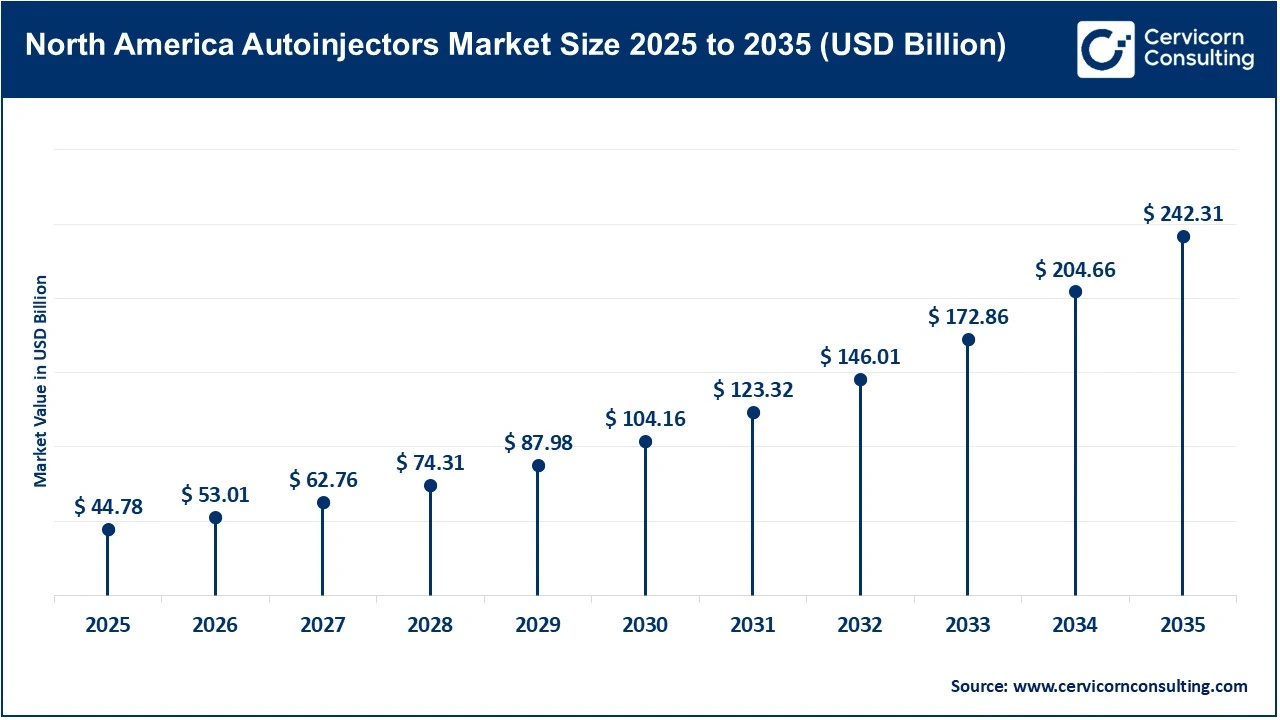
The North America autoinjectors market size was valued at USD 44.78 billion in 2025 and is expected to exceed around USD 242.31 billion by 2035. North America remains the dominant market, supported by a highly developed healthcare system, high patient awareness, and strong adoption of home-based treatment solutions. The region is increasingly shifting towards value-based healthcare, with insurance providers and healthcare systems encouraging home care treatments to reduce the high costs associated with hospital-based infusion therapies. Moreover, North America is a major hub for device research and development, particularly for "smart" connected autoinjectors that integrate with digital health platforms to track and monitor patient adherence and support enhanced clinical outcomes.
The United States continues to be dominant, driven by R&D and High Spending on Healthcare
The U.S. market is a major hub for innovation, with a strong focus on R&D and on integrating digital health technologies into drug delivery systems.
- High investment in smart Autoinjector technologies is driven by the estimated annual cost of nearly USD 300 billion linked to patient non-adherence.
- The U.S. Food and Drug Administration has established clear regulatory pathways for combination products, enabling faster commercialisation of advanced drug delivery technologies.
- The growing shift towards home-based care, supported by payers and insurers, is accelerating the adoption of self-administered, high-cost biologic therapies.
Canada is experiencing increased demand from a Growing Allergy and Diabetes Population
Canada is witnessing steady demand for autoinjectors due to the rising prevalence of anaphylaxis and diabetes.
- Public health initiatives have expanded access to emergency Epinephrine autoinjectors across public spaces.
- The Canadian market continues to benefit from rising public awareness and the introduction of advanced drug-delivery technologies.
- Integration of autoinjectors with provincial health record systems is emerging as a key focus for manufacturers.
Europe Autoinjectors Market: Driven by Stringent Regulatory Environments and Growing Aging Population
The Europe autoinjectors market size reached at USD 30.20 billion in 2025 and is forecasted to hit around USD 163.42 billion by 2035. The European market is marked by stringent regulatory frameworks and a strong focus on product safety and environmental sustainability. The implementation of the EU Medical Device Regulation (MDR) has raised the bar for clinical evidence, device quality, and safety compliance across the healthcare supply chain. Beyond regulatory advances, Europe is actively promoting a shift from disposable devices to reusable and modular autoinjector systems to reduce environmental impact.
United Kingdom Will Focus on Patient-Care Approaches to Home Care
The UK market aligns with NHS initiatives to reduce the burden on outpatient clinics by increasing the adoption of home-based treatment solutions.
- NHS “Homecare Medicines” initiatives encourage pharmaceutical companies to provide comprehensive device training and patient support.
- Transitioning stable patients from outpatient settings to home-based Autoinjector therapies has led to significant cost savings by reducing administrative overhead per patient.
- Commercial success increasingly depends on a service-oriented approach that includes robust patient support and effective medical waste disposal systems.
Autoinjectors Market Share, By Region, 2025 (%)
| Region |
Revenue Share, 2025 (%) |
| North America |
43% |
| Europe |
29% |
| Asia Pacific |
20% |
| LAMEA |
8% |
LAMEA Autoinjectors Market: Driven Emerging Healthcare Landscapes and Growing Awareness of Benefits of Biologic Medications
The LAMEA autoinjectors market was valued at USD 8.33 billion in 2025 and is anticipated to reach around USD 45.08 billion by 2035. The LAMEA region is witnessing steady growth, supported by improving healthcare infrastructure and increasing awareness of biologic therapies. Currently, the region accounts for a small market share of 8% but is seeing a considerable rise in biosimilar take-up as key patents for major biologics expire. Latin America and the Middle East have invested in government-subsidised "fill-finish" facilities to reduce reliance on bio-pharma imports from Western markets and stabilize supply chains. Governments in countries such as Brazil and the UAE are expanding public health insurance coverage for high-cost therapies, thus driving demand for easy-to-use autoinjector devices that can be utilized in multiple configurations and across socio-economic strata.
Brazil to Expand Access to Specialty Medicines and Biologics
Brazil is integrating more autoinjectors to increase public access to very expensive biologics.
- The expiration of patents for high-cost biologics is enabling greater entry of biosimilars into the Brazilian market.
- The Brazilian Unified Health System (SUS) is increasingly incorporating autoinjectors into chronic disease management programmes.
- Local manufacturing initiatives are being expanded to reduce device costs and improve accessibility within the public healthcare system.
United Arab Emirates to Drive Market Growth through Medical Tourism and Innovation
The UAE is establishing itself as a hub for medical innovation, driving market growth through its premier healthcare systems and medical tourism.
- Government initiatives supporting healthcare technology are attracting international patients to the United Arab Emirates for advanced biologic therapies.
- High disposable incomes are driving strong adoption of premium connected autoinjector devices.
- Collaborations with global pharmaceutical companies are enabling faster clinical launches of next-generation drug-delivery platforms.
Autoinjectors Market Segmental Analysis
The Autoinjectors market is segmented into usage, scale, drug type, technology, therapy area, end-user, and region.
Usage Analysis
The disposable autoinjector segment dominates the autoinjector market due to its ease of use and reduced safety risks associated with device maintenance and cross-contamination. For example, in treating chronic conditions such as rheumatoid arthritis and Crohn’s disease, patients increasingly prefer ready-to-use solutions that simplify self-administration and minimize the time and effort required to manage therapy. Disposable devices eliminate the need for loading or cleaning, making them more user-friendly and improving treatment adherence. In addition, the convenience of disposability is reinforced by clinical workflows and reimbursement plans that have historically rewarded the "one-and-done" concept in devices.
Autoinjectors Market Share, By Usage, 2025 (%)
| Usage |
Revenue Share, 2025 (%) |
| Disposable Autoinjectors |
58% |
| Reusable Autoinjectors |
42% |
Reusable autoinjectors are the fastest-growing segment of the market, driven by a growing global focus on environmental sustainability and long-term cost management. As healthcare systems transition towards value-based care models, reusable platforms offer significant economic advantages by allowing patients to retain the expensive mechanical and electronic components while replacing only the drug cartridge. This reduces the overall cost of therapy over extended treatment periods. Growth in this segment is particularly strong in emerging markets and within the smart-device category, where the integration of advanced electronics enhances the economic and functional value of reusable systems.
Drug Type Analysis
The biologics drug segment dominates the market because these large-molecule drugs are the current standard of care for autoimmune, oncological, and rare diseases that require a subcutaneous route. The molecular complexity of biologics and their instability in the gastrointestinal tract necessitate injection rather than oral administration, and the large profit margins on biologics enable further investment in autonomous or semi-autonomous autoinjector delivery systems. Biologics form the bedrock of the drug-type market segment, as autoinjectors were designed to safely handle high-viscosity drug formulations while delivering accurate doses.
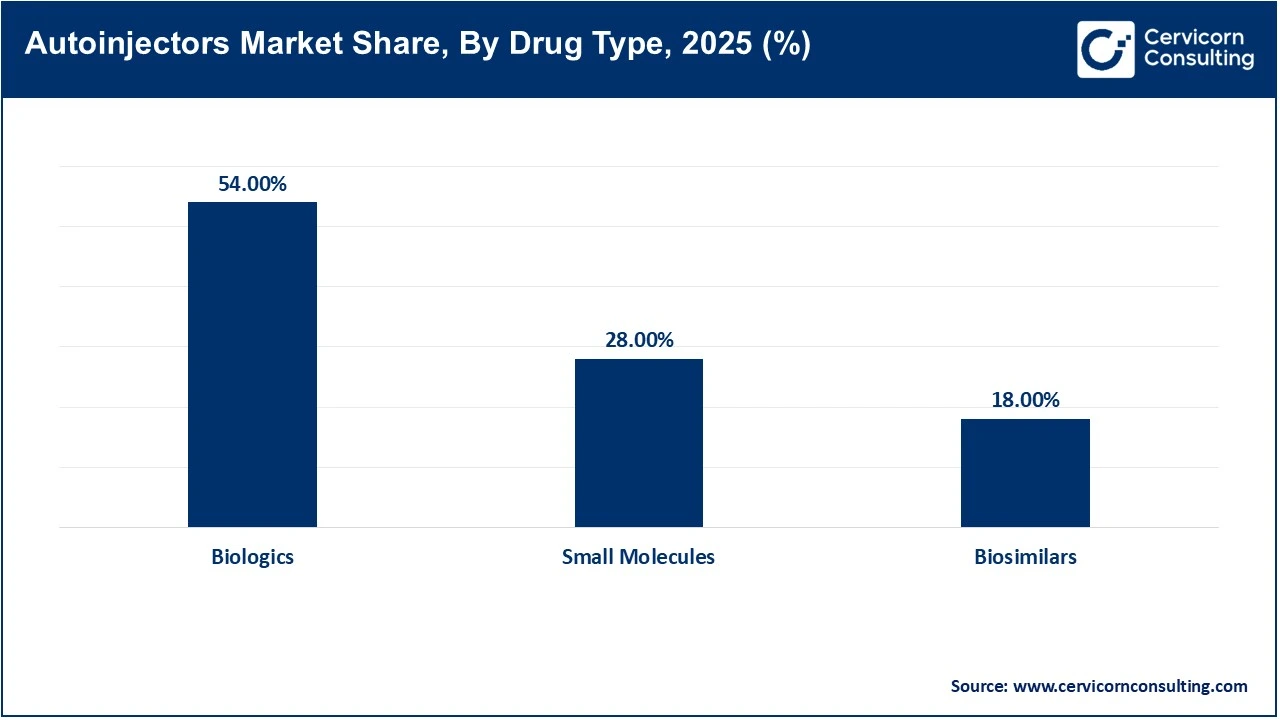
Biosimilars are the fastest-growing segment in the market, driven by increasing patent expirations of major biologic drugs and rising demand for cost-effective therapies. Governments and healthcare providers are encouraging the adoption of biosimilars to reduce healthcare spending while improving patient access to advanced treatments. Manufacturers are also pairing biosimilars with user-friendly autoinjector systems to enhance product differentiation and expand market penetration.
Technology Analysis
Automatic autoinjectors hold the largest market share because they simplify the injection process and reduce user error. These devices automate needle insertion and drug delivery, ensuring consistent administration and improving patient comfort. Features such as hidden needles also help reduce needle anxiety, making autoinjectors highly preferred in-home care settings and among patients with limited manual dexterity.
Autoinjectors Market Share, By Technology, 2025 (%)
| Technology |
Revenue Share, 2025 (%) |
| Automatic Autoinjectors |
61% |
| Manual Autoinjectors |
39% |
Manual autoinjectors are experiencing strong growth due to their affordability and greater control during drug administration. Some patients prefer manual devices because they allow adjustment of injection speed, helping reduce discomfort during treatment. The segment is also expanding in developing and price-sensitive markets, where manufacturers are focusing on simpler and lower-cost solutions to improve access to biologic therapies.
Therapy Area Analysis
Diabetes continues to dominate the therapy area segment due to the large global patient population requiring frequent subcutaneous injections. Rising adoption of insulin therapies, GLP-1 receptor agonists, and long-acting injectables continues to drive demand for autoinjectors. The scale of diabetes care also supports significant research and development investments, strengthening diabetes' position as the leading application area in the market.
Autoinjectors Market Share, By Therapy Area, 2025 (%)
| Therapy Area |
Revenue Share, 2025 (%) |
| Diabetes |
29% |
| Rheumatoid Arthritis |
24% |
| Anaphylaxis |
18% |
| Multiple Sclerosis |
14% |
| Obesity |
9% |
| Others |
6% |
Multiple Sclerosis is the fastest-growing therapy area in the market because the latest generation of disease-modifying therapies (DMTs) is increasingly designed for self-administered subcutaneous delivery. Patients increasingly prefer home-based treatment options that support convenience and long-term adherence. In addition, the growing use of smart, connected autoinjectors to monitor treatment adherence and improve patient outcomes is accelerating growth in the Multiple Sclerosis segment.
End-user Analysis
Home care settings are the dominant end users of the market, mainly because these devices are specifically designed to support self-administration outside hospitals and clinics. Home-based treatment improves patient convenience, reduces healthcare costs, and eases pressure on healthcare infrastructure. The shift towards decentralized healthcare, accelerated by the COVID-19 pandemic, has further strengthened the adoption of autoinjectors in home care environments for chronic disease management.
Autoinjectors Market Share, By End-user, 2025 (%)
| End-user |
Revenue Share, 2025 (%) |
| Home Care Settings |
54% |
| Hospitals & Clinics |
28% |
| Pharmaceutical & Biotechnology Companies |
18% |
Hospital and clinic use is the fastest-growing end-user segment, driven by increased use of autoinjectors for emergency medicine, such as epinephrine for anaphylaxis, and for "first-dose" observations for more complex new biologics. Healthcare professionals are adopting these devices to ensure accurate drug delivery and reduce medication errors in clinical settings. In addition, hospitals are increasingly using autoinjectors for patient training and monitoring during the initial stages of complex injectable therapies.
Autoinjectors Market Top Companies
Recent Developments
- In February 2026, Eli Lilly and Company received FDA approval for the multi-dose Zepbound KwikPen, enabling a full month of obesity treatment with a single injection device.
- In April 2025, Novo Nordisk plans to launch Wegovy pen injectors in India, expanding its global portfolio of injectable obesity treatments.
- In November 2024, Novo Nordisk partnered with Ypsomed to supply injection pens at scale for its next-generation obesity drug, CagriSema.
Market Segmentation
By Usage
- Disposable Autoinjectors
- Reusable Autoinjectors
By Drug Type
- Biologics
- Small Molecules
- Biosimilars
By Technology
- Automatic Autoinjectors
- Manual Autoinjectors
By Therapy Area
- Diabetes
- Rheumatoid Arthritis
- Anaphylaxis
- Multiple Sclerosis
- Obesity
- Others
By End-user
- Home Care Settings
- Hospitals & Clinics
- Pharmaceutical & Biotechnology Companies
By Region
- North America
- APAC
- Europe
- LAMEA