Pharmaceutical Drug Delivery Market Size, Growth, Forecast 2026 to 2035
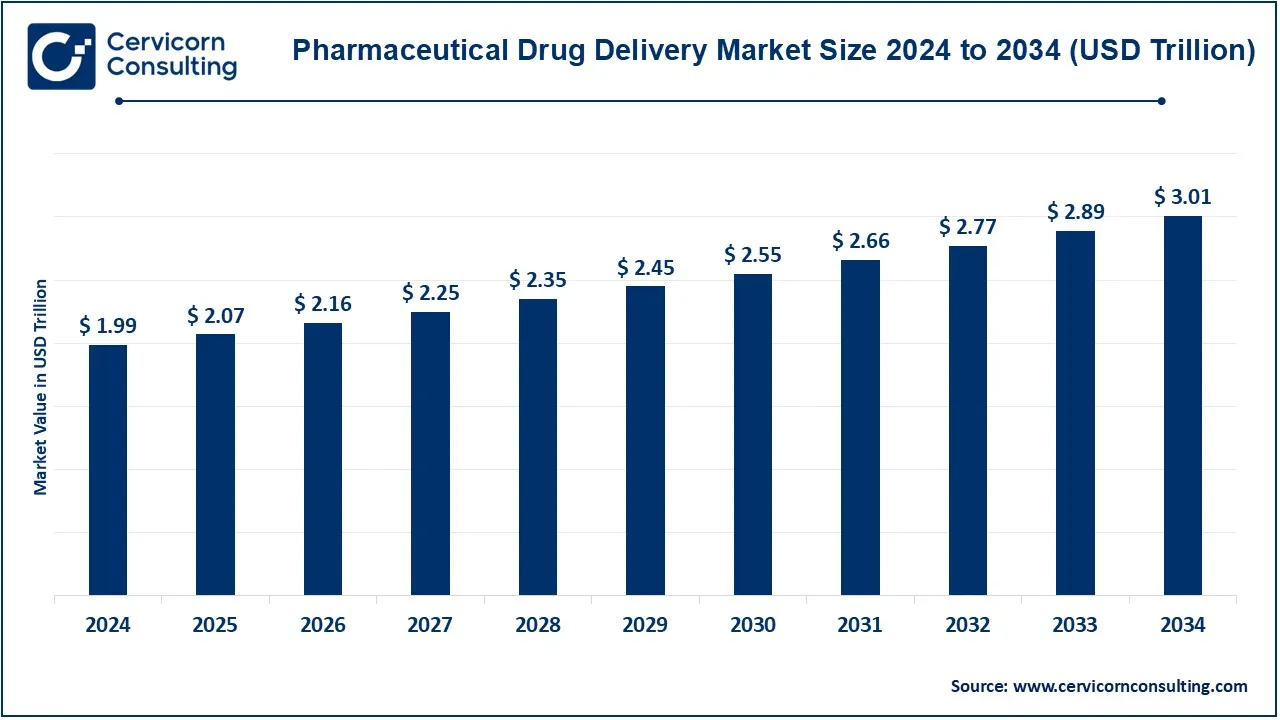
The global pharmaceutical drug delivery market size was valued at USD 2,107.21 billion in 2025 and is projected to grow from USD 2,199.96 billion in 2026 to nearly USD 3,241.72 billion by 2035, registering a CAGR of 4.5% over the 2026 to 2035 period. The pharmaceutical drug delivery market is expanding because there is an increasing need for drug delivery methods that are efficient, patient-friendly, and tailored. Innovative treatments are being supported by developments in drug formulation, delivery systems, and personalized medicine. Opportunities for market expansion are being created by the growing demand for targeted and controlled-release treatments. Convenient and efficient drug administration techniques are becoming more and more necessary as chronic diseases become more common. Additionally, growing investments in cutting-edge medication delivery technologies are fostering innovation and industry growth.
In January 2026, AptarGroup, Inc. announced its Beat the Blink drug delivery technology, designed to improve dosing precision and enhance the patient experience for ophthalmic drug delivery. The development highlights the growing focus on innovative delivery systems that improve drug administration and patient convenience.
Report Highlights
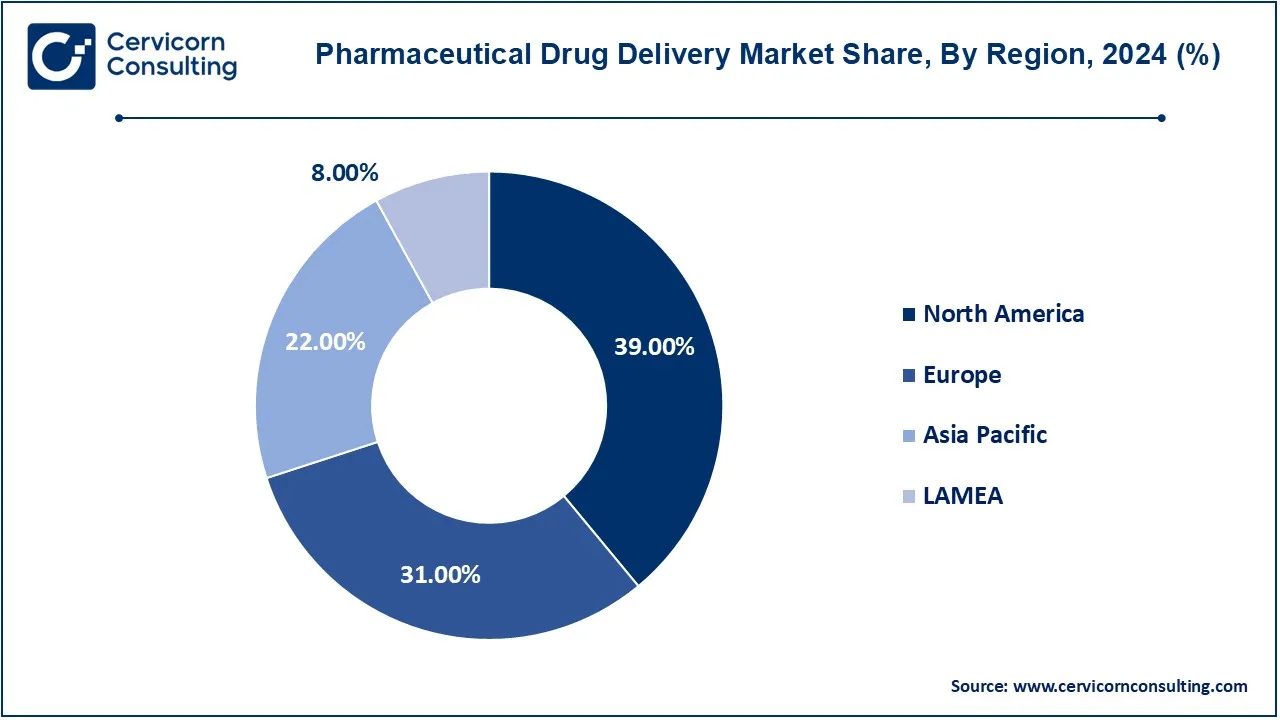
- By region, North America led the market in 2025 (revenue share of 38%), supported by advanced healthcare infrastructure and strong R&D.
- By route of administration, injectable drug delivery led the pharmaceutical drug delivery market in 2025, driven by the growing use of biologics and specialty medicines.
- By drug delivery technology, conventional drug delivery led the market in 2025, supported by its widespread use in pharmaceutical treatments.
- By dosage form, solid oral dosage forms led the market in 2025, supported by the widespread use of tablets and capsules.
- By drug type, small-molecule drugs led the market in 2025, supported by their broad therapeutic use.
- By application, oncology led the market in 2025, supported by increasing demand for advanced cancer therapies.
- By delivery mechanism, immediate-release delivery led the market in 2025, supported by its established use in conventional medicines.
- By device/platform, prefilled syringes and conventional injectable devices led the market in 2025, supported by their established use.
- By end user, hospitals led the market in 2025, supported by their use in complex and injectable therapies.
Growth Factors
- Growth of Targeted Drug Delivery: Increasing focus on delivering medicines directly to specific tissues or organs is improving treatment effectiveness and reducing unwanted effects.
- Rise of Long-Acting Drug Delivery: Long-acting formulations are gaining attention as they can reduce dosing frequency and improve patient convenience.
- Advances in Nanotechnology: Nanotechnology is supporting the development of drug carriers that can improve drug stability, absorption, and controlled release.
- Increasing Use of Injectable Systems: Advanced injectable delivery systems are gaining adoption due to their ability to provide precise and efficient drug administration.
- Shift Toward Patient-Friendly Delivery: Drug delivery systems are increasingly being designed for easier administration, supporting self-care and home-based treatment.
- Development of Smart Drug Delivery: Smart delivery technologies are being developed to provide controlled and responsive drug release based on patient or treatment needs.
- Integration of AI: AI is increasingly being used to support drug formulation, delivery-system development, and the optimization of treatment approaches.
Market Dynamics
Key Drivers
- Long-Acting Formulations: Increasing development of long-acting medicines is driving demand for delivery technologies capable of maintaining therapeutic drug concentrations over extended periods. Injectable and implantable systems can reduce dosing frequency and support adherence, with WHO recommending twice-yearly injectable lenacapavir as an additional HIV prevention option in 2025.
- Complex Molecules: Growing pharmaceutical pipelines for peptides, proteins, antibodies, and other complex molecules are increasing demand for specialized delivery technologies. These molecules can face degradation, poor permeability, and bioavailability limitations, encouraging development of nanoparticles, lipid-based systems, microspheres, implants, and other approaches designed to improve therapeutic delivery.
- Alternative Administration: Pharmaceutical developers are increasingly exploring administration routes that can improve convenience, absorption, and treatment adherence. Oral, transdermal, pulmonary, nasal, buccal, implantable, and injectable systems provide alternatives to conventional formulations, while emerging technologies are also being developed to overcome biological barriers affecting drug absorption and release.
Key Restraints
- High Development Costs: Advanced drug delivery systems require substantial investment in formulation development, device engineering, analytical testing, manufacturing processes, and clinical validation. Complex combination products can further increase development requirements, making commercialization more expensive and potentially limiting investment in delivery technologies for medicines with uncertain clinical or commercial returns.
- Regulatory Requirements: Drug delivery products must demonstrate appropriate safety, efficacy, quality, stability, and performance before commercialization. Combination products that integrate medicines with delivery devices can involve additional regulatory considerations, while changes to complex formulations may require extensive testing, increasing development timelines and creating additional compliance requirements for pharmaceutical developers.
- Formulation Complexity: Delivering biologics, peptides, and other sensitive molecules presents technical challenges involving stability, solubility, degradation, absorption, and controlled release. Long-acting systems also require careful control of drug release profiles and pharmacokinetics, increasing formulation complexity and making development more technically demanding than conventional immediate-release products.
Key Opportunities
- Oral Biologics: Advances in formulation science are creating opportunities to convert selected injectable therapies into oral medicines. Recent development of oral peptide therapies demonstrates progress in overcoming gastrointestinal degradation and absorption barriers, potentially expanding patient-friendly treatment options and creating new opportunities for pharmaceutical companies developing delivery technologies for complex molecules.
- Smart Delivery Systems: Emerging materials, responsive polymers, implants, and controlled-release technologies are creating opportunities for delivery systems capable of releasing medicines according to specific therapeutic requirements. Research is advancing thermoresponsive gels, polymer-drug conjugates, prodrugs, 3D-printed systems, and externally controlled implants for more precise drug release.
- Targeted Delivery: Increasing interest in precision medicine is creating opportunities for systems that deliver therapeutic compounds more selectively to specific tissues or cells. Nanoparticles, lipid-based carriers, antibody-linked systems, and other targeted approaches can potentially improve drug exposure at intended sites while reducing unnecessary systemic exposure and associated adverse effects.
Key Challenges
- Bioavailability Barriers: Many pharmaceutical compounds face challenges involving poor solubility, enzymatic degradation, limited permeability, or rapid metabolism. These barriers can reduce the amount of active drug reaching systemic circulation or the intended tissue, requiring sophisticated formulation strategies to achieve consistent therapeutic exposure and reliable clinical performance.
- Manufacturing Scale-Up: Advanced delivery technologies can be difficult to translate from laboratory development to commercial-scale manufacturing. Maintaining particle size, drug loading, release characteristics, sterility, stability, and product uniformity during scale-up can require specialized manufacturing processes and stringent quality controls, increasing technical complexity and commercialization timelines.
- Adoption and Access: Advanced delivery systems can face challenges related to manufacturing capacity, healthcare infrastructure, reimbursement, administration requirements, and product cost. WHO notes that access to some long-acting injectable medicines remains restricted, particularly in lower-income settings, demonstrating that successful drug delivery innovation also requires scalable and accessible implementation pathways.
Regional Analysis
North America dominated the pharmaceutical drug delivery market
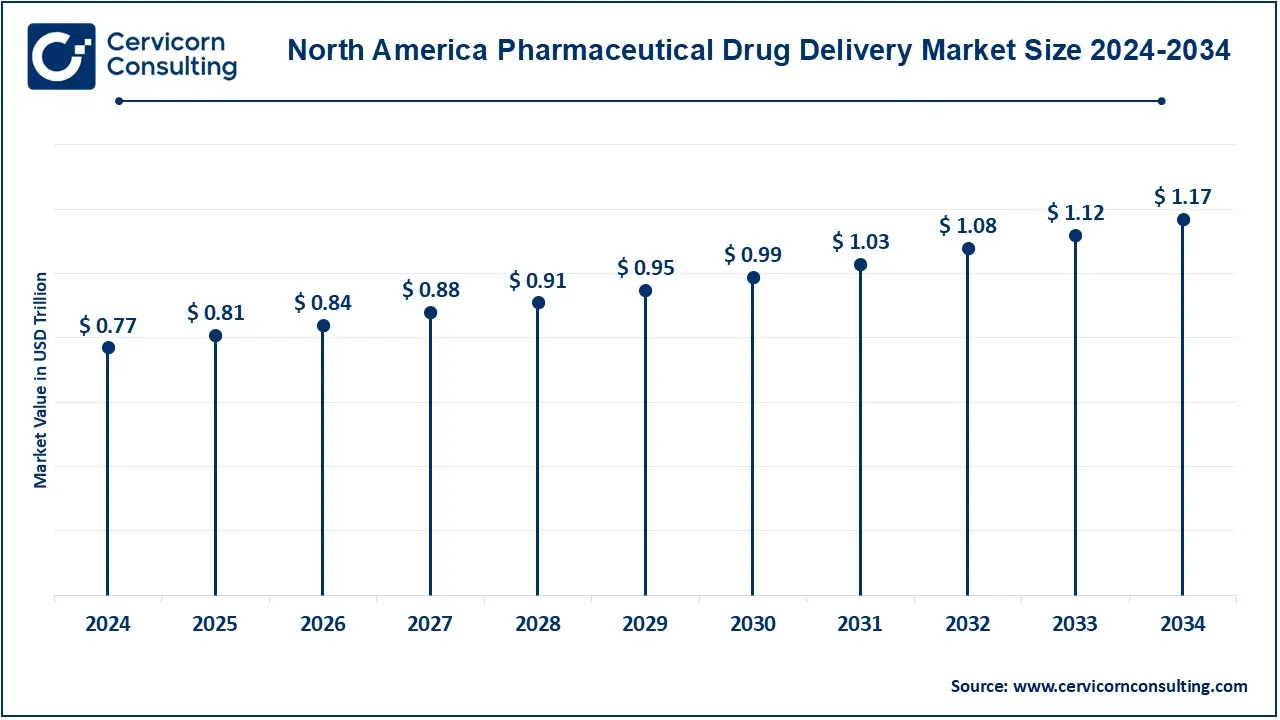
The North America pharmaceutical drug delivery market size was valued at USD 800.74 billion in 2025 and is projected to reach nearly USD 1,231.85 billion by 2035. North America dominated the pharmaceutical drug delivery market in 2025, propelled by robust pharmaceutical research and development, sophisticated healthcare infrastructure, and widespread use of cutting-edge medication delivery technology. The region's dominant market position is further reinforced by the presence of significant pharmaceutical and medical device companies. The strong demand for specialized drugs and biologics is driving ongoing technological advancement. Additionally, patient-centric and self-administration delivery systems are widely used in the area.
Asia Pacific is growing rapidly in the pharmaceutical drug delivery market
The Asia-Pacific pharmaceutical drug delivery market size was estimated at USD 526.80 billion in 2025 and is expected to surpass USD 810.43 billion by 2035. Asia Pacific is growing rapidly in the pharmaceutical drug delivery market from 2026 to 2035, driven by increased pharmaceutical production capabilities, growing use of biologics, rising healthcare investment, and an increase in the prevalence of chronic diseases. Regional expansion is also being aided by increased demand for innovative delivery technologies, home-based care, and self-administration. New opportunities are being created throughout the region by advancements in pharmaceutical production and healthcare infrastructure. The industry is expanding due to the increasing use of digital health solutions and injectable medicines.
Segmental Analysis
Route of Administration Analysis
Injectable Drug Delivery: Injectable drug delivery segment dominated the pharmaceutical drug delivery market in 2025, motivated by the expanding use of vaccinations, biologics, biosimilars, and treatments for long-term conditions requiring parenteral delivery. Its dominant position is further supported by the growing use of wearable injectors, autoinjectors, infusion systems, and prefilled syringes. Reliable injectable delivery systems are becoming more and more necessary as specialist medicines grow. The usage of sophisticated injectable platforms is also being strengthened by the increasing need for self-administration and home-based treatment.
Injectable and Advanced Self-Administration Delivery: Injectable and advanced self-administration delivery are growing rapidly in the market from 2026 to 2035, driven by the growing need for patient-friendly delivery methods, home-based care, and convenient treatment options. Growth is also being supported by the growing usage of wearable injectors, autoinjectors, and other self-administration technology. Frequent hospital trips can be avoided and treatment can be made easier using these solutions. It is anticipated that the move to patient-centric care will spur additional innovation in this market.
Drug Delivery Technology Analysis
Conventional Drug Delivery: Conventional drug delivery dominated the pharmaceutical drug delivery market in 2025, motivated by its well-established use, wide range of therapeutic applications, and familiarity with patients and healthcare professionals. Demand is nevertheless supported by its extensive availability and sophisticated manufacturing techniques. For commonly used pharmaceutical items and standard treatments, conventional methods are still crucial. Continued acceptance is also supported by their well-established manufacturing and regulatory processes.
Targeted and Advanced Controlled-Release Delivery: Targeted and advanced controlled-release delivery are growing rapidly in the market from 2026 to 2035, driven by decreased dose frequency, enhanced therapeutic efficacy, and growing demand for accurate medication administration. Innovation in these technologies is being stimulated by the increasing use of biologics and complicated medicines. Medication can be delivered more precisely to targeted locations with the aid of targeted systems. More options for targeted and regulated distribution are being made possible by developments in nanotechnology and formulation science.
Dosage Form Analysis
Solid Oral Dosage Forms: Solid oral dosage forms dominated the pharmaceutical drug delivery market in 2025, motivated by the extensive usage of tablets and capsules in a variety of medical applications. Their established production infrastructure, patient familiarity, ease of administration, and convenience all contribute to their strong position. A wide variety of medications and medical disorders can be treated using these dosage forms. Their continuous usage is further facilitated by their easy administration and storage.
Injectable and Long-Acting Formulations: Injectable and Long-Acting Formulations are growing rapidly in the pharmaceutical drug delivery market from 2026 to 2035, fueled by the growing use of biologics, specialized drugs, and treatments that need long-term pharmacological action. These formulations can improve treatment convenience and adherence while lowering the frequency of doses. Pharmaceutical companies are being encouraged to create better formulations due to the increasing demand for long-acting treatments. This market is being further supported by developments in wearable technology and subcutaneous delivery.
Drug Type Analysis
Small-Molecule Drugs: Small Molecule Drugs dominated the pharmaceutical drug delivery market in 2025, motivated by their widespread application in important therapeutic domains and the accessibility of proven formulation and delivery methods. Strong demand is still supported by their wide clinical applicability. They can be administered using a number of tried-and-true methods and dosage formulations. Their ongoing market presence is also supported by their widespread use in healthcare systems.
Biologics and Advanced Therapy Products: Biologics and Advanced Therapy Products are growing rapidly in the market from 2026 to 2035, propelled by the growing development of complicated medicines such as mRNA-based therapeutics, gene therapies, cell therapies, and biologics. To enhance stability, targeting, and therapeutic efficacy, these treatments need specific delivery strategies. Patient-friendly delivery systems are in high demand due to the growing use of large-molecule medications. Their uptake is being aided by developments in formulation and device technology.
Application Analysis
Cancer: Cancer dominated the pharmaceutical drug delivery market in 2025, driven by the rising use of targeted therapies, biologics, and cutting-edge medications as well as the growing need for efficient cancer treatments. The segment is additionally supported by the requirement for precise drug delivery in cancer treatment. The need for specialized delivery methods is growing as complicated oncology medicines are developed. The adoption of cutting-edge pharmaceuticals is also being supported by increasing investments in cancer treatment infrastructure.
Autoimmune/Rare-Disease Therapies: are growing rapidly in the market from 2026 to 2035, driven by the growing use of biologics, specialist treatments, and targeted medications. Innovative drug delivery methods are becoming more and more in demand as sophisticated treatments for complex ailments are developed. These treatments frequently call for very exact dosages and certain administration techniques. It is anticipated that increased investment in specialized pharmaceuticals will help the industry grow.
Delivery Mechanism Analysis
Immediate-Release Delivery: Immediate-release delivery dominated the pharmaceutical drug delivery market in 2025, motivated by its extensive application in traditional pharmaceutical formulations and its capacity to deliver quick medication availability. Its widespread therapeutic uses and well-established production methods continue to encourage its use. It is still widely utilized in everyday treatments and frequently prescribed medications. It is also appropriate for numerous therapeutic uses because of its straightforward administration and composition.
Targeted and Long-Acting Delivery: Targeted and long-acting delivery are growing rapidly in the market from 2026 to 2035, driven by the growing demand for less frequent dosing and accurate drug distribution. These delivery methods are becoming more significant in biologics, specialist treatments, and chronic illnesses. Long-acting strategies can enhance patient adherence and treatment convenience. Additionally, targeted systems are being created to decrease needless distribution and enhance drug exposure at particular locations.
Device/Delivery Platform Analysis
Prefilled Syringes & Conventional Injectable Devices: Prefilled syringes and conventional injectable devices dominated the pharmaceutical drug delivery market in 2025, motivated by their well-established use, simplicity of administration, and their use in injectable treatments. Additionally, proper dosing and patient convenience are supported by their ready-to-use style. Hospitals, clinics, and home care settings all make extensive use of these devices. Adoption of injectable biologics and vaccines is being further supported by rising demand.
Wearable injectors and smart/connected delivery devices: Wearable injectors and smart/connected delivery devices are growing rapidly in the market from 2026 to 2035, driven by the growing need for digitally enabled healthcare, home-based therapy, and self-administration. Convenient medication delivery, monitoring, and better treatment adherence can all be facilitated by these devices. Wearable technology is especially important for long-term, high-volume subcutaneous treatments. Digital technology integration can enhance patient engagement and treatment monitoring even more.
End User / Care Setting Analysis
Hospitals: Hospitals dominated the pharmaceutical drug delivery market in 2025, motivated by their significant involvement in the administration of complex, cancer, infusion, and injectable medicines. The dominant position of the segment is further supported by access to specialist healthcare personnel and advanced healthcare infrastructure. Hospitals are still crucial for treatments that call for specialized technology and expert supervision. Their sustained involvement in medication administration is also supported by government investments in healthcare infrastructure.
Home Care Settings: Home Care Settings are growing rapidly in the market from 2026 to 2035, driven by the growing use of self-administration technologies and the growing need for convenient care outside of hospitals. The trend toward home-based care is being further supported by the increasing use of autoinjectors, wearable injectors, and long-acting medications. More and more patients are looking for therapies that cut down on the number of times they visit the doctor. Home-based administration is becoming more feasible because of developments in connected and patient-friendly delivery equipment.
Government Insights
- In September 2026, National Institutes of Health (NIH) announced new initiatives to advance human-based research for drug and treatment development. The initiatives include standardized organoid models, robotics, AI, and advanced data technologies to improve the predictability of preclinical research. This can support the development and evaluation of new pharmaceutical therapies and advanced drug delivery approaches.
- In May 2026, National Institutes of Health (NIH) completed the submission phase of its TARGETED Challenge, which focuses on improving in-vivo delivery systems for genome-editing technologies. The program supports the development of programmable and non-viral delivery methods that can reach specific tissues and cross the blood-brain barrier. Such government-backed initiatives can encourage innovation in targeted drug and therapeutic delivery technologies.
- In July 2026, U.S. Food and Drug Administration (FDA) published a strategy document under its Chemistry, Manufacturing, and Controls Development and Readiness Pilot to support products with accelerated clinical development timelines. The program aims to improve communication between regulators and sponsors during CMC development and help accelerate the availability of certain therapies to patients. This regulatory support can help pharmaceutical companies advance innovative drug products more efficiently.
Recent Developments
- In September 2026, Novartis announced an agreement with Alteogen to access its drug delivery technology, which is designed to convert intravenous medicines into injectable formulations. The collaboration highlights growing interest in delivery technologies that can improve treatment convenience and expand options for patients.
- In August 2026, Ashland Inc. launched permexa™ sodium caprate, an intestinal permeation enhancer designed to support the development of oral peptide and biologic medicines. The technology is intended to improve the delivery of drugs that have traditionally faced challenges with oral absorption.
- In August 2026, Zydus Lifesciences launched Revahale in India, a once-daily nebulized treatment for chronic obstructive pulmonary disease. Its nebulized delivery approach is designed to reduce dependence on inhalation technique and provide sustained drug delivery to the lungs.
- In June 2026, Nortiva Bio launched as a clinical-stage company focused on developing long-acting oral medicines through its LYNX™ drug delivery platform. The platform is designed to transform daily oral medicines into longer-acting treatments that may improve convenience and medication adherence.
- In May 2026, MannKind Corporation announced FDA approval of Afrezza for use in children and adolescents aged six and older with diabetes. The inhaled insulin provides an alternative to mealtime injections and expands the application of pulmonary drug delivery technology.
- In March 2026, Rusan Healthcare launched the APOSAN® 3ml multi-dose pen in India for delivering apomorphine to patients experiencing Parkinson’s disease-related motor fluctuations. The device provides a more convenient delivery option compared with traditional injection formats.
- In March 2026, Sapu Nano announced the launch of its Deciparticle™ nanomedicine platform, designed to improve tissue distribution and support intravenous delivery of highly hydrophobic oncology drugs. The development reflects increasing use of nanotechnology to address drug-delivery challenges.
Top Companies
Segments Covered
By Route of Administration
- Oral Drug Delivery
- Injectable Drug Delivery
- Topical Drug Delivery
- Transdermal Drug Delivery
- Pulmonary/Inhalation Drug Delivery
- Nasal Drug Delivery
- Ocular Drug Delivery
- Implantable Drug Delivery
- Transmucosal Drug Delivery
- Other Routes
By Drug Delivery Technology
- Conventional Drug Delivery
- Controlled-Release Drug Delivery
- Sustained-Release Drug Delivery
- Extended-Release Drug Delivery
- Targeted Drug Delivery
- Site-Specific Drug Delivery
- Long-Acting Drug Delivery
- Nanotechnology-Based Drug Delivery
- Lipid Nanoparticle-Based Delivery
- Biodegradable Drug Delivery
- Smart/Connected Drug Delivery
By Dosage Form
- Tablets
- Capsules
- Liquids
- Solutions
- Suspensions
- Emulsions
- Creams
- Ointments
- Gels
- Patches
- Others
By Drug Type
- Small-Molecule Drugs
- Biologics
- Biosimilars
- Peptides
- Vaccines
- Gene Therapy Products
- Cell Therapy Products
- mRNA-Based Therapeutics
- Oligonucleotide-Based Therapeutics
- Other Advanced Therapies
By Application
- Cancer
- Diabetes
- Cardiovascular Diseases
- Respiratory Diseases
- Infectious Diseases
- Autoimmune Diseases
- Central Nervous System Disorders
- Neurological Disorders
- Ophthalmic Disorders
- Gastrointestinal Disorders
- Hormonal & Metabolic Disorders
- Rare Diseases
- Other Therapeutic Applications
By Delivery Mechanism
- Immediate Release
- Controlled Release
- Sustained Release
- Extended Release
- Delayed Release
- Pulsatile Release
- Targeted Release
- Site-Specific Release
- Long-Acting/Depot Delivery
By Device / Delivery Platform
- Prefilled Syringes
- Autoinjectors
- Pen Injectors
- Wearable Injectors
- Infusion Pumps
- Inhalers
- Nebulizers
- Nasal Delivery Devices
- Transdermal Patches
- Microneedle Systems
- Implantable Pumps
- Drug-Eluting Implants
- Needle-Free Injectors
- Smart/Connected Delivery Devices
By End User / Care Setting
- Hospitals
- Specialty Clinics
- Ambulatory Surgical Centers
- Home Care Settings
- Long-Term Care Facilities
- Diagnostic Centers
- Research & Academic Institutions
- Other Healthcare Settings
By Region
- North America
- Europe
- Germany
- UK
- France
- Italy
- Spain
- Rest of Europe
- Asia Pacific
- China
- Japan
- India
- South Korea
- Australia
- Rest of Asia Pacific
- Latin America
- Brazil
- Mexico
- Rest of Latin America
- Middle East & Africa
- GCC
- South Africa
- Rest of Middle East & Africa