U.S. In Vitro Diagnostics Market Size and Growth 2026 to 2035
The U.S. in vitro diagnostics market size was reached at USD 37.13 billion in 2025 and is expected to be worth around USD 61.58 billion by 2035, exhibiting at a compound annual growth rate (CAGR) of 5.2% over the forecast period 2026 to 2035. The U.S. In Vitro Diagnostics (IVD) market is experiencing significant changes as molecular biology, digital health, and decentralized care models become more integrated. As the largest segment in the medical device industry, the IVD sector plays a crucial role in clinical decision-making and is estimated to impact more than 70% of healthcare outcomes.
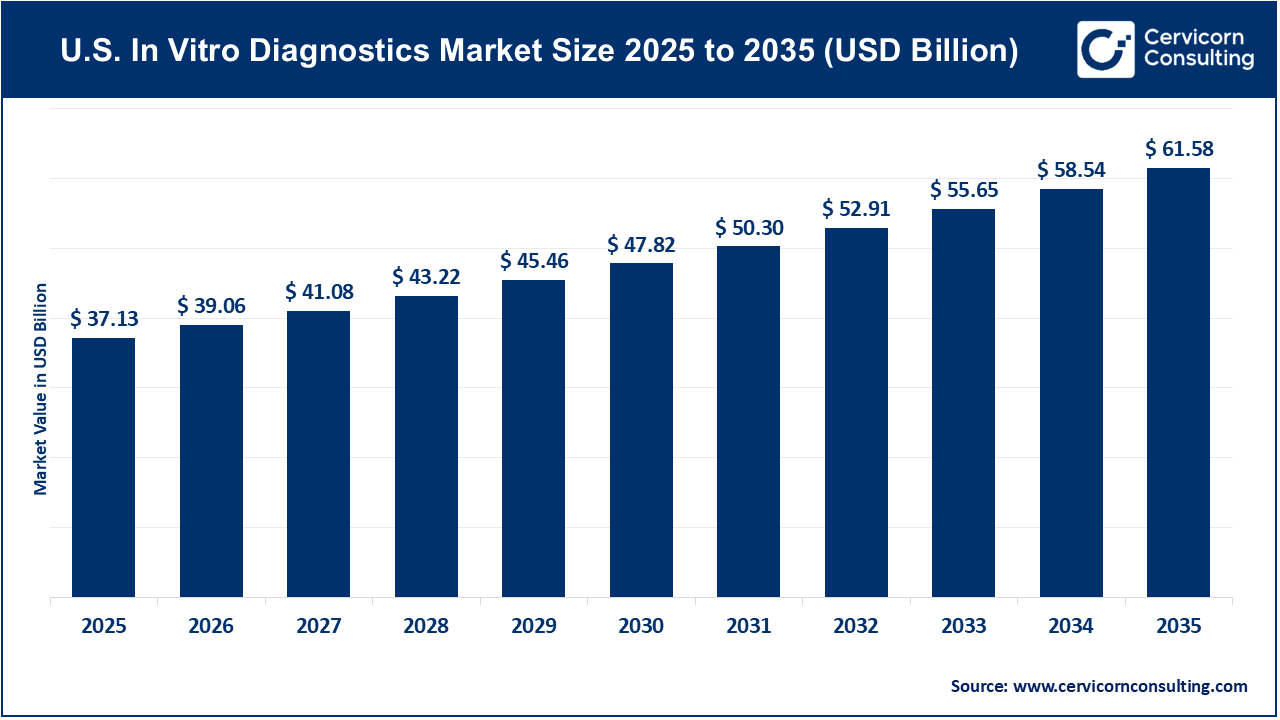
The In vitro diagnostics market is the largest and most active part of the medical device industry in the United States. IVD technologies provide essential information for disease prevention, diagnosis, and monitoring. These include a range of reagents, instruments, and systems used to examine blood, urine, or tissue samples. In 2024, the global medical technology industry was valued at over 567 billion dollars, and the IVD sector continues to be a major source of revenue because of its important role in healthcare. The U.S. market benefits from strong clinical laboratory infrastructure and a high adoption rate of new diagnostic technologies. This has helped IVD move from a supporting laboratory tool to a key part of personalized medicine and population health management.
Report Highlights
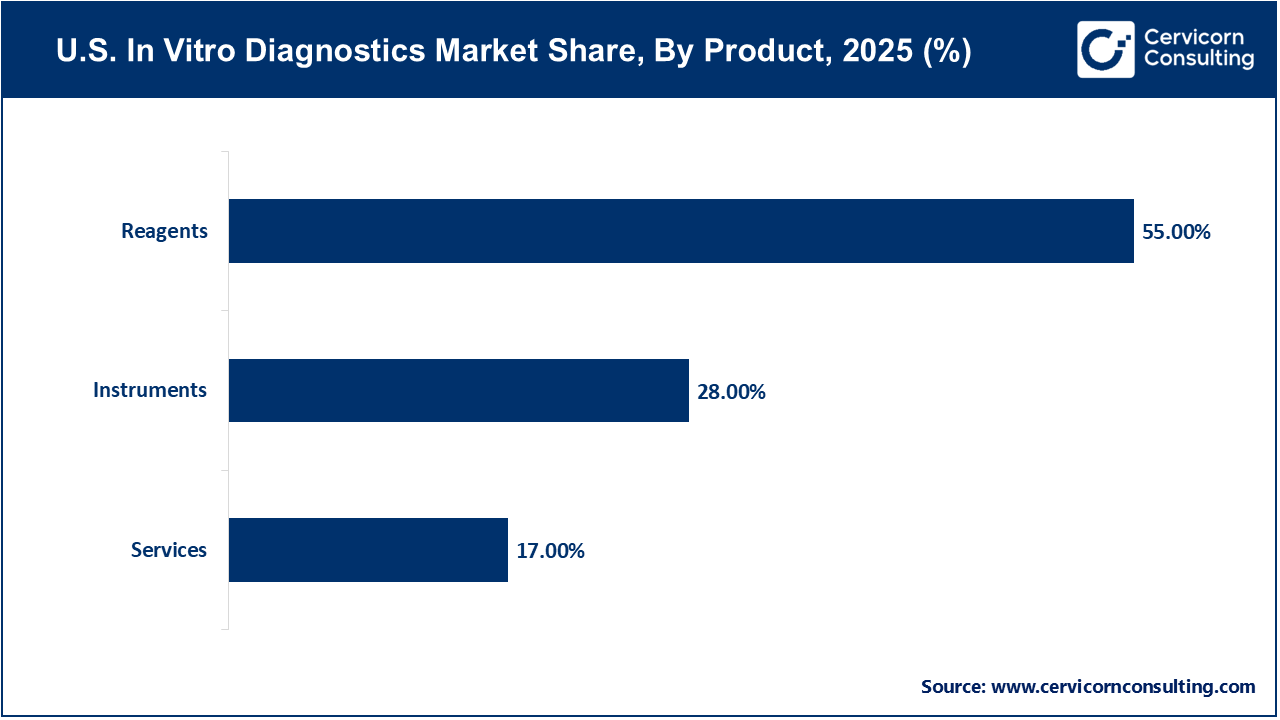
- Reagents dominate the product segment with approximately 55% share, driven by their recurring use across routine and advanced diagnostic tests.
- Immunoassay leads the technology segment with around 34% share, supported by widespread adoption in infectious disease, endocrinology, and chronic disease testing
- Infectious diseases represent the largest application at nearly 30% share, fueled by high testing volumes and continuous public health surveillance.
- Hospitals and laboratories lead end-use with a combined 83.0% share, reflecting their central role in diagnostic testing delivery.
Transition Toward Decentralized Point-of-Care Testing Driving the IVD Market
The U.S. healthcare system is currently experiencing a significant transformation, as there is a shift from centralized laboratory testing towards decentralized Point-of-Care Testing (POCT). This change is largely driven by the increasing need for rapid clinical decision-making. The trend is especially noticeable in the management of infectious diseases and chronic conditions such as diabetes, where immediate test results are essential for improving patient outcomes and reducing hospital readmission rates. Recent technological advancements have made it possible to miniaturize complex assays, which allows healthcare providers to obtain laboratory-quality results in physician offices, urgent care centers, and retail clinics. The adoption of POCT aligns with the broader movement towards consumer-focused healthcare, as patients seek faster, more accessible diagnostic services. As a result, this decentralization is reducing the logistical challenges faced by centralized facilities and is expanding access to diagnostic interventions, particularly for underserved populations.
The introduction of new molecular POCT devices utilizing rapid nucleic acid detection methods, such as isothermal amplification, is further accelerating the movement toward decentralized testing. These platforms can deliver results more quickly than traditional PCR, and as their costs decrease and usability improves, they are increasingly incorporated into routine clinical workflows. This development reduces dependence on specialized laboratory personnel and allows resources to be redirected toward more efficient care delivery. As a result, healthcare providers are better positioned to address acute diagnostic needs in real time and to respond more effectively to patient demand.
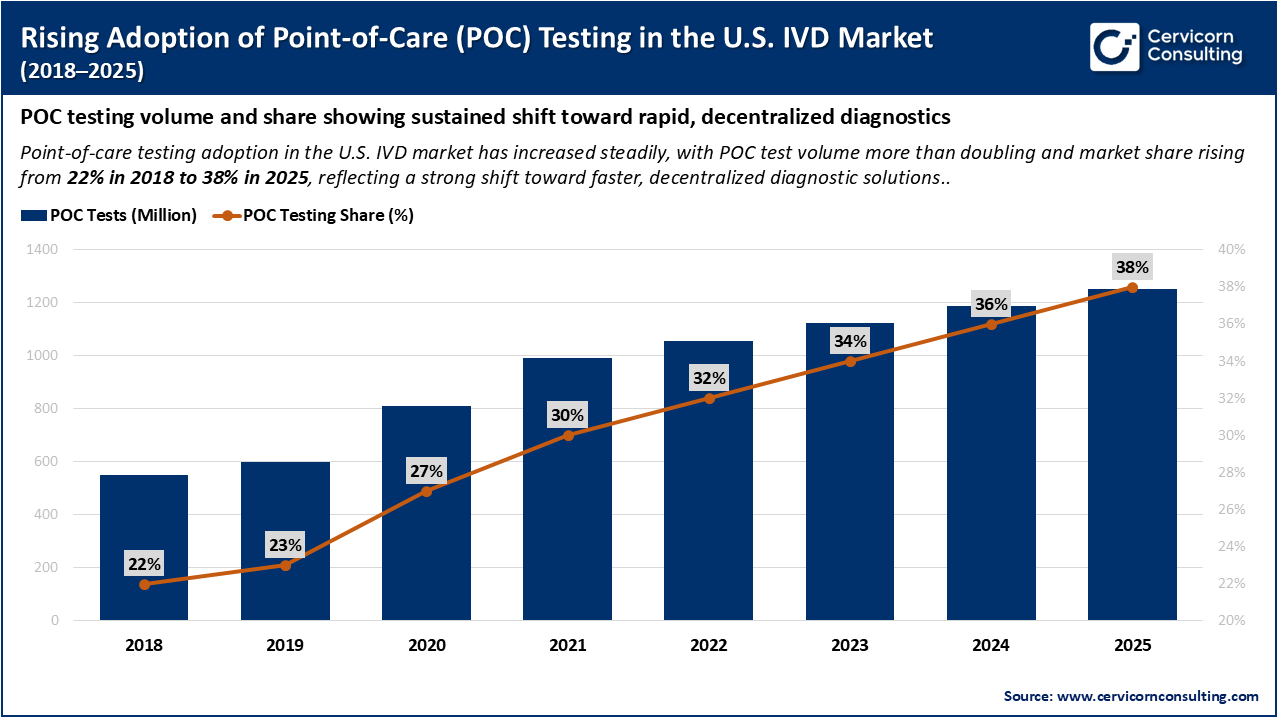
The chart illustrates the steady rise in Point-of-Care (POC) testing adoption in the U.S. IVD market from 2018 to 2025. POC test volumes increased from approximately 550 million tests in 2018 to about 1.25 billion tests in 2025, reflecting strong growth in decentralized diagnostics. Over the same period, POC testing’s share of total IVD tests expanded from 22% in 2018 to 38% in 2025, highlighting a clear market shift toward faster, near-patient testing and reduced reliance on centralized laboratory settings.
Recent Major Milestones
1. Breakthroughs in Rapid Molecular Diagnostic Platforms
From 2023 to 2025, the IVD sector has made considerable progress in developing rapid molecular diagnostic platforms with syndromic testing capabilities. These platforms enable clinicians to test for a wide range of pathogens, including various respiratory and gastrointestinal viruses, using a single patient sample. The FDA has cleared several high-sensitivity multiplex PCR systems for use in near-patient settings, which has significantly reduced the time required to obtain results from several days to less than an hour. This advancement is important for managing seasonal outbreaks and helps prevent the overuse of antibiotics by providing clear viral identification at the point of care. As a result, these rapid platforms support a more targeted approach to infectious disease management, helping to maintain the effectiveness of current treatments and improve patient recovery times.
2. Government Initiatives for Early Cancer Detection and Screening
The U.S. government has increased its efforts in early cancer detection through the Cancer Moonshot initiative, which has allocated significant funding for the development of multi-cancer early detection (MCED) tests. These liquid biopsy technologies, designed to detect circulating tumor DNA (ctDNA) from a simple blood sample, are moving from experimental stages into clinical practice. In 2024, several important pilot programs began to assess how these tests can be used in routine screenings for high-risk groups. These efforts are expected to change the approach to oncology by focusing on early intervention, allowing cancer to be found when it is most treatable. As a result, government support is speeding up the commercialization and reimbursement of advanced genomic screening tools, which could lead to earlier diagnoses and save many lives each year.
3. Strategic Corporate Mergers Enhancing Testing Portfolios
The in vitro diagnostics (IVD) market is currently seeing a notable rise in mergers and acquisitions. Leading companies are acquiring specialized biotechnology firms to strengthen their positions in fast-growing areas like Next-Generation Sequencing (NGS) and digital pathology. This trend is mainly driven by the increasing need for comprehensive laboratory solutions that cover the entire diagnostic process, from sample preparation to data analysis using artificial intelligence. By acquiring these firms, established players can bring new technologies to market more quickly, avoiding long research and development periods. As a result, the IVD sector is becoming more concentrated, with integrated diagnostic platforms that improve efficiency and expand the range of available diagnostic tools.
4. FDA Clearances for Next-Generation Sequencing Technologies
The FDA has reached an important milestone by approving a record number of next-generation sequencing (NGS)-based companion diagnostics, which play a key role in personalized therapies. This development reflects a change in regulatory strategy, as large-panel genomic tests that can detect hundreds of genetic variants in a single assay are now being accepted. By the end of 2024, the FDA had approved almost 950 artificial intelligence (AI)-enabled medical devices, many of which process the large datasets produced by NGS platforms. These regulatory advancements provide a clearer route for developers to introduce complex genomic tests to the market. As a result, precision medicine is becoming more accessible, and advanced genetic profiling is now a standard part of diagnostic procedures for cancer and rare genetic disorders in the United States.
Report Scope
| Area of Focus |
Details |
| Market Size in 2026 |
USD 39.06 Billion |
| Market Size in 2035 |
USD 61.58 Billion |
| Market CAGR 2026 to 2035 |
5.20% |
| Key Segments |
Product, Technology, Application, Test Location, End-use |
| Key Companies |
Abbott Laboratories, Thermo Fisher Scientific, Danaher Corporation, Quest Diagnostics, Becton, Dickinson and Company, Bio-Rad Laboratories, Illumina, QuidelOrtho Corporation, Exact Sciences Corporation, Natera, Siemens Healthineers, Beckman Coulter Diagnostics |
Market Dynamics
Market Drivers
- Rising Burden of Chronic and Infectious Diseases: The U.S. IVD market is mainly driven by the ongoing increase in chronic diseases such as diabetes, cardiovascular disorders, and cancer. Recent analyses show that these conditions create a steady demand for regular monitoring and diagnostic tests. For example, as the diabetic population grows, there is a greater need for continuous glucose monitoring and frequent HbA1c testing, which supports the clinical chemistry and point-of-care segments. The appearance of new infectious diseases and the return of existing ones also require a strong and flexible testing system. As a result, the high burden of disease leads to a consistent need for IVD services, making this market a key area for healthcare investment, even when budgets are limited.
- Technological Advancements in Digital Pathology and High-Throughput Screening: Technological innovation is playing a significant role in driving market growth, especially in digital pathology and high-throughput screening. As laboratories move from traditional microscopy to digital imaging, they can now share slides remotely and use AI algorithms to help pathologists detect malignant cells. This shift to digital methods not only increases diagnostic accuracy but also helps address differences in access to specialized pathology expertise across regions. At the same time, high-throughput screening instruments allow laboratories to process thousands of samples each day with less human involvement, which lowers the cost per test. These advancements are leading to higher laboratory productivity and fewer diagnostic errors, resulting in more efficient patient care and reduced overall costs.
Market Restraints
- Complex Regulatory Compliance and Reimbursement Policies: The U.S. IVD market is currently facing significant challenges due to the increasingly complex regulatory environment. The FDA’s recent final rule on Laboratory Developed Tests (LDTs) now requires many tests that were previously developed and used within a single laboratory to go through the same FDA review process as commercial IVD kits. Although this regulation aims to ensure safety and effectiveness, it places considerable financial and administrative pressure on clinical laboratories. As a result, the pace of innovation in the sector may slow down. In addition, reimbursement policies under the Protecting Access to Medicare Act (PAMA) continue to reduce the prices of routine diagnostic tests. These regulatory and financial pressures are leading to narrower profit margins for laboratory operators, which is causing them to focus on high-volume or specialized testing in order to remain competitive.
- Economic Pressures and High Maintenance Costs for Advanced Instruments: High capital and maintenance costs associated with advanced diagnostic instruments remain a significant barrier for smaller healthcare providers. The adoption of newer platforms, including automated molecular workcells and next-generation sequencing systems, necessitates specialized infrastructure and skilled personnel, thereby increasing overall expenditures. Furthermore, inflation and supply chain disruptions have contributed to higher prices for reagents and consumables. As a result, rural and community hospitals face financial constraints that hinder the implementation of the latest diagnostic technologies. These challenges are contributing to an expanding disparity in access to modern diagnostics between well-resourced urban centers and smaller regional providers.
Market Opportunities
- Growth in Home-Based and Self-Diagnostic Testing Kits: The demand for home-based and self-diagnostic testing kits is increasing in the U.S. IVD market. The acceptance of home COVID-19 tests has made consumers more open to self-testing for other health conditions, such as urinary tract infections and colon cancer screening. The use of smartphone-based diagnostic tools also supports this trend by enabling users to share their results with healthcare providers for faster follow-up. Moving diagnostic testing into the home environment helps patients become more involved in their own care and supports earlier detection and management of chronic diseases. This is expected to improve long-term health outcomes as patients take a more active role in their healthcare.
- Synergy with the AI for Enhanced Data Protection: The increasing interconnection of diagnostic devices and their reliance on cloud technologies is driving significant changes in the in vitro diagnostic (IVD) market. As a result, collaboration among IVD manufacturers has become important for addressing security challenges. Security of diagnostic data is now essential for regulatory approval and for building market confidence. The integration of artificial intelligence-based solutions enables real-time monitoring and automated threat detection, helping protect sensitive patient records from cyberattacks. Companies that design their diagnostic platforms with security as a core feature are more likely to secure contracts with large healthcare networks that require strong data integrity. This trend is leading to a more resilient diagnostic infrastructure that leverages connectivity and artificial intelligence while ensuring patient privacy and safety.
Market Challenges
- Interoperability Issues in Heterogeneous Healthcare Systems: One of the main challenges in the U.S. IVD market is the lack of smooth interoperability between diagnostic platforms and Electronic Health Record systems. Laboratories often use equipment from different vendors, which do not always communicate effectively. This results in data silos and increases the risk of manual data entry errors. Such fragmentation makes it difficult for healthcare providers to access a complete view of a patient’s diagnostic history, which can delay important treatments. To address this, the industry is moving towards the adoption of standardized data protocols like HL7 and FHIR to improve data exchange. Solving these interoperability issues will help create a more integrated healthcare system, where diagnostic information can be shared accurately and efficiently, supporting better clinical coordination.
- Cybersecurity Threats to Connected Diagnostic Devices and Patient Records: The growing use of digital interfaces and internet connectivity in diagnostic devices has increased their exposure to cyber threats. Weaknesses in outdated software or unsecured data transmissions can lead to unauthorized access to patient information or even tampering with diagnostic results. These incidents not only threaten patient safety but also create significant legal and financial risks for healthcare organizations. As a result, the adoption of strong cybersecurity frameworks, in line with FDA recommendations, has become necessary to reduce these risks and maintain reliable diagnostic services. This situation has led to greater recognition of the need for ongoing security updates and active risk management, making cybersecurity a key aspect of the IVD product lifecycle.
U.S. In Vitro Diagnostics Market Segmental Analysis
The U.S. in vitro diagnostics market is segmented into product, technology, application, test location, and end-use.
Product Analysis
Reagents represent the dominant product segment in the IVD market due to their recurring usage across routine and specialized diagnostic tests. Unlike instruments, reagents are consumables that must be replenished regularly, generating continuous revenue for manufacturers. High testing volumes for infectious diseases, diabetes, oncology, and chronic disorders across hospitals and laboratories sustain strong demand. Additionally, advancements in assay sensitivity and specificity further support widespread reagent adoption, reinforcing this segment’s leading market position.
The services segment is the fastest growing, driven by increasing reliance on outsourced diagnostic testing, laboratory management, and maintenance services. Rising complexity of diagnostic procedures, particularly molecular and genetic testing, has increased demand for specialized service providers. Workforce shortages in clinical laboratories and the need for cost-efficient operations are encouraging healthcare providers to outsource diagnostics. Growth in reference laboratories and data-driven diagnostic solutions is further accelerating expansion of the services segment.
Technology Analysis
Immunoassay technology holds the dominant share in the IVD market due to its broad application in infectious disease detection, hormone analysis, oncology screening, and therapeutic drug monitoring. Its high sensitivity, specificity, and compatibility with automated platforms make it a preferred choice for high-volume testing in hospitals and laboratories. The continued use of immunoassays in routine and specialty diagnostics, along with innovation in multiplex testing formats, sustains its leadership across the U.S. diagnostic landscape.
U.S. In Vitro Diagnostics Market Share, By Technology, 2025 (%)
| Technology |
Revenue Share, 2025 (%) |
| Immunoassay |
34% |
| Hematology |
12% |
| Clinical Chemistry |
28% |
| Molecular Diagnostics |
18% |
| Coagulation |
4% |
| Microbiology |
3% |
| Others |
1% |
Molecular diagnostics is the fastest-growing technology segment, driven by increasing adoption of PCR, real-time PCR, and next-generation sequencing. These technologies enable early disease detection, genetic profiling, and precision medicine applications, particularly in oncology and infectious diseases. Growing demand for companion diagnostics and personalized treatment strategies further supports growth. Continuous advancements in speed, accuracy, and cost-effectiveness are accelerating adoption across clinical laboratories.
Application Analysis
Infectious diseases account for the largest share of the IVD application segment due to the high frequency of diagnostic testing for viral, bacterial, and fungal infections. Routine screening for respiratory infections, sexually transmitted diseases, and hospital-acquired infections drives consistent demand. Public health surveillance programs and preventive healthcare initiatives further support testing volumes. The need for rapid, accurate diagnostics ensures infectious disease testing remains a core application area.
U.S. In Vitro Diagnostics Market Share, By Application, 2025 (%)
| Application |
Revenue Share, 2025 (%) |
| Infectious Diseases |
30% |
| Diabetes |
18% |
| Oncology |
15% |
| Cardiology |
10% |
| Nephrology |
8% |
| Autoimmune Diseases |
7% |
| Drug Testing |
6% |
| Others |
6% |
Oncology is the fastest-growing application segment, driven by increasing cancer incidence and the growing emphasis on early diagnosis. The shift toward precision oncology has increased demand for molecular and genetic tests that guide targeted therapies. Companion diagnostics, biomarker testing, and liquid biopsy technologies are gaining traction. Advancements in cancer screening and personalized treatment approaches are significantly expanding the role of IVD solutions in oncology care.
End-use Analysis
Diagnostic laboratories dominate the end-use segment due to their central role in processing the majority of IVD tests. Independent, reference, and hospital-based laboratories perform large volumes of routine and specialized diagnostics. Availability of advanced instruments, trained personnel, and automated systems enables high-throughput testing. Laboratories remain the preferred setting for complex assays, molecular diagnostics, and confirmatory testing, maintaining their dominant position in the market.
U.S. In Vitro Diagnostics Market Share, By End-use, 2025 (%)
| End-use |
Revenue Share, 2025 (%) |
| Hospitals |
38% |
| Laboratory |
45% |
| Home-care |
12% |
| Others |
5% |
Home-care is the fastest-growing end-use segment, supported by rising adoption of self-testing and remote monitoring solutions. Increased prevalence of chronic diseases, aging population, and demand for convenient healthcare options are key growth drivers. Home-based glucose monitoring, infectious disease tests, and rapid diagnostic kits are gaining popularity. Technological innovation and digital health integration are further expanding the role of home-care diagnostics.
U.S. In Vitro Diagnostics Market Top Companies
Recent Developments by Major Companies
Abbott Laboratories Expands Global POCT Footprint
Abbott continues to lead the decentralized testing market with the 2024 expansion of its "i-STAT" and "BinaxNOW" platforms. The company recently secured additional FDA clearances for rapid panels that can detect multiple respiratory viruses in under 15 minutes, directly targeting the urgent care and retail pharmacy markets. This move strengthens Abbott's position as a provider of immediate, actionable health data. The impact of this expansion is a more dominant presence in the consumer-facing diagnostic space, reinforcing the trend of healthcare moving closer to the patient.
Roche Diagnostics Launches Next-Generation Digital Pathology Suite
Roche has announced the rollout of a comprehensive AI-driven digital pathology platform designed to integrate seamlessly with existing hospital laboratory information systems. This suite utilizes advanced algorithms to assist in the grading of breast and prostate cancers, aiming to reduce inter-pathologist variability. By combining high-resolution imaging with cloud-based data management, Roche is addressing the global shortage of pathology expertise. The impact of this launch is a significant step forward in the digitalization of the diagnostic workflow, setting a new standard for precision in oncology.
Market Segmentation
By Product
- Instruments
- Reagents
- Services
By Technology
- Immunoassay
- Hematology
- Clinical Chemistry
- Molecular Diagnostics
- Coagulation
- Microbiology
- Others
By Application
- Infectious Diseases
- Upper respiratory
- Gastrointestinal panel testing
- Methicillin-resistant Staphylococcus Aureus (MRSA)
- Clostridium difficile
- Vancomycin-Resistant Enterococci (VRE)
- Carbapenem-resistant bacteria
- Flu
- Respiratory Syncytial Virus (RSV)
- Candida
- Tuberculosis (TB) and drug-resistant TB
- Meningitis
- Chlamydia
- Gonorrhoea
- HIV
- Hepatitis C
- Hepatitis B
- Others
- Diabetes
- Oncology
- Cardiology
- Nephrology
- Autoimmune Diseases
- Drug Testing
- Others
By Test Location
- Point of Care
- Home-care
- Others
By End-use
- Hospitals
- Laboratory
- Home-care
- Others