Mental Health Technology Market Size, Growth, Forecast 2026 To 2035
The global mental health technology market size was valued at USD 10.41 billion in 2025 and is expected to surpass around USD 56.74 billion by 2035, accelerating a compound annual growth rate (CAGR) of 18.5% over the forecast period from 2026 to 2035.
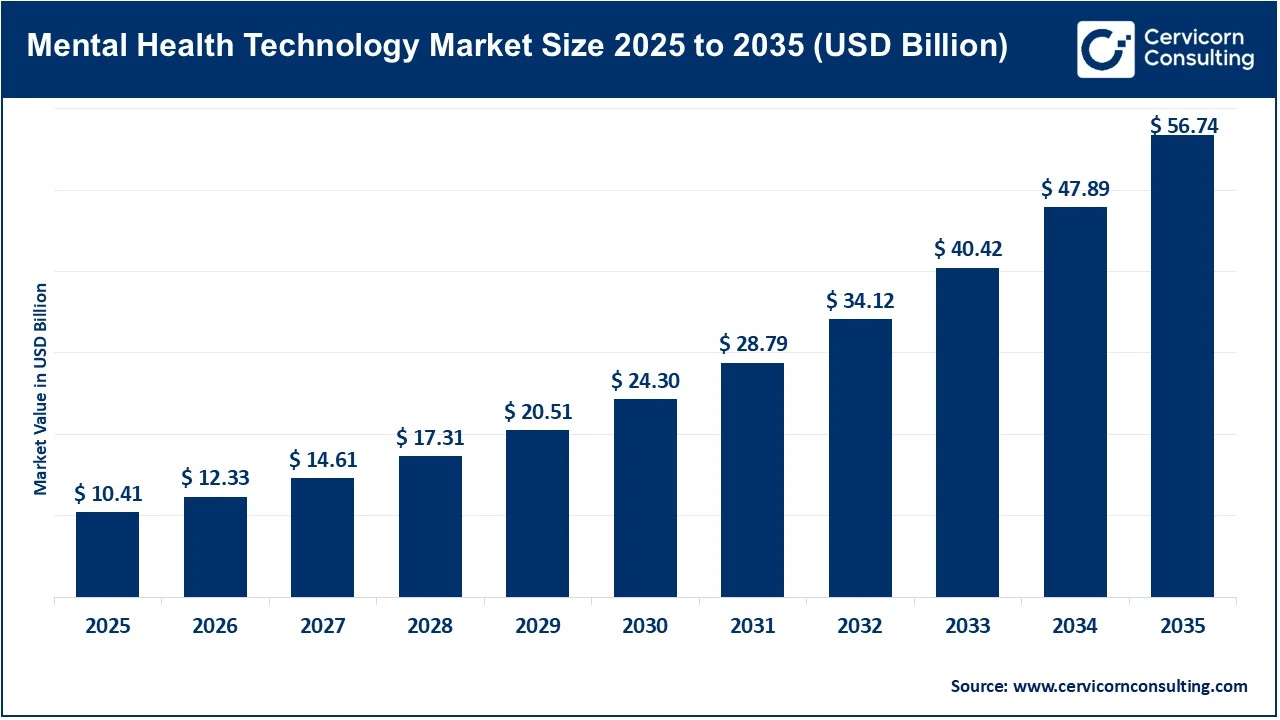
The mental health technology market is primarily driven by the growing prevalence of mental health disorders and the widening gap between demand for care and the availability of mental health professionals. According to the World Health Organization, 1 in every 8 people worldwide lives with a mental health disorder, while anxiety and depression remain among the leading contributors to global disability. This rising disease burden has accelerated the adoption of AI-powered mental health platforms, teletherapy, digital therapeutics, and mobile mental wellness applications that enable continuous, remote, and personalized care. In addition, growing public awareness, reduced stigma surrounding mental illness, and supportive government initiatives promoting digital healthcare are encouraging healthcare providers and patients to adopt technology-enabled mental health solutions.
Another major growth factor is the rapid expansion of digital health infrastructure and the increasing use of smartphones, wearable devices, and cloud-based healthcare platforms. Employer-sponsored mental wellness programs are also expanding as organizations recognize the impact of mental health on productivity and employee retention. According to the American Psychiatric Association, 43% of U.S. adults reported feeling more anxious in 2024, compared with 37% in 2023, highlighting the increasing demand for accessible mental health support. Advances in artificial intelligence, conversational chatbots, predictive analytics, and virtual reality therapies are further improving early diagnosis, personalized treatment, and patient engagement, creating significant opportunities for innovation and long-term market expansion.
Report Highlights
- By Region, North America dominated the global market with an estimated 42.8% share, supported by advanced digital healthcare infrastructure, widespread telepsychiatry adoption, and favorable reimbursement policies.
- By Region, Asia-Pacific is projected to register the fastest growth, driven by expanding digital health initiatives, increasing smartphone penetration, and growing investments in AI-powered mental healthcare.
- By component, the software segment accounted for the largest market share of 62.4%, owing to strong adoption of digital therapeutics, teletherapy platforms, and AI-enabled behavioral health solutions.
- By technology, telepsychiatry & teletherapy platforms led the market with a 28.7% share due to increasing demand for remote mental healthcare and virtual consultations.
- By application, anxiety & stress management held the largest share of 31.8%, supported by rising workplace stress, increasing awareness, and growing use of digital wellness applications.
- By end user, healthcare providers dominated with 48.5% of the market, driven by increasing implementation of AI-assisted diagnostics, electronic behavioral health records, and telepsychiatry platforms.
What is Mental Health Technology?
Mental health technology refers to digital solutions and technology-enabled platforms designed to prevent, diagnose, monitor, and treat mental health conditions while improving emotional well-being. It includes teletherapy platforms, AI-powered chatbots, mobile mental health applications, digital therapeutics, wearable devices, virtual reality (VR)-based therapy, remote patient monitoring systems, and cloud-based behavioral health platforms. These technologies enhance access to mental healthcare by enabling personalized treatment, real-time symptom tracking, early intervention, and continuous patient engagement, helping bridge the gap between rising mental health needs and the shortage of mental health professionals.
Why Organizations Are Investing in Mental Health Technologies
| Investment Driver |
Supporting Investment Data |
| High Return on Investment (ROI) |
Organizations receive an average GBP 4.70 return for every GBP 1 invested in employee mental health initiatives through improved productivity and reduced absenteeism. |
| Lower Productivity Losses |
Poor mental health costs UK employers approximately GBP 51 billion annually, making preventive digital mental health solutions a strategic investment. |
| Burnout Reduction |
63% of employees report experiencing at least one symptom of burnout, driving employers to deploy digital mental health platforms and wellness technologies. |
| Improved Employee Retention |
59% of employees planning to leave or who recently left a job cited mental health and well-being as a contributing factor, encouraging investment in mental health technologies. |
| Better Workforce Productivity |
Digital mental health tools reduce presenteeism, the largest contributor to workplace productivity losses associated with mental health conditions. |
| Greater Access to Care |
Organizations are investing in teletherapy and AI-powered platforms to provide employees with 24/7, confidential, and easily accessible mental health support, improving service utilization and outcomes. |
Mental Health Technology Market Dynamics
Market Drivers
1. Rising Prevalence of Mental Health Disorders
The increasing incidence of mental health disorders is a primary driver of the mental health technology market. According to the World Health Organization (WHO), 1 in every 8 people worldwide, or nearly 970 million individuals, live with a mental health disorder, with anxiety and depression accounting for the majority of cases. Growing awareness of mental well-being and the shortage of mental health professionals have accelerated the adoption of digital platforms, AI-based assessments, teletherapy, and remote monitoring solutions that improve access to timely and personalized mental healthcare.
YoY Trend – Rising Prevalence of Mental Health Disorders
| Year |
Key Statistic |
| 2019 |
970 million people globally were living with a mental disorder (1 in 8 people). |
| 2021 |
359.2 million anxiety cases and 332.4 million depressive disorder cases worldwide; age-standardized disability rates increased compared to 1990. |
| 2024 |
In England, common mental health conditions among 16–24-year-olds reached 25.8%, up from 18.9% in 2014. |
| 2025 |
More than 1 billion people worldwide are estimated to be living with mental health conditions (approximately 1 in 7 people). |
2. Increasing Digital Healthcare Adoption and Telehealth Expansion
The rapid adoption of digital healthcare infrastructure and virtual care services is significantly driving demand for mental health technologies. Global smartphone penetration has exceeded 69%, while internet access now reaches more than 5.5 billion people, enabling broader access to digital mental health services. Governments and healthcare providers are increasingly integrating telepsychiatry, mobile health applications, and digital therapeutics into routine care, improving accessibility for rural populations and supporting continuous monitoring, patient engagement, and treatment adherence.
Market Restraints
1. Data Privacy and Cybersecurity Risks
Mental health technology platforms manage highly sensitive personal and behavioral health information, making cybersecurity and privacy significant barriers to market growth. According to the IBM Cost of a Data Breach Report 2024, the average healthcare data breach cost reached USD 9.77 million, the highest among all industries. Concerns regarding unauthorized access, data misuse, and compliance with strict healthcare regulations discourage healthcare organizations and individuals from fully adopting cloud-based mental health platforms and connected digital solutions.
Here are some recent data privacy and cybersecurity incidents
- In June 2026, a healthcare AI platform disclosed a phishing-related cyberattack affecting approximately 1.4 million individuals. The compromised data included names, Social Security numbers, health insurance information, and medical treatment records, highlighting the vulnerability of AI-enabled healthcare systems to credential theft.
- In June 2026, the UK's data protection regulator launched an investigation into the use of AI-powered camera monitoring systems in mental health wards, citing concerns about patient privacy, consent, and data protection. The technology had been deployed in around 40% of NHS mental health trusts.
2. Limited Clinical Validation and Regulatory Complexity
The lack of standardized clinical validation and evolving regulatory requirements continues to restrain market expansion. Many digital mental health solutions require extensive clinical evidence before being accepted into healthcare systems or reimbursed by insurers. Different countries maintain varying regulatory frameworks for digital therapeutics, increasing approval timelines and development costs. These challenges slow commercialization, limit physician confidence, and reduce adoption despite the growing demand for innovative mental health technologies.
Market Opportunities
1. Growing Integration of Artificial Intelligence in Mental Healthcare
Artificial intelligence is creating significant opportunities by enabling personalized treatment recommendations, early diagnosis, predictive risk assessment, and automated patient engagement. Recent healthcare surveys indicate that more than 70% of healthcare organizations are actively exploring or implementing AI-enabled solutions across clinical operations. AI-powered symptom analysis, conversational assistants, and predictive analytics improve care efficiency while reducing clinician workload, making intelligent mental health platforms an increasingly attractive investment across healthcare systems.
2. Rising Investment in Preventive Mental Healthcare
Healthcare systems are increasingly shifting from reactive treatment toward preventive and early intervention strategies, creating strong opportunities for mental health technology providers. The World Health Organization estimates that every USD 1 invested in scaling treatment for depression and anxiety generates a return of approximately USD 4 through improved health and productivity. This growing emphasis on prevention is driving adoption of digital wellness platforms, remote monitoring, self-guided therapy applications, and continuous behavioral health assessment tools.
Market Challenges
1. Shortage of Skilled Mental Health Professionals
Despite technological advancements, the shortage of trained mental health professionals remains a major challenge for effective implementation. According to the World Health Organization, many low- and middle-income countries have fewer than one mental health worker per 100,000 people, creating substantial treatment gaps. While digital platforms improve accessibility, successful patient outcomes still depend on qualified professionals for diagnosis, supervision, and complex therapeutic interventions, limiting scalability in several regions.
2. Low Long-Term User Engagement
Maintaining consistent user engagement remains one of the biggest challenges for mental health technology providers. Studies indicate that a significant proportion of users discontinue mental health applications within the first month due to limited personalization, declining motivation, or insufficient clinical guidance. Low retention reduces treatment effectiveness and limits long-term health outcomes. As a result, developers continue enhancing user experiences through personalized interventions, behavioral analytics, adaptive content, and interactive features to improve sustained engagement.
Mental Health Technology Market Regional Analysis
The mental health technology market is segmented by region into North America, Europe, Asia-Pacific, Latin America, and LAMEA. Here is a brief overview of each region:
Why does North America dominates in the mental health technology market?
The North America mental health technology market size was estimated at USD 4.46 billion in 2025 and is expected to hit around USD 24.28 billion by 2035.
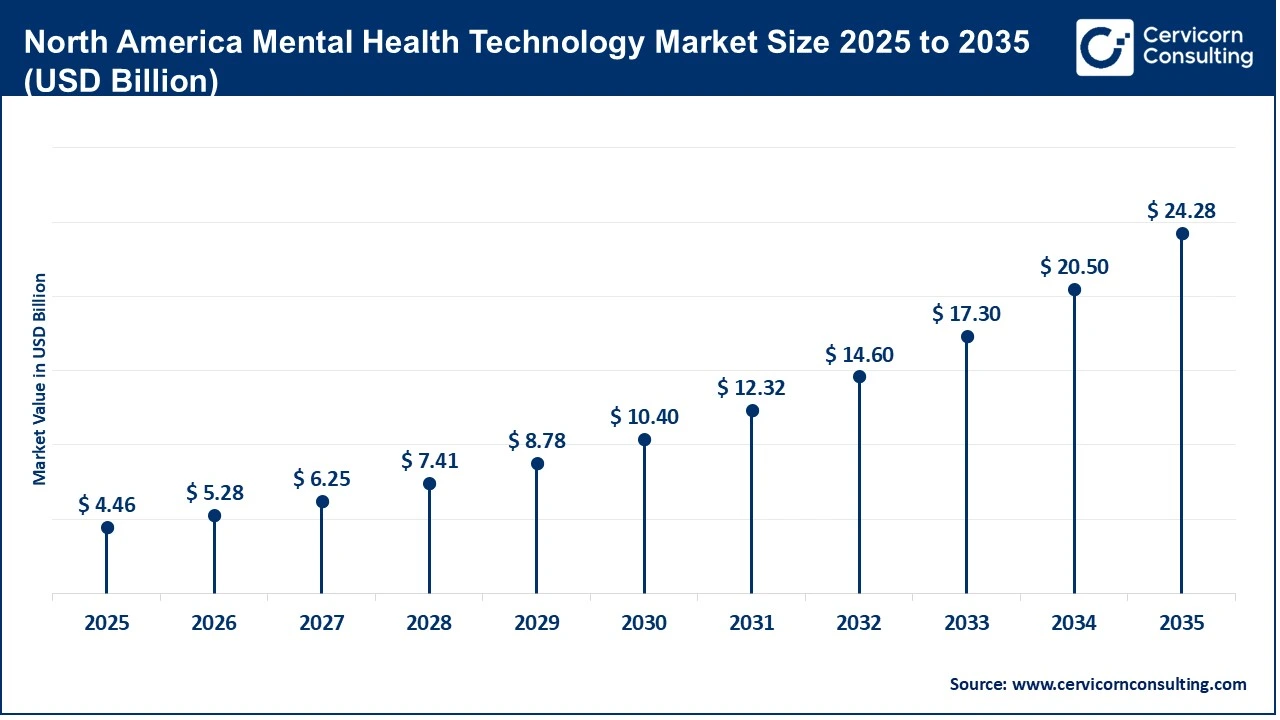
North America dominates the market due to the high prevalence of mental health disorders, widespread adoption of digital healthcare solutions, and robust investments in behavioral health infrastructure. The region benefits from advanced healthcare IT systems, extensive telehealth utilization, and increasing integration of artificial intelligence, digital therapeutics, and remote patient monitoring into mental healthcare. Strong reimbursement frameworks, favorable regulatory support for digital health solutions, and growing employer investments in workforce mental wellness continue to accelerate market expansion. Rising smartphone penetration, increasing demand for personalized mental healthcare, and continuous innovation in AI-powered behavioral health platforms further strengthen North America's leadership in the global market.
United States: High mental health awareness, strong digital health infrastructure, and expanding telepsychiatry adoption drive market growth.
- Approximately 59.3 million U.S. adults (23.1%) experienced a mental illness in 2022, significantly increasing demand for digital mental health platforms, AI-assisted diagnostics, and teletherapy services.
- Nearly 88% of office-based physicians have adopted Electronic Health Records (EHRs), facilitating seamless integration of digital behavioral health solutions into routine clinical care.
Canada: Expanding virtual mental healthcare, increasing government investment, and rising digital health adoption support market expansion.
- One in five Canadians experiences a mental health problem or illness each year, driving sustained demand for telepsychiatry, digital therapeutics, and mobile mental health applications.
- Federal and provincial governments continue investing in mental health services and virtual care infrastructure, improving access to behavioral healthcare across urban and rural communities.
Why is Asia-Pacific witnessing rapid growth in the mental health technology market?
The Asia-Pacific mental health technology market size was accounted for USD 2.25 billion in 2025 and is forecasted to grow around USD 12.26 billion by 2035. The Asia-Pacific market is witnessing rapid growth due to the increasing prevalence of mental health disorders, expanding digital healthcare infrastructure, and rising adoption of telemedicine across emerging economies. The region benefits from growing smartphone and internet penetration, increasing investments in artificial intelligence based healthcare solutions, and supportive government initiatives promoting digital health. Rising healthcare expenditure, improved accessibility to virtual mental health services, and growing awareness of behavioral health are encouraging the adoption of mobile mental health applications, telepsychiatry platforms, AI-powered diagnostics, and digital therapeutics. The shortage of mental health professionals in several countries is further accelerating demand for scalable, technology-enabled mental healthcare solutions.
China: Strong digital healthcare expansion, increasing AI adoption, and government-backed healthcare modernization drive market growth.
- China is rapidly expanding its digital healthcare ecosystem through national healthcare digitalization initiatives, encouraging widespread adoption of telemedicine and AI-enabled mental health services.
- With more than 1.1 billion internet users and one of the world's largest smartphone user bases, China provides a strong foundation for mobile mental health applications and virtual counseling platforms.
India: Growing mental health burden, expanding telemedicine adoption, and increasing digital health initiatives support market expansion.
- According to the National Mental Health Survey, nearly 10.6% of Indian adults experience mental health disorders, creating substantial demand for accessible digital mental healthcare.
- Government initiatives such as the National Tele Mental Health Programme (Tele-MANAS) are expanding access to mental health counseling and telepsychiatry services across the country.
Why Europe expanding steadily in mental health technology market?
The Europe mental health technology market size is expanding from USD 2.84 billion in 2025 to over USD 15.49 billion by 2035. The Europe market is expanding steadily due to increasing awareness of mental well-being, rising prevalence of anxiety and depression, and growing investments in digital healthcare infrastructure. The region benefits from universal healthcare systems, favorable reimbursement policies, and government initiatives promoting telemedicine and digital mental health services. The widespread adoption of electronic health records, artificial intelligence, mobile health applications, and virtual therapy platforms is improving access to behavioral healthcare. Additionally, increasing healthcare digitization under the European Health Data Space (EHDS) initiative and the growing focus on preventive mental healthcare continue to support market growth across the region.
Germany: Strong digital healthcare reforms, expanding telemedicine adoption, and increasing mental health investments drive market growth.
- Germany is accelerating digital healthcare adoption through the Digital Healthcare Act (DVG), supporting reimbursement for approved digital health applications, including mental health solutions.
- Approximately 27.8% of adults experience a mental health condition each year, creating sustained demand for digital therapeutics, telepsychiatry, and AI-enabled behavioral healthcare.
United Kingdom: Rising mental health awareness, expanding NHS digital services, and increasing virtual mental healthcare adoption support market expansion.
- Around 1 in 4 adults in the UK experiences a mental health problem each year, driving demand for digital mental health platforms, online therapy, and remote counseling services.
- The National Health Service (NHS) continues expanding digital mental health services through NHS Talking Therapies, virtual consultations, and mobile health applications to improve access to behavioral healthcare.
Mental Health Technology Market Share, By Region, 2025 (%)
| Region |
Revenue Share, 2025 (%) |
| North America |
42.8% |
| Europe |
27.3% |
| Asia-Pacific |
21.6% |
| LAMEA |
8.3% |
Why ia LAMEA experiencing steady growth?
The LAMEA mental health technology market was valued at USD 0.86 billion in 2025 and is anticipated to reach around USD 4.71 billion by 2035. The LAMEA market is experiencing steady growth due to increasing recognition of mental health disorders, expanding digital healthcare infrastructure, and rising adoption of telemedicine services. Growing smartphone and internet penetration, coupled with government initiatives promoting digital transformation in healthcare, is improving access to behavioral health services across the region. The shortage of mental health professionals, increasing healthcare investments, and rising demand for affordable virtual counseling, AI-enabled mental health platforms, and mobile wellness applications are further supporting market expansion.
Brazil: Growing telehealth adoption, rising mental health burden, and government digital health initiatives support market growth.
- Brazil has one of the highest prevalence rates of anxiety disorders globally, with the World Health Organization (WHO) estimating that about 9.3% of the population is affected by anxiety disorders, driving demand for digital mental health services.
- The country continues expanding telemedicine and digital healthcare programs, improving access to psychiatric consultations and behavioral health support across remote and underserved regions.
Saudi Arabia: Vision 2030 healthcare transformation, increasing digital health investments, and expanding telemedicine services drive market expansion.
- Under Saudi Vision 2030, the government is accelerating healthcare digitalization through investments in telemedicine, electronic health records, and AI-enabled healthcare solutions, including mental health services.
- Rising awareness of mental well-being and expanding access to virtual consultations are encouraging the adoption of digital mental health platforms across hospitals and primary healthcare centers.
Mental Health Technology Market Segmental Analysis
The mental health technology market is segmented into component, technology, application, end user, and geography.
Component Analysis
The software segment dominates the mental health technology market due to its widespread adoption across teletherapy platforms, AI-powered mental health assessment tools, digital therapeutics, mobile wellness applications, and electronic behavioral health records. Software solutions enable remote consultations, symptom monitoring, personalized treatment planning, and seamless integration with healthcare information systems. The increasing demand for scalable, cloud-based, and subscription-driven mental health platforms, combined with continuous software upgrades and AI integration, has positioned software as the largest revenue-generating segment across healthcare providers, employers, insurers, and individual consumers.
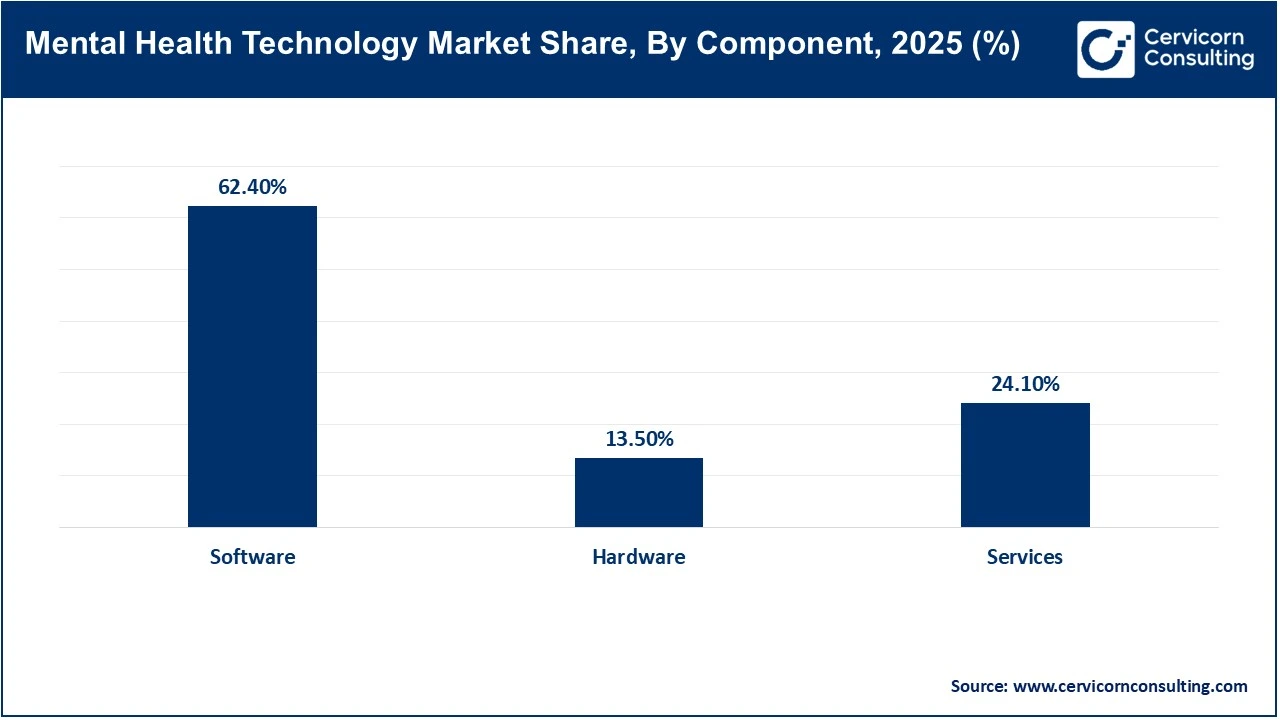
The services segment is expected to register the fastest growth, driven by rising demand for implementation, consulting, training, managed services, technical support, and digital therapy delivery. As healthcare organizations increasingly deploy AI-enabled mental health platforms and telepsychiatry systems, they require specialized expertise for integration, cybersecurity, regulatory compliance, and workflow optimization. Growing outsourcing of behavioral healthcare services, expanding virtual counseling programs, and increasing demand for continuous platform maintenance are driving rapid growth in professional and managed services across both public and private healthcare sectors.
Technology Analysis
Telepsychiatry and teletherapy platforms dominate the technology segment, having become the primary mode of delivering remote mental healthcare. These platforms improve access to licensed professionals, reduce travel time, support follow-up consultations, and address shortages of mental health specialists in underserved regions. Their widespread adoption by hospitals, clinics, employers, and community healthcare providers has significantly expanded access to behavioral healthcare. Continued reimbursement support, increasing patient acceptance of virtual consultations, and integration with electronic health systems further strengthen their leading market position.
Mental Health Technology Market, By Technology, 2025 (%)
| Technology |
Revenue Share, 2025 (%) |
| Telepsychiatry & Teletherapy Platforms |
28.7% |
| Mobile Mental Health Applications |
22.6% |
| Artificial Intelligence (AI) & Machine Learning |
16.4% |
| Cloud-Based Mental Health Platforms |
11.8% |
| Chatbots & Conversational AI |
8.3% |
| Wearable Devices & Digital Biomarkers |
7.2% |
| Virtual Reality (VR) & Augmented Reality (AR) |
5% |
Artificial Intelligence (AI) and Machine Learning represent the fastest-growing technology segment as healthcare organizations increasingly leverage intelligent algorithms for early diagnosis, predictive risk assessment, personalized treatment recommendations, and automated patient engagement. AI-powered conversational assistants, behavioral analytics, speech recognition, and clinical decision-support tools improve operational efficiency while reducing clinician workload. Continuous advancements in generative AI, natural language processing, and predictive analytics are accelerating investment in intelligent mental healthcare platforms, making AI one of the most transformative technologies within the market.
Application Analysis
Anxiety and stress management account for the largest application segment due to the increasing prevalence of workplace stress, lifestyle-related disorders, and psychological distress across all age groups. Digital mental health applications, meditation platforms, virtual counseling services, AI chatbots, and cognitive behavioral therapy programs are widely used to manage anxiety symptoms and improve emotional well-being. Growing public awareness, expanding employer wellness initiatives, and easier access to digital self-care solutions continue to drive adoption, making anxiety and stress management the leading application area.
Mental Health Technology Market, By Application, 2025 (%)
| Application |
Revenue Share, 2025 (%) |
| Anxiety & Stress Management |
31.8% |
| Depression Management |
24.7% |
| Sleep Disorders |
11.2% |
| Substance Use Disorder (SUD) |
9.4% |
| Post-Traumatic Stress Disorder (PTSD) |
8.1% |
| Bipolar Disorder |
6.3% |
| Schizophrenia & Psychotic Disorders |
5.0% |
| Others |
3.5% |
Depression management is projected to be the fastest-growing application segment due to rising diagnosis rates, increasing awareness of early intervention, and growing adoption of digital therapeutics. AI-assisted screening tools, remote monitoring platforms, teletherapy services, and app-based cognitive behavioral therapy programs are improving treatment accessibility and patient adherence. Government initiatives promoting mental healthcare, expanding insurance coverage for digital behavioral therapies, and continuous innovation in personalized mental health technologies are expected to accelerate the growth of depression management solutions throughout the forecast period.
End User Analysis
The healthcare providers segment dominates the mental health technology market due to the widespread implementation of digital solutions across hospitals, psychiatric clinics, behavioral health centers, and primary care facilities. Providers increasingly utilize telepsychiatry platforms, AI-assisted diagnostic tools, electronic behavioral health records, and remote patient monitoring systems to improve clinical efficiency and expand access to care. Growing investments in healthcare digitalization, increasing patient volumes, and the need for integrated mental health services continue to strengthen the leadership of healthcare providers within the market.
Mental Health Technology Market, By End User, 2025 (%)
| End User |
Revenue Share, 2025 (%) |
| Healthcare Providers |
48.5% |
| Patients/Individuals |
23.2% |
| Employers |
13.6% |
| Payers |
7.1% |
| Government & Public Health Organizations |
4.2% |
| Educational Institutions |
3.4% |
The employers segment is expected to witness the fastest growth as organizations increasingly prioritize workforce mental well-being to improve productivity, reduce absenteeism, and enhance employee retention. Companies are expanding investments in digital mental health platforms, virtual counseling, stress management applications, mindfulness programs, and employee assistance solutions to address rising workplace stress and burnout. The growing recognition of mental health as a strategic business priority, combined with increasing adoption of preventive wellness initiatives and hybrid work environments, is accelerating demand for employer-sponsored mental health technologies.
Mental Health Technology Market Top Companies
Recent Developments
- In April 2025, Teladoc Health acquired mental healthcare provider UpLift to strengthen its virtual behavioral health portfolio and expand insurance-covered mental health services. The acquisition enhanced the company's integrated care strategy and broadened access to digital therapy and behavioral healthcare across multiple U.S. states.
- In June 2025, Headspace Health launched its direct-to-consumer virtual therapy service, expanding beyond employer-sponsored programs. The new offering enables individuals to access licensed therapists alongside meditation, mindfulness, and mental wellness tools through a unified digital platform.
- In October 2025, Spring Health secured USD 100 million in new funding to accelerate the expansion of its AI-powered mental healthcare platform, enhance personalized care capabilities, and strengthen its employer-focused behavioral health services globally.
- In March 2026, Talkspace agreed to be acquired by Universal Health Services in an approximately USD 835 million transaction, aiming to expand digital behavioral healthcare delivery and integrate virtual mental health services with broader clinical care networks.
Market Segmentation
By Component
- Software
- Hardware
- Services
By Technology
- Artificial Intelligence (AI) & Machine Learning
- Telepsychiatry & Teletherapy Platforms
- Mobile Mental Health Applications
- Wearable Devices & Digital Biomarkers
- Virtual Reality (VR) & Augmented Reality (AR)
- Chatbots & Conversational AI
- Cloud-Based Mental Health Platforms
By Application
- Depression Management
- Anxiety & Stress Management
- Substance Use Disorder (SUD)
- Post-Traumatic Stress Disorder (PTSD)
- Bipolar Disorder
- Schizophrenia & Psychotic Disorders
- Sleep Disorders
- Others
By End User
- Healthcare Providers
- Patients/Individuals
- Employers
- Payers
- Government & Public Health Organizations
- Educational Institutions
By Geography
- North America
- Europe
- Asia-Pacific
- LAMEA