Healthcare Gamification Market Size, Growth, Forecast 2026 to 2035
The global healthcare gamification market size was accounted for USD 5.52 billion in 2025 and is expected to exceed around USD 27.46 billion by 2035, accelerating a compound annual growth rate (CAGR) of 17.4% over the forecast period from 2026 to 2035.
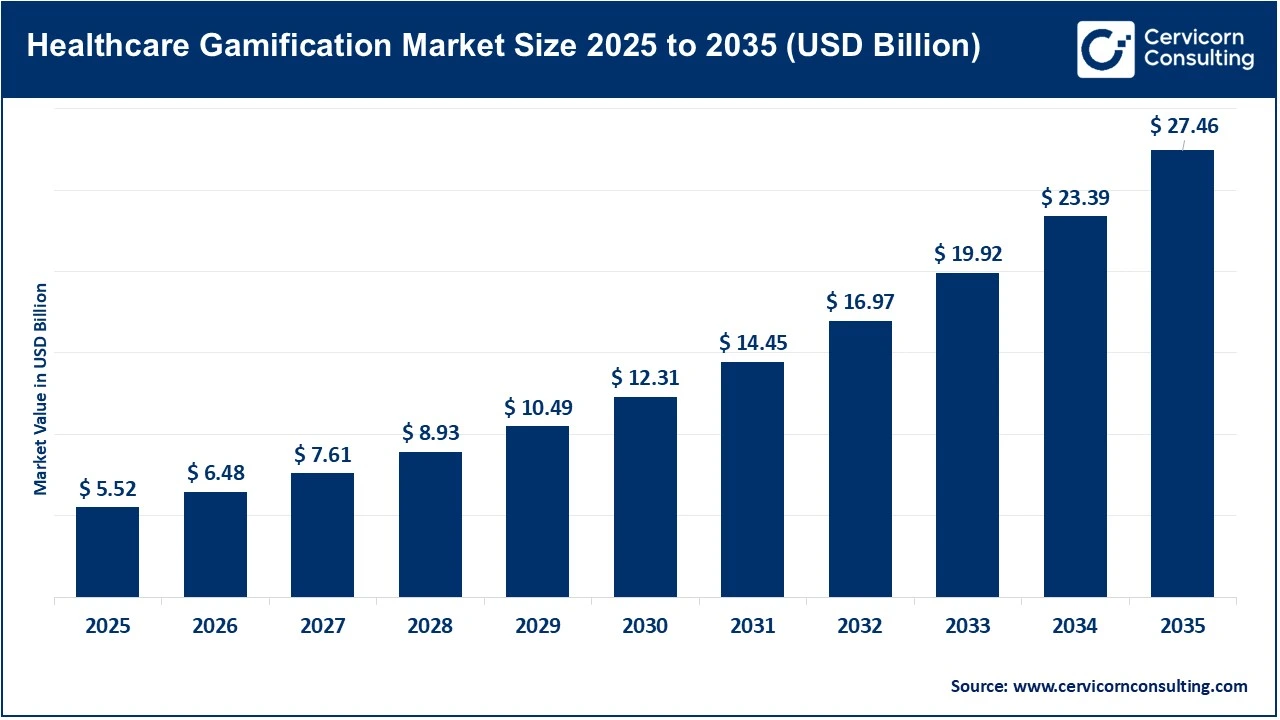
The primary driver of the healthcare gamification market is the rapid adoption of digital health technologies and mobile health (mHealth) applications that encourage long-term patient engagement. Healthcare providers are increasingly integrating game mechanics such as rewards, badges, progress tracking, and leaderboards into chronic disease management, fitness monitoring, medication adherence, and rehabilitation programs to improve patient participation. According to the World Health Organization (WHO), approximately 1.28 billion adults aged 30–79 years worldwide live with hypertension, while the International Diabetes Federation estimates that 589 million adults are living with diabetes in 2024, creating a substantial need for digital tools that improve self-management and treatment compliance. In addition, medication non-adherence remains a major healthcare challenge, with adherence rates for chronic conditions often remaining below 50%, making gamified interventions an increasingly attractive solution for healthcare providers and payers.
Another significant growth factor is the expanding use of wearable devices, AI-powered health platforms, and remote patient monitoring solutions that leverage gamification to encourage healthier lifestyles and preventive care. Gamified wellness applications have demonstrated measurable improvements in user engagement and physical activity. For example, research on wearable fitness platforms found that leaderboard-based gamification increased users' daily physical activity by approximately 3.5% (around 370 additional steps per day), while previously sedentary users achieved an average increase of 1,300 daily steps (15%) after participating in gamified challenges. Furthermore, healthcare organizations are increasingly adopting gamified rehabilitation, mental wellness, and telehealth solutions to reduce healthcare costs while improving patient outcomes, supported by growing smartphone penetration and digital health investments worldwide.
Report Highlights
- North America dominated the healthcare gamification market with 38.6% share, driven by advanced digital health infrastructure, widespread wearable adoption, and strong patient engagement initiatives.
- Europe accounted for 27.8% of the market, supported by digital health regulations, preventive healthcare programs, and expanding adoption of digital therapeutics.
- Asia-Pacific captured 24.9% market share and is projected to grow fastest due to rising smartphone penetration and government-backed digital healthcare initiatives.
- Serious Games led the game type segment with 35.8% market share, driven by increasing applications in rehabilitation, chronic disease management, and medical training.
- Fitness Management dominated the application segment with 22.8% share, supported by growing demand for wearable devices, fitness applications, and preventive healthcare programs.
- Patients/Consumers held the largest end-user share at 34.6%, owing to increasing adoption of mobile health applications, wellness platforms, and self-care technologies.
What is Healthcare Gamification?
Healthcare gamification is the application of game-design elements such as points, badges, rewards, leaderboards, challenges, progress tracking, and achievement systems to healthcare services, digital therapeutics, wellness programs, and medical education. Its primary objective is to motivate patients, caregivers, healthcare professionals, and consumers to adopt healthier behaviors, improve medication adherence, participate in rehabilitation programs, increase physical activity, and enhance learning outcomes through engaging and interactive experiences. By integrating gamification with mobile health applications, wearable devices, artificial intelligence, and remote patient monitoring, healthcare organizations can improve patient engagement, treatment compliance, and overall health outcomes while reducing long-term healthcare costs.
Recent Investments and Strategic Initiatives
| Year |
Company |
Investment |
Strategic Objective |
| 2025 |
Akili Interactive |
Raised USD 30 million in Series C funding. |
Accelerate the commercialization of gamified digital therapeutics for neurological disorders and expand product development. |
| 2023 |
EvokAI Creative Labs Inc. |
Acquired Rehaboo Oy. |
Strengthen AI-powered rehabilitation offerings by integrating gamified recovery solutions to improve patient engagement. |
| 2025 |
Kaia Health |
Continued strategic investment in AI-driven musculoskeletal and chronic disease management platforms. |
Enhance personalized coaching, gamified rehabilitation, and remote patient monitoring capabilities. |
| 2025 |
Omada Health Inc. |
Expanded investments in behavioral health and digital chronic care technologies. |
Improve long-term patient engagement through personalized coaching, behavioral science, and gamification-based disease management. |
Healthcare Gamification Market Dynamics
Market Drivers
1. Rising Burden of Chronic Diseases and Need for Better Patient Engagement
The increasing prevalence of chronic diseases such as diabetes, cardiovascular disorders, obesity, and respiratory illnesses is a major driver of the healthcare gamification market. Gamified applications encourage patients to adhere to medication schedules, monitor health metrics, complete rehabilitation exercises, and maintain healthier lifestyles through rewards, challenges, and personalized feedback. According to the World Health Organization, approximately 41 million people die annually from non-communicable diseases (NCDs), accounting for nearly 74% of global deaths, while physical inactivity contributes significantly to disease risk. Gamification helps improve long-term patient engagement and self-management, making it an increasingly valuable tool for healthcare providers and payers.
YoY global burden of chronic (non-communicable) diseases
| Year |
Chronic Disease (NCD) Deaths (Million) |
| 2019 |
41.0 |
| 2020 |
41.9 |
| 2021 |
43.0 |
| 2022 |
43.7 |
| 2023 |
44.5 |
| 2024 |
45.1 |
2. Growing Adoption of Smartphones, Wearables, and Digital Health Platforms
The rapid expansion of smartphones, wearable fitness trackers, and connected healthcare devices is accelerating the adoption of gamified healthcare solutions. Wearables provide real-time health data that can be integrated with gamification features such as achievement badges, progress tracking, and personalized health challenges. According to the GSMA, global mobile subscribers have exceeded 5.8 billion, while wearable device adoption continues to grow worldwide. The increasing use of remote patient monitoring and AI-powered mobile health applications enables healthcare organizations to deliver engaging, data-driven experiences that improve treatment adherence and patient satisfaction.
- 6.90 billion smartphone users are projected globally in 2025, representing nearly 84% of the world's population.
- Connected wearable devices are expected to exceed 1.34 billion in active use globally in 2024, driven by increasing adoption of smartwatches and fitness trackers.
- Global mobile health (mHealth) app downloads reached approximately 380 million in 2023, reflecting strong consumer demand for digital health services.
Market Restraints
1. Data Privacy and Cybersecurity Concerns
Healthcare gamification platforms collect sensitive personal information, including medical records, activity levels, biometric data, and behavioral patterns. Protecting this information remains a significant challenge due to increasing cyberattacks targeting healthcare organizations. According to the IBM Cost of a Data Breach Report, the healthcare industry continues to record the highest average data breach cost among all sectors, exceeding USD 9 million per incident in recent years. These privacy concerns discourage some healthcare providers and patients from adopting cloud-based gamification platforms, particularly in highly regulated markets.
2. Limited Long-Term User Retention
Although gamification initially attracts users, sustaining long-term engagement remains difficult. Many users gradually lose interest after the novelty wears off, reducing the effectiveness of digital health interventions. Research on digital health applications indicates that medication adherence for chronic conditions often remains below 50%, while long-term participation in many health applications declines significantly without continuous personalization and behavioral support. Maintaining user motivation therefore requires frequent content updates, adaptive challenges, and personalized coaching, increasing development costs for solution providers.
Market Opportunities
1. Expansion of AI-Powered Personalized Gamification
Artificial intelligence offers significant opportunities by enabling highly personalized healthcare gamification experiences based on individual health conditions, behavior patterns, and treatment goals. AI can dynamically adjust rewards, reminders, challenges, and recommendations, improving engagement and adherence. Recent evidence shows that AI-enabled digital health interventions are increasingly associated with improved patient self-management, medication adherence, and physical activity across multiple chronic disease categories. As healthcare systems continue investing in precision medicine and digital therapeutics, AI-powered gamification is expected to become a key differentiator in patient engagement solutions.
2. Increasing Adoption of Corporate Wellness and Preventive Healthcare Programs
Employers and health insurers are increasingly implementing gamified wellness platforms to encourage healthier employee behaviors, reduce absenteeism, and lower healthcare costs. Features such as fitness challenges, wellness rewards, mental health activities, and lifestyle tracking motivate employees to participate actively in preventive healthcare programs. With preventive care becoming a strategic priority globally, organizations are investing more heavily in digital wellness ecosystems that improve workforce productivity while reducing long-term medical expenditures, creating substantial opportunities for healthcare gamification providers.
Market Challenges
1. Integration with Existing Healthcare IT Infrastructure
Healthcare providers often operate multiple electronic health record (EHR), telehealth, and hospital information systems that may not easily integrate with gamified applications. Achieving seamless interoperability requires compliance with healthcare standards, secure data exchange, and significant IT investment. According to the Organisation for Economic Co-operation and Development, interoperability and governance remain among the primary barriers preventing healthcare organizations from fully utilizing digital health technologies, limiting large-scale deployment of gamification platforms.
2. Demonstrating Consistent Clinical Effectiveness
Despite growing adoption, healthcare providers and regulators continue to seek stronger long-term clinical evidence demonstrating that gamification consistently improves patient outcomes across diverse populations and disease conditions. While numerous studies report better engagement and adherence, the magnitude of clinical improvement varies depending on patient demographics, intervention design, and duration. Establishing standardized clinical validation through large-scale randomized studies remains a critical challenge for widespread reimbursement and regulatory acceptance of healthcare gamification solutions.
Healthcare Gamification Market Regional Analysis
The healthcare gamification market is segmented by region into North America, Europe, Asia-Pacific, Latin America, and LAMEA. Here is a brief overview of each region:
What is driving North America's dominance in the healthcare gamification market?
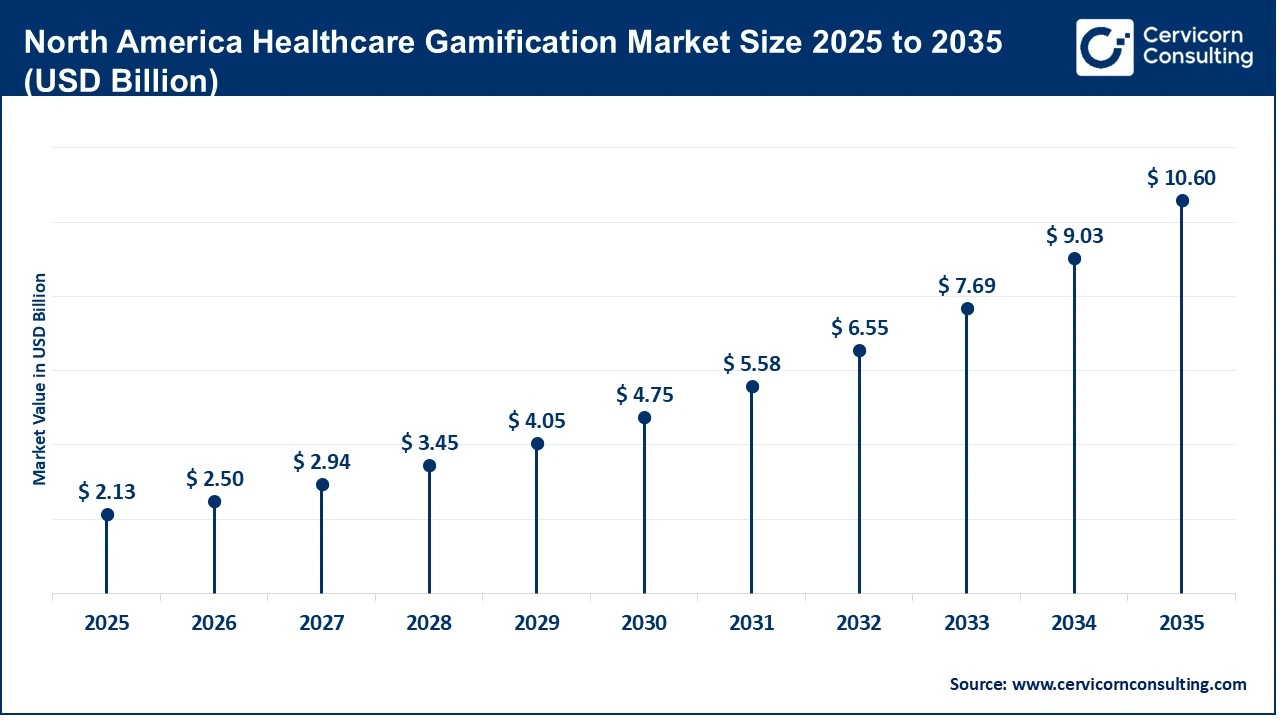
The North America healthcare gamification market size was valued at USD 2.13 billion in 2025 and is predicted to surge USD 10.60 billion by 2035. The North America market is witnessing significant growth, supported by advanced healthcare infrastructure, widespread adoption of digital health technologies, and increasing emphasis on preventive care and patient engagement. The region leads in integrating artificial intelligence (AI), wearable devices, mobile health (mHealth) applications, remote patient monitoring, and digital therapeutics into gamified healthcare solutions. Strong healthcare spending, favorable reimbursement policies, growing chronic disease prevalence, and continuous investments in digital innovation are encouraging healthcare providers, insurers, and employers to deploy gamification platforms that improve medication adherence, rehabilitation outcomes, wellness participation, and long-term disease management.
United States: High digital health adoption, widespread wearable usage, and increasing investments in patient engagement technologies continue driving market growth.
- The United States spends approximately 17% of its GDP on healthcare, providing strong support for investments in digital health, AI-enabled care, and gamified patient engagement platforms.
- More than 129 million Americans live with at least one chronic disease, while over 38 million have diabetes, creating substantial demand for gamified chronic disease management, medication adherence, and lifestyle improvement applications.
Canada: Expanding digital healthcare initiatives, growing preventive care programs, and increasing adoption of virtual healthcare support market expansion.
- Canada continues to expand digital healthcare through nationwide initiatives led by Canada Health Infoway, promoting electronic health records, virtual care, and interoperable digital health systems.
- More than 90% of Canadians have internet access, supporting widespread adoption of telehealth, mobile health applications, and gamified wellness solutions across urban and rural populations.
Why is the Asia-Pacific experiencing the fastest growth globally in the healthcare gamification market?
The Asia-Pacific healthcare gamification market size was estimated at USD 1.37 billion in 2025 and is predicted to hit around USD 6.84 billion by 2035. The Asia-Pacific is experiencing the fastest growth globally, fueled by rapid digital transformation, expanding smartphone and internet penetration, increasing adoption of wearable devices, and rising investments in digital healthcare infrastructure. Growing healthcare awareness, the rising prevalence of chronic diseases, and government initiatives promoting telemedicine, digital health, and preventive care are accelerating the adoption of gamified healthcare platforms. The region also benefits from a large young population, increasing health-conscious consumers, and expanding corporate wellness programs. Furthermore, the integration of artificial intelligence (AI), mobile health (mHealth), and cloud-based healthcare solutions is enabling scalable and personalized gamification experiences across both developed and emerging economies.
China: Massive digital ecosystem, expanding wearable adoption, and government-led digital health initiatives drive market growth.
- China has over 1.1 billion smartphone users, providing one of the world's largest user bases for mobile health applications and gamified healthcare platforms.
- The country has more than 1.09 billion internet users, supporting widespread adoption of AI-enabled healthcare, telemedicine, and digital wellness solutions.
- China's Healthy China 2030 strategy continues to accelerate investments in preventive healthcare, chronic disease management, and digital health technologies, creating significant opportunities for healthcare gamification.
- China is one of the world's largest wearable device markets, with over 45 million wearable devices shipped in 2024, supporting fitness management, remote monitoring, and gamified wellness applications.
India: Rising digital healthcare adoption, expanding smartphone penetration, and government digital health programs accelerate market expansion.
- India has over 806 million internet users and more than 750 million smartphone users, creating a large addressable market for gamified healthcare and mobile health applications.
- The Ayushman Bharat Digital Mission (ABDM) is accelerating the digitization of healthcare by expanding digital health IDs, electronic health records, and interoperable healthcare services.
- India has over 101 million people living with diabetes, one of the highest diabetic populations globally, driving demand for gamified chronic disease management and medication adherence platforms.
Why is Europe experiencing steady growth in the healthcare gamification market?
The Europe healthcare gamification market size is expanding from USD 1.53 billion in 2025 to over USD 7.63 billion by 2035. The Europe market is experiencing steady growth, supported by robust digital health infrastructure, increasing healthcare digitalization, and strong government initiatives promoting preventive care and patient engagement. The region is witnessing rising adoption of mobile health (mHealth) applications, wearable devices, artificial intelligence (AI), and digital therapeutics to improve chronic disease management, rehabilitation, and wellness outcomes. An aging population, increasing prevalence of chronic diseases, and favorable regulatory frameworks such as the European Health Data Space (EHDS) are further accelerating the implementation of gamified healthcare solutions across hospitals, healthcare providers, insurers, and corporate wellness programs.
Germany: Advanced digital healthcare infrastructure, expanding Digital Health Applications (DiGA), and increasing wearable adoption drive market growth.
- Germany is Europe's largest digital health market, supported by the Digital Healthcare Act (DVG), which enables reimbursement for approved Digital Health Applications (DiGA) prescribed by physicians.
- Approximately 30% of Germany's population is aged 60 years or older, increasing demand for gamified rehabilitation, chronic disease management, and healthy aging solutions.
United Kingdom: Expanding NHS digital transformation, increasing mobile health adoption, and growing preventive healthcare initiatives support market expansion.
- The NHS Long Term Plan and NHS App continue to accelerate digital healthcare adoption, with the NHS App surpassing 35 million registered users, strengthening patient access to digital healthcare services.
- More than 65% of UK adults regularly use health and fitness applications or wearable devices to monitor physical activity, sleep, and overall wellness.
Healthcare Gamification Market Share, By Region, 2025 (%)
| Region |
Revenue Share, 2025 (%) |
| North America |
38.6% |
| Europe |
27.8% |
| Asia-Pacific |
24.9% |
| LAMEA |
8.7% |
Why is LAMEA witnessing gradual growth in healthcare gamification market?
The LAMEA healthcare gamification market was valued at USD 0.48 billion in 2025 and is expected to reach around USD 2.39 billion by 2035. The LAMEA market is witnessing gradual growth, supported by improving digital healthcare infrastructure, increasing smartphone and internet penetration, and rising government investments in healthcare modernization. Growing awareness of preventive healthcare, the increasing prevalence of chronic diseases, and expanding adoption of telemedicine and mobile health (mHealth) platforms are encouraging the use of gamified healthcare solutions. Additionally, the region is benefiting from AI-powered digital health initiatives, corporate wellness programs, and growing public-private partnerships aimed at improving patient engagement, medication adherence, and remote disease management.
Brazil: Growing digital health adoption, expanding smartphone usage, and increasing chronic disease burden support market growth.
- Brazil has more than 187 million internet users, representing over 86% of its population, providing a strong foundation for mobile health and gamified healthcare applications.
- Smartphone penetration exceeds 88%, accelerating the adoption of digital wellness platforms, fitness applications, and remote patient monitoring solutions.
- Approximately 57% of Brazilian adults are overweight, while diabetes and cardiovascular diseases continue to rise, driving demand for gamified lifestyle management and chronic disease solutions.
Saudi Arabia: Vision 2030 healthcare transformation and rapid digitalization accelerate healthcare gamification adoption.
- Under Saudi Vision 2030, the government is making substantial investments in digital healthcare, telemedicine, artificial intelligence, and smart hospital infrastructure.
- Internet penetration exceeds 99%, while smartphone penetration is among the highest globally at approximately 97%, creating favorable conditions for mobile health and gamified wellness platforms.
- The prevalence of diabetes in Saudi Arabia is estimated at around 18–20% of adults, increasing demand for digital chronic disease management and medication adherence solutions.
Healthcare Gamification Market Segmental Analysis
The healthcare gamification market is segmented into game type, application, end user, and geography.
Game Type Analysis
Serious games dominate the healthcare gamification market because they are specifically designed to achieve clinical, therapeutic, and educational outcomes rather than entertainment alone. These games are extensively used in rehabilitation, chronic disease management, cognitive therapy, and medical education, enabling healthcare providers to improve patient adherence and learning effectiveness. Their growing integration with digital therapeutics, virtual reality, and AI-based coaching platforms has strengthened their adoption across hospitals, rehabilitation centers, and academic institutions, making them the leading game type in the market.
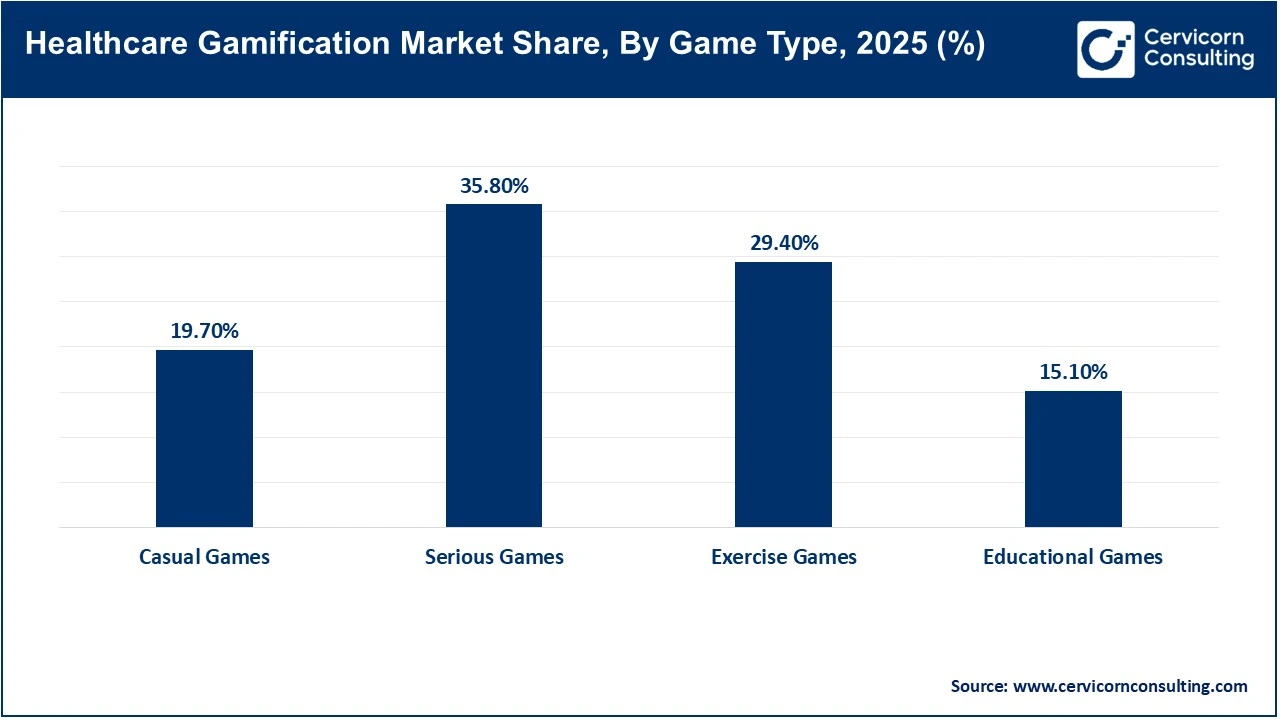
Exercise games are expected to register the fastest growth due to rising awareness of preventive healthcare, increasing wearable device adoption, and expanding home-based fitness programs. These games motivate users through activity challenges, rewards, and real-time performance tracking while supporting physical rehabilitation and wellness initiatives. The growing popularity of smartwatches, fitness bands, and connected health applications, combined with employer wellness programs and aging populations, is accelerating demand for gamified exercise solutions across both developed and emerging healthcare markets.
Application Analysis
Fitness management represents the largest application segment owing to the widespread adoption of gamified fitness applications, wearable technologies, and wellness ecosystems. Healthcare providers, employers, and consumers increasingly use these platforms to encourage physical activity, monitor daily health metrics, and reduce lifestyle-related diseases. Features such as achievement badges, personalized challenges, leaderboards, and social engagement improve user retention and long-term participation, making fitness management the most established and commercially successful application within the healthcare gamification market.
Healthcare Gamification Market, By Application, 2025 (%)
| Application |
Revenue Share, 2025 (%) |
| Fitness Management |
22.8% |
| Chronic Disease Management |
18.6% |
| Patient Engagement |
14.7% |
| Mental Health & Wellness |
12.9% |
| Medication Adherence |
9.8% |
| Physical Rehabilitation |
7.6% |
| Medical Training & Education |
5.8% |
| Weight Management |
4.2% |
| Smoking Cessation |
2.1% |
| Others |
1.5% |
Mental health and wellness is projected to be the fastest-growing application segment as anxiety, depression, stress, and burnout become major global healthcare concerns. Gamified mental wellness platforms utilize behavioral psychology, mindfulness exercises, cognitive training, and personalized rewards to improve emotional well-being and treatment adherence. Increasing investments in digital mental health solutions, AI-enabled therapy platforms, and employer-sponsored wellness programs are significantly expanding adoption among individuals seeking accessible, engaging, and non-invasive mental healthcare solutions.
End User Analysis
Patients and consumers account for the largest share of the healthcare gamification market because they represent the primary users of mobile health applications, fitness platforms, chronic disease management tools, and wellness programs. The widespread availability of smartphones, wearable devices, and personalized digital health services has enabled individuals to actively monitor and improve their health. Growing awareness of preventive care, self-management, and healthy lifestyle practices continues to drive strong consumer adoption of gamified healthcare solutions worldwide.
Healthcare Gamification Market, By End User, 2025 (%)
| End User |
Revenue Share, 2025 (%) |
| Patients/Consumers |
34.6% |
| Hospitals & Clinics |
23.8% |
| Healthcare Providers |
15.7% |
| Corporate Wellness Programs |
10.8% |
| Pharmaceutical & Life Sciences Companies |
7.3% |
| Health Insurance Companies |
4.5% |
| Educational & Research Institutions |
3.3% |
Corporate wellness programs are anticipated to witness the fastest growth as employers increasingly invest in employee health to improve productivity, reduce absenteeism, and lower healthcare costs. Organizations are implementing gamified wellness initiatives that include fitness challenges, mental health activities, lifestyle rewards, and team competitions to encourage healthier behaviors. The expansion of hybrid work environments, employer-sponsored digital health benefits, and data-driven wellness platforms is accelerating the adoption of gamification across corporate healthcare ecosystems.
Healthcare Gamification Market Top Companies
Recent Developments
- In February 2026, GOQii expanded its AI-powered preventive healthcare ecosystem by introducing enhanced personalized wellness coaching and gamified health engagement features, strengthening user participation in fitness and chronic disease management programs.
- In January 2026, Fitbit, Inc. continued expanding AI-driven health capabilities across its wearable portfolio, introducing more personalized activity insights, sleep tracking, and health recommendations to improve long-term user engagement.
Market Segmentation
By Game Type
- Casual Games
- Serious Games
- Exercise Games
- Educational Games
By Application
- Fitness Management
- Chronic Disease Management
- Medication Adherence
- Physical Rehabilitation
- Mental Health & Wellness
- Medical Training & Education
- Patient Engagement
- Smoking Cessation
- Weight Management
- Others
By End User
- Hospitals & Clinics
- Healthcare Providers
- Pharmaceutical & Life Sciences Companies
- Health Insurance Companies
- Patients/Consumers
- Educational & Research Institutions
- Corporate Wellness Programs
By Geography
- North America
- Europe
- Asia-Pacific
- LAMEA