CRO Services Market Size and Growth Outlook 2026 to 2035
The global contract research organization (CRO) services market size was valued at USD 78.78 billion in 2025 and is expected to be worth around USD 240.34 billion by 2035, exhibiting a compound annual growth rate (CAGR) of 11.8% over the forecast period from 2026 to 2035. The CRO services market is experiencing steady growth driven by increasing R&D investment from pharmaceutical, biotechnology, and medical device companies, as well as the growing complexity of drug development. As a result, the demand for cost-effective, flexible, and time-efficient clinical and preclinical research solutions has accelerated the outsourcing of drug discovery, development, and regulatory services to CROs worldwide.
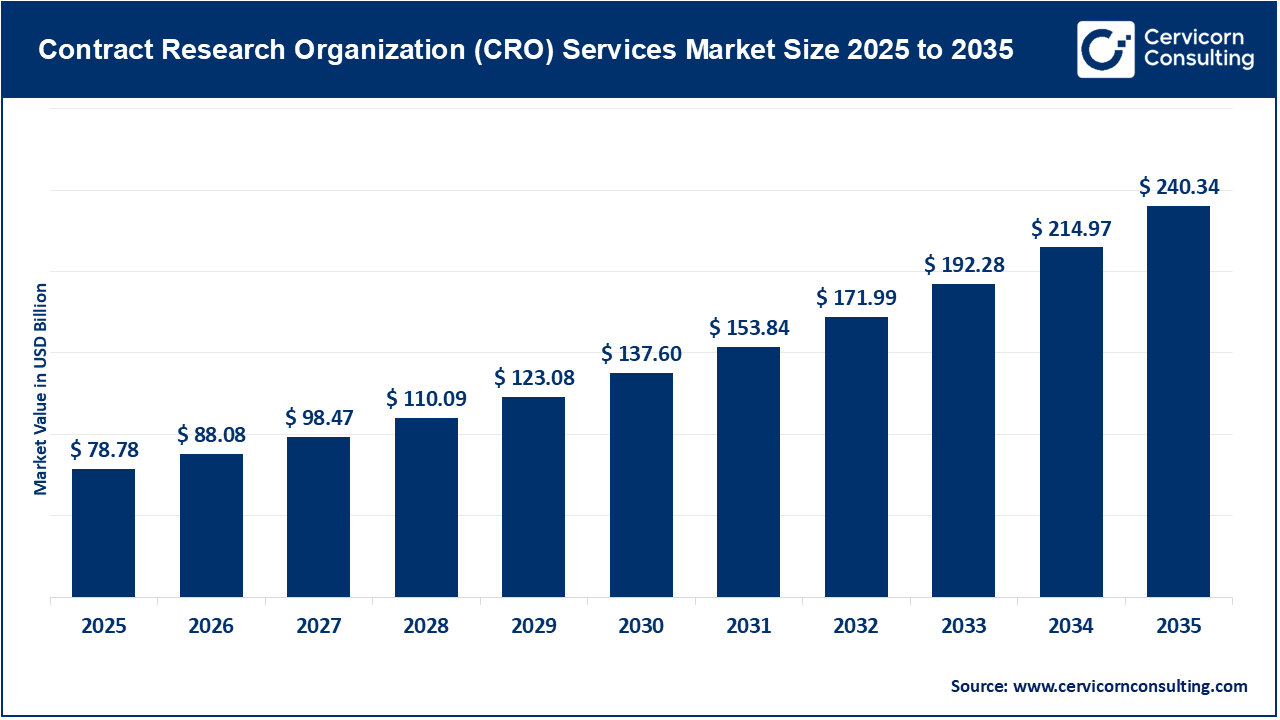
Increasing trial complexity through advancements in biologics, cell and gene therapy, personalized medicine, and rare disease research is causing more sponsors to depend on specialty CRO expertise. The globalisation of clinical research, rising regulatory scrutiny, and the need for faster access to new products are driving demand for integrated CRO service perspectives.
Report Highlights
- Asia-Pacific led the CRO services market, generating around 41% of global revenue, driven by rapid expansion of clinical trials, large and diverse patient pools, cost-efficient operations, and growing pharmaceutical R&D activity in China, India, Japan, and South Korea.
- Clinical research services are the most dominant segment, accounting for nearly 49% of total demand, as sponsors increasingly outsource Phase II–IV trials to accelerate development timelines and manage complex, multi-country studies.
- Oncology is the leading application area, representing approximately 32% of CRO service demand, supported by a strong global oncology pipeline and the high complexity and duration of cancer clinical trials.
- Pharmaceutical and biotechnology companies remain the largest end users, holding about 62% of the market, as these companies rely heavily on CROs to optimize R&D costs, improve trial efficiency, and access global clinical expertise.
Contract Research Organization Services Strengthen Global Drug Development
The CRO Service Market has been expanding due to increased reliance on outsourced research by pharmaceutical companies, biotechnology firms, and medical device manufacturers during drug development. CROs offer support throughout the entire product development process, from the discovery stage to finalising FDA submissions and post-marketing surveillance.
CRO services include clinical trial management, laboratory testing, data analysis, regulatory consulting, and pharmacovigilance. These services are crucial for reducing development time, lowering costs, and ensuring compliance with international regulatory standards.
Global CRO Services Market: Expansion of CRO Landscape and Regional Concentration (2018–2025)
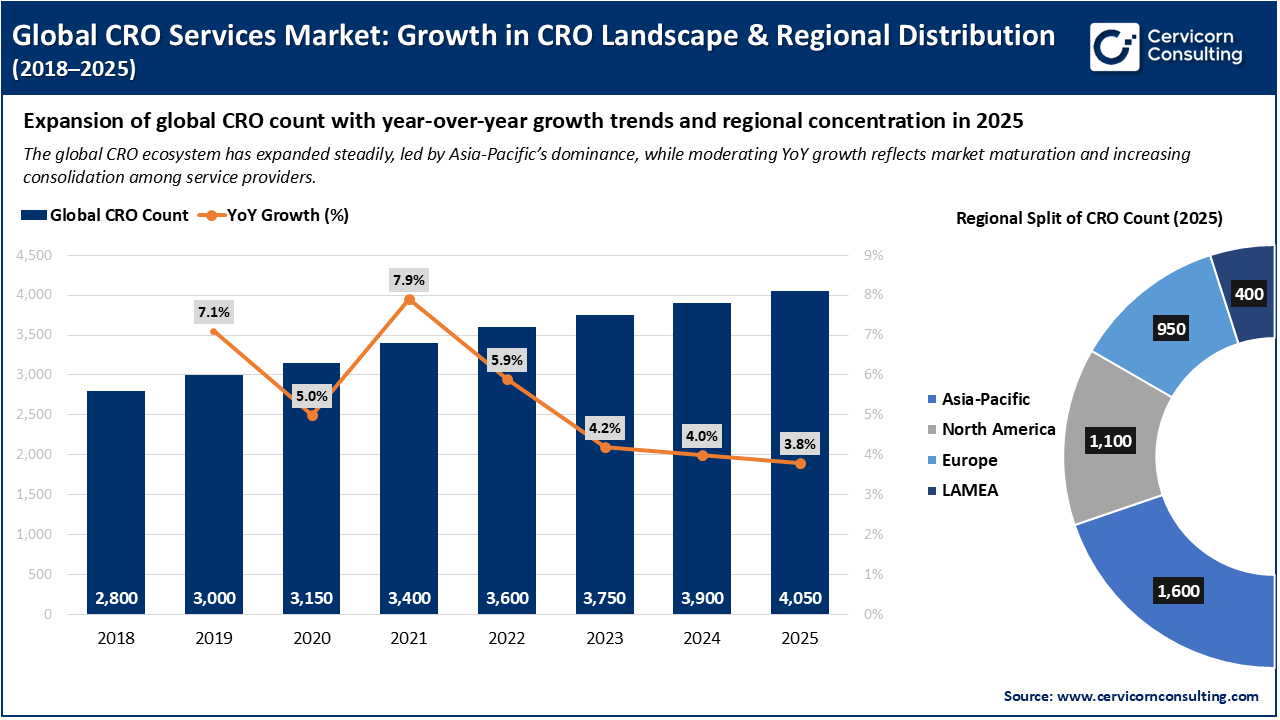
The global CRO ecosystem is experiencing steady growth, with the number of CROs increasing from around 2,800 in 2018 to more than 4,050 by 2025. However, the year-over-year growth rate is gradually slowing, which shows that the market is maturing and becoming more consolidated. Asia-Pacific is expected to become the leading region in 2025, holding the largest share of CROs. This growth is mainly driven by cost advantages, rising clinical trial activity, and strong pharmaceutical R&D. North America and Europe continue to be important mature markets with well-established research infrastructure.
Developments in CRO Services market
- IQVIA experienced significant growth in its Research & Development Solutions segment in 2025, fueled by increased demand for late-stage clinical trials and real-world evidence studies.
- ICON plc strengthened its functional service provider (FSP) model through expanded strategic partnerships with top pharmaceutical sponsors, enhancing long-term contract visibility.
- Syneos Health introduced improved digital trial solutions by integrating decentralized trial tools, patient engagement platforms, and advanced analytics to boost trial efficiency and recruitment outcomes.
Recent Major Milestones
1. Expansion of Cell & Gene Therapy Drives Specialized CRO Demand
With the rapid growth of cell and gene therapy development in 2025, there has been a significant increase in demand for contract research organizations (CROS) with high-tech capabilities supporting viral vector production, biomarker testing, and complex regulatory submissions. These therapies require specialized trial designs, fewer patients per trial, and longer follow-up periods for participants, which makes niche and highly-skilled CROS essential drivers of innovation in these fields.
2. Late-Stage and Post-Approval Research Gains Momentum
There has been increased regulatory focus by authorities on monitoring product safety and assessing their real-world effectiveness, leading to higher demand for Phase III and Phase IV studies as well as post-market studies. CROS offering pharmacovigilance, real-world evidence generation, and health economic outcomes research (HEOR) services have all experienced significant growth, especially in the Oncology, Immunology, and Rare Disease sectors.
3. Sustainability and Ethical Research Practices Become Strategic Priorities
As part of the increased emphasis by sponsors on ensuring CROS have evidence of their commitment to ethical research conduct, sustainability practices, and diversity in clinical trials, the use of decentralized trial models has reduced patient travel emissions while the adoption of paperless data management systems has lessened an organization’s overall environmental impact. Additionally, regulatory agencies are keenly focused on ensuring that clinical trial designs are inclusive regarding patient demographics, further emphasising the importance of CROS' expertise in patient engagement and recruitment strategies.
4. Industry 4.0 Adoption Transforms Clinical Research Operations
The rapid growth of the CRO industry has been driven by digital transformations involving artificial intelligence-powered analytics, automation, and cloud-based clinical trial management systems. Advanced data analysis tools and techniques have improved the ability to monitor clinical trials, manage risks through a risk-based quality approach, and utilise predictive enrollment models. Automation has decreased the manual work needed to handle higher trial volumes, despite the ongoing shortage of talent.
Report Scope
| Area of Focus |
Details |
| Market Size in 2026 |
USD 88.08 Billion |
| Market Size in 2035 |
USD 240.34 Billion |
| CAGR 2026 to 2035 |
11.80% |
| Dominant Region |
Asia-Pacific |
| Key Segments |
Type, Application, Modality, End User, Region |
| Key Companies |
IQVIA Holdings Inc., ICON plc, Laboratory Corporation of America Holdings , Syneos Health, Inc., PPD, Inc. (Thermo Fisher Scientific), Charles River Laboratories International, Inc., Parexel International Corporation, Medpace Holdings, Inc., WuXi AppTec Co., Ltd., Thermo Fisher Scientific Inc., Pharmaceutical Product Development (PPD), PSI CRO AG, Premier Research, Worldwide Clinical Trials |
Market Dynamics
Market Drivers
Rising Demand for Specialized, High-Complexity Drug Development Services
- The need for specialized, high-complexity drug development service providers continues to grow as drug development programs become more complex. There is significant expansion in the Advanced Therapeutics segment of the Contract Research Organization (CRO) Services Market, driven by rising volumes of new product applications, market approvals, and clinical trials for advanced therapeutics such as biologics, biosimilars, cell and gene therapies, personalised medicines, orphan drugs, and others. The specialized nature of these Therapeutic products requires expertise in clinical trial design, the ability to use biomarkers for patient stratification, advanced bioanalytical testing, and long-term safety monitoring- capabilities that many pharmaceutical, biotech, and medical device companies cannot provide internally.
- As drug development regulations become more defined, trial protocols are growing more sophisticated in their design and execution. With increasing complexity, sponsors are more frequently outsourcing clinical, preclinical, and regulatory functions to CROs with proven skills and experience.
Increasing Outsourcing Amid Workforce Constraints and Operational Pressures
- Pharmaceutical and biotech companies worldwide are facing shortages of qualified clinical research professionals, including clinical project managers, biostatisticians, regulatory affairs specialists, and data scientists. In addition to workforce constraints, internal R&D costs are rising, leading to an increased reliance on outsourcing research activities to contract research organizations (CROs) that offer scalable talent pools and standardized processes. CROs enable sponsors to access specialized expertise, advanced technologies, and established trial networks, allowing them to manage variable workloads without expanding internal staff.
Market Restraints
High Operational Costs and Technology Investment Requirements
- Operating a contract research organization (CRO) demands substantial capital due to the services CROs offer during a product's research and development process. CROs are highly capital-intensive, especially those that provide comprehensive clinical trial management, laboratory testing, data analytics, and regulatory consulting services. Investing in advanced clinical trial management systems (CTMS), electronic data capture (EDC), AI-powered analytics tools, laboratory infrastructure, and global compliance systems requires significant capital investments to ensure successful operation.
Stringent Regulatory Requirements and Compliance Complexity
- CROs are highly regulated and must adhere to the guidelines established by global regulatory agencies, including the Food and Drug Administration (FDA), European Medicines Agency (EMA), Pharmaceuticals and Medical Devices Agency (PMDA), and other national authorities. These guidelines encompass standards for Good Clinical Practice (GCP), Good Laboratory Practice (GLP), and data protection (GDPR), all of which add complexity to the daily operations of CROS. Failing to meet these regulatory expectations can lead to trial delays, financial penalties, or damage to reputation, making regulatory expertise and quality management systems essential but costly requirements for CROs.
Market Opportunities
Expansion of Decentralized, Digital, and Data-Driven Clinical Trials
- There are significant growth opportunities for CROs due to the rapid shift toward decentralized and hybrid clinical trial models. Clinical trials are being reshaped by new technologies such as telemedicine, remote patient monitoring, electronic consent, and real-world data collection. CROs that effectively integrate digital platforms, AI-driven analytics, and patient-centered solutions will have increased success in recruiting and retaining patients, obtaining high-quality data, and reducing the time and costs associated with clinical trials. CROs offering digitally enabled trial solutions and advanced data science capabilities can create new business opportunities and foster long-term strategic partnerships as sponsors shift their focus toward patient convenience, diversity, and generating real-world evidence.
Accelerated Growth in Emerging Pharmaceutical and Biotech Markets
- The growth of pharmaceutical manufacturing, clinical research activity, and healthcare infrastructure development in emerging markets across Asia-Pacific, Latin America, Eastern Europe, and parts of the Middle East and Africa continues to accelerate. Governments in these regions support clinical research through regulatory reforms, investment incentives, and public-private partnerships. CROs that expand into these areas can benefit from large patient populations, lower operating costs, and a rising demand from both local and international sponsors.
Market Challenges
Talent Shortages and Increasing Trial Complexity
- As clinical trials become increasingly complex, with oncology, rare diseases, and advanced therapies all requiring skilled, experienced staff in clinical operations, data management, biostatistics, and regulatory strategy, recruiting the right people has never been more challenging for CROs due to a global shortage of seasoned clinical research professionals that limits their ability to scale operations and meet clients’ service quality expectations. With rising costs of doing business caused by higher labor expenses and competition for highly skilled, specialized talent, CROs face ongoing pressure to invest in employee training and development, adopt new technology and process improvements, and successfully deliver projects on time within budget constraints.
Data Security Risks, Quality Consistency, and Global Supply Chain Dependencies
- CROs are responsible for collecting, storing, and maintaining large amounts of sensitive patient and clinical trial data from around the world; therefore, they must exercise due diligence in protecting the confidentiality and integrity of that data. Cybersecurity incidents, data breaches, or equipment failures can all potentially compromise the integrity of the CRFs (case report forms) and the trial itself, and also lead to significant non-compliance with regulatory requirements.
CRO Services Market Regional Analysis
The Contract Research Organization (CRO) Services market is segmented into various regions, including North America, Europe, Asia-Pacific, and LAMEA. Here is a brief overview of each region:
Asia-Pacific CRO Services Market: Driven by Expanding Clinical Trial Activity and Cost Advantages
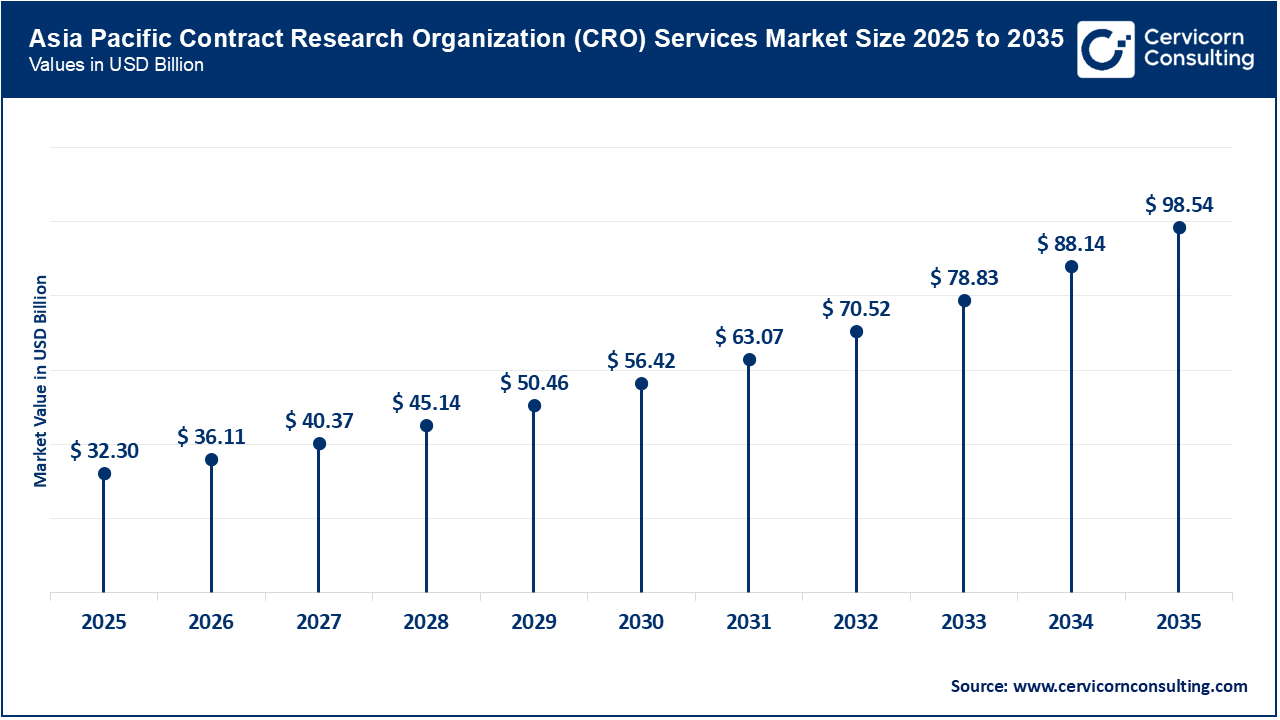
The Asia-Pacific CRO services market size was valued at USD 32.30 billion in 2025 and is expected to surpass around USD 98.54 billion by 2035. The Asia-Pacific is expanding rapidly and is expected to continue gaining market share through 2035. This growth is fueled by a rapidly expanding pharmaceutical manufacturing sector, rising clinical trial volumes, large and diverse patient populations, and relatively lower operational costs. Consequently, countries such as China, India, South Korea, Japan, and Australia are emerging as key global hubs for both early- and late-phase clinical research. There is increasing government support for clinical research throughout Asia-Pacific, ongoing improvements in regulatory harmonisation with global standards, and significant increases in Foreign Direct Investment (FDI) from multinational pharmaceutical and biotechnology companies. This makes Asia-Pacific an even more attractive location for conducting clinical trials, especially in oncology, infectious diseases, and metabolic diseases, due to shortened patient recruitment timelines.
Recent Developments:
- China expanded domestic CRO capabilities to support growing oncology and biologics pipelines.
- India strengthened its position as a global hub for clinical trials and bioanalytical services through regulatory reforms and cost competitiveness.
North America CRO Services Market: Driven by High R&D Spending and Innovation Leadership
The North America CRO services market size was estimated at USD 21.27 billion in 2025 and is estimated to record around USD 64.89 billion by 2035. North America market grows due to significant spending on pharmaceutical R&D, the presence of many global biopharma companies, and advanced clinical trial infrastructure. The United States is expected to be the largest market in North America as it has many more ongoing clinical trials than any other country and is a leader in the research and development of cell and gene therapies and biologics.
North America is leading in digital transformation in clinical research with high levels of use of artificial intelligence (AI)-based data analytics, real world evidence (RWE) studies, and decentralised clinical trial models. The ongoing use of sponsor-large full-service CRO partnerships will continue to bolster long-term market stability.
Recent Developments:
- U.S. based CROs expanded decentralized and hybrid trial capabilities across oncology and rare disease studies.
- Increased NIH and private funding supported early-phase and translational research outsourcing.
Europe CRO Services Market: Mature Market Supported by Regulatory Strength and Therapeutic Expertise
The Europe CRO services market size was reached at USD 17.33 billion in 2025 and is forecasted to report USD 52.87 billion by 2035. The Europe is expected to experience steady growth as it is well established and has a mature market, with strong regulatory and payer systems, healthcare service quality and access, and extensive therapeutic expertise throughout Europe. Countries with the highest demand for CRO services in Europe will include Germany, the United Kingdom, France, and the Netherlands, due to their high levels of clinical trial activity and the number of pharmaceuticals headquartered in these countries. In addition to these factors, the demand for post-marketing surveillance (PMS), real-world evidence (RWE) studies, and clinical evaluation studies on medical devices is driving growth in the European market. There are also initiatives to protect patient data and establish ethical standards in the conduct of clinical trials, which require experienced CROs.
Recent Developments:
- Germany increased outsourcing of early-phase and oncology trials to specialized CROs.
- EU medical device regulations (MDR) increased demand for CRO-led clinical evaluation and post-market studies.
CRO Services Market Share, By Region, 2025 (%)
| Region |
Revenue Share, 2025 (%) |
| Asia-Pacific |
41% |
| North America |
27% |
| Europe |
22% |
| LAMEA |
10% |
LAMEA CRO Services Market: Emerging Growth Region Driven by Patient Availability and Trial Expansion
he LAMEA CRO services market was valued at USD 7.88 billion in 2025 and is anticipated to reach around USD 24.03 billion by 2035. The Latin American market is growing due to increased clinical trial activity, improved regulations, and a large pool of eligible patients. With many patients being treated naively and a shorter timeframe for conducting clinical trials, Brazil, Mexico, and Argentina have become popular locations for multinational clinical trials. Currently, Latin America accounts for a small part of the global CRO services market, but as sponsors show more interest in the region, more investigators will conduct studies, and government support for clinical research will continue to grow. Additionally, the MEA market for CRO services is expected to experience steady and moderate growth. This growth is mainly driven by increased investment in healthcare, the development of clinical research infrastructure, and a move toward diversifying clinical trial sites. Countries such as Saudi Arabia, UAE, and South Africa are emerging as regional research hubs.
Recent Developments:
- Brazil expanded participation in global oncology and vaccine trials.
- Mexico strengthened its role in late-phase and post-approval clinical studies.
- Saudi Arabia increased clinical research funding as part of national healthcare transformation programs.
CRO Services Market Segmental Analysis
The contract research organization (CRO) services market is segmented into type, application, end user, and geography.
Type Analysis
Clinical research services dominate the CRO services market due to the high cost, long duration, and operational complexity associated with Phase I–IV clinical trials. These services include clinical operations, site monitoring, patient recruitment, clinical data management, regulatory submissions, and pharmacovigilance. This segment's leadership is strongly supported by the increasing number of late-stage trials in immunology, oncology, and rare diseases.
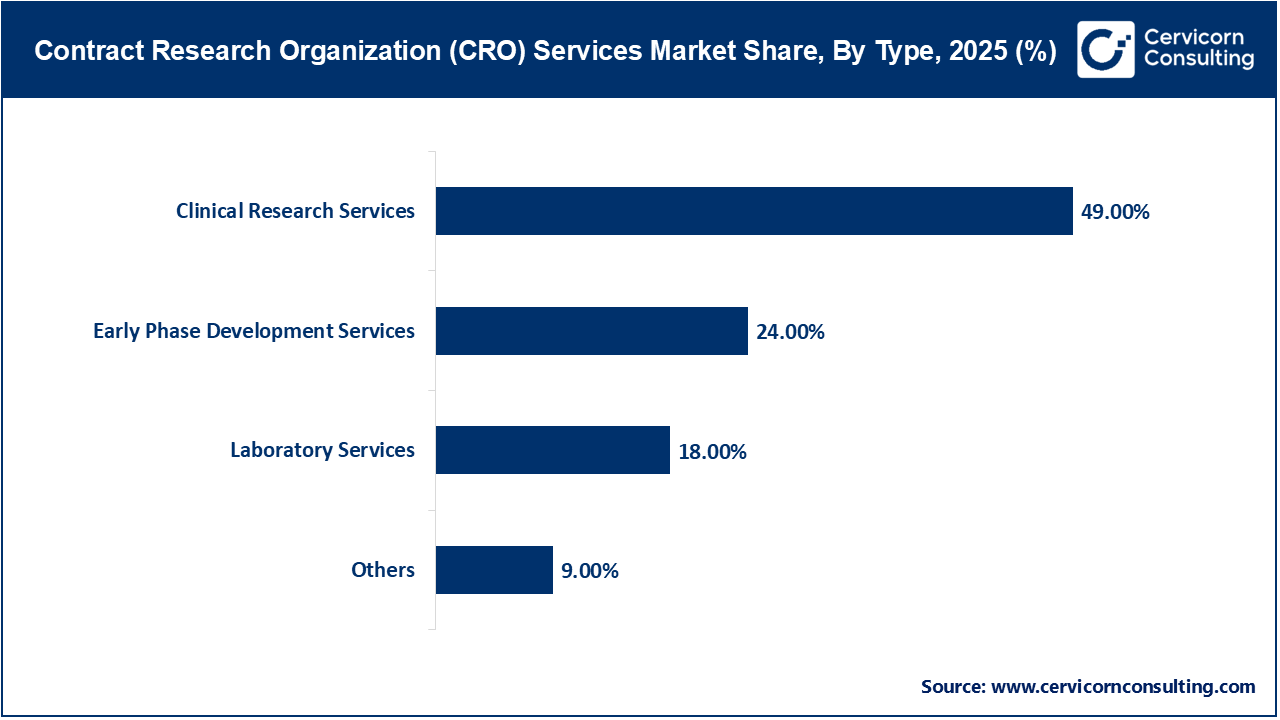
The fastest-growing market is early phase development services, driven by rising investments in precision medicine, cell and gene therapies, and biologics. To accelerate development timelines and manage costs, emerging biotech companies are increasingly outsourcing preclinical, toxicology, PK/PD, and IND-enabling studies.
Application Analysis
CRO services demand in oncology accounts for the largest share of the CRO services market. This is due to the high complexity of oncology clinical trials, biomarker-driven protocols, adaptive trial designs, and extended safety monitoring. Ongoing oncology pipelines focused on immunotherapy and targeted therapies will continue to fuel outsourcing.
CRO Services Market, By Application, 2025 (%)
| Application |
Revenue Share, 2025 (%) |
| Oncology |
32% |
| Neurology |
14% |
| Cardiology |
12% |
| Infectious Disease |
15% |
| Metabolic Disorders |
13% |
| Nephrology |
6% |
| Others |
8% |
Infectious diseases and metabolic disorders are growing rapidly because of increased research in infectious diseases as part of global efforts for preparedness, vaccine and antiviral development, and the rising worldwide prevalence of metabolic conditions like diabetes and obesity, along with ongoing needs for long-term treatment.
End User Analysis
The pharmaceutical and biotechnology companies represent the largest segment of end users due to their extensive R&D portfolios, numerous clinical trials, and ongoing shift toward strategic outsourcing and Functional Service Provider (FSP) models. Additionally, their increased use of virtual biotech companies continues to heighten their reliance on Contract Research Organization (CRO) partners.
CRO Services Market, By End User, 2025 (%)
| End User |
Revenue Share, 2025 (%) |
| Pharmaceutical & Biotechnological Companies |
62% |
| Medical Device Companies |
18% |
| Academic & Research Institutes |
12% |
| Others |
8% |
Medical device companies are the fastest-growing end-user segment, driven by increased regulatory scrutiny, tighter post-marketing surveillance, and a rise in the use of implantable, digital, and combination medical devices.
CRO Services Market Top Companies
Recent Developments by Major Companies
IQVIA Holdings Inc.
- Expanded its real-world evidence (RWE) and advanced analytics platforms, strengthening support for post-approval studies and regulatory decision-making.
- Increased investment in AI-driven trial optimization and decentralized clinical trial technologies to improve patient recruitment and trial efficiency.
ICON plc
- Continued expansion of its Functional Service Provider (FSP) model, securing long-term strategic partnerships with top global pharmaceutical companies.
- Strengthened oncology and rare disease trial capabilities through targeted investments in specialized clinical operations teams.
Syneos Health, Inc.
- Strengthened its clinical and commercial integration model, enabling sponsors to align development strategies with market access planning.
- Launched enhanced digital trial solutions focusing on decentralized trials, site optimization, and patient-centric study designs.
Charles River Laboratories International, Inc.
- Expanded early-stage discovery and preclinical services to support growing demand for IND-enabling studies.
- Increased investment in biologics safety assessment and advanced laboratory technologies to support complex therapeutic modalities.
Market Segmentation
By Type
- Early Phase Development Services
- Chemistry, Manufacturing and Controls (CMC)
- Preclinical Services
- Discovery
- Clinical Research Services
- Phase 1
- Phase 2
- Phase 3
- Phase 4
- Laboratory Services
- Consulting Services
- Data Management Services
- Others
By Application
- Oncology
- Breast Cancer
- Lung Cancer
- Prostate Cancer
- Colorectal Cancer
- Neurology
- Cardiology
- Infectious Disease
- Metabolic Disorders
- Renal/Nephrology
- Others
By Modality
- Small Molecules
- Biologics
- Medical Devices
- Biosimilars
- Others
By End User
- Pharmaceutical & Biotechnological Companies
- Medical Device Companies
- Academic & Research Institutes
- Others
By Region
- North America
- Europe
- Asia-Pacific
- LAMEA