Autoimmune Drugs Market Overview and Insights 2026 to 2035
The global autoimmune drugs market size was valued at USD 132.71 billion in 2025 and is expected to reach USD 246.38 billion by 2035, growing at a CAGR of 6.4% during the forecast period from 2026 to 2035. A rise in cases of rheumatoid arthritis, psoriasis, inflammatory bowel disease (IBD), lupus, and multiple sclerosis, with a surging move towards biologics and targeted therapies, is driving the global market progression. Alongside this, many regions are expanding healthcare spending and boosting biosimilar development, supporting the industry's growth prospects.
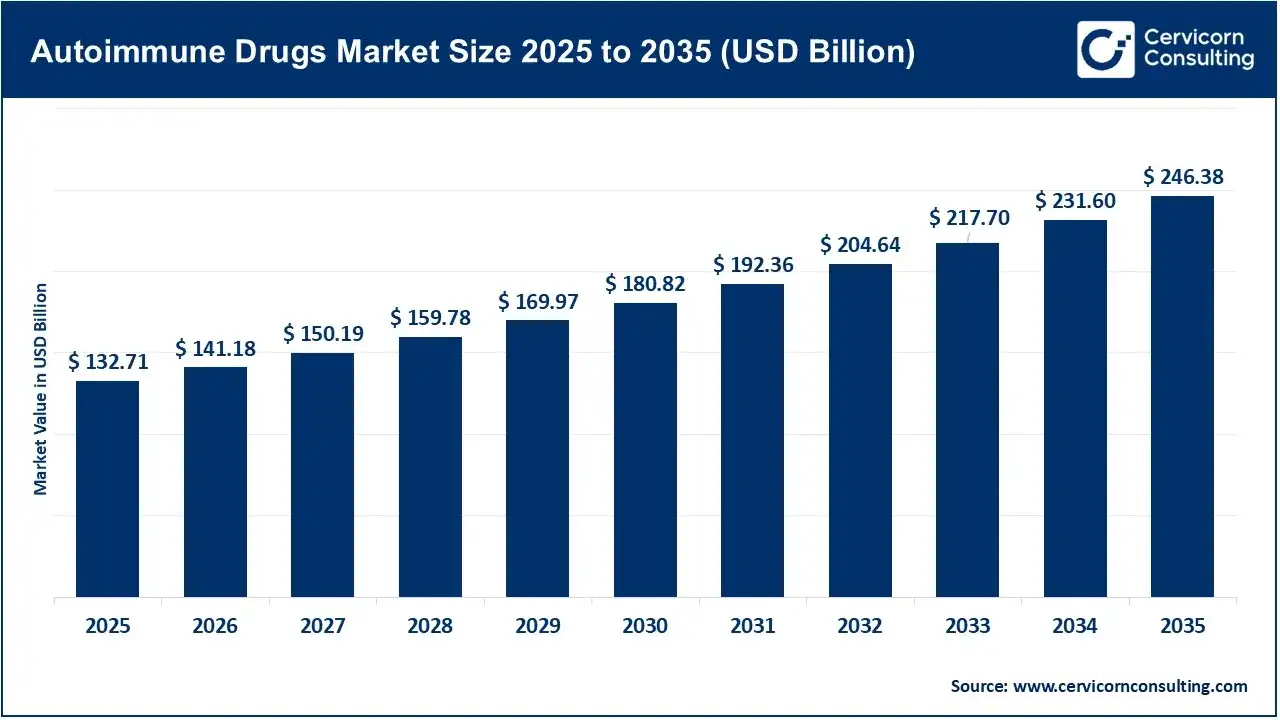
Autoimmune Drugs Market Size & Forecast
- Base Year Market Size (2025): $132.71 billion
- Current Year Market Size (2026): $141.18 billion
- Estimated Year Market Size (2035): $246.38 billion
- Forecast Period CAGR (2026-2035): 6.4%
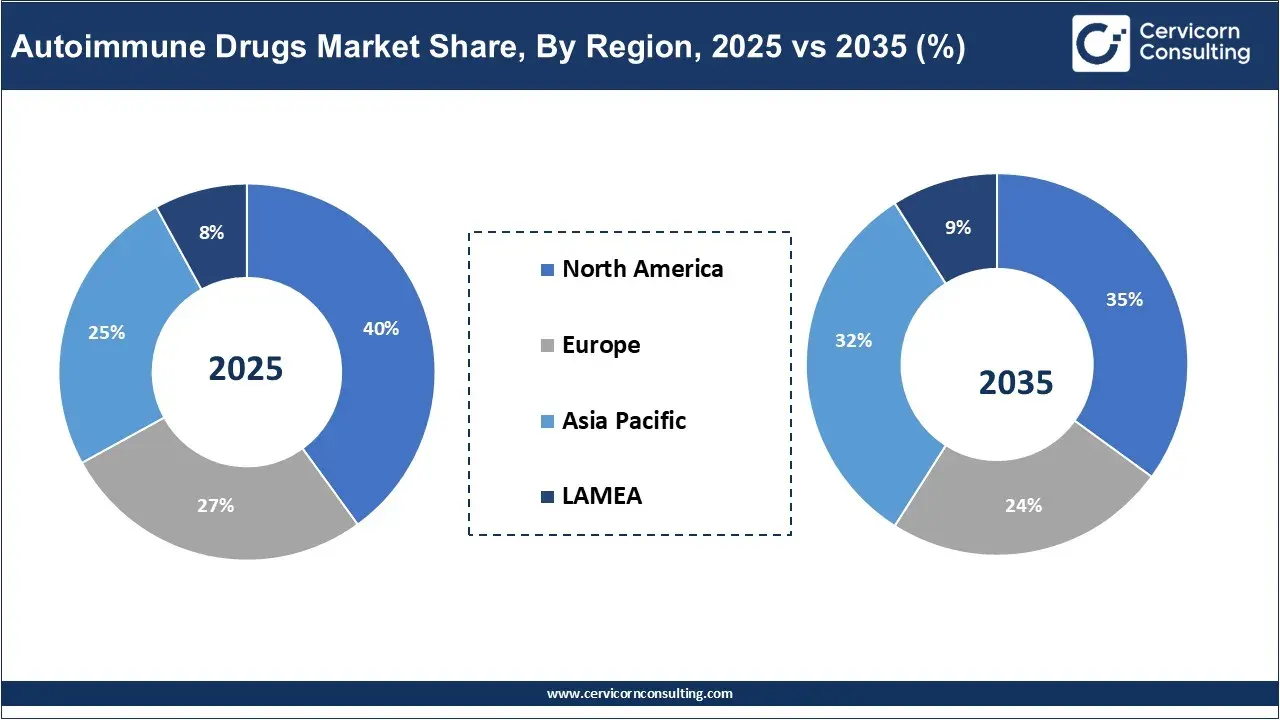
- Leading region: North America (revenue share 40%)
Report Highlights
- By region, North America registered dominance in the market in 2025 (revenue share 40%), fueled by the presence of sophisticated healthcare systems and ongoing massive investments in clinical studies.
- By drug class, biologic DMARDs dominated the market in 2025 (revenue share 43%) due to their widespread benefits and earlier clinical diagnosis.
- By disease indication, rheumatoid arthritis led the market in 2025 (revenue share 30%), supported by a globally rising geriatric population and increasing demand for biologics and targeted therapies.
- By route of administration, injectable was dominant in the market in 2025 (revenue share 58%), driven by its bypassing first-pass metabolism and continuous breakthroughs in delivery device technologies.
- By distribution channel, hospital pharmacies dominated the market because of their well-developed management and higher adoption of biosimilars.
What are the Ongoing Advances in the Autoimmune Drugs Market?
Firstly, the market includes drugs that control, suppress, or modify an overactive immune system that accidentally targets the body’s own healthy tissues and cells. The worldwide demand for these drugs is primarily propelled by accelerating cases of autoimmune disorders, expedited adoption of targeted therapies, and strengthening biotechnology innovations. Besides this, the 2026 industry has been seeking the progression of CD19-directed CAR-T and in vivo programs. Additionally, leading manufacturers, such as Moderna, are bolstering mRNA-improved and in vivo CAR-T platforms to evolve CAR-T cells directly inside the patient's body and focusing on boosting the scalability of immune-reset therapies.
Key Funding
- October 2026: The Arthritis National Research Foundation (ANRF) offered many research grant opportunities to assist early-career researchers and postdoctoral fellows in the field of arthritis and related autoimmune diseases, and applications will close on January 8, 2027.
- October 2026: The Indian Council of Medical Research (ICMR) funded a multi-center 4-year study to assess genetic links and therapies for lupus across AIIMS Delhi, AIIMS Bibinagar, SGPGIMS Lucknow, St John's Hospital Bengaluru, Nizam's Institute of Medical Sciences Hyderabad, and Kolkata Medical College.
- October 2026: Immutep Limited and Monash University’s Biomedicine Discovery Institute announced a A$652,248 grant over three years from the Australian Research Council (ARC) to foster their structural and therapeutic research on Lymphocyte Activation Gene-3 (LAG-3) in autoimmune and immune diseases.
Market Dynamics
Growth Drivers
- Growth in Prevalence & Advanced Therapies: Across the globe, numerous regions are facing nearly 80 diverse autoimmune conditions, pushing diagnosis rates and early treatment demand. To overcome such instances, the autoimmune drugs market is inclining towards personalized biologics and monoclonal antibodies.
- Rising Novelty in Pipelines: Gradually, eminent clinical development pipelines are increasingly aiming at extensive depletion of autoreactive B-cells and plasma cells employing targets, including CD19, BCMA, and CD3.
- Enhanced Access to Diagnostics & Specialists: Several advanced and emerging pharma countries are broadening availability of specialty settings in rheumatology, dermatology, and gastroenterology, enabling rapid diagnosis and shorter times from approval to patient access.
Market Restraints
- Enforcement of Rigorous Frameworks: Often, payers and health systems employ stringent prior authorization (PA) and step-therapy protocols, which lead to delays in patient care, administrative stress for clinicians, and treatment shortages.
- Huge Treatment Prices: The use of innovative and advanced biologic therapies and targeted immunomodulators necessitates complex production processes, stricter quality controls, and cold-chain logistics, which fuels higher therapy prices and cumulative out-of-pocket expenses for patients.
- Bottlenecks of Tariffs & Supply Chain: Implementation of international trade tariffs on imported biologic drugs, specialty pharmaceuticals, and diagnostic equipment is boosting manufacturing and import expenditures and especially impacting North America and Europe.
Key Opportunities
- Reinforcing Oral Solutions: In the coming era, the market will consistently push newly developed oral treatments, like the latest pills for MS and other applications, coupled with continuous enhancement in patient compliance and lower the pressure of clinic-administered infusions.
- Vast Access to Biosimilars & Generics: The prospective industry will have a huge rivalry among biologics and affordable biosimilars, which raises significant commercial change that emphasises price reduction and strengthened access across developing markets, with a focus on premium and outcome-based pricing models.
- Advancing Precision Approaches: The exploration of integrated AI, next-generation sequencing, and companion diagnostics enables clinicians to leverage individual biomarker data and support early target drug adoption and mitigate irreversible organ damage.
Market Challenges
- Regulatory Concerns: Nowadays, stringent regulatory supervision for new molecular entities and changing government drug-pricing and reimbursement policies are creating commercial uncertainty.
- Notable Difficulty in Pipeline: The overall evolution of the latest solutions, like deep B-cell depletion via CD19/BCMA-targeted therapies and in vivo CAR-T measures, indicates increased failure rates and wider issues in managing expansive, undefined patient labels.
Autoimmune Drugs Market Regional Analysis
Why did North America Dominate the Market in 2025?
The North America autoimmune drugs market size was valued at USD 53.08 billion in 2025 and is expected to hit USD 98.55 billion by 2035. North America led with a dominant share of the market in 2025, driven by the presence of well-established healthcare infrastructure and increasing diagnosis rates. However, stronger Canadian pediatric and adult rheumatology frameworks have also strengthened funding and registries led through agencies, including the CDA-AMC, to trace rare autoimmune cytopenias, myopathies, and scleroderma cohorts arriving in advanced clinical studies.
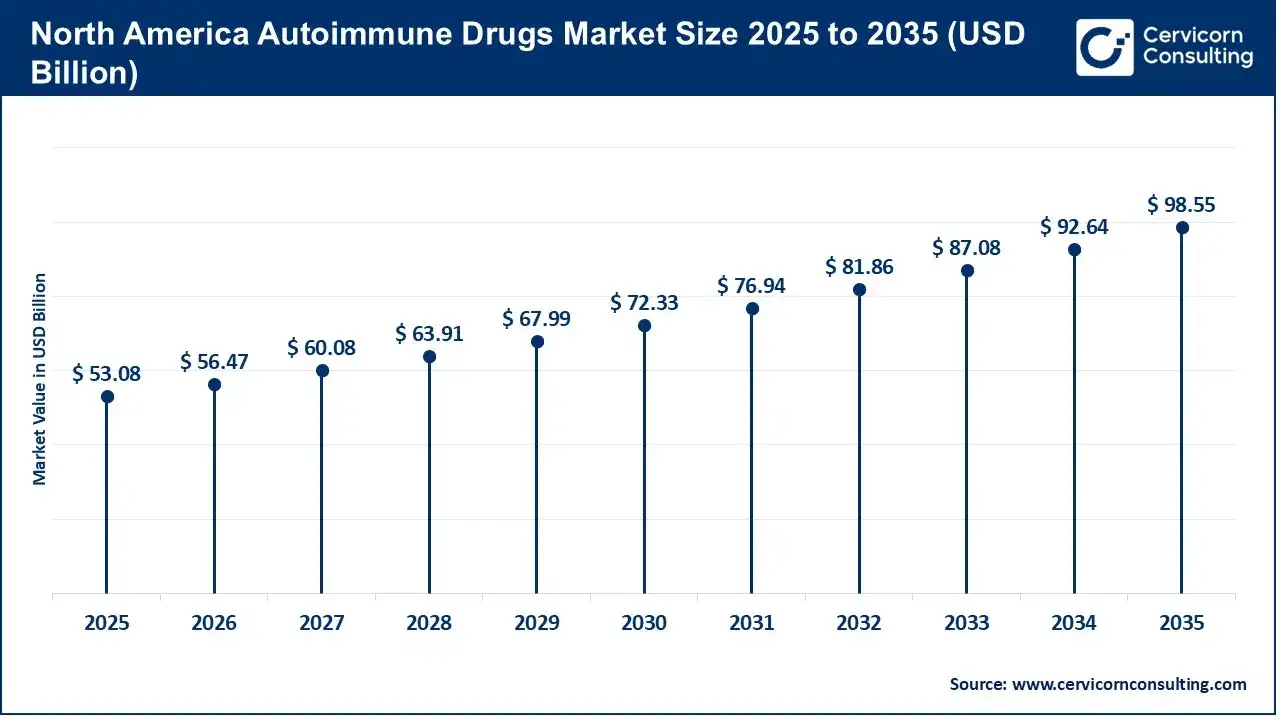
United States Market
- A major contributor has expanded several approvals across the market, along with substantial involvement of academic and clinical pipelines that broadly use unique nanocarriers to reduce systemic immunosuppression and organ toxicity. Moreover, leading firms in the U.S. have developed immune-retraining nanoparticle platforms to selectively allow the immune system to target specific autoantigens.
Why is Asia Pacific Considered to Grow Rapidly in the Coming Years?
The Asia-Pacific autoimmune drugs market size was estimated at USD 33.18 billion in 2025 and is projected to surpass USD 61.60 billion by 2035. Asia Pacific is projected to expand fastest in the market during 2026-2035, due to surging disease cases and an increasing need for early diagnostic solutions. Along with modernization of the healthcare system, APAC governments are massively investing in medical infrastructure, expanding public and private health insurance coverage. China’s consistent alliances are using generative AI platforms to co-establish innovative small-molecule and biologic pipelines to treat complex autoimmune and central nervous system disorders.
India Market
- According to Arthritis India, India shows roughly 20 to 40 new cases of rheumatoid arthritis (RA) per 100,000 (per lac) population annually. Most Indian leaders are boosting the continuous scale-up of cost-effective biosimilar monoclonal antibodies, specifically for autoimmune and inflammatory issues. Moreover, heavy investments are advancing National Institutes of Pharmaceutical Education and Research (NIPERs) and establishing a network of over 1,000 accredited clinical trial sites across India.
Why is Europe Registering Notable Growth in the Market in 2026?
The Europe autoimmune drugs market size was accounted for USD 35.83 billion in 2025 and is anticipated to reach USD 66.22 billion by 2035. Europe is experiencing a lucrative expansion, due to an expanding aged population and rising healthcare and NHS spending. In terms of regulatory settings, recently the MHRA and UK government have worked to speed up clinical trial set-up times and developed streamlined regulatory trajectories for tailored and advanced therapy medicinal products (ATIMPs) in autoimmune applications.
Germany Market
- Germany’s significant expansion in the market is driven by favourable healthcare expenditure, comprehensive clinical studies, and supportive regulatory circumstances. Meanwhile, specialized clinical facilities are strengthening dendritic cell-based immunotherapy, especially for rheumatoid arthritis and other chronic inflammatory conditions. On the other hand, TolerogenixX started a new study in Kidney International that offers preclinical proof-of-concept for its Modified Immune Cells (MIC) platform in lupus nephritis.
Autoimmune Drugs Market Segmentation Analysis
Drug Class Analysis
Biologic DMARDs: The biologic DMARDs segment accounted for the largest share of the market in 2025, driven by their superior efficacy, broader applications, and prevention of structural damage. A recently revealed multicenter retrospective cohort study showed that beginning biologic DMARDs as first-line therapy gained a 50% rate of sustained, event-free remission at week 72, compared with just 12% in patients treated with conventional synthetic DMARDs.
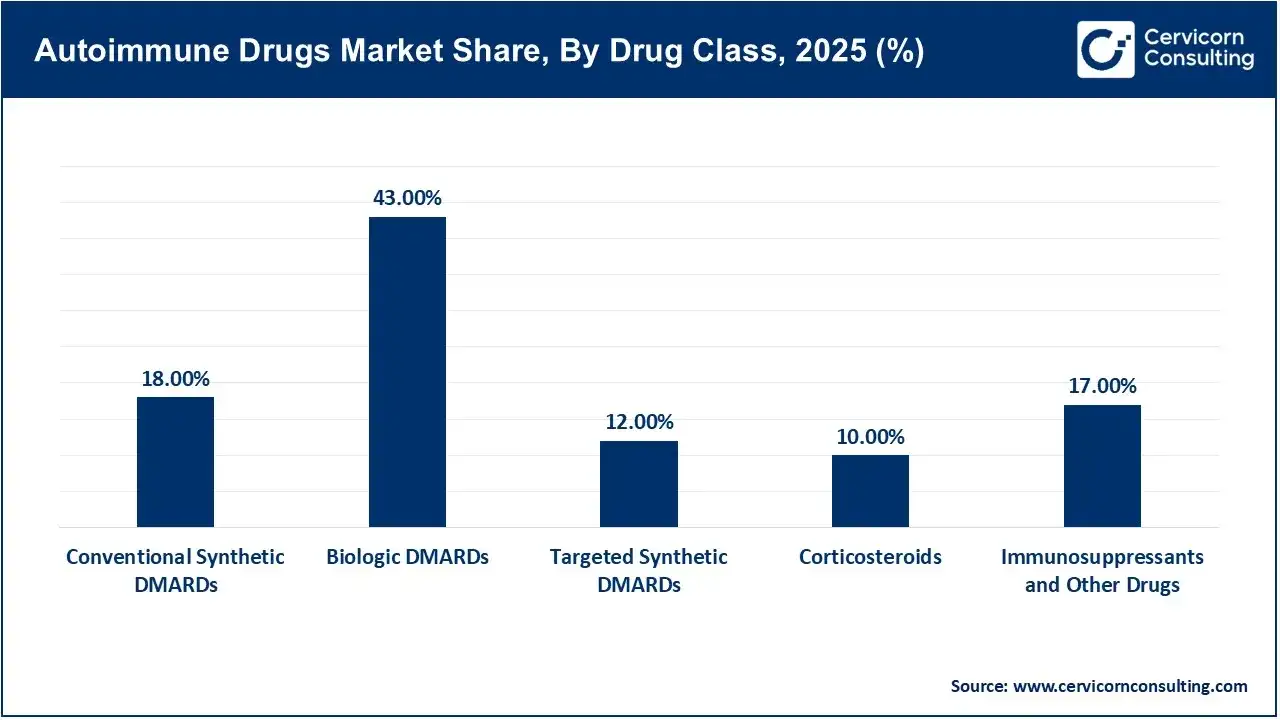
Targeted Synthetic DMARDs: The targeted synthetic DMARDs segment is predicted to be the fastest-growing during the forecast period, fueled by their variety of clinical and lifestyle advantages and growth in oral route convenience. According to the latest advances, the industry is exploring JAK inhibitors as valid targeted synthetic alternatives after a conventional synthetic DMARD (like methotrexate) fails.
Disease Indication Analysis
Rheumatoid Arthritis: The rheumatoid arthritis segment held a dominant share of the market in 2025, due to increasing global cases and expanded standardized clinical landscapes. Along with updated international guidelines, clinical trials have shown administration of the biologic drug abatacept to high-risk individuals with early joint pain, which drastically lowered the 12-month and 24-month progression rate to clinical rheumatoid arthritis.
Autoimmune Drugs Market Share, By Disease Indication, 2025 (%)
| Disease Indication |
Revenue Share, 2025 (%) |
| Rheumatoid Arthritis |
30% |
| Multiple Sclerosis |
13% |
| Psoriasis and Psoriatic Arthritis |
19% |
| Inflammatory Bowel Disease |
17% |
| Systemic Lupus Erythematosus |
9% |
| Others |
12% |
Multiple Sclerosis: The multiple sclerosis segment is predicted to witness rapid expansion in the upcoming years, propelled by a growing patient base and continuous breakthroughs in drug formulations. 2026 with nearly 3.1 million cases, recently, the US FDA authorized Ocrevus (Ocrelizumab) to treat relapsing-remitting MS (RRMS) in children and adolescents aged 10 and older weighing at least 55 pounds.
Route of Administration Analysis
Injectable: The injectable segment captured a major share of the autoimmune drugs market in 2025, supported by its higher clinical efficiency, broader convenience for self-administration, and surging suitable pharmacy infrastructure. In the last year, the US FDA cleared a prefilled syringe for VYVGART Hytrulo to allow self-injection in generalized myasthenia gravis (gMG) and chronic inflammatory demyelinating polyneuropathy (CIDP).
Autoimmune Drugs Market Share, By Route of Administration, 2025 (%)
| Route of Administration |
Revenue Share, 2025 (%) |
| Oral |
31% |
| Injectable |
58% |
| Intravenous |
8% |
| Topical |
3% |
Oral: The oral segment is anticipated to grow rapidly in the predicted timeframe, fueled by its widespread patient convenience, growing health economics, and versatility in treatment regimens. Most agents have indicated potent oral efficacy and fast onset of action in chronic spontaneous urticaria (CSU), shifting non-steroidal, targeted oral alternatives ahead.
Distribution Channel Analysis
Hospital Pharmacies: The hospital pharmacies segment accounted for the largest share of the market in 2025, because of accelerating inpatient & outpatient hospitalisation, and exploration of in-house or hospital-affiliated specialty pharmacies. Eventually, they have strengthened their focus on clinical governance, toxicity monitoring, and infection management for in vivo engineered cell therapies. Also, day-by-day progressing digital steps have broadened integration of pharmacogenomics and molecular profiling data.
Autoimmune Drugs Market Share, By Distribution Channel, 2025 (%)
| Distribution Channel |
Revenue Share, 2025 (%) |
| Hospital Pharmacies |
36% |
| Retail Pharmacies |
25% |
| Online Pharmacies |
7% |
| Specialty Pharmacies |
32% |
Specialty Pharmacies: The specialty pharmacies segment is expected to be the fastest-growing during 2026-2035, motivated by their offerings, including targeted, high-end clinical and logistical support to control complex, chronic, rare, or life-threatening conditions. Different robust settings, like the ACCESS to Pharmacy Care Program, enable specialty and clinical pharmacists to formally bill for chronic care management and align harmonized medication regimens to enhance patient compliance and health outcomes.
Recent Development
- November 2026: HUTCHMED Limited received the US Food and Drug Administration grant for sovleplenib for the treatment of autoimmune hemolytic anemia (AIHA).
- October 2026: The U.S. FDA granted Sun Pharma's supplemental Biologics License Application (sBLA) for Ilumya (tildrakizumab-asmn) and expanded its indication to cover adults with active psoriatic arthritis (PsA).
- October 2026: The U.S. FDA granted expedited approval to Ultomiris (ravulizumab-cwvz) for adult patients with primary immunoglobulin A (IgA) nephropathy (IgAN) who are at risk for disease progression.
- October 2026: Skyrizi (risankizumab-rzaa) received FDA approval for the subcutaneous induction treatment of moderately to severely active Crohn's disease in adults.
- October 2026: Genentech received the US FDA approval for Enspryng (satralizumab-mwge), as the first and only self-administered, at-home subcutaneous treatment for adults with thyroid eye disease (TED).
Prospective Pipelines
| Brepocitinib |
Developed by Roivant Sciences, slated to file for regulatory approval in the first half of 2027 for brepocitinib, followed by pivotal trials for non-infectious uveitis. |
| Miv-cel |
Kyverna Therapeutics is looking for a BLA submission for stiff-person syndrome (SPS) and registrational trials for generalized myasthenia gravis (gMG). |
| Rese-cel |
Cabaletta Bio is expecting a 2027 BLA submission for myositis, following FDA alignment on registrational cohorts. |
Key Players
Segments Covered
By Drug Class
- Conventional Synthetic DMARDs
- Biologic DMARDs
- Targeted Synthetic DMARDs
- Corticosteroids
- Immunosuppressants and Other Drugs
By Disease Indication
- Rheumatoid Arthritis
- Multiple Sclerosis
- Psoriasis and Psoriatic Arthritis
- Inflammatory Bowel Disease
- Systemic Lupus Erythematosus
- Other Autoimmune Diseases
By Route of Administration
- Oral
- Injectable
- Intravenous
- Topical
By Distribution Channel
- Hospital Pharmacies
- Retail Pharmacies
- Online Pharmacies
- Specialty Pharmacies
By Region
- North America
- Europe
- Asia-Pacific
- Latin America
- Middle East and Africa
