Dermatology Devices Market Size and Forecast 2026 to 2035
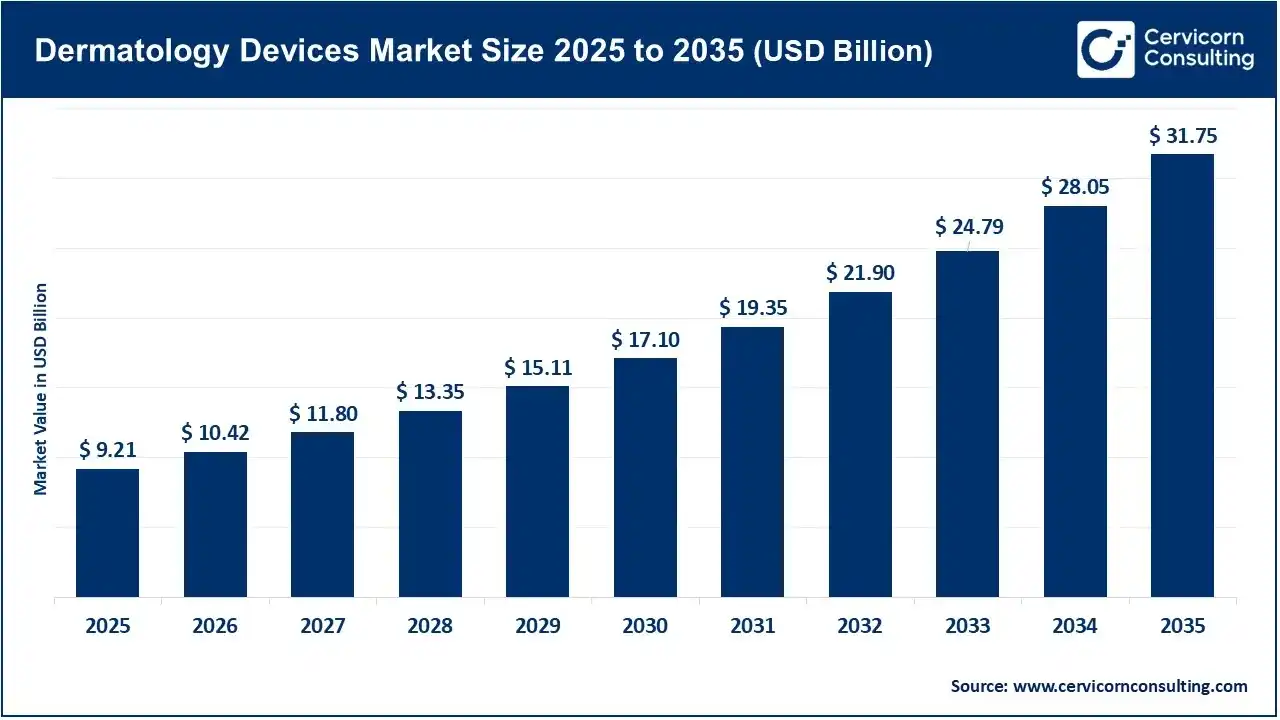
The global dermatology devices market size was valued at USD 9.21 billion in 2025 and is projected to grow from USD 10.42 billion in 2026 to nearly USD 23.75 billion by 2035, registering a CAGR of 13.2% over the forecast period 2026 to 2035. The market is growing due to rising demand for minimally invasive skin treatments and increasing adoption of advanced aesthetic technologies.
Report Highlights
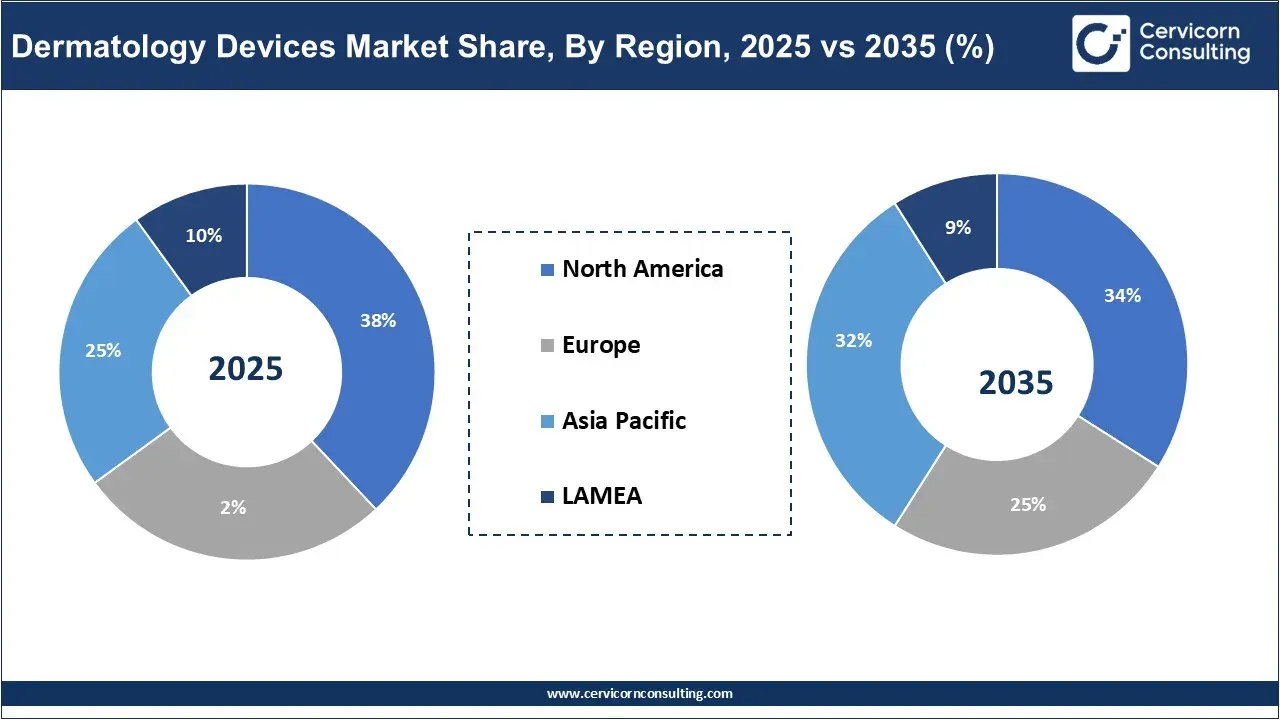
- By region, North America led the market in 2025 with revenue share of 38%, supported by advanced healthcare infrastructure and strong demand for aesthetic procedures.
- By product type, treatment devices generated highest revenue share of 63% in 2025, supported by rising demand for advanced and minimally invasive treatments.
- By technology, laser-based technology led the market in 2025, supported by its wide use in skin rejuvenation, hair removal, and pigmentation treatment.
- By laser type, non-ablative and fractional laser platforms led the market in 2025, supported by demand for effective treatments with limited downtime.
- By application, aesthetic dermatology and skin rejuvenation led the market in 2025, driven by rising demand for cosmetic skin treatments.
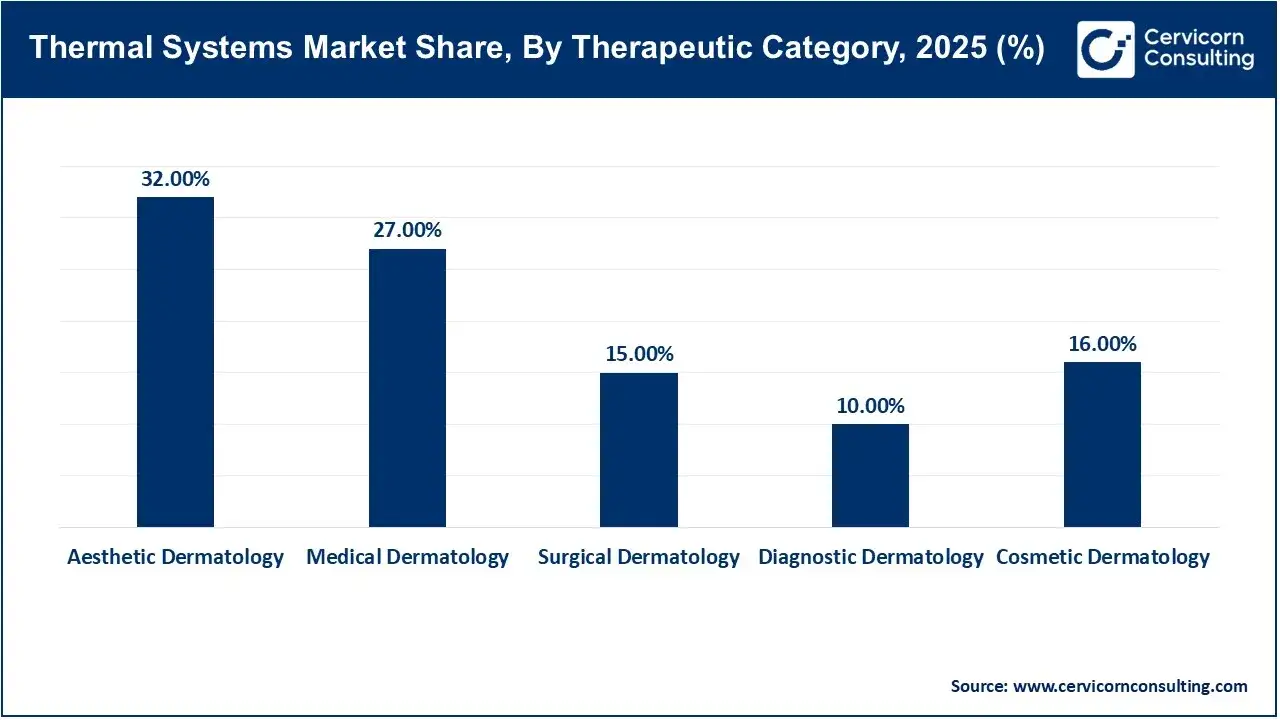
- By therapeutic category, aesthetic dermatology generated revenue share of 32% in 2025, supported by growing demand for cosmetic and skin rejuvenation treatments.
- By treatment area, face led the market in 2025, driven by strong demand for facial rejuvenation, acne treatment, and pigmentation correction.
- By procedure type, non-invasive procedures held highest revenue share of 43% in 2025, supported by demand for treatments with less discomfort and downtime.
- By end user, dermatology clinics and medical facilities led the market in 2025 with revenue share of 28%, supported by increasing dermatological procedures and device adoption.
Why Is the Dermatology Devices Market Growing?
The dermatology devices market is growing because advanced skin, hair, and cosmetic treatments are becoming increasingly popular. Adoption is being driven by growing interest in minimally invasive procedures, growing awareness of skin health, and ongoing developments in laser, light-based, and energy-based technologies. Dermatology clinic expansion, rising demand for cosmetic procedures, and an increasing emphasis on customized skincare are all contributing factors to the market's expansion.
In April 2026, Dermalogica launched its PRO Pen Microneedling System, its first FDA-cleared device, expanding its professional portfolio into advanced in-office dermatology treatments for improving the appearance of facial acne scars. The launch reflects the growing adoption of device-based technologies for targeted skin treatments and supports innovation in the dermatology devices market.
Recent Trends
- Growing use of laser devices: Laser and light-based devices are increasingly used for acne, pigmentation, hair removal, and skin rejuvenation.
- Rise in minimally invasive treatments: Patients prefer treatments with less pain, shorter recovery, and fewer complications, boosting device adoption.
- Adoption of energy-based technologies: Radiofrequency and ultrasound devices are gaining popularity for skin tightening and aesthetic treatments.
- Demand for personalized skincare: Advanced imaging and diagnostic tools help dermatologists provide more targeted and personalized treatments.
- Growth of aesthetic procedures: Increasing beauty awareness is driving demand for devices used in skin rejuvenation, wrinkle reduction, and scar treatment.
- Use of AI in dermatology: AI-based tools are supporting skin analysis, diagnosis, and treatment planning.
Market Dynamics
Growth Drivers
- Minimally Invasive Procedures: Growing preference for minimally invasive dermatological procedures is increasing demand for technologies that provide targeted treatment with limited tissue disruption and shorter recovery periods. Laser therapy, intense pulsed light, radiofrequency, cryotherapy, and other energy-based devices are increasingly used across both medical dermatology and aesthetic applications.
- Skin Cancer Detection: Increasing emphasis on early detection of melanoma and other skin cancers is driving adoption of advanced diagnostic technologies. Dermoscopy, total-body imaging, digital lesion monitoring, and AI-assisted image analysis can help dermatologists identify suspicious lesions and monitor changes over time, supporting greater utilization of specialized dermatology diagnostic devices.
- Aesthetic Dermatology: Rising consumer spending on appearance-related treatments is increasing procedure volumes for skin resurfacing, pigmentation correction, wrinkle reduction, hair removal, and acne-scar treatment. Dermatology clinics and aesthetic centers are expanding their device portfolios to offer multiple procedures, increasing demand for versatile platforms capable of addressing several treatment indications.
Market Restraints
- High Device Costs: Advanced dermatology systems can require substantial investment in laser sources, energy-delivery components, imaging technologies, treatment software, installation, and maintenance. High acquisition costs can restrict adoption among smaller clinics and practices, particularly when procedure volumes are insufficient to generate attractive returns on expensive equipment.
- Limited Reimbursement: Many aesthetic dermatology procedures are considered elective and may receive limited or no insurance reimbursement. Patients therefore frequently bear treatment costs directly, making procedure demand sensitive to disposable income, economic conditions, and treatment pricing. Limited reimbursement can also affect investment decisions for devices primarily used in cosmetic applications.
- Regulatory Requirements: Dermatology devices must satisfy regulatory requirements concerning safety, performance, clinical evidence, labeling, and manufacturing quality. Requirements can vary considerably between countries and may increase development timelines and commercialization costs. Devices incorporating software, AI, or multiple energy modalities can face additional validation and regulatory considerations.
Key Opportunities
- AI Skin Diagnostics: Artificial intelligence is creating opportunities for automated lesion analysis, skin imaging, treatment planning, and clinical decision support. AI-enabled systems can analyze large collections of dermatological images and identify visual patterns associated with specific conditions, creating opportunities for diagnostic platforms that complement dermatologist expertise and improve workflow efficiency.
- Combination Platforms: Development of multifunctional dermatology systems creates opportunities for clinics to perform several procedures using a single platform. Devices combining laser, radiofrequency, ultrasound, or light-based technologies can address multiple indications, potentially improving equipment utilization while allowing providers to expand their medical and aesthetic treatment offerings.
- Emerging Markets: Improving healthcare infrastructure, increasing dermatologist availability, rising disposable income, and growing awareness of aesthetic treatments are creating opportunities in emerging economies. Countries across Asia-Pacific, Latin America, and the Middle East are expanding specialized dermatology and aesthetic-care services, creating additional demand for diagnostic, therapeutic, and cosmetic dermatology devices.
Market Challenges
- Patient Safety: Dermatology devices often deliver concentrated laser, light, thermal, electrical, or cryogenic energy to biological tissue, requiring precise control of treatment parameters. Incorrect settings or inappropriate patient selection can result in burns, pigmentation changes, scarring, or other complications, making clinical training and appropriate device operation critical to safe adoption.
- Clinical Training: Effective operation of advanced dermatology devices requires knowledge of skin types, treatment parameters, contraindications, device settings, and potential complications. Differences in patient characteristics can affect treatment outcomes, creating a need for specialized training and experienced practitioners. Limited availability of qualified personnel can therefore restrict effective deployment in some markets.
- Technology Competition: Rapid innovation is increasing competition among laser, light-based, radiofrequency, ultrasound, imaging, and other energy-based technologies. Manufacturers must continuously improve treatment precision, safety, versatility, and ease of use while developing clinical evidence to differentiate their products, increasing research and development requirements and putting pressure on device pricing.
Regional Analysis
North America dominated the dermatology devices market
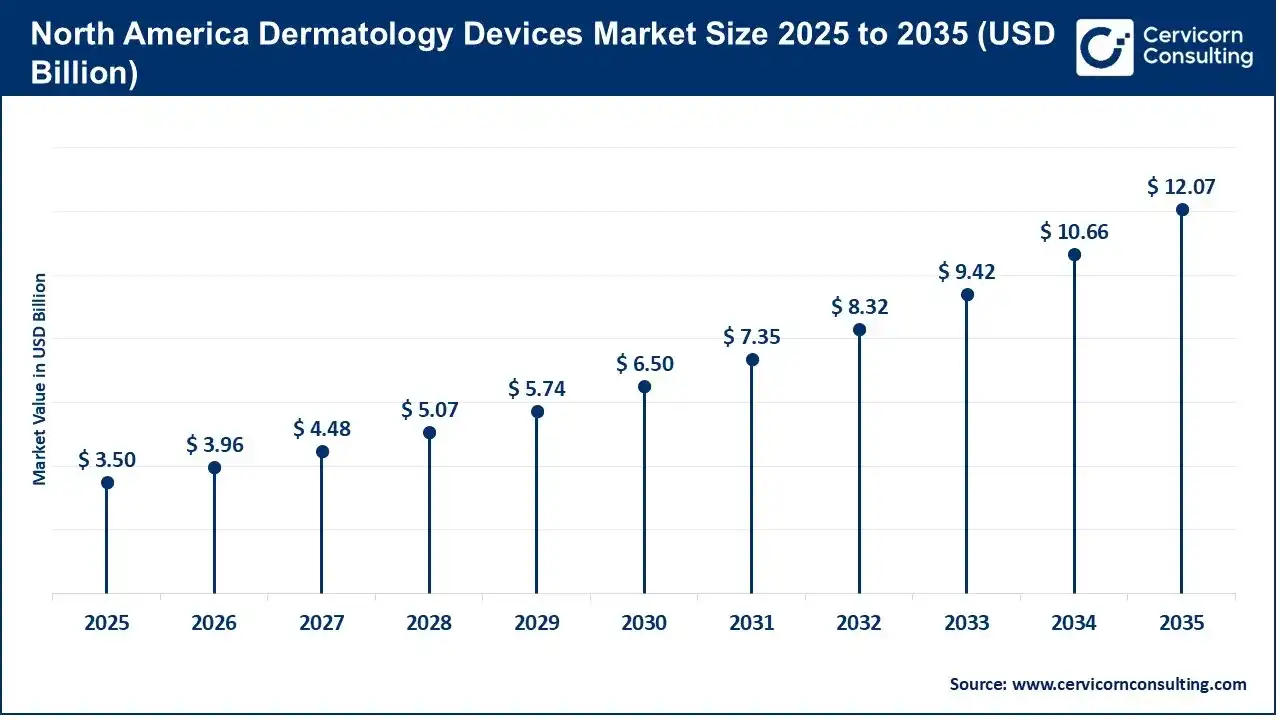
The North America dermatology devices market size was valued at USD 3.50 billion in 2025 and is expected to surpass USD 12.07 billion by 2035. North America dominated the market in 2025, driven by a robust demand for cosmetic operations, a high adoption rate of cutting-edge dermatology technologies, and an advanced healthcare infrastructure. Growing awareness of skin health is contributing to regional development. The continuous acceptance of devices is being supported by the existence of reputable dermatology clinics and technology vendors. Regional growth is also being aided by the high demand for cutting-edge aesthetic procedures.
Asia Pacific is growing rapidly
The Asia-Pacific dermatology devices market size was estimated at USD 2.30 billion in 2025 and is projected to hit USD 7.94 billion by 2035. Asia Pacific is growing rapidly in the market during 2026–2035, driven by growing access to cutting-edge technologies, growing awareness of dermatological treatments, and increased investment in healthcare. Further bolstering regional expansion is the rising demand for cosmetic operations in nations like China, India, Japan, and South Korea. Access to contemporary dermatology equipment is being improved by the growth of private medical and cosmetic clinics. New opportunities are also being created throughout the region by rising disposable incomes and growing interest in skincare.
Segmental Analysis
Product Type Analysis
Diagnotic devices segment dominated the dermatology devices market in 2025, driven by the growing need for advanced treatment systems such as laser, light therapy, radiofrequency, cryotherapy, and others. The market is being further supported by rising adoption of esthetic treatments and growing preference for minimally invasive procedures. Clinics are being encouraged to increase the scope of their treatments due to the availability of sophisticated devices for various skin conditions. Additionally, ongoing product innovation is enhancing patient convenience and treatment accuracy.
Treatment devices are growing rapidly in the market during 2026–2035, propelled by the growing use of minimally invasive and energy-based systems. Clinics are being encouraged to invest in cutting-edge equipment due to the growing demand for skin rejuvenation, acne treatment, hair removal, and other esthetic procedures. These technologies are becoming more in demand as non-surgical treatment options become more widely recognized. Wider adoption is also being supported by advancements in device usability and safety.
Technology Analysis
Laser-based technology dominated the dermatology devices market in 2025, motivated by its extensive application in scar reduction, hair removal, pigmentation treatment, and skin resurfacing. Adoption is being aided by ongoing advancements in laser precision and treatment efficacy. Treatment flexibility is increased using various laser wavelengths for particular skin conditions. Advanced laser platforms are becoming more widely available, which encourages dermatology clinics to use them.
Light-based and RF-based technologies are growing rapidly in the market, motivated by the growing need for non-invasive skin care procedures. More demand is being generated by their increasing application in skin tightening, pigmentation correction, acne treatment, and skin rejuvenation. Patients find these technologies appealing because they provide flexible treatment options with little downtime. Continuous technological advancements are increasing the effectiveness and comfort of treatment.
Laser Type Analysis
Non-ablative and fractional laser platforms dominated the dermatology devices market in 2025, motivated by their capacity to deliver efficient skin treatments with comparatively little recovery time. Their use is being encouraged by the rising demand for scar treatment, pigmentation correction, and skin rejuvenation. Procedures that enable a speedy return to daily activities are becoming more and more popular among patients. Demand is also being bolstered by advancements in laser control and treatment customization.
Fractional and advanced multi-wavelength laser systems are growing rapidly, motivated by the need for accurate and flexible treatment options. Dermatology and esthetic clinics are adopting them because of their versatility in treating various skin issues. With a single system, multifunctional platforms can accommodate various treatment requirements. Flexibility and treatment results are also being enhanced by growing innovation in laser technology.
Application Analysis
Aesthetic dermatology and skin rejuvenation dominated the dermatology devices market in 2025, driven by the growing desire for skin tightening, pigmentation correction, wrinkle reduction, and general skin enhancement. Growth is also being supported by rising awareness of beauty and a preference for non-surgical procedures. More people are seeking esthetic procedures as a result of growing interest in keeping skin looking young. To satisfy this demand, clinics are also increasing the range of esthetic services they provide.
Skin rejuvenation and hair removal are growing rapidly, motivated by rising consumer demand for quick and minimally invasive cosmetic procedures. This expansion is also being aided by developments in laser and light-based technologies. The range of skin types and issues that can be treated is expanding the pool of potential clients. The market is expanding due to the rising demand for routine esthetic procedures.
Therapeutic Category Analysis
Aesthetic dermatology dominated the dermatology devices market in 2025, driven by the growing need for cosmetic procedures such as wrinkle reduction, hair removal, and skin rejuvenation. The market is growing as a result of increased awareness of esthetic procedures. Esthetic procedures are becoming more accessible and convenient thanks to advancements in treatment technologies. Demand from both younger and older customers is being boosted by the increased emphasis on personal appearance.
Aesthetic and minimally invasive dermatology are growing rapidly, motivated by the desire of patients for efficient treatments with little recovery time. Innovation in minimally invasive and energy-based devices is also promoting adoption. A greater variety of skin issues are being addressed by clinicians with the aid of new treatment platforms. The use of minimally invasive options is also being supported by rising patient awareness of them.
Treatment Area Analysis
Face dominated the dermatology devices market in 2025, driven by the high demand for wrinkle reduction, pigmentation correction, acne treatment, and facial skin rejuvenation. The demand for devices is still supported by the variety of facial treatments available. For both medical and cosmetic reasons, facial procedures are very popular. Demand for related devices is being further strengthened by consumers' growing attention to facial appearance.
Full-body and scalp/hair applications are growing rapidly, propelled by rising demand for scalp care, hair removal, and body treatments. These applications are also being supported by the growing interest in comprehensive esthetic treatments. The need for specialized devices is growing as people become more conscious of the health of their hair and scalp. Full-body treatment technologies are being used more frequently as a result of growing esthetic service offerings.
Procedure Type Analysis
Non-invasive procedures dominated the dermatology devices market in 2025, motivated by the desire of patients for procedures with less discomfort, less recovery time, and fewer risks. The market is being supported by the increasing use of laser, light, and energy-based treatments. Both cosmetic and medical skin issues are increasingly being treated with these procedures. Additionally, non-invasive treatments are becoming more convenient and effective due to improvements in device performance.
Dermatology Devices Market Share, By Procedure Type, 2025 (%)
| Procedure Type |
Revenue Share, 2025 (%) |
| Non-Invasive Procedures |
43% |
| Minimally Invasive Procedures |
30% |
| Surgical Procedures |
15% |
| Diagnostic Procedures |
12% |
Minimally invasive procedures are growing rapidly, driven by the need for efficient therapies that require less time for recovery. Wider adoption is being encouraged by developments in laser, radiofrequency, and microneedling technologies. Alternatives to conventional surgical procedures are becoming more and more popular among patients. This trend is being reinforced by improved treatment protocols and increased device precision.
End User Analysis
Dermatology clinics and medical facilities dominated the dermatology devices market in 2025, driven by the rise in dermatological procedures and consultations carried out in specialized facilities. Demand is also being supported by the increasing use of cutting-edge diagnostic and therapeutic tools. To treat various skin conditions and esthetic requirements, these facilities need a wide variety of equipment. Investment in cutting-edge equipment is also encouraged by growing specialization in dermatological care.
Aesthetic clinics, medical spas, and home-use devices are growing rapidly, fueled by growing consumer demand for therapies that are easily accessible and convenient. New growth prospects are being created by the expansion of medical spas and user-friendly household appliances. Customers are looking for more adaptable treatment choices outside of conventional healthcare settings. Wider home-use adoption is being supported by product development that prioritizes safety and ease of use.
Government Insights
- In June 2025, Department of Pharmaceuticals, Government of India modified the operational guidelines for the Scheme for Strengthening of Medical Device Industry, supporting capacity building and skill development in the medical devices sector. The initiative can support the availability of skilled professionals and strengthen domestic medical-device manufacturing.
- In November 2025, Central Drugs Standard Control Organization (CDSCO) reviewed dermatology-related medical devices through its SEC (Dermatology & Allergy) meeting, including the Sculptra poly-L-lactic acid medical device. The committee recommended regulatory consideration subject to conditions including use by adequately trained professionals and post-market follow-up.
- In December 2025, CDSCO, Ministry of Health & Family Welfare introduced a new online Risk Classification Module for Medical Devices, making it easier for manufacturers to obtain risk classification for devices not already included in the published classification list. This supports a more structured regulatory pathway for new medical-device technologies.
- In March 2026, Ministry of Health & Family Welfare highlighted the regulatory framework for AI-enabled medical devices, including requirements for technical documentation, risk analysis, validation, clinical evidence, and quality management. This is relevant to emerging AI-enabled dermatology diagnostic and imaging devices.
Recent Developments
- In February 2026, Cynosure Lutronic received regulatory approvals for its Clarity II dual-wavelength laser platform in China and Japan. The device supports multiple aesthetic applications and expands the company’s presence in the Asia-Pacific dermatology and medical aesthetics market. The approvals also strengthen access to advanced laser-based treatment technologies in these markets.
- In February 2026, Solta Medical launched the Clear + Brilliant Touch laser in Canada following Health Canada approval. The dual-wavelength system is designed for customizable non-invasive skin rejuvenation treatments. The launch expands the availability of advanced laser technology for dermatologists and aesthetic practitioners.
- In March 2026, SkinCure Oncology added the FDA-cleared GentleBeam to its dermatology treatment platform. The image-guided technology is designed to improve visualization and precision during treatment planning for nonmelanoma skin cancer. The development highlights the growing use of advanced imaging technologies in dermatological care.
- In March 2026, BENEV partnered with LaserAway to expand access to the XTherma high-frequency RF and cryogen combination therapy device in the U.S. The technology combines radiofrequency and cryogen-based treatment in a single platform. The partnership reflects continued innovation in energy-based dermatology and aesthetic devices.
- In March 2026, SkinSpirit launched its SkinSpirit Laser Facial, a non-ablative laser treatment designed to improve skin clarity, texture, redness, and firmness. The treatment focuses on providing visible results without extended downtime. The launch reflects growing interest in convenient and minimally invasive laser-based skin treatments.
Key Companies
Segments Covered
By Product Type
- Diagnostic Devices
- Dermatoscopes
- Digital Dermatoscopes
- Skin Imaging Systems
- Microscopes
- Trichoscopes
- Biopsy Devices
- Treatment Devices
- Laser Devices
- Light Therapy Devices
- Radiofrequency Devices
- Cryotherapy Devices
- Electrosurgical Devices
- Ultrasound/HIFU Devices
- Microdermabrasion Devices
- Microneedling Devices
- Other Dermatology Devices
By Technology
- Laser-Based
- Light-Based
- Radiofrequency-Based
- Ultrasound-Based
- Cryotherapy-Based
- Electrosurgical
- Phototherapy
- Imaging-Based
- Other Technologies
By Laser Type
- Ablative Lasers
- Non-Ablative Lasers
- Fractional Lasers
- CO₂ Lasers
- Diode Lasers
- Alexandrite Lasers
- Pulsed Dye Lasers
- Excimer Lasers
- Other Lasers
By Application
- Skin Rejuvenation & Anti-Aging
- Hair Removal
- Acne & Acne Scar Treatment
- Psoriasis
- Eczema & Atopic Dermatitis
- Skin Cancer Diagnosis & Treatment
- Pigmented Lesion Removal
- Vascular Lesion Removal
- Tattoo Removal
- Scar Treatment
- Hyperpigmentation Treatment
- Vitiligo Treatment
- Wound Healing
- Body Contouring & Fat Reduction
- Cellulite Reduction
- Other Applications
By Therapeutic Category
- Aesthetic Dermatology
- Medical Dermatology
- Surgical Dermatology
- Diagnostic Dermatology
- Cosmetic Dermatology
By Treatment Area
- Face
- Scalp & Hair
- Neck
- Hands
- Arms & Legs
- Abdomen & Torso
- Full Body
- Other Treatment Areas
By Procedure Type
- Non-Invasive Procedures
- Minimally Invasive Procedures
- Surgical Procedures
- Diagnostic Procedures
By End User
- Hospitals & Ambulatory Surgical Centers
- Dermatology Clinics & Medical Facilities
- Aesthetic Clinics
- Beauty Centers & Medical Spas
- Specialty Clinics
- Research & Academic Institutions
- Home Care Settings
- Others
By Region
- North America
- Europe
- Germany
- UK
- France
- Italy
- Spain
- Rest of Europe
- Asia Pacific
- China
- Japan
- India
- South Korea
- Australia
- Rest of Asia Pacific
- Latin America
- Middle East & Africa
