Single Cell Sequencing Market Size, Growth, Forecast 2026 to 2035
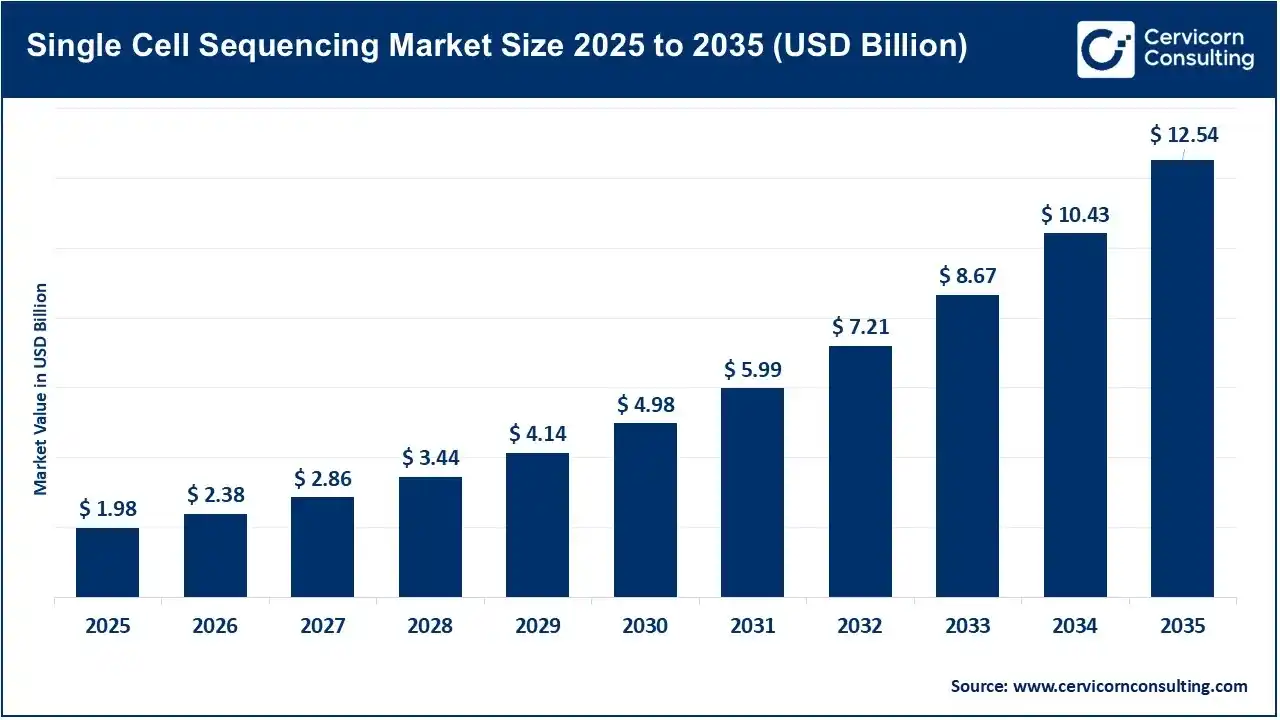
The global single cell sequencing market size was valued at USD 1.98 billion in 2025 and is expected to be worth around USD 12.54 billion by 2035. The market is expected to witness a promising growth with a CAGR of 20.3% during the forecast period of 2025-2035. Increasing government funding of genomics related programs globally, increasing R&D activities by pharmaceuticals, and growing collaborations among all the biotechnology, academic and sequencing technology organizations will significantly contribute to market expansion over the coming years.
Report Highlights
- By region, North America accounted for a revenue share of 45.10% in 2025 owing to its advanced genomics research ecosystem, substantial government funding, strong biotechnology industry, and widespread adoption of precision medicine.
- By region, Asia Pacific is expected to grow at a notable rate during the forecast period driven by expanding biotechnology research, increasing investments in genomics infrastructure, supportive government initiatives, and growing adoption of precision medicine across emerging economies.
- By technology type, the single cell RNA sequencing (scRNA-seq) segment dominated the market with revenue share of 50% in 2025 due to its extensive adoption in transcriptomic profiling, precision medicine, and cancer research, enabling high-resolution analysis of cellular heterogeneity.
- By technology type, the single cell proteomics segment is expected to grow at a notable rate during the forecast period owing to increasing demand for multiomics approaches that provide comprehensive insights into cellular functions, protein expression, and biomarker discovery.
- By product category, the instruments segment hit notable share in 2025 driven by growing investments in advanced sequencing platforms, automated cell isolation systems, and high-throughput laboratory infrastructure supporting large-scale genomic research.
- By product category, the software & bioinformatics platforms segment is anticipated to witness significant growth during the forecast period due to the rising need for AI-powered and cloud-based analytical tools to manage and interpret complex single-cell sequencing datasets.
- By application, the oncology segment captured revenue share of 33% in 2025 as increasing cancer incidence and the growing adoption of precision oncology accelerated the use of single cell sequencing for tumor profiling, biomarker discovery, and immunotherapy development.
- By application, the drug discovery & development segment is projected to grow at a notable rate during the forecast period owing to rising pharmaceutical investments in targeted therapeutics, biomarker identification, and precision medicine research.
- By end user, the pharmaceutical companies segment dominated the market in 2025 supported by extensive utilization of single cell sequencing across drug discovery, clinical development, biomarker validation, and precision medicine programs.
- By end user, the contract research organizations (CROs) segment is expected to register notable growth during the forecast period due to increasing outsourcing of genomics research and demand for specialized sequencing and bioinformatics services.
What is Single Cell Sequencing Market?
The single cell sequencing market consists of technologies, instruments, reagents, software platforms, and analysis services that are used to characterize genomic, transcriptomic, epigenomic, and proteomic features at the single-cell level. It provides an unprecedented resolution to analyze cellular heterogeneity (which would have been impossible with bulk sequencing techniques that would have yielded an average from millions of cells).
The market has found diverse applications in oncology, immunology, neuroscience, stem cell biology, developmental biology, infectious diseases, and precision medicine; where the technique has been used to identify novel treatment targets, biomarkers and diagnostic tools.
Growing investment in the field of genomics research, rising demand for personalized medicine, increasing applications in drug discovery and increasing advancements in next generation sequencing technology are anticipated to propel market growth. Enhanced resolution of sequencing, increased capacity for high-throughput sequencing, development of effective single-cell isolation and microfluidic methods, and advancement in artificial intelligence (AI) powered bioinformatics tools will augment the adoption of the technology in disease diagnosis.
How Is Single Cell Sequencing Transforming Drug Discovery and Development?
The advent of single cell sequencing is a game-changer for drug discovery and development. It allows researchers to profile diseases and study pathological mechanisms at an unprecedented level of cellular detail. While typical drug development relies on bulk tissue analysis which could hide critical differences among individual cells and also overlook rare disease-initiating cells, the comprehensive single cell sequencing platform provides detailed analyses of gene expression, mutations, epigenetic regulation, and cellular interactions from single cells.
Key Areas Where Single Cell Sequencing Is Transforming Drug Discovery
- Identification of novel drug targets: Researchers can identify disease-driving genes and signaling pathways by analyzing individual cell populations, enabling the development of highly targeted therapeutics.
- Precision patient stratification: Single cell sequencing helps classify patients based on unique cellular and molecular characteristics, allowing pharmaceutical companies to design more personalized treatment approaches and improve clinical trial outcomes.
- Understanding tumor heterogeneity: In oncology research, the technology identifies diverse cancer cell populations within the same tumor, helping researchers understand treatment resistance, disease progression, and mechanisms of metastasis.
- Accelerating biomarker discovery: High-resolution cellular analysis enables the discovery of predictive and prognostic biomarkers that support early diagnosis, patient selection, and therapeutic monitoring.
- Optimizing immunotherapy development: Single cell immune profiling provides detailed insights into immune cell composition and function, supporting the development of next-generation immunotherapies and cell-based treatments.
- Improving drug safety and toxicity assessment: Researchers can evaluate cellular responses to drug candidates at the single-cell level, enabling early detection of toxicity and reducing late-stage clinical failures.
Venture Capital & Investment Landscape
| Company / Startup |
Recent Investment / Strategic Activity |
Investment Significance |
| 10x Genomics |
Continues to invest heavily in single-cell and spatial biology platforms while expanding its product portfolio through acquisitions and internal R&D. The company's technologies have been cited in more than 10,000 scientific publications, reflecting strong market adoption. |
Maintains leadership in single-cell sequencing innovation and drives commercialization of next-generation genomics technologies. |
| QIAGEN / Parse Biosciences |
QIAGEN announced the acquisition of Parse Biosciences for an upfront payment of approximately $225 million, strengthening its position in scalable single-cell sequencing. Parse's technology is already used in 3,000+ laboratories across more than 40 countries. |
Demonstrates increasing consolidation as established life science companies acquire innovative single-cell technology developers. |
| Mission Bio |
Secured early-stage funding from Life Science Angels along with support from NIH and NSF grants to commercialize its single-cell DNA sequencing platform for oncology applications. |
Highlights continued investor confidence in precision oncology and single-cell DNA analysis. |
| Singular Genomics |
Continues investing in spatial sequencing and pathology technologies to expand high-resolution molecular analysis for research and clinical applications. |
Reflects growing investment in spatial biology, an important extension of single-cell genomics. |
| Scale Biosciences |
Developed massively parallel barcoding technology to enable lower-cost, high-throughput single-cell analysis. The company has been acquired by 10x Genomics to strengthen its technology portfolio. |
Indicates strategic acquisitions aimed at expanding sequencing capacity and reducing analysis costs. |
| Element Biosciences |
Raised a new financing round in 2026, including a $175 million strategic investment from Samsung Electronics to accelerate commercialization of sequencing platforms. |
Demonstrates growing participation of large technology companies in genomics and precision medicine infrastructure. |
| Illumina |
Expanded its single-cell portfolio through acquisitions and continued investments in sequencing technologies and spatial transcriptomics capabilities. |
Strengthens competition in integrated sequencing platforms and expands the clinical genomics ecosystem. |
| Thermo Fisher Scientific |
Continues expanding investments in next-generation sequencing instruments, reagents, and bioinformatics platforms through product development and strategic collaborations. |
Reinforces the industry's focus on end-to-end genomics workflows. |
| Standard BioTools |
Continues advancing single-cell analysis, proteomics, and multiomics technologies through platform innovation and collaborations with research institutions. |
Supports growing demand for integrated multiomics research. |
| Bio-Rad Laboratories |
Invests in digital PCR, single-cell analysis tools, and life science research technologies to strengthen precision biology capabilities. |
Expands laboratory infrastructure supporting advanced genomics research. |
Market Dynamics
Driver
Growing Adoption of Precision Medicine and Increasing Investments in Genomics Research
The growth of the single cell sequencing market is mainly attributed to the rapid development of precision medicine programs coupled with worldwide increased investment in the genomics research. Single cell sequencing is used for the analysis of genetic contents of individual cells, in contrast to the traditional sequencing techniques that examine the genetic contents from bulk cells. This feature offers greater insights into cell-to-cell variation, the development of diseases and molecular pathways.
It offers improved accuracy and resolution in such areas as oncology, immunology, neurosciences, stem cell research and rare diseases which are focused on cell to cell variations to deliver personalized and effective therapy development.
The number of governments, research institutes and pharmaceutical companies are increasingly investing in the precision medicine program, cancer genomic research and the translational research studies.
Restraint
High Cost of Single Cell Sequencing Workflows and Complex Data Analysis
Although there are tremendous technologies have been developed, wide application of single cell sequencing is limited by the exorbitant price of instrument, reagents and consumables, sample preparation and computational platform. An entire single cell sequencing workflow requires a large investment in advanced instruments, automatic cell dissociation machines, sequencing platforms, high-end computation power required for analyzing large-scale genomic data.
Beside the cost of the instrument, cost associated with the analysis including specialized reagents, sequencing kit, quality control agents and the software license add to the huge cost burden to both research institutes and clinics. Another challenge is the complexity of single cell sequencing data, the results of an experiment generates a multidimensional large-scale dataset that requires expertise, machine learning, cloud computing and high-end calculation to analyse the result.
Opportunity
Expansion of Multiomics Technologies and Clinical Applications of Single Cell Sequencing
Future market growth could be led by the expanding intersection between single cell sequencing and multiomics. Scientists are gaining a holistic perspective by applying combined genomics, transcriptomics, epigenomics, proteomics, metabolomics, and spatial transcriptomics data to cellular activity, disease pathogenesis, and response to therapy. This can reveal previously uncovered targets, biomarkers and therapies.
This trend coupled with expanding VC investments, strategic partnerships between drug companies and gene sequencing technology platforms and innovation within the space-including spatial and automation/high throughput sequencing-should foster and accelerate longer-term growth in both the academic and clinical realms.
Top Technologies
| Technology |
Key Applications |
Major Advantages |
| Single Cell RNA Sequencing (scRNA-seq) |
Cell type identification, tumor heterogeneity analysis, immune profiling, developmental biology, biomarker discovery. |
High-resolution transcriptomic profiling, identification of rare cell populations, improved understanding of cellular diversity. |
| Single Cell DNA Sequencing (scDNA-seq) |
Cancer evolution studies, clonal lineage tracing, genetic disorder research, mutation detection. |
Detects genetic heterogeneity, identifies somatic mutations, enables precision oncology research. |
| Single Cell ATAC Sequencing (scATAC-seq) |
Epigenomics research, cell differentiation studies, regulatory element mapping, developmental biology. |
Reveals gene regulation patterns, identifies active genomic regions, complements transcriptomic analysis. |
| Spatial Transcriptomics |
Tumor microenvironment analysis, neuroscience, tissue architecture studies, pathology research. |
Combines molecular and spatial information, improves understanding of tissue organization and cell interactions. |
| Single Cell Multiomics |
Precision medicine, biomarker discovery, disease mechanism studies, systems biology. |
Provides comprehensive cellular profiling and enables deeper biological insights than single-omics approaches. |
| Single Cell Proteomics |
Immunotherapy research, protein biomarker discovery, drug response analysis, cancer biology. |
Measures functional cellular activity directly and complements genomic information. |
| Artificial Intelligence (AI) & Machine Learning |
Cell classification, disease prediction, drug target identification, precision medicine. |
Accelerates analysis of large datasets, improves accuracy, reduces manual interpretation time. |
| Cloud-Based Bioinformatics Platforms |
Collaborative genomics research, clinical genomics, pharmaceutical R&D, population-scale studies. |
Scalable computing resources, remote accessibility, efficient management of high-volume genomic data. |
| Dimensionality Reduction Algorithms (PCA, t-SNE, UMAP) |
Cell population visualization, clustering analysis, exploratory data analysis. |
Facilitates identification of cellular subpopulations and improves biological interpretation. |
| Cell Trajectory & Pseudotime Analysis |
Stem cell research, developmental biology, cancer progression, regenerative medicine. |
Helps understand dynamic cellular processes and lineage relationships. |
| Batch Effect Correction & Data Integration Tools |
Multi-center studies, large-scale genomics projects, meta-analysis. |
Enhances data consistency, reproducibility, and cross-study comparability. |
| Cell–Cell Communication Analysis Tools |
Immunology, tumor microenvironment studies, inflammatory diseases, tissue biology. |
Improves understanding of intercellular signaling and disease mechanisms, supporting therapeutic target discovery. |
Regional Analysis
Why is North America leading the single cell sequencing market?
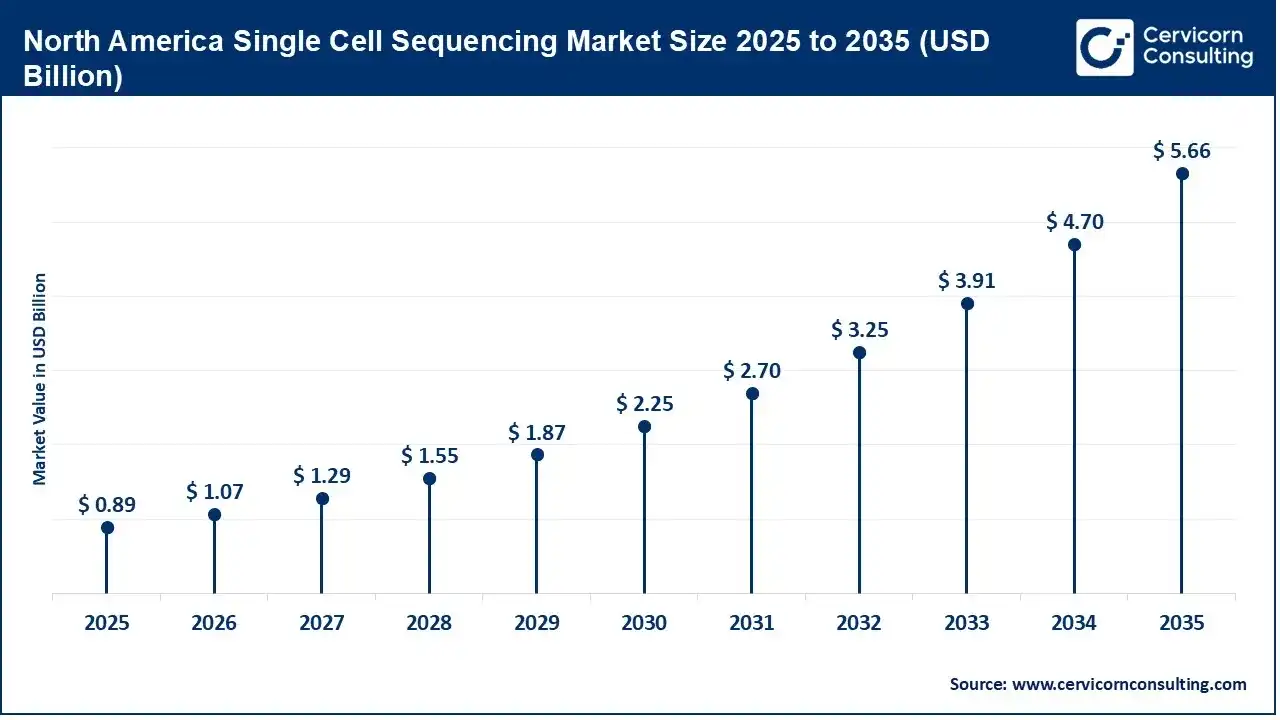
The North America single cell sequencing market size was valued at USD 0.89 billion in 2025 and is projected to hit around USD 5.56 billion by 2035. North America held a major share in the market in 2025, owing to development in genomics research, strong support from government, robust biotech market and the prevalence of precision medicine. The market had many of world leading sequencing technology providers, pharmaceuticals, research institutes, biotech start-ups that invests continuously in next generation genomic research.
Many massive projects that fund the research of cancer genomics, orphan disease research, precision medicine and translational science helped increase the use of the technology in the labs and medical centers. The availability of advanced infrastructure for sequencing, favourable reimbursement for advanced diagnostics and increasing uses for genomics in clinical practices also give strength to the position of the region.
Why is Asia Pacific projected to witness significant growth for single cell sequencing market?
The Asia-Pacific single cell sequencing market size was estimated at USD 0.45 billion in 2025 and is predicted to reach around USD 2.85 billion by 2035. Asia Pacific is projected to witness significant growth throughout the forecast period driven by rapid advancements in biotechnology research, increased healthcare expenditure and favorable government initiatives for genomics and personalized medicine. Several countries in the Asia Pacific region, including China, Japan, South Korea, India, and Singapore, are making significant investments in improving the genomic research infrastructure, national sequencing programs, biotechnology capabilities and pharmaceutical research. The increasing prevalence of cancer and chronic diseases, along with the growing awareness about personalized treatment are promoting the use of advanced single cell sequencing technologies at research institutes, hospitals and biotechnology companies.
Market growth is also being driven by expansion of pharmaceutical manufacturing, increased clinical trials conducted at various regional research centers and rising number of collaborations between regional research institutions and global sequencing companies.
Improvements in the costs of sequencing technologies, automation at labs, AI-based bioinformatics platforms, and multiomics research are also helping in the adoption of technologies. Driven by increase in government funding, enhancements in academic research and rapid development of biotechnology ecosystem, Asia Pacific is also anticipated to become the fastest growing market globally in single cell sequencing during the forecast period.
Segmental Analysis
Technology Type Analysis
Single cell RNA sequencing (scRNA-seq) was the leading segment of the global single cell sequencing market in 2025, owing to increasing adoption of the technique in transcriptomic analysis, precision medicine and research on disease mechanism. The technology allows researchers to decipher the transcriptomes of individual cells, thereby enabling identification of cell-to-cell variations that are typically masked using conventional bulk sequencing. ScRNA-seq plays an essential role in understanding the process in cancer research, immunology, neuroscience, stem cell research and development.
Precision oncology, where the heterogeneity of tumour tissues and immune response, is crucial for the tailored treatment approaches are significantly escalating the adoption of scRNA-seq technology.
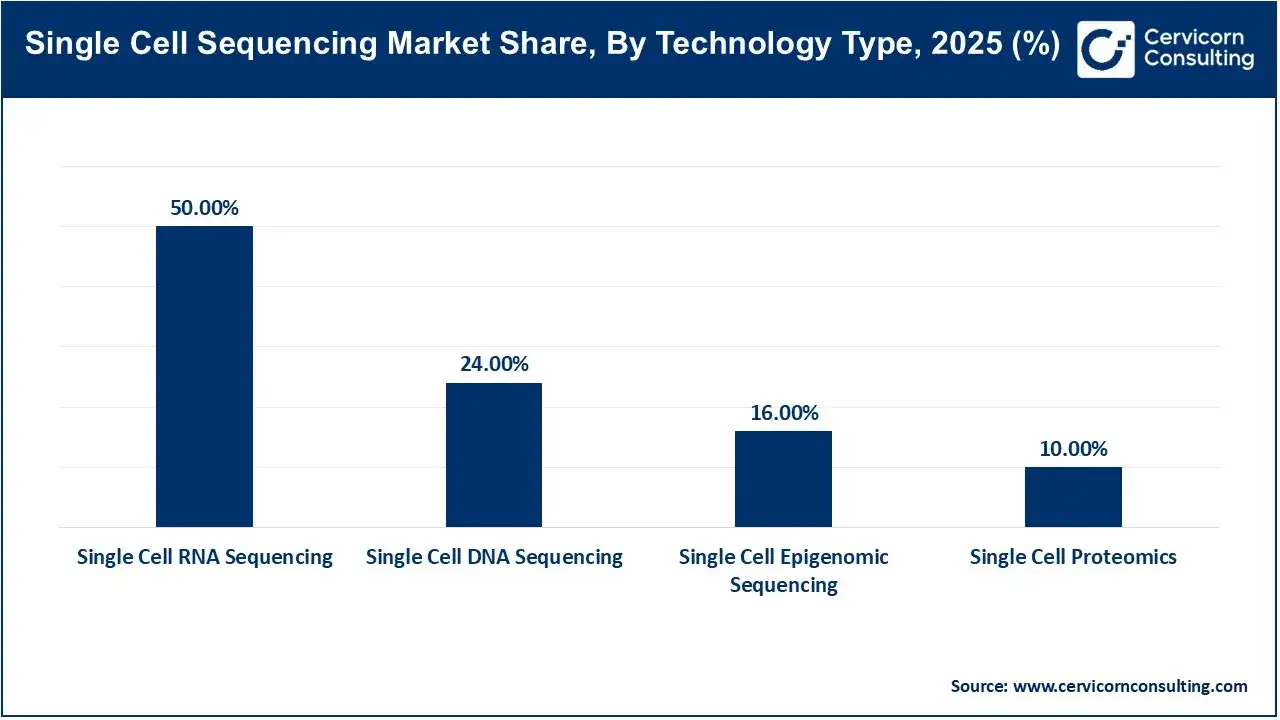
The single cell proteomics segment is projected to undergo substantial development throughout the prediction period of 2026-2035 on account of the ever-increasing demand for understanding cellular functions, in enhancement of genetics information from DNA and genes (from RNA). Protein controls activities like signaling path ways of cell, actions involving immune reaction of human body, & pathogenesis; the information gathered on genome or on RNA is not as comprehensive as required by researcher.
The single cell proteomic strategy in combination to single cell sequencing information which will result in the comprehensive understanding of the cell behaviors, the rise in using the technique for discovering immune system biomarkers in the fields such as, immunotherapies as well as cancer studies have driven the requirement for solitary cell proteomic based goods.
Product Category Analysis
Instruments segment accounted notable share in 2025 on account of high investment in advanced sequencing platforms, automated cell separation systems, and high throughput laboratory infrastructure. Instruments is required in each step for modern single cell sequencing workstreams including cell capture, microfluidic manipulation, sequencing, imaging, data capturing, etc.
Increasing adoption of automated lab workflows led researchers and companies involved in drug discovering and development invest heavily in the sequencing platforms capable of isolating and analyzing several thousand single cells with higher reproducibility and throughput at an individual cell resolution.
Single Cell Sequencing Market Share, By Product Category, 2025 (%)
| Product Category |
Revenue Share, 2025 (%) |
| Instruments |
25% |
| Reagents & Consumables |
59% |
| Software & Bioinformatics Platforms |
16% |
Software and bioinformatics platforms segment is anticipated to register considerable growth during the forecast period on account of rapidly burgeoning genomic data by application of high-throughput sequencing instruments. Single cell sequencing data generates complex multi-dimensional data require high level of analytical tool for the analysis that includes clustering, filtering, differential gene expression analysis, pathway enrichment, cell annotation, etc.
Continuous growth of the high-end and massive-throughput sequencing projects also contributing the overall growth of the segment, to a large extent; hence, many of the leading Pharma and research organization is inclined towards the investment of cloud-based bioinformatics, machine learning, artificial intelligence algorithms tools with improved analytical methods.
Application Analysis
The oncology segment held major share in the global single cell sequencing market in the year 2025 due to the rising worldwide cancer incidence and demand for personalized cancer therapies. This technology plays a vital role in understanding the heterogeneity of a tumor, isolation of rare cancer cell types, disease progression monitoring and evaluation of therapeutic resistance.
In contrast to conventional sequencing technologies, single cell sequencing technologies allow study of individual cells, provide comprehensive data of gene mutation, cell communication among tumor cells and tumor microenvironment and these technologies is being adopted by the pharmaceutical companies and cancer research institutes for target discovery and development, companion diagnostic and improvement of immunotherapy.
Single Cell Sequencing Market Share, By Application, 2025 (%)
| Application |
Revenue Share, 2025 (%) |
| Oncology |
33% |
| Immunology |
22% |
| Neuroscience |
11% |
| Drug Discovery & Development |
17% |
| Stem Cell & Developmental Biology |
10% |
| Infectious Disease Research |
7% |
The drug discovery and development segment is anticipated to exhibit significant growth over the projected timeframe owing to increasing investment from pharmaceutical companies in personalized medicines, discovery of novel biomarkers and clinical trials. This technology significantly improves the detection of disease-specific pathways in cell and facilitate the development of specific therapeutic agents in oncology, auto-immune disorders, neurodegenerative diseases, and rare genetic disorders.
End User Analysis
The pharmaceutical companies segment held the largest market share during 2025, driven by the rise in investment on precision medicine, targeted drug development, biomarker identification and clinical trials research. Pharmaceutical companies make broad use of single cell sequencing through their drug development life-cycle for the understanding of diseases biology, the discovery of new targets, the assessment of the host immune response, and better choice of patients for clinical trials.
The research between pharmaceutical companies, technology providers (sequencing tech suppliers) and academic research centers grew to accelerate the adoption of the technology on the market and improve the research possibilities.
Single Cell Sequencing Market Share, By End User, 2025 (%)
| End User |
Revenue Share, 2025 (%) |
| Academic Research Institutions |
38% |
| Pharmaceutical Companies |
24% |
| Biotechnology Companies |
18% |
| Contract Research Organizations |
12% |
| Hospital & Clinical Laboratories |
8% |
The contract research organizations (CROs) segment registered significant growth in the course of the forecast period because of increasing outsourcing practices applied to the genomics and pharmaceutical development activities by the CROs. Both pharmaceutical companies and biotech firms increasingly outsource their R&D genomics experiments to CROs to use their bioinformatics experts, and sophisticated lab infrastructure and obtain cost-effective services while avoiding the capital cost associated to the setup of internal sequencing facilities.
Recent News
- February 2026 – Parse Biosciences launched Evercode™ Whole Transcriptome v4 platform to enhance scalability and accessibility of single-cell RNA sequencing workflows. The upgraded technology enables analysis of up to 5 million cells and 384 samples in a single run, while improving sensitivity, cell recovery, and workflow efficiency. The launch highlights the industry's shift toward high-throughput, cost-efficient single-cell sequencing solutions for large-scale biomedical research, oncology studies, and drug discovery applications.
- June 2026 – Illumina introduced the StrataMap Spatial Solution, an advanced spatial transcriptomics platform designed to deliver single-cell resolution analysis of tissue samples. The solution strengthens Illumina’s position in spatial biology by enabling researchers to investigate tissue organization, tumor progression, cellular interactions, and novel therapeutic targets, supporting expanding applications in precision medicine and cancer research.
Single Cell Sequencing Market Competitive Landscape
- 10x Genomics, Inc.: 10x Genomics is one of the leading companies in the single cell sequencing market, offering advanced platforms such as Chromium and Visium that enable high-throughput single-cell and spatial biology analysis across oncology, immunology, neuroscience, and drug discovery applications.
- Illumina, Inc.: Illumina holds a strong position in the genomics ecosystem through its next-generation sequencing (NGS) platforms, which serve as a critical foundation for single cell sequencing workflows and large-scale genomic research worldwide.
- Thermo Fisher Scientific Inc.: Thermo Fisher Scientific supports market growth through its extensive portfolio of sequencing instruments, reagents, molecular biology solutions, and laboratory technologies used in single-cell research and precision medicine applications.
- QIAGEN N.V.: QIAGEN contributes to the single cell sequencing landscape through its sample preparation technologies, genomic analysis solutions, and bioinformatics capabilities that support integrated sequencing workflows.
- Bio-Rad Laboratories, Inc.: Bio-Rad strengthens the market through its single-cell analysis technologies, droplet-based platforms, and molecular detection solutions used in cancer research, immunology, and cellular biology studies.
- Standard BioTools Inc.: Standard BioTools is recognized for its single-cell proteomics and multiomics technologies, enabling detailed cellular analysis for applications in immunology, oncology, and translational research.
- Parse Biosciences, Inc.: Parse Biosciences is an emerging player specializing in scalable single-cell sequencing technologies, providing high-throughput solutions that allow researchers to analyze large numbers of individual cells efficiently.
Segments Covered
By Technology Type
- Single Cell RNA Sequencing
- Single Cell DNA Sequencing
- Single Cell Epigenomic Sequencing
- Single Cell Proteomics
By Product Category
- Instruments
- Reagents & Consumables
- Software & Bioinformatics Platforms
By Application
- Oncology
- Immunology
- Neuroscience
- Drug Discovery & Development
- Stem Cell & Developmental Biology
- Infectious Disease Research
By End User
- Academic Research Institutions
- Pharmaceutical Companies
- Biotechnology Companies
- Contract Research Organizations
- Hospital & Clinical Laboratories
By Region
- North America
- Europe
- Asia Pacific
- Latin America
- Middle East & Africa