Protein Therapeutics Market Size and Forecast 2026 to 2035
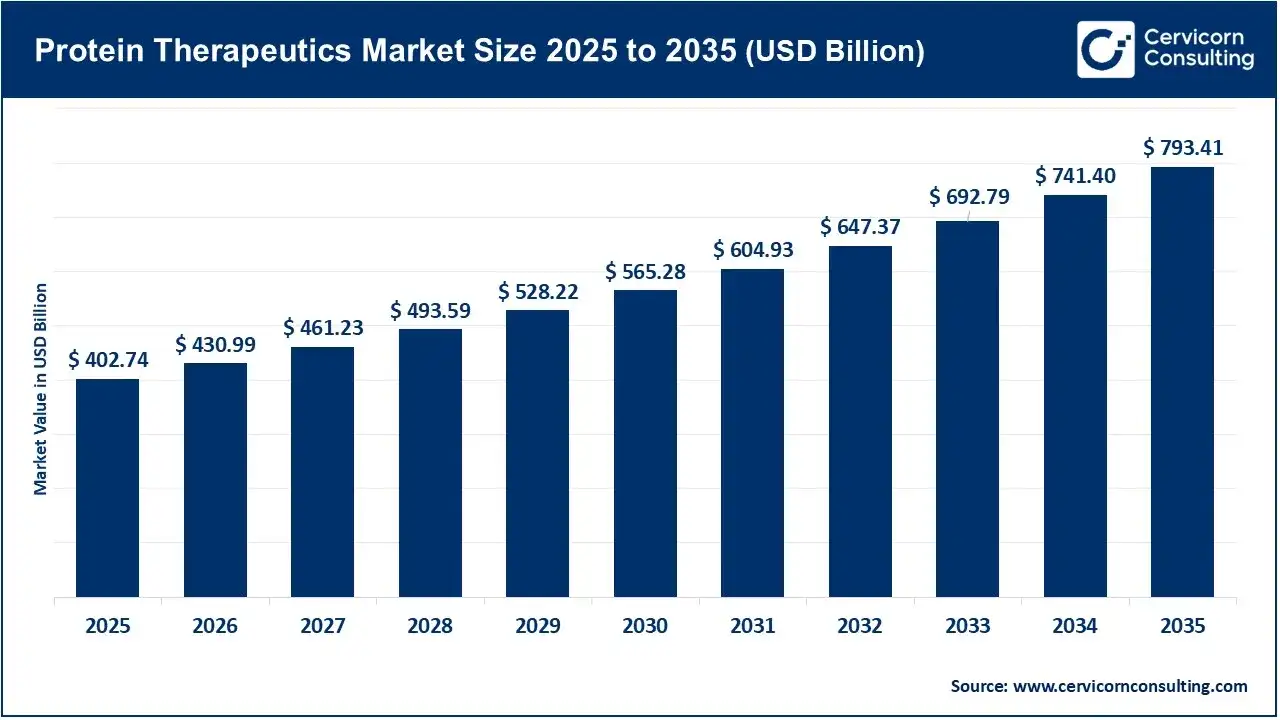
The global protein therapeutics market size was valued at USD 402.74 billion in 2025 and is projected to grow from USD 430.99 billion in 2026 to nearly USD 793.41 billion by 2035, registering a CAGR of 7.1% over the forecast period 2026 to 2035. The market is growing due to increasing demand for advanced treatments and ongoing developments in biotechnology.
Report Highlights
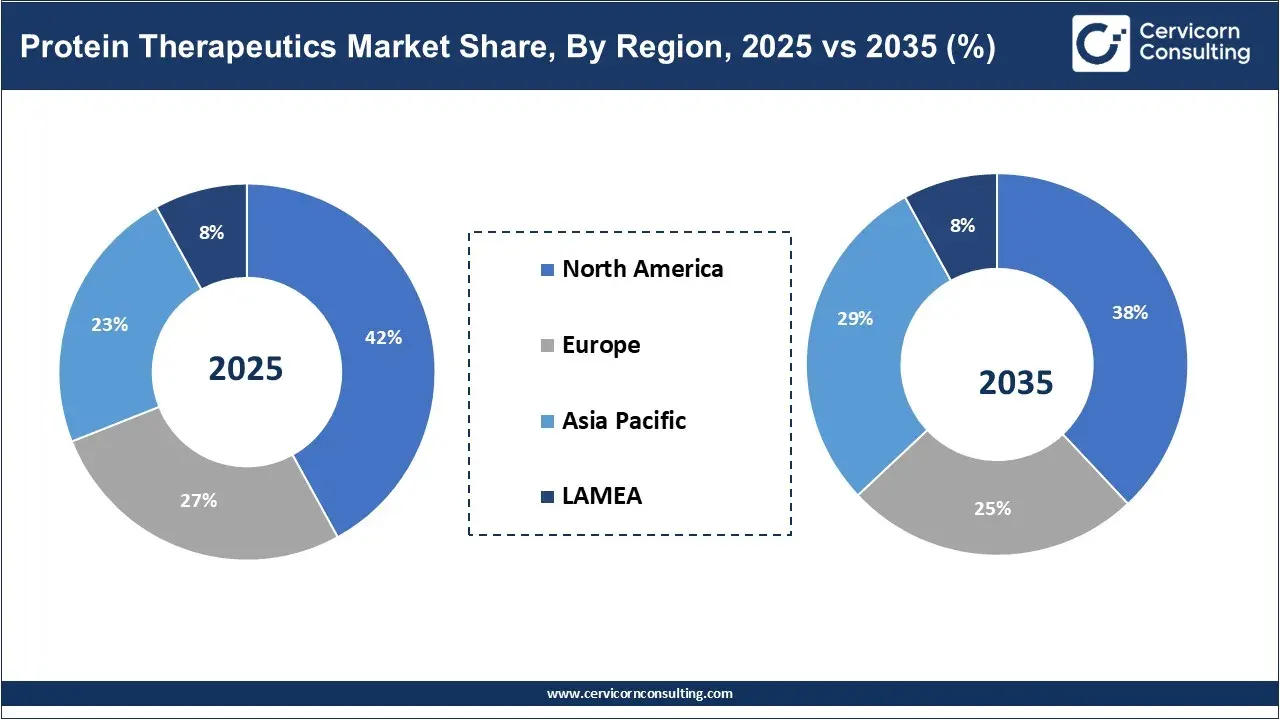
- By region, North America generated highest revenue share of 42%, supported by its strong pharmaceutical and biotechnology ecosystem.
- By region, Asia Pacific is expected to grow fastest, driven by rising healthcare and biotechnology investment.
- By product type, monoclonal antibodies garnered revenue share of 38% in 2025, due to their widespread use in oncology and autoimmune diseases.
- By product type, insulin & insulin analogs are expected to grow fastest, driven by rising diabetes prevalence and treatment demand.
- By therapeutic area / application, oncology dominated market with revenue share of 30% in 2025, due to the growing use of protein therapies in cancer treatment.
- By therapeutic area / application, metabolic disorders are expected to grow fastest, driven by rising diabetes and obesity.
- By function, enzymatic & regulatory activity dominated the market with revenue share of 42% in 2025, due to their role in biological regulation and treatment.
- By function, special targeting activity is expected to grow fastest, driven by targeted and precision therapies.
- By route of administration, subcutaneous dominated market with revenue share of 48% in 2025, due to its convenience and ease of self-administration.
- By route of administration, subcutaneous is also expected to grow fastest, driven by increasing home-based treatment.
- By source, recombinant dominated market with revenue share of 78% in 2025, due to its scalable and reliable protein production.
- By source, recombinant is also expected to grow fastest, driven by advances in genetic engineering.
- By technology, recombinant DNA technology dominated, due to its established use in therapeutic protein production.
- By technology, protein engineering is expected to grow fastest, driven by improved protein stability and efficacy.
- By end user, hospitals dominated the market with revenue share of 32% in 2025, due to the widespread use of protein therapies for complex diseases.
- By end user, pharmaceutical & biotechnology companies are expected to grow fastest, driven by rising investment in biologic development.
Why Is the Protein Therapeutics Market Growing?
As pharmaceutical companies continue to develop protein-based medications for chronic and complex diseases, the market for protein therapeutics is growing. Research in biologics, protein engineering, and biotechnology is making it possible to develop more focused treatments with better therapeutic outcomes. Growing applications of these treatments in conditions such as cancer, metabolic diseases, and immune-related illnesses are supporting market expansion.
In July 2026, Novartis received FDA traditional approval for Fabhalta (iptacopan) to slow the decline in kidney function in adults with primary immunoglobulin A nephropathy. The approval highlights the continued development and commercialization of targeted protein-based therapies for chronic and complex diseases. It also demonstrates how advances in biologic and molecular therapies are expanding treatment options for patients with unmet medical needs.
Recent Trends
- Rising Use of Monoclonal Antibodies: More pharmaceutical companies are developing monoclonal antibody therapies for conditions such as cancer, autoimmune diseases, and other complex health conditions.
- Improvement in Protein Engineering: New protein engineering methods are helping researchers create therapies with better stability, effectiveness, and disease-targeting capabilities.
- Growing Role of AI: AI-based tools are increasingly being used to understand protein structures, identify potential drug targets, and support faster therapeutic development.
- Increasing Demand for Recombinant Proteins: Recombinant protein technology is gaining importance as manufacturers look for efficient ways to produce therapeutic proteins for different medical applications.
- Focus on Targeted Therapies: Drug developers are increasingly designing protein therapies that act on specific disease-related targets, improving treatment precision.
- Better Protein Drug Delivery: Companies are working on improved delivery methods that can make protein-based medicines easier to administer and more convenient for patients.
Market Dynamics
Key Driver
Rising Demand for Biologic and Targeted Therapies
The demand for protein-based therapies is being driven by the growing need for effective treatments for metabolic diseases, autoimmune disorders, cancer, and other complex conditions. Because they can target particular biological pathways, protein therapeutics are increasingly being used in situations where traditional medications may not be effective. Advancements in biotechnology and biologic drug development are also enabling pharmaceutical companies to develop more specialized and effective protein-based treatments.
In June 2026, Regeneron Pharmaceuticals was selected for the FDA PreCheck Pilot Program, with its Saratoga Springs facility planned to manufacture biotechnology drug substances, sterile injectables, and novel protein therapeutics for multiple diseases. The development supports the expansion of domestic manufacturing capacity for protein-based medicines and demonstrates continued investment in the protein therapeutics industry.
Restraint
Complex Manufacturing and Quality Requirements
Compared with many conventional medications, protein therapeutics are more difficult to produce, characterize, and maintain. Strict quality control and specialized manufacturing procedures are required because even minor changes to facilities, equipment, or manufacturing processes can alter the properties of biological products. These requirements can increase development complexity, production costs, and regulatory challenges.
The FDA continues to emphasize detailed chemistry, manufacturing, and control requirements for biological products because manufacturing changes can affect their safety, purity, potency, and effectiveness. This highlights the technical and regulatory challenges companies face when developing and manufacturing protein therapeutics.
Opportunity
Expansion of Biosimilars and Advanced Biomanufacturing
The protein therapeutics market is gaining opportunities from the increased focus on biosimilars and advanced manufacturing techniques. Improved analytical methods, manufacturing technologies, and regulatory strategies can support the development of more protein-based medicines while potentially improving accessibility. In addition, the FDA has been promoting advanced biologics manufacturing approaches and streamlining biosimilar development.
In March 2026, the FDA announced new steps to streamline biosimilar development, including recommendations to reduce unnecessary clinical pharmacokinetic testing when scientifically justified. Such measures can make development more efficient and support the broader availability of biosimilar versions of biological and protein-based therapies.
Segmental Analysis
Product Type Analysis
Monoclonal antibodies (mAbs) dominated the protein therapeutics market in 2025, supported by their extensive use in autoimmune diseases, cancer, and other complex conditions. Their leading position is supported by their high specificity and proven clinical applications. Demand is also being supported by growing research into targeted biologic therapies and the development of novel antibody-based treatments. Increased manufacturing capacity and growing investment in biologics pipelines are further supporting the segment.
Insulin & insulin analogy are expected to be the fastest-growing segment from 2026 to 2035, driven by the growing need for effective, practical, and long-term glucose management treatments and the rising incidence of diabetes. New opportunities are emerging from the increasing use of advanced insulin formulations. Demand is also being supported by greater diabetes management awareness and improved access to healthcare. Ongoing innovation in insulin delivery and treatment options is expected to further support segment growth.
Therapeutic Area / Application Analysis
Oncology dominated the protein therapeutics market in 2025, because biologic therapies such as recombinant proteins and monoclonal antibodies are widely used in cancer treatment. Growing research into targeted therapies is supporting the segment. The increasing focus on individualized cancer treatment is also encouraging the development of more specialized protein-based medicines. Strong biologics pipelines and increased investment in oncology research are further supporting the segment.
Metabolic disorders are expected to be the fastest-growing segment from 2026 to 2035, fueled by the rising use of protein-based treatments and the increasing incidence of metabolic diseases such as diabetes and obesity. The development of novel biologic treatments is creating new opportunities in this therapeutic area. Adoption is also being supported by the growing need for effective long-term disease management. Improved healthcare infrastructure and access to advanced therapies are expected to further support segment growth.
Function Analysis
Enzymatic & regulatory activity dominated the protein therapeutics market in 2025, supported by the crucial role of therapeutic proteins in controlling biological processes and treating enzyme-related disorders and deficiencies. Demand is further supported by their use across various therapeutic applications. These proteins are frequently used to treat diseases where specific biological processes need to be regulated or restored. Ongoing developments in biotechnology and protein development are supporting their use across various disease areas.
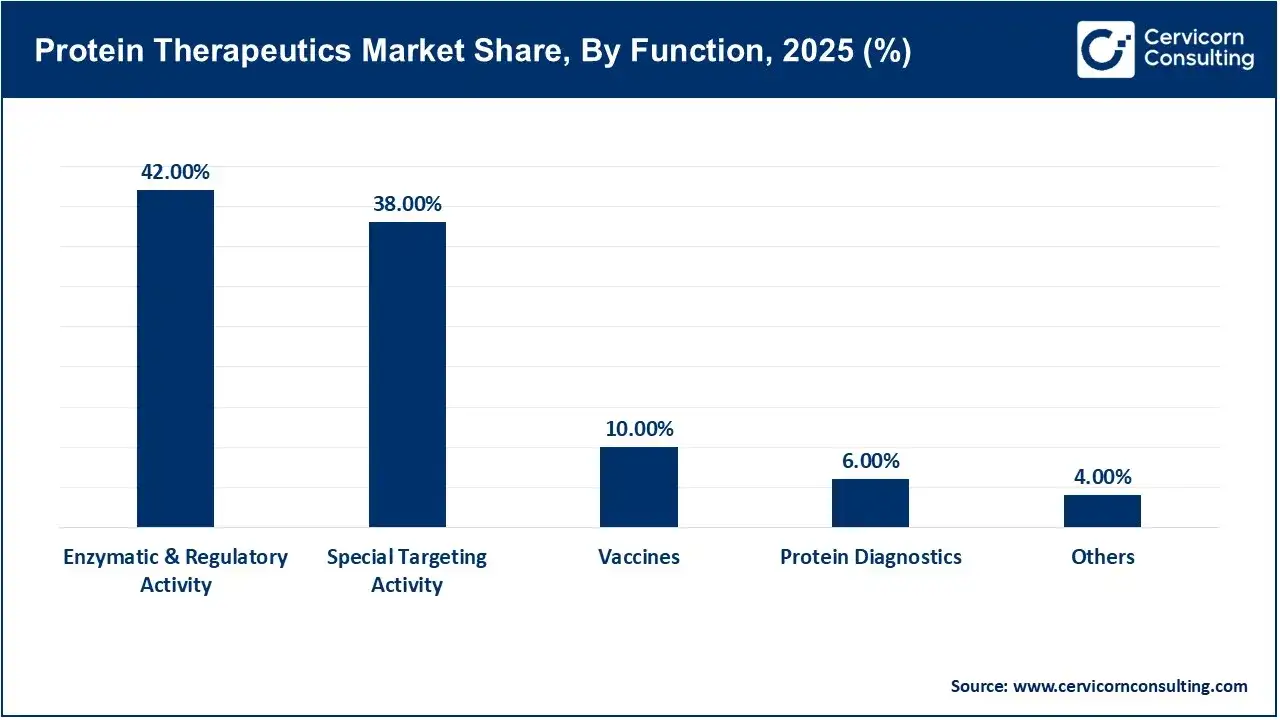
Special targeting activity is expected to be the fastest-growing segment from 2026 to 2035, propelled by developments in targeted therapies that allow proteins to act more precisely on biological pathways and disease-related cells. Increasing demand for highly specific treatment approaches is creating strong opportunities for this segment. Advances in protein engineering and molecular biology are improving targeting capabilities. Growing research in precision and personalized medicine is expected to further support segment growth.
Route of Administration Analysis
Subcutaneous administration dominated the protein therapeutics market in 2025 because it is convenient, simple to administer, and suitable for self-administration of various protein-based treatments. Its adoption is further supported by increasing demand for patient-friendly treatment options. For some therapies, subcutaneous delivery can reduce the need for hospital visits. The growing availability of convenient drug delivery devices and self-injection systems is also supporting the segment.
Subcutaneous administration is also expected to be the fastest-growing segment from 2026 to 2035, driven by the growing use of convenient home-based biologic therapies and self-injection. Its adoption is being supported by patients' increasing preference for flexible and less invasive treatment options. Pharmaceutical companies are also focusing on improving subcutaneous formulations and delivery systems. These advancements are expected to increase the use of this administration route across various protein therapies.
Source Analysis
Recombinant sources dominated the protein therapeutics market in 2025, supported by their ability to produce therapeutic proteins in a controlled, scalable, and reliable manner. Their position is further strengthened by advances in biotechnology and rising demand for biologic medicines. Recombinant production techniques enable manufacturers to produce complex therapeutic proteins with greater consistency and quality control. Rising investment in biopharmaceutical manufacturing is also supporting the segment.
Recombinant sources are also expected to be the fastest-growing segment from 2026 to 2035, fueled by developments in biomanufacturing, genetic engineering, and the development of novel protein-based treatments. Growing demand for reliable and scalable production methods is creating new opportunities for the segment. Improvements in manufacturing processes are also increasing product consistency and production efficiency. Expanding biologics pipelines are expected to further support demand for recombinant protein production.
Technology Analysis
Recombinant DNA technology dominated the protein therapeutics market in 2025 because it enables the production of a wide range of therapeutic proteins with improved quality, consistency, and scalability. Its leading position is supported by its well-established use in the production of numerous biologic medicines. The technology is widely used to produce proteins for various therapeutic applications. Ongoing advances in biotechnology and genetic engineering are further enhancing its efficiency and applications.
Protein engineering is expected to be the fastest-growing segment from 2026 to 2035, driven by advances in designing proteins with improved therapeutic performance, stability, efficacy, and specificity. The technology is increasingly being used to create next-generation protein therapies with enhanced properties. Growing demand for tailored and targeted treatments is creating new opportunities for protein engineering. Further research into optimized protein structures and functions is expected to support its adoption.
End Use Analysis
Hospitals dominated the protein therapeutics market in 2025, supported by the widespread use of biologic treatments in hospital settings for complex diseases such as metabolic, autoimmune, and cancer conditions. Their position is further strengthened by specialized healthcare infrastructure. Hospitals provide the facilities and qualified medical personnel required to administer and monitor various protein-based treatments. Growing use of biologics for chronic and complex conditions continues to support this end-user segment.
Pharmaceutical & biotechnology companies are expected to be the fastest-growing segment from 2026 to 2035, driven by increasing investment in clinical research, protein engineering, biologic drug development, and advanced manufacturing technologies. These companies are increasingly focusing on developing innovative protein-based treatments. Expanding collaborations, research initiatives, and biotechnology investments are also supporting the segment. Continued expansion of biologics pipelines is expected to increase demand from pharmaceutical and biotechnology companies.
Regional Analysis
North America: Strong Biopharma Ecosystem Sustains Market Leadership
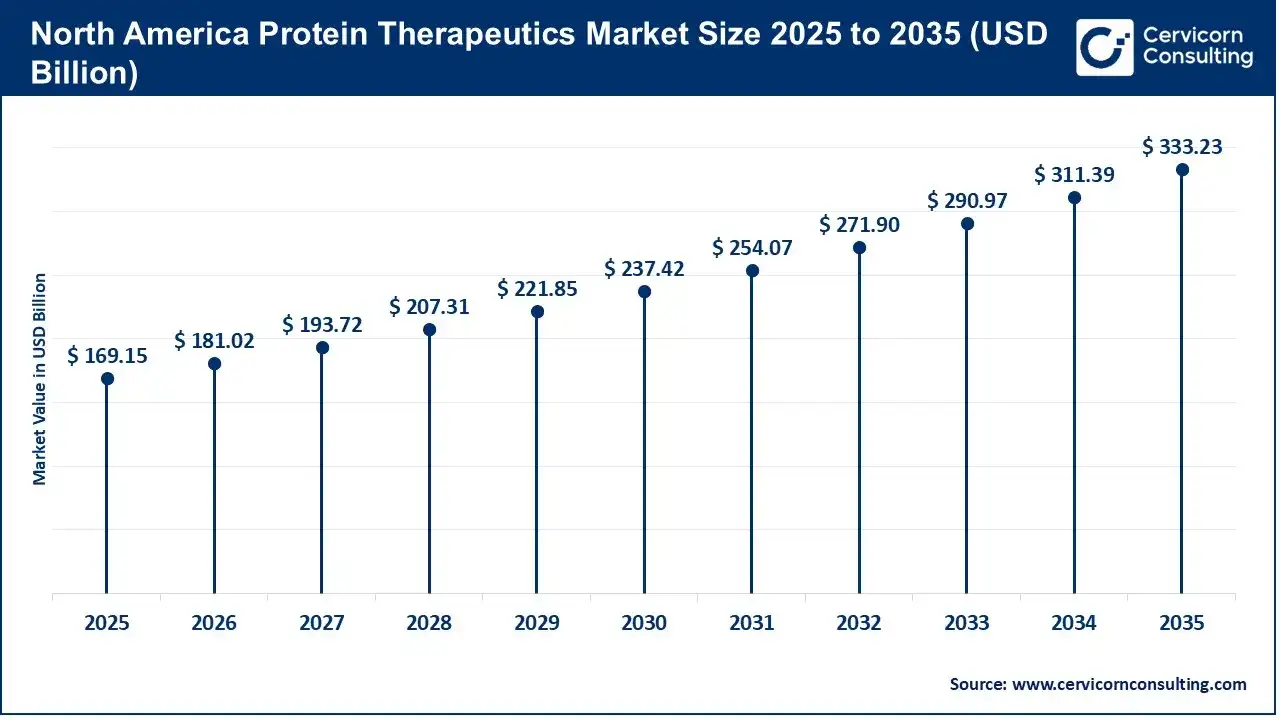
The North America protein therapeutics market size was valued at USD 169.15 billion in 2025 and is projected to hit USD 333.23 billion by 2035. North America dominated the protein therapeutics market in 2025, backed by a robust pharmaceutical sector, a sophisticated biotechnology ecosystem, strong research and development capabilities, and high adoption of biologic therapies. The region's position is further strengthened by the presence of major biotechnology and pharmaceutical companies with extensive capabilities in protein engineering, biologics development, clinical research, and commercial manufacturing.
A well-developed healthcare system, high healthcare expenditure, and significant investments in advanced treatments are also supporting market growth. Continued research into biologics, targeted therapies, recombinant proteins, and advanced protein technologies is expected to maintain North America's leading position.
- United States: The United States leads the North American protein therapeutics market due to its strong pharmaceutical and biotechnology industry, extensive R&D infrastructure, high adoption of biologic medicines, and substantial investment in innovative therapies. The presence of major biopharmaceutical companies and advanced clinical development capabilities further strengthens the country's position.
Asia Pacific: Expanding Biopharma Capabilities Drive Rapid Growth
The Asia Pacific protein therapeutics market size was valued at USD 92.63 billion in 2025 and is projected to hit USD 182.48 billion by 2035. Asia Pacific is expected to be the fastest-growing region in the protein therapeutics market from 2026 to 2035, driven by developing pharmaceutical manufacturing capabilities, rising demand for advanced therapies, increasing biotechnology investment, and expanding healthcare infrastructure. The region is experiencing growing adoption of biologic medicines across emerging healthcare markets as access to advanced treatments improves.
Government support for pharmaceutical manufacturing, domestic biologics production, biotechnology research, and healthcare modernization is creating new opportunities for market participants. Increasing investments in research activities, clinical development, biosimilar production, and healthcare accessibility are expected to further accelerate regional growth.
- China: China is a leading country in the Asia Pacific protein therapeutics market, supported by its expanding biotechnology and pharmaceutical manufacturing sector, growing biologics pipeline, and increasing healthcare spending. Government initiatives promoting biotechnology innovation and domestic production of advanced medicines are further strengthening the country's protein therapeutics ecosystem.
Government Initiatives
- In March 2026, the Government of India, through Biopharma SHAKTI, further detailed plans to strengthen CDSCO's scientific review capabilities and establish a network of 1,000 accredited clinical trial sites. These measures can support faster development, evaluation, and commercialization of protein-based therapies.
- In June 2026, the Government of India highlighted the expansion of Biopharma SHAKTI to strengthen innovation, manufacturing, clinical research, and regulatory capabilities in biologics and biosimilars. The initiative envisions the development of 100 biologics by 2047. This policy focus is expected to encourage investment and innovation across India's protein therapeutics ecosystem.
Recent Developments
- In May 2026, Regeneron announced a strategic collaboration with Parabilis Medicines to discover and develop new therapeutic candidates based on Parabilis' Helicon peptide platform, with a focus on Antibody-Helicon Conjugates. The collaboration combines Regeneron's antibody capabilities with a novel peptide platform to target difficult-to-treat disease pathways. The development highlights continued innovation in antibody-based and peptide-based protein therapeutics.
- In May 2026, Pfizer and Innovent Biologics announced a strategic collaboration covering the research and development of 12 early-stage cancer medicines, including antibody-drug conjugates and multispecific antibodies. The agreement expands the development of advanced antibody-based therapies for oncology applications. It also demonstrates increasing investment in next-generation protein therapeutics and targeted biologic medicines.
- In July 2026, Novartis announced an agreement to acquire Myricx Bio, strengthening its development of next-generation antibody-drug conjugates for cancer treatment. The acquisition adds Myricx's antibody-drug conjugate technology and novel payload platform to Novartis' oncology pipeline. The development reflects growing interest in engineered protein-based therapies that can deliver targeted treatments to cancer cells.
- In July 2026, Novartis announced FDA traditional approval for Fabhalta (iptacopan) to slow the decline in kidney function in adults with primary IgA nephropathy. The therapy targets the alternative complement pathway involved in disease-related inflammation. The approval demonstrates the continued expansion of targeted protein-based and biologic therapies into chronic and immune-related diseases.
Top Companies
- Amgen Inc. – Amgen develops and commercializes protein-based therapeutics across areas including oncology, cardiovascular disease, inflammation, and rare diseases.
- Eli Lilly and Company – Eli Lilly offers a broad portfolio of biologic and protein-based therapies supported by strong research and development capabilities.
- Johnson & Johnson – Johnson & Johnson develops advanced biologic medicines for oncology, immunology, and other therapeutic areas through its pharmaceutical business.
- Pfizer Inc. – Pfizer maintains a significant biologics portfolio and invests in protein-based medicines for multiple complex and chronic diseases.
- Roche – Roche is a major biotechnology company with extensive expertise in antibody-based therapies and other protein therapeutics, particularly in oncology and immunology.
- AbbVie – AbbVie develops biologic therapies across immunology, oncology, neuroscience, and other specialized treatment areas
- Novo Nordisk – Novo Nordisk has strong expertise in protein therapeutics, particularly peptide and recombinant protein medicines for diabetes, obesity, and related conditions.
- Merck & Co. – Merck develops and commercializes biologic medicines while investing heavily in innovative therapies and biopharmaceutical research.
- Sanofi – Sanofi has a diversified biologics portfolio spanning immunology, rare diseases, vaccines, and other specialty healthcare areas.
- Takeda Pharmaceutical Company – Takeda develops advanced biologic and protein-based therapies with a focus on areas such as gastroenterology, rare diseases, oncology, and immunology.
Segments Covered
By Product Type
- Monoclonal Antibodies (mAbs)
- Insulin & Insulin Analogs
- Recombinant Proteins
- Fusion Proteins
- Erythropoietin
- Clotting Factors
- Interferons
- Human Growth Hormones
- Follicle-Stimulating Hormones
- Enzymes
- Others
By Therapeutic Area / Application
- Oncology
- Metabolic Disorders
- Autoimmune Disorders
- Immunological Disorders
- Hematological Disorders
- Infectious Diseases
- Hormonal Disorders
- Genetic & Rare Diseases
- Cardiovascular Diseases
- Neurological Disorders
- Other Diseases
By Function
- Enzymatic & Regulatory Activity
- Special Targeting Activity
- Vaccines
- Protein Diagnostics
- Other Functions
By Route of Administration
- Subcutaneous
- Intravenous
- Intramuscular
- Oral
- Transdermal
- Nasal
- Inhalation
- Other Routes
By Source
- Recombinant
- Microbial-Derived
- Animal-Derived
- Plant-Derived
- Other Sources
By Technology
- Recombinant DNA Technology
- Cell-Based Technology
- Hybridoma Technology
- Protein Engineering
- Transfection Technology
- Gene & Biotechnologies
- Other Technologies
By End User
- Hospitals
- Clinics
- Pharmaceutical Companies
- Biotechnology Companies
- Research Laboratories
- Diagnostic Laboratories
- Academic & Research Institutions
- Other End Users
By Region
- North America
- Europe
- Asia Pacific
- Latin America
- Middle East & Africa
