House Call Market Size, Growth, Forecast 2026 To 2035
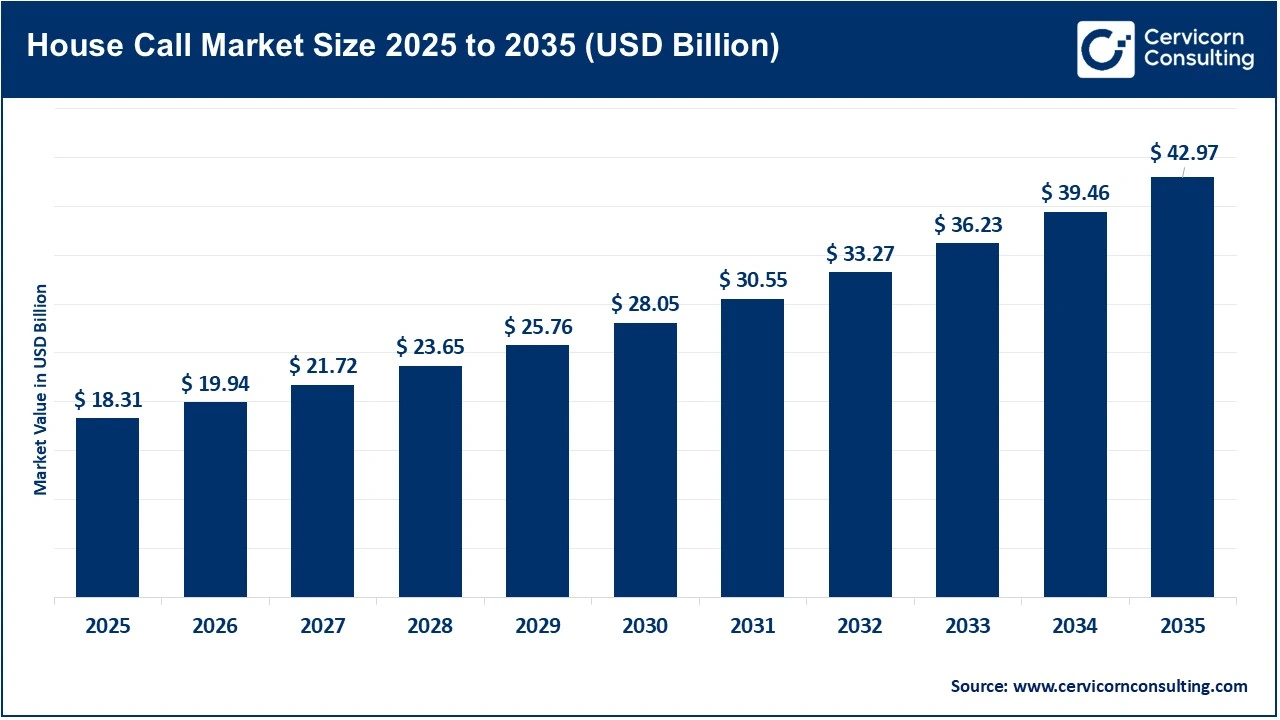
The global house call market size was valued at USD 18.31 billion in 2025 and is expected to be worth around USD 42.97 billion by 2035, exhibiting a compound annual growth rate (CAGR) of 8.9% over the forecast period from 2026 to 2035. The rising burden of chronic diseases, aging populations, and growing preference for convenient healthcare are major drivers accelerating the house call market. According to the World Health Organization, people aged 60 years and above are expected to reach 2.1 billion by 2050, significantly increasing demand for home-based medical services. Studies also indicate that home-based primary care can reduce hospital admissions and emergency department utilization while improving patient satisfaction. Additionally, nearly 80% of older adults prefer receiving healthcare at home whenever feasible, encouraging providers to expand physician house calls, nursing visits, and chronic disease management services.
Technological advancements and supportive healthcare policies are further strengthening market growth. The widespread adoption of telehealth, AI-enabled diagnostics, remote patient monitoring and mobile healthcare applications allows physicians to deliver faster, coordinated care directly to patients' homes. Research shows that preventive home-based care can reduce overall healthcare costs by up to 30%, while integrated home healthcare models improve treatment adherence and clinical outcomes. Increasing reimbursement support for home-based services, combined with hospital capacity constraints and rising consumer demand for personalized care, is encouraging healthcare organizations to invest in scalable house call programs.
Report Highlights
- North America dominated the global House Call Market with an estimated 39.8% market share, driven by advanced home healthcare infrastructure, favorable reimbursement policies, and expanding hospital-at-home programs.
- Primary Care Services accounted for the largest 31.5% market share, supported by increasing demand for routine physician visits, chronic disease monitoring, and preventive healthcare delivered at home.
- Hospitals led the provider segment with approximately 39.4% market share, owing to strong clinical capabilities, integrated home healthcare networks, and growing investments in value-based care models.
- Geriatric patients represented the largest patient segment, contributing around 47.6% market share, fueled by the rising aging population, higher prevalence of chronic illnesses, and increasing preference for aging-in-place healthcare.
What is House Call?
A house call is a healthcare service in which a physician, nurse practitioner, or other qualified medical professional visits a patient's home to provide diagnosis, treatment, preventive care, chronic disease management, follow-up consultations, or minor medical procedures instead of requiring the patient to travel to a hospital or clinic. Modern house call services often integrate telehealth, remote patient monitoring, and electronic health records to deliver personalized, convenient, and cost-effective care, particularly for older adults, individuals with chronic illnesses, patients with limited mobility, and those recovering after hospitalization.
Benefits of House Call
- Reduces hospitalizations: Home-based primary care programs have demonstrated a 23% reduction in hospitalizations among eligible patients.
- Lowers readmissions: House call models have achieved a 27% decrease in 30-day hospital readmissions, improving continuity of care.
- Generates healthcare savings: The Independence at Home program saved approximately USD 70 million over three years, with measurable savings per beneficiary.
- Improves patient outcomes: A systematic review involving 46,156 patients found fewer emergency department visits, hospital bed days, and long-term care admissions with home-based primary care.
- Enhances patient satisfaction: Studies consistently report higher patient satisfaction due to personalized care, greater comfort, and treatment in familiar home environments.
House Call Market Dynamics
Market Driver
1. Rising Aging Population and Chronic Disease Burden
The growing elderly population and increasing prevalence of chronic diseases are major drivers of the house call market. According to the World Health Organization, the global population aged 60 years and above is projected to reach 2.1 billion by 2050, creating substantial demand for home-based medical care. Older adults with conditions such as diabetes, heart disease, and respiratory disorders often require continuous monitoring and follow-up visits. House call services reduce unnecessary hospital visits, improve continuity of care, and enable patients with limited mobility to receive personalized treatment in their homes.
2. Growth of Digital Healthcare Technologies
Rapid adoption of telehealth, remote patient monitoring, and portable diagnostic devices is accelerating the expansion of house call services. Healthcare providers increasingly combine virtual consultations with in-home visits to improve care coordination and patient outcomes. Studies indicate that approximately one-third to one-half of adults with diabetes or prediabetes used telehealth in recent years, demonstrating growing acceptance of remote healthcare. Integration of AI-enabled monitoring and electronic health records further enhances physician efficiency while reducing avoidable hospital admissions and healthcare costs.
Market Restraint
1. Workforce Shortages and Time Constraints
Limited availability of physicians and healthcare professionals remains a significant restraint for the house call market. Home visits require considerably more travel and consultation time than clinic-based appointments, reducing the number of patients providers can serve daily. Research has identified inadequate reimbursement, lack of time, and insufficient training as key barriers to physician participation in house call programs. These operational challenges increase service costs and restrict expansion, particularly in rural and underserved regions with limited healthcare workforce availability.
2. Limited Reimbursement and Operational Costs
House call providers face higher transportation, staffing, medical equipment, and logistics costs compared to traditional outpatient clinics. In many healthcare systems, reimbursement policies have not fully compensated for these additional expenses, limiting provider profitability. Studies show that physicians often cite inadequate financial compensation as one of the primary reasons for reducing home visits. Smaller healthcare organizations may therefore struggle to invest in dedicated house call infrastructure, slowing adoption despite growing patient demand for home-based medical services.
Market Opportunity
1. Expansion of Hospital-at-Home Programs
Hospital-at-home initiatives are creating substantial opportunities for the house call market by enabling advanced medical treatments outside traditional hospitals. Industry estimates suggest the hospital-at-home sector could become a nearly USD 300 billion industry by 2028, driven by value-based healthcare and demand for lower-cost care delivery. These programs improve patient comfort while reducing hospital overcrowding and readmissions. Expanding government support and payer reimbursement for home-based acute care are expected to encourage healthcare providers to invest further in physician house call services.
2. Increasing Consumer Preference for Home-Based Care
Patient preference for receiving healthcare at home presents a strong growth opportunity for service providers. Consumer surveys indicate that while 72% of patients recently received care in physician offices, only 34% prefer future care in traditional clinics, reflecting growing demand for home-based healthcare models. Rising awareness of personalized treatment, convenience, infection prevention, and aging-in-place strategies encourages hospitals, insurers, and technology companies to expand comprehensive house call services supported by digital health platforms.
Market Challenge
1. Maintaining Consistent Quality of Care
Ensuring consistent clinical quality across diverse home environments remains a major challenge for house call providers. Unlike hospitals, patients' homes differ significantly in sanitation, available medical equipment, internet connectivity, and caregiver support. Healthcare professionals must adapt treatment plans while maintaining clinical standards and patient safety. Research highlights that unsuitable home environments and limited physician training for home visits can reduce operational efficiency and complicate diagnosis, treatment delivery, and emergency response during in-home consultations.
2. Infrastructure and Geographic Accessibility
Delivering timely house call services across large geographic areas remains operationally challenging. Rural and remote regions often lack sufficient transportation infrastructure, broadband connectivity, and healthcare personnel, increasing response times and service costs. Telehealth can address some access issues, but many examinations still require physical visits. Healthcare organizations must balance travel expenses, scheduling efficiency, and workforce allocation while maintaining high-quality patient care, making nationwide expansion difficult despite growing demand for home-based healthcare services.
House Call Market Regional Analysis
The house call market is segmented by region into North America, Europe, Asia-Pacific, Latin America, and LAMEA. Here is a brief overview of each region:
Why is North America at the forefront of the house call market?
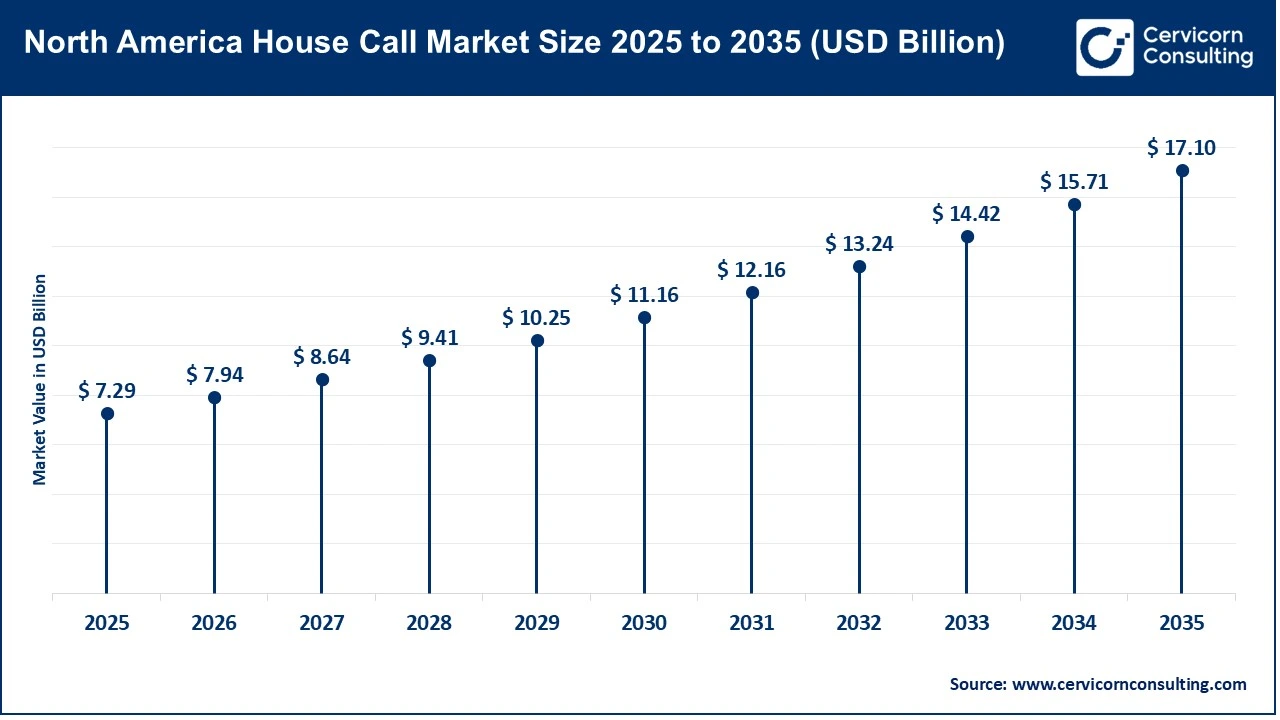
The North America house call market size was valued at USD 7.29 billion in 2025 and is projected to surge around USD 17.10 billion by 2035. The North America market is witnessing robust growth due to increasing demand for convenient, patient-centered healthcare services and the rapid expansion of home-based medical care. The region benefits from advanced healthcare infrastructure, widespread adoption of telehealth, favorable reimbursement policies, and growing investments in hospital-at-home programs. Rising prevalence of chronic diseases, increasing healthcare costs, and an aging population are encouraging providers to shift care delivery from hospitals to patients' homes. The integration of remote patient monitoring, electronic health records, and AI-enabled diagnostics is further improving the efficiency and accessibility of physician house call services. Additionally, strong government support for value-based healthcare and increasing consumer preference for personalized home treatment continue to accelerate market expansion across North America.
United States: Strong hospital-at-home adoption, expanding telehealth ecosystem, and increasing chronic disease burden continue driving market growth.
- More than 60% of U.S. adults live with at least one chronic disease, creating sustained demand for home-based physician visits and long-term care management.
- The Centers for Medicare & Medicaid Services (CMS) Acute Hospital Care at Home initiative has enabled 300+ hospitals to deliver eligible inpatient-level care in patients' homes, accelerating adoption of house call services.
Canada: Growing aging population, expanding home healthcare services, and supportive public healthcare policies strengthen market development.
- By 2030, nearly 23% of Canada's population is expected to be aged 65 years or older, increasing demand for physician house calls and home healthcare services.
- Canada continues to expand investments in home and community care programs, helping reduce hospital admissions while improving access to healthcare for seniors and patients with mobility limitations.
Why is Asia-Pacific experiencing the fastest growth in the house call market?
The Asia-Pacific house call market size was estimated at USD 4.16 billion in 2025 and is forecasted to hit around USD 9.75 billion by 2035. The Asia-Pacific market is experiencing the fastest growth due to rising healthcare expenditure, rapid urbanization, expanding digital health infrastructure, and increasing awareness of home-based medical services. The region is witnessing a significant rise in chronic diseases, aging populations, and demand for convenient healthcare delivery, particularly in densely populated countries. Governments are actively promoting telemedicine and home healthcare through digital health initiatives, while private healthcare providers are expanding physician-at-home services. Increasing smartphone penetration, improving internet connectivity, and growing investments in AI-enabled healthcare platforms are further accelerating the adoption of house call services across the region.
China: Rapid aging population, strong digital health ecosystem, and expanding home healthcare investments drive market growth.
- China has more than 310 million people aged 60 years and above, creating substantial demand for physician house calls, chronic disease management, and elderly home healthcare.
- Internet hospitals and digital healthcare platforms continue to expand rapidly, enabling integrated teleconsultations and home-based medical services across urban and semi-urban regions.
India: Rising chronic disease burden, increasing telemedicine adoption, and expanding private home healthcare services support market expansion.
- India records over 77 million people living with diabetes, significantly increasing demand for home-based chronic disease monitoring and physician visits.
- The Ayushman Bharat Digital Mission (ABDM) is accelerating digital health integration by connecting healthcare providers, patients, and electronic health records, improving access to home-based care.
Why is Europe house call market is expanding steadily?
The Europe house call market is expected to skyrocket from USD 5.24 billion in 2025 to over USD 12.29 billion by 2035. The Europe market is expanding steadily due to the region's rapidly aging population, strong public healthcare infrastructure, and increasing focus on delivering patient-centered care at home. Rising prevalence of chronic diseases, favorable reimbursement policies, and government initiatives supporting community-based healthcare are encouraging healthcare providers to expand physician house call services. The widespread adoption of telemedicine, remote patient monitoring, and electronic health records further enhances the efficiency of home healthcare delivery. Additionally, increasing healthcare expenditure and efforts to reduce hospital overcrowding are accelerating the transition toward integrated home-based care models across Europe.
Germany: Strong home healthcare infrastructure, growing elderly population, and digital health reforms continue driving market growth.
- More than 22% of Germany's population is aged 65 years or older, significantly increasing demand for physician home visits and chronic disease management services.
- Germany's Digital Healthcare Act (DVG) has accelerated the adoption of telemedicine and digital health applications, supporting integrated house call services.
United Kingdom: Expanding NHS home care initiatives, increasing chronic disease prevalence, and wider telehealth adoption support market development.
- The National Health Service (NHS) continues to expand community and hospital-at-home programs to reduce hospital admissions and improve patient outcomes.
- Approximately one in four adults in the UK lives with at least one long-term health condition, increasing demand for home-based physician consultations and follow-up care.
House Call Market Share, By Region, 2025 (%)
| Region |
Revenue Share, 2025 (%) |
| North America |
39.80% |
| Europe |
28.60% |
| Asia-Pacific |
22.70% |
| LAMEA |
8.90% |
Why is LAMEA house call market witnessing steady growth?
The LAMEA house call market was valued at USD 1.63 billion in 2025 and is anticipated to reach around USD 3.82 billion by 2035. The LAMEA market is witnessing steady growth due to increasing healthcare awareness, rising incidence of chronic diseases, and growing demand for accessible home-based medical services. Governments and private healthcare providers are investing in digital health platforms, telemedicine, and community healthcare programs to improve healthcare access, particularly in underserved areas. The expansion of private health insurance, rising elderly populations, and increasing smartphone penetration are further supporting physician house call services. Additionally, healthcare infrastructure modernization and greater adoption of remote patient monitoring technologies are creating new growth opportunities across the region.
Brazil: Expanding private healthcare sector, growing elderly population, and increasing home healthcare utilization drive market growth.
- Brazil has more than 33 million people aged 60 years and above, generating strong demand for physician house calls and long-term home healthcare services.
- The country's expanding private healthcare network is increasing investments in home-based medical care, chronic disease management, and post-hospitalization services.
Saudi Arabia: Healthcare transformation initiatives, digital health investments, and aging population support market expansion.
- Under Saudi Vision 2030, the government is expanding home healthcare and digital health services to improve accessibility and reduce hospital dependence.
- The Ministry of Health continues to strengthen telemedicine, remote patient monitoring, and home healthcare programs for patients with chronic diseases and mobility limitations.
House Call Market Segmental Analysis
The house call market is segmented into service type, provider type, patient type, and geography.
Service Type Analysis
Primary care services dominate the house call market due to their broad application in routine health assessments, chronic disease follow-ups, medication management, and preventive consultations. The increasing prevalence of hypertension, diabetes, and cardiovascular disorders has significantly raised demand for home-based primary care. Older adults and mobility-impaired patients particularly benefit from regular physician visits at home, reducing unnecessary hospital admissions and emergency department utilization. Growing healthcare expenditure, improved reimbursement policies, and integration with telehealth platforms further strengthen the leadership of this segment across developed and emerging healthcare markets.
House Call Market Share, By Service Type, 2025 (%)
| Service Type |
Revenue Share, 2025 (%) |
| Primary Care Services |
31.5% |
| Chronic Disease Management |
22.8% |
| Urgent Care Services |
16.4% |
| Preventive Healthcare Services |
11.2% |
| Post-Surgical Care |
8.1% |
| Diagnostic & Laboratory Services |
6.3% |
| Others |
3.7% |
Chronic disease management is the fastest-growing service segment as healthcare systems increasingly emphasize long-term, home-based monitoring for patients with diabetes, heart failure, chronic obstructive pulmonary disease, and kidney disorders. Rising global chronic disease prevalence, aging populations, and remote patient monitoring technologies are accelerating adoption. Healthcare providers are expanding physician house calls supported by wearable devices and digital health platforms to improve treatment adherence and reduce readmissions. The shift toward value-based healthcare and personalized care models continues to create strong growth opportunities for this segment.
Provider Type Analysis
Hospitals account for the largest share of the house call market because of their extensive clinical infrastructure, multidisciplinary care teams, and strong patient referral networks. Many hospitals have expanded home healthcare programs to reduce inpatient occupancy, improve patient outcomes, and support value-based care initiatives. Their ability to integrate diagnostics, specialist consultations, electronic health records, and emergency services enhances service quality. Favorable reimbursement frameworks and growing investments in hospital-at-home programs further reinforce hospitals' dominant position within the global house call ecosystem.
House Call Market, By Provider Type, 2025 (%)
| Provider Type |
Revenue Share, 2025 (%) |
| Hospitals |
39.4% |
| Home Healthcare Agencies |
28.7% |
| Independent Physicians |
16.5% |
| Telehealth Companies |
10.2% |
| Others |
5.2% |
Telehealth companies represent the fastest-growing provider segment due to rapid advancements in digital healthcare technologies and increasing patient acceptance of virtual-first care models. These companies combine remote consultations with physician house calls, AI-enabled triage, and remote patient monitoring to deliver efficient home-based healthcare. Rising smartphone penetration, improved internet connectivity, and supportive regulatory policies are accelerating adoption. Strategic partnerships with hospitals, insurers, and home healthcare providers enable telehealth companies to expand comprehensive, technology-driven medical services across diverse patient populations.
Patient Type Analysis
The geriatric segment dominates the house call market because older adults require frequent medical evaluations, chronic disease management, medication monitoring, and post-hospitalization follow-up. Mobility limitations and multiple chronic conditions make home-based healthcare a preferred alternative to frequent hospital visits. Growing life expectancy and the rising elderly population worldwide continue to increase demand for physician home visits. Government initiatives supporting aging-in-place and expanding home healthcare reimbursement policies further strengthen the dominance of geriatric patients within the overall market.
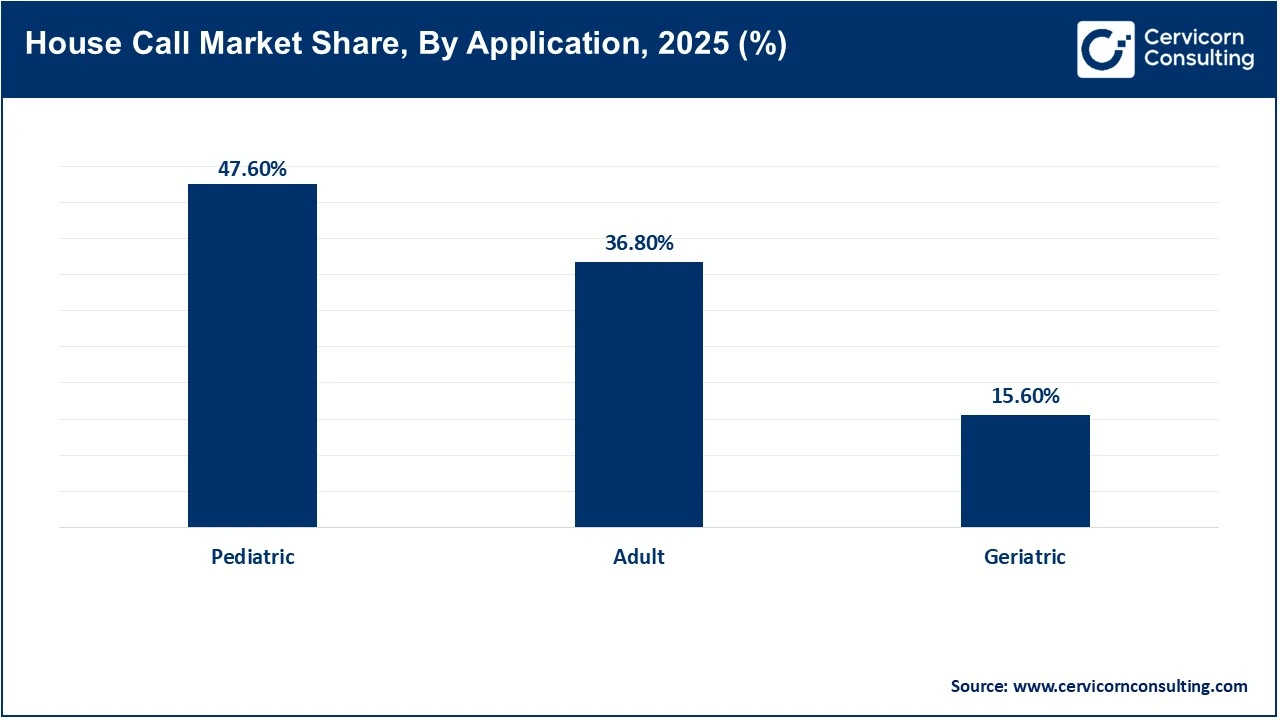
The adult segment is projected to experience the fastest growth as working professionals increasingly seek convenient, time-efficient healthcare solutions that minimize travel and waiting times. Rising cases of lifestyle-related diseases, mental health conditions, and preventive healthcare awareness are driving greater utilization of physician house calls. Employers are also adopting home-based healthcare programs to improve employee wellness and reduce productivity losses. Integration of telemedicine, remote diagnostics, and mobile healthcare applications continues to expand access and accelerate growth within the adult patient segment.
House Call Market Top Companies
Recent Developments
- In March 2026, MedArrive acquired key technology assets from Inbound Health, adding AI-powered care navigation capabilities to strengthen its home care logistics platform and improve hospital-to-home patient transitions.
- In March 2025, DispatchHealth announced a merger with Medically Home to create one of the largest hospital-at-home providers in the U.S., expanding advanced in-home acute care across nearly 50 metropolitan areas in partnership with around 40 health systems.
Market Segmentation
By Service Type
- Primary Care Services
- Urgent Care Services
- Chronic Disease Management
- Preventive Healthcare Services
- Post-Surgical Care
- Diagnostic & Laboratory Services
- Others
By Provider Type
- Hospitals
- Home Healthcare Agencies
- Independent Physicians
- Telehealth Companies
- Others
By Patient Type
- Pediatric
- Adult
- Geriatric
By Geography
- North America
- Europe
- Asia-Pacific
- LAMEA