Healthcare CRM Market Size, Growth, Forecast 2026 to 2035
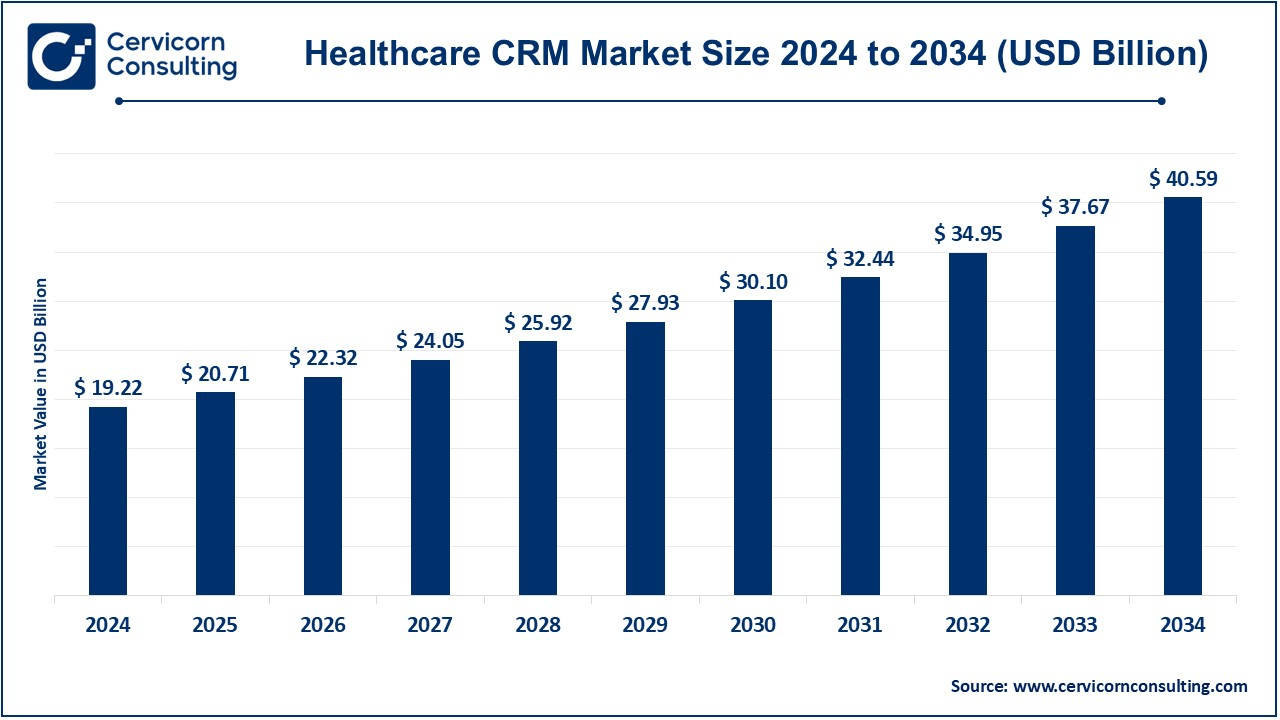
The global healthcare CRM market size was valued at USD 20.71 billion in 2025 and is expected to exceed around USD 43.38 billion by 2035, growing at a compound annual growth rate (CAGR) of 7.67% over the forecast period from 2026 to 2035. The healthcare CRM market is experiencing robust growth driven by factors such as growing demand for the data that is structured and automation in healthcare organizations.
There has been a surge in the healthcare customer relationship management (CRM) owing to the rising demand for the demand for the patient-centric care along with advancements in the digital technologies and increasing adoption of the data-driven decision making in the healthcare sector. Innovations in digital technologies have been responsible for the growth of CRM software in terms of the utilization of patient data and increasing data-driven decision making in the healthcare sector. By consolidating data from various touch-points, apart from electronic health records (EHRs) as the most common types, these CRM's really simplify communication with patients and at the same time encourage patient engagement, operational efficiency, and data exchange among the healthcare facilities of the involved entities. Demand for personalized healthcare, as mentioned previously, has seen the adoption of CRM further driving healthcare organizations using patient data to understand and improve the delivery quality of health services and continue fostering the relationship. And now with telemedicine and mobile health applications strengthening, management of patient communication by CRM assumes a larger role. They continue with AI and ML in CRM becoming more significant in predicting patient needs and determining resource allocation. Implementation remains costly, but it is thought that better patient outcomes would justify these investments. More so, high-performing AI systems that optimize resource management set the pace for better healthcare CRM delivery.
Report Highlights
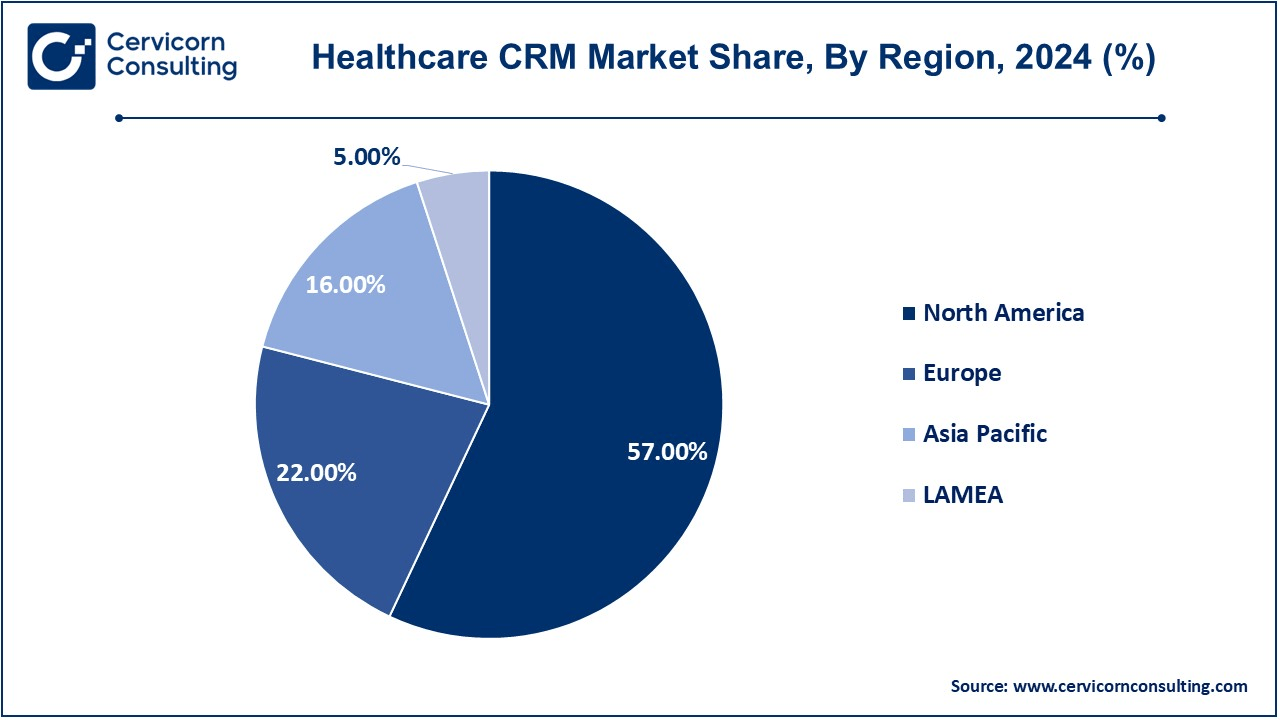
- North America dominated the healthcare CRM market with a 57% revenue share in 2025, driven by widespread adoption of digital patient engagement platforms, advanced healthcare IT infrastructure, and strong investments in customer relationship management solutions.
- Europe accounted for 22% of the market share in 2025, supported by increasing healthcare digitalization, growing focus on patient-centric care, and rising implementation of CRM technologies across healthcare organizations.
- By component, the software segment led the market in 2025, owing to growing demand for integrated CRM platforms that streamline patient management, communication, marketing, and operational workflows.
- By deployment, the cloud-based segment captured 81.50% of the market revenue in 2025, driven by its scalability, cost efficiency, remote accessibility, and ease of integration with existing healthcare systems.
- By functionality, the sales segment held a 31% revenue share in 2025, supported by increasing use of CRM solutions to improve patient acquisition, relationship management, and revenue generation strategies.
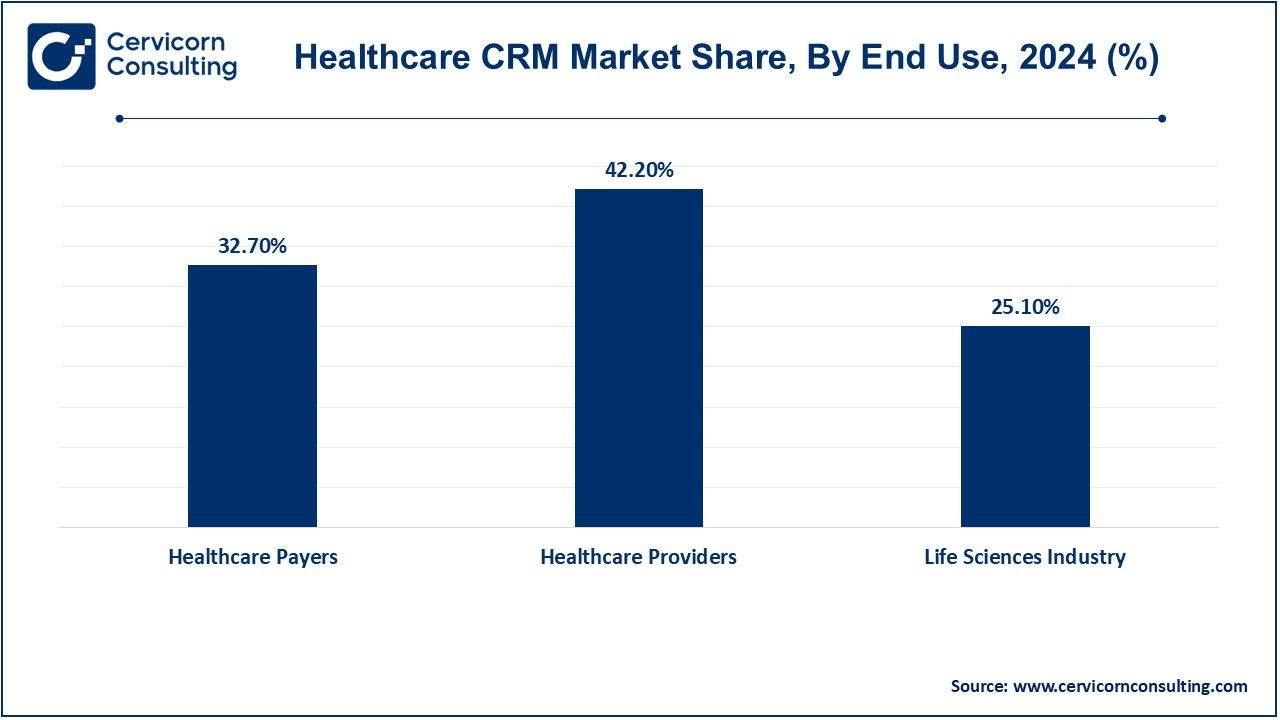
- By end use, the healthcare providers segment accounted for approximately 42.20% of the market share in 2025, fueled by growing adoption of CRM platforms by hospitals, clinics, and healthcare networks to enhance patient engagement and care coordination.
Healthcare CRM Market Statistical Insights
- Over 96% of hospitals in U.S. were using certified EHR systems as of 2025 providing a sound digital infrastructure for seamless integration of healthcare CRM applications for managing patient engagement, coordinating care, and managing communications.
- About 1 billion+ physician office visits took place in U.S. (2024) driving adoption of CRM solutions that enable managing appointment scheduling, patient communication, referral management, and follow-up communications efficiently.
- As per the healthcare utilization stats 38+ million hospital admissions were recorded every year in the US (2024), creating enormous volumes of patient data requiring advanced CRM applications for robust relationship management.
- Over 130+ million individuals are suffering from at least one chronic disease in US (2025) leading to increased demand for CRM applications facilitating ongoing patient engagement, medication adherence programs, and chronic care initiatives.
- Around 15%-20% of the total outpatient consultations happened through telehealth in the leading healthcare organizations (2025), accelerating the use of integrated CRM systems for managing both virtual and in-person patient interactions.
- About 70,000+ hospitals and 1.3 million+ registered physicians exist in the Indian healthcare system (2025), creating significant opportunities for healthcare organizations to deploy CRM systems to manage patient communication and business operations efficiently.
- Over 2 billion+ outpatient visits happened every year in India as of 2024 demonstrating growing demand for a digital patient relationship management application that is robust enough to manage such high patient volumes.
- More than 950 million Indians were internet users and over 800 million people were smartphone users in India (2025) enabling the health systems to utilize CRM based mobile engagement, online booking and patient outreach capabilities more extensively.
- Hundreds of millions of digital health records were generated by 2025 under the Ayushman Bharat Digital Mission (ABDM) speeding up the adoption of CRM applications to help manage and leverage the patient information efficiently.
- Over 1,850 hospitals and 430,000+ physicians practiced medicine in Germany (2025), providing a robust infrastructure for wide scale adoption of CRM technologies by healthcare providers and institutions.
- Over 17 million hospital admissions in Germany were recorded annually (2024), raising demand for CRM applications focused on optimizing patient engagement and enhancing care coordination activities.
- The 90%+ population coverage by the statutory health insurance scheme in Germany (2025) created enormous patient data volumes demanding advanced CRM applications to manage the same.
- Over 22% population aged 65 years and above were present in Germany (2025), indicating a greater need for CRM applications focusing on chronic disease management, elderly care management, and customized patient communication.
Growth Factors
- Increasing Demand for Patient-Centric Care: Medical care is a personalized patient-focused care, and this is going to require clinicians to deliver individualized services to meet every single patient's needs. This is realized by the CRM through the extraction and processing of information from a variety of sources, whereby each individual is endowed with an identical representation. Improving communication, health trend monitoring, and personal plan of care, CRMs has an effect of improving patient satisfaction and patient outcomes. They allow clinicians to organize patient needs, to handle chronic illness efficiently, and to establish ongoing relationships which can lead patients to feel committed, trusting and reciprocatively linked. With the growth in the demand for value-based care, roll out of CRMs is still in progress across the health system.
- Growing Adoption of Digital Health Solutions: The digitization of health information systems has already begun to translate into improvement of the patient care, and CRMs are at the core of the effort of standardizing a variety of data recorded by systems in health care, including electronic health records (EHRs), appointment schedules, and remote health services. These methods allow us to exploit valuable strategies for the structuring of patient information, the log files of communications and itinerary of communications. With increasing use of digital tools by health care facilities, CRMs make the implementation of interoperability and create a smooth user experience for both patients and providers. Through information flow links, digital health CRMs can enhance decision making, lead to improved operational efficiency which then allows for their adoption on a substantial scale in modern medicine.
- Advancements in AI and Analytics: CRMs with predictive information, patient clustering and resource allocation are transforming CRMs in the era of artificial intelligence (AI) and analytics. AI-powered CRMs enable medical practitioners to forecast, preempt, and prepare the patient needs, to analyze high-risk-population, and to individualize a treatment. Advancements in trend analysis brought about by the use of sophisticated analytics provide opportunities to prevent complications and enhance care delivery. By means of automatic (self-service) creation of administrative tasks, such as appointment reminders and follow-ups, workload decreases and process is optimized. Machine learning algorithms amplify the usefulness of CRMs that are powered by big data for patient interaction and patient outcomes in the data-driven age of medicine.
- Expansion of Telehealth Services: Cytokine receptor monoclonal antibody receptor (CRMs) have been highlighted by the explosion in the adoption of telehealth stemming from the convenience benefit and pandemic need. Telehealth platforms need robust infrastructure to support remote consultation, to maintain a steady dialogue connection, and to provide/perform post visits. CRMs are able to accomplish these functions by providing a single central repository of patient data, logging interaction and providing remote continuity of care. These approaches can be also tailored to better suit the telehealth experience, appointments scheduling, and Feedback collection. As the telehealth trend is incorporated into health care delivery systems, CRMs are critical to the sustainability and expansion of health care telehealth.
- Rising Prevalence of Chronic Diseases: Increasing health care load of chronic diseases, such as diabetes and cardiovascular disease, requires not only continuous, but also sustained patient management. CRMs make available methods for tracking health data, scheduling and delivering personalized plan of care so as to ensure that patients do not forget to attend, and that they are receiving the plan of care tailored to their needs. These systems also improve care coordination among providers, enhance adherence to treatment regimens, and facilitate remote monitoring. The utilization of data-based decision making allows CRMs to take a key position in improving the clinical performance of the patient and the cost derived from chronic diseases that cannot be overlooked in contemporary healthcare management.
Market Trends
- Government Initiatives and Investments: On a global scale, introduction of health care digitalization is being pushed by governments to enhance the provision of and efficiency of care services. Efforts to promote the adoption of electronic health record (EHR) systems and digital health technologies are behind EHR and digital health CRM adoption. Regulatory prescripts have fostered the integration and interoperability of data, which has, in turn, driven the development of CRMs. Investments are also in operation to enhance care quality, efficiency and reduction of administrative burden as well as streamline-flow, which in turn brings to greater efficiency and patient-centeredness health systems. Given that health care digitalization today is the primary concern of policymakers, CRMs are the nexus of health care innovation programs.
- Increasing Use of Wearable Devices: Wearable devices (i.e., fitness trackers and medical grade data monitors) produce vast amounts of healthcare data in real time. The capacity of such information to be put into CRMs in order to be monitored continuously by clinicians is that this information can be used by clinicians to monitor patients, identify health trends and take appropriate measures. Wearables also enable patients to understand what they can do to manage themselves in proactive health management, and how they can participate in their care plan. Clinical health facilities can provide personalized intelligence through the use of wearables combined with CRM analytics and clinical data, better manage chronic conditions, and support rehabilitative care. Therefore, the popularity growth of wearables is driving the need for advanced CRM frameworks.
- Focus on Operational Efficiency: Healthcare institutions are facing growing pressure to maximize efficiency of cost and also to minimize process complexity. The use of CRMs can not only improve the administrative processes like booking, follow up of patients and data management, but also it allows the staff to allocate it more of their focus to patient care. CRMs are powered by a suite of different systems and automation of routine activities, bypassing bottlenecks and allowing for interdepartmental cooperation. They also deliver specific suggestions via analytics that can subsequently be used for more effective management of provider resource distribution. Operational efficiency, striving for maximum rate of care quality, has unfortunately been the impetus for the adoption of CRMs in the health care system.
- Growing Healthcare Consumerism: Transparency, ease of access, and patient involvement in healthcare processes are becoming also topics where the patients should have access to more information and to better expectations. CRMs allow the provider to fulfil the following needs, through personalised communication, easy access to medical records and efficient appointment scheduling. By clustering disease data through aggregation, CRMs ensure homogeneity, availability and better patient satisfaction and loyalty. They also allow health organisations to react to consumer-led trends in health care service provision such as digital and on-demand health services, for instance. As healthcare consumers become increasingly popular, CRMs have played a crucial role in managing the changing needs of customers.
- Emergence of Mobile Health Applications: Mobile health (mHealth) applications are transforming what forms the bedrock of patient engagement—access to care, for example. CRMs (combined with mHealth applications) provide means of access to procedures within the appointment scheduling, reminders and secure messaging which, in return, will enhance patient-provider communication. Such applications allow the flow of real-time data, such that providers can monitor health status and deliver, for example, modelized interventions. MHealth apps supported by CRMs facilitate improved care delivery and patient satisfaction bridge the distance between patients and providers. Because of the advent of personal smartphones and health applications, this is promising phenomenon.
Report Scope
| Area of Focus |
Details |
| Market Size in 2026 |
USD 22.32 Billion |
| Expected Market Size by 2035 |
USD 43.38 Billion |
| Projected CAGR 2026 to 2035 |
7.67% |
| Top-performing Region |
North America |
| Rapidly Expanding Region |
Asia-Pacific |
| Key Segments |
Component, Deployment, Functionality, End-Use, Region |
| Key Companies |
Accenture, Alvaria, Creatio, hc1, IBM, LeadSquared, Microsoft, NICE, Oracle (Cerner Corporation), Salesforce, SAP, Talisma, Veeva Systems, Verint Systems Inc., Zoho Corporation |
Market Dynamics
Market Drivers
Demand for Real-Time Data Accessibility
- Almost real-time accessibility to report of the patients is compulsory in urgent healthcare situations in order to facilitate and then decide. Collection of data from EHR, wearable devices, and telehealth, by a CRM, guarantees that everything needed is within arm's reach. Real-time data accessibility would mean better care coordination, better emergency responses, and better decision-making among other improvements. CRMs enable a facility or healthcare provider to meet very high demand increase in data processing requirements of up-to-date insights for delivery so that their interventions are very personalized to the individual patients of record, with as little or as much protection as patients may need.
Rising Competition Among Providers
- The health providers are bound to face stiffening competition as services attempt to distinguish themselves from one another. CRM is designed to help health organizations-to interact more fully with the patient, appeal to their experience, and make available better care coordination. This leading edge uses integrated targeting by generation, follow-the-sun efficiency, and scientific insights through source-acquired data to enhance patient loyalty and bring in a new crowd. It is much more closely required in the case when most of the patients give much regard towards seamless and personalized healthcare experiences. This need to lead has encouraged health organizations to invest in robust CRM solutions.
Market Restraints
High Implementation and Maintenance Costs
- In order to use a health care CRM, the organization has to spend more than what a small health care outfit would be able to afford. That is the additional cost of one-time implementation and maintenance. This expense includes purchasing software, customization, linkage with existing IT infrastructure, staff training, and subsequent system updates. The financial obstacle will serve as a problem for the interested entities, especially the resource-crunched entities, when it comes to regarding the CRM solutions to be as much beneficial. Additionally, the ROI will never be seen in the short term that will result in limited adoption. Low cost or flexible affordable CRM solutions could mitigate this hindrance and lead to a much broader process of adoption in health care.
Data Privacy and Security Concerns
- Healthcare CRM stages are taking care of patient-sensitive data hence are vulnerable to breaches and cyber-attacks. It becomes even more complicated for CRM deployment due to requirements of stringent rules or regulations such as the United States' HIPAA or Europe's GDPR on security for certain patient data, resulting in complex and expensive data protection solutions as a criterion for CRM deployment. The biggest problems in this regard are data storage security, access controls, and compliance with prescribed laws. Moreover, this creates trepidation in patient confidence, as thievery may hurt one's reputation. Proper dealing with the issues of data privacy and security has to be included in more comprehensive use of CRMs in healthcare and prompt a never-ending gross investment in brisk cybersecurity measures.
Market Opportunities
Expansion in Emerging Markets
- Emerging markets present vast potential growth in healthcare CRM sectors due to the vast investments in infrastructure for healthcare and very fast adoption of digital health technology: however, on the broader front, states and private sectors in lesser developed countries are more enthusiastic about enhancing access to improved healthcare. Accordingly, healthcare demand generates the necessary environment for new solutions to engaging patients and coordinating with them. Across these markets, chronic diseases are becoming quite predominant. The resulting patient/consumer is equally taking over health or personalized healthcare solutions. The opportunities appear good ones for healthcare CRMs as the relationship-managing systems have possibility for simplifying operational workload since integration of information from different databases all brought these new procedures closer to realization and are excellent potential solutions for providers in developing countries.
Integration with Advanced Technologies
- Integration with advanced technologies such as AI, blockchain, and the Internet of Things (IoT) is going to offer top-notch opportunities for innovations. Sophisticated AI applications on CRM will be enhanced as they can now predict, communicate immediately and result into entirely personal with the patients. Block chain technology on the other hand makes sharing more trustable through secure data protection via permanent record links. With the IoT devices, real-time data produced would be greatly of aid toward facilitating better and crisper analyses applied to the enhanced CRMs thus resulting into yet better detection. These developments will make the CRM even more desirable to the user in that they solve nearly all the complications that exist within healthcare, bring in a more optimized system safeguarding information and focusing on the patient.
Market Challenges
Resistance to Technological Adoption
- Some healthcare providers and staff are apprehensive about adopting new technologies such as CRMs simply because these people have had familiarity with legacy systems, no technical know-how, and fear of a disruption in workflow. Inadequate training and fears of increased workload during the transitional period often exacerbates this reluctance. The convincing of the stakeholders to commit to using the CRMs on an ongoing basis so as to bring in greater efficiency and will also increase patient engagement, continues to be a difficult task. Removing resistance calls for comprehensive training programs, highly comfortable interfaces to be designed, and communication to flow clearly about the various advantages of the adoption of CRM thus only through this could be ensured successful integration into health care practices.
Complex Integration Process
- The integration of healthcare CRMs into existing healthcare information technology (IT) systems like electronic health records (EHRs), lab management systems, and billing systems raises a lot of challenges right from the start. This also emanates from a great number of data formats, missing standardization, and lack of interoperability which mostly leads to delay and rise in costs. If the cost of the installation and annual maintenance exceeds the potential benefits, then it would become so burdensome to adopt CRMs. The "simple" solution then in order to overcome these barriers and to make CRM adoption popular in the healthcare industry is through standardization of API, very high interoperability and quite a lot of vendor support.
Regional Analysis
The healthcare CRM market is segmented into various regions, including North America, Europe, Asia-Pacific, and LAMEA. Here is a brief overview of each region:
What factors are driving North America's dominance in the healthcare CRM market?
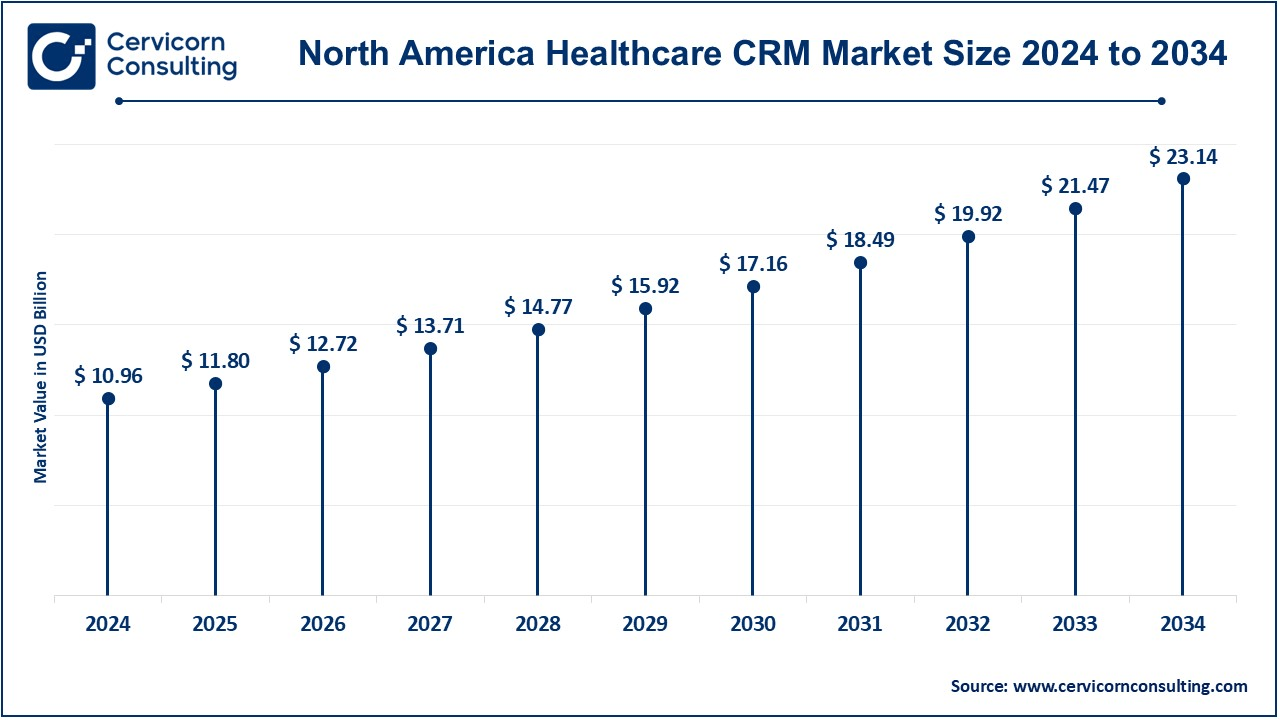
The North America healthcare CRM market size was reached at USD 11.80 billion in 2025 and is estimated to surpass around USD 24.72 billion by 2035. North America is a dominant market because there is a developed healthcare market, widespread adoption of digital health technology and a regulatory environment, which encourages the adoption of such technology. The United States and Canada have been pioneers in applying healthcare CRM systems, all of which are utilized to improve patient care, increase efficiency, and comply with HIPAA standards, etc. In the context of the above trends, the combined issue of declining health care cost and operations efficiency and the raised personalized care need is the reason that the health care CRM market in North America is expanding.
United States Healthcare CRM Market Trends
United States is the most attractive market for healthcare CRM solutions in terms of advancement of healthcare system and the trend of patient engagement. It spends more than $ 5 trillion per year on healthcare which approximately translates to 17% of the nation's GDP, a ratio higher than any other country in the world.
The U.S healthcare system is equipped with more than 6,100 hospitals and 1+ million active physicians and with about 38 million inpatient hospital admissions annually providing large amount of patient data, relationships are to be managed efficiently. According to the industry sources, over 96% of the non-federal acute care hospitals use a certified EHR system, a strong prerequisite to incorporate a CRM system.
Europe healthcare CRM market is growing
The Europe healthcare CRM market size was reached at USD 4.56 billion in 2025 and is estimated to surpass around USD 9.54 billion by 2035. Europe market is growing as healthcare facilities become, in an increasingly important way, to focus on patient engagement, workflow efficiency, and care delivery. Data privacy legislation in Europe (e.g., GDPR) has become focused on the safe custody of patient information and this leads to a strong integration of CRM applications, which are strong from a security perspective. It is being put into practice in the European territory in order to deal with the geriatric population and prevalence of comorbidities of chronic diseases, for instance, in Germany, the United Kingdom (UK) and France.
Germany Healthcare CRM Market Trends
Germany is one of the most digitally inclined healthcare markets in Europe due to higher spending on healthcare and established healthcare infrastructure. Germany spends about 12% of its GDP on healthcare, which is one of the highest among the European countries. Germany has more than 1,850 hospitals with approximately 430,000 practicing doctors and 1+ million healthcare professionals.
Nearly 17 million hospital inpatient admissions are recorded in Germany annually while outpatient visits reach hundreds of millions annually thereby paving a large ground for patient management and engagement solutions. Digital healthcare in Germany is booming through applications and systems supporting ePA, telemedicine, digital health applications, etc.
Why is Asia-Pacific expanding very rapidly in the healthcare CRM market?
The Asia-Pacific healthcare CRM market size was reached at USD 3.31 billion in 2025 and is estimated to surpass around USD 6.94 billion by 2035. The Asia-pacific market is expanding very rapidly, driven by factors of rising healthcare expenditure, rising expectations of patients, and digitalization in the area. In China, India, and Japan, CRMs are being used to optimize patient care, streamline workflows, and extend service territory. The density and richness of the local population as well as the growing use of telemedicine and mobile apps provide significant opportunities for CRM providers.
India Healthcare CRM Market Trends
India is considered as one of the fastest growing healthcare CRM markets owing to rapid digitalization of healthcare and an ever-expanding healthcare infrastructure. India has more than 1.4 billion of population relying on more than 70,000 hospitals and over 1.3 million registered allopathic physicians. Healthcare sector in India is getting rapidly modernized and digitalized with missions like Ayushman Bharat Digital Mission (ABDM) have already registered hundreds of millions of digital health records and health IDs.
India sees more than 2 billion outpatient visits in a year providing a plethora of opportunities for patient engagement and relationship management. With the user base of over 800 million smartphones and internet subscribers of more than 950 million, digital communication and CRM applications are seeing increased adoption by the healthcare providers.
LAMEA Healthcare CRM Market Trends
The LAMEA healthcare CRM market size was reached at USD 1.04 billion in 2025 and is estimated to surpass around USD 2.17 billion by 2035. The LAMEA market is modest yet is expanding at a slow, deliberate rate, because healthcare providers and payers in the LAMEA markets are now recognizing the utility of digital change. Across Brazil, Mexico, UAE and South Africa and the adoption of CRM tools continues to rise to enhance the engagement of patients, streamline operations and to provide a proper handling of health information. The area is suffering from shortage of health care infrastructure and legislation, but the sociopolitical pressure exerted by the government in terms of health care access and affordability is the driving force behind the CRM system implementation.
Segmental Analysis
Component Analysis
Software: The software segment has dominated the market in 2025. Applications are the engine of a healthcare CRM which delivers features including, storage, management, and scheduling of patient information, appointment scheduling and management, and the ability to analyze. These methods enable focused consolidation of patient data, smoother information exchange among the members of the healthcare team and better delivery of care. Customizable and scalable software options cater to various organizational needs, from small clinics to large hospital networks. The integration of advanced technologies, through the use of Artificial Intelligence (AI) and Cloud Computing, is rapidly improving software performance, giving access to real-time data and predictive analytics.
Services: In the healthcare CRM market, services are key to software rollout, customization, and continuous support. These are (consultancy, training, system integration, technical support etc) with the potential of smooth assimilation and high performance. Managed services are used and benefit organisations in a variety of ways in order to address problems such as data confidentiality or compliance with legislation as well as training services to enhance the competency of users. Furthermore, the system has a robust support system in the form of systems providing uptime security and continuous operation which reduces the possibility of interruptions in the provision of patient care.
Deployment Analysis
On-Premise Model: On-premise housing of healthcare CRMs is the housing of software and data on the internal servers of an organization and, consequently, enhanced control over patient health data is feasible. This model is for such companies that have good control on data security or such companies that are located in areas with particularly strong regulatory environment. Off-premise solutions have very good customization power, making it possible for the organization to personalize the system according to the unique requirements of the organization. However, it requires a hell of a lot of out of the box infrastructure investment, IT staff and support, etc.
Healthcare CRM Market Revenue Share, By Deployment, 2025 (%)
| Deployment |
Revenue Share, 2025 (%) |
| Cloud/Web-based |
81.50% |
| On-premise |
18.50% |
Cloud/web-based: Cloud/web-based deployment model of healthcare CRMs is scalable and flexible, and economics, which is the most prevalent option for a large majority of organizations. These solutions are served on remote servers and accessed on the internet, so that providers can decrease infrastructure expenses and gain the advantage of automatic updates. Cloud-based CRMs enable real time data access and this allows for better sharing of information amongst stakeholders, as well as better patient engagement (for example). Most significantly, they are very useful, especially, for Small Medium Enterprises, due to their accessibility and easy installation.
Functionality Analysis
Customer Service and Support: Customer service and support features in health care CRMs allow for greater patient engagement by effectively automating communication and handling inquiries. These applications are useful for medical staff working to answer patients' questions, make appointments, and follow up in a timely manner. The availability of features like chatbots, help desk, and ticketing systems 24/7 with multiple modalities and improving the patient safety. With the ability to store rich interaction histories, health organizations are able to provide individualized service, thereby building trust and loyalty. This functionality is critical for patient experience and building strong relationships in the long term, which leads to its penetration in the healthcare CRM market.
Digital Commerce: Digital commerce function within the health care customer relationship management (CRM) allows the vendor to accomplish online billing, payment processing and e-commerce for medical products and services. By combining secure payment gateways and inventory systems, CRMs offer a single solution for streamlining patient and provider interactions. Patients can use the website to pay bills, purchase drugs (pharmacies), or schedule appointments, which either increases the convenience and access. This functionality plays a role in allowing healthcare organizations to broaden their revenue streams and improve operational efficiency, and thereby is a key element in modern healthcare CRMs.
Marketing: Marketing features provided in healthcare CRMs allow a targeted marketing campaign, tracking, and monitoring of patient outreach and quantification of the degree of engagement. These tools make use of data analytics to cluster patients, so that they can be served with tailored marketing campaigns aimed at their specific needs and wants. Automation possibilities simplify operations such as email marketing, reminder for appointment and marketing promotion. Campaign performance analysis can help providers improve their approach and target focus, and hence maximize return on investment. If the marketing function is successful, health care organisations are able to benefit and sustain patients, generate customer loyalty, and increase patient engagement, which in turn makes it one of the power players in the CRM market.
Sales: The Sales segment has dominated the market in 2025. In a healthcare CRMs sales operation, clinicians are empowered to manage relationships with stakeholders including patients, payers and collaborators. These applications provide for lead tracking, contract management, and revenue streams direction all with the goal of productive operations and business growth. Pipelining management and analytics capabilities enable companies to discover opportunities, optimize their use of resources and achieve their revenue targets. By the merging with other functional capabilities CRMs can achieve a integrated representation of organizational performance for strategic decision making. This functionality is particularly relevant to health care organizations, who wish not only to expand market penetration but also to maximize revenue.
Cross-CRM Integration: Cross-CRM functionality provides a tight integration between more than one CRM and other healthcare IT applications, including electronic health records (EHRs) and telehealth services. This capability is also used by the providers to get (comp ill) patient data from different sources, so as to increase care coordination and operational efficiency. Integration of cross-CRM (connection of CRM) licenses better communication and decision making by allowing departmental data sharing across departments and organizations. It also improves the ease of communication for the patient through centralization of channels of communication and duplication reduction. This functionality is becoming increasingly relevant with the expansion of the complexity of health care systems, that is also resulting in demanding integration between CRMs.
End-Use Analysis
Healthcare Providers: The Healthcare Providers segment has dominated the market in 2025. CRM software for healthcare is special software, which is used by organizations that provide services in health facilities to engage patients in the lifetime valuation of their relationship with clients. Individual practitioners, hospitals, and clinics are the direct end users of healthcare CRM systems nowadays. They, too, need to use these systems for making their patient dealings organized, meaningful, and personal. The reason this industry uses CRM software is that controlled data on patients, visits tracked, quick retrieval of medical records, and service personalization go together. Scheduled patient visits can be entered into the system. The patient will be tracked when he or she will need to be scheduled next, in case of a follow-up. By simplifying administrative tasks, health providers can concentrate on improving patient outcomes, reducing operating expense, or assisting in patient satisfaction-the goal is to practice healthcare in the positive.
Healthcare Payers: Insurance companies and administrators of third parties are healthcare payers who introduce CRM solutions to them so that they can better deal with member engagement while they maintain the profiles of all policyholders, complete claims with such a creative service, as policy renewal and reminder, and much more. The insurers can review their risk, come up with open-ended tailor-made insurance packages, and satisfy the members even more through scale-developed member satisfaction improvements. It will help them recognize emerging health trends. They expect to reduce claims fallout time while at the same time reducing the overhead costs, which boosts CRM's worth within the insurance sector.
Life Science Industry: The industry is augmented by life sciences, pharmaceutical corporations, biotechnology, and the companies that produce medical devices. Their use in CRM integrates these providers with healthcare practitioners and provides patient alignment. In Congress, CRM technology is used by life science industries solely to establish options for this efficient communication with sales team and medical personnel in clinical trials. The CRM is an advantage for product selling, makes the marketing easier, and also justifies adherence to regulatory standards. CRM also permits marketing access strategy to get that harder recognition and enhancement of a market with a virtual environment.
Healthcare CRM Market Top Companies
Recent Developments
- In March 2026, Salesforce introduced new AI-powered healthcare agents designed to automate referral management, patient engagement, and administrative workflows, highlighting the growing integration of generative AI into healthcare CRM platforms.
- In March 2026, Amazon Web Services launched Amazon Connect Health, a healthcare-focused customer engagement platform that supports appointment scheduling, patient communication, and healthcare contact center operations, reflecting increasing investment in AI-enabled patient relationship management solutions.
- In 2023, Salesforce introduced 'Life Sciences Cloud,' which is a software-as-a-service (SaaS) CRM-arm specifically for medical technology in pharmaceutical sectors. The platform would ensure quick drug and device development while minimizing recruitment and retention costs in human clinical trials. This will also involve leveraging AI to create an unmatched user experience through access to unique product customization services.
- In 2023, Salesforce announced developing cloud space technology for healthcare as part of its closed-for-HIPAA-sort-of Commerce Cloud. You save customer service costs by being able to trade against them and take out point solutions. When coupled with the Data Cloud, Salesforce's consumer data platform really allows for customized experiences across all channels because having an omni-view of each patient and doctor in a centralized, real-time tight snapshot is unparalleled - anytime they interact with an online asset.
Market Segmentation
By Component
By Deployment
- Cloud/Web-based Model
- On-premise Model
By Functionality
- Customer Service and Support
- Digital Commerce
- Cross-CRM
- Sales
- Marketing
By End-Use
- Healthcare Payers
- Healthcare Providers
- Life Sciences Industry
By Region
- North America
- APAC
- Europe
- LAMEA