Cancer Treatment Market Size and Growth 2026 to 2035
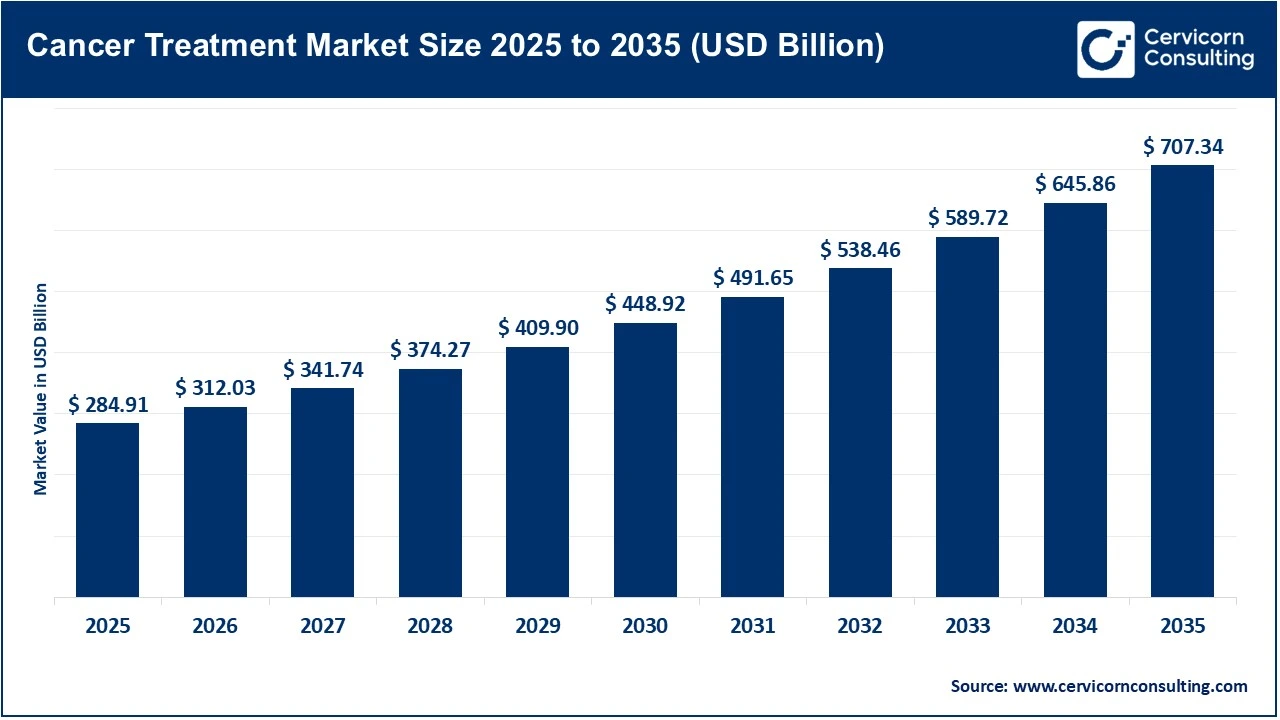
The global cancer treatment market size was valued at USD 284.91 billion in 2025 and is expected to be worth around USD 707.34 billion by 2035, exhibiting a compound annual growth rate (CAGR) of 9.5% over the forecast period from 2026 to 2035. The cancer treatment market is primarily driven by the rising global burden of cancer and the increasing aging population. According to the World Health Organization, cancer accounted for nearly 20 million new cancer cases and around 9.7 million deaths globally in 2022, with projections indicating that annual cancer cases could exceed 35 million by 2050, representing an increase of about 77% from 2022 levels. The growing prevalence of lifestyle-related risk factors such as tobacco use, obesity, alcohol consumption, sedentary lifestyles, and environmental pollution is significantly increasing cancer incidence, thereby driving demand for chemotherapy, immunotherapy, radiation therapy, and targeted therapies. Additionally, the expanding geriatric population is a major growth catalyst, as cancer risk increases substantially with age, particularly among individuals aged 60 years and above.
Another major growth factor is the rapid advancement of oncology innovation, especially in precision medicine, immunotherapy, and biomarker-driven treatments. The increasing adoption of immune checkpoint inhibitors, CAR-T cell therapies, and targeted drugs has improved treatment outcomes and accelerated oncology drug approvals worldwide. For example, the U.S. Food and Drug Administration has approved more than 20 novel oncology drugs and expanded indications in recent years, reflecting strong momentum in innovation in cancer therapeutics. Furthermore, rising healthcare expenditure, improved cancer screening programs, increasing awareness for early diagnosis, and expanding access to specialized oncology care in emerging economies are contributing significantly to market expansion. Government initiatives and investments in cancer research are also accelerating clinical trials and the commercialization of advanced treatment modalities.
Report Highlights
- By Region, North America dominated the global market with 42.3% share, supported by strong oncology R&D, high healthcare spending, rapid adoption of immunotherapy, and favorable reimbursement systems.
- By Treatment Type, the chemotherapy held the dominant share of 28.5%, owing to its broad applicability across multiple cancer indications and strong adoption in both developed and emerging healthcare markets.
- By Cancer Type, the lung cancer accounted for the highest share of 18.7%, due to high global disease prevalence, smoking-related risks, and increasing use of targeted and immunotherapy-based treatments.
- By Drug Class, the monoclonal antibodies led the segment with 26.4% share, driven by strong effectiveness in targeted treatment and expanding use in breast, blood, and lung cancers.
- By Route of Administration, injectable/intravenous (IV) segment dominated with 58.6% share, as most chemotherapy, biologics, and immunotherapies require infusion-based delivery in clinical settings.
- By End User, the hospitals segment represented highest share of 51.8%, supported by multidisciplinary oncology care, advanced treatment infrastructure, and high patient inflow.
Shift toward Precision Medicine Accelerating Cancer Treatment Market Growth
The growing shift toward precision medicine is significantly driving the cancer treatment market by enabling more personalized, effective, and targeted therapies based on a patient’s genetic and molecular profile. Unlike conventional chemotherapy, precision oncology uses biomarkers and genomic testing to identify mutations such as HER2, EGFR, BRCA, KRAS, and ALK, allowing physicians to prescribe highly targeted treatments with improved efficacy and fewer side effects. According to the National Cancer Institute, nearly 30% of cancer patients may benefit from genome-informed precision therapies, while targeted therapies and immunotherapies have demonstrated substantially higher response rates in specific cancers such as lung, breast, and melanoma.
Furthermore, the increasing adoption of companion diagnostics and next-generation sequencing (NGS) is accelerating treatment personalization; estimates indicate that the global number of genomic tests performed in oncology has expanded rapidly over the past decade. The U.S. Food and Drug Administration has also approved a growing number of biomarker-linked oncology drugs, with more than 35% of newly approved cancer drugs in recent years involving precision medicine approaches, reinforcing investment and innovation across the cancer treatment ecosystem.
Key Growth Factors
- Rising Use of Biomarker-Based Therapies: More than 70% of oncology drugs in development target specific biomarkers or molecular pathways, reflecting a strong shift toward personalized cancer care and targeted therapeutics.
- Growing Adoption of Genomic Testing & NGS: According to the National Cancer Institute, approximately 30% of cancer patients could benefit from genome-informed precision therapies, increasing demand for molecular diagnostics and mutation profiling.
- Higher Effectiveness than Traditional Chemotherapy: Targeted therapies in cancers such as HER2-positive breast cancer and EGFR-mutated lung cancer have shown improved progression-free survival and response rates, often outperforming conventional chemotherapy in selected patient groups.
- Rapid Expansion of Immunotherapy: Immunotherapy drugs such as checkpoint inhibitors have transformed treatment outcomes; for example, some melanoma and lung cancer immunotherapies have increased 5-year survival rates from below 10% to over 30–40% in certain patient populations.
- Increasing Investment in Oncology R&D: Oncology remains the largest pharmaceutical R&D area globally, accounting for nearly 30–40% of total pharmaceutical pipelines in many major drug companies.
- Growing Precision Medicine Spending: Healthcare systems are increasingly allocating budgets toward precision diagnostics, molecular testing, and targeted biologics, especially in developed markets such as the U.S., Europe, and Japan.
Report Scope
| Area of Focus |
Details |
| Market Size in 2026 |
USD 312.03 Billion |
| Market Size in 2035 |
USD 707.34 Billion |
| CAGR 2026 to 2035 |
9.50% |
| Dominant Region |
North America |
| Fastest Growing Region |
Asia-Pacific |
| Key Segments |
Treatment Type, Cancer Type, Drug Class, Route of Administration, End User, Region |
| Key Companies |
Roche, Novartis, Merck & Co., Bristol Myers Squibb, AstraZeneca, Pfizer, Johnson & Johnson, Amgen, AbbVie, Eli Lilly and Company, GSK, Takeda Pharmaceutical Company |
Recent Major Milestones
1. Merck & Co.’s Injectable Keytruda Approval (2025)
A major recent milestone in the cancer treatment market was the U.S. FDA approval of Merck’s subcutaneous (injectable) version of Keytruda in 2025, reducing administration time from roughly 30 minutes for IV infusion to just 1–2 minutes. Keytruda generated nearly USD 30 billion in annual sales, making it one of the world’s leading oncology drugs. This development is accelerating market growth by improving treatment convenience, increasing hospital efficiency, reducing infusion center burden, and expanding patient access to immunotherapy ultimately supporting wider adoption of checkpoint inhibitors in oncology.
2. AstraZeneca & Daiichi Sankyo Breast Cancer Drug Approval (2025)
In January 2025, the FDA approved Datopotamab Deruxtecan (Datroway) for HR-positive, HER2-negative metastatic breast cancer, representing another milestone in targeted oncology treatment. The therapy uses an antibody-drug conjugate (ADC) mechanism to selectively attack cancer cells while minimizing healthy tissue damage. This is driving market growth by expanding precision oncology treatment options, increasing investment in targeted biologics, and strengthening the shift away from conventional chemotherapy toward high-efficacy personalized therapies.
3. U.S. Food and Drug Administration Accelerated Oncology Approval Programs
Government initiatives aimed at speeding up cancer drug approvals have become a major market milestone. The FDA continues expanding accelerated approval and fast-track oncology pathways, helping promising therapies reach patients faster, especially for cancers with high unmet needs. Such initiatives reduce commercialization timelines that traditionally took 10–12 years, encouraging pharmaceutical companies to increase oncology R&D spending and clinical trial activity. Faster approvals are stimulating innovation in immunotherapy, CAR-T, and biomarker-based treatments, thereby accelerating overall market expansion.
4. Iovance Biotherapeutics First FDA-Approved Tumor-Infiltrating Lymphocyte (TIL) Therapy
Another major milestone was the approval of Amtagvi (lifileucel), the first tumor-derived T-cell immunotherapy for advanced melanoma. The therapy introduced a new treatment class in oncology by using a patient’s own immune cells to fight cancer after standard treatments fail. This breakthrough is driving market growth by opening opportunities in personalized cell therapies, increasing investment in advanced immuno-oncology platforms, and encouraging further commercialization of next-generation cellular cancer treatments.
Cancer Treatment Market Regional Analysis
The cancer treatment market is segmented by region into North America, Europe, Asia-Pacific, Latin America, and LAMEA. Here is a brief overview of each region:
North America Cancer Treatment Market: Driven by Advanced Oncology Innovation and Rising Cancer Burden
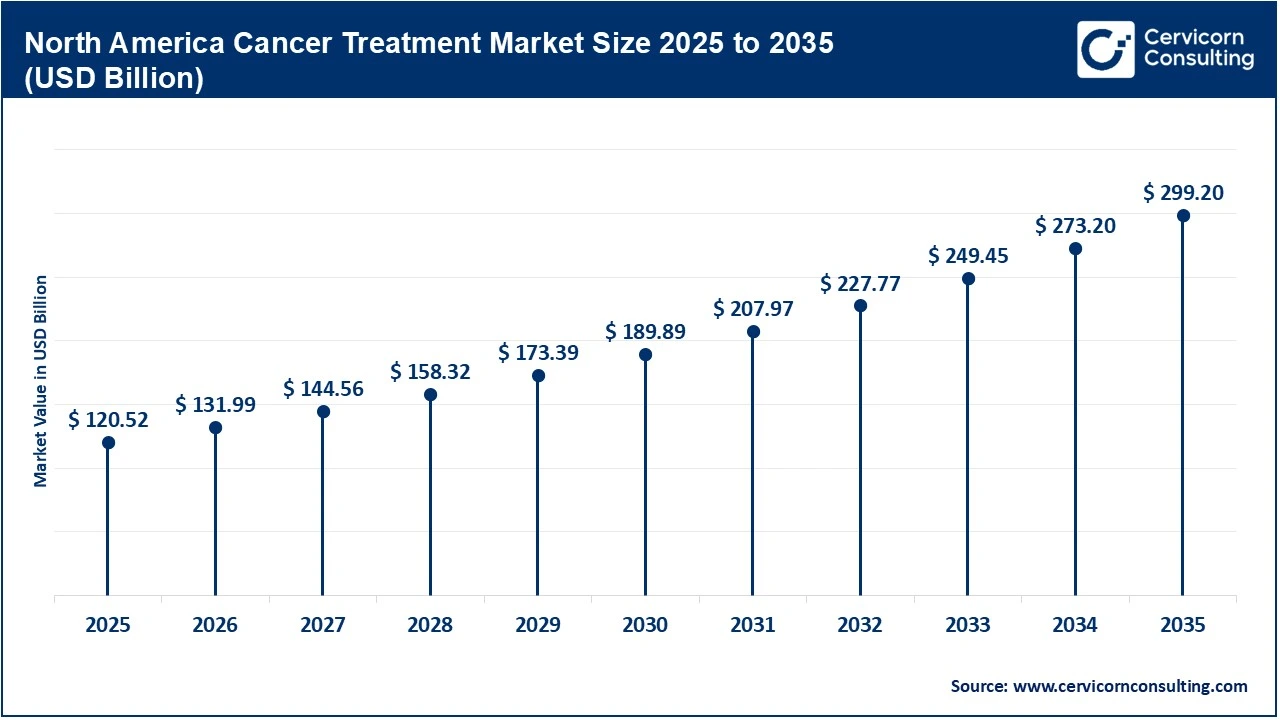
The North America cancer treatment market size was valued at USD 120.52 billion in 2025 and is expected to exceed around USD 299.20 billion by 2035.
The North America market is highly advanced and innovation-driven, supported by strong healthcare infrastructure, substantial oncology R&D spending, and rapid adoption of precision medicine and immunotherapy. The region benefits from the presence of leading pharmaceutical companies, advanced cancer research institutions, and favorable reimbursement systems that improve patient access to high-cost therapies. Increasing cancer incidence, growing use of biomarker-based targeted therapies, and rising approvals for immunotherapies and cell-based treatments are accelerating market growth. Additionally, government-led cancer initiatives, expanding screening programs, and rising investments in clinical trials are strengthening the region’s leadership in oncology treatment innovation.
United States: Strong oncology drug innovation, high healthcare expenditure, and rapid adoption of precision medicine are driving market growth.
- Cancer cases projected to exceed 2 million new diagnoses annually in the U.S.
- The National Cancer Institute invests more than USD 7 billion annually in cancer research and innovation
- Over 2,000 active oncology clinical trials are ongoing across multiple cancer indications
- Strong adoption of immunotherapy, CAR-T therapies, and biomarker-driven treatments in hospitals and specialty cancer centers
Canada: Increasing government healthcare investments and rising cancer prevalence are supporting market expansion.
- Nearly 1 in 2 Canadians are expected to develop cancer during their lifetime
- Rising investments in precision oncology, genomic testing, and cancer screening programs across provinces
- Government-backed healthcare system improving access to targeted therapies and immunotherapy
Asia-Pacific (APAC) Cancer Treatment Market: Driven by Rising Cancer Burden, Expanding Healthcare Access, and Precision Oncology Adoption
The Asia-Pacific cancer treatment market size reached at USD 63.82 billion in 2025 and is forecasted to grow around USD 158.44 billion by 2035. The Asia-Pacific market is witnessing rapid growth, driven by the rising prevalence of cancer, expanding healthcare infrastructure, and increasing government investment in oncology care. Growing aging populations, changing lifestyles, tobacco consumption, and environmental pollution are contributing to higher cancer incidence across the region. Countries are increasingly investing in advanced cancer hospitals, genomic testing, and precision medicine to improve treatment outcomes. In addition, rising awareness of early diagnosis, improving reimbursement frameworks, and increasing availability of targeted therapies and immunotherapies are accelerating market expansion. The region is also emerging as a major hub for oncology clinical trials and pharmaceutical manufacturing, strengthening long-term growth prospects.
China: Large patient population, strong healthcare reforms, and rising oncology drug innovation are driving market growth.
- China records over 4.8 million new cancer cases annually, among the highest globally
- Government initiatives under Healthy China 2030 are strengthening cancer prevention and treatment access
- Rising domestic production and approvals of targeted therapies, biosimilars, and immunotherapies
India: Growing cancer burden, improving healthcare infrastructure, and government-led cancer programs are accelerating growth.
- India reports approximately 1.4–1.5 million new cancer cases annually
- Government initiatives such as the National Programme for Prevention and Control of Cancer, Diabetes, Cardiovascular Diseases and Stroke (NPCDCS) support early diagnosis and treatment access
- Rising investment in multi-specialty oncology hospitals and affordable cancer care services
Europe Cancer Treatment Market: Driven by Strong Public Healthcare Systems and Expanding Precision Oncology Adoption
The Europe cancer treatment market size was estimated at USD 76.36 billion in 2025 and is predicted to surpass around USD 189.57 billion by 2035. The Europe market is experiencing steady growth, supported by strong public healthcare systems, rising cancer prevalence, and increasing adoption of advanced oncology therapies. The region benefits from robust government funding for cancer care, well-established reimbursement frameworks, and extensive cancer screening programs that enable early diagnosis and treatment. Growing investments in precision medicine, immunotherapy, and personalized cancer care are accelerating innovation across major European economies. In addition, increasing clinical trial activity, favorable regulatory pathways from the European Medicines Agency, and collaborative cancer research initiatives are strengthening Europe’s position in the global oncology landscape.
Germany: Advanced healthcare infrastructure, strong oncology research, and high treatment accessibility are driving market growth.
- Germany records approximately 500,000+ new cancer cases annually
- Strong adoption of precision medicine, immunotherapy, and radiation oncology technologies
- High healthcare expenditure supporting access to advanced cancer treatments
United Kingdom: Government-backed cancer strategies and rising investment in early diagnosis are accelerating market expansion.
- Around 375,000 new cancer cases diagnosed annually in the UK
- The National Health Service Long Term Plan prioritizes earlier cancer detection and faster treatment pathways
- Growing use of targeted therapies and immunotherapies across oncology care settings
Cancer Treatment Market Share, By Region, 2025 (%)
| Region |
Revenue Share, 2025 (%) |
| North America |
42.3% |
| Europe |
26.8% |
| Asia-Pacific |
22.4% |
| LAMEA |
8.5% |
LAMEA Cancer Treatment Market: Driven by Improving Healthcare Infrastructure and Rising Cancer Burden
The LAMEA cancer treatment market was valued at USD 24.22 billion in 2025 and is anticipated to reach around USD 60.12 billion by 2035. The LAMEA market is witnessing gradual growth, driven by rising cancer incidence, improving healthcare infrastructure, and increasing government efforts to expand oncology care access. Growing urbanization, aging populations, tobacco consumption, and lifestyle-related risk factors are contributing to higher cancer prevalence across the region. Governments and private healthcare providers are investing in cancer hospitals, radiotherapy centers, and diagnostic capabilities to address unmet treatment demand. In addition, rising adoption of targeted therapies, improving reimbursement frameworks in select countries, and increasing partnerships with global pharmaceutical companies are supporting market expansion. Expanding medical tourism and growing awareness of early cancer detection are further strengthening long-term market growth.
Brazil: Large patient population and expanding oncology infrastructure are driving market growth.
- Brazil reports approximately 700,000 new cancer cases annually
- Government-supported public healthcare system improving access to cancer diagnosis and treatment
- Rising investment in radiotherapy centers, oncology hospitals, and targeted therapies
- Increasing partnerships between pharmaceutical companies and cancer institutes supporting clinical research
Saudi Arabia: Strong healthcare investments and national transformation initiatives are supporting oncology growth.
- Rising cancer incidence linked to aging population and lifestyle changes
- Growing adoption of precision medicine, robotic surgery, and targeted therapies
- Expansion of specialized cancer centers and genomic testing capabilities
- Increasing partnerships with international healthcare providers for advanced oncology treatment
Cancer Treatment Market Segmental Analysis
The cancer treatment market is segmented into treatment type, cancer type, drug class, route of administration, end user, and geography.
Treatment Type Analysis
Chemotherapy dominates the cancer treatment market due to its widespread use across multiple cancer indications, including breast, lung, colorectal, and blood cancers. It remains a foundational treatment option, particularly in low- and middle-income countries where access to advanced biologics and precision therapies is limited. Chemotherapy is frequently used as a first-line or combination treatment alongside surgery and radiation. Its established clinical protocols, broad applicability, and extensive hospital adoption continue to support strong market demand despite the emergence of targeted alternatives.
Cancer Treatment Market Share, By Treatment Type, 2025 (%)
| Treatment Type |
Revenue Share, 2025 (%) |
| Chemotherapy |
28.5% |
| Immunotherapy |
18.2% |
| Targeted Therapy |
17.4% |
| Hormonal Therapy |
9.3% |
| Radiation Therapy |
8.1% |
| Surgery |
6.7% |
| Stem Cell / Bone Marrow Transplantation |
3.2% |
| Precision Medicine / Gene Therapy |
2.9% |
| Combination Therapy |
4.1% |
| Others |
1.6% |
Immunotherapy is the fastest-growing segment owing to its ability to enhance the immune system’s capacity to identify and destroy cancer cells with improved survival outcomes. The increasing adoption of checkpoint inhibitors, CAR-T therapies, and monoclonal antibodies in treating melanoma, lung, and blood cancers is accelerating growth. Rising regulatory approvals, expanding clinical indications, and increasing physician preference for therapies with fewer side effects than chemotherapy are driving demand. Growing investment in immuno-oncology research further strengthens this segment’s rapid expansion.
Cancer Type Analysis
Lung cancer dominates the cancer treatment market due to its high global incidence and mortality rate, creating substantial demand for therapeutics and long-term disease management. The rising prevalence of smoking, air pollution, and occupational exposure to carcinogens contributes significantly to patient volume. In addition, lung cancer treatment often involves costly targeted therapies and immunotherapies, increasing treatment spending. The availability of biomarker-based treatments for EGFR, ALK, and PD-L1 mutations further supports market dominance within this segment.
Cancer Treatment Market, By Cancer Type, 2025 (%)
| Cancer Type |
Revenue Share, 2025 (%) |
| Lung Cancer |
18.7% |
| Breast Cancer |
16.3% |
| Colorectal Cancer |
11.2% |
| Prostate Cancer |
8.6% |
| Blood Cancer (Leukemia, Lymphoma, Myeloma) |
10.1% |
| Liver Cancer |
5.2% |
| Cervical Cancer |
3.8% |
| Ovarian Cancer |
3.4% |
| Pancreatic Cancer |
3.9% |
| Skin Cancer (Melanoma) |
4.7% |
| Brain Tumor / CNS Cancer |
2.8% |
| Gastric Cancer |
4.1% |
| Kidney Cancer |
3.3% |
| Bladder Cancer |
2.9% |
| Others |
1.0% |
Breast cancer is the fastest-growing segment due to increasing awareness, screening programs, and advancements in personalized treatment approaches. Growing diagnosis rates, especially in younger populations and emerging economies, are contributing to treatment demand. Innovations in HER2-targeted therapies, hormonal drugs, and immunotherapy have significantly improved survival outcomes and expanded treatment options. Rising healthcare investments, strong pipeline activity, and increasing use of precision medicine for metastatic and hormone receptor-positive breast cancer are accelerating segment growth.
Drug Class Analysis
Monoclonal antibodies dominate the market because of their high efficacy in targeted cancer treatment and broad use across several cancer types. Drugs such as checkpoint inhibitors and HER2-targeted antibodies have become standard treatments for breast, lung, and blood cancers. Their ability to selectively target tumor cells while reducing damage to healthy tissue has increased physician preference. Continuous product approvals and growing biologics adoption in developed healthcare systems continue to strengthen this segment’s leading position.
Cancer Treatment Market, By Drug Class, 2025 (%)
| Drug Class |
Revenue Share, 2025 (%) |
| Monoclonal Antibodies |
26.4% |
| Cytotoxic Drugs |
21.7% |
| Immune Checkpoint Inhibitors |
16.8% |
| Tyrosine Kinase Inhibitors (TKIs) |
12.5% |
| Hormonal Drugs |
8.4% |
| PARP Inhibitors |
4.3% |
| Cell & Gene Therapies (CAR-T, TCR) |
3.9% |
| Biosimilars |
4.5% |
| Others |
1.5% |
Cell and gene therapies are witnessing the fastest growth due to their transformative potential in difficult-to-treat and relapsed cancers. CAR-T therapies have shown remarkable effectiveness in blood cancers such as lymphoma and leukemia, leading to increasing clinical adoption. Rising investment in personalized medicine, strong biotechnology innovation, and expanding regulatory support are accelerating commercialization. Moreover, advancements in gene engineering and growing research into solid tumors are expected to further boost growth opportunities in this segment.
Route of Administration Analysis
Injectable and intravenous administration dominates the market as most chemotherapy drugs, biologics, immunotherapies, and monoclonal antibodies are delivered through infusion-based methods. Hospitals and cancer centers widely prefer IV delivery due to controlled dosage, faster therapeutic action, and physician supervision during treatment. The increasing use of infusion-based immunotherapies and targeted biologics further supports market dominance. Additionally, advanced-stage cancer patients frequently require IV medications, reinforcing the segment’s significant contribution to overall treatment demand.
Cancer Treatment Market, By Route of Administration, 2025 (%)
| Route of Administration |
Revenue Share, 2025 (%) |
| Injectable / Intravenous (IV) |
58.6% |
| Oral |
28.1% |
| Subcutaneous |
6.2% |
| Intramuscular |
3.1% |
| Topical |
1.4% |
| Others |
2.6% |
The oral route of administration is growing rapidly due to increasing patient preference for convenient, home-based treatment options. Oral targeted therapies and hormonal drugs are becoming increasingly common, particularly in breast, prostate, and blood cancers. This route reduces hospital visits, lowers healthcare burden, and improves patient adherence to long-term treatment regimens. Rising development of oral oncology drugs, combined with advancements in personalized medicine and telehealth monitoring, is accelerating the segment’s market growth.
End User Analysis
Hospitals dominate the cancer treatment market because they provide comprehensive oncology care, including chemotherapy, surgery, radiation therapy, and advanced diagnostic services under one setting. Most cancer treatments require multidisciplinary care teams, intensive monitoring, and specialized equipment, making hospitals the primary treatment centers. High patient inflow, access to oncology specialists, and availability of reimbursement support further strengthen this segment. In addition, hospitals remain the leading providers for complex procedures such as stem cell transplantation and immunotherapy infusions.
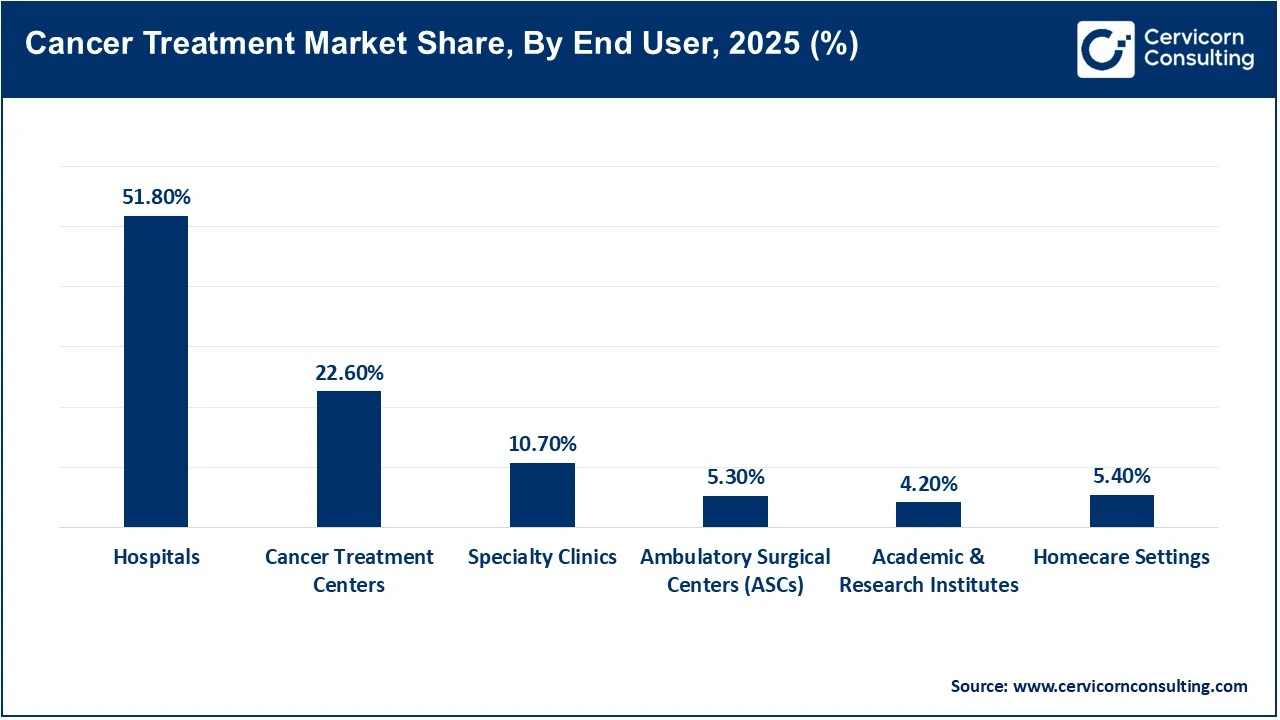
Cancer treatment centers are emerging as the fastest-growing end-user segment due to rising demand for specialized oncology services and patient-centric care. These facilities offer dedicated expertise, advanced treatment technologies, and access to clinical trials, improving treatment efficiency and outcomes. Increasing investments in standalone oncology centers, growing cancer prevalence, and shorter waiting times compared to hospitals are driving patient preference. Furthermore, the expansion of precision medicine and outpatient cancer care models is accelerating growth in this segment.
Cancer Treatment Market Top Companies
Recent Developments
- In April 2025, Visa offered Apple a USD 100 million deal to secure the Apple Card partnership, aiming to strengthen its position in the contactless and digital payments ecosystem by expanding its role in mobile-first transactions.
- In May 2025, PayPal launched tap-to-pay functionality for iPhone users in Germany, enabling NFC-based in-store Cancer Treatments and expanding its presence in physical retail transactions.
- In December 2025, Apple expanded its “Tap to Pay on iPhone” feature to Hong Kong, allowing merchants to accept Cancer Treatments without additional hardware, significantly reducing barriers for small businesses.
Market Segmentation
By Treatment Type
- Chemotherapy
- Immunotherapy
- Targeted Therapy
- Hormonal Therapy
- Radiation Therapy
- Surgery
- Stem Cell / Bone Marrow Transplantation
- Precision Medicine / Gene Therapy
- Combination Therapy
- Others
By Cancer Type
- Breast Cancer
- Lung Cancer
- Colorectal Cancer
- Prostate Cancer
- Blood Cancer (Leukemia, Lymphoma, Myeloma)
- Liver Cancer
- Cervical Cancer
- Ovarian Cancer
- Pancreatic Cancer
- Skin Cancer (Melanoma)
- Brain Tumor / CNS Cancer
- Gastric Cancer
- Kidney Cancer
- Bladder Cancer
- Others
By Drug Class
- Cytotoxic Drugs
- Monoclonal Antibodies
- Immune Checkpoint Inhibitors
- Tyrosine Kinase Inhibitors (TKIs)
- PARP Inhibitors
- Hormonal Drugs
- Cell & Gene Therapies (CAR-T, TCR)
- Biosimilars
- Others
By Route of Administration
- Oral
- Injectable / Intravenous (IV)
- Subcutaneous
- Intramuscular
- Topical
- Others
By End User
- Hospitals
- Cancer Treatment Centers
- Specialty Clinics
- Ambulatory Surgical Centers (ASCs)
- Academic & Research Institutes
- Homecare Settings
By Region
- North America
- Europe
- Asia-Pacific
- LAMEA