Biomarker Discovery Market Size and Growth Outlook 2026 to 2035
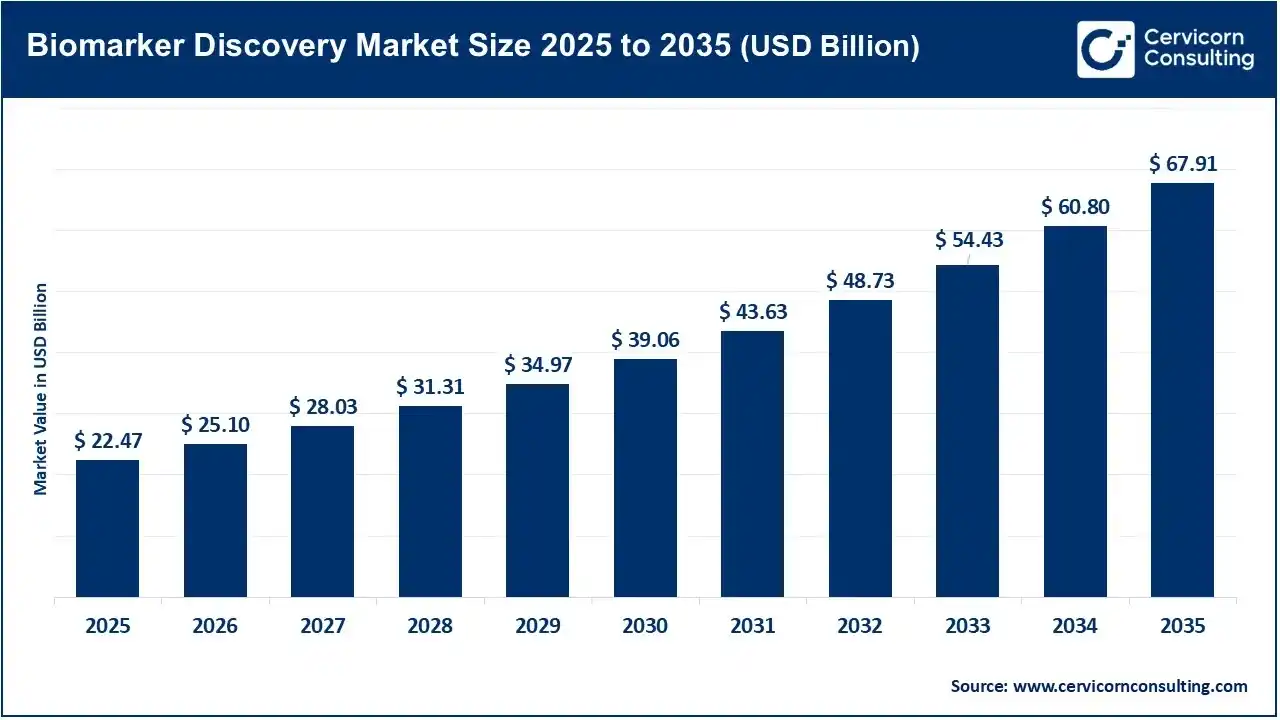
The global biomarker discovery market size was valued at USD 22.47 billion in 2025 and is expected to exceed around USD 67.91 billion by 2035, growing at a compound annual growth rate (CAGR) of 11.7% over the forecast period 2026 to 2035. The increasing adoption of precision medicine and biomarker-guided drug development is a major growth driver for the biomarker discovery market.
Biomarkers help pharmaceutical companies identify responsive patient populations, evaluate treatment response, monitor safety, and improve clinical-trial efficiency. The FDA states that biomarkers can help reduce the time and cost of clinical trials and support patient selection for precision medicine. The expansion of biomarker-defined oncology is particularly significant: a 2024 analysis of 47,271 solid tumors found that tumors carrying standard-of-care predictive biomarkers increased from 8.9% in 2017 to 31.6% in 2022. In addition, the NCI clinical-trial analysis identified 5,044 biomarker-eligible interventional trials among 20,894 trials, covering 630 biomarkers across 36 cancer subtypes, demonstrating the expanding role of biomarkers in clinical research.
Technological advances in next-generation sequencing (NGS), proteomics, metabolomics, liquid biopsy, multi-omics, artificial intelligence, and machine learning are further accelerating biomarker discovery. These technologies enable researchers to identify complex molecular signatures and previously difficult-to-detect disease markers from genomic, protein, metabolic, and circulating tumor data. The FDA issued final guidance in November 2024 on the use of circulating tumor DNA (ctDNA) biomarkers in early-stage solid-tumor drug development, including molecular residual disease assessment, supporting greater standardization of biomarker applications. Meanwhile, oncology drug development continues to demonstrate strong biomarker dependence: in an analysis of 16 FDA-approved cancer drugs in 2025, 10 (63%) used biomarker-based enrichment trial designs, while 12 (75%) used objective response rate as the primary endpoint. These developments, alongside growing demand for companion diagnostics and targeted therapies, are expanding investment in biomarker identification, validation, and translational research.
Report Highlights
- North America accounts for 42.5% share, supported by advanced precision-medicine infrastructure, pharmaceutical R&D, and widespread adoption of genomic and proteomic technologies.
- Consumables dominate the product segment with 55.5% share, supported by recurring demand for reagents, assay kits, and sample-preparation materials.
- Protein biomarkers account for 34.6% share, reflecting extensive applications in disease identification, therapeutic development, and clinical research.
- Genomics leads the technology segment with 35.3% share, driven by sequencing-based biomarker identification and expanding molecular profiling applications.
- Drug Discovery & Development holds 38.7% share, supported by increasing use of biomarkers for target identification, patient stratification, and treatment-response assessment.
- Pharmaceutical & Biotechnology Companies represent 42.8% share, reflecting substantial biomarker research investments throughout drug-development pipelines.
What is Biomarker Discovery?
Biomarker discovery involves identifying quantifiable biological molecules, features, or molecular patterns that indicate disease presence, progression, treatment efficacy, or biological responses to therapy. This process leverages technologies such as genomics, proteomics, metabolomics, transcriptomics, mass spectrometry, next-generation sequencing, and multi-omics to identify potential biomarkers from samples including blood, tissue, urine, and other biofluids. These findings aid in early disease detection, patient stratification, personalised medicine, drug development, companion diagnostics, and treatment tracking. Recent progress in single-cell and multi-omics analysis allows researchers to study molecular differences at higher resolution, including rare cell populations and disease-specific molecular signatures.
Biomarker Discovery Market Recent Milestones
| Year |
Company / Organization |
Recent Milestone |
Market Relevance |
| Nov. 2024 |
FDA |
Issued final guidance on using ctDNA as a biomarker in early-stage solid-tumor drug development and molecular residual disease assessment. |
Supports standardization and wider clinical adoption of liquid-biopsy biomarkers. |
| 2025 |
Research community |
Plasma-proteomics benchmarking compared 8 platforms and identified 13,011 unique plasma proteins across the evaluated technologies. |
Demonstrates expanding analytical depth for protein biomarker discovery. |
| Apr. 2026 |
FDA |
FDA Grand Rounds focused on clinical omics biomarker discovery and validation, including metabolomics, proteomics, miRNA, and blood-based applications. |
Highlights increasing regulatory and translational focus on omics-driven biomarkers. |
| May 2026 |
Natera / FDA |
FDA approved Signatera CDx, an NGS-based ctDNA assay for detecting molecular residual disease in muscle-invasive bladder cancer. |
Strengthens the role of ctDNA biomarkers in treatment selection and monitoring. |
| May 2026 |
Genentech / FDA |
FDA approved atezolizumab for bladder cancer patients with ctDNA molecular residual disease identified using an FDA-authorized test. |
Represents a direct clinical application of biomarker-guided treatment selection. |
| June 2026 |
Guardant Health / FDA |
Guardant360 CDx received an FDA authorization for identifying BRAF V600E mutations in colorectal cancer. |
Expands companion-diagnostic applications for genomic biomarkers. |
| Aug. 2026 |
Johns Hopkins |
Researchers reported that a blood-based ctDNA test could identify immunotherapy response in advanced lung cancer within weeks of treatment. |
Demonstrates growing potential for real-time treatment-response biomarkers. |
Biomarker Discovery Market Dynamics
Market Drivers
1. Increasing Adoption of Precision Medicine
The growing use of precision medicine is increasing demand for biomarkers that can identify suitable patient populations and guide treatment decisions. Biomarker-based approaches can improve clinical trial design, treatment selection, and therapeutic monitoring. A 2026 review of precision-medicine development found that more than 30 recent FDA-approved new drug applications were examined to identify factors associated with successful biomarker-guided development. The review found that successful programs commonly used clearly defined biomarkers linked to drug mechanisms, particularly in oncology and rare diseases.
2. Integration of AI and Multi-Omics Technologies
Rapid integration of artificial intelligence with genomics, proteomics, metabolomics, imaging, and clinical datasets is accelerating biomarker identification. Modern clinical datasets can contain tens of thousands of clinicogenomic measurements per patient, creating opportunities for AI to detect molecular patterns that conventional analysis may overlook. In a 2025 study, an AI predictive-biomarker framework retrospectively improved patient selection in phase 3 immuno-oncology data, with biomarker-identified patients showing a 15% improvement in survival risk compared with the original trial population.
Market Restraints
1. High Cost of Discovery and Clinical Validation
High expenditure associated with sample collection, advanced instrumentation, analytical validation, clinical studies, and regulatory submissions restricts biomarker development, particularly for smaller biotechnology companies. Advanced NGS, mass spectrometry, proteomics, and multi-omics workflows require specialized equipment and skilled personnel, further increasing costs. Estimates cited in recent literature indicate that developing and commercializing a typical FDA-reviewed in-vitro diagnostic can require approximately USD 20 - 100 million and 3–7 years, creating significant financial barriers before a biomarker reaches routine clinical use.
2. Limited Clinical Translation of Discovered Biomarkers
A major restraint is the difficulty of converting promising research biomarkers into clinically validated and routinely used tests. Differences in sample handling, analytical platforms, patient populations, and validation methodologies can reduce reproducibility and clinical confidence. Recent literature estimates that only approximately 1–2% of published biomarkers achieve clinical adoption, illustrating the substantial gap between biomarker discovery and practical healthcare implementation. Consequently, companies must invest in larger validation cohorts, standardized analytical procedures, and clinical evidence before biomarkers can generate sustainable commercial value.
Market Opportunities
1. Expansion of Liquid Biopsy and Non-Invasive Biomarkers
The growing development of liquid biopsy creates opportunities for discovering minimally invasive biomarkers from circulating tumor DNA, RNA, proteins, and other blood components. These approaches can enable repeated sampling and longitudinal monitoring without requiring invasive tissue collection. The opportunity is expanding beyond oncology as biomarker-based diagnostics increasingly enter cardiovascular, neurological, infectious, and rare-disease applications. A 2026 review specifically identified NGS and liquid biopsy as technologies reshaping companion-diagnostic development while highlighting their potential to improve precision medicine and treatment monitoring.
2. Growth of AI-Enabled Predictive Biomarker Discovery
AI and machine learning provide an opportunity to integrate high-dimensional molecular, clinical, imaging, and real-world datasets to identify predictive biomarkers more efficiently. AI can potentially reduce manual analysis and uncover combinations of biomarkers associated with treatment response rather than relying on single molecular indicators. A 2025 study demonstrated that an AI framework could identify predictive biomarkers from real-world and clinical trial data and generate interpretable signatures for clinical decision-making. This creates opportunities for pharmaceutical companies to improve patient stratification and develop more targeted clinical trials.
Market Challenges
1. Standardization and Regulatory Complexity
Lack of standardized analytical procedures, assay platforms, cutoff values, and validation methodologies remains a major challenge for biomarker commercialization. Multi-omics biomarkers are particularly difficult because high-dimensional datasets can introduce substantial variability and complicate reproducibility during regulatory review. A 2025 analysis identified clinical relevance, data quality, and bioanalytical standardization among the principal regulatory barriers affecting omics biomarkers. Differences in companion-diagnostic requirements across the US, Europe, and Japan can further complicate global development and regulatory submissions.
2. Patient Diversity, Data Quality, and Reproducibility
Biomarker discovery increasingly depends on large and diverse datasets, but differences in patient demographics, disease characteristics, sample collection, and data quality can reduce the generalizability of discovered biomarkers. AI-based approaches face additional challenges involving population diversity and access to harmonized datasets. Recent research highlights population diversity, harmonized data availability, costly clinical studies, evolving AI regulations, and scalable diagnostic infrastructure as important barriers to translating AI-derived biomarkers into clinical practice. These limitations can delay validation and restrict adoption across healthcare settings.
Biomarker Discovery Market Regional Analysis
The biomarker discovery market is segmented by region into North America, Europe, Asia-Pacific, Latin America, and LAMEA. Here is a brief overview of each region:
North America Biomarker Discovery Market: Driven by Precision Medicine, Advanced Omics Technologies, Biopharmaceutical R&D, Clinical Trials, and Expanding Biomarker Testing
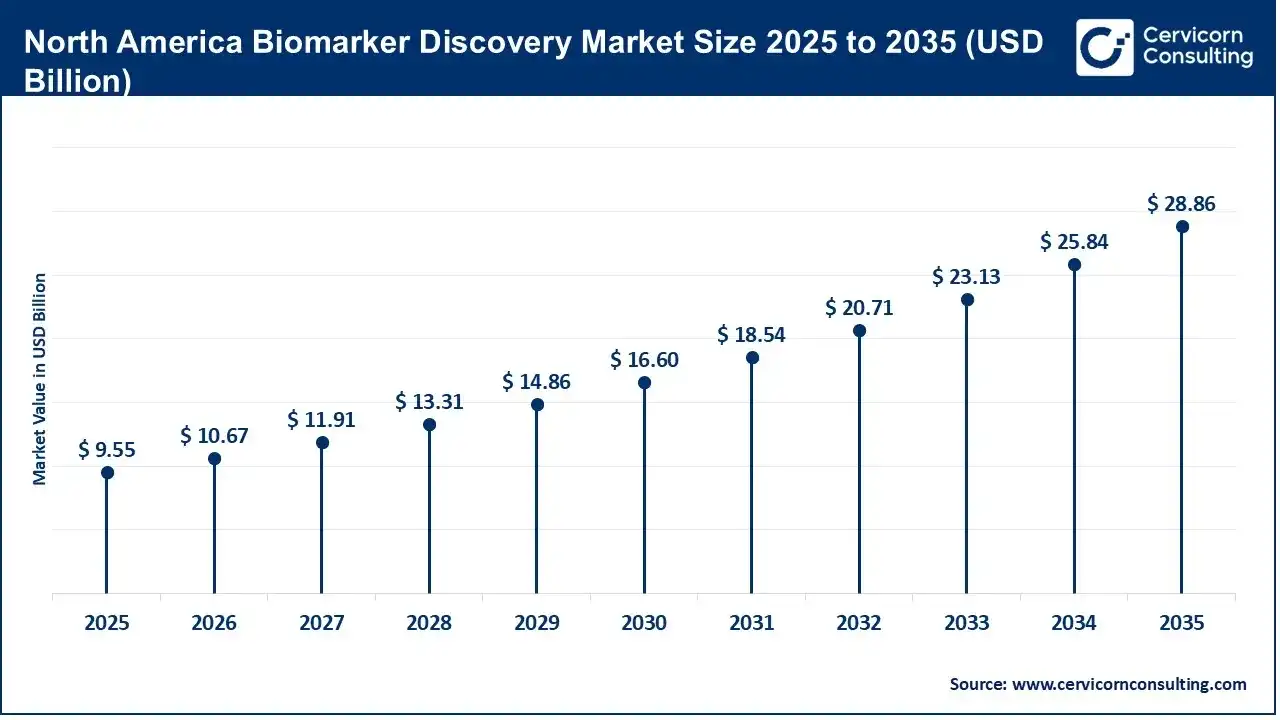
The North America biomarker discovery market size was valued at USD 9.55 billion in 2025 and is expected to reach USD 28.86 billion by 2035. North America is a major region, supported by sophisticated pharmaceutical and biotechnology ecosystems, advanced genomics and proteomics infrastructure, extensive clinical research, and strong adoption of precision medicine. The United States leads regional activity through its concentration of pharmaceutical companies, biotechnology firms, academic research centers, diagnostic laboratories, and CROs. Canada is also expanding biomarker research through precision-oncology initiatives, genomics programs, and university-led translational research. Increasing integration of next-generation sequencing, liquid biopsy, single-cell analysis, artificial intelligence, and multi-omics is creating additional opportunities for biomarker identification and validation across oncology, neurological, cardiovascular, and rare diseases.
United States: Precision Medicine, Biopharmaceutical R&D, AI-Enabled Discovery, and Liquid Biopsy Drive Market Demand
- The U.S. National Cancer Institute's Cancer Moonshot initiative has established major programs supporting biomarker development, cancer genomics, early detection, and precision oncology research.
- The FDA has authorized more than 50 next-generation sequencing-based oncology tests for clinical use, supporting broader utilization of genomic biomarkers in cancer care.
- The U.S. All of Us Research Program has enrolled more than 750,000 participants, with genomic and health information being used to investigate relationships between genetics, disease, and treatment response.
Canada: Genomic Medicine, National Research Programs, and Precision Oncology Strengthen Biomarker Discovery
- Canada's biomarker ecosystem is supported by organizations such as the Canadian Institutes of Health Research (CIHR), Genome Canada, university research centers, and specialized cancer institutes.
- Genome Canada has supported large-scale genomics research involving more than 1,000 researchers across approximately 200 projects, strengthening national capabilities in genomics and translational research.
Asia-Pacific (APAC) Biomarker Discovery Market: Driven by Genomics Expansion, Precision Medicine, Biopharmaceutical R&D, Molecular Diagnostics, and Increasing Clinical Research
The Asia-Pacific biomarker discovery market size was estimated at USD 4.36 billion in 2025 and is expected to surpass around USD 13.17 billion by 2035. Asia-Pacific is a rapidly developing region, supported by expanding healthcare infrastructure, increasing genomic research, growing pharmaceutical and biotechnology capabilities, and rising adoption of precision medicine. China, Japan, India, South Korea, Singapore, and Australia are important regional centers, with each developing specialized capabilities across genomics, molecular diagnostics, clinical research, and bioinformatics. In 2026, the region's diagnostics ecosystem included more than 2,000 diagnostics companies and manufacturers across six major markets, demonstrating the expanding infrastructure available for biomarker research and clinical translation.
China: Large Patient Population, Genomics Investment, Biopharmaceutical Expansion, and Clinical Research Drive Market Demand
- China is the leading biomarker market in Asia-Pacific, supported by its large and diverse patient population, expanding biopharmaceutical industry, and increasing clinical-trial activity.
- The country has developed strong capabilities in genomics, molecular diagnostics, oncology testing, and neurodegenerative-disease diagnostics, creating substantial opportunities for biomarker discovery.
- China has more than 1,400 IVD manufacturers, providing a broad ecosystem for molecular testing, assay development, and biomarker commercialization.
Japan: Advanced Healthcare Infrastructure, Translational Research, Aging Population, and Precision Oncology Support Market Development
- Japan has a highly developed healthcare and research ecosystem supported by pharmaceutical companies, universities, hospitals, diagnostic laboratories, and specialized research institutes.
- The country has approximately 360 IVD manufacturers, supporting a mature ecosystem for molecular diagnostics, laboratory testing, and biomarker-related technologies.
Europe Biomarker Discovery Market: Driven by Precision Medicine, Genomic Data Infrastructure, Oncology Research, Multi-Omics Adoption, and Strong Academic–Industry Collaboration
The Europe biomarker discovery market size was accounted for USD 6.36 billion in 2025 and is projected to hit around USD 19.22 billion by 2035. Europe is a major region, supported by advanced healthcare systems, established pharmaceutical and biotechnology industries, extensive academic research capabilities, and growing adoption of precision medicine. The European Union's 1+ Million Genomes initiative involves 25 EU Member States plus Norway, creating a coordinated framework for secure access to genomic and clinical data for research and personalized healthcare. The European Genomic Data Infrastructure is also designed to provide access to a network of more than 1 million genome sequences, supporting biomarker research across cancer, rare diseases, infectious diseases, and other conditions.
Germany: Strong Pharmaceutical R&D, Genomics Infrastructure, Precision Oncology, and Translational Research Support Market Demand
- Germany has one of Europe's strongest pharmaceutical and academic research ecosystems, supporting biomarker discovery across oncology, immunology, rare diseases, and neurological disorders.
- The country is participating in the 1+ Million Genomes initiative, strengthening cross-border genomic data access and enabling larger datasets for biomarker research.
United Kingdom: Genomic Medicine, National Health Infrastructure, Biobank Resources, and Precision Healthcare Drive Market Development
- The United Kingdom has a mature genomics ecosystem supported by the NHS, universities, biotechnology companies, and specialized research organizations.
- The UK Biobank has whole-genome sequencing data for approximately 500,000 participants, creating a substantial resource for genetic association studies and biomarker discovery.
- The country's integration of genomics into healthcare provides opportunities for translating research biomarkers into diagnostic and treatment-selection applications.
Biomarker Discovery Market Share, By Region, 2025 (%)
| Region |
Revenue Share, 2025 (%) |
| North America |
42.5% |
| Europe |
28.3% |
| Asia-Pacific |
19.4% |
| LAMEA |
9.8% |
LAMEA Biomarker Discovery Market: Driven by Precision Medicine, Genomics, Oncology Research, and Expanding Molecular Diagnostics
The LAMEA biomarker discovery market was valued at USD 2.20 billion in 2025 and is anticipated to reach USD 6.66 billion by 2035. LAMEA is an emerging region, supported by increasing genomic research, precision medicine initiatives, cancer diagnostics, and clinical research investments. Adoption remains uneven across Latin America, the Middle East, and Africa because of differences in healthcare infrastructure, reimbursement, laboratory capacity, and availability of specialized genomic professionals. However, growing biobanks, multi-omics research, AI-enabled diagnostics, and collaborations between governments, universities, pharmaceutical companies, and research organizations are strengthening the regional biomarker ecosystem.
Latin America: Expanding Genomic Research and Precision Oncology
- Brazil: Brazil represents an important hub for biomarker discovery, supported by university research centers, molecular diagnostic laboratories, pharmaceutical research, and precision-oncology programs. Single-cell and genomics initiatives are also generating more representative datasets for AI-enabled precision medicine.
- Mexico: Mexico is expanding molecular diagnostics and oncology research through collaborations among hospitals, universities, diagnostic laboratories, and pharmaceutical companies. Biomarker testing is increasingly relevant for targeted therapies and clinical research.
Middle East: Government-Led Genomics and Precision Medicine Initiatives
- Saudi Arabia: National investments in genomics, molecular diagnostics, and precision healthcare are supporting biomarker research, particularly for inherited diseases, oncology, and population-specific genomic studies.
- United Arab Emirates: The UAE is developing advanced healthcare and genomics infrastructure, with precision medicine increasingly connected to digital health, molecular diagnostics, and clinical research.
Biomarker Discovery Market Segmental Analysis
The biomarker discovery market is segmented into product, biomarker type, technology, application, end user, and geography.
Product Analysis
Consumables hold the leading position because biomarker discovery workflows require continuous use of reagents, assay kits, antibodies, buffers, sample-preparation materials, and laboratory plates. Their recurring consumption across genomics, proteomics, metabolomics, and immunoassay workflows generates consistent demand from pharmaceutical companies, biotechnology firms, CROs, and research institutions. High-throughput screening and increasing numbers of biomarker experiments further increase consumable utilization. The relatively shorter replacement cycle compared with instruments also supports the segment’s strong revenue contribution across biomarker discovery laboratories.
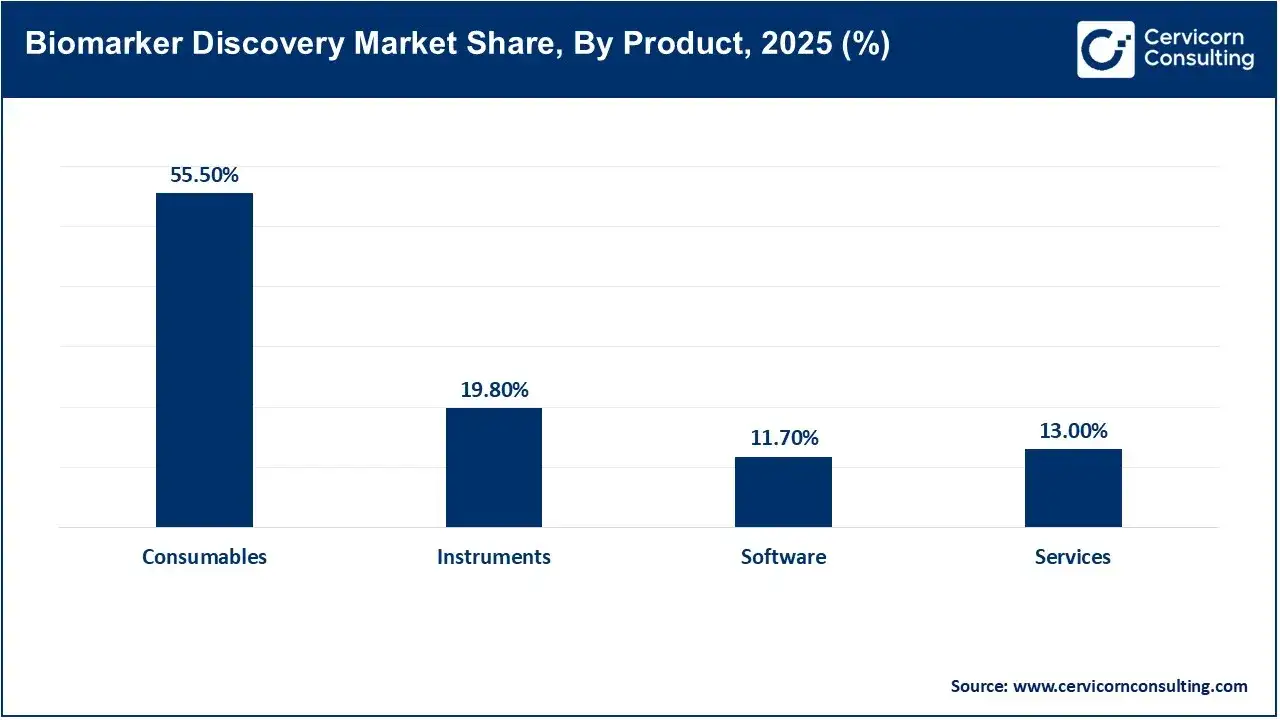
Software is the fastest-growing product segment as biomarker discovery increasingly depends on sophisticated bioinformatics, artificial intelligence, machine learning, and multi-omics data-analysis platforms. Researchers generate large volumes of genomic, proteomic, transcriptomic, and clinical data that require specialized tools for processing, visualization, statistical analysis, and biomarker identification. Cloud-based platforms are also improving collaboration between pharmaceutical companies, CROs, and academic laboratories. Increasing adoption of AI-assisted biomarker discovery is therefore accelerating demand for advanced analytical software and integrated data-management solutions.
Biomarker Type Analysis
Protein biomarkers represent the leading biomarker type because proteins directly reflect biological processes, disease pathways, cellular activity, and therapeutic responses. They are extensively investigated in oncology, cardiovascular disorders, neurological diseases, inflammatory conditions, and drug-development programs. Advances in mass spectrometry, immunoassays, antibody-based technologies, and multiplex protein analysis are improving the ability to identify and quantify protein signatures. Their compatibility with established laboratory workflows and clinical testing platforms further supports widespread use across discovery research, validation studies, and translational medicine.
Biomarker Discovery Market, By Biomarker Type, 2025 (%)
| Biomarker Type |
Revenue Share, 2025 (%) |
| Protein Biomarkers |
34.6% |
| Genetic Biomarkers |
28.8% |
| Metabolic Biomarkers |
14.9% |
| Cellular Biomarkers |
9.7% |
| Epigenetic Biomarkers |
6.8% |
| Lipid Biomarkers |
5.2% |
Genetic biomarkers are experiencing rapid growth because advances in next-generation sequencing and molecular profiling enable researchers to identify mutations, variants, gene signatures, and inherited disease-associated alterations. Their increasing applications in precision oncology, pharmacogenomics, rare-disease research, and companion diagnostics are driving demand. Falling sequencing costs and improvements in bioinformatics are also making genomic analysis more accessible. Furthermore, pharmaceutical companies increasingly use genetic information to stratify patients and identify individuals most likely to respond to targeted therapies, supporting continued expansion of this segment.
Technology Analysis
Genomics dominates biomarker discovery technologies because it provides comprehensive information about genetic mutations, variants, copy-number alterations, and other molecular changes associated with disease. Next-generation sequencing has become an important research tool for identifying clinically relevant genomic signatures and supporting patient stratification. Genomic analysis is particularly important in oncology, rare diseases, inherited disorders, and precision medicine. Increasing availability of sequencing platforms, expanding genomic databases, and improvements in computational analysis are strengthening the use of genomics across pharmaceutical research and clinical biomarker programs.
Biomarker Discovery Market, By Technology, 2025 (%)
| Technology |
Revenue Share, 2025 (%) |
| Genomics |
35.3% |
| Proteomics |
22.7% |
| Metabolomics |
12.8% |
| Transcriptomics |
10.4% |
| Epigenomics |
6.9% |
| Lipidomics |
4.8% |
| Immunoassays |
4.1% |
| Others |
3.0% |
Proteomics is the fastest-growing technology segment as researchers increasingly seek direct measurements of proteins and protein modifications that cannot be completely inferred from genomic information. High-resolution mass spectrometry, multiplex assays, and automated protein-analysis platforms are improving sensitivity and throughput. Proteomics is particularly valuable for discovering disease-associated protein signatures and pharmacodynamic biomarkers. Its integration with genomics and metabolomics through multi-omics workflows is further expanding applications. Pharmaceutical companies are increasingly using proteomic profiling to understand drug mechanisms, therapeutic response, and disease biology.
Application Analysis
Drug Discovery & Development represents the largest application because biomarkers are used throughout pharmaceutical research, including target identification, mechanism-of-action studies, patient selection, pharmacodynamic assessment, efficacy evaluation, and safety monitoring. Biomarker information can help researchers identify appropriate patient populations and design more targeted clinical trials. Pharmaceutical and biotechnology companies increasingly incorporate biomarker strategies into development programs for oncology, immunology, neurological disorders, and rare diseases. This broad utilization across multiple stages of drug development supports the segment's leading position within the market.
Biomarker Discovery Market, By Application, 2025 (%)
| Application |
Revenue Share, 2025 (%) |
| Drug Discovery & Development |
38.7% |
| Clinical Diagnostics |
22.4% |
| Personalized Medicine |
18.6% |
| Companion Diagnostics |
11.9% |
| Disease Risk Assessment |
5.1% |
| Others |
3.3% |
Companion Diagnostics is the fastest-growing application as targeted therapies increasingly depend on biomarkers to determine whether a patient is likely to benefit from a specific treatment. Biomarker discovery enables identification of genomic, protein, or molecular characteristics that can subsequently support diagnostic test development. Expansion of precision oncology is particularly important because therapies targeting specific mutations or molecular pathways frequently require patient-selection tests. Increasing collaboration between pharmaceutical companies and diagnostic developers is also supporting integrated drug-diagnostic development and accelerating demand for clinically validated biomarkers.
End User Analysis
Pharmaceutical and biotechnology companies account for the leading end-user position because they conduct extensive biomarker research throughout drug discovery and clinical development. These organizations use biomarkers for identifying therapeutic targets, understanding disease mechanisms, selecting clinical-trial participants, monitoring treatment response, and developing companion diagnostics. Increasing investment in precision medicine and targeted therapies is strengthening internal biomarker programs. Large pharmaceutical companies also maintain advanced genomic, proteomic, and bioinformatics capabilities, enabling them to integrate biomarker discovery into broader research and development pipelines.
Biomarker Discovery Market, By End User, 2025 (%)
| End User |
Revenue Share, 2025 (%) |
| Pharmaceutical & Biotechnology Companies |
42.8% |
| Contract Research Organizations |
20.6% |
| Academic & Research Institutes |
18.3% |
| Hospitals & Clinics |
11.2% |
| Others |
7.1% |
Contract Research Organizations are the fastest-growing end-user segment as pharmaceutical and biotechnology companies increasingly outsource specialized biomarker discovery and validation activities. CROs provide access to advanced sequencing, proteomics, mass spectrometry, bioinformatics, sample management, and clinical research capabilities without requiring sponsors to develop equivalent infrastructure internally. Outsourcing also helps companies manage complex multi-omics projects and accelerate research timelines. Increasing numbers of biotechnology companies and emerging drug-development programs are further creating opportunities for CROs specializing in biomarker discovery, translational research, and clinical biomarker validation.
Biomarker Discovery Market Top Companies
Segments Covered
By Product
- Consumables
- Instruments
- Software
- Services
By Biomarker Type
- Protein Biomarkers
- Genetic Biomarkers
- DNA Biomarkers
- RNA Biomarkers
- Metabolic Biomarkers
- Cellular Biomarkers
- Epigenetic Biomarkers
- Lipid Biomarkers
By Technology
- Genomics
- Proteomics
- Metabolomics
- Transcriptomics
- Epigenomics
- Lipidomics
- Immunoassays
- Others
By Application
- Drug Discovery & Development
- Clinical Diagnostics
- Personalized Medicine
- Companion Diagnostics
- Disease Risk Assessment
- Others
By End User
- Pharmaceutical & Biotechnology Companies
- Contract Research Organizations
- Academic & Research Institutes
- Hospitals & Clinics
- Others
By Geography
- North America
- Europe
- Asia-Pacific
- LAMEA