Antibody Drug Conjugate Market Size and Growth 2026 To 2035
The global antibody drug conjugate (ADC) market size reached USD 14.89 billion in 2025 and is expected to reach around USD 43.23 billion by 2035, exhibiting a compound annual growth rate (CAGR) of 11.2% over the forecast period 2026 to 2035.
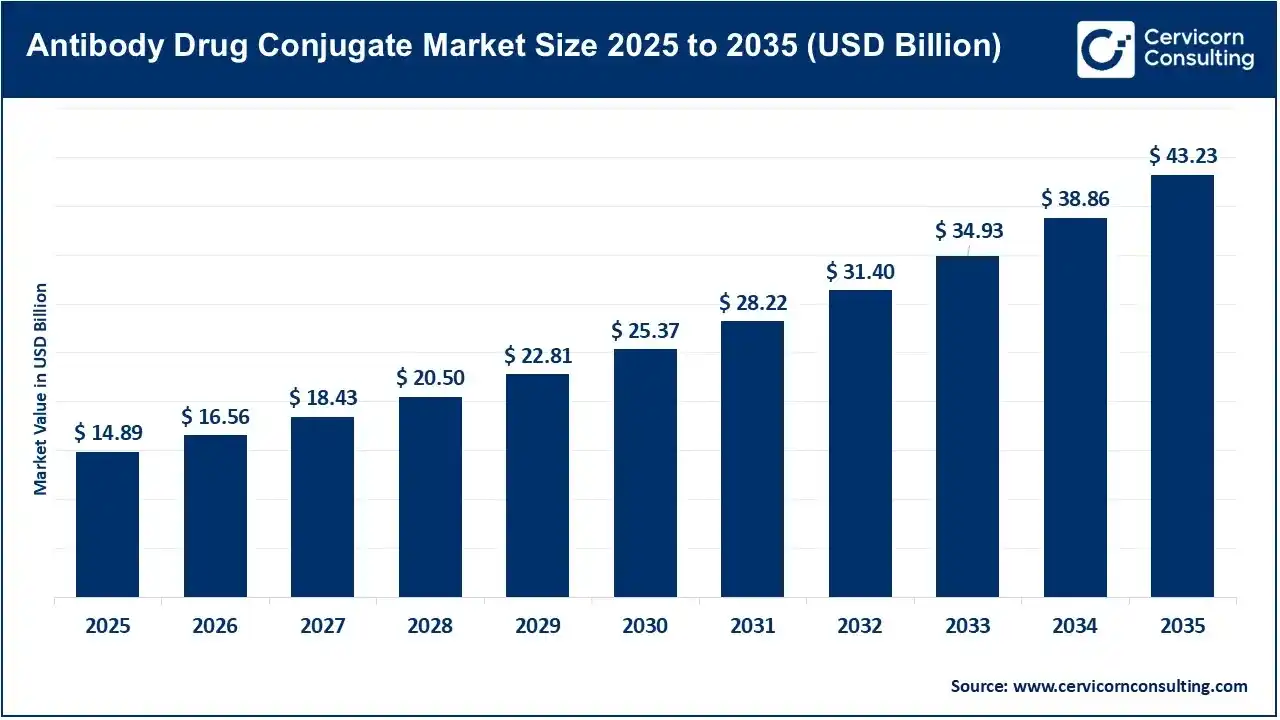
The rising global cancer burden is a major driver for ADC adoption, with nearly 20 million new cancer cases and 9.7 million cancer-related deaths recorded in 2022. ADCs offer targeted delivery of highly potent cytotoxic payloads to tumor cells, potentially improving therapeutic precision while reducing exposure to healthy tissues compared with conventional chemotherapy.
Rapid expansion of the ADC development pipeline is further supporting market growth, with more than 100 ADCs in clinical trials and increasing regulatory approvals across diverse cancer indications. In January 2025, the FDA approved datopotamab deruxtecan, expanding TROP2-targeted ADC use in breast cancer, while ADC research increasingly focuses on novel targets, payloads, linkers, bystander effects, and earlier treatment lines.
Report Highlights
- North America held the largest regional share at approximately 39.8% in 2025, supported by advanced oncology infrastructure, strong pharmaceutical R&D, and widespread adoption of targeted cancer therapies.
- Enhertu (trastuzumab deruxtecan) dominated the product segment with approximately 28.6% market share in 2025, supported by broad HER2-targeted applications and expanding indications.
- Auristatins (MMAE, MMAF) represented the leading payload category with approximately 35.7% market share, benefiting from established clinical validation and extensive use across approved ADCs.
- Cleavable linkers accounted for approximately 67.7% market share in 2025, reflecting their widespread adoption for controlled intracellular payload release and improved therapeutic targeting.
- Breast cancer represented the largest indication segment with approximately 40.8% market share, driven by increasing HER2 testing and broader utilization across HER2-positive, HER2-low, and ultralow populations.
- Hospital pharmacies dominated the distribution channel with approximately 52.8% market share, primarily because many ADCs require intravenous administration and specialized oncology supervision.
What is an Antibody Drug Conjugate?
An antibody drug conjugate is a targeted cancer therapy that combines a monoclonal antibody with a highly potent drug payload through a chemical linker. The antibody recognizes a specific antigen on cancer cells, enabling the ADC to bind to and enter the tumor cell, where the payload is released to kill the cancer cell while potentially limiting exposure to healthy tissues. ADCs typically consist of three components an antibody, linker, and cytotoxic payload and are increasingly being developed against targets such as HER2, TROP2, CD30, Nectin-4, and BCMA.
Recent Milestones
| Date |
Company |
Recent Milestone |
Market Significance |
| January 2025 |
Daiichi Sanky |
FDA approved Datroway (datopotamab deruxtecan), a TROP2-directed ADC, for HR-positive/HER2-negative metastatic breast cancer. |
Expanded ADC applications into another major breast cancer population and strengthened TROP2-targeted therapies. |
| February 2025 |
Pfizer |
FDA expanded Adcetris (brentuximab vedotin) with lenalidomide and rituximab for relapsed/refractory large B-cell lymphoma. |
Expanded the clinical use of an established ADC into an additional hematological cancer setting. |
| June 2025 |
Takeda |
FDA granted orphan-drug designation to a CLDN18.2-targeted ADC containing exatecan for second-line pancreatic ductal adenocarcinoma. |
Demonstrated increasing development of ADCs against novel targets and difficult-to-treat solid tumors. |
| October 2025 |
GSK |
FDA approved Blenrep (belantamab mafodotin) with bortezomib and dexamethasone for relapsed/refractory multiple myeloma. |
Reinforced ADC adoption in hematological malignancies and expanded BCMA-directed treatment options. |
| December 2025 |
AstraZeneca & Daiichi Sanky |
FDA approved Enhertu plus Perjeta as first-line treatment for advanced HER2-positive breast cancer. |
Expanded Enhertu into an earlier treatment line; the pivotal study involved 1,157 patients. |
| May 2026 |
AbbVie |
FDA approved Decnupaz (pivekimab sunirine), a CD123-directed antibody and alkylating-agent conjugate, for BPDCN. |
Added a novel ADC to treatment of an ultra-rare hematologic malignancy; 69.7% of treatment-naïve patients achieved CR/CRc. |
| 2026 |
Gilead Sciences & Tubulis |
Gilead announced the acquisition of Tubulis for up to USD 5 billion, strengthening its ADC capabilities and oncology pipeline. |
Highlights increasing strategic investment and M&A activity around next-generation ADC technologies. |
Antibody Drug Conjugate Market Dynamics
Market Drivers
1. Expansion of ADC Clinical Pipeline:
The rapid expansion of ADC research is a major market driver, with more than 300 ADC candidates reportedly in clinical trials globally. Increasing development of novel antibodies, payloads, linkers, and site-specific conjugation technologies is broadening potential applications across solid and hematological cancers. The pipeline is also moving beyond conventional targets toward difficult-to-treat tumors and combination regimens, creating additional commercial opportunities for ADC developers.
2. Improved Therapeutic Precision:
ADCs are gaining adoption because they combine antibody-mediated targeting with highly potent cytotoxic payloads, allowing drug delivery toward antigen-expressing cancer cells. Recent research highlights that ADC design can influence systemic distribution, tumor penetration, cellular uptake, and toxicity, encouraging development of more selective therapies. The FDA had already approved 11 oncology ADCs by January 2024, demonstrating growing clinical validation of the modality and supporting continued physician and pharmaceutical-company interest.
Market Restraints
1. High Development and Manufacturing Complexity:
ADC development faces substantial technical complexity because manufacturers must optimize the antibody, linker, payload, conjugation process, drug-to-antibody ratio, stability, and pharmacokinetic profile simultaneously. Unlike conventional biologics, ADCs combine biological and small-molecule characteristics, creating additional analytical and regulatory requirements. FDA guidance specifically addresses clinical pharmacology considerations arising from this combination, highlighting the specialized development requirements. These complexities can increase development timelines, manufacturing costs, quality-control requirements, and barriers for smaller biotechnology companies.
2. Treatment-Related Toxicity:
Safety concerns remain a significant restraint because the cytotoxic payload can potentially affect healthy tissues despite antibody targeting. Recent research notes that the majority of administered ADC does not reach the tumor, meaning off-target distribution and payload release can contribute to toxicity. Adverse events can include hematological toxicity, ocular complications, liver toxicity, and gastrointestinal effects depending on the ADC design. Consequently, companies must balance potency with tolerability, potentially limiting dosing levels and reducing the therapeutic window of certain ADCs.
Market Opportunities
1. Development of Next-Generation ADCs:
Next-generation ADC technologies present substantial opportunities through novel targets, improved linker chemistry, site-specific conjugation, new payload classes, and optimized antibody formats. The FDA previously identified more than 40 different targets among 77 novel ADCs evaluated across 113 active clinical trials, illustrating substantial technological diversification. Continued advances could improve tumor penetration, payload release, stability, and therapeutic index while addressing limitations associated with earlier ADC generations.
2. Expansion into Earlier Treatment Lines and Combination Therapies:
ADC developers have significant opportunities to expand successful therapies into earlier treatment settings and combination regimens. Recent clinical progress has demonstrated increasing integration of ADCs with immunotherapies and other anticancer agents. Research published in 2025 identified movement toward earlier lines of treatment and combination approaches, potentially increasing eligible patient populations and treatment duration. Combining ADCs with immune-modulating therapies may also exploit immunogenic cell death and bystander effects to enhance antitumor activity.
Market Challenges
1. Tumor Heterogeneity and Antigen Expression:
Tumor heterogeneity remains a major challenge because ADC effectiveness depends heavily on adequate target-antigen expression and tumor-cell accessibility. Recent 2026 research identifies heterogeneous target-antigen expression and insufficient internalization among persistent limitations of conventional ADCs. Tumors with low or uneven antigen expression can reduce ADC uptake, while changes in antigen levels during treatment may contribute to resistance. Developers therefore face challenges in selecting suitable biomarkers, targets, patient populations, and companion-diagnostic strategies for consistent clinical responses.
2. Resistance and Limited Tumor Penetration:
ADC effectiveness can be compromised by multiple resistance mechanisms, including impaired internalization, altered trafficking, payload resistance, antigen loss, and inadequate penetration into solid tumors. Research indicates that ADC efficacy depends strongly on successful tumor penetration and intracellular delivery, while most administered ADC may be metabolized outside the tumor. These biological barriers make it difficult to achieve sufficient payload exposure without increasing systemic toxicity, creating a continuing challenge for developers seeking broader and more durable responses.
Regional Analysis
The antibody drug conjugate market is segmented by region into North America, Europe, Asia-Pacific, Latin America, and LAMEA. Here is a brief overview of each region:
North America Antibody Drug Conjugate Market: Driven by Advanced Oncology Infrastructure, Strong ADC Pipeline, Precision Medicine Adoption, and Robust Pharmaceutical R&D Investments
The North America antibody drug conjugate (ADC) market size was estimated at USD 5.93 billion in 2025 and is projected to exceed USD 17.21 billion by 2035.
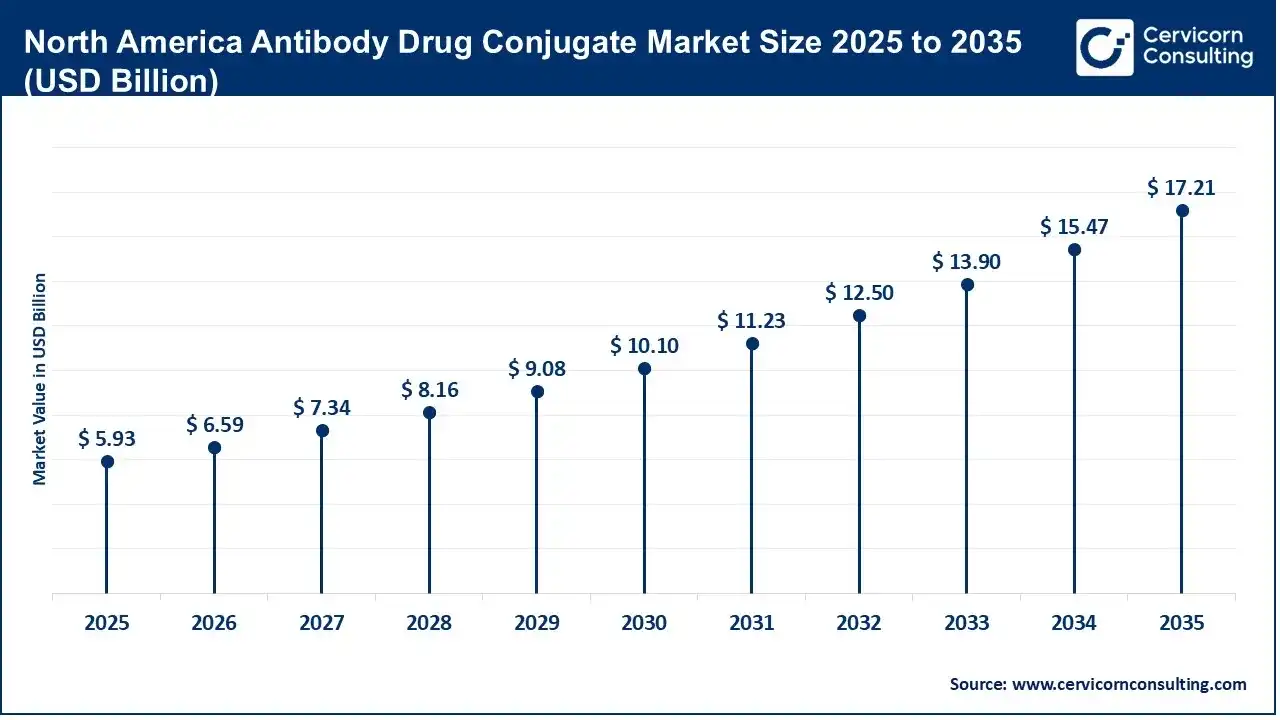
North America dominates the market owing to its advanced oncology infrastructure, strong presence of leading pharmaceutical and biotechnology companies, extensive clinical research capabilities, and rapid adoption of targeted cancer therapies. The region benefits from substantial investments in antibody engineering, linker technologies, cytotoxic payload development, and companion diagnostics. The U.S. Food and Drug Administration (FDA) has approved numerous ADC therapies across hematological and solid tumors, supporting commercial adoption and physician familiarity. Strong collaborations among pharmaceutical companies, biotechnology firms, academic institutions, and cancer centers are accelerating ADC discovery, clinical development, manufacturing, and combination-therapy research, reinforcing North America's leadership in the global ADC market.
United States: Advanced Oncology Infrastructure, Rapid ADC Approvals, and Strong Precision Medicine Adoption Drive Market Growth
- According to the National Cancer Institute (NCI), the United States is expected to record approximately 2.04 million new cancer cases and 618,120 cancer-related deaths in 2025, creating substantial demand for targeted oncology therapies such as antibody drug conjugates (ADCs).
- The U.S. FDA approved Datroway (datopotamab deruxtecan) in January 2025 for HR-positive/HER2-negative metastatic breast cancer based on the 732-patient TROPION-Breast01 trial, strengthening adoption of TROP2-directed ADC therapies.
Canada: Growing Cancer Burden, Precision Oncology Expansion, and Increasing Access to Targeted Therapies Support Market Growth
- Canadian Cancer Statistics 2025 provides national projections for cancer incidence, mortality, and survival across more than 20 cancer types, highlighting the substantial oncology treatment requirements supporting demand for advanced targeted therapies.
- Canada's ADC adoption is supported by increasing access to biomarker-driven oncology, particularly for HER2-positive, HER2-low, and TROP2-expressing cancers, enabling more precise identification of patients who may benefit from ADC therapies.
Asia-Pacific (APAC) Antibody Drug Conjugate Market: Driven by Rising Cancer Burden, Rapid ADC Innovation, Expanding Clinical Pipelines, and Growing Precision Oncology Adoption
The Asia-Pacific antibody drug conjugate (ADC) market size was valued at USD 3.19 billion in 2025 and is predicted to surpass around USD 9.25 billion by 2035. Asia-Pacific is emerging as a high-growth region in the ADC Market, supported by rising cancer incidence, improving oncology infrastructure, expanding precision medicine capabilities, and increasing investments by pharmaceutical and biotechnology companies. China, Japan, South Korea, and India are becoming important centers for ADC discovery, clinical development, manufacturing, and commercialization. China's regulatory environment is particularly supportive, with three ADCs receiving first-time NMPA approvals in 2025, demonstrating accelerating commercialization of locally developed and globally sourced ADC therapies.
China: Rapid ADC Innovation, Growing Domestic Pipeline, and Expanding Regulatory Approvals Drive Market Growth
- China is the leading ADC innovation hub in Asia-Pacific, supported by a large pharmaceutical industry and rapidly expanding domestic development capabilities. In 2025, three ADCs received first-time NMPA approvals, highlighting increasing regulatory acceptance of the technology.
- Chinese companies are increasingly developing novel ADC technologies; in July 2025, Huadong Medicine received NMPA IND approval for HDM2012, a MUC17-targeted ADC using a topoisomerase I inhibitor payload and cleavable linker for advanced solid tumors.
Japan: Advanced Pharmaceutical R&D, Strong ADC Expertise, and Expanding Targeted Oncology Applications Support Market Growth
- Japan has a strong position in ADC development due to its sophisticated pharmaceutical industry and the global ADC leadership of companies such as Daiichi Sankyo. Datroway received its first global approval in Japan in December 2024, expanding access to TROP2-directed ADC therapy for breast cancer.
- Japan's ADC ecosystem benefits from established clinical research capabilities and increasing development of next-generation conjugates, while Japanese-developed ADC technologies are also being commercialized internationally, strengthening the country's influence across the global ADC landscape.
Europe Antibody Drug Conjugate Market: Driven by Advanced Oncology Infrastructure, Strong Regulatory Support, Precision Medicine Adoption, and Expanding ADC Clinical Development
The Europe antibody drug conjugate (ADC) market size was accounted for USD 4.15 billion in 2025 and is forecasted to hit around USD 12.06 billion by 2035. Europe represents a significant ADC market, supported by advanced cancer-care systems, established pharmaceutical and biotechnology industries, strong clinical-research infrastructure, and increasing adoption of targeted oncology therapies. The European Medicines Agency (EMA) has approved ADCs across breast cancer, lymphoma, multiple myeloma, cervical cancer, and other indications, creating a broad clinical foundation for the technology. In January 2025 alone, EMA reviewed approvals for Datroway and Tivdak, demonstrating continued expansion of ADC-based oncology treatments within the European market.
Germany: Strong Oncology Infrastructure, Pharmaceutical R&D, and Precision Medicine Adoption Drive Market Growth
- Germany is a major European ADC market owing to its advanced cancer-care infrastructure, extensive network of specialized oncology centers, and strong pharmaceutical research capabilities. Increasing biomarker testing is supporting identification of patients eligible for HER2-, TROP2-, and other targeted ADC therapies.
- Germany's participation in multinational oncology clinical trials also supports access to emerging ADC candidates, while its established pharmaceutical manufacturing ecosystem provides capabilities for antibody engineering, conjugation technologies, payload development, and commercial production.
United Kingdom: Advanced Cancer Research, Strong Clinical-Trial Infrastructure, and Precision Oncology Programs Support ADC Adoption
- The United Kingdom benefits from a strong oncology research ecosystem involving the NHS, universities, biotechnology companies, and pharmaceutical manufacturers. Increasing integration of molecular diagnostics and precision medicine supports biomarker-based selection of patients for ADC treatment.
- The UK's participation in international ADC clinical programs is strengthening access to emerging therapies and next-generation technologies, while specialized cancer centers provide infrastructure for clinical evaluation and administration of complex oncology biologics.
Antibody Drug Conjugate Market Share, By Region, 2025 (%)
| Region |
Revenue Share, 2025 (%) |
| North America |
39.8% |
| Europe |
27.9% |
| Asia-Pacific |
21.4% |
| LAMEA |
10.9% |
LAMEA Antibody Drug Conjugate Market: Driven by Rising Cancer Burden, Improving Oncology Infrastructure, Healthcare Investments, and Growing Access to Targeted Therapies
The LAMEA antibody drug conjugate (ADC) market was valued at USD 1.62 billion in 2025 and is anticipated to reach around USD 4.71 billion by 2035. LAMEA is an emerging market for ADCs, supported by increasing cancer incidence, improving oncology infrastructure, expanding access to biologic medicines, and growing government and private-sector healthcare investments. Brazil, Saudi Arabia, the UAE, and South Africa represent important markets because of their relatively developed healthcare systems and growing adoption of precision oncology. In the Middle East & Africa, breast cancer represented 46.55% of ADC market revenue in 2025, highlighting the importance of targeted therapies for breast cancer. Increasing pharmaceutical partnerships, molecular diagnostics, and investments in local healthcare infrastructure are expected to improve ADC accessibility across the region.
Brazil: Rising Cancer Burden, Expanding Oncology Infrastructure, and Growing Access to Targeted Therapies Support Market Growth
- Brazil represents a major LAMEA market because of its large oncology patient population, established pharmaceutical sector, and expanding availability of advanced cancer treatments through public and private healthcare systems.
- Increasing adoption of biomarker testing and targeted oncology therapies is creating opportunities for HER2- and TROP2-directed ADCs, while participation in international clinical research is supporting access to emerging ADC candidates.
United Arab Emirates: Advanced Healthcare Infrastructure, Medical Tourism, and Precision Medicine Adoption Support Market Growth
- The UAE is strengthening its position in advanced oncology through modern hospitals, specialized cancer centers, international healthcare partnerships, and increasing investment in precision medicine and molecular diagnostics.
- Growing medical tourism and availability of innovative oncology medicines are supporting access to ADC therapies, while government initiatives aimed at developing biotechnology and pharmaceutical capabilities are creating opportunities for future ADC clinical research and commercialization.
Segmental Analysis
The antibody drug conjugate market is segmented into product, payload type, linker type, indication, distribution channel, and geography.
Product Analysis
Enhertu (trastuzumab deruxtecan) is the leading product segment, supported by its broad use across HER2-positive and HER2-low cancers and continued label expansion. It accounted for approximately 28.6% of market revenue in 2025, reflecting strong commercial uptake and clinical adoption. Its DXd-based topoisomerase I payload, cleavable linker, and bystander effect have strengthened its efficacy across tumors with varying HER2 expression.
Antibody Drug Conjugate Market Share, By Product, 2025 (%)
| Product |
Revenue Share, 2025 (%) |
| Kadcyla (ado-trastuzumab emtansine) |
14.8% |
| Enhertu (trastuzumab deruxtecan) |
28.6% |
| Adcetris (brentuximab vedotin) |
10.9% |
| Padcev (enfortumab vedotin) |
10.7% |
| Trodelvy (sacituzumab govitecan) |
8.6% |
| Polivy (polatuzumab vedotin) |
7.4% |
| Elahere (mirvetuximab soravtansine) |
5.2% |
| Zynlonta (loncastuximab tesirine) |
2.8% |
| Others |
11.0% |
Enhertu is also projected to be among the fastest-growing commercial ADC products, supported by expanding applications across breast, gastric, and lung cancers. Its segment is projected to grow at strong CAGR through 2035 in one recent industry assessment. Continued regulatory expansions, increasing HER2-low patient identification, and growing physician familiarity are expected to accelerate adoption and strengthen Enhertu's position in the global ADC landscape.
Payload Type Analysis
Auristatins currently represent the leading payload category, accounting for approximately 35.7% of market revenue in 2025. Their dominance reflects extensive clinical validation and established use in ADCs such as Adcetris, Padcev, and Polivy. MMAE and MMAF disrupt microtubule assembly, providing potent cytotoxic activity at relatively low intracellular concentrations. Established manufacturing capabilities, regulatory familiarity, and multiple approved therapies continue to support widespread adoption of auristatin-based ADC platforms.
Antibody Drug Conjugate Market, By Payload Type, 2025 (%)
| Payload Type |
Revenue Share, 2025 (%) |
| Auristatins (MMAE, MMAF) |
35.7% |
| Maytansinoids (DM1, DM4) |
19.8% |
| Calicheamicin Derivatives |
7.6% |
| Topoisomerase I Inhibitors (SN-38, DXd) |
27.1% |
| Pyrrolobenzodiazepine (PBD) Dimers |
3.8% |
| Others |
6.0% |
Topoisomerase I inhibitors are emerging as the fastest-growing payload category because of their strong activity across solid tumors and compatibility with next-generation ADC designs. DXd and SN-38 are increasingly used in HER2- and TROP2-directed therapies, while clinical development is expanding into lung, breast, gastric, and other cancers. In lung-cancer ADC trials, topoisomerase I inhibitors represented 54.7% of analyzed payloads, highlighting their growing importance in pipeline innovation.
Linker Type Analysis
Cleavable linkers maintain clear market leadership because they enable controlled payload release after ADC internalization into tumor cells. The segment represented approximately 67.7% of market revenue in 2025, supported by extensive clinical validation and use across several commercially successful ADCs. Protease-cleavable designs are particularly important because they can facilitate intracellular drug release and, depending on payload characteristics, enhance bystander killing of neighboring tumor cells with heterogeneous antigen expression.
Antibody Drug Conjugate Market, By Linker Type, 2025 (%)
| Linker Type |
Revenue Share, 2025 (%) |
| Cleavable Linkers |
67.7% |
| Non-Cleavable Linkers |
29.1% |
| Linkerless |
3.2% |
Non-cleavable linkers are expected to experience strong growth as developers seek greater plasma stability, reduced premature payload release, and improved control over systemic exposure. Their value is particularly evident in ADC designs where the released catabolite remains pharmacologically active after lysosomal degradation. Recent market analysis identifies non-cleavable linkers as the fastest-growing linker category, reflecting increasing investment in stable conjugation technologies and efforts to improve therapeutic windows while reducing off-target toxicity.
Indication Analysis
Breast cancer represents the largest ADC indication, accounting for approximately 40.8% of market revenue in 2025. Multiple approved ADCs, including Enhertu, Kadcyla, and Trodelvy, address different breast-cancer subtypes and biomarker populations. Expanding treatment into HER2-low and HER2-ultralow populations has substantially increased the addressable patient pool. Continued adoption of HER2 and TROP2 testing, guideline inclusion, and treatment-line expansion are supporting sustained demand for ADC therapies within breast oncology.
Antibody Drug Conjugate Market, By Indication, 2025 (%)
| Indication |
Revenue Share, 2025 (%) |
| Breast Cancer |
40.8% |
| Blood Cancer |
18.6% |
| Lung Cancer |
13.4% |
| Urothelial/Bladder Cancer |
11.8% |
| Ovarian Cancer |
6.1% |
| Gastrointestinal Cancer |
3.5% |
| Gynecological Cancer |
2.7% |
| Other |
3.1% |
Urothelial cancer is emerging as one of the fastest-growing ADC indications, driven particularly by enfortumab vedotin-based treatment. The FDA approval of enfortumab vedotin with pembrolizumab for first-line advanced or metastatic urothelial cancer expanded ADC use into earlier treatment settings. Increasing incorporation into clinical guidelines, broader treatment eligibility, and growing physician experience are supporting adoption. Continued clinical investigation in maintenance, perioperative, and other treatment settings could further expand the addressable population.
Distribution Channel Analysis
Hospital pharmacies represent the leading distribution channel, accounting for approximately 52.8% of market revenue in 2025. ADCs are predominantly administered through intravenous infusion and require specialized handling, preparation, monitoring, and oncology supervision, making hospital-based distribution particularly important. Hospitals also provide access to multidisciplinary oncology teams and established reimbursement mechanisms. The increasing complexity of ADC administration and management of potential adverse reactions further reinforces the importance of hospital pharmacies in the market.
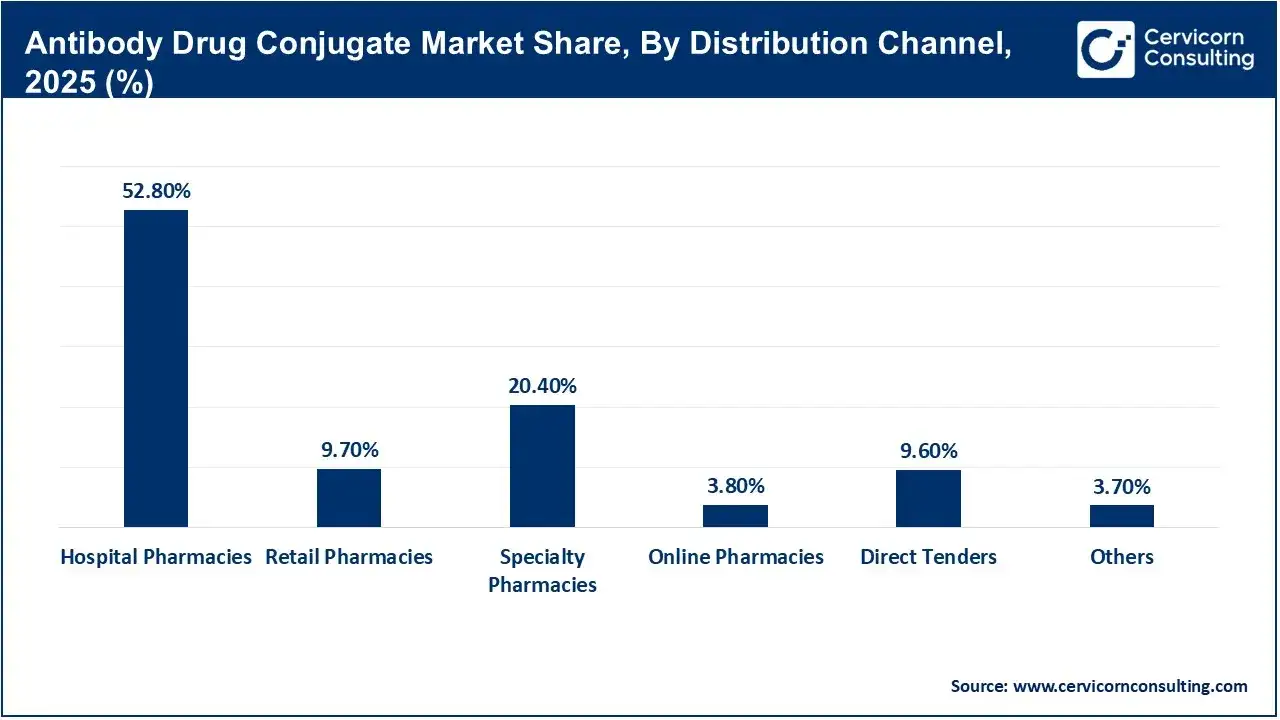
Specialty pharmacies are positioned for strong growth as ADC treatment expands beyond traditional hospital-based oncology settings and patient-support services become increasingly important. These pharmacies can provide specialized storage, dispensing coordination, reimbursement assistance, adherence support, and patient education for complex oncology medicines. Growing use of outpatient cancer-care models and increasing demand for coordinated specialty-drug services are supporting the channel's expansion. However, hospital pharmacies are expected to remain dominant because many ADCs require supervised intravenous administration.
Antibody Drug Conjugate Market Top Companies
Segments Covered
By Product
- Kadcyla (ado-trastuzumab emtansine)
- Enhertu (trastuzumab deruxtecan)
- Adcetris (brentuximab vedotin)
- Padcev (enfortumab vedotin)
- Trodelvy (sacituzumab govitecan)
- Polivy (polatuzumab vedotin)
- Elahere (mirvetuximab soravtansine)
- Zynlonta (loncastuximab tesirine)
- Others
By Payload Type
- Auristatins (MMAE, MMAF)
- Maytansinoids (DM1, DM4)
- Calicheamicin Derivatives
- Topoisomerase I Inhibitors (SN-38, DXd)
- Pyrrolobenzodiazepine (PBD) Dimers
- Others
By Linker Type
- Cleavable Linkers
- Peptide-Based
- Acid-Labile
- Disulfide-Based
- Non-Cleavable Linkers
- Linkerless
By Indication
- Breast Cancer
- Blood Cancer
- Lymphoma
- Leukemia
- Multiple Myeloma
- Lung Cancer
- Urothelial/Bladder Cancer
- Ovarian Cancer
- Gastrointestinal Cancer
- Gynecological Cancer
- Other
By Distribution Channel
- Hospital Pharmacies
- Retail Pharmacies
- Specialty Pharmacies
- Online Pharmacies
- Direct Tenders
- Others
By Geography
- North America
- Europe
- Asia-Pacific
- LAMEA