
The global stroke diagnostic and therapeutic market size was estimated at USD 41.67 billion in 2025 and is expected to be worth around USD 86.41 billion by 2035, growing at a compound annual growth rate (CAGR) of 7.6% over the forecast period 2026 to 2035.
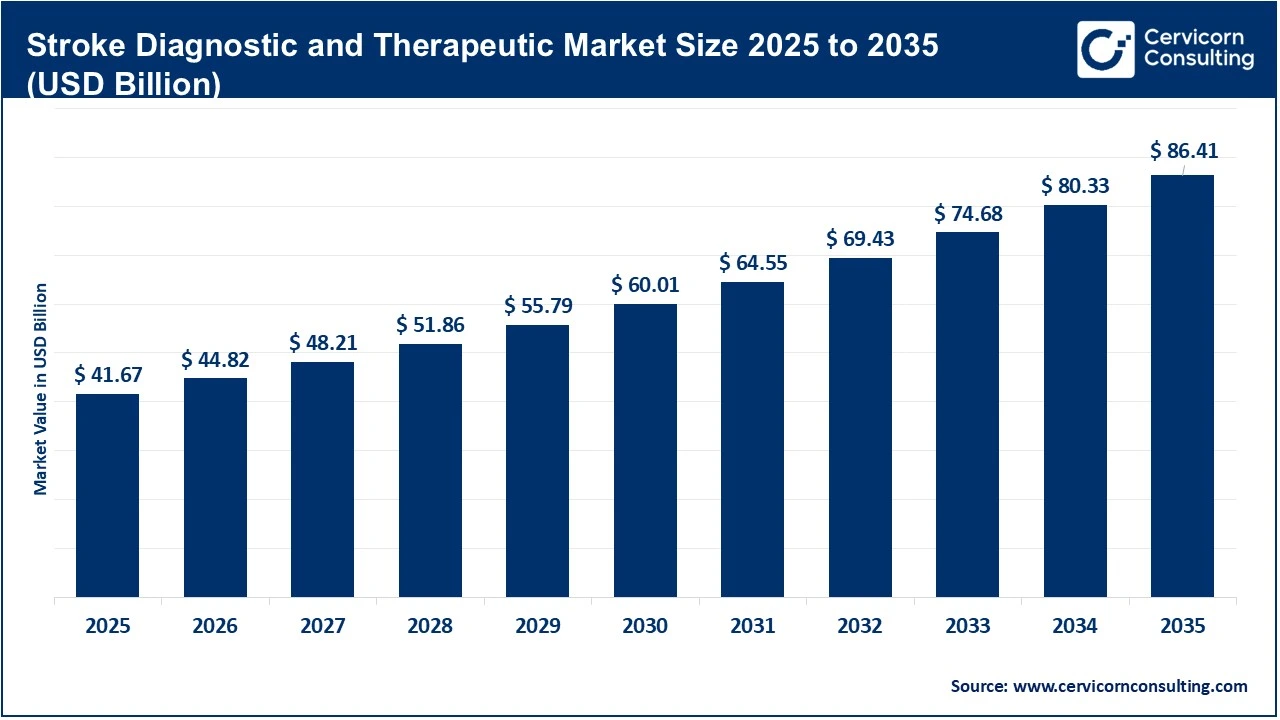
The increasing global burden of stroke is a primary driver of the stroke diagnostic and therapeutic market. According to the World Stroke Organization, nearly 12 million people experience a new stroke each year, while one in four adults over the age of 25 is expected to suffer a stroke during their lifetime. In 2021, stroke affected approximately 93.8 million people worldwide and remained the third leading cause of death and disability, creating substantial demand for rapid diagnostic imaging technologies such as CT and MRI, along with timely therapeutic interventions including thrombolytic therapy and mechanical thrombectomy. The growing prevalence of hypertension, diabetes, obesity, atrial fibrillation, and aging populations is further accelerating the need for advanced stroke diagnosis and treatment solutions across healthcare systems.
Market growth is also supported by continuous technological advancements in neuroimaging, AI-assisted stroke detection, and minimally invasive endovascular therapies that improve treatment speed and clinical outcomes. Mechanical thrombectomy has become the standard of care for acute large vessel occlusion strokes, while expanding stroke centers, tele-stroke networks, and favorable clinical guidelines are improving patient access to specialized care. Additionally, around 83% of incident stroke cases occur in low- and middle-income countries, prompting governments and healthcare providers to invest in stroke awareness programs, diagnostic infrastructure, and comprehensive stroke management pathways. Increasing adoption of integrated emergency stroke protocols and precision imaging is expected to further strengthen demand for innovative diagnostic and therapeutic products worldwide.
What is Stroke Diagnostic and Therapeutic?
Stroke diagnostic and therapeutic refers to the range of medical technologies, devices, imaging systems, pharmaceuticals, and interventional procedures used to detect, diagnose, treat, and manage stroke. Diagnostic approaches primarily include advanced imaging modalities such as computed tomography (CT), magnetic resonance imaging (MRI), carotid ultrasound, cerebral angiography, and laboratory testing to rapidly differentiate ischemic from hemorrhagic stroke and determine the most appropriate treatment. Therapeutic solutions encompass thrombolytic drugs, antiplatelet and anticoagulant medications, mechanical thrombectomy devices, surgical interventions, and rehabilitation therapies aimed at restoring blood flow, minimizing brain damage, preventing recurrent strokes, and improving long-term patient outcomes.
Recent Technologies Introduced in the Stroke Diagnostic and Therapeutic Market
| Technology | Description |
| AI-Based Stroke Detection Software | Artificial intelligence algorithms automatically analyze CT and MRI scans to identify ischemic strokes, intracranial hemorrhage, and large vessel occlusions within minutes, enabling faster clinical decision-making. |
| Mobile Stroke Units (MSUs) | Specialized ambulances equipped with onboard CT scanners, telemedicine systems, and point-of-care laboratory testing allow diagnosis and thrombolytic treatment before hospital arrival. |
| Advanced CT Perfusion Imaging | Modern perfusion imaging provides real-time assessment of brain tissue viability, helping physicians accurately identify patients eligible for reperfusion therapies beyond traditional treatment windows. |
| Next-Generation Mechanical Thrombectomy Devices | New aspiration catheters and stent retrievers offer improved clot retrieval efficiency, higher first-pass recanalization rates, and reduced procedural complications. |
| AI-Enabled Clinical Decision Support Systems | Integrated software combines imaging findings with patient data to recommend evidence-based treatment pathways and prioritize emergency stroke cases. |
| Portable Low-Field MRI Systems | Compact MRI platforms enable bedside neuroimaging in intensive care units and emergency departments, reducing delays associated with patient transport. |
1. Rising Global Burden of Stroke and Aging Population
The increasing incidence of stroke worldwide, driven by aging populations and the growing prevalence of hypertension, diabetes, obesity, and cardiovascular disorders, is a major driver of the stroke diagnostic and therapeutic market. Older adults are at a significantly higher risk of both ischemic and hemorrhagic strokes, leading to greater demand for rapid diagnostic imaging, emergency interventions, and long-term rehabilitation services. Governments and healthcare providers are consequently investing in comprehensive stroke care infrastructure, advanced imaging systems, and specialized stroke centers to improve survival rates and reduce long-term disability.
2. Advancements in Imaging and Endovascular Technologies
Continuous innovations in medical imaging and minimally invasive therapies are accelerating market growth. Artificial intelligence-assisted CT and MRI analysis, advanced perfusion imaging, and next-generation mechanical thrombectomy devices enable faster diagnosis and more accurate treatment decisions. These technologies improve clot detection, reduce treatment delays, and enhance patient outcomes. Increasing adoption of integrated stroke care pathways and evidence-based treatment protocols has encouraged hospitals to upgrade diagnostic capabilities and expand access to advanced neurointerventional procedures.
1. High Cost of Advanced Stroke Diagnosis and Treatment
Advanced stroke management requires expensive imaging equipment, specialized catheter-based devices, and highly trained healthcare professionals, making treatment costly for many healthcare facilities. Mechanical thrombectomy procedures, AI-enabled diagnostic software, and high-end MRI or CT systems involve substantial capital investment and ongoing maintenance expenses. In low- and middle-income countries, limited healthcare budgets and inadequate reimbursement policies restrict the adoption of advanced stroke technologies, creating disparities in access to timely diagnosis and effective treatment.
2. Limited Availability of Specialized Stroke Centers
Successful stroke treatment depends on rapid diagnosis and immediate intervention, yet many regions continue to experience shortages of dedicated stroke centers and neurointerventional specialists. Rural and underserved areas often lack advanced imaging equipment, neurologists, and emergency transport systems capable of delivering patients within the recommended therapeutic window. These infrastructure limitations delay treatment, reduce eligibility for reperfusion therapies, and restrict the widespread adoption of innovative stroke diagnostic and therapeutic technologies.
1. Expansion of Artificial Intelligence in Stroke Care
The growing integration of artificial intelligence into stroke diagnosis presents significant market opportunities. AI-powered software can rapidly detect intracranial hemorrhage, large vessel occlusion, and ischemic stroke from imaging scans while automatically alerting physicians for immediate intervention. These technologies reduce interpretation time, improve diagnostic accuracy, and optimize hospital workflows. Increasing regulatory approvals, cloud-based healthcare platforms, and digital health investments are expected to accelerate AI adoption across emergency departments and stroke care networks.
2. Growing Adoption of Telemedicine and Mobile Stroke Units
The expansion of telemedicine services and mobile stroke units offers new opportunities to improve access to timely stroke diagnosis and treatment. Equipped with portable CT scanners, laboratory testing, and remote neurologist consultation, mobile stroke units enable early diagnosis and thrombolytic therapy before hospital arrival. Rising government support for emergency healthcare modernization and increasing investment in digital healthcare infrastructure are expected to strengthen adoption, particularly in remote and underserved regions.
1. Narrow Therapeutic Time Window for Stroke Treatment
Stroke treatment remains highly time-sensitive, with patient outcomes depending on rapid diagnosis and immediate intervention. Delays in symptom recognition, emergency transportation, or imaging significantly reduce eligibility for thrombolytic therapy and mechanical thrombectomy. Many patients arrive at healthcare facilities outside the recommended treatment window, limiting therapeutic effectiveness. Addressing this challenge requires improved public awareness, faster emergency response systems, streamlined hospital workflows, and broader availability of specialized stroke care services.
2. Shortage of Skilled Neurointerventional Professionals
The increasing demand for advanced stroke procedures has created a shortage of trained neurologists, neurointerventional radiologists, and specialized stroke care teams. Mechanical thrombectomy and complex neurovascular interventions require extensive expertise and dedicated clinical infrastructure. Many healthcare facilities, particularly in developing regions, struggle to recruit and retain qualified professionals, resulting in uneven access to advanced therapies. Expanding specialized training programs and strengthening workforce development remain essential to support future market growth.
The stroke diagnostic and therapeutic market is segmented by region into North America, Europe, Asia-Pacific, Latin America, and LAMEA. Here is a brief overview of each region:
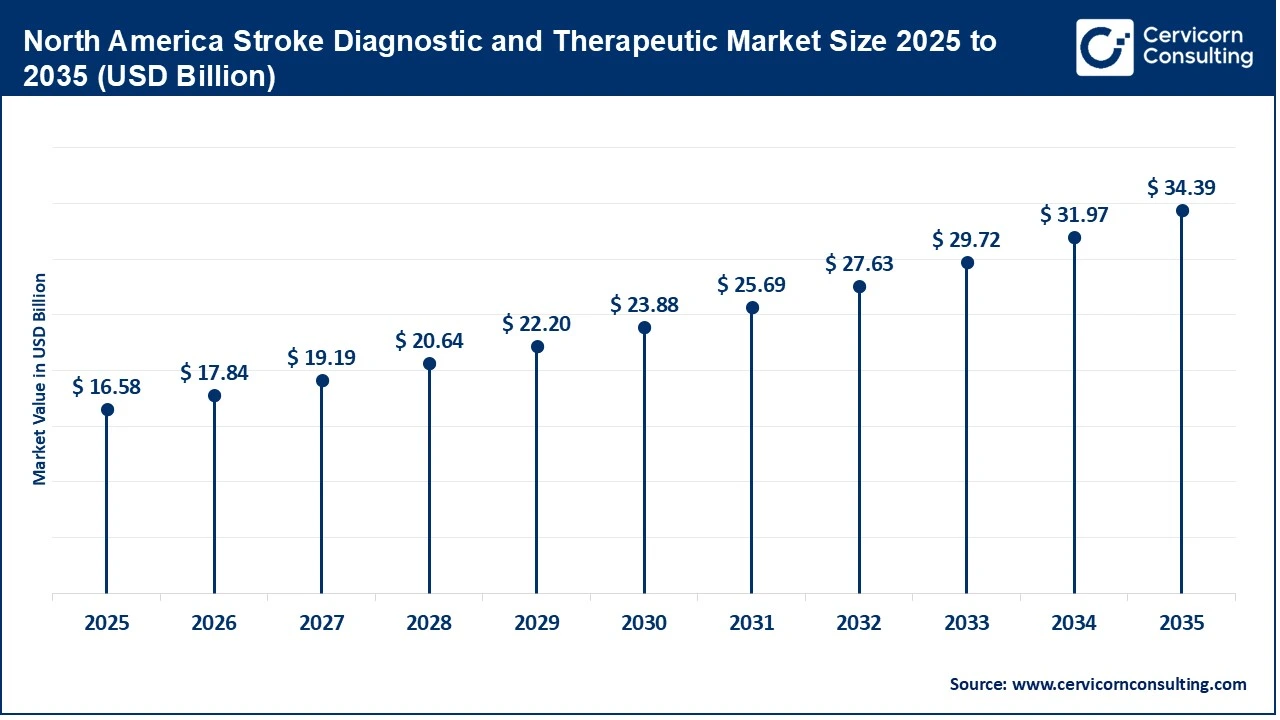
The North America stroke diagnostic and therapeutic market size was valued at USD 16.58 billion in 2025 and is projected to surpass around USD 34.39 billion by 2035. The North America market dominates the global industry owing to its well-established healthcare infrastructure, high adoption of advanced neuroimaging technologies, and strong availability of comprehensive stroke care centers. The region continues to witness increasing demand for rapid diagnosis and minimally invasive stroke treatment due to the growing prevalence of cardiovascular diseases, hypertension, diabetes, and an aging population. Continuous investments in artificial intelligence-assisted imaging, mechanical thrombectomy technologies, tele-stroke networks, and emergency stroke response systems have significantly improved treatment outcomes. Favorable reimbursement policies, extensive clinical research, and the presence of leading medical device and pharmaceutical companies further strengthen North America's leadership in the global stroke diagnostic and therapeutic market.
United States: Advanced Stroke Care Networks, AI-Based Imaging, and Expanding Endovascular Therapy Continue to Strengthen Market Leadership
Canada: Universal Healthcare, Stroke Prevention Programs, and Expansion of Comprehensive Stroke Services Support Market Growth
The Asia-Pacific stroke diagnostic and therapeutic market size was estimated at USD 9.88 billion in 2025 and is expected to hit around USD 20.48 billion by 2035. The Asia-Pacific market is the fastest-growing regional market due to its large patient population, rapidly aging demographics, increasing prevalence of hypertension and diabetes, and improving access to healthcare services. Rising government investments in stroke prevention, expansion of advanced imaging facilities, and greater adoption of minimally invasive neurointerventional procedures are strengthening market growth across the region. Continuous improvements in emergency medical services, telemedicine, artificial intelligence-assisted diagnostics, and comprehensive stroke centers, combined with increasing healthcare expenditure and favorable public health initiatives, are accelerating the adoption of innovative stroke diagnostic and therapeutic technologies throughout Asia-Pacific.
China: Growing Stroke Burden, Healthcare Modernization, and Expansion of Comprehensive Stroke Centers Drive Market Leadership
India: Increasing Stroke Prevalence, Expanding Diagnostic Infrastructure, and Government Healthcare Initiatives Support Rapid Market Growth
The Europe stroke diagnostic and therapeutic market size is growing rapidly from USD 11.71 billion in 2025 to over USD 24.28 billion by 2035. The Europe market holds a significant share of the global industry, supported by a rapidly aging population, a high prevalence of cardiovascular diseases, and well-established healthcare systems. The region benefits from widespread availability of certified stroke centers, advanced diagnostic imaging technologies, and strong adoption of evidence-based treatment protocols, including thrombolysis and mechanical thrombectomy. Increasing investments in artificial intelligence-assisted imaging, tele-stroke services, and neurovascular research, along with supportive government healthcare funding and cross-border clinical collaborations, continue to drive demand for innovative stroke diagnostic and therapeutic solutions across Europe.
Germany: Comprehensive Stroke Unit Network, Advanced Neuroimaging, and Strong Healthcare Investment Drive Regional Leadership
United Kingdom: National Stroke Strategy, NHS Investment, and Digital Health Adoption Accelerate Market Growth
Stroke Diagnostic and Therapeutic Market Share, By Region, 2025 (%)
| Region | Revenue Share, 2025 (%) |
| North America | 39.8% |
| Europe | 28.1% |
| Asia-Pacific | 23.7% |
| LAMEA | 8.4% |
The LAMEA stroke diagnostic and therapeutic market was valued at USD 3.50 billion in 2025 and is anticipated to reach around USD 7.26 billion by 2035. The LAMEA market is witnessing steady growth due to the increasing burden of cardiovascular diseases, rising incidence of hypertension and diabetes, and gradual improvements in healthcare infrastructure. Governments across the region are investing in emergency care services, diagnostic imaging capabilities, and specialized neurological treatment centers to reduce stroke-related mortality and disability. Growing awareness of early stroke recognition, expanding access to CT and MRI imaging, increasing adoption of telemedicine, and rising investments by public and private healthcare providers are supporting the demand for advanced stroke diagnostic and therapeutic solutions throughout the region.
Brazil: Expanding Public Healthcare Services, Rising Stroke Burden, and Growing Adoption of Advanced Neuroimaging Drive Regional Leadership
Saudi Arabia: Vision 2030 Healthcare Transformation, Digital Health Adoption, and Expansion of Specialized Stroke Centers Accelerate Market Growth
The stroke diagnostic and therapeutic market is segmented into type, application, and geography.
The diagnostics segment dominates the stroke diagnostic and therapeutic market due to the critical need for rapid and accurate stroke identification before treatment initiation. Imaging modalities such as CT scans and MRI are the first-line diagnostic tools used to distinguish ischemic from hemorrhagic stroke, enabling timely therapeutic decisions. Growing investments in advanced imaging infrastructure, increasing emergency department admissions for stroke, and widespread adoption of AI-assisted diagnostic software have further strengthened the demand for diagnostic technologies across hospitals and specialized stroke centers worldwide.
Stroke Diagnostic and Therapeutic Market Share, By Type, 2025 (%)
| Type | Revenue Share, 2025 (%) |
| Diagnostics | 57.4% |
| Therapeutics | 42.6% |
The therapeutics segment is projected to be the fastest-growing owing to increasing adoption of advanced treatment options, particularly mechanical thrombectomy and targeted thrombolytic therapies. Continuous innovations in catheter-based neurointerventional devices, expanding treatment eligibility through updated clinical guidelines, and improved patient outcomes are accelerating therapeutic adoption. Rising availability of comprehensive stroke centers, favorable reimbursement for endovascular procedures, and ongoing development of novel neuroprotective drugs are further contributing to the rapid expansion of this segment globally.
The ischemic stroke segment accounts for the largest market share because it represents the majority of stroke cases worldwide. The high prevalence of arterial blockages caused by thrombosis or embolism generates substantial demand for diagnostic imaging, thrombolytic drugs, mechanical thrombectomy, and long-term secondary prevention therapies. Growing incidence of cardiovascular diseases, diabetes, hypertension, and aging populations continues to increase patient volumes, making ischemic stroke the primary focus of clinical research, treatment innovation, and healthcare investments.
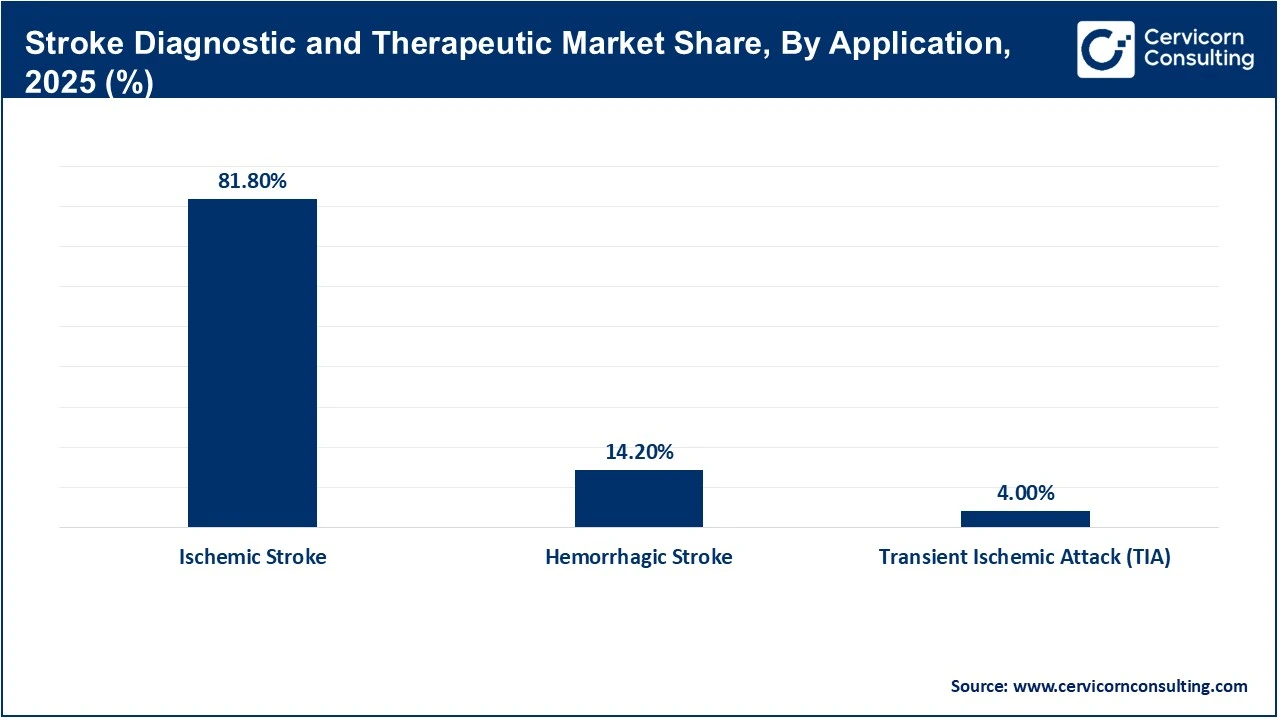
The transient ischemic attack (TIA) segment is expected to grow at the fastest pace as healthcare providers increasingly recognize TIAs as important predictors of future stroke risk. Greater awareness among physicians and patients has led to earlier diagnostic evaluation, preventive imaging, and prompt initiation of antiplatelet or anticoagulant therapies. Expanding use of AI-assisted diagnostics, improved emergency stroke protocols, and preventive healthcare initiatives are encouraging timely intervention, reducing recurrent stroke risk, and driving growth in this segment.
By Type
By Application
By Geography
Chapter 1. Market Introduction and Overview
1.1 Market Definition and Scope
1.1.1 Overview of Stroke Diagnostic and Therapeutic
1.1.2 Scope of the Study
1.1.3 Research Timeframe
1.2 Research Methodology and Approach
1.2.1 Methodology Overview
1.2.2 Data Sources and Validation
1.2.3 Key Assumptions and Limitations
Chapter 2. Executive Summary
2.1 Market Highlights and Snapshot
2.2 Key Insights by Segments
2.2.1 By Type Overview
2.2.2 By Application Overview
2.3 Competitive Overview
Chapter 3. Global Impact Analysis
3.1 COVID 19 Impact on Stroke Diagnostic and Therapeutic Market
3.2 Russia-Ukraine Conflict: Global Market Implications
3.3 Regulatory and Policy Changes Impacting Global Markets
Chapter 4. Market Dynamics and Trends
4.1 Market Dynamics
4.1.1 Market Drivers
4.1.1.1 Rising Global Burden of Stroke and Aging Population
4.1.1.2 Advancements in Imaging and Endovascular Technologies
4.1.2 Market Restraints
4.1.2.1 High Cost of Advanced Stroke Diagnosis and Treatment
4.1.2.2 Limited Availability of Specialized Stroke Centers
4.1.3 Market Opportunities
4.1.3.1 Expansion of Artificial Intelligence in Stroke Care
4.1.3.2 Growing Adoption of Telemedicine and Mobile Stroke Units
4.1.4 Market Challenges
4.1.4.1 Narrow Therapeutic Time Window for Stroke Treatment
4.1.4.2 Shortage of Skilled Neurointerventional Professionals
4.2 Market Trends
Chapter 5. Premium Insights and Analysis
5.1 Global Stroke Diagnostic and Therapeutic Market Dynamics, Impact Analysis
5.2 Porter’s Five Forces Analysis
5.2.1 Bargaining Power of Suppliers
5.2.2 Bargaining Power of Buyers
5.2.3 Threat of Substitute Products
5.2.4 Rivalry among Existing Firms
5.2.5 Threat of New Entrants
5.3 PESTEL Analysis
5.4 Value Chain Analysis
5.5 Product Pricing Analysis
5.6 Vendor Landscape
5.6.1 List of Buyers
5.6.2 List of Suppliers
Chapter 6. Stroke Diagnostic and Therapeutic Market, By Type
6.1 Global Stroke Diagnostic and Therapeutic Market Snapshot, By Type
6.1.1 Market Revenue (($Billion) and Growth Rate (%), 2023-2035
6.1.1.1 Diagnostics
6.1.1.2 Therapeutics
Chapter 7. Stroke Diagnostic and Therapeutic Market, By Application
7.1 Global Stroke Diagnostic and Therapeutic Market Snapshot, By Application
7.1.1 Market Revenue (($Billion) and Growth Rate (%), 2023-2035
7.1.1.1 Ischemic Stroke
7.1.1.2 Hemorrhagic Stroke
7.1.1.3 Transient Ischemic Attack (TIA)
Chapter 8. Stroke Diagnostic and Therapeutic Market, By Region
8.1 Overview
8.2 Stroke Diagnostic and Therapeutic Market Revenue Share, By Region 2025 (%)
8.3 Global Stroke Diagnostic and Therapeutic Market, By Region
8.3.1 Market Size and Forecast
8.4 North America
8.4.1 North America Stroke Diagnostic and Therapeutic Market Revenue, 2023-2035 ($Billion)
8.4.2 Market Size and Forecast
8.4.3 North America Stroke Diagnostic and Therapeutic Market, By Country
8.4.4 U.S.
8.4.4.1 U.S. Stroke Diagnostic and Therapeutic Market Revenue, 2023-2035 ($Billion)
8.4.4.2 Market Size and Forecast
8.4.4.3 U.S. Market Segmental Analysis
8.4.5 Canada
8.4.5.1 Canada Stroke Diagnostic and Therapeutic Market Revenue, 2023-2035 ($Billion)
8.4.5.2 Market Size and Forecast
8.4.5.3 Canada Market Segmental Analysis
8.4.6 Mexico
8.4.6.1 Mexico Stroke Diagnostic and Therapeutic Market Revenue, 2023-2035 ($Billion)
8.4.6.2 Market Size and Forecast
8.4.6.3 Mexico Market Segmental Analysis
8.5 Europe
8.5.1 Europe Stroke Diagnostic and Therapeutic Market Revenue, 2023-2035 ($Billion)
8.5.2 Market Size and Forecast
8.5.3 Europe Stroke Diagnostic and Therapeutic Market, By Country
8.5.4 UK
8.5.4.1 UK Stroke Diagnostic and Therapeutic Market Revenue, 2023-2035 ($Billion)
8.5.4.2 Market Size and Forecast
8.5.4.3 UK Market Segmental Analysis
8.5.5 France
8.5.5.1 France Stroke Diagnostic and Therapeutic Market Revenue, 2023-2035 ($Billion)
8.5.5.2 Market Size and Forecast
8.5.5.3 France Market Segmental Analysis
8.5.6 Germany
8.5.6.1 Germany Stroke Diagnostic and Therapeutic Market Revenue, 2023-2035 ($Billion)
8.5.6.2 Market Size and Forecast
8.5.6.3 Germany Market Segmental Analysis
8.5.7 Rest of Europe
8.5.7.1 Rest of Europe Stroke Diagnostic and Therapeutic Market Revenue, 2023-2035 ($Billion)
8.5.7.2 Market Size and Forecast
8.5.7.3 Rest of Europe Market Segmental Analysis
8.6 Asia Pacific
8.6.1 Asia Pacific Stroke Diagnostic and Therapeutic Market Revenue, 2023-2035 ($Billion)
8.6.2 Market Size and Forecast
8.6.3 Asia Pacific Stroke Diagnostic and Therapeutic Market, By Country
8.6.4 China
8.6.4.1 China Stroke Diagnostic and Therapeutic Market Revenue, 2023-2035 ($Billion)
8.6.4.2 Market Size and Forecast
8.6.4.3 China Market Segmental Analysis
8.6.5 Japan
8.6.5.1 Japan Stroke Diagnostic and Therapeutic Market Revenue, 2023-2035 ($Billion)
8.6.5.2 Market Size and Forecast
8.6.5.3 Japan Market Segmental Analysis
8.6.6 India
8.6.6.1 India Stroke Diagnostic and Therapeutic Market Revenue, 2023-2035 ($Billion)
8.6.6.2 Market Size and Forecast
8.6.6.3 India Market Segmental Analysis
8.6.7 Australia
8.6.7.1 Australia Stroke Diagnostic and Therapeutic Market Revenue, 2023-2035 ($Billion)
8.6.7.2 Market Size and Forecast
8.6.7.3 Australia Market Segmental Analysis
8.6.8 Rest of Asia Pacific
8.6.8.1 Rest of Asia Pacific Stroke Diagnostic and Therapeutic Market Revenue, 2023-2035 ($Billion)
8.6.8.2 Market Size and Forecast
8.6.8.3 Rest of Asia Pacific Market Segmental Analysis
8.7 LAMEA
8.7.1 LAMEA Stroke Diagnostic and Therapeutic Market Revenue, 2023-2035 ($Billion)
8.7.2 Market Size and Forecast
8.7.3 LAMEA Stroke Diagnostic and Therapeutic Market, By Country
8.7.4 GCC
8.7.4.1 GCC Stroke Diagnostic and Therapeutic Market Revenue, 2023-2035 ($Billion)
8.7.4.2 Market Size and Forecast
8.7.4.3 GCC Market Segmental Analysis
8.7.5 Africa
8.7.5.1 Africa Stroke Diagnostic and Therapeutic Market Revenue, 2023-2035 ($Billion)
8.7.5.2 Market Size and Forecast
8.7.5.3 Africa Market Segmental Analysis
8.7.6 Brazil
8.7.6.1 Brazil Stroke Diagnostic and Therapeutic Market Revenue, 2023-2035 ($Billion)
8.7.6.2 Market Size and Forecast
8.7.6.3 Brazil Market Segmental Analysis
8.7.7 Rest of LAMEA
8.7.7.1 Rest of LAMEA Stroke Diagnostic and Therapeutic Market Revenue, 2023-2035 ($Billion)
8.7.7.2 Market Size and Forecast
8.7.7.3 Rest of LAMEA Market Segmental Analysis
Chapter 9. Competitive Landscape
9.1 Competitor Strategic Analysis
9.1.1 Top Player Positioning/Market Share Analysis
9.1.2 Top Winning Strategies, By Company, 2023-2025
9.1.3 Competitive Analysis By Revenue, 2023-2025
9.2 Recent Developments by the Market Contributors (2025)
Chapter 10. Company Profiles
10.1 F. Hoffmann-La Roche Ltd
10.1.1 Company Snapshot
10.1.2 Company and Business Overview
10.1.3 Financial KPIs
10.1.4 Product/Service Portfolio
10.1.5 Strategic Growth
10.1.6 Global Footprints
10.1.7 Recent Development
10.1.8 SWOT Analysis
10.2 Siemens Healthineers AG
10.3 GE HealthCare Technologies Inc.
10.4 Canon Medical Systems Corporation
10.5 Koninklijke Philips N.V.
10.6 Medtronic plc
10.7 Stryker Corporation
10.8 Penumbra, Inc.
10.9 Abbott Laboratories
10.10 Becton, Dickinson and Company
10.11 Boston Scientific Corporation
10.12 Terumo Corporation