Stem Cell Therapy Market Size & Forecast
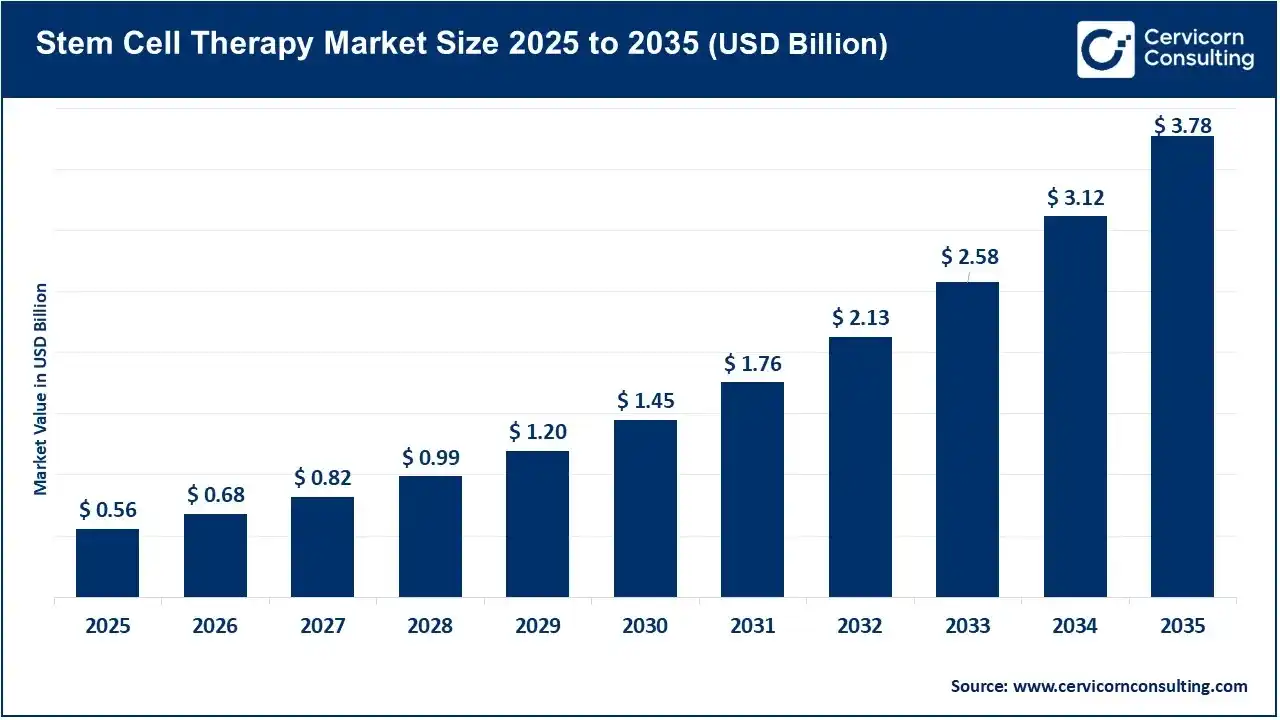
The global stem cell therapy market size was valued at USD 0.56 billion in 2025 and is expected to exceed around USD 3.78 billion by 2035, increasing at a CAGR of 21% during the projected period from 2026 to 2035.
- Base Year Market Size (2025): $0.56 billion
- Current Year Market Size (2026): $0.68 billion
- Estimated Year Market Size (2035): $3.78 billion
- Forecast Period CAGR (2026-2035): 21%
- Dominant Region: North America (Revenue Share 42%)
Report Highlights
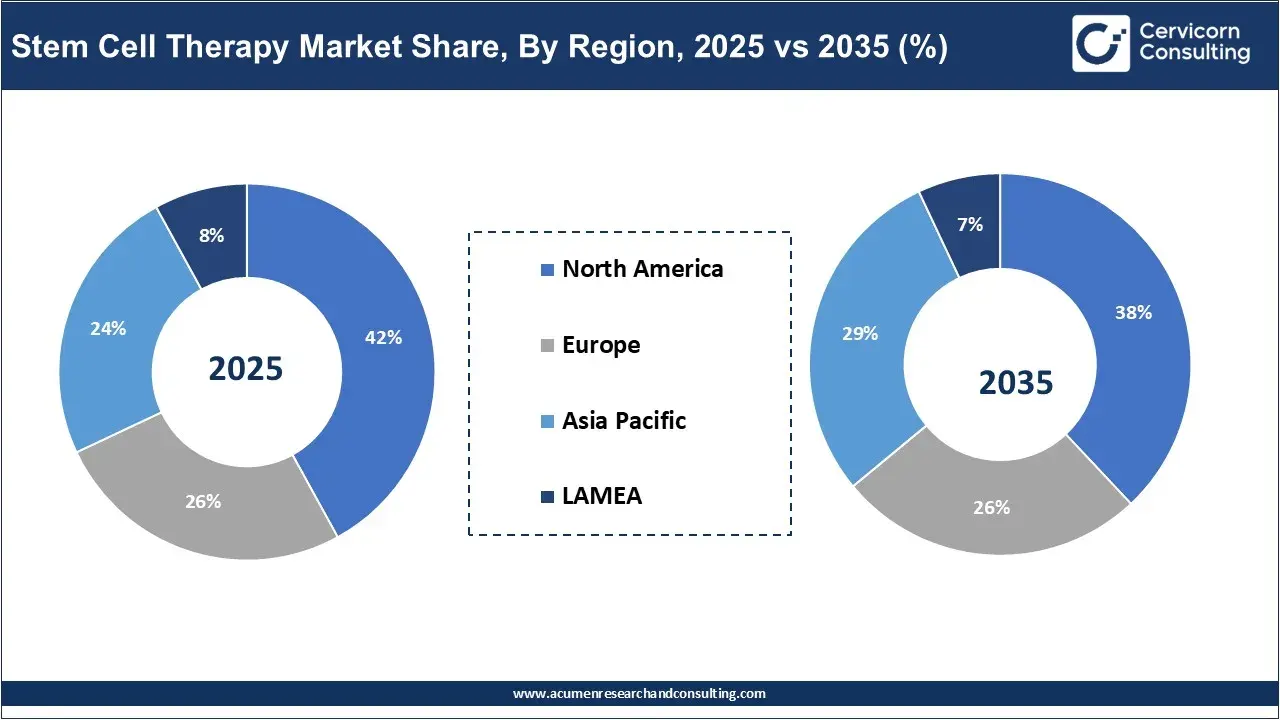
- By Region: North America registered accounted for a highest revenue share of 42% in 2025 because it has well-established research infrastructure, massive biotechnology investment, and advanced clinical trial networks.
- By Cell Type: Adult stem cells led the market in 2025 (revenue share 35%), led by expanded clinical applications and the widespread use of hematopoietic and other adult stem cells in therapeutic procedures.
- By Therapy Type: Autologous stem cell therapy was dominant in the market in 2025 (revenue share 59%), as it leverages a patient's own cells and reduces the risk of immune rejection.
- By Application: Cancer and hematological disorders dominated the market in 2025 (revenue share 28%), due to broadened stem cell transplantation indications in selected blood cancers and hematological concerns.
- By End User: Hospitals and specialty clinics registered dominance in the market in 2025 (revenue share 42%), supported by their role in stem cell transplantation, patient treatment, and specialized clinical care.
What are the Targeted Areas of the Stem Cell Therapy Market in 2026?
Primarily, emerging stem cell therapy utilizes stem cells or their derivatives to boost the repair, restoration, or replacement of infected, dysfunctional, or injured tissue. This therapy has a specific mechanism, i.e., consistent self-renewal and differentiation into unique cell types, like heart muscle, nerve cells, or blood cells. The global market leaders are looking for widening therapies’ emphasis specifically on diabetes & islet cell replacement, precision & induced pluripotent stem cells (iPSCs), and orthopedics with sports medicine. Moreover, the industry is undergoing expansive advances in therapies by using AI solutions.
Adoption Rate and Clinical Uptake
- Stem Cell Transplants: 47,204 hematopoietic cell transplants were recorded across 53 countries in 2024.
- CAR-T Therapy Adoption: CAR-T treatments increased 24.5% in 2024, reaching 6,082 patients in EBMT-reporting countries.
- Clinical Trial Adoption: 322 active cell and gene therapy clinical trials were reported in 2025.
- Allogeneic Transplantation: Donor-derived stem cell transplants increased 2.6% in 2024, reaching 21,023 procedures.
- Oncology Adoption: Lymphomas accounted for approximately 70% of CAR-T treatment indications reported in the 2024 EBMT survey.
- Clinical Infrastructure: 688 transplant centers across 53 countries contributed to the EBMT's 2024 activity survey.
- Regulatory Adoption: The U.S. FDA approved 29 cellular and gene therapy products between 2021 and 2025, reflecting broader clinical availability of advanced therapies.
Regulatory Landscape
| Country/Region |
Regulatory Authority |
Regulatory Framework |
Key Regulatory Requirement |
| United States |
FDA |
Federal Food, Drug, and Cosmetic Act and Public Health Service Act |
Approval is required for regulated stem cell products before commercial marketing. |
| Europe |
European Medicines Agency (EMA) |
Advanced Therapy Medicinal Products (ATMP) Regulation |
Marketing authorization is required for regulated ATMPs before they can be marketed. |
| India |
CDSCO |
New Drugs and Clinical Trials Rules, 2019 |
Stem cell-derived products require applicable regulatory permissions for clinical trials and marketing. |
| Japan |
Pharmaceuticals and Medical Devices Agency (PMDA) |
Act on the Safety of Regenerative Medicine and Pharmaceuticals and Medical Devices Act |
Regenerative medicine products are subject to regulatory review and applicable safety requirements. |
| South Korea |
Ministry of Food and Drug Safety (MFDS) |
Advanced Regenerative Medicine and Advanced Biological Products framework |
Advanced biological products are subject to authorization and applicable clinical and safety requirements. |
Recent Trends
- Shifts in Combination Therapies: Day by day, many clinical studies are widely aiming at the unification of mesenchymal stem cells (MSCs) with exosomes to provide rapid anti-inflammatory and acute pain relief, coupled with long-term cellular regeneration.
- AI Assistance in Precision Medicine: The worldwide expanding AI era has also dominated stem cell therapy to analyse stem cell quality, anticipate therapeutic results, and customize cell-based treatments by employing iPSCs to lower immune rejection.
- Trials for Parkinson Disease: Recently, the International Society for Stem Cell Research (ISSCR) demonstrated new Phase I/II data that examined cryopreserved, off-the-shelf dopaminergic progenitor cells obtained from human pluripotent stem cells to replace lost midbrain neurons.
What are the Key Catalysts of the Stem Cell Therapy Market?
- Surge in Chronic Conditions: Several regions across the globe are facing a huge burden of geriatric populations, resulting in age-related concerns, like osteoarthritis, CVD, neurodegenerative disorders, diabetes, etc., and enabling the arrival of new therapies.
- Rise in Innovative Solutions: The leading companies are pushing broader adoption and evolution of CRISPR, gene editing, along with execution of biomaterials and 3D printing to enhance cell survival, targeted delivery, and tissue engineering.
- Inclining Toward Regenerative Medicine: Thousands of research activities are indicating MSCs with released of higher growth factors, cytokines, and extracellular vesicles. The unveiling of the latest regenerative medicine broadly facilitates a way to repair or replace scarred or failing organs.
What are the Notable Challenges of Stem Cell Therapy?
- Safety and Medical Concerns: Certainly, the use of stem cell therapy may lead to immune rejection, with uncontrolled mass growth in tissue. During the production operations, one can face contamination, genetic changes, or lower active cell counts in commercial entities.
- Efficacy and Scientific Issues: Many of the approved treatments shows restricted robust clinical evidence, coupled with hurdles in survival, integration, or accurate maturation. In the case of adult stem cells and MSCs, they show high diversity based on the donor’s age, health, and method of cell cultivation in the lab.
- Economic and Regulatory Risks: Most of the advanced solutions are unexpectedly expensive and rarely covered by health insurance. Meanwhile, a part of the global regulatory framework enables un-audited clinics to market unauthenticated treatments, coupled with stricter and slow approval trajectories.
Future Outlook
According to experts at Cervicorn Consulting, the market will have exceptional research approaches in the stem cell therapy area. This includes researchers at Keio University slated to introduce a physician-initiated clinical trial in 2027, with the use of gliogenic neural stem/progenitor cells. This will secure myelin around surviving nerve fibers in patients with chronic, incomplete spinal cord injuries. With a significant growth in demand for tailored medicine, the patient-focused Mayo Clinic is using induced pluripotent stem cells (iPSCs) and genetic profiling and will impel the study of individual disease mutations.
Along with gene editing and CRISPR measures, the scientific sector will conduct joint events, such as the ISSCR 2027 Annual Meeting on June 15–18, 2027, in San Francisco and the STEMCELL-2027 Conference on April 19–20, 2027, in Milan to address advances in regenerative medicine, AI-enabled cell prediction, and clinical translation.
Stem Cell Therapy Market Regional Analysis
How did North America Register Dominance in the Market in 2025?
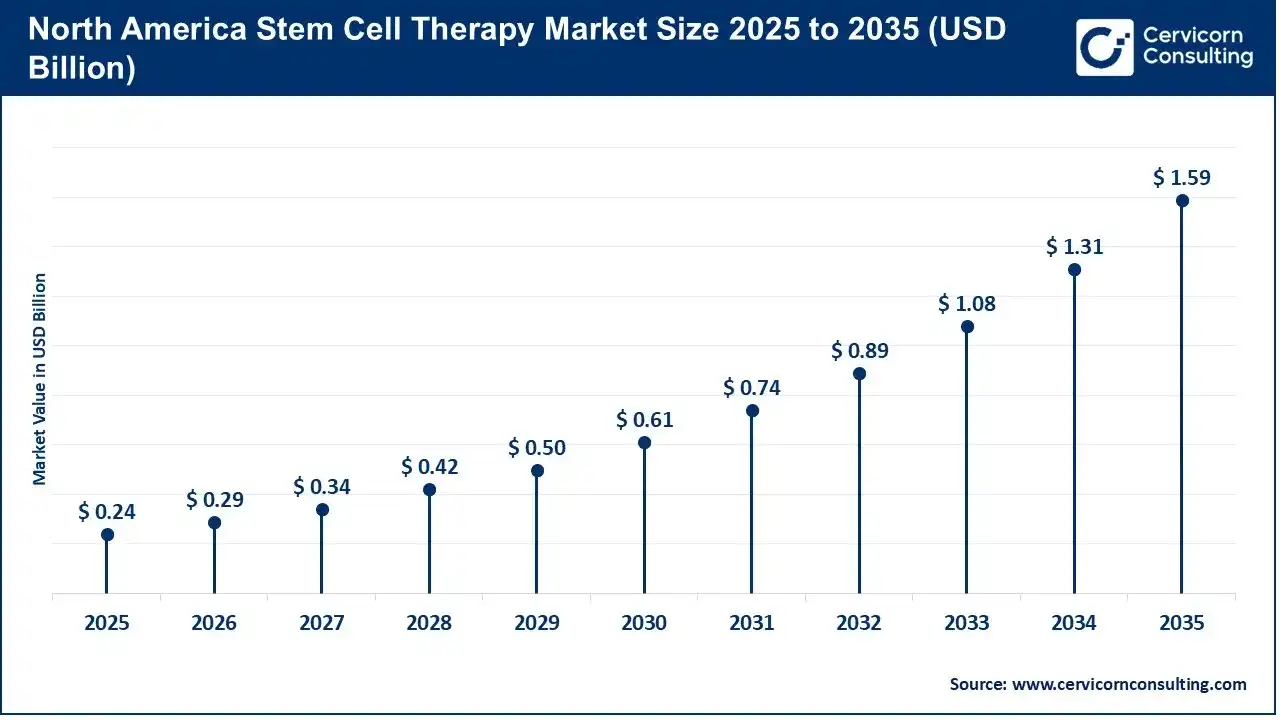
The North America stem cell therapy market size was valued at USD 0.24 billion in 2025 and is forecasted to reach USD 1.59 billion by 2035. In 2025, North America captured the largest share in the market, as it has modern research infrastructure and widespread biotechnology investment. Alongside this, the US FDA has sped up commercialization via rapid programs, like RMAT (Regenerative Medicine Advanced Therapy), Fast Track, and Priority Review designations. Moreover, a regulatory step cleared IND approval for three iPSC-based neural progenitor cell therapies to target Parkinson’s disease, spinal cord injury, and ALS.
Canada Stem Cell Therapy Market
- As the U.S. witnessed major contributions, side by side, Canada also showed a prominent role in the stem cell therapy market in 2025. Specifically, the Stem Cell Network uncovered its novel plan to propel pan-Canadian translational research, training, and clinical deployment across > 26 disease areas. Alongside this, the nation is stepping into gene-engineered cord blood therapies for aggressive leukemias.
Why is the Asia Pacific Expected to Expand Fastest in the Market?
The Asia-Pacific stem cell therapy market size was valued at USD 0.13 billion in 2025 and is anticipated to reach USD 0.91 billion by 2035. During 2026-2035, the Asia Pacific is anticipated to be the fastest-growing region, as the region's leaders are advancing regenerative medicine research, broadening biotechnology investment, and improving healthcare infrastructure. One of the eminent events is the 1st Asia Pacific Regenerative Medicine Congress (APREMIC 2026) in Jakarta, Indonesia explored collaborative efforts by international and regional experts in stem cells, tissue engineering, and gene therapy.
India Stem Cell Therapy Market
- India is predicted to grow rapidly in the stem cell therapy market over the forecast period, driven by strong government support and modern research & clinical centres. Besides this, Indian states are looking for expansion of public awareness and media coverage of regenerative advances to attract local and international patients. However, the 11th Annual Cell & Gene Therapy Symposium in Vellore and Bengaluru showcased how to navigate the gene-editing, GMP-compliant manufacturing, and clinical-translation landscape.
Stem Cell Therapy Market Segmentation Analysis
Cell Type Analysis
Adult Stem Cells: The adult stem cells segment held a dominant share of 35% in 2025, due to broader clinical indications and the use of hematopoietic and other adult stem cells in distinct methods. In 2025, umbilical cord- and adult-derived MSCs (U-MSCs) took the spotlight, specifically for anti-ageing and tissue-rejuvenation protocols focused on lowering cellular inflammation and preserving organ functionality.
The Mesenchymal Stem Cells (MSCs) segment accounted for the second-largest share of 32% in 2025, supported by heavy funding for MSC-based biotech leaders and benchmarked approval to ensure MSC immunomodulatory mechanisms. In addition, MSCs have been leveraged in chronic non-healing wounds, multiple sclerosis, gynecological conditions, and pulmonary/cardiovascular concerns.
Stem Cell Therapy Market Share, By Cell Type, 2025 (%)
| Cell Type |
Revenue Share, 2025 (%) |
| Adult Stem Cells |
35% |
| Mesenchymal Stem Cells (MSCs) |
32% |
| Hematopoietic Stem Cells (HSCs) |
18% |
| Embryonic Stem Cells |
5% |
| Induced Pluripotent Stem Cells (iPSCs) |
10% |
Induced Pluripotent Stem Cells (iPSCs): The Induced Pluripotent Stem Cells (iPSCs) segment is projected to expand rapidly in the coming years because of progress in regenerative medicine, disease modeling, and cell-based drug development. With the participation of eminent universities and biotechs, some leaders, such as Greenstone Bio, have integrated AI with patient-derived iPSCs to shape human pathology and speed up high-throughput drug screening.
Therapy Type Analysis
Autologous Stem Cell Therapy: The autologous stem cell therapy segment captured the largest share of 59% in 2025, fueled by advancing tailored medicine, minimal immune rejection risks, and advancing clinical applications. The inclusion of scalable production technologies, closed-processing workflows, and bio-preservation/cryopreservation techniques, and the presence of autologous stem cell transplants (autoSCT) for high-risk newly diagnosed multiple myeloma (NDMM) patients, supported further developments.
Allogeneic Stem Cell Therapy: The allogeneic stem cell therapy segment is estimated to be the fastest-growing during 2026-2035, supported by the potential for standardized, scalable, off-the-shelf cell treatments. Many players are consistently forcing advances in allogeneic ‘off-the-shelf’ CAR-T pipelines to target cancer and autoimmune diseases. Additionally, Orca-T and Orca-Q split donor cellular components demonstrate fragmented graft-versus-leukaemia advantages.
Application Analysis
Cancer and Hematological Disorders: The cancer and hematological disorders segment reported a major share of 28% in 2025 in the stem cell therapy market, because of expanded stem cell transplantation uses in selected blood cancers and hematological issues. 2025’s substantial growth in cancer cases worldwide demonstrated the use of cyclosporine and cyclophosphamide combinations for matched-related donor blood stem cell transplants, with enhanced safety and minimal lifelong complications.
The cardiovascular diseases segment registered steady growth in 2025, driven by a focus on regeneration of tissues, lowering fibrosis, and boosting angiogenesis. Most of 2025’s research studies have shown that several injected progenitor or stem cell types serve mainly through paracrine signaling and vascular support instead of directly converting into permanent heart muscle.
Stem Cell Therapy Market Share, By Application, 2025 (%)
| Application |
Revenue Share, 2025 (%) |
| Regenerative Medicine |
22% |
| Musculoskeletal Disorders |
18% |
| Cancer and Hematological Disorders |
28% |
| Cardiovascular Diseases |
8% |
| Neurological Disorders |
9% |
| Wound Healing and Tissue Repair |
7% |
| Others |
8% |
Neurological Disorders: The neurological disorders segment is predicted to expand rapidly in the coming years, due to a rise in research into cell-based approaches for neurodegenerative diseases and nervous system injuries. Along with MSC studies, many research groups are seeking continuous demonstration of the mechanism behind stem cell-derived products that support jump-starting and stabilising electrical brain activity patterns after a stroke.
End User Analysis
Hospitals and Specialty Clinics: The hospitals and specialty clinics segment registered a dominant share of 42% in 2025, as they play a pivotal role in stem cell transplantation, execution of patient treatment, and specific clinical care. Especially, stem cell therapies have promoted their use in routine clinical practice, with advanced insurance reimbursement and commercial adoption in indications such as paediatrics and inflammation.
The research and academic institutes segment is expected to witness lucrative growth during 2026-2035, as they are receiving millions of dollars in funding from government and philanthropic firms. Global academic institutes are seeking broader use of iPSCs to develop complex 3D organoids and allow for high outcomes in drug testing, rare genetic disorder modelling, and tailored medicine.
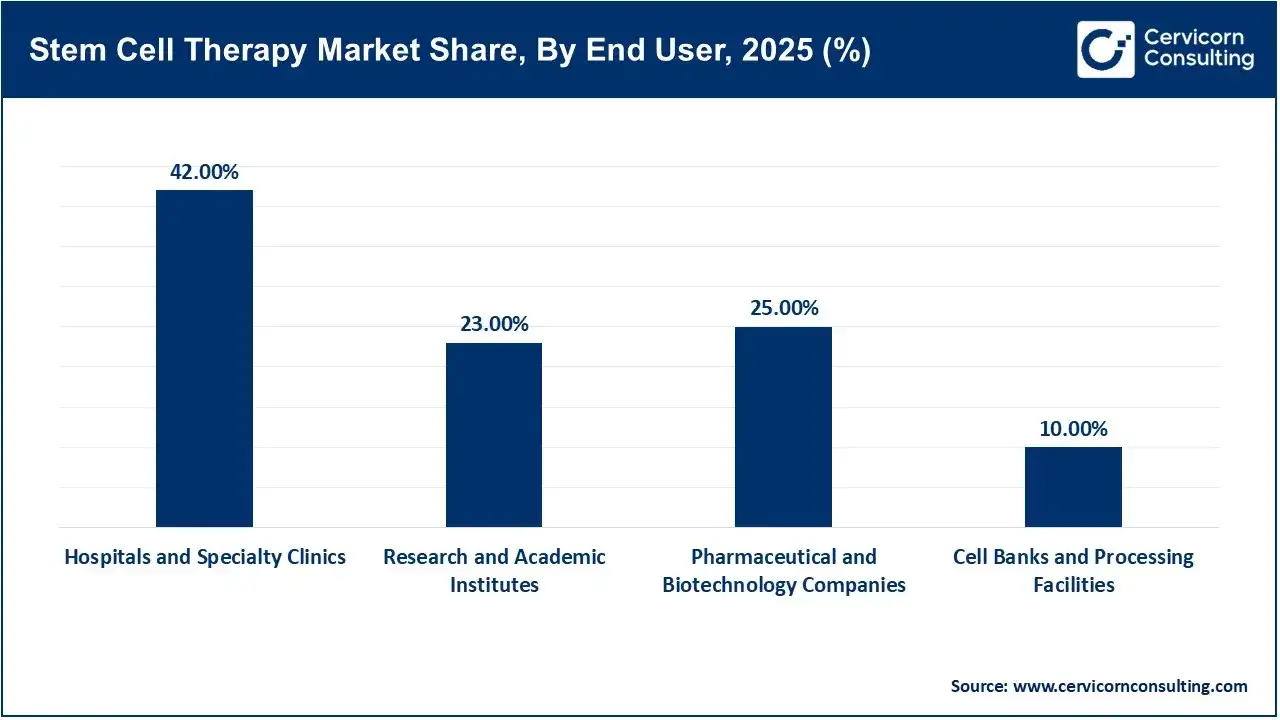
Pharmaceutical and Biotechnology Companies: The pharmaceutical and biotechnology companies segment is projected to witness rapid expansion in the upcoming years because of growing investment in cell therapies, clinical development, and advanced manufacturing capabilities. Some of the key firms, such as BlueRock Therapeutics, are expanding clinical research for stem cell-derived dopamine-producing neuron replacements in Parkinson’s cases.
Recent Developments
- October 2026: Vitalant launched its analytics lab at the Phoenix Bioscience Core to broaden and strengthen its cell and gene therapy analytical capabilities for pioneers of allogeneic cell therapies.
- August 2026: NueCell Bio introduced itself as a cell therapy science and development services company leveraging proprietary modular translational development solutions.
- June 2026: X-Therma Inc., a developing biotechnology company, commercially launched its XT-NoVo® and TimeSeal® platform.
- June 2026: Made Scientific and Pluristyx partnered to unify Pluristyx Technology such as GMP iPSC lines and derivative cell types, including induced natural killer (iNK) cells and induced mesenchymal stem cells (iMSCs), into Made Scientific's end-to-end CDMO offering for global cell and gene therapy innovators.
Short Description of Upcoming Pipelines of Stem Cell Therapy Market in 2027
- The San Diego-based biotech Aspen Neurosciences is spurring the development of an autologous induced pluripotent stem cell (iPSC) therapy for Parkinson’s disease. Afterwards, following an open-label Phase 1/2a trial (ASPIRO) that dosed 15 patients, the company is slated to begin a Phase 3 trial in the second half of 2027.
- Aspect Biosystems is planning to develop and publish clinical data in 2027, which is obtained from its immune-evasive cell therapy pipeline.
- Trex Bio, the South San Francisco-based biotech, is studying its lead TNFR2 agonist entity, called TRB-061. Currently, it is in a Phase 1b clinical trial for moderate-to-severe atopic dermatitis, and they are expecting clinical data to arrive in mid-2027.
- Cellusion is focusing on commercialization or advancing sales of its iPSC-derived corneal endothelium cell therapy (CSL-001) for bullous keratopathy in Japan by 2027.
Key Companies
Segments Covered
By Cell Type
- Adult Stem Cells
- Mesenchymal Stem Cells (MSCs)
- Hematopoietic Stem Cells (HSCs)
- Embryonic Stem Cells
- Induced Pluripotent Stem Cells (iPSCs)
By Therapy Type
- Autologous Stem Cell Therapy
- BM, Blood, & Umbilical Cord-derived Stem Cells
- Adipose-Derived Cells
- Others
- Allogeneic Stem Cell Therapy
- Hematopoietic Stem Cell Therapies
- Mesenchymal Stem Cell Therapies
By Technology
- Cell Acquiition
- Bone Marrow Harvest
- Umbilical Blood Cord
- Apheresis
- Cell Production
- Therapeutic Cloning
- In-vitro Fertilization
- Cell Culture
- Isolation
- Cryopreservation
- Expansion and Sub-Culture
By Application
- Regenerative Medicine
- Musculoskeletal Disorders
- Cancer and Hematological Disorders
- Cardiovascular Diseases
- Neurological Disorders
- Wound Healing and Tissue Repair
- Others
By End User
- Hospitals and Specialty Clinics
- Research and Academic Institutes
- Pharmaceutical and Biotechnology Companies
- Cell Banks and Processing Facilities
By Region
- North America
- Europe
- Asia-Pacific
- Latin America
- Middle East and Africa
