Respiratory Care Devices Market Size and Growth 2026 to 2035
The global respiratory care devices market size was estimated at USD 24.96 billion in 2025 and is expected to hit around USD 57.12 billion by 2035, growing at a compound annual growth rate (CAGR) of 8.6% over the forecast period from 2026 to 2035. The respiratory care devices market is being strongly driven by the rising burden of chronic respiratory diseases such as COPD, asthma, and sleep apnea, alongside worsening air quality and smoking-related lung disorders. According to the World Health Organization (WHO), COPD caused approximately 3.5 million deaths globally in 2021, accounting for nearly 5% of all deaths worldwide, making it one of the leading causes of mortality and a major catalyst for long-term respiratory support demand. Increasing diagnosis rates of obstructive sleep apnea are also accelerating adoption of CPAP/BiPAP devices, oxygen concentrators, nebulizers, and ventilators. In the U.S. alone, around 39 million adults are estimated to suffer from obstructive sleep apnea, highlighting the substantial patient pool requiring respiratory monitoring and therapeutic devices. Rising pollution levels, urbanization, and tobacco exposure especially in emerging economies are further expanding the need for respiratory care technologies.
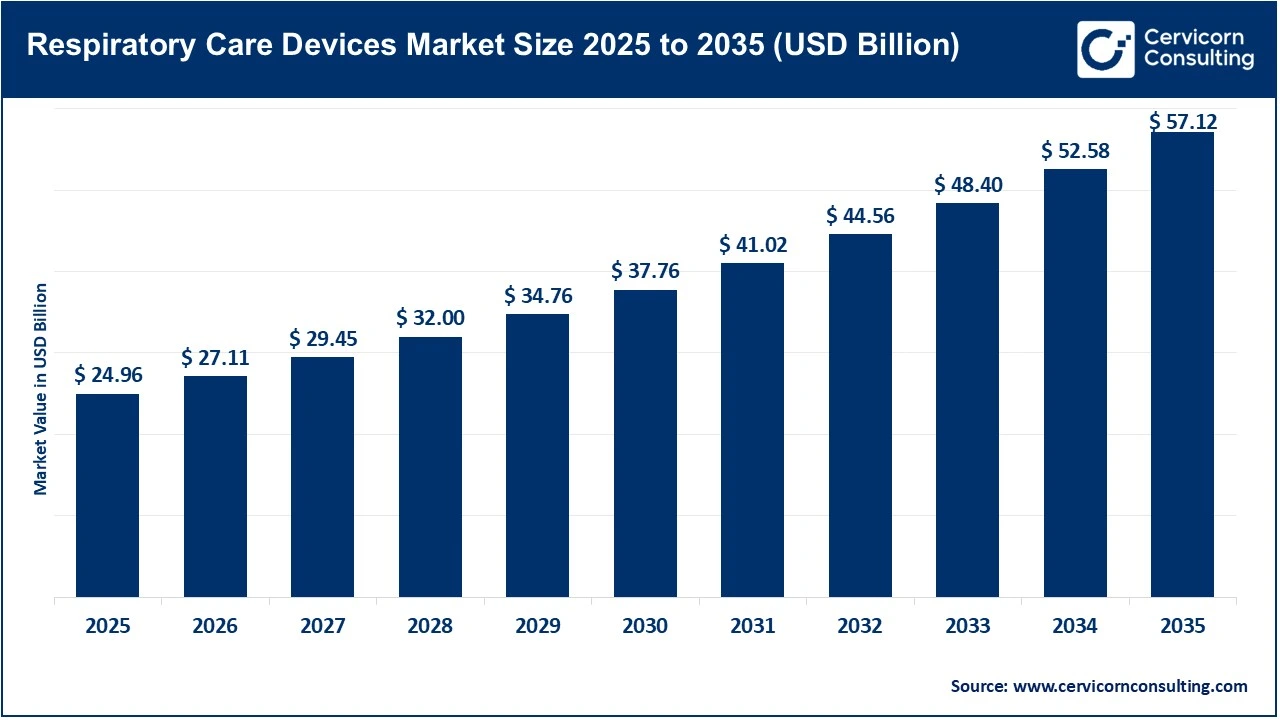
Another major growth factor of respiratory care devices market is the rapid shift toward home-based respiratory care and portable monitoring systems, supported by aging populations and healthcare cost pressures. Elderly patients are more vulnerable to chronic respiratory conditions and increasingly require long-term oxygen therapy, ventilators, and portable spirometry solutions at home. Market adoption is also benefiting from technological advancements, including cloud-connected respiratory systems, wireless monitoring, smart inhalers, and remote patient management tools, which improve treatment adherence and clinical outcomes. Hospitals continue to remain key demand centers due to the high volume of respiratory emergencies and critical care admissions, while expanding healthcare infrastructure in countries such as India and China is accelerating device penetration. Additionally, studies estimate that more than 65 million people globally suffer from moderate-to-severe COPD, creating sustained demand for respiratory assistance and diagnostic devices over the long term.
Report Highlights
- North America dominated the global market with a 39.2% share, supported by high prevalence of COPD, asthma, and sleep apnea, advanced healthcare infrastructure, and strong adoption of home respiratory care devices.
- Asia-Pacific represented 23.4% market share and remained the fastest-growing regional market, fueled by expanding healthcare infrastructure, rising respiratory disease burden, urban pollution, and growing healthcare investments in China and India.
- Therapeutic Respiratory Care Devices held the largest product segment share at 46.8%, driven by strong demand for ventilators, oxygen concentrators, nebulizers, inhalers, and CPAP/BiPAP systems for chronic respiratory disease management.
- Hospitals accounted for the highest end-user share of 48.5%, owing to increasing ICU admissions, emergency respiratory care demand, and large-scale procurement of ventilators and respiratory monitoring systems.
- COPD emerged as the leading disease indication segment with a 34.7% market share, supported by rising smoking prevalence, aging populations, worsening air pollution, and long-term oxygen therapy requirements.
Smart Respiratory Care Devices Technologies Driving Market Growth
The respiratory care devices market is increasingly being shaped by smart, connected, and AI-enabled technologies that improve disease monitoring, treatment adherence, and remote patient management. The growing prevalence of chronic respiratory diseases such as COPD, asthma, and sleep apnea has accelerated demand for intelligent respiratory systems capable of real-time monitoring and predictive intervention. Innovations such as AI-powered ventilators, Bluetooth-enabled inhalers, cloud-connected CPAP devices, and wearable respiratory monitoring sensors are helping clinicians optimize treatment while enabling patients to manage respiratory conditions at home. Remote patient monitoring (RPM) and telehealth integration have become major growth drivers, particularly for older adults and post-ICU respiratory patients, reducing hospital readmissions and improving long-term outcomes. These smart technologies are transforming respiratory care from reactive treatment to proactive disease management.
Emerging Smart Respiratory Care Device Technologies
| Technology |
Description |
Market Impact |
| AI-Powered Ventilators |
Uses machine learning to optimize airflow, oxygen delivery, and ventilation settings |
Improves critical care efficiency and patient outcomes |
| Smart Inhalers |
Bluetooth-enabled inhalers with medication tracking and adherence reminders |
Enhances asthma and COPD treatment compliance |
| Connected CPAP/BiPAP Devices |
Cloud-linked sleep apnea devices with remote physician monitoring |
Expands home respiratory care adoption |
| Wearable Respiratory Sensors |
Sensors tracking breathing rate, oxygen saturation, and respiratory distress |
Enables continuous remote patient monitoring |
| Tele-respiratory Platforms |
Telehealth-integrated respiratory monitoring systems |
Supports homecare and reduces hospitalization burden |
| Portable Oxygen Concentrators (POCs) |
Lightweight, battery-powered oxygen delivery devices |
Improves mobility and patient convenience |
| Digital Spirometers |
Smartphone-enabled pulmonary function testing devices |
Enables faster diagnosis and home monitoring |
Recent Major Milestones
1. Philips Respironics FDA Consent Decree & Recall Remediation (2024)
In April 2024, Philips Respironics reached a consent decree agreement with the U.S. FDA and Department of Justice following its large-scale recall of CPAP, BiPAP, and ventilator devices. The agreement requires Philips to strengthen its manufacturing quality systems and expand remediation for affected patients by providing repaired or replacement respiratory devices. Although regulatory in nature, this milestone is reshaping the respiratory care market by accelerating demand for next-generation, safer respiratory devices and encouraging stronger compliance standards across manufacturers. Competitors have also benefited from replacement demand, stimulating innovation in sleep apnea and home respiratory care technologies. The recall impacted nearly 15 million respiratory devices globally, highlighting the critical need for device reliability and regulatory oversight in respiratory care.
2. Expansion of Home-Based Respiratory Care Through Smart CPAP & Remote Monitoring
Respiratory care companies, particularly major manufacturers, are increasingly investing in cloud-connected CPAP/BiPAP systems and remote patient monitoring platforms to support home-based care. Recent respiratory care product developments emphasize digital tracking, telehealth integration, and AI-supported therapy optimization for sleep apnea and COPD patients. This milestone is driving market growth by reducing hospital dependency and improving long-term treatment adherence, especially among aging populations. Home respiratory care adoption has increased significantly because connected devices allow physicians to monitor patient compliance remotely, creating sustained demand for smart respiratory equipment and software-enabled ecosystems.
3. FDA Clearance of New Airway Clearance Technologies (2025)
In July 2025, Synchrony Medical received FDA 510(k) clearance for its LibAirty™ Airway Clearance System, a device designed to improve mucus clearance and respiratory therapy outcomes. This milestone reflects the increasing pace of innovation in respiratory devices beyond traditional ventilators and oxygen systems. Such approvals are expanding treatment options for chronic pulmonary diseases and post-critical care rehabilitation. Regulatory approvals of advanced respiratory technologies encourage competitive product launches and faster adoption of specialized respiratory therapies, particularly for COPD and chronic airway management patients.
4. Government Investments in Respiratory Infrastructure & Oxygen Preparedness
Governments worldwide continue to strengthen respiratory care preparedness by investing in oxygen infrastructure, ICU respiratory equipment, and hospital respiratory units, particularly following pandemic-related healthcare lessons. Public healthcare spending aimed at respiratory emergency preparedness and chronic disease management is supporting procurement of ventilators, oxygen concentrators, respiratory monitors, and portable care systems. These initiatives are driving long-term market growth by increasing healthcare access in emerging economies and supporting broader penetration of respiratory technologies in both hospitals and homecare settings. Government-backed respiratory preparedness programs are also improving awareness and diagnosis of chronic respiratory disorders, increasing patient adoption of respiratory care devices.
Regional Analysis
The respiratory care devices market is segmented by region into North America, Europe, Asia-Pacific, Latin America, and LAMEA. Here is a brief overview of each region:
North America Respiratory Care Devices Market: Driven by High Respiratory Disease Burden, Advanced Healthcare Infrastructure, and Strong Homecare Adoption
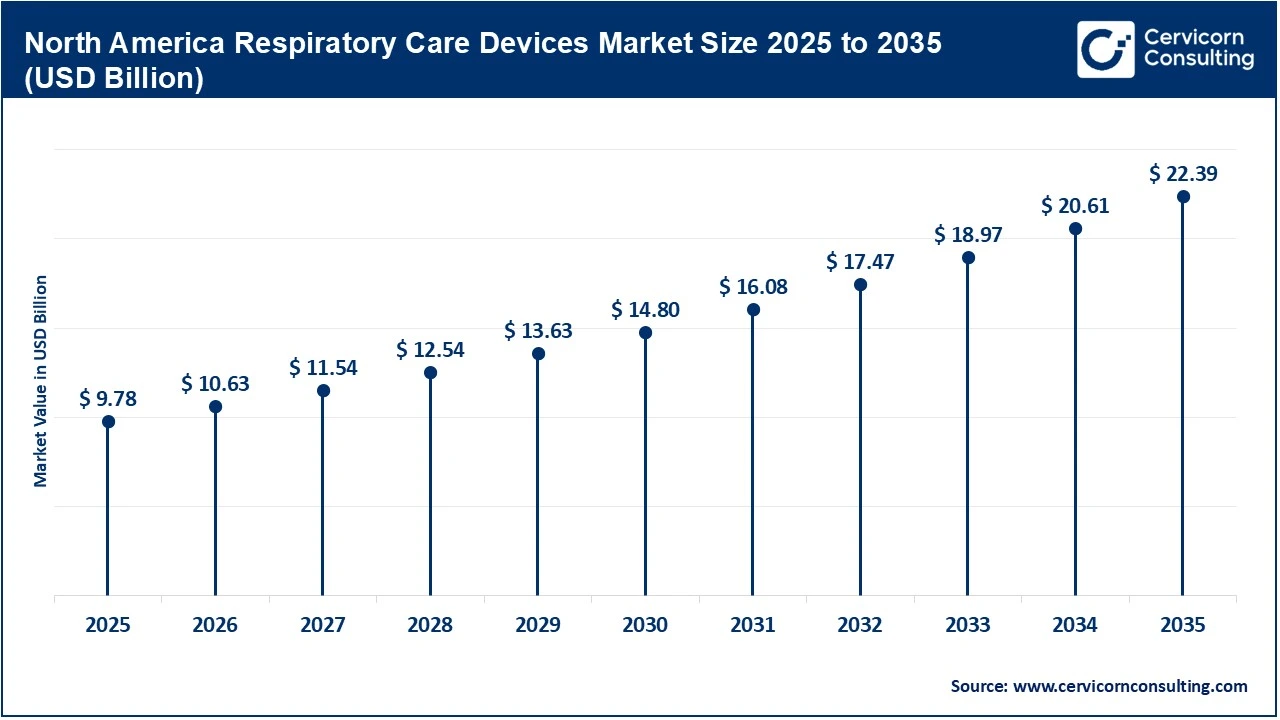
The North America respiratory care devices market size was accounted at USD 9.78 billion in 2025 and is expected to reach USD 22.39 billion by 2035. The North America market is highly developed, supported by advanced healthcare systems, rising prevalence of chronic respiratory disorders, and rapid adoption of technologically advanced respiratory solutions. The region benefits from strong demand for ventilators, oxygen concentrators, nebulizers, inhalers, CPAP/BiPAP devices, and respiratory monitoring systems due to the increasing burden of COPD, asthma, and sleep apnea. Growing preference for home-based respiratory care, increasing integration of smart respiratory monitoring technologies, and strong reimbursement frameworks further strengthen market expansion. Additionally, the presence of major respiratory device manufacturers, continuous FDA approvals, and rising investments in connected respiratory care platforms continue to position North America as one of the leading and most innovation-driven respiratory care markets globally.
United States: Strong respiratory device innovation, high chronic respiratory disease burden, and expanding homecare adoption drive market growth.
- More than 25 million Americans suffer from asthma, increasing long-term demand for inhalers, nebulizers, and respiratory monitoring devices
- Approximately 16 million adults in the U.S. are diagnosed with COPD, while millions remain undiagnosed, supporting strong respiratory therapy demand
- Increasing adoption of cloud-connected CPAP/BiPAP devices and remote respiratory monitoring technologies is accelerating home respiratory care expansion
Canada: Rising chronic respiratory disease prevalence, healthcare modernization, and growing home oxygen therapy adoption support market growth.
- Around 3 million Canadians live with a serious respiratory disease, including asthma and COPD
- Growing investments in healthcare infrastructure and respiratory care programs continue to improve access to advanced respiratory devices
- Increasing elderly populations and demand for portable oxygen concentrators and home respiratory therapies are driving market expansion across long-term care settings
Asia-Pacific Respiratory Care Devices Market: Driven by Rising Respiratory Disease Burden, Expanding Healthcare Infrastructure, and Growing Homecare Adoption
The Asia-Pacific respiratory care devices market size was recorded at USD 5.84 billion in 2025 and is projected to surpass around USD 13.37 billion by 2035. The Asia-Pacific market is witnessing strong growth due to the increasing prevalence of chronic respiratory diseases, rising air pollution levels, rapid urbanization, and expanding healthcare investments across emerging economies. Countries in the region are experiencing growing demand for ventilators, oxygen concentrators, nebulizers, inhalers, and respiratory monitoring systems as COPD, asthma, sleep apnea, and infectious respiratory diseases become more prevalent. Increasing healthcare expenditure, improving hospital infrastructure, expanding access to respiratory diagnostics, and rising awareness regarding early respiratory disease management are further supporting market expansion.
China: Strong healthcare investments, severe air pollution concerns, and rising prevalence of chronic respiratory diseases drive market growth.
- China records high COPD prevalence, affecting nearly 100 million people, creating substantial demand for oxygen therapy and respiratory support devices
- Rising government healthcare investments and hospital modernization programs continue to strengthen respiratory device adoption
- Increasing urban pollution and smoking rates are accelerating demand for respiratory monitoring and homecare solutions
India: Expanding healthcare access, growing respiratory disease burden, and rising homecare adoption accelerate market expansion.
- India has over 55 million people suffering from COPD and asthma combined, significantly increasing respiratory treatment demand
- Rising air pollution in major urban areas and increasing smoking-related illnesses support growth in nebulizers, inhalers, and oxygen concentrators
- Government healthcare expansion initiatives and improving access to affordable respiratory devices are strengthening market penetration
Europe Respiratory Care Devices Market: Driven by Aging Population, Strong Healthcare Systems, and Rising Chronic Respiratory Disease Burden
The Europe respiratory care devices market size was valued at USD 6.69 billion in 2025 and is forecasted to grow around USD 15.31 billion by 2035. The Europe market is highly developed and supported by advanced healthcare infrastructure, rising prevalence of chronic respiratory diseases, and increasing demand for home-based respiratory care. Growing cases of COPD, asthma, sleep apnea, and respiratory infections, coupled with increasing elderly populations, continue to drive demand for ventilators, oxygen concentrators, nebulizers, inhalers, and respiratory monitoring devices. The region also benefits from favorable reimbursement systems, strong public healthcare spending, and increasing adoption of technologically advanced respiratory solutions such as connected CPAP devices and remote patient monitoring systems.
Germany: Advanced healthcare infrastructure, strong medical technology sector, and high respiratory disease burden support market growth.
- Germany maintains one of Europe’s largest medical device industries, supporting strong respiratory equipment innovation and adoption
- Approximately 6–7 million people in Germany suffer from chronic respiratory diseases, including COPD and asthma
- Increasing use of home oxygen therapy and sleep apnea treatment devices continues to strengthen respiratory care demand
United Kingdom: Rising chronic respiratory disorders, NHS support, and increasing adoption of home respiratory care drive expansion.
- Around 7.2 million people in the UK live with asthma, creating substantial demand for inhalers and respiratory monitoring systems
- The National Health Service (NHS) continues expanding respiratory disease management and homecare support programs
- Growing diagnosis rates of sleep apnea and COPD are increasing demand for CPAP/BiPAP and oxygen therapy devices
Respiratory Care Devices Market Share, By Region, 2025 (%)
| Region |
Revenue Share, 2025 (%) |
| North America |
39.2% |
| Europe |
26.8% |
| Asia-Pacific |
23.4% |
| LAMEA |
10.6% |
LAMEA Respiratory Care Devices Market: Driven by Expanding Healthcare Access, Rising Respiratory Disease Burden, and Increasing Government Healthcare Investments
The LAMEA respiratory care devices market was valued at USD 2.65 billion in 2025 and is anticipated to reach around USD 6.05 billion by 2035. The LAMEA market is steadily expanding due to increasing prevalence of chronic respiratory diseases, improving healthcare infrastructure, and rising awareness regarding respiratory disease diagnosis and treatment. Growing incidences of COPD, asthma, respiratory infections, and smoking-related pulmonary disorders, combined with worsening air pollution in urban centers, continue to drive demand for ventilators, oxygen concentrators, nebulizers, inhalers, and respiratory monitoring systems. Governments across several countries are increasing investments in healthcare modernization, oxygen infrastructure, and hospital respiratory care capabilities. In addition, rising penetration of private healthcare services, growing medical tourism in selected countries, and increasing demand for affordable home respiratory care solutions are contributing to market growth across the region.
Brazil: Large patient population, rising respiratory disease burden, and healthcare modernization support market expansion.
- Brazil accounts for one of the largest healthcare markets in Latin America, increasing demand for respiratory diagnostic and therapeutic devices
- Rising cases of asthma, COPD, and smoking-related respiratory illnesses continue supporting respiratory equipment adoption
- Expanding public and private healthcare infrastructure is improving access to oxygen therapy and pulmonary care services
Saudi Arabia: Growing healthcare investments, rising respiratory disease prevalence, and advanced hospital expansion drive growth.
- Increasing government investments under Vision 2030 healthcare transformation initiatives are strengthening medical device adoption
- Rising prevalence of asthma and sleep apnea, coupled with obesity-related respiratory disorders, supports CPAP/BiPAP demand
- Expansion of advanced hospitals and intensive care facilities continues increasing respiratory device procurement
Segmental Analysis
The respiratory care devices market is segmented into product, disease indication, end user, and geography.
Product Analysis
Therapeutic respiratory care devices dominate the market due to their widespread use in managing chronic and acute respiratory conditions, including COPD, asthma, sleep apnea, and respiratory failure. Products including ventilators, oxygen concentrators, nebulizers, inhalers, and CPAP/BiPAP systems represent the largest revenue share because they are essential for both hospital-based critical care and long-term home treatment. Rising respiratory disease prevalence, increasing elderly populations, and greater demand for home oxygen therapy continue strengthening adoption of therapeutic respiratory solutions globally.
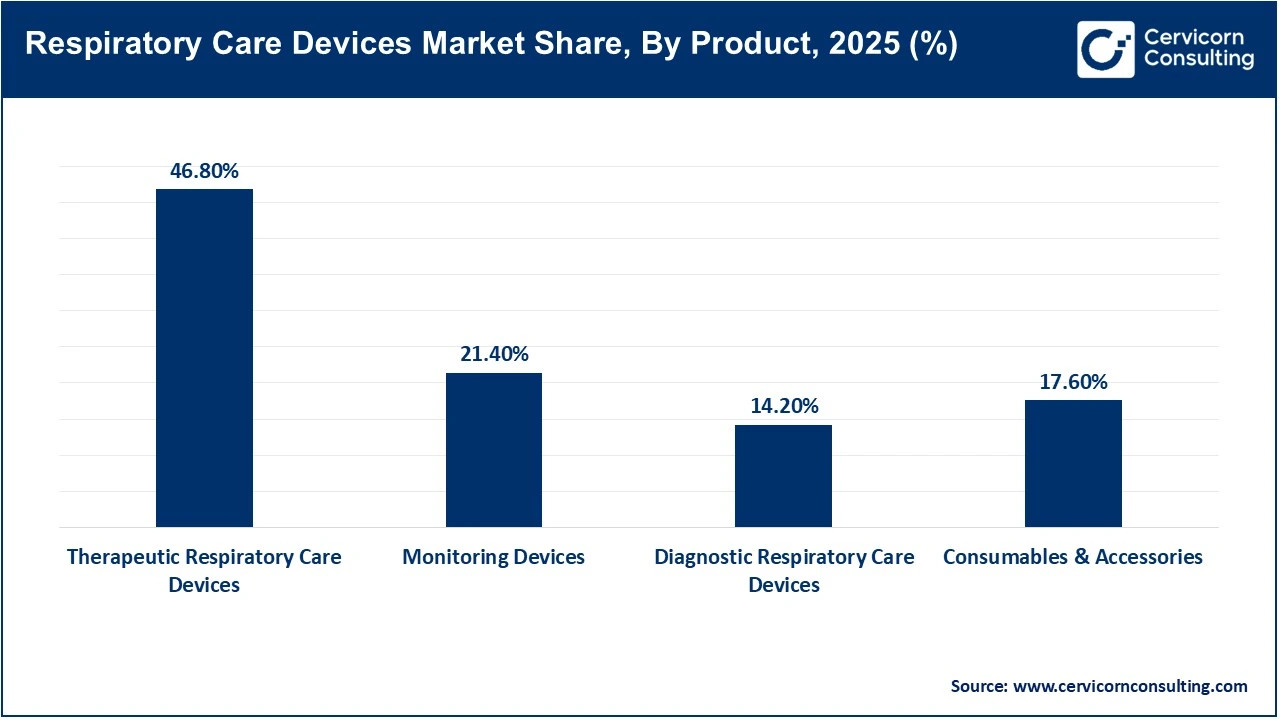
Monitoring devices are expected to witness the fastest growth owing to rising demand for real-time respiratory assessment and remote patient monitoring. Pulse oximeters, capnography systems, and gas analyzers are increasingly used across hospitals and homecare settings to track oxygen saturation and breathing performance. Growth is supported by expanding telehealth ecosystems, increasing awareness of preventive respiratory monitoring, and the adoption of wearable respiratory technologies. The shift toward connected healthcare and early disease detection further accelerates demand for smart respiratory monitoring devices.
Disease Indication Analysis
Chronic Obstructive Pulmonary Disease (COPD) remains the dominant disease indication segment due to its high global disease burden and long-term requirement for respiratory support therapies. Patients suffering from COPD frequently require oxygen therapy, nebulizers, inhalers, ventilators, and pulmonary monitoring systems, making it one of the largest contributors to respiratory device demand. Increasing smoking prevalence, aging demographics, and worsening air pollution levels are sustaining market expansion. Frequent hospitalizations and long-term disease management requirements also contribute to the segment’s substantial market leadership.
Respiratory Care Devices Market, By Disease Indication, 2025 (%)
| Disease Indication |
Revenue Share, 2025 (%) |
| Chronic Obstructive Pulmonary Disease (COPD) |
34.7% |
| Sleep Apnea |
24.3% |
| Asthma |
19.6% |
| Infectious Diseases |
12.1% |
| Others |
9.3% |
Sleep apnea is projected to be the fastest-growing disease indication segment because of increasing diagnosis rates and growing awareness of untreated sleep disorders. Rising obesity prevalence, sedentary lifestyles, and growing sleep health awareness are significantly boosting demand for CPAP, BiPAP, and smart sleep monitoring devices. Additionally, advancements in cloud-connected respiratory technologies and remote compliance tracking are improving treatment adherence. Expanding access to sleep diagnostics and homecare respiratory therapy further strengthens growth opportunities in this segment.
End User Analysis
Hospitals dominate the respiratory care devices market due to high patient inflow for emergency respiratory care, intensive care treatment, and chronic disease management. Hospitals represent major purchasers of ventilators, oxygen delivery systems, respiratory monitoring equipment, and pulmonary diagnostic devices, especially for critically ill patients. Increasing respiratory admissions linked to COPD, pneumonia, asthma, and infectious diseases continue driving procurement. Furthermore, advanced infrastructure and access to skilled healthcare professionals reinforce hospitals as the leading end-user segment globally.
Respiratory Care Devices Market, By End User, 2025 (%)
| End User |
Revenue Share, 2025 (%) |
| Hospitals |
48.5% |
| Home Care Settings |
31.7% |
| Ambulatory Care Centers (ACCs) |
11.2% |
| Others |
8.6% |
Home care settings are anticipated to experience the fastest growth due to increasing preference for cost-effective, patient-centric respiratory treatment outside hospitals. Growing adoption of portable oxygen concentrators, nebulizers, CPAP/BiPAP devices, and remote respiratory monitoring systems is supporting this expansion. Elderly populations and patients requiring long-term respiratory support increasingly prefer home-based treatment for convenience and reduced hospitalization costs. Technological advances in connected respiratory devices and telehealth integration are also accelerating the shift toward home respiratory care.
Top Companies
Recent Developments
- In December 2025, ResMed Inc. received FDA 510(k) clearance for Personalized Therapy Comfort Settings (PTCS), an AI-enabled digital CPAP optimization technology marketed as Smart Comfort, designed to personalize therapy pressure settings and improve sleep apnea treatment adherence. The development strengthens ResMed’s leadership in connected respiratory care and accelerates adoption of AI-driven respiratory therapies.
- In September 2025, ResMed Inc. launched the ResMed Sleep Institute, a global initiative focused on improving awareness of sleep apnea, diagnostics, and respiratory disease education through digital respiratory health programs. This move supports stronger patient engagement and expands the company’s sleep and respiratory ecosystem.
- In Q1 2026, Koninklijke Philips N.V. reported continued growth in its Sleep & Respiratory Care (SRC) business, supported by stronger international demand and innovation in connected respiratory solutions despite ongoing U.S. regulatory remediation efforts. The company expanded investments in digitally enabled respiratory monitoring and homecare respiratory support technologies.
Market Segmentation
By Product
- Therapeutic Respiratory Care Devices
- Monitoring Devices
- Diagnostic Respiratory Care Devices
- Consumables & Accessories
By Disease Indication
- Chronic Obstructive Pulmonary Disease (COPD)
- Sleep Apnea
- Asthma
- Infectious Diseases
- Others
By End User
- Hospitals
- Home Care Settings
- Ambulatory Care Centers (ACCs)
- Others
By Region
- North America
- Europe
- Asia-Pacific
- LAMEA