Polyurethane Market Size and Growth 2026 to 2035
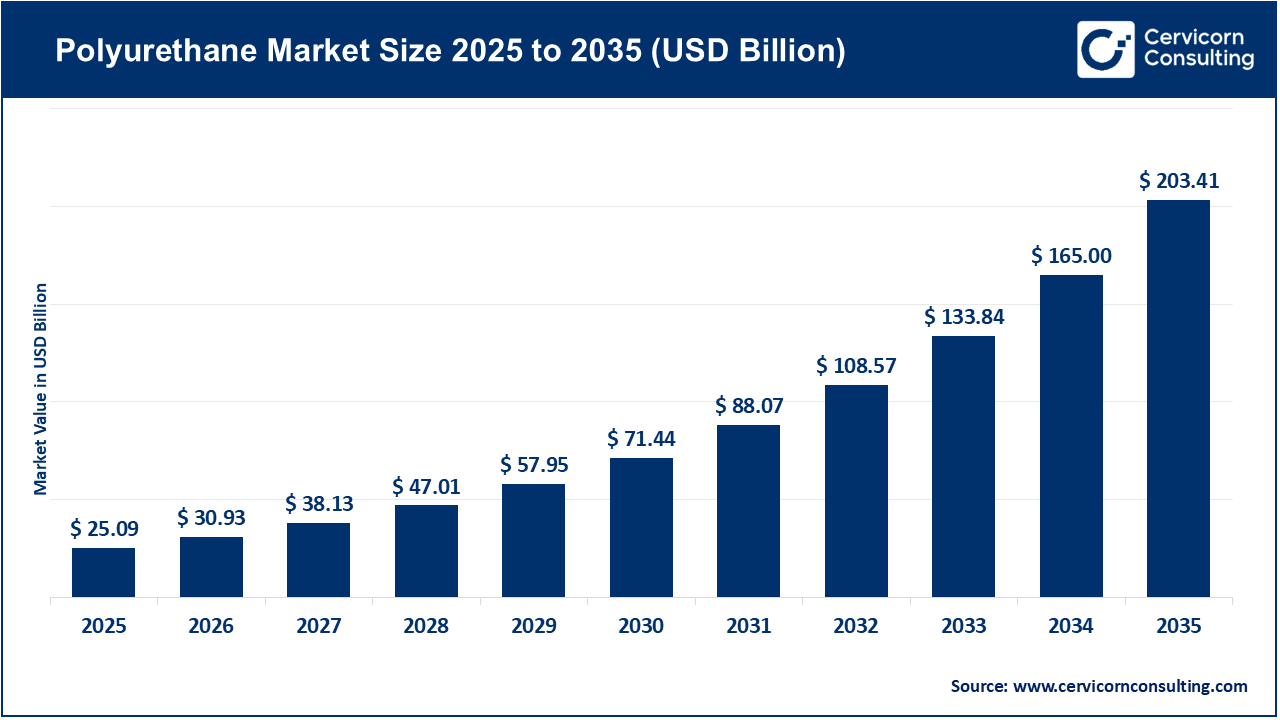
The global polyurethane market size was estimated at USD 88.64 billion in 2025 and is expected to be worth around USD 148.32 billion by 2035, exhibiting at a compound annual growth rate (CAGR) of 5.3% over the forecast period from 2026 to 2035. The global polyurethane (PU) market has entered a transformational stage driven by a strategic transition to sustainable and high-performing applications, as well as regional consolidation.
Polyurethane (PU) is one of the most adaptable classes of polymer in the contemporary chemical industry, covering applications from ultra-soft flexible foams in the bedding market, rigid insulation in aerospace and construction through high-performance applications. PU is adaptable because its unique chemical structure is synthesized through the exothermic reaction of a polyol with a diisocyanate. Interestingly, the industry is now characterized by a bifurcated environment: PU represents one of the fundamental building blocks of energy efficiency and lightweighting applications, while being a prominent target of environmental and health regulations given PU's basic dependency on petroleum-based feedstocks and health hazards from the precursors.
The global polyurethane market is likely to grow from USD 88.64 billion in 2025 to potentially much higher valuation by the end of the decade, given urbanization in emerging economies and the global mandate for carbon neutrality. According to studies, the synthesis of plastics, polyurethane being among them, is responsible for around 3% of global greenhouse gas emissions and this number is expected to grow as global synthetic polymer production will be near 600 million tons by 2060. Accordingly, the industry is currently pivoting towards the use of "Green PU" strategies to blend bio-based materials together with chemical recycling to distance crude oil from growth.
Report Highlights
- Asia-Pacific dominates the global polyurethane market with a 45.4% share, driven by rapid urbanization, strong construction activity, expanding furniture manufacturing, and growing automotive production in China, India, and Southeast Asia.
- Rigid foam is the largest product segment with a 31.4% share, owing to its widespread use in building insulation, refrigeration, and cold-storage applications.
- Polyols are the leading raw material segment with a 37.1% share, as they are essential across all polyurethane product types.
- Construction is the largest application segment with a 27.2% share, driven by global energy-efficiency mandates, green building standards, and demand for advanced insulation materials.
Shift Toward Automotive and Electronics Reshapes Polyurethane Demand
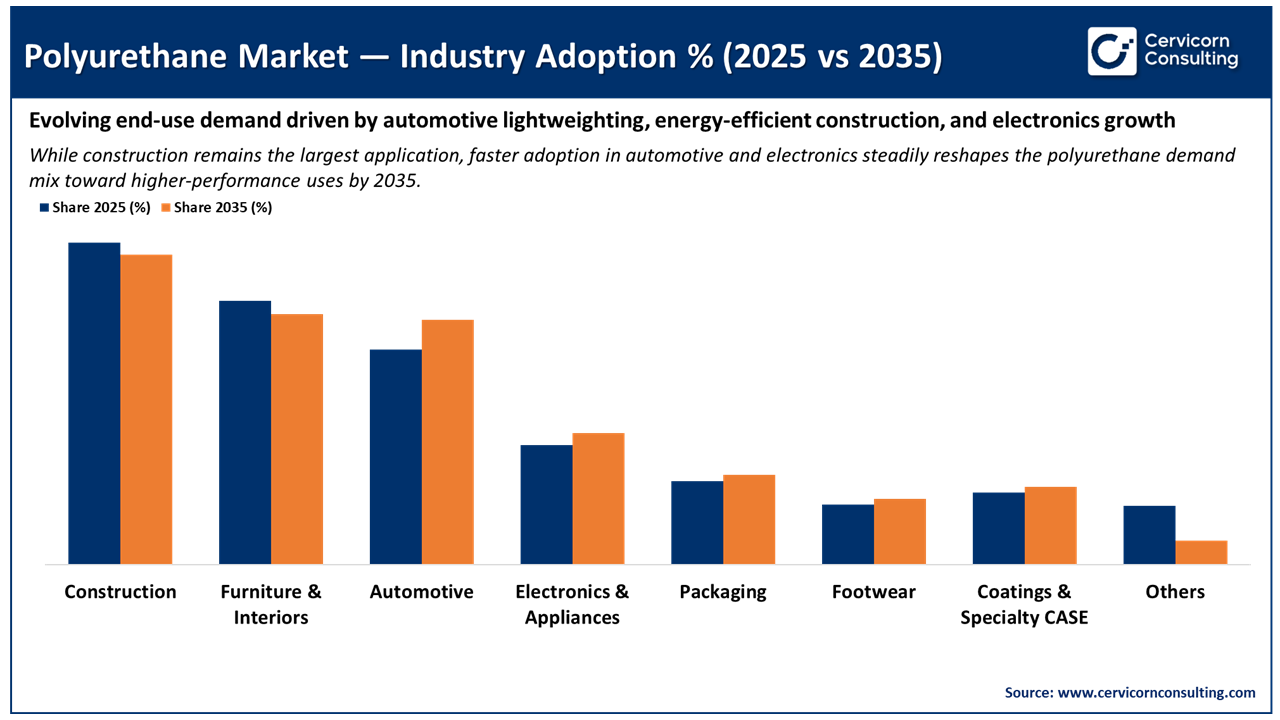
The chart highlights a clear evolution in polyurethane industry adoption between 2025 and 2035, showing a gradual rebalancing of demand across end-use sectors rather than a complete structural shift. Construction remains the largest application in both years, though its relative share declines slightly by 2035 as growth stabilizes in mature building markets. Furniture & interiors also see a modest reduction in share, reflecting saturation and slower replacement cycles. In contrast, automotive adoption increases notably, driven by lightweighting requirements, electric vehicle growth, and rising use of polyurethane in seating, interiors, and NVH components. Electronics & appliances, packaging, and footwear all post incremental gains, supported by appliance insulation needs, e-commerce logistics, and comfort-oriented consumer products. Overall, the data suggests that while traditional bulk applications continue to anchor the market, higher-growth, technology-driven sectors increasingly influence polyurethane demand dynamics by 2035.
Recent Major Milestones
1. Major Corporate Capacity Expansion and Plant Launches
In the recent past, the global polyurethane raw materials supply chain has seen consolidated and expanded capacity, especially in Methylene Diphenyl Diisocyanate (MDI). Wanhua Chemical has successfully grown to be the largest global MDI producer and it has executed numerous large-scale, capacity expansions in Ningbo and Fujian, China. Wanhua has clearly established the APAC region as the global production region, owning over 30% of global MDI capacity. Competitors to Wanhua like BASF and Covestro have primarily executed actions related to optimizing their production footprint. Some facilities in Europe have adapted to fluctuating energy costs and operational challenges, while new, efficient plants have recently been launched in Asia, and reflect a commitment to long-term growth of the electronics and automotive sectors.
2. Government Sustainability Initiatives and Green Building Mandates
Governmental policies have been the major driver of market change. For example, the European Green Deal and a variety of net-zero building mandates across North America have fueled the use of high-performance insulation. Rigid polyurethane foam is often described as the "gold standard" for thermal efficiency supporting the developer in meeting more stringent R-values in building codes. Also, China is now emphasizing resource recycling and has appointed specific recycling groups at the end of 2024 to reuse industrial plastics, including pu foams used in the construction and appliances categories.
3. Significant Developments in Bio-based Polyol R&D
There has been significant development for the transition to renewable primary feedstocks with the recent retrofitting of bio-based polyols from lignin, castor, and soybean oil. Recent studies have shown the viability of using lignin, a byproduct of the pulp and paper sector, as a partial replacement of petroleum oil-based polyols for use in flexible/rigid foams. The importance of these milestones is obvious in reducing the carbon footprint of pu products. For example, taking bio-based rigid PU foams made from black alder bark biomass to incorporate a local agricultural waste into an existing area of significant demand for insulation in building construction.
4. Regulated Environmental and Safety Policy Deployment
Regulated scrutiny by ECHA European Chemicals Agency, Environmental Protection Agency (EPA) are forcing the industry to respond. The end of the designation of potential sensitizers for certain isocyanates, and the tightening VOC emissions standards have forced regulated compliance contract limitations outlined in the construction sector. This has led to the introduction of ultra-low VOC spray foam systems and renewed attention on Non-Isocyanate Polyurethanes (NIPUs). Numerous examples exist where regulatory hurdles can be viewed as innovation drivers for safer next-generation polymer chemistries, through research and development within related scientific fields.
Report Scope
| Area of Focus |
Details |
| Market Size in 2026 |
USD 93.32 Billion |
| Market Size in 2035 |
USD 148.32 Billion |
| Market CAGR 2026 to 2035 |
5.30% |
| Dominant Region |
Asia-Pacific |
| Key Segments |
Product, Raw Material, Application, Region |
| Key Companies |
BASF SE, Mitsui & Co. Plastics Ltd, Covestro AG, DIC Corporation, Huntsman International LLC, Dow Inc., Eastman Chemical Company, RAMPF Holding GmbH & Co. KG, Mitsubishi Chemical Corporation, The Lubrizol Corporation, Recticel NV/SA, Tosoh Corporation, Woodbridge, RTP Company |
Market Dynamics
Market Drivers
- Increased Demand for High-Performance Insulation Materials in Construction: The construction industry continues to underpin the PU market growth. Data indicates the growth of the building sector has been a major contributor for the rigid polyurethane (PUR) foam insulation. Building on the premise of the material's greater thermal resistance, the rigid PU foam insulates more effectively than many traditional choices resulting in thinner walls and increase usable floor space in urban developments. As building codes globally orient toward net-zero energy in consumption, it is anticipated that PUR and polyisocyanurate (PIR) boards will maintain their market trajectory.
- Increased Global Furniture and Bedding Market: Flexibly polyurethane foam is widely used in the furniture, mattresses, and upholstery industries. Economists are predicting a "comfort economy" and increased consumption of high-resilience foams in emerging economies in the LAMEA and APAC regions. A recent market report indicated that high PU usage in mattresses and sofas made the most substantial contribution to global consumption volume. Additionally, the switch from traditional materials such as cotton and coir to PU products in developing countries will further contribute to this demand.
Market Restraints
- Price Fluctuations of Raw Feedstocks and Crude Oil: The PU industry is reliant on petrochemical feedstocks, namely benzene and toluene, which are used to make MDI and TDI, respectively. Because of this, PU sees price fluctuations based on crude oil and natural gas prices. Since crude oil is a major commodity, geopolitical tensions, supply chain disruptions, and other variables can quickly lead to price shocks on feedstocks, which compress margins for PU manufacturers. As price volatility creates an uncomfortable environment for the PU industry in general, it is especially challenging for downstream markets, such as automotive and furniture manufacturing, where long-term pricing contracts are typically the norm.
- Required Regulations on VOC Emissions: Expectations for environmental regulations regarding Volatile Organic Compounds (VOCs) account for another significant restraint. Most older PU systems, especially in coatings and adhesives, use solvents that emit VOCs during their applications. Recently mandated regulations instruct the industry to move to water-borne or high-solids systems. Additionally, semi-volatile organic compounds (VOCs) such as certain isocyanates are subject to scrutiny for potential health risks, which is leading to expensive vapor recovery systems and protected worker environments within industrial operations.
Market Opportunities
- Growth of the Electric Vehicle Infrastructure and Lightweighting: As the global shift from internal combustion engines (ICEs) toward electric vehicles (EVs), this presents a potentially high-growth opportunity for the PU market. EVs require more advanced thermal management systems to protect the battery, and PU is now a preferred thermal interface material (TIM) as well as a lightweight encapsulant for battery packs. EVs also require lightweighting to extend battery ranges due to the benefits of using PU composites and foams instead of heavier metals. The core assumption is that content per vehicle will be much greater in usage of PU in the EV segment than for ICEs.
- The Circular Economy and Advances in Recyclable Polyurethanes: The circular economy, and the development of strategies that utilize "waste" into a product is a rapidly-growing opportunity in the PU market segment. Research initiatives utilizing glycolysis and other chemical methods are beginning to emerge and potentially allow PU products to become "waste foams" and be recycled back to polyols. Companies like Covestro and BASF have launched initiatives exploring depolymerization of post-consumer products like mattresses in search of creating a closed-loop network. There are heightened consumer expectations for sustainable products along with legislated Extended Producer Responsibility (EPR) laws that will support these opportunities.
Market Challenges
- Health and Safety Risks Associated with Isocyanates: Isocyanates, the core hardeners used for PU production, are well documented health hazards that can trigger respiratory sensitization and other allergic reactions. This will lead to healthy response protocols and further entail a risk of future regulations banning or limiting exposure, as the long standing risk to the traditional PU market, urging for the need of alternatives that do not use isocyantes.
- Supply Chain Disruptions and Global Logistical Constraints: Because of the concentration of PU raw material production in a few regions of the world, supply chain disruptions are develop, particularly by regional shocks. For example, force majeure events at major MDI plants lead to ripple effects while also experiencing global supply shortages and price instability. Logistical constraints with global shipping can be disruptive because certain specialized additives early production schedules of downstream manufacturers.
Polyurethane Market Regional Analysis
The polyurethane market is segmented into various regions, including North America, Europe, Asia-Pacific, and LAMEA. Here is a brief overview of each region:
North America Polyurethane Market: Energy-efficiency retrofits and building code tightening are the key demand driver
The North America polyurethane market size was valued at USD 18.79 billion in 2025 and is forecasted to hit around USD 31.44 billion by 2035. North America led by rigid foam insulation (buildings, cold storage, refrigerated logistics) and flexible foams (furniture, bedding), with additional pull from automotive lightweighting and specialty CASE applications. The biggest structural tailwind is the region's push to cut building energy use via tax credits, commercial deductions, and newer model energy codes-which directly supports higher-performance insulation materials where PU is competitive on thermal performance per thickness.
Recent Developments:
- BASF advancing the Geismar (Louisiana) MDI expansion ("MDI 3") targeting 600 kt/yr capacity positioned as its largest wholly owned North America investment and aimed at supporting growth in regional MDI customers.
- Canada Greener Homes Initiative provides incentives for eligible home retrofits, including envelope improvements that can benefit insulation demand.
Asia-Pacific (APAC) Polyurethane Market: Urbanization and cold-chain buildout are the big demand driver
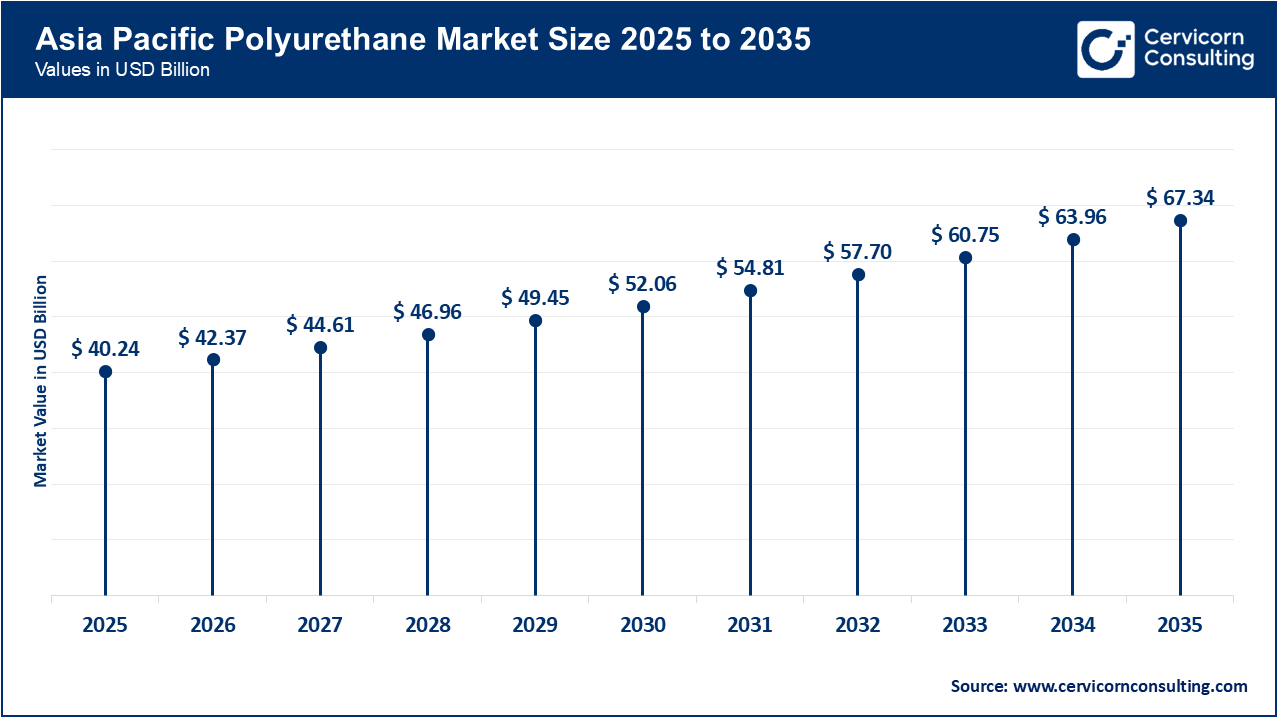
The Asia-Pacific polyurethane market size was accounted for USD 40.24 billion in 2025 and is projected to surge around USD 67.34 billion by 2035. Asia-Pacific is the fastest-expanding PU consumption base, driven by construction, appliances, automotive, and rapidly growing cold-chain logistics supporting food and pharma distribution. The key demand driver is the combination of urbanization and infrastructure build-out plus energy-efficiency measures that increasingly favor better thermal envelopes and efficient refrigeration both strong fits for rigid PU foam. Supply in the region is also evolving quickly, with major producers expanding regional isocyanates footprints and launching lower-carbon product grades to align with customer sustainability targets.
Recent Developments:
- BASF reported new MMDI capacity in Shanghai (2024) and Chongqing (2025) to expand its MDI footprint in China, alongside rollout of lower-PCF product grades.
- Covestro India and CSIR-NCL collaboration to explore PU waste recycling pathways.
Europe Polyurethane Market: Building decarbonization policy (EPBD/renovation push) is the core driver
The Europe polyurethane market size was reached at USD 20.21 billion in 2025 and is forecasted to hit around USD 33.82 billion by 2035. Europe's PU market is anchored in insulation for renovation and new builds, plus steady use in automotive interiors, appliances, and CASE. The region's defining demand driver is regulation-backed energy efficiency and decarbonization of buildings, where PU's high insulation performance supports space-efficient retrofits (a big advantage in dense building stock). In parallel, Europe is one of the most active regions on circular economy pathways for PU (recycling concepts, lower-carbon feedstocks, and product designs that reduce embodied carbon).
Recent Developments:
- Covestro and Recticel collaboration to supply more circular PU-based insulation boards with reduced carbon footprint claims for a circular building project in the Netherlands.
- BASF showcased PU recycling methods and circular concepts at UTECH 2024 in Maastricht, highlighting industry movement toward circular PU solutions in Europe.
Polyurethane Market Share, By Region, 2025 (%)
| Region |
Revenue Share, 2025 (%) |
| Asia-Pacific |
45.4% |
| Europe |
22.8% |
| North America |
21.2% |
| LAMEA (Latin America, Middle East & Africa) |
10.6% |
LAMEA Polyurethane Market: GCC megaprojects and mandatory thermal-insulation rules are the main driver
The LAMEA polyurethane market was valued at USD 9.40 billion in 2025 and is anticipated to reach around USD 15.72 billion by 2035. LAMEA demand is uneven but generally propelled by construction and infrastructure (especially GCC megaprojects), district cooling/HVAC efficiency, and cold-chain expansion, which favors rigid PU insulation in panels, pipes, and refrigerated facilities. A key market driver is policy-led energy efficiency in buildings in hot climates especially, thermal insulation requirements and enforcement can materially increase insulation penetration and specification quality. Latin America also sees PU demand tied to appliances, footwear, furniture, and a notable focus on trade measures affecting upstream inputs like polyether polyols.
Recent Developments:
- Saudi Building Code thermal insulation guidelines published by SEEC (2025) to guide compliant insulation system application.
Polyurethane Market Segmental Analysis
The polyurethane market is segmented into product, raw material, application, and region.
Product Analysis
Polyurethane foams can be divided into rigid and flexible foams are dominate different industrial applications. Within the industrial sector, rigid foams have valued enhanced mechanical strength as well as insulation properties which protect volume in walls and roofs and as a stiffening layer. Rigid foams provide thermal efficiency while providing additional stiffening to roof assemblies. Flexible foams with a typical open-cell structure are commonly the most common material for car seats, furniture, and mattresses, due to their resilience to repeated cycles of compression and comfort. Together, these major foam segments constitute the majority of the PU market volume.
Polyurethane Market Share, By Product, 2025 (%)
| Product |
Revenue Share, 2025 (%) |
| Rigid Foam |
31.4% |
| Flexible Foam |
28.6% |
| Coatings |
11.2% |
| Adhesives & Sealants |
10.0% |
| Elastomers |
10.4% |
| Others |
8.4% |
CASE (Coatings, Adhesives, Sealants, and Elastomers) segment is the fastest-growing, primarily due to the industry need for high duties protective layers for automobiles and electronics. The PU-based adhesives and sealants are finding success in the construction and manufacturing industries due to their superior bonding strength and durability. Water-based PU coatings will look to conduct lower rates of VOC emissions and is also a trend in this space while adhering to global environmental standards, guidelines and regulations.
Raw Material Analysis
Methylene Diphenyl Diisocyanate (MDI) and Polyols are the raw material key Building Blocks of PU. MDI is the leading Isocyanate used in the majority of rigid foam applications. MDI has a lower volatility and allows for a greater number of functional groups than TDI. The bulky MDI molecule can allow more rigid segments of the polymer chain, which leads to an overall more structurally integrated product. Polyols, which can be derived from petroleum or also bio-based sources get a similar position of importance within raw materials, with Polyether polyols and Polyester polyols being the most common types of polyols in industrial applications.
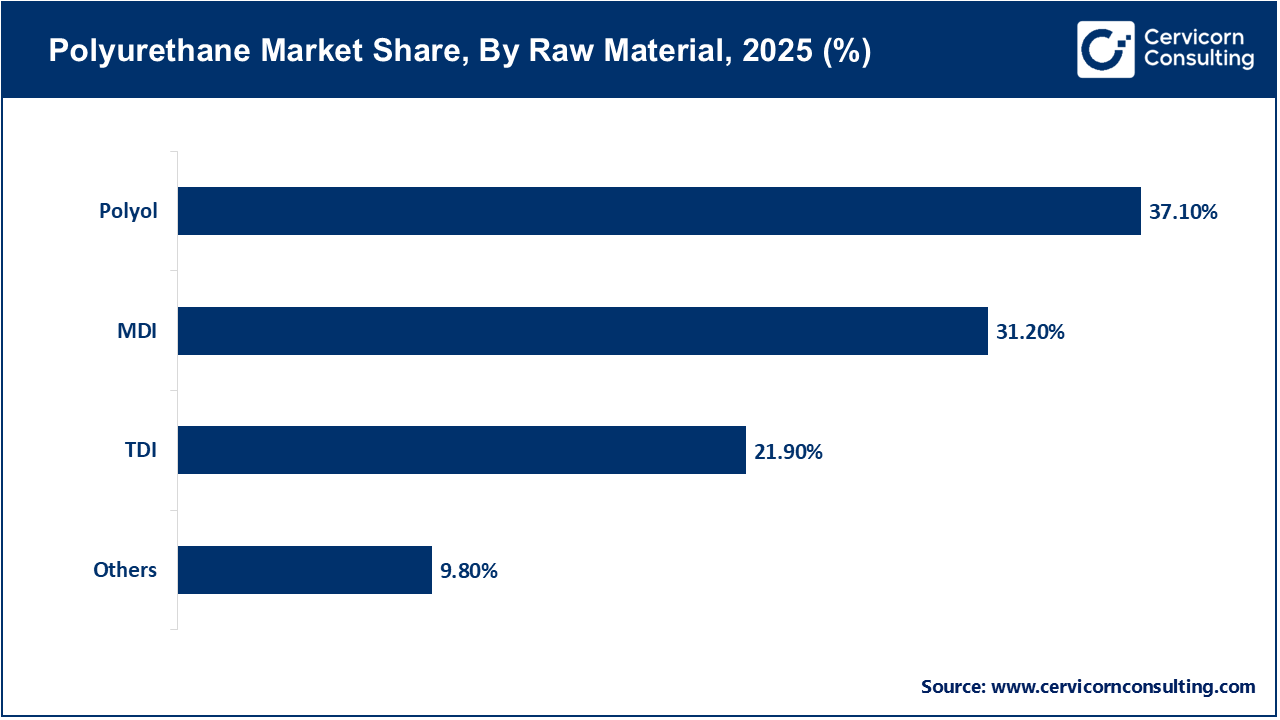
Toluene Diisocyanate (TDI) continues to be the most common production of flexible foams for upholstery and furniture. TDI is a significant part of the market with developments in high resilience. Interestingly, speciality raw materials are developing for example, aliphatic isocyanates for UV stable coatings are now transitioning from development to commercial use of bio-based isocyanates.
Application Analysis
The largest two application segments for polyurethane are construction and furniture. In construction, PU is utilized for thermal insulation, sealants, and binders, and serves as a key contributor to energy efficient building designs. In the furniture sector, there is stable consumption driven by a consistent demand for flexible foam for mattresses and seating. The construction and furniture sectors are heavily influenced by macroeconomic trends, such as interest rates and housing starts, yet both progress as segments due to continued global urbanization and rising living standards.
Polyurethane Market Share, By Application, 2025 (%)
| Application |
Revenue Share, 2025 (%) |
| Construction |
27.2% |
| Furniture & Interiors |
22.1% |
| Automotive |
17.8% |
| Electronics & Appliances |
10.1% |
| Packaging |
6.9% |
| Footwear |
4.9% |
| Others |
11% |
There are also niche applications demonstrating high growth potential, like footwear and electronics packaging. Specifically, PU elastomers, which are used to manufacture lightweight and durable soles for athletic and casual shoes, are expected to grow significantly in the footwear segment. The synthetic PU leather market, being driven by demand for animal leather substitutes in vegan and sustainable alternatives, is also expected to grow. In electronics, PU foams provide key shock absorption and thermal insulation protection for components sensitive to the environment during transit and operation.
Polyurethane Market Top Companies
Recent Developments by Major Companies
- In March 2025, BASF introduced a new biomass balance flexible polyurethane foam system (Elastoflex BMB) for the North American furniture market, capable of reducing product carbon footprint by up to 75% compared to conventional PU foams, helping customers meet sustainability goals without changing processing practices.
- In March 2025, Mitsui & Co. Plastics Ltd., alongside JCCL and Toyo Seikan Group Holdings, launched a joint initiative for early implementation of CO₂ capture technology, targeting reduced environmental impact via low-cost, high-efficiency emission reduction tech-an upstream move relevant to plastics and PU value chains.
- In September 2025, Covestro and Recticel jointly supplied low-carbon Desmodur® CQ MS raw materials for PU insulation boards used in the Circular House of Brightlands project, demonstrating collaboration on circular construction materials.
Market Segmentation
By Product
- Rigid Foam
- Flexible Foam
- Coatings
- Adhesives & Sealants
- Elastomers
- Others
By Raw Material
By Application
- Furniture & Interiors
- Construction
- Electronics & Appliances
- Automotive
- Footwear
- Packaging
- Others
By Region
- North America
- APAC
- Europe
- LAMEA