Plant Growth Regulator Market Size and Forecast 2026 to 2035
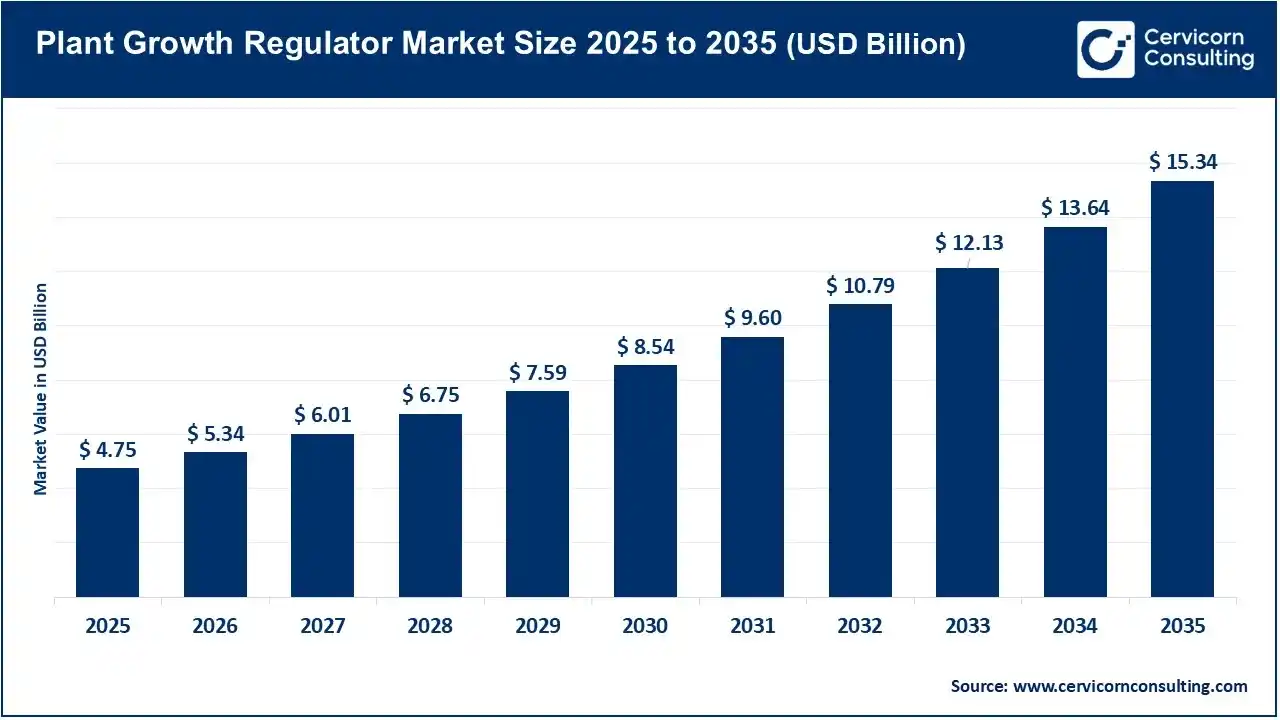
The global plant growth regulator market size was valued at USD 4.75 billion in 2025 and is expected to exceed around USD 15.34 billion by 2035, growing at a CAGR of 12.5% during the forecast period from 2026 to 2035.
- Base Year Market Size (2025): $4.75 billion
- Current Year Market Size (2026): $5.34 billion
- Estimated Year Market Size (2035): $15.34 billion
- Forecast Period CAGR (2026-2035): 12.5%
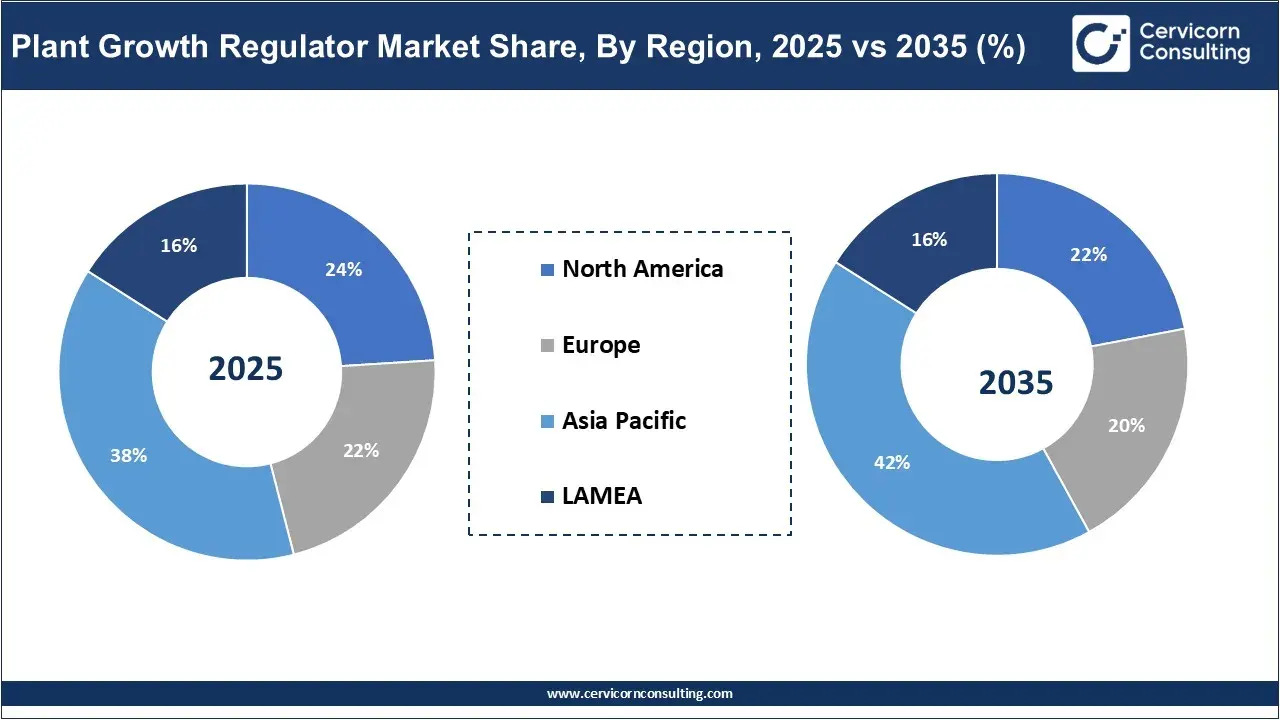
- Leading Region: Asia-Pacific (revenue share 38%)
Report Highlights
- By region: Asia-Pacific led the market in 2025 (revenue share 38%), due to comprehensive agricultural activity and a surge in demand for higher crop productivity.
- By product type: Cytokinins registered dominance in the market in 2025, driven by their major role in cell division, shoot development, and delaying leaf senescence.
- By function: Growth promoters were dominant in the market in 2025 (revenue share 35%), because of their expansive use to support crop development and productivity.
- By form: Liquid led the market in 2025 (revenue share 48%), due to ease of application, uniform coverage, and compatibility with foliar spraying.
- By crop type: Fruits and vegetables led the market in 2025 (revenue share 39%), fueled by increased demand for improved fruit setting, size, quality, and shelf life.
What are Plant Growth Regulators and Their Key Applications?
The plant growth regulator market covers natural or synthetic chemical substances that control and change plant physiological processes at very low concentrations. Significantly, PGRs act as chemical messengers or traffic controllers that address when and how plant cells divide, elongate, and mature. PGRs have many applications, including supporting climate stress mitigation and improved recovery from high temperatures. However, the use of salicylic acid pre-treatments fosters activation of systemic acquired resistance (SAR) and upregulates internal metabolic processes, resulting in detoxification and reduction in chemical residue accumulation in crops. Meanwhile, the latest applications of PGRs have expanded into genomic sequencing, transcriptomics, and small-molecule chemical tools to hit specific hormone receptors with dose-dependent precision.
Ongoing Trends
- Goal of Nano-Formulations: Day by day, the global industry is shifting towards nanotechnology for PGR delivery, while advanced nano-encapsulated PGRs enable controlled, slow-release mechanisms that drastically reduce active chemical wastage, with enhanced cellular uptake.
- Execution of Multi-Hormonal Plans: Most recent groundbreaking work is seeking implementation of manipulated multi-hormonal concepts, such as abscisic acid-gibberellin (ABA-GA) antagonism are being employed to balance a plant's energy between active growth and stress defense.
- Uncovering New Protocols: Specifically, the trend has been demonstrating variety-specific protocols, which explains different changes in efficacy based on genetic baselines, like the stark difference in how Indica and Japonica rice subspecies control gibberellins.
Market Dynamics
Major Drivers
- Massive Global Demand: The worldwide accelerating population is fueling the need for increased food production from compressed or fixed agricultural land, which makes yield-enhancing PGRs essential.
- Transition Toward Sustainability: Eventual market progression has been bolstering growth of organic farming and sustainable practices, which propels the adoption of natural, low-toxicity, and bio-based PGRs.
- Rising Climate Stress: Nowadays, the globe is facing variable weather patterns, heatwaves, and drought conditions, and this expedites the demand for thermo-stable and photo-stable PGR formulations to support crops in resisting abiotic stress.
Pivotal Restraints
- Extension in Regulatory Approval Period: In 2026, many government bodies are enforcing rigorous safety, environmental, and toxicity regulations, which further delays commercialisation and also elevates development and compliance spending.
- Huge Initial Expenditure: Several farmers are facing the requirement of higher capital costs for premium PGR products, creating a hurdle, especially for small-scale farmers across emerging economies like the Asia Pacific.
- Narrow Application with Risks: Regardless of macronutrients, PGRs offer hyper-precise physiological benefits; one requires accurate dosing, exact dilution, and limited seasonal space for implementation.
Prospective Opportunities of PGRs in 2027
- Integration of Digital Platforms: Many research activities have unveiled the unification of PGRs with digital cop management solutions, including satellite imagery, weather data, and crop growth stage models that support operators in calculating the actual windows for PGR application.
- Lucidity in Regulatory Landscapes: With transformative opportunities in the market, some regulatory bodies, like the EU frameworks and the US EPA, are declaring advanced, clear definitions for biostimulants vs. plant regulators. This will facilitate a highly predictable trajectory for safety testing and labelling.
- Emerging Applications: Specific spotlight on slow-release cytokinins via advanced encapsulation that lowers transplant shock, whereas the latest synthetic auxin formulations offer excellent rooting progress rates and minimise premature fruit declines in commercial nurseries.
Key Challenges
- Surge in R&D and Validation Expenses: Sequential validation of active ingredients needs distinct season trials across various regions and unveiling of innovations, demanding higher costs and lead as prominent obstacle for small developers.
- Difference in Adoption and Awareness: Across the globe, small-scale and smallholder farmers often face an absence of proper training on precise dosage, utilization, and management. Meanwhile, developing agricultural regions are also experiencing economic stress to adopt affordable generic options.
- Ecological Limitations: A rise in analysis of chemical consistency, runoff, and probable effects on non-target species or soil microbiota is pushing a huge move toward bio-based and organic regulators that possess their own formulation and stability concerns.
Plant Growth Regulator Market Regional Analysis
Why did the Asia Pacific Register Dominance in the Market in 2025?
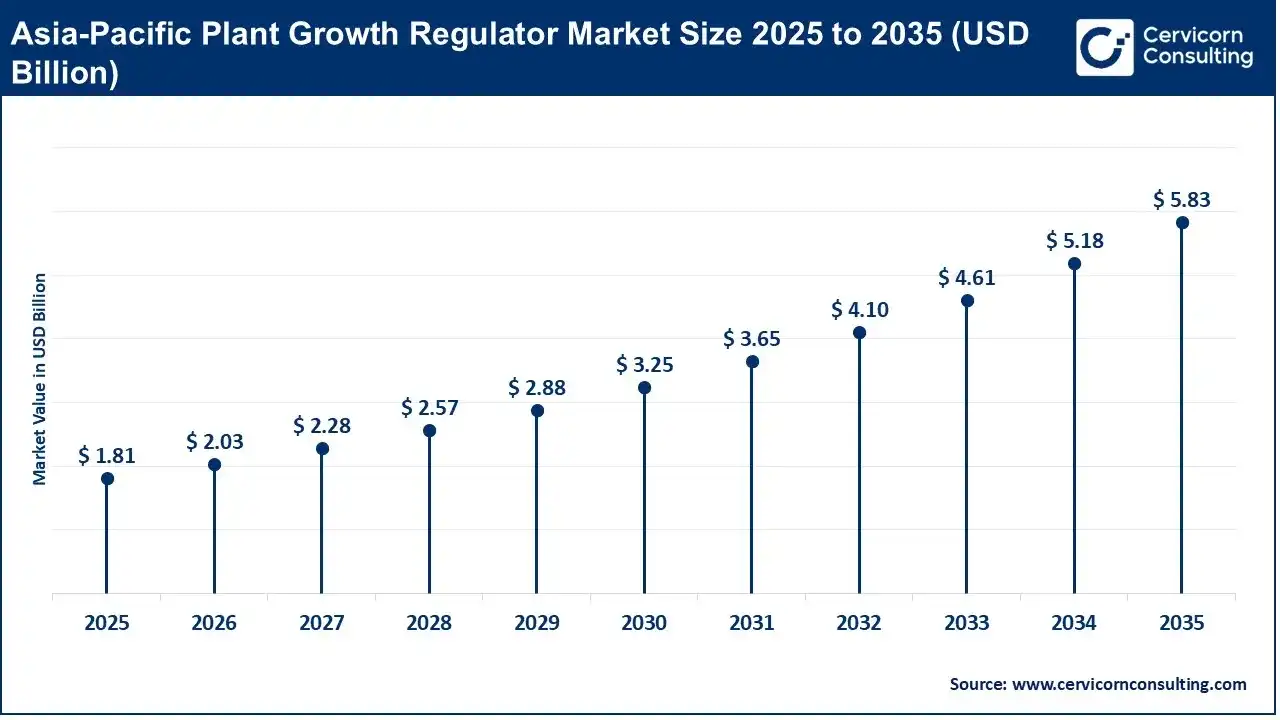
The Asia Pacific plant growth regulator market size was valued at USD 1.81 billion in 2025 and is anticipated to surpass USD 5.83 billion by 2035. Asia Pacific led with 38% share of the market in 2025, driven by a robust hub of agricultural activity, continuous breakthroughs, and growing crop demand to match the rising regional population. Specifically, South Korea focused on floriculture and ornamental nurseries, while China assessed specialized foliar PGR applications to boost soybean reproductive biomass and nutrient accumulation under abiotic stress.
India Market
- As a key contributor to the Asia Pacific market, India experienced massive burden of population, which escalated food security requirements. Along with greenhouse cultivation, net houses, and vertical farming, India leveraged PGRs widely in cash crops, fruits like mango, banana, tomatoes, and spices to foster rooting uniformity and handle monsoon differences.
Which Region is Expected to Expand Fastest in the Market?
The North America plant growth regulator market size was estimated at USD 1.14 billion in 2025 and is projected to hit USD 3.68 billion by 2035. North America is anticipated to witness rapid expansion in the market during 2026-2035, propelled by agricultural modernization, horticultural expansion, and surging adoption of crop management inputs. In terms of regulatory guidelines, Canada introduced final amendments to the Plant Breeders’ Rights Regulations that reinforce intellectual property protection for new plant types and lower online filing fees to speed up the release of resilient, high-performance crop strains.
United States Market
- The U.S. market is forecasted to expand at a rapid rate in the upcoming years, as leading firms are seeking integration of PGRs with GPS, drones, and IoT-driven precision tools. Recently, researchers at the Salk Institute for Biological Studies found that partner proteins to the plant hormone auxin serve as internal temperature ‘thermostats’, enabling plants to adapt root growth directly in response to temperature fluctuations.
Regional Government Initiatives in Agriculture Sector
North America & U.S.
- The region signed the "Advancing Regenerative Agriculture and Strengthening American Farm Resilience" order in July 2026, which covers advanced precision agriculture and mandates federal bodies to increase investment in AgTech, with a streamlined regulatory framework.
- In 2026, the regional government also formed FIFRA and biostimulant landscapes, which ultimately upgrade the Federal Insecticide, Fungicide, and Rodenticide Act (FIFRA), developing clear exclusions for non-pesticidal growth regulators, offering rapid approvals for sustainable crop-enhancement formulas.
India
- Based on the 2026-2027 budget, India government rolled out Bharat VISTAAR, a multilingual AI-driven agricultural platform funded at ₹150 crore. This approach consolidates India’s AgriStack digital registry with the Indian Council of Agricultural Research (ICAR) data to transfer real-time, localized advisories directly to farmers.
- Moreover, India published the Draft Insecticides (Amendment) Rules, 2026, mandating QR codes on inputs to guarantee visibility and safety. Alongside this, the government is consistently subsidising precision spray drones, with the use of GPS-guided variable-rate drone systems to leverage nano-fertilisers and PGRs.
- However, NITI Aayog launched the AgriBio 2.0 program, which integrates biotechnology into eco-friendly farming schemes and further scales up the industrial deployment of next-generation bio-based plant growth promoters.
European Union (EU)
- Many EU policies in 2026 are aimed at evolving regional data-exchange infrastructure through projects such as SmartAgriHubs and the AgData program. These programs support farmers in mapping micro-variations in their fields to use variable-rate application equipment, lowering avoidable chemical broadcast drift.
- Also, the EU enforced stringent new agricultural emission tracking laws, necessitating players to express the environmental footprint of their complete agricultural value chain.
Latin America
- The regional government explored new agrochemical updates, which simplified registration, packaging, and technical specifications for biological inputs and plant growth regulators controlled by the Ministry of Agriculture (MAPA). This further enables vast commercial operations to expeditiously clear advanced slow-release and microencapsulated PGRs for application with satellite-guided variable-rate machinery.
Plant Growth Regulator Market Segmentation Analysis
Product Type Analysis
Cytokinins: The cytokinins segment held a dominant share in 2025, as they promote cell division, boost plant growth, and exceed leaf ageing timeline. Moreover, recent research studies have developed novel bioorthogonal and selective chemical tools that omit isopentenyl groups from active cytokinins and foster seed germination and regulate root-shoot growth in lab trials.
The gibberellins segment registered a notable expansion in the market in 2025, supported by their role in cell elongation, wall loosening, and activating flowering. Recent commercialisation approaches highlight continuous adoption of GA to induce seedless traits in cucurbits, increase berry size in premium viticulture and improve spike architecture in staple cereals.
Plant Growth Regulator Market Share, By Product Type, 2025 (%)
| Product Type |
Revenue Share, 2025 (%) |
| Auxins |
26% |
| Gibberellins |
22% |
| Cytokinins |
19% |
| Ethylene-Releasing Compounds |
18% |
| Abscisic Acid and Other Plant Growth Regulators |
15% |
Auxins: The auxins segment is projected to be the fastest-growing during 2026-2035 because of growing demand for root development, fruit setting, and crop growth management. Certain research publications in 2026 have uncovered that auxin serves as a prominent foraging hormone, and elevated temperature stress resulted in faster growth in local auxin production via TAA1/YUCCA pathways.
Function Analysis
Growth Promoters: The growth promoters segment led with 35% share of the plant growth regulator market in 2025, driven by broader application in crop development and productivity and an increase in demand for fruits, vegetables, and ornamental plants. In 2025, scientists have employed AI-enabled promoter design and CRISPR-based transcriptional control, enabling precise, high-throughput tuning of gene expression.
The plant growth retardants segment is predicted to witness lucrative growth in the coming years, due to rising global population pressure and the launch of modern precision agriculture. Alongside this, continuous efforts have explored applications in reducing internode length and stem height without lowering leaf numbers, which leads to a strong, thick, and more compact plant.
Plant Growth Regulator Market Share, By Function, 2025 (%)
| Function |
Revenue Share, 2025 (%) |
| Growth Promoters |
35% |
| Growth Inhibitors |
14% |
| Plant Growth Retardants |
18% |
| Stress-Tolerance Regulators |
17% |
| Ripening and Maturation Regulators |
16% |
Stress-Tolerance Regulators: The stress-tolerance regulators segment is anticipated to expand at the fastest rate during the forecast period, propelled by accelerating concerns regarding drought, heat, and other environmental stresses affecting crops. An emphasis on recent discussions has addressed ABA and epibrassinolide, which sync across several regulatory layers to reprogram drought responses, controlling stomatal movement and root architecture to conserve water.
Form Analysis
Liquid: The liquid segment accounted for a major share of 48% of the market in 2025, as it offers height and structure control, consistent coverage, and encourages flowering and fruiting. Additionally, manufacturers aimed at large-scale production of botanical, amino-acid, and microbial-derived liquid PGRs to improve sustainability. Moreover, consolidation of liquids with standard spray equipment enables rapid translocation and fast physiological results.
The powder and granules segment held a significant share of the market in 2025 because of their simple handling, minimal dust exposure, affordability, and precise dosage solutions. The leading players have pushed dry formulations that spur compatibility with the latest mechanical spreaders, micro-dosing equipment, and custom seed-treatment lines.
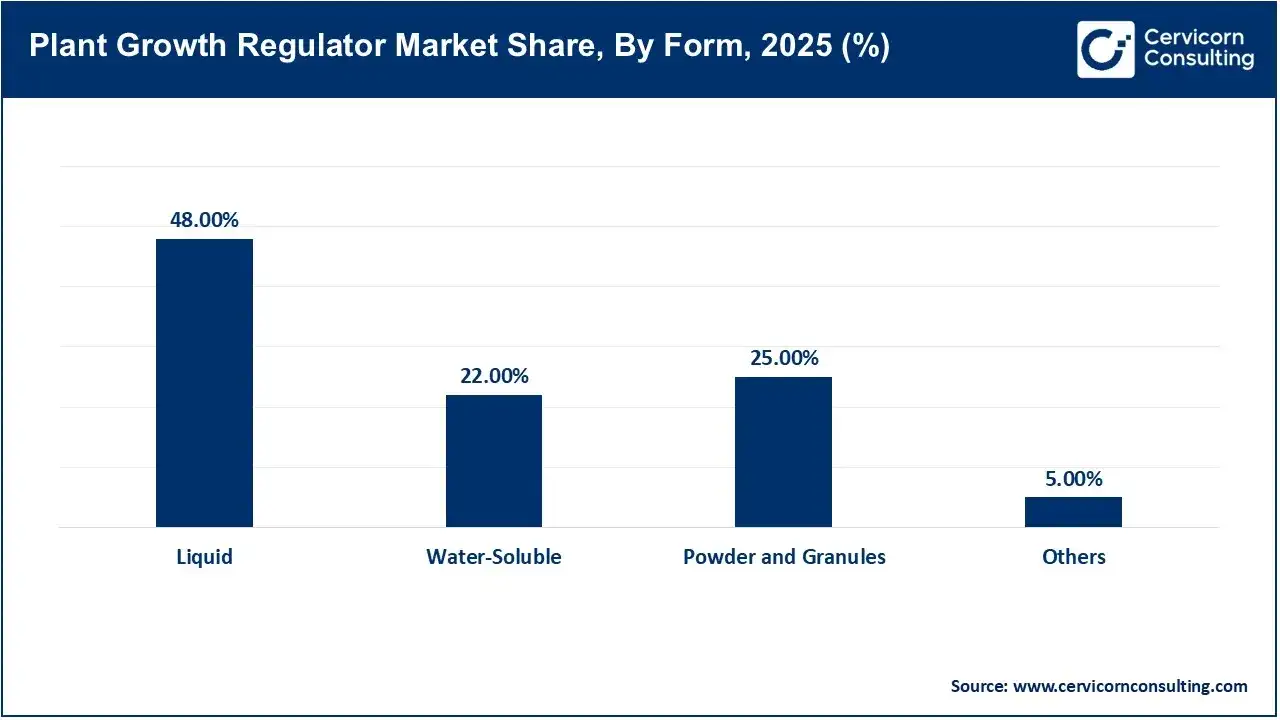
Water-Soluble Formulations: The water-soluble formulations segment is forecast to grow rapidly in the predicted timeframe, supported by fertigation, precision application, and compatibility with modern crop management systems. By considering rigorous global guidelines, especially in Europe and APAC have promoted bio-based water-soluble PGRs, including natural cytokinins and biostimulant complexes into fully water-soluble mediums.
Crop Type Analysis
Fruits and Vegetables: The fruits and vegetables segment held the largest share of 38% of the plant growth regulator market in 2025 and is expected to expand fastest, fueled by higher demand for high-quality produce and support in managing stunted ripening with a modern agriculture approach. However, the broadened global adoption of brassinosteroids, salicylic acid, jasmonic acid, CPPU, and melatonin enhances fruit weight, pulp percentage, colour, total soluble solids, and post-harvest shelf life.
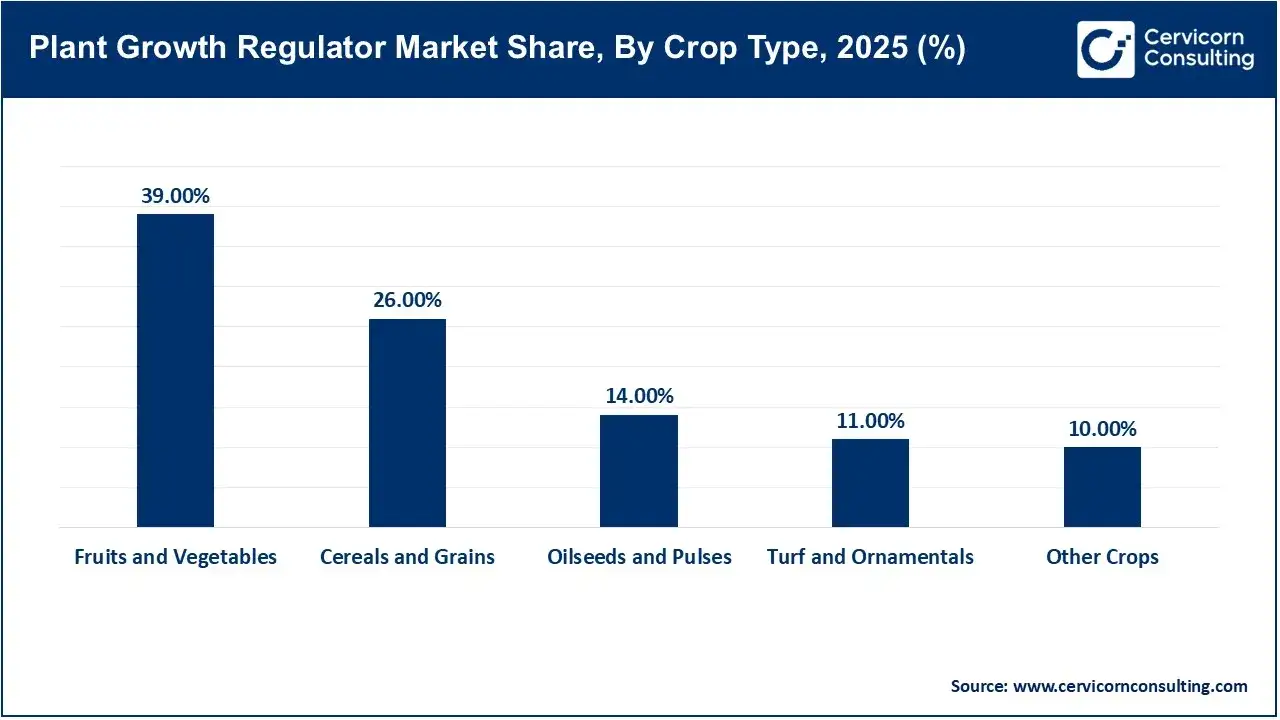
The cereals and grains segment reported a significant expansion in the market in 2025, due to a surge in staple crop prioritization and progression of intensive farming methods and precision crop improvement to enhance yield volumes/hectare. Many of the ongoing studies have underlined integrated nano-formulations and precision gene-editing techniques to improve absorption in cereal crops and their response to exogenous phytohormones.
Leading Players
Segments Covered
By Product Type
- Auxins
- Gibberellins
- Cytokinins
- Ethylene-Releasing Compounds
- Abscisic Acid and Other Plant Growth Regulators
By Function
- Growth Promoters
- Growth Inhibitors
- Plant Growth Retardants
- Stress-Tolerance Regulators
- Ripening and Maturation Regulators
By Form
- Liquid
- Water-Soluble
- Powder and Granules
- Other Formulations
By Crop Type
- Fruits and Vegetables
- Cereals and Grains
- Oilseeds and Pulses
- Turf and Ornamentals
- Other Crops
By Region
- Asia-Pacific
- North America
- Europe
- Latin America
- Middle East and Africa
