Healthcare ERP Market Size, Growth, Forecast 2026 to 2035
The global healthcare ERP market size was accounted for USD 8.45 billion in 2025 and is projected to exceed around USD 14.42 billion by 2035, growing at a compound annual growth rate (CAGR) of 5.49% from 2026 to 2035. Globally, over 68% of hospitals in developed economies have integrated ERP modules into at least one major operational area, while approximately 41% of mid-sized hospitals in emerging economies have begun ERP implementation as of 2025. Administrative costs account for nearly 25%–30% of total healthcare expenditure globally, making ERP adoption a major strategy for reducing operational inefficiencies and improving resource allocation.
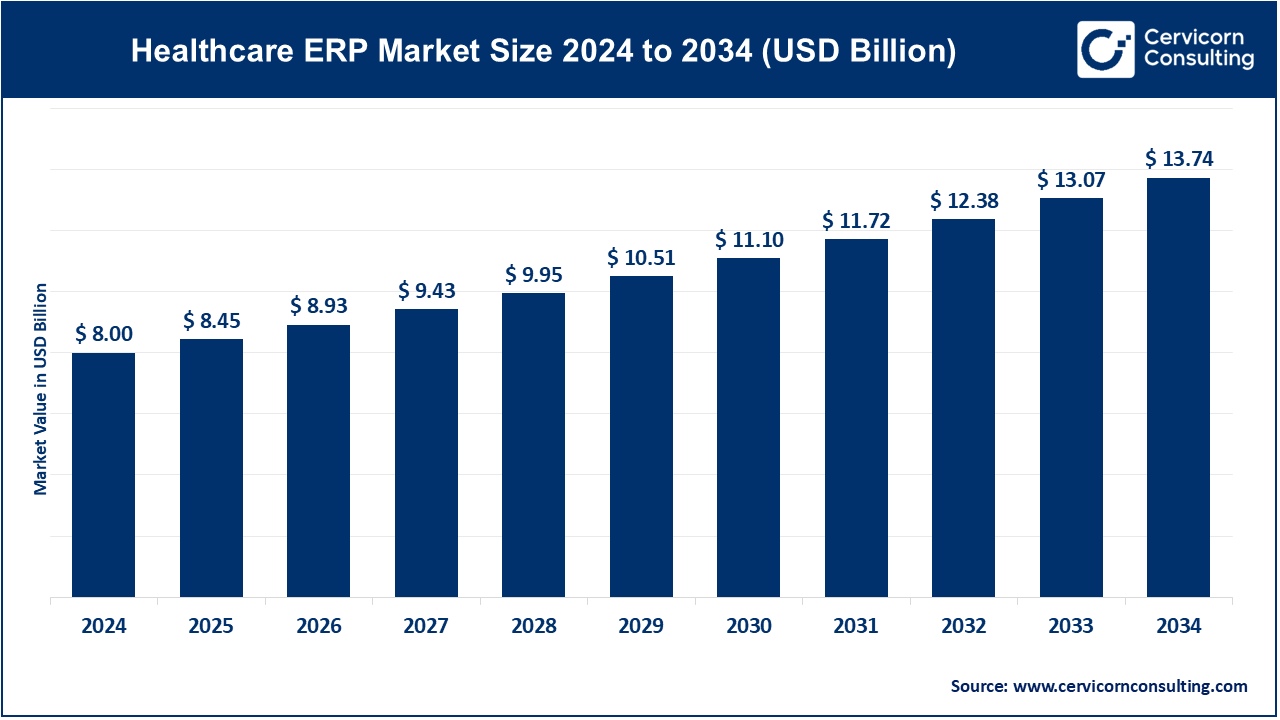
The healthcare ERP market is witnessing steady growth as healthcare providers increasingly prioritize operational efficiency and data-driven decision-making. The rising adoption of electronic health records (EHRs) and the growing need to manage complex administrative tasks have made ERP systems a critical investment for hospitals, clinics, and diagnostic centers. Furthermore, governments worldwide are encouraging healthcare institutions to embrace digital transformation, which is driving demand for ERP solutions. Regionally, North America leads the market due to its advanced healthcare infrastructure and early adoption of technology, while Europe follows closely with strong government support for healthcare IT. Moreover, the shift toward cloud-based ERP systems is enhancing accessibility and scalability, making ERP solutions more attractive to small and medium-sized healthcare organizations globally. In June 2024, healthcare software firm Waystar, which aids hospitals and doctors in financial management, raised USD 968 million in its initial public offering (IPO), valuing the company at USD 3.69 billion. This move underscores the growing investor interest in healthcare ERP and related software solutions.
Healthcare ERP (Enterprise Resource Planning) is a software system designed to streamline and integrate various administrative, financial, and operational processes within healthcare organizations. It combines functions like patient records, inventory management, staff scheduling, billing, compliance tracking, and procurement into a unified platform. This ensures better communication between departments, reduces manual errors, and enhances overall efficiency. For example, a healthcare ERP can automate patient admissions, track medical supplies, and manage staff payroll simultaneously, allowing administrators to focus on improving patient care. By centralizing data and providing real-time analytics, healthcare ERP helps hospitals and clinics make data-driven decisions, optimize resource allocation, and maintain compliance with healthcare regulations.
Report Highlights
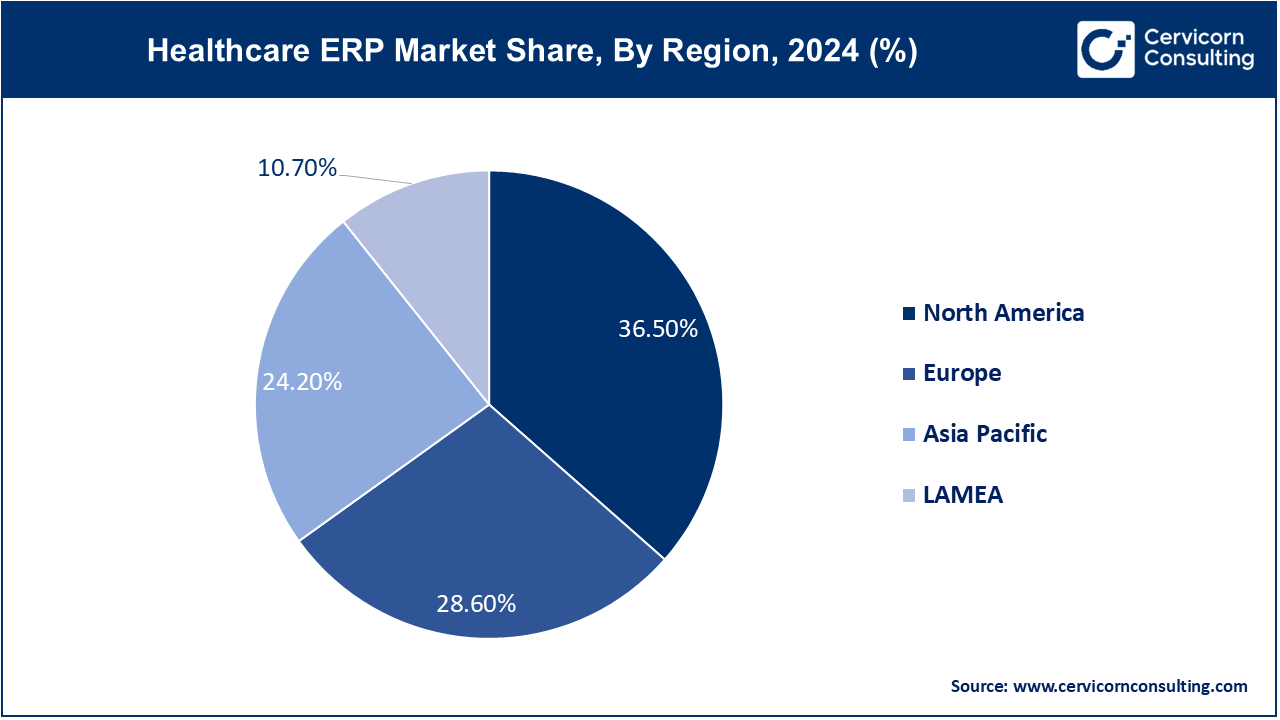
- By region, North America recorded 36.5% revenue share in 2025 due to robust healthcare IT infrastructure, early adoption of integrated hospital management systems and a strong regulatory urge for digital initiatives in healthcare organizations.
- By region, Europe accounted for the second largest market share of 28.6% in 2025 due to growing digital transformation initiatives in healthcare, expanding hospital modernization projects, and increasing need for centralized operational management.
- By function, the finance and billing segment accounted for the largest market share of 38.64% in 2025 due to increasing efforts by healthcare organizations to optimize revenue cycles, manage insurance claims and utilize automated billing along with compliance-oriented financial reporting.
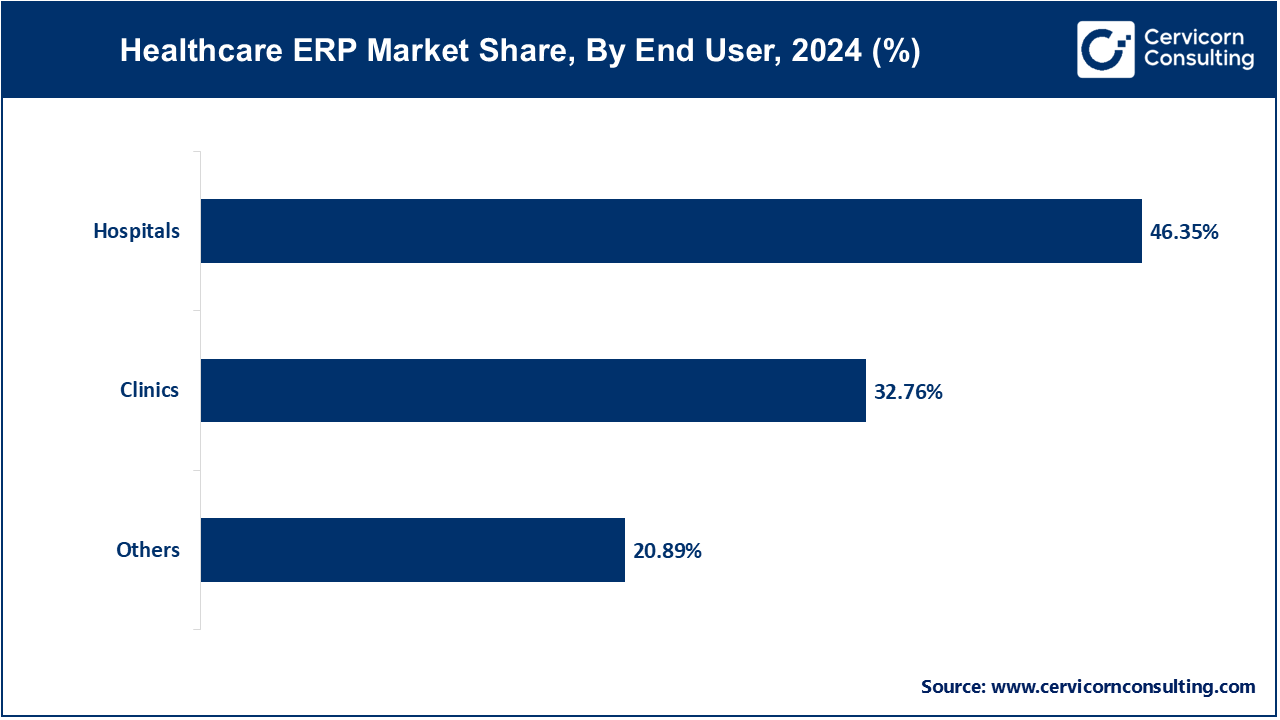
- By end user, the hospitals segment recorded the highest market share of 46.35% in 2025 due to largest operational complexity and workload that include workforce management, procurement systems, patient records and multi-departmental financial management in hospitals.
- By deployment, the on-premise segment accounted for the largest market share in 2025 of 72% due to higher level of concern for data security and regulatory compliance along with control over sensitive health data in the organization.
- With more than 82% hospitals in the U.S. and 74% hospitals in Europe adopting EHRs, the enormous requirement for ERP integration to unify patient data, billing, and operational functions.
- Global spending on healthcare IT surpassed $82 billion in 2025 and the hospitals' digital transformation budget is growing more than 11% YoY, the two driving factors fueling adoption of ERP systems in hospitals.
- Hospitals across the globe manage 15,000 to 35,000 different SKUs that include drugs, medical instruments, and devices, where ERP-based inventory management systems have reduced stockouts by almost 30% and purchase waste by 18%-22%.
- The global healthcare industry incurs over $380 billion annually through losses incurred from frauds and thereby ERP-based financial management and compliance systems are the critical requirement for validation of claim, audit trails, and detection of frauds.
- Lack of efficiencies in the revenue cycle impact hospitals' profitability; claims denied alone are close to $260 billion annually worldwide, where automated ERP billing systems have expedited the process by 40-50%.
- More than 75 million people constituted the global healthcare workforce in 2025 and ERP-driven workforce management system have boosted efficiency in scheduling by 20% while cutting the overtime labor costs by 15% at hospitals.
- Cloud adoption has been gaining traction with 57% of new ERP implementations in hospitals in 2025 being cloud based against 29% in 2020, with more scalability and cost-effectiveness to hospitals.
- AI integration is quickly finding a way in ERP systems where predictive resource planning has helped improve bed utilization by 19% at hospitals, and staffing and supply shortage reduced by 14% and 21% respectively.
- The concern regarding cyber security is also a key factor influencing ERP investment as data breaches in healthcare cost $10.9 million per breach that makes it most expensive industry to experience cyber-attacks.
- The global market of telehealth surpassed 1.8 billion patient interaction in 2025 and the need of ERP for integration of billing, scheduling, and patient records management in telehealth is growing rapidly.
- Procurement of pharmaceuticals contribute almost 35% to the overall hospital operational expenses and procurement ERP modules are helping hospitals attain favorable terms with suppliers and increasing medication availability.
Top 5 Countries to Contribute in Healthcare ERP Industry
| Country |
Key Statistical Data |
Market Insights |
| United States |
Over 6,100 hospitals operate in the U.S.; 82%+ EHR adoption; healthcare admin spending exceeds $1 trillion annually |
Largest market globally due to advanced IT infrastructure, ERP maturity, and high hospital digitization. |
| Germany |
Over 1,900 hospitals; hospital digitalization funding exceeded €4.3 billion under modernization programs |
Strong ERP demand for hospital billing, compliance, and procurement systems. |
| United Kingdom |
NHS handles over 1.6 million patients daily; digital transformation budgets exceed £3 billion annually |
Large public healthcare ERP demand focused on centralized patient and financial management. |
| Japan |
More than 8,200 hospitals; aging population above 36 million people over 65 |
High ERP adoption driven by aging care management, hospital automation, and workforce planning. |
| India |
Over 70,000 hospitals and clinics; healthcare IT spending growing at 18% annually |
Fast-growing ERP market due to private hospital expansion, insurance digitization, and health infrastructure modernization. |
Healthcare ERP Market Growth Factors
- Easy Access to Medical Records: ERP solutions provide a centralized platform to store and access medical records, allowing healthcare providers to quickly retrieve patient information, improving efficiency and patient care.
- Clinical Operations Management: Patient experience and operational efficiency can be negatively impacted by the time-consuming and error-prone nature of managing clinical workflows manually. Treatment plans and patient flow are tasks that can be more easily automated with the help of the clinical management features present in the ERP software. Additionally, by monitoring patients from the time of admission until their discharge, the healthcare ERP systems ensure that medical protocols are followed, thereby improving patient care and simplifying clinical operations.
- Growing Need for Seamless Communication: Continuous communication between departments and teams in hospitals and clinics is crucial and can significantly improve the quality of care given to patients. Healthcare automation can help promote efficient teamwork that can be used in situations where different teams are required to collaborate to handle complicated healthcare issues. Quick information access between departments and facilities leads to better patient outcomes, improved patient flow, and improved interoperability of hospital systems. Secure messaging between doctors and patients is also valuable. For people from remote areas who cannot get to the clinic, healthcare automation provides the ability to see doctors online through a mobile app or web platform.
- Accurate Diagnosis and Treatment: Centralized and automated processing of patient data improves diagnosis and makes the overall picture more comprehensive. Automation enables quick data access, highlights patient deviations from treatment plans, and enables more precise prescription of drug dosages. Healthcare automation can keep patients informed of medication intake through notifications and wearable devices.
Healthcare ERP Market Trends
- Trend toward Cloud ERP: Many healthcare organizations and companies, are reluctant to move important data transfer apps online because they are highly dependent on on-premises ERP systems and software. But now since the cloud ERP software is so widely used, employees are becoming more aware of its advantages and are moving away from local computer programs. This is because cloud-based applications allow employees to complete their tasks from any place that has an internet connection.
- Increasing Digital Transformation: Companies are incorporating digital technologies for the completion of daily operations and business processes which is known as technological transformation. This tactic can improve customer service and communication, staff productivity and efficiency, the customer experience, and, in most cases, sales and competitiveness. An ERP system can be one of the areas where a company starts the process of digital transformation, and it has a significant impact on it. Many changes are incorporated under the heading "digital transformation" which include the selection of AI and machine learning for advanced analytics and the integration of AI-powered ERP with IoT devices.
- Deploying Two-Tier ERP: Many companies have tried deploying a single ERP system for headquarters and regional offices and subsidiaries. This approach was often costly and extremely difficult to implement. Therefore, two-tier ERP remains a top ERP trend. With the help of a two-tier ERP strategy, businesses can easily make the most of their investments in their prevailing enterprise-level ERP systems (Tier 1) while using a different cloud-based ERP solution for their subsidiaries and departments (Tier 2).
Report Scope
| Area of Focus |
Details |
| Market Size in 2026 |
USD 8.93 Billion |
| Estimated Market Size (2035) |
USD 14.42 Billion |
| Growth Rate (2026 to 2035) |
5.49% |
| Dominating Region |
North America |
| Fastest Expanding Region |
Asia-Pacific |
| Key Segments |
Function, Deployment, End User, Region |
| Key Companies |
Microsoft Corporation, Oracle Corporation, SAP SE, Allscripts Healthcare Solutions, Inc., Sage Group Plc., Cerner Corporation, Infor, Inc., GE Healthcare, Odoo, QAD, Inc., Aptean, Epicor Software Corporation, ZEUS Systems Pvt. Ltd., DXC Technology, Epic Systems Corporation, Meditech, NextGen Healthcare, Inc., Carestream Health, Athenahealth, Inc., eClinicalWorks, Netsmart Technologies, Inc., NTT DATA Corporation |
Healthcare ERP Market Dynamics
Drivers
Improved Scalability and Data Protection
- An ERP system when integrated into the healthcare industry ensures productivity, cost-effectiveness, and efficiency. Moreover, the healthcare industry compulsorily needs to strengthen security to protect patient information and also adhere to legal requirements such as HIPAA. For this extensive security protocols are installed to meet all regulatory requirements and ensure data security. Hospitals must take the required steps to secure and protect patient data to guarantee the ERP system's long-term functionality.
Integrating Technologies with ERP
- Businesses are utilizing advanced cutting-edge technologies to improve overall operational efficiency and enhance their essential functions. Integrating IoT sensors with ERP systems improves real-time tracking of device performance, enabling the prediction of maintenance needs before any malfunctions occur. ERP systems can enhance order fulfillment by creating multiple integrations with e-commerce platforms.
Restraints
High Cost Associated with Implementation and Maintenance
- Some substantial initial investments in hardware infrastructure, software licenses, and customization are to be made for the successful implementation of the ERP system. Additionally, the expenses that are associated with ongoing maintenance and support may be substantial. This can be a significant challenge for small healthcare organizations with restricted budgets, as the financial implications of ERP solutions can impede their adoption. Furthermore, the healthcare sector may face obstacles in the integration of ERP systems due to stakeholders' reluctance to change and the implementation of complex processes.
Regulatory Compliance
- The healthcare sector is governed by strict regulatory frameworks. Some of the regulatory frameworks include the Health Insurance Portability and Accountability Act (HIPAA) in the US and the General Data Protection Regulation (GDPR) in Europe. In addition, it is very essential to maintain ongoing monitoring to determine whether an ERP system conforms with these regulations.
Opportunities
Increasing Personalization
- ERP platforms with complex scripting languages were difficult to customize to each company's specific needs. The flexibility of modern ERP systems is also contributing to a growing range of ERP solutions tailored to the needs of specific industries. For instance, in the healthcare industry, there are ERP systems that are used specifically for managing patient records, adhering to healthcare laws, and integrating with medical billing systems. These modules are becoming more and more common in the healthcare sector. Therefore such systems make it possible for medical professionals to concentrate less on administrative work and more on patient care.
Increasing Usage of Predictive Analytics
- The increasing use of AI-powered ERP underscores the growing desire of companies to mine their operational and customer data for new and relevant insights that increase revenue and profits. Predictive analytics is also expanding into areas such as financial forecasting, demand planning, and even human resources, where it can predict employee turnover and improve hiring processes. The company can further use the data for optimizing maintenance schedules so that the parts are replaced or maintained properly before they cause any problems for the customers.
Challenges
Data Integration and Interoperability
- Massive volumes of data are generated in healthcare organizations from different departments, such as radiology information systems (RIS), laboratory information systems (LIS), electronic health records (EHRs), and others. Integrating these disparate data sources into a cohesive ERP system is a major challenge. Ensuring data interoperability, where systems can accurately exchange and interpret shared data, is critical to smooth operations.
Resistance to Change
- Change is difficult to implement in healthcare settings because many healthcare workers resist change. The majority of staff members are cooperative and open to change, but still, when there are frequent changes made in an organization, it is met with some resistance and mistrust. This resistance is very often observed in healthcare environments, where the approach encouraged to be used is person- or patient-centered. Resistance among healthcare workers and teams persists despite World Health Organization (WHO) guidelines, highlighting the significance of effective resistance and evaluation of change effectiveness.
Healthcare ERP Market Regional Analysis
What factors contribute to North America's dominance in the healthcare ERP market?
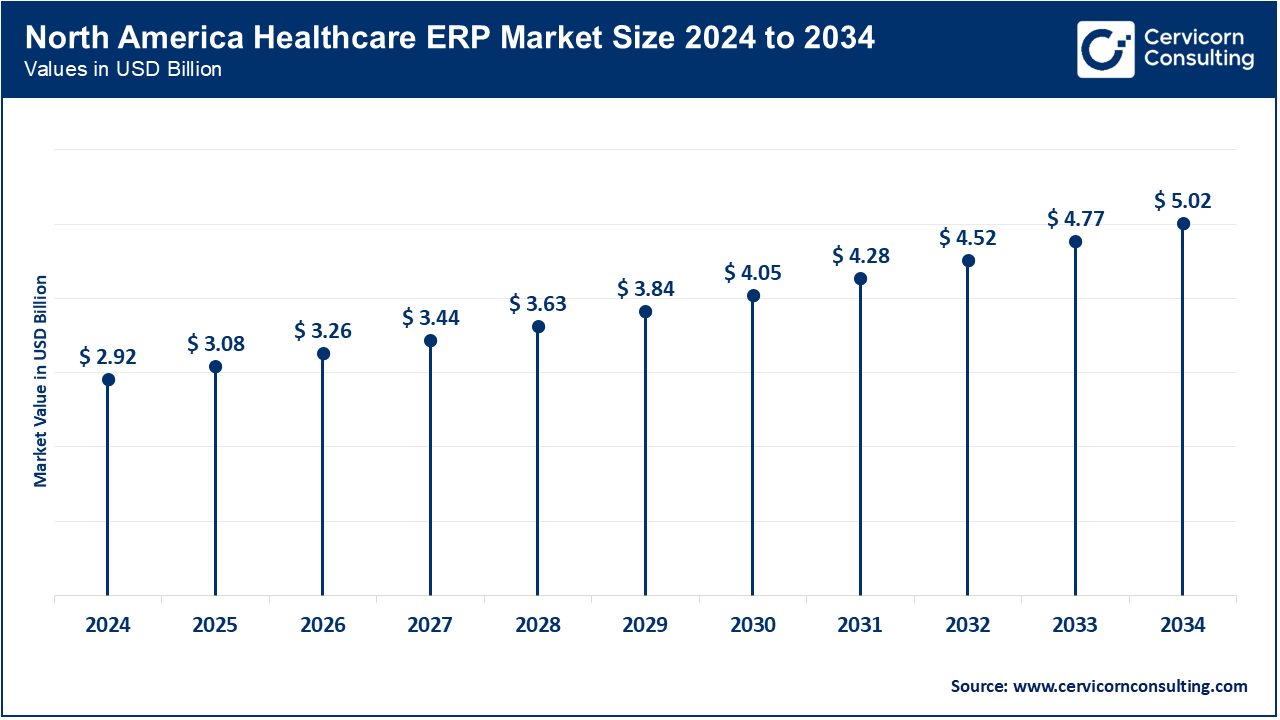
The North America healthcare ERP market size was estimated at USD 3.08 billion in 2025 and is expected to reach around USD 5.26 billion by 2035. Increasing adoption of digital and automated technologies in the North American healthcare sector. Furthermore, the increasing adoption of healthcare services due to the increasing prevalence of diseases and healthcare expenditure has compelled healthcare providers to adopt ERP systems to offer enhanced and personalized services to patients in North America.
Moreover, the government initiatives to promote the adoption of digital technologies to reduce paperwork, maintain a patient database, and improve the speedy delivery of healthcare services have played a crucial role in the growth of the North American healthcare ERP market.
Why is Europe healthcare ERP market expanding?
The Europe healthcare ERP market size was valued at USD 2.42 billion in 2025 and is projected to hit around USD 4.13 billion by 2035. The European healthcare tech industry is expanding at an unprecedented rate due to several factors, including regulatory support, technological advancements, and a growing need for creative solutions. As a result, the growing market penetration and accessibility of cloud services for general consumers are anticipated to present significant growth opportunities for the healthcare ERP market in the region.
Additionally, it is also anticipated that the low operational costs of cloud-based healthcare ERP software would motivate healthcare facilities to adopt the solution. Oracle inaugurated a new Health Support Hub in Barcelona in October 2023. With the opening of the new facility in Europe, it would be easy for Oracle to address the requirements of the customers of modernizing their healthcare systems to enhance patient outcomes and care more effectively.
Europe is home to a diverse ecosystem where there are established companies, research institutions, and entrepreneurs who specialize in healthcare technology. Furthermore, countries such as the United Kingdom, Germany, and France are at the forefront of adopting the technology; however, on the other hand, the smaller nations are also making substantial accomplishments in this field.
Why is Asia-Pacific region expanding at an exponential rate in healthcare ERP market?
The Asia-Pacific healthcare ERP market size was accounted for USD 2.04 billion in 2025 and is predicted to surpass around USD 3.49 billion by 2035. The market growth in the Asia Pacific region is due to the increasing government investment in developing digitized and technologically advanced healthcare infrastructure. Moreover, the increasing prevalence of various chronic diseases and the rapidly growing geriatric population is causing the number of patients to increase rapidly. Therefore, to provide prompt and improved care services to patients, the demand for healthcare ERP systems is expected to grow rapidly in Asia Pacific during the forecast period.
LAMEA healthcare ERP market trends
The LAMEA healthcare ERP market was valued at USD 0.90 billion in 2025 and is expected to reach around USD 1.54 billion by 2035. Enterprise resource planning (ERP) software is a comprehensive business management software that consolidates the diverse functions of an organization into a single system. Eton Solutions, a cloud-based enterprise resource planning (ERP) platform provider, expanded its global presence in September 2023 by establishing a new office in the United Arab Emirates (UAE). Through this expansion, the goal of Eaton Solutions was to offer cutting-edge solutions to customers across the Middle East.
In addition, governments in the area are also deducing policies that encourage high adoption of technology and at the same time recognize the role of digital infrastructure in economic development. For example, the Dubai Paperless Strategy initiative of the Dubai Government aimed at digitizing all the government processes, which in turn encouraged various businesses and organizations to go digital and implement ERP solutions. In addition, Kenya also found salvation from this technology for numerous of their patients. ERPs have been used in the medical field to improve patient data storage and to connect all the life-saving equipment in hospitals for easy access. Eventually, the incorporation of ERP in healthcare has led to better treatment outcomes and patient care in the region.
Healthcare ERP Market Segmental Analysis
The healthcare ERP market is segmented into function, deployment, end-user and region. Based on function, the market is classified into supply chain & logistics, finance & billing, inventory management, patient relationship management, and others. Based on deployment, the market is classified into on-premise, and cloud. Based on end-user, the market is classified into hospitals, clinics, and others.
Function Analysis
Supply Chain & Logistics
The Supply Chain & Logistics segment has accounted revenue share of around 24.81% in 2025. The healthcare industry supply chain system operates behind the scenes in most healthcare systems. The responsibilities of a supply chain team in a healthcare system or hospital encompass a wide range of activities from strategic to tactical and require coordination with internal and external stakeholders. ERP plays a vital role in tying together the sources of supply and demand and controlling the movement of goods to guarantee the effective management of a business's supply chain. ERP systems help businesses reduce supply chain risks, improve supply chain monitoring with real-time data, and forecast and plan demand more effectively.
Finance & Billing
The finance & billion segment has dominated the market and accounted revenue share of 38.64% in 2025. Any healthcare organization is required to maintain a proper financial and billing section for taxes and transactions. Some of the financial processes that are prioritized by the ERP system include financial reporting, invoicing, revenue cycle management, and billing. Healthcare organizations are therefore implementing financial ERP solutions for ensuring accurate financial management, compliance, and cost control, owing to the increasing complexities associated with healthcare reimbursement and financial regulations.
Healthcare ERP Market Revenue Share, By Function, 2025 (%)
| By Function |
2025 (%) |
| Supply Chain & Logistics Management |
24.81% |
| Finance & Billing |
38.64% |
| Inventory and Material Management |
17.70% |
| Patient Relationship Management |
12.50% |
| Others |
6.35% |
Inventory Management
The inventory management segment has captured revenue share of 17.70% in 2025. Medical facilities such as clinics and hospitals can benefit from inventory management solutions that make the tracking and administration of medical supplies, equipment, and prescription drugs easier and more productive. These provide real-time visibility, automation, and data-driven insights for enhancing resource allocation and decision-making beyond the power of making simple spreadsheets. Furthermore, having a suitable process in place can positively impact the healthcare facility, by ensuring the availability of life-saving drugs and preventing stockouts of expensive drugs. This is where ERP systems come into play, providing a robust feature set that goes well beyond just monitoring medications and patches.
Patient Relationship Management
The patient relationship management segment has garnered revenue share of 12.50% in 2025. Merging of patient data from multiple departments into a single database is done with the help of healthcare ERP software, which in turn simplifies patient administration. The ERP system assists healthcare practitioners in reducing duplication and making more informed decisions owing to the access to real-time information. In addition to providing a forum for case discussions, information sharing, and treatment plan coordination, healthcare ERP systems also help physicians, nurses, and administrative staff manage patients more effectively. Hence, this kind of data integration provides a comprehensive approach to ensure the well-being of the patient.
Others
The others segment has captured revenue share of 6.35% in 2025. Clinical operations that include tasks like patient care, electronic medical records, scheduling, and clinical workflows, are addressed by the clinical ERP system. Clinical ERP systems assist healthcare providers to optimize resources and improve operational efficiency and patient outcomes. In the highly competitive healthcare sector implementation of successful sales and marketing strategies is crucial for making money. For this purpose, ERP systems are being used in healthcare organizations that help them stay competitive and thereby attract new clients. The ERP system offers an interface to track ongoing industry trends, sales leads, and marketing campaigns for this reason. Furthermore, human resource management is equally necessary for healthcare organizations to effectively oversee a diverse workforce, which can be achieved by the integration of HR modules into healthcare ERP systems that help in payroll, performance reviews, and employee orientation.
Deployment Analysis
On-Premise
The on-premise segment has leading the market and accounted revenue share of 72% in 2025. An on-premises ERP system is hosted and managed directly using any organization's infrastructure. The on-premise mode of deployment is found to greatly benefit organizations that prioritize compliance, customization, and data security. Aside from these, this method also provides better control over modules and data and runs without requiring an internet connection. Some of the significant upfront expenditures associated with on-premises systems include the cost of hardware and software, installation and maintenance fees, and support. As the systems are managed locally, highly qualified IT staff with specific knowledge are also essential for guaranteeing seamless functioning of the system.
Herbal Extract Market Revenue Share, By Deployment, 2025 (%)
| Deployment |
2025 (%) |
| On-Premise |
72% |
| Cloud |
28% |
Cloud
The flexibility offered by cloud-based ERPs is the among most popular choices made by numerous organizations. Users are authorized to use the software at any time and from any location just by hosting it on their servers and gaining access to it via the Internet. The cloud-based approach cuts down the need for manual intervention by providing automatic updates and dedicated support through the cloud. Furthermore, it was reported that around 70% of healthcare IT professionals had implemented cloud solutions in their organization by 2023, and an additional 20% intend to do so in the future.
Hybrid
The hybrid systems combine the features of both on-premise and cloud solutions. So, if a healthcare facility utilizes the hybrid system it can host and manage some processes on the cloud while handling some processes internally. By doing this, facilities can easily retain any form of sensitive data on-site while taking advantage of cloud computing's flexibility and hosting other documents on the cloud. The cost of maintaining a hybrid ERP solution can fluctuate based on the configuration in the end. Although this method necessitates meticulous preparation, the majority of organizations will encounter no difficulties in realizing its advantages with the assistance of an experienced technology consultant.
End-Users Analysis
Hospitals
The hospitals segment has dominating the market, accounted revenue share of 46.35% in 2025. Hospitals have found success with the implementation of ERP because they boost output and efficiency, cut expenses, and enhance departmental communication while providing improved financial and operational visibility. ERP systems are modernizing hospitals and are therefore essential in the digital transformation. By facilitating the modernization process, streamlining development, and optimizing the ERP environment, hospitals can achieve improved efficiency and effectiveness overall.
Clinics
The clinics segment has accounted revenue share of 32.76% in 2025. Rapidly increasing commercial activity and increasing use of commercial facilities make commercial waste the fastest-growing market segment. Rising consumer awareness about proper waste disposal and adoption of corporate social responsibility initiatives are also expected to help drive market growth in this segment in the long term.
Others
The others segment has recorded 20.89% of the total revenue share in 2025. Others include life sciences, nursing homes, and pharmaceutical industries. Life sciences organizations operate in a highly regulated environment with changing business models, disruptive technologies, and significant amounts of data. The pace of change is only increasing. In a rapidly changing world, forward-thinking professionals focus on the horizon and the here and now. They anchor their experiences in today's reality while helping healthcare and life sciences organizations innovate and position themselves.
ERP for nursing homes is carefully designed to handle the multifaceted nature of outpatient care, from consultations to diagnostic tests to laboratory and pharmacy services. It deftly manages complicated appointment schedules, accommodates walk-ins, and streamlines billing between different departments. Elderly care service providers can streamline customer care, facility operations, and staff coordination to ensure quality care and effective communication with clients and their families.
ERP pharma software is a robust pharmacy solution that streamlines medical store operations. ERP in pharma facilitates digitization, reduces manual paperwork, and also promotes operational efficiency. The best ERP solutions for pharma companies have insightful analytics that enable informed decisions for saving costs and reducing overheads. Precision in billing, inventory management, patient data, and order processing optimizes the overall performance of the company.
Healthcare ERP Market Top Companies
- Microsoft Corporation
- Oracle Corporation
- SAP SE
- Allscripts Healthcare Solutions, Inc.
- Sage Group Plc.
- Cerner Corporation
- Infor, Inc.
- GE Healthcare
- Odoo
- QAD, Inc.
- Aptean
- Epicor Software Corporation
- ZEUS Systems Pvt. Ltd.
- DXC Technology
- Epic Systems Corporation
- Meditech
- NextGen Healthcare, Inc.
- Carestream Health
- Athenahealth, Inc.
- eClinicalWorks
- Netsmart Technologies, Inc.
- NTT DATA Corporation
Recent Developments
- In January 2026, Oracle launched its next-generation healthcare ERP intelligence layer integrated into Oracle Health, designed to automate hospital finance, procurement, workforce planning, and predictive resource management. The launch focuses heavily on AI-based hospital cost forecasting and supply chain optimization.
- In October 2025, SAP introduced upgraded healthcare-specific ERP modules under SAP S/4HANA Cloud for hospitals and life sciences companies. The new release enhances patient billing integration, inventory intelligence, and compliance analytics across hospital systems.
Market Segmentation
By Function
- Supply Chain & Logistics
- Finance & Billing
- Inventory Management
- Patient Relationship Management
- Others
By Deployment
By End-User
By Region
- North America
- Europe
- APAC
- LAMEA