Dental Service Organization Market Size and Forecast 2026 to 2035
The global dental service organization market size reached at USD 450.93 billion in 2025 and is expected to exceed USD 1,289.25 billion by 2035, expanding at a compound annual growth rate (CAGR) of 11.08% from 2026 to 2035. The dental service organization (DSO) market is experiencing significant transformation due to the increasing shift towards consolidation within the dental industry. As private practices face challenges related to rising overhead costs and administrative burdens, more dental professionals are seeking partnerships with DSOs to benefit from economies of scale. This trend is fostering a wave of consolidation, where independent practices join larger networks to improve their operational efficiency and patient service offerings. As a result, DSOs are increasingly seen as a solution that provides access to better technology, larger patient bases, and enhanced negotiating power with insurance providers and suppliers. Another driving factor is the growing demand for dental care, which has been fueled by a larger aging population and greater awareness of oral health's connection to overall health. With these demographic shifts, DSOs are capitalizing on the opportunity to expand their reach into both urban and underserved rural areas.
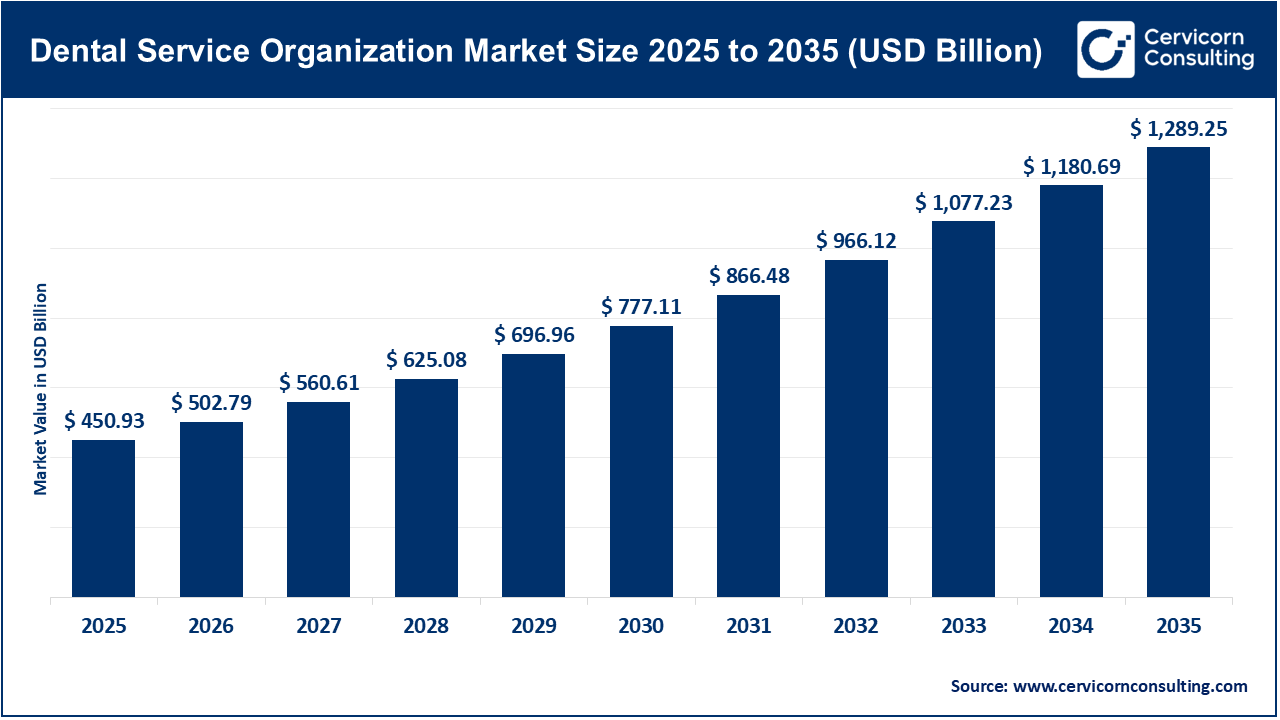
A Dental Service Organization (DSO) is a business model where dental practices partner with an organization that provides administrative support and resources. These services may include management of operations, billing, human resources, and marketing, allowing dental professionals to focus on patient care. DSOs often help streamline administrative tasks and reduce overhead costs for practices, leading to greater efficiency and profitability. They operate under various models, such as corporate DSOs, private equity-backed DSOs, and physician-owned DSOs, with each offering distinct benefits depending on the structure of the organization and the needs of the dental practice.
Report Highlights
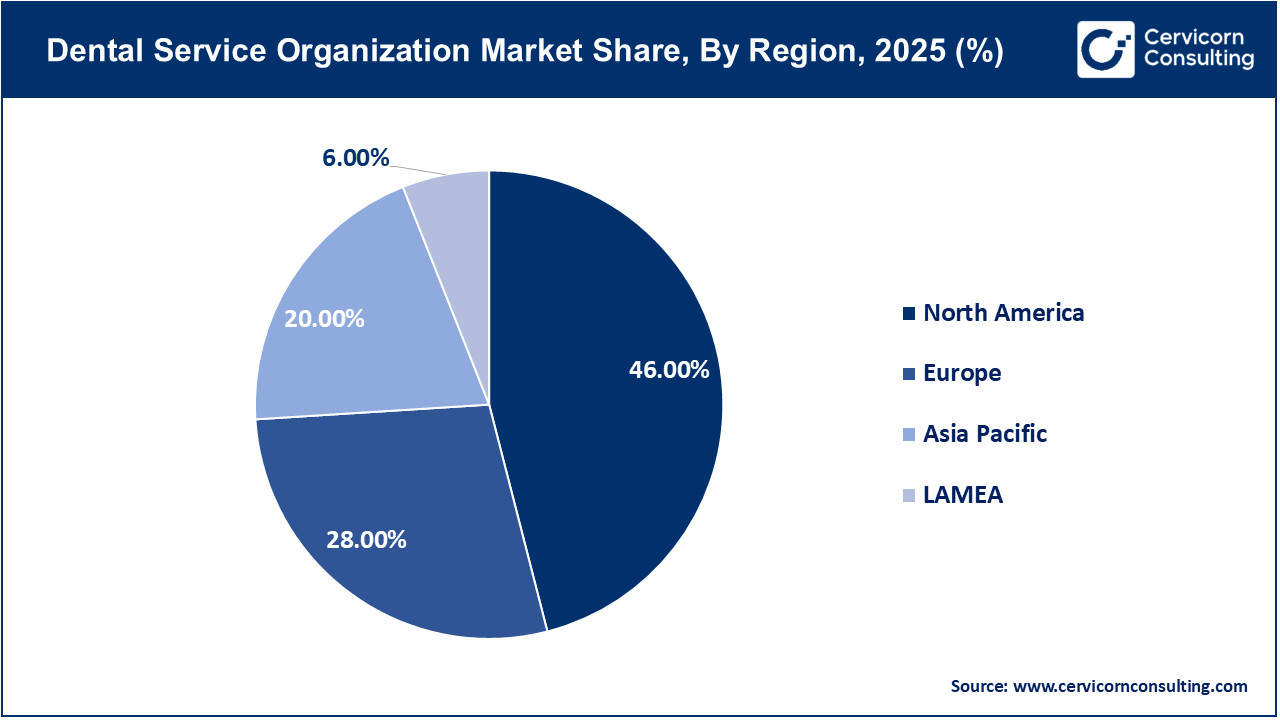
- By region, North America held the dominant market share of 46% in 2025, owing to large presence of multi-clinic dental chains, favorable reimbursement by insurance plans, swift consolidation of independent dental practices into DSOs.
- By region, Europe held the market share of 28% in 2025 owing to increasing private dental investments, rising adoption for cosmetic dental procedures, and reimbursement schemes in western Europe.
- By service, the others segment held market share of 33% in 2025 as the rising adoption for value-added service such as orthodontics, cosmetic treatments, implants and preventive dental packages will drive the market in this segment.
- By end use, the general dentists segment held the highest market share of 34% in 2025, as the majority of the DSOs have formed partnership with general dental practitioners to extend services across the wider pool of patient population with emphasis on scaling routine dental practices.
- By end use, the others segment held second highest market share of 27% in 2025, due to growing partnerships with dentists specialized in different domains, hygienists, and assistant staff for multi-specialty care delivery.
Future Technology Outlook
Future of Dental Service Organizations (DSO's) will be largely determined by the rapid adoption of cutting edge digital technologies, which are expected to revolutionize how dental services are delivered, managed, and scaled up. In the next ten years, DSO's are projected to transition from conventional practices management into a technological based health care networks. AI, robotics, cloud and data analytics are poised to fundamentally change clinical work flows, increase diagnostic capabilities and improve operational efficiencies across dental networks in multiple locations. With expansion in the range and diversity of services and across multiple locations, technology will emerge as a crucial element to enable consistency, scalability, and economic delivery of care.
Secondly, a significant change will be seen in cloud-based practice management systems and centralized data systems. The DSOs of the future will be built on cloud-based practice management platforms that bring together a unified system that syncs patient data, billing and insurance processing, appointment scheduling and reporting with real time information throughout the locations. These centralized systems will help DSOs in planning staffing needs, prediction of needs and managing the revenue cycle effectively. Using predictive analytics, organizations will be able to recognize patient trends, high need procedures, decrease open appointment times and increase the chances of patient retention.
Growth Factors
- Consolidation of Dental Practices: The trend of consolidating smaller dental practices into larger DSOs allows for greater operational efficiencies and economies of scale. This consolidation reduces administrative burdens and costs, enabling practices to focus more on patient care and less on management.
- Increased Demand for Comprehensive Care: There is a growing demand for comprehensive dental services, including preventive, restorative, and cosmetic treatments. DSOs are expanding their service offerings to meet patient expectations and provide a wide range of treatments under one roof, enhancing patient convenience and satisfaction.
- Technological Advancements: Innovations in dental technology, such as digital imaging, CAD/CAM systems, and tele-dentistry, are driving the growth of DSOs. These technologies improve diagnostic accuracy, treatment efficiency, and patient engagement, making dental care more accessible and effective.
- Rising Dental Care Awareness: Increased awareness of oral health and the importance of regular dental visits is contributing to higher patient volumes. DSOs are capitalizing on this trend by offering educational programs and outreach initiatives to attract and retain patients.
- Investment in Dental Practice Networks: Investment from private equity firms and venture capitalists is fueling the expansion of DSOs. These investments support the growth and acquisition of dental practices, enhancing network capabilities and geographic reach.
- Focus on Patient Experience: DSOs are increasingly focusing on improving the patient experience by offering more convenient appointment scheduling, extended hours, and enhanced customer service. This focus helps attract new patients and build long-term loyalty.
Market Trends
- Tele-dentistry Expansion: The adoption of tele-dentistry has grown significantly, driven by advancements in digital communication tools and the increased need for remote consultations during the COVID-19 pandemic. DSOs are integrating tele-dentistry into their service offerings to enhance patient accessibility and convenience, allowing for virtual consultations, follow-ups, and initial assessments without requiring physical visits.
- Integration of Artificial Intelligence (AI): AI technology is increasingly being used in DSOs for diagnostics and treatment planning. AI-powered tools are improving the accuracy of diagnostics, such as detecting cavities or assessing oral conditions from digital images, and are helping in customizing treatment plans. This integration enhances operational efficiency and clinical outcomes.
- Emphasis on Patient-Centric Care: There is a growing focus on delivering patient-centric care, where DSOs are designing their services around patient needs and preferences. This trend includes personalized treatment plans, improved patient education, and enhanced communication channels. DSOs are investing in patient experience management tools to ensure higher satisfaction and better patient retention.
- Increased Collaboration with Specialists: DSOs are increasingly forming collaborative partnerships with dental specialists to offer a more comprehensive range of services. These collaborations enhance the ability of DSOs to provide specialized care, such as orthodontics, periodontics, and oral surgery, within their network, leading to more holistic patient care.
- Sustainability Initiatives: As part of their commitment to environmental responsibility, many DSOs are adopting sustainability practices. This includes the use of eco-friendly materials, reducing waste through digital solutions, and implementing energy-efficient technologies in their practices. These initiatives align with broader corporate social responsibility goals and appeal to environmentally conscious patients.
Report Scope
| Area of Focus |
Details |
| Market Size in 2025 |
USD 450.93 Billion |
| Market Growth Rate |
CAGR of 11.08% from 2026 to 2035 |
| Market Size by 2034 |
USD 1,289.25 Billion |
| North America Market Share |
46% in 2025 |
| APAC Market Share |
20% in 2025 |
Market Dynamics
Drivers
Regulatory Changes
- Recent changes in healthcare regulations and policies are driving the expansion of Dental Service Organizations (DSOs). New regulations that simplify administrative processes and provide better reimbursement structures for dental care encourage the consolidation of practices under DSOs. These changes streamline compliance and operational efficiency, making it more attractive for individual practices to join larger networks.
Aging Population
- The increasing number of aging individuals with complex dental needs is a key driver for DSOs. Older adults often require comprehensive dental care, including restorative and prosthetic treatments, which DSOs are well-positioned to provide through their extensive networks and specialized services. This growing demographic trend supports the expansion and demand for integrated dental care solutions.
Restraints
Regulatory and Compliance Challenges
- The Dental Service Organization (DSO) market faces significant restraints due to complex and varying regulations across regions. Compliance with evolving healthcare laws, dental practice standards, and reimbursement policies can be burdensome and costly for DSOs. These regulatory challenges may hinder the expansion and operational efficiency of DSOs, as they must continuously adapt to maintain legal and professional standards.
High Initial Investment Costs
- Establishing or expanding a Dental Service Organization requires substantial initial investments in infrastructure, technology, and recruitment. The high cost of integrating multiple practices, upgrading facilities, and implementing advanced dental technologies can be a significant barrier to entry and growth for DSOs. These financial constraints may limit their ability to rapidly scale and expand their network.
Opportunities
Expansion into Underserved Areas
- There is a significant opportunity for Dental Service Organizations (DSOs) to expand into underserved and rural areas where access to quality dental care is limited. By establishing practices in these regions, DSOs can address gaps in care, attract new patient bases, and enhance their market presence. This expansion aligns with broader healthcare initiatives to improve access to essential services.
Integration of Advanced Technologies
- The growing adoption of advanced technologies, such as artificial intelligence and tele-dentistry, presents a key opportunity for DSOs to enhance their service offerings and operational efficiency. Implementing AI-driven diagnostic tools and telehealth platforms can improve patient care, streamline processes, and differentiate DSOs in a competitive market, driving growth and innovation.
Challenges
Talent Recruitment and Retention
- Dental Service Organizations (DSOs) face challenges in recruiting and retaining skilled dental professionals. The demand for qualified dentists, hygienists, and support staff is high, and competition from private practices and other DSOs can drive up recruitment costs and turnover rates. Ensuring competitive compensation packages and a supportive work environment are critical to overcoming this challenge.
Managing Practice Integration
- Integrating multiple dental practices into a cohesive DSO network can be complex and fraught with operational challenges. Ensuring consistency in service quality, maintaining practice culture, and harmonizing different management systems require careful planning and execution. Effective integration strategies are essential to align practices with the DSO’s standards and operational goals.
Regional Analysis
Why North America is leading in the dental service organization market?
North America market size is calculated at USD 207.43 billion in 2025 and is projected to grow around USD 593.06 billion by 2035. In North America, the Dental Service Organization (DSO) market is robust, driven by high demand for comprehensive dental care and significant investment in dental technology. The United States leads the market due to a large number of established DSOs and a focus on integrating advanced technologies and patient management systems. Canada also shows growth with increasing consolidation of dental practices. Regulatory support and high patient awareness further bolster market expansion in this region.
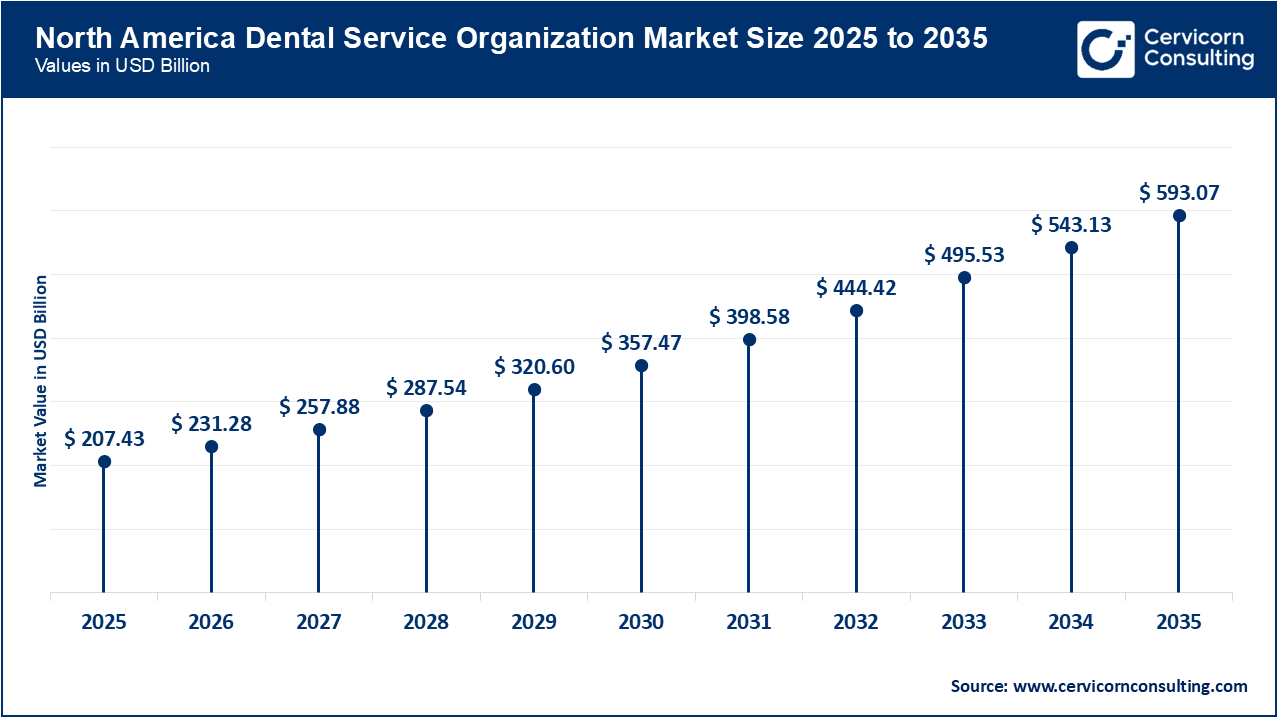
United States: Largest marketplace for dental service organization globally. High PE investments, high dental care expenditure and fast consolidation of private dental clinics is the reason for the large DSO market in US. 30-35% plus of dental clinics are affiliated to DSOs and use of digital dentistry, AI diagnostics, and same-day treatment options is further bolstering the growth. Increased insurance penetration, increase in demand for cosmetic dentistry has also supported the expansion of DSOs in multiple states networks.
Why Asia-Pacific is experiencing significant growth in the dental service organization market?
The Asia-Pacific region is experiencing rapid growth in the DSO market due to rising dental care awareness, urbanization, and increasing disposable incomes. Asia Pacific market size is expected to reach around USD 257.86 billion by 2035 increasing from USD 90.19 billion in 2025. Countries such as China, India, and Japan are driving this expansion with a growing number of dental practices seeking operational efficiencies through consolidation. Government initiatives to improve healthcare infrastructure and the increasing adoption of advanced dental technologies are key factors contributing to market growth.
India: One of the high-growth dental service organization markets, driven by factors such as increasing urbanization, growing middle-class disposable income and rising awareness of oral health. Dental clinics and dental care centers are actively expanding across tier-1 and tier-2 cities with standardization and competitive pricing as key elements to drive organic and inorganic growth. Dental tourism in India is flourishing and increased need for orthodontics and implants is adding up the impetus for DSO growth in India.
Europe Dental Service Organization Market Trends
Europe's DSO market is growing steadily, supported by increasing consolidation and the expansion of dental networks. Europe market size is measured at USD 126.26 billion in 2025 and is expected to grow around USD 360.99 billion by 2035. The region is characterized by diverse regulatory environments and varying market dynamics across countries. Major markets like the UK, Germany, and France are leading the growth, driven by a focus on improving patient care and operational efficiencies. Investment in digital dentistry and cross-border collaborations are also enhancing market development in Europe.
Germany: One of the fast-growing markets for dental service organizations in continental Europe owing to permissive regulation, which permits investor-backed dental care centers (MVZs). High standards of healthcare, and growing use of state of the art orthodontics and implants procedures in the region are driving the consolidation process. DSOs in Germany are also expanding by increasing focus on digital work flows and premium dental solutions to improve patient experience.
LAMEA Dental Service Organization Market Trends
The LAMEA region shows emerging potential in the DSO market, with growth driven by increasing access to dental care and improving healthcare infrastructure. LAMEA market size is forecasted to reach around USD 77.35 billion by 2035 from USD 27.06 billion in 2025. In Latin America, countries like Brazil and Mexico are expanding their dental networks, while the Middle East is investing in advanced dental technologies. The African market is gradually growing, with a focus on increasing dental care access and developing healthcare systems.
Segmental Analysis
Services Analysis
Human Resources: The Human Resources (HR) segment in Dental Service Organizations (DSOs) is increasingly focusing on talent acquisition, training, and employee retention strategies. With the growing need for skilled dental professionals, DSOs are investing in comprehensive HR systems to streamline recruitment processes, enhance staff training programs, and improve job satisfaction, which in turn supports organizational growth and efficiency.
Marketing & Branding: DSOs are emphasizing robust marketing and branding strategies to differentiate themselves in a competitive market. This includes leveraging digital marketing, social media, and patient engagement tools to build brand awareness, attract new patients, and retain existing ones. Effective marketing and branding help DSOs establish a strong market presence and drive patient acquisition.
Accounting: The Accounting segment in DSOs is critical for managing financial operations, including billing, revenue cycle management, and financial reporting. Advanced accounting systems and software are increasingly used to streamline financial processes, ensure accurate and timely reporting, and improve overall financial management. This supports DSOs in maintaining financial health and operational efficiency.
Medical Supplies Procurement: The procurement of medical supplies is a key operational focus for DSOs, which involves sourcing and managing inventory of dental tools, equipment, and materials. Trends include adopting centralized procurement systems to negotiate better pricing, ensure consistent supply quality, and reduce costs. Efficient supply chain management supports operational continuity and enhances service delivery.
Others: The others segment has captured market share of 33% in 2023. This segment includes various additional services that DSOs provide to support their operations. This can include IT support, facility management, and compliance services. Trends in this segment involve integrating technology solutions to streamline operations, enhance service quality, and ensure adherence to regulatory standards, contributing to overall operational effectiveness.
End-use Analysis
Dental Surgeons: Dental surgeons within DSOs are experiencing increased demand due to advancements in surgical techniques and an aging population requiring complex procedures. Dental surgeons segment has covered market share of 23% in 2025. Trends include the integration of specialized surgical services and technologies to improve outcomes and patient experiences. This focus on surgical excellence drives growth in DSOs that cater to high-complexity procedures and cutting-edge treatments.
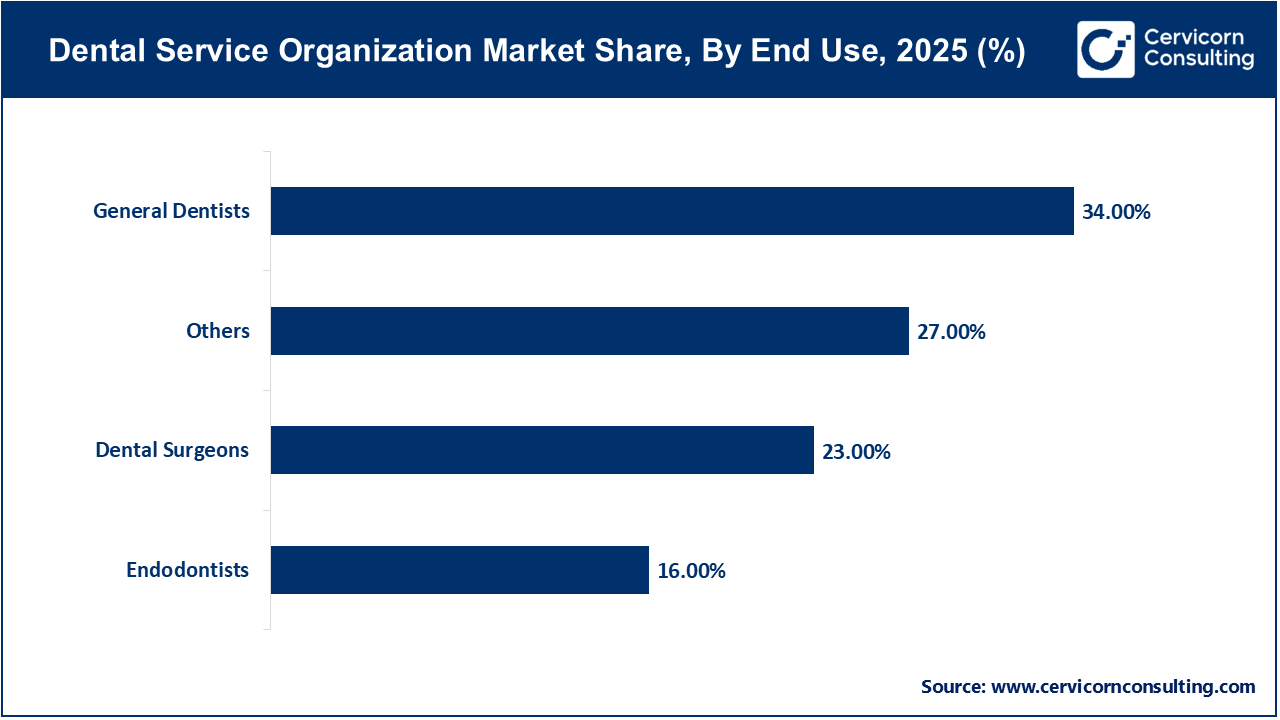
Endodontists: The endodontists segment has recorded market share of 16% in 2025. Endodontists, specializing in root canal therapy and other pulp-related treatments, are seeing growing integration within DSOs. The trend towards comprehensive care within DSOs allows for specialized treatment services to be offered under one roof, enhancing patient convenience and continuity of care. Investments in advanced endodontic technology and training support this segment's expansion.
General Dentists: The general dentists has registered market share of 34% in 2025. General dentists are a core component of DSOs, with a focus on providing broad dental care services. Trends include the adoption of integrated practice management systems and enhanced patient care protocols. DSOs are increasingly standardizing general dental practices to offer consistent quality, streamline operations, and improve patient outcomes across their networks.
Others: The other segment has measured market share of 27% in 2025. This segment includes various dental specialties and support roles within DSOs, including orthodontists, periodontists, and dental hygienists. Trends involve expanding the range of services offered to cover diverse patient needs and integrating various specialties within DSOs to provide comprehensive, patient-centered care. This diversification enhances patient attraction and retention.
Top Companies
- Aspen Dental Management, Inc. (ADMI)
- Heartland Dental
- Pacific Dental Services
- Smile Brands Inc.
- Dental Care Alliance (DCA)
- Affordable Dentures & Implants
- Western Dental & Orthodontics
- Great Expressions Dental Centers
- United Dental Partners
- Benevis
- Caring Dental
- Castle Dental
- Midwestern University Dental Clinic
- Kois Center
- Dental One Partners
Recent Developments
- In January 2026, Heartland Dental announced a massive growth plan aimed at the acquisition of standalone dental practices in rural and suburban areas of the United States currently underserved by modern dental care, looking to add to the existing network of over 3,000 dental practices. The move reflects further industry consolidation and investor faith in scalable DSO models.
- In September 2025, Aspen Dental unveiled an artificial intelligence based practice optimization tool. Aimed at improving patient scheduling, revenue cycle management and treatment planning, the platform has shown double digit efficiency gains within early pilot clinics according to the company. The move indicates positive development towards digitalization of DSOs.
Market Segmentation
By Service
- Human Resources
- Marketing & Branding
- Accounting
- Medical Supplies Procurement
- Others
By End-use
- Dental Surgeons
- Endodontists
- General Dentists
- Others
By Regions
- North America
- APAC
- Europe
- LAMEA