Cardiovascular Devices Market Size, Growth, Forecast 2026 to 2035
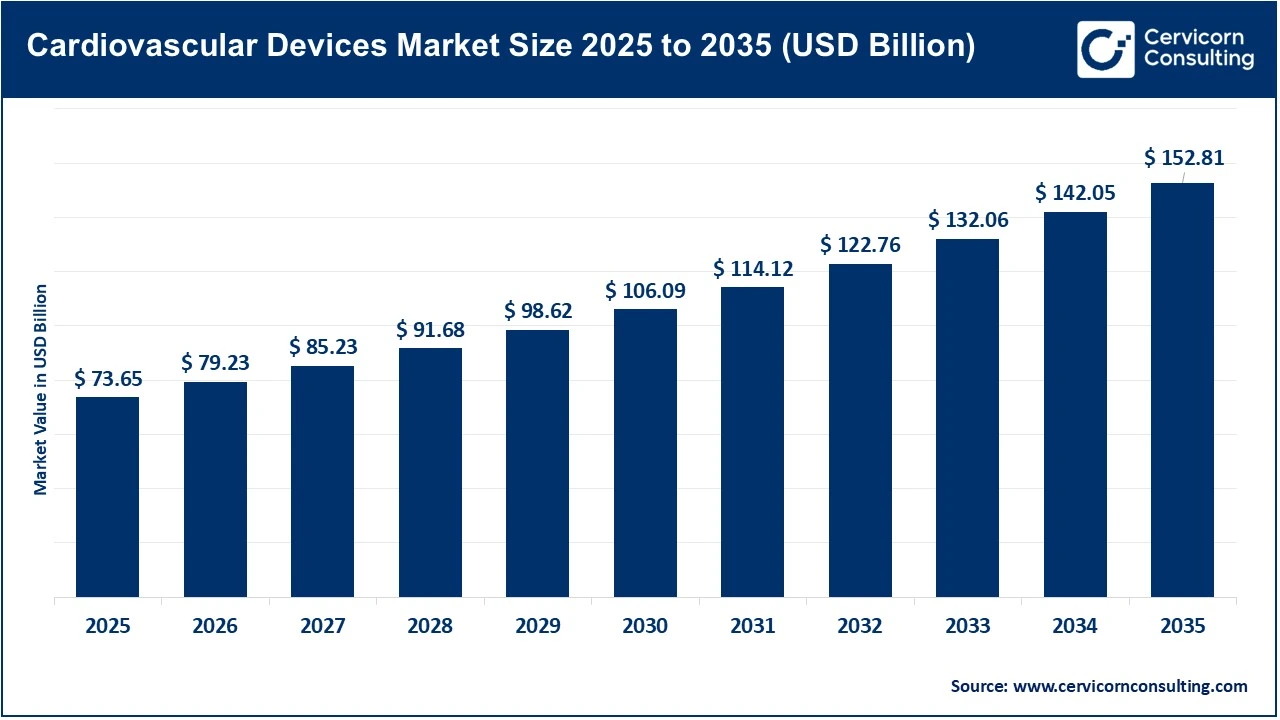
The global cardiovascular devices market size was valued at USD 73.65 billion in 2025 and is expected to be worth around USD 152.81 billion by 2035, exhibiting a compound annual growth rate (CAGR) of 7.6% over the forecast period from 2026 to 2035. The cardiovascular devices market is primarily driven by the increasing global burden of cardiovascular diseases (CVDs), coupled with the rapid growth of the aging population and lifestyle-related risk factors such as hypertension, diabetes, obesity, and smoking.
According to the World Health Organization (WHO), cardiovascular diseases caused approximately 19.8 million deaths in 2022, accounting for nearly 32% of all global deaths, while more than 85% of these deaths resulted from heart attacks and strokes. Additionally, over three-quarters of CVD-related deaths occur in low- and middle-income countries, creating significant demand for advanced diagnostic, interventional, and cardiac rhythm management devices. The rising incidence of coronary artery disease, heart failure, and structural heart disorders continues to increase the adoption of stents, pacemakers, implantable defibrillators, heart valves, and imaging systems across healthcare facilities.
Another major growth factor is the accelerating adoption of minimally invasive cardiovascular procedures and continuous technological advancements in interventional cardiology. The increasing preference for catheter-based treatments, transcatheter heart valve replacement, AI-enabled cardiac imaging, and next-generation implantable devices is improving clinical outcomes while reducing hospital stays and recovery time. According to the American Heart Association, approximately 435,895 percutaneous coronary intervention (PCI) procedures were performed in the U.S. during 2022, while transcatheter aortic valve replacement (TAVR) procedures increased from 13,723 during 2011–2013 to 72,991 in 2019, surpassing traditional surgical valve replacement in many patient groups. Furthermore, European clinical data indicate that PCI and TAVR procedure volumes have steadily increased over the past decade, reflecting expanding physician adoption and broader access to advanced cardiovascular technologies worldwide.
Report Highlights
- North America dominated the cardiovascular devices market with a 39.8% share, driven by advanced healthcare infrastructure, favorable reimbursement policies, and widespread adoption of innovative cardiac technologies.
- Therapeutic & Surgical Devices led the device type segment with a 67.4% market share due to increasing demand for minimally invasive cardiovascular interventions.
- Diagnostic & Monitoring Devices accounted for 32.6% of the market, supported by growing adoption of wearable ECG devices and remote cardiac monitoring solutions.
- Coronary Artery Disease held the largest application share at 42.8%, driven by rising PCI procedures and increasing prevalence of coronary heart disease globally.
- Cardiac Arrhythmia represented 26.7% of the market, fueled by expanding use of pacemakers, ICDs, catheter ablation systems, and rhythm monitoring devices.
- Hospitals dominated the end-user segment with a 71.2% share due to high procedure volumes and comprehensive cardiovascular treatment capabilities.
What are Cardiovascular Devices?
Cardiovascular devices are medical technologies designed to diagnose, monitor, treat, and manage disorders affecting the heart and blood vessels, including coronary artery disease, heart failure, arrhythmias, valvular heart disease, and peripheral vascular disease. These devices encompass a broad range of products such as electrocardiographs (ECGs), cardiac imaging systems, pacemakers, implantable cardioverter defibrillators (ICDs), coronary stents, catheters, heart valves, vascular grafts, and mechanical circulatory support systems. By enabling early diagnosis, minimally invasive interventions, continuous cardiac monitoring, and life-saving therapies, cardiovascular devices improve clinical outcomes, reduce complications, shorten hospital stays, and enhance the quality of life for patients with cardiovascular diseases.
Recent Developments in Cardiovascular Devices
| Company |
Device Name |
Updates |
| Edwards Lifesciences Corporation |
SAPIEN M3 Transcatheter Mitral Valve Replacement (TMVR) System |
Expanded structural heart portfolio with a minimally invasive solution for mitral regurgitation, offering treatment for patients unsuitable for open-heart surgery. |
| Boston Scientific Corporation |
FARAPULSE Pulsed Field Ablation (PFA) System |
Expanded global adoption for atrial fibrillation treatment by providing precise tissue ablation while reducing damage to surrounding cardiac structures. |
| Medtronic plc |
PulseSelect Pulsed Field Ablation System |
Advanced electrophysiology treatment with rapid pulmonary vein isolation and improved procedural efficiency for atrial fibrillation patients. |
| Abbott Laboratories |
TriClip Transcatheter Edge-to-Edge Repair (TEER) System |
Expanded minimally invasive treatment options for tricuspid regurgitation, helping reduce symptoms and improve quality of life in high-risk patients. |
| Meril Life Sciences |
MyClip TEER System |
Introduced an India-developed transcatheter mitral valve repair device, strengthening access to minimally invasive structural heart therapies. |
| Stereotaxis |
MAGiC Robotic Magnetic Ablation Catheter |
Received U.S. FDA approval in 2026, enabling highly precise robotic catheter navigation for cardiac ablation procedures and improving procedural accuracy. |
Cardiovascular Devices Market Dynamics
Market Drivers
1. Rising Burden of Cardiovascular Diseases and Aging Population
The growing prevalence of cardiovascular diseases (CVDs), including coronary artery disease, heart failure, and arrhythmias, is a major driver of the cardiovascular devices market. Increasing life expectancy, sedentary lifestyles, obesity, diabetes, and hypertension are contributing to higher disease incidence worldwide. As the elderly population is more susceptible to cardiovascular disorders, healthcare providers are increasingly adopting advanced diagnostic, monitoring, and therapeutic devices such as pacemakers, stents, and heart valves to improve patient outcomes and reduce mortality.
Cardiovascular diseases caused approximately 19.8 million deaths worldwide in 2022, representing about 32% of all global deaths, while the global prevalence exceeded 612 million people. Population aging is one of the strongest contributors to the increasing burden of cardiovascular disease and the growing demand for cardiovascular devices.
Global Trends in Aging Population and Cardiovascular Disease Burden
| Country |
Estimated Population Aged 65+ |
Cardiovascular Disease Burden |
| Japan |
29.8% of the population is aged 65 years or older (highest globally). |
Aging population is driving high demand for pacemakers, heart valves, and cardiac monitoring devices. |
| Italy |
24.6% of the population is aged 65+ years. |
Cardiovascular disease remains one of the leading causes of mortality, increasing demand for minimally invasive cardiac procedures. |
| Germany |
Approximately 23.8% of the population is aged 65+ years. |
High prevalence of coronary artery disease and heart failure supports strong adoption of cardiovascular devices. |
| United States |
About 18% of the population is aged 65+ years. |
Nearly 127.9 million adults were living with cardiovascular disease in 2021, making it one of the country's largest healthcare burdens. |
| China |
Approximately 15.4% of the population is aged 65+ years (over 216 million people). |
Rapid population aging and increasing hypertension and diabetes cases are accelerating demand for cardiovascular interventions. |
| India |
Around 7.7% of the population is aged 65+ years. |
India accounts for one of the world's largest numbers of cardiovascular disease cases, with CVD responsible for about 28% of all deaths. |
2. Technological Advancements in Minimally Invasive Cardiac Procedures
Continuous innovation in cardiovascular technologies is accelerating market growth by improving procedural safety, precision, and recovery times. The adoption of transcatheter heart valves, drug-eluting stents, AI-enabled cardiac imaging, pulsed field ablation systems, and remote cardiac monitoring devices has significantly enhanced treatment effectiveness. These minimally invasive solutions reduce hospital stays, lower complication rates, and improve patient satisfaction, encouraging hospitals and physicians to replace conventional surgical approaches with advanced cardiovascular devices.
Market Restraints
1. High Cost of Advanced Cardiovascular Devices and Procedures
The premium pricing of technologically advanced cardiovascular devices, including implantable defibrillators, transcatheter heart valves, and robotic-assisted systems, remains a significant market restraint. In addition to device costs, hospitals incur expenses related to specialized infrastructure, physician training, and postoperative care. Limited reimbursement policies in several developing countries further restrict patient access, causing healthcare providers to delay adoption and reducing market penetration in cost-sensitive regions.
2. Stringent Regulatory Approval and Clinical Validation Requirements
Cardiovascular devices are subject to rigorous regulatory review because they directly affect patient safety and long-term clinical outcomes. Manufacturers must complete extensive preclinical testing, multi-phase clinical trials, quality audits, and post-market surveillance before obtaining commercial approval. These lengthy and expensive regulatory processes increase product development costs, delay market entry, and create challenges for emerging companies seeking to introduce innovative cardiovascular technologies.
Market Opportunities
1. Expansion of Remote Cardiac Monitoring and Digital Health Solutions
The growing adoption of digital healthcare presents significant opportunities for cardiovascular device manufacturers. Wearable ECG monitors, implantable cardiac monitors, AI-powered diagnostic platforms, and remote patient monitoring systems enable continuous assessment of heart conditions outside hospitals. Increasing telehealth adoption, improved internet connectivity, and healthcare digitalization are encouraging healthcare providers to invest in connected cardiovascular technologies that support early diagnosis, personalized treatment, and proactive disease management.
2. Growing Demand in Emerging Healthcare Markets
Rapid improvements in healthcare infrastructure across Asia-Pacific, Latin America, and the Middle East are creating substantial growth opportunities for cardiovascular device manufacturers. Rising healthcare expenditure, expanding insurance coverage, increasing awareness of cardiovascular diseases, and government investments in advanced medical technologies are driving demand for modern cardiac care. Companies expanding local manufacturing, strategic partnerships, and affordable product portfolios are well positioned to capitalize on these fast-growing regional markets.
Market Challenges
1. Shortage of Skilled Cardiovascular Specialists
The successful use of advanced cardiovascular devices requires experienced interventional cardiologists, electrophysiologists, cardiac surgeons, and trained clinical staff. Many developing countries continue to face shortages of skilled healthcare professionals capable of performing complex procedures such as transcatheter valve replacement and catheter ablation. This workforce gap limits the adoption of sophisticated cardiovascular technologies, particularly in rural and underserved healthcare settings.
2. Cybersecurity and Data Privacy Risks in Connected Cardiac Devices
The increasing integration of wireless connectivity, cloud platforms, and AI into cardiovascular devices has introduced cybersecurity and patient data privacy concerns. Connected pacemakers, implantable cardiac monitors, and remote monitoring systems transmit sensitive health information that may become vulnerable to cyberattacks if not adequately protected. Manufacturers and healthcare providers must continuously strengthen cybersecurity measures, comply with evolving data protection regulations, and maintain patient trust while expanding digital cardiovascular care.
Cardiovascular Devices Market Regional Analysis
The cardiovascular devices market is segmented by region into North America, Europe, Asia-Pacific, Latin America, and LAMEA. Here is a brief overview of each region:
Why does North America dominates the cardiovascular devices market?
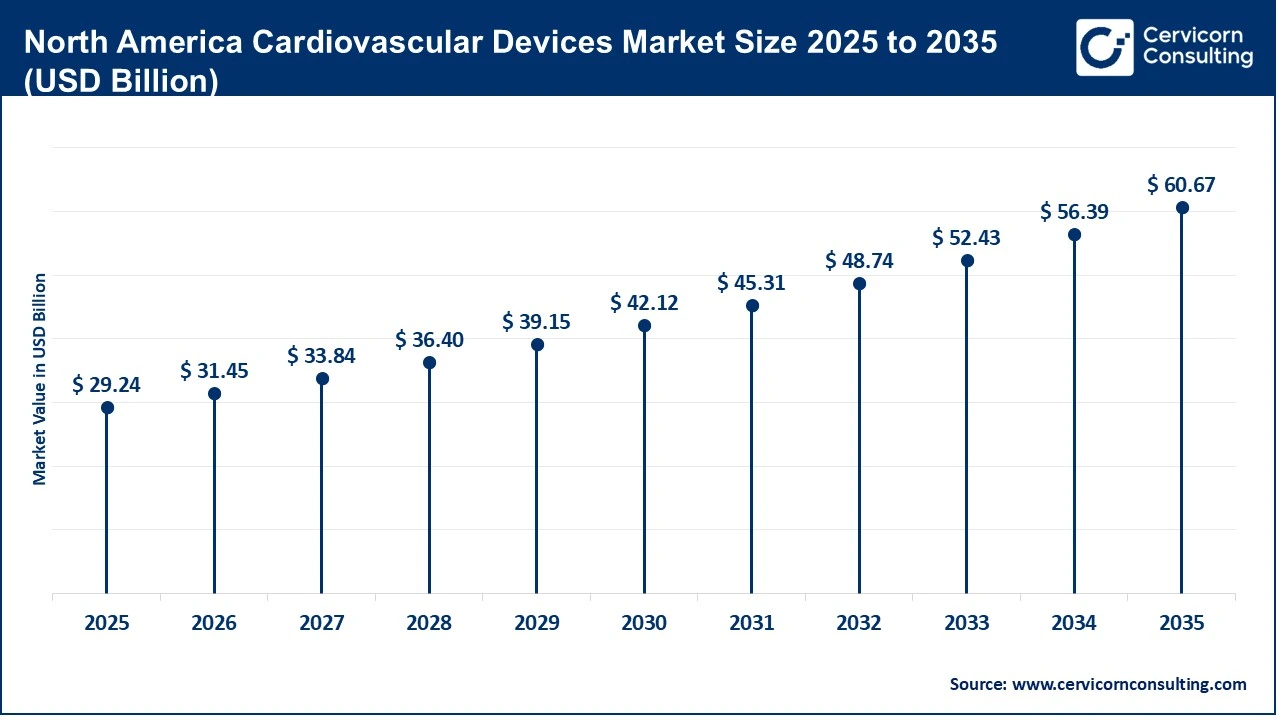
North America dominates the market owing to its high prevalence of cardiovascular diseases, well-established healthcare infrastructure, strong reimbursement systems, and rapid adoption of advanced medical technologies. The region is at the forefront of minimally invasive cardiac interventions, structural heart procedures, cardiac rhythm management, and AI-enabled diagnostic imaging. Rising investments in research and development, increasing adoption of remote cardiac monitoring, and continuous regulatory approvals for innovative cardiovascular devices are further supporting market expansion. The presence of leading manufacturers, highly skilled cardiologists, and advanced catheterization laboratories enables early adoption of next-generation technologies such as transcatheter heart valves, pulsed field ablation systems, leadless pacemakers, and implantable cardiac monitors, reinforcing North America's leadership in the global cardiovascular devices market.
United States: High Cardiovascular Disease Prevalence, Strong Reimbursement, and Continuous Medical Innovation Drive Market Leadership
- Cardiovascular disease affects nearly 128 million U.S. adults, making it the leading cause of death and generating sustained demand for diagnostic, monitoring, and therapeutic cardiovascular devices.
- The U.S. performs hundreds of thousands of percutaneous coronary intervention (PCI) procedures and tens of thousands of transcatheter aortic valve replacement (TAVR) procedures annually, supporting strong utilization of advanced interventional cardiology devices.
Canada: Universal Healthcare, Aging Population, and Growing Investment in Cardiac Care Support Market Expansion
- Canada’s publicly funded healthcare system continues to invest in expanding access to advanced cardiovascular diagnostics, minimally invasive cardiac procedures, and structural heart interventions.
- The country's rapidly growing elderly population is increasing the prevalence of coronary artery disease, heart failure, atrial fibrillation, and valvular heart disease, driving demand for cardiovascular devices.
Why is Asia-Pacific fastest-growing regional market in the cardiovascular devices market?
The Asia-Pacific market is the fastest-growing regional market, supported by the rising prevalence of cardiovascular diseases, aging populations, increasing healthcare expenditure, and expanding access to advanced cardiac care. Rapid urbanization, lifestyle-related risk factors such as diabetes, obesity, hypertension, and smoking, along with improving health insurance coverage, are driving demand for cardiovascular diagnostics and interventional devices. Governments across the region are investing in modern hospitals, catheterization laboratories, and digital healthcare infrastructure while encouraging local medical device manufacturing. The growing adoption of minimally invasive procedures, AI-enabled cardiac diagnostics, remote patient monitoring, and transcatheter therapies is further accelerating market growth across Asia-Pacific.
China: Expanding Healthcare Investments, Aging Population, and Domestic Medical Device Innovation Drive Regional Leadership
- China has one of the world's largest cardiovascular disease patient populations, creating substantial demand for diagnostic imaging systems, coronary stents, cardiac rhythm management devices, and structural heart technologies.
- Government initiatives under Healthy China 2030 continue to strengthen healthcare infrastructure, expand access to advanced cardiac care, and promote domestic innovation in high-end medical devices.
India: Rising Cardiovascular Disease Burden, Healthcare Modernization, and Expanding Access to Advanced Cardiac Care Fuel Market Growth
- India accounts for one of the world's highest burdens of cardiovascular disease, with heart disease responsible for approximately 28% of all deaths, driving significant demand for cardiovascular devices.
- Government initiatives such as Ayushman Bharat are improving healthcare accessibility by expanding insurance coverage and increasing the availability of advanced cardiac treatments across public and private hospitals
Why Europe represents a significant share in the cardiovascular devices market?
Europe represents a significant share, supported by its rapidly aging population, high prevalence of cardiovascular diseases, well-established public healthcare systems, and continuous adoption of innovative medical technologies. The region has a strong network of specialized cardiac centers, advanced catheterization laboratories, and experienced healthcare professionals performing minimally invasive cardiovascular procedures. Increasing demand for transcatheter heart valve replacement, cardiac rhythm management devices, AI-enabled diagnostic imaging, and remote patient monitoring is further driving market growth. Favorable reimbursement policies, continuous clinical research, and the presence of leading cardiovascular device manufacturers continue to strengthen Europe's position as a major regional market.
Germany: Advanced Healthcare Infrastructure, High Procedure Volumes, and Medical Technology Innovation Drive Regional Leadership
- Germany has one of Europe's most advanced healthcare systems, with a large number of specialized cardiac hospitals and catheterization laboratories performing high volumes of interventional cardiology procedures.
- The country's aging population and high prevalence of coronary artery disease, heart failure, and cardiac arrhythmias continue to increase demand for pacemakers, implantable cardioverter defibrillators (ICDs), coronary stents, and transcatheter heart valves.
United Kingdom: NHS Investment, Rising Cardiovascular Disease Burden, and Expansion of Minimally Invasive Cardiac Care Support Market Growth
- Cardiovascular disease remains one of the leading causes of mortality in the United Kingdom, driving sustained demand for advanced diagnostic, monitoring, and therapeutic cardiovascular devices.
- The National Health Service (NHS) continues to invest in expanding cardiac diagnostic services, catheter-based interventions, structural heart procedures, and digital cardiovascular care to improve patient outcomes.
Cardiovascular Devices Market Share, By Region, 2025 (%)
| Region |
Revenue Share, 2025 (%) |
| North America |
39.8% |
| Europe |
28.4% |
| Asia-Pacific |
23.9% |
| LAMEA (Latin America, Middle East & Africa) |
7.9% |
Why is LAMEA cardiovascular devices market experiencing steady growth?
The LAMEA market is experiencing steady growth due to the increasing prevalence of cardiovascular diseases, improving healthcare infrastructure, and rising investments in specialized cardiac care. Growing urbanization, aging populations, and lifestyle-related risk factors such as obesity, diabetes, hypertension, and tobacco use are increasing demand for cardiovascular diagnostics and interventional devices. Governments across the region are expanding public healthcare programs, modernizing hospitals, and strengthening access to minimally invasive cardiac procedures. In addition, the increasing presence of multinational medical device manufacturers, improving reimbursement frameworks in selected countries, and growing medical tourism are contributing to the adoption of advanced cardiovascular technologies across the region.
Brazil: Expanding Cardiac Care Infrastructure, High Cardiovascular Disease Burden, and Increasing Adoption of Minimally Invasive Procedures Drive Regional Leadership
- Brazil accounts for one of Latin America's largest cardiovascular device markets, supported by a high prevalence of coronary artery disease, heart failure, and cardiac arrhythmias.
- Government investments through the public healthcare system (SUS), along with expanding private hospital networks, are improving access to advanced cardiovascular diagnostics and interventional treatments.
Saudi Arabia: Vision 2030 Healthcare Transformation, Rising Chronic Disease Burden, and Investment in Specialized Cardiac Centers Support Market Growth
- Saudi Vision 2030 continues to drive large-scale investments in healthcare infrastructure, digital health, and advanced cardiovascular services, accelerating the adoption of innovative medical devices.
- The increasing prevalence of diabetes, obesity, hypertension, and cardiovascular diseases is generating substantial demand for cardiac monitoring systems, diagnostic imaging, and interventional cardiology devices.
Cardiovascular Devices Market Segmental Analysis
The cardiovascular devices market is segmented into device type, application, end user, and geography.
Device Type Analysis
Therapeutic & surgical devices dominate the cardiovascular devices market due to their extensive use in treating life-threatening cardiovascular conditions such as coronary artery disease, heart failure, structural heart disease, and cardiac arrhythmias. Products including coronary stents, heart valves, pacemakers, implantable cardioverter defibrillators (ICDs), catheters, and atherectomy devices are widely adopted due to the increasing volume of minimally invasive procedures and the rising demand for interventional cardiology. Continuous technological advancements and favorable reimbursement for complex cardiac procedures further strengthen the leadership of this segment.
Cardiovascular Devices Market Share, By Device Type, 2025 (%)
| Device Type |
Revenue Share, 2025 (%) |
| Therapeutic & Surgical Devices |
67.4% |
| Diagnostic & Monitoring |
32.6% |
Diagnostic & monitoring devices are projected to register the fastest growth owing to the increasing emphasis on early disease detection, preventive healthcare, and remote patient monitoring. The growing adoption of wearable ECG devices, implantable cardiac monitors, AI-powered cardiac imaging systems, advanced echocardiography, and continuous blood pressure monitoring solutions is enhancing diagnostic accuracy and enabling timely intervention. Expanding telehealth services, increasing cardiovascular screening programs, and rising awareness regarding early diagnosis are expected to accelerate demand for advanced diagnostic technologies across both developed and emerging healthcare markets.
Application Analysis
Coronary artery disease (CAD) represents the largest application segment due to its high global prevalence and increasing incidence associated with aging, obesity, diabetes, smoking, and hypertension. The management of CAD requires extensive use of cardiovascular devices, including coronary stents, angioplasty balloons, intravascular imaging systems, guidewires, and diagnostic catheters. The growing number of percutaneous coronary intervention (PCI) procedures, combined with improvements in drug-eluting stent technologies and expanding access to cardiac care, continues to support the dominance of this application segment worldwide.
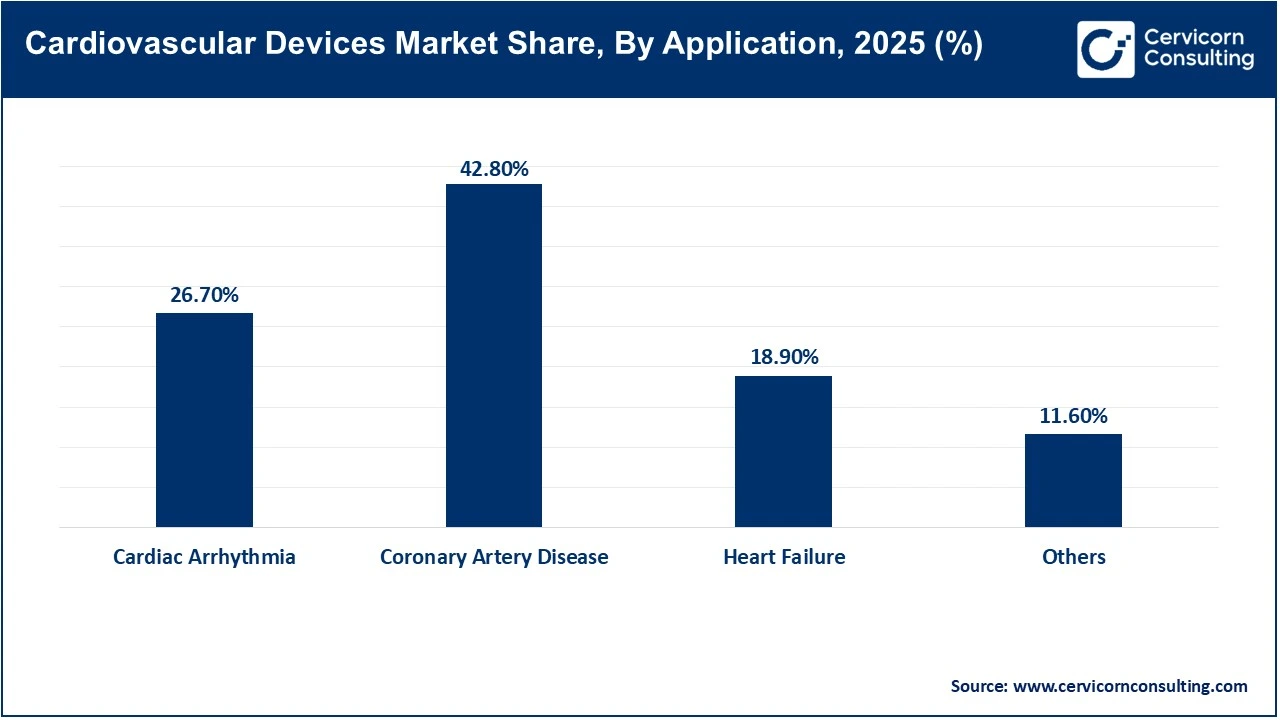
Cardiac arrhythmia is anticipated to witness the fastest growth due to the rising prevalence of atrial fibrillation and other rhythm disorders among aging populations. Increasing adoption of implantable cardiac monitors, wearable ECG devices, pacemakers, implantable cardioverter defibrillators (ICDs), and catheter ablation technologies is significantly improving diagnosis and treatment outcomes. Furthermore, the commercialization of pulsed field ablation systems, AI-assisted rhythm monitoring, and remote cardiac monitoring solutions is accelerating procedural volumes and expanding treatment accessibility across global healthcare systems.
End User Analysis
Hospitals account for the largest share of the cardiovascular devices market owing to their comprehensive cardiac care infrastructure, availability of specialized cardiologists, and capability to perform complex interventional and surgical procedures. Most high-value cardiovascular devices, including transcatheter heart valves, pacemakers, implantable defibrillators, ventricular assist devices, and advanced imaging systems, are primarily utilized in hospital settings. Strong reimbursement support, high patient volumes, and continuous investments in hybrid operating rooms and catheterization laboratories further reinforce hospital dominance.
Cardiovascular Devices Market, By End User, 2025 (%)
| End User |
Revenue Share, 2025 (%) |
| Hospitals |
71.2% |
| Specialty Clinics |
20.3% |
| Others |
8.5% |
Specialty clinics are expected to experience the fastest growth as healthcare systems increasingly shift toward outpatient and minimally invasive cardiovascular care. These facilities offer faster diagnosis, reduced waiting times, personalized treatment, and lower procedural costs compared to traditional hospital settings. The increasing availability of advanced diagnostic equipment, catheter-based interventions, cardiac rehabilitation services, and remote patient monitoring technologies enables specialty clinics to manage a wider range of cardiovascular conditions while improving operational efficiency and patient convenience.
Cardiovascular Devices Market Top Companies
Recent Developments
- In June 2026, Medtronic announced strategic investments to expand its Affera™ cardiac ablation portfolio, including intracardiac echocardiography (ICE) technologies, to meet growing physician demand for advanced atrial fibrillation treatment solutions.
- In February 2026, Abbott received U.S. FDA approval for the next-generation CardioMEMS™ HERO remote heart failure monitoring reader, improving patient monitoring through a lighter and more user-friendly design.
- In January 2026, Boston Scientific agreed to acquire Penumbra, Inc. for USD 14.5 billion, significantly expanding its cardiovascular portfolio in thrombectomy, pulmonary embolism, and vascular intervention technologies.
- In October 2025, Edwards Lifesciences received U.S. FDA approval for its SAPIEN M3 Transcatheter Mitral Valve Replacement (TMVR) System, expanding minimally invasive treatment options for patients with mitral regurgitation.
Market Segmentation
By Device Type
- Diagnostic & Monitoring
- Electrocardiogram (ECG) Devices
- Holter Monitors
- Event Monitors
- Implantable Cardiac Monitors (ICMs)
- Cardiac Ultrasound (Echocardiography) Systems
- Cardiac MRI Systems
- Cardiac CT Systems
- Blood Pressure Monitoring Devices
- Cardiac Stress Testing Systems
- Therapeutic & Surgical Devices
- Cardiac Resynchronization Therapy (CRT)
- CRT-Defibrillator
- CRT-Pacemaker
- Implantable Cardioverter Defibrillators (ICDs)
- Single Chamber ICDs
- Dual Chamber ICDs
- Pacemakers
- Conventional Pacemakers
- Leadless Pacemakers
- Coronary Stents
- Catheters
- Guidewires
- Cannula
- Valves
- Occlusion Devices
By Application
- Cardiac Arrhythmia
- Coronary Artery Disease
- Heart Failure
- Others
By End User
- Hospitals
- Specialty Clinics
- Others
By Geography
- North America
- Europe
- Asia-Pacific
- LAMEA