
Content
The Healthier Basket: How a $6.16 Trillion Wellness Market Is Rewriting the CPG Playbook


Wellness is no longer a category on the shelf. It is the logic that decides what goes into the basket, what premium shoppers will pay, and which brands big companies choose to buy. This is what that means for consumer packaged goods.
Why the wellness boom is really a CPG story
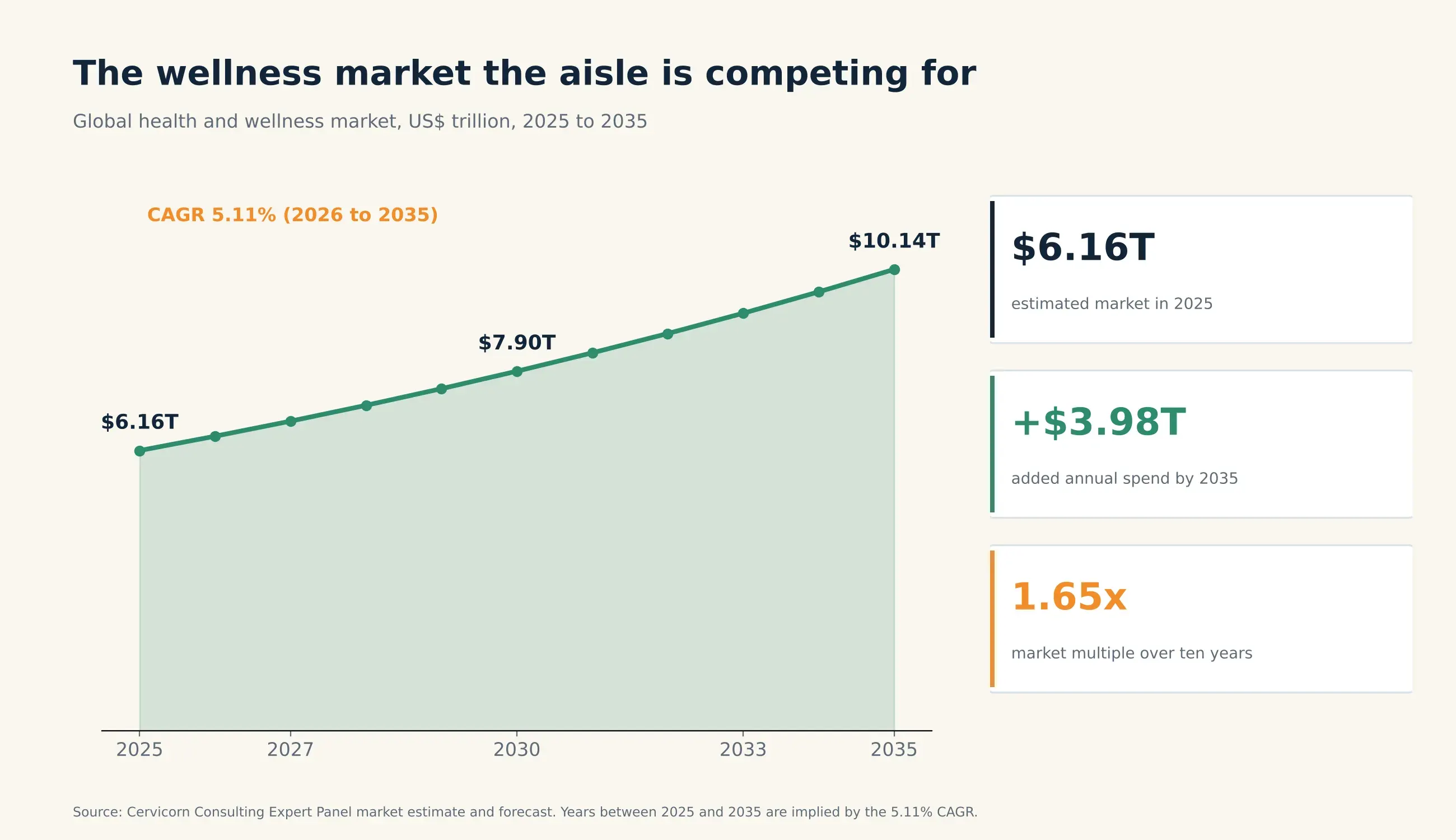
The Cervicorn Consulting Expert Panel estimates the global health and wellness market at $6.16 trillion in 2025, rising above $10.14 trillion by 2035. That is a compound annual growth rate (CAGR) of 5.11% from 2026 to 2035 and nearly $4 trillion of additional annual spending. Services, devices and clinics will take a share. But the first and most frequent touchpoint for wellness spending is still a packaged product: the yogurt with added protein, the prebiotic soda, the fibre cereal, the electrolyte sachet, the vitamin gummy.
For CPG companies this creates an unusual combination of opportunity and pressure. Demand is moving toward products that claim a health benefit and can prove it, yet the core of many portfolios was built for taste, convenience and price. This article looks at where the pressure is greatest, where the growth is concentrated, and how global and Indian players are responding.
Exhibit 1: The market CPG is competing for
The claim premium: health-led products pull ahead
The clearest evidence that wellness is a CPG growth engine comes from retail scan data. NielsenIQ (NIQ), tracking US food and beverage, found that products carrying better-for-you claims grew sales at a compound rate of 6.4% a year between 2018 and 2022, against 4.7% for products without such claims, a gap of 170 basis points. The period predates the latest surge in protein and GLP-1 related demand, which suggests the premium has been building for years.
Growth is also concentrated. In a 2026 NIQ analysis, just 4.5% of US households accounted for 43% of the sales growth in products carrying muscle health claims. These are the over-informed shoppers who scan labels, compare ingredient panels and look for proof before they buy. For a brand, winning this small group first can matter more than broad distribution.
Exhibit 2: Claims, and the households behind the growth
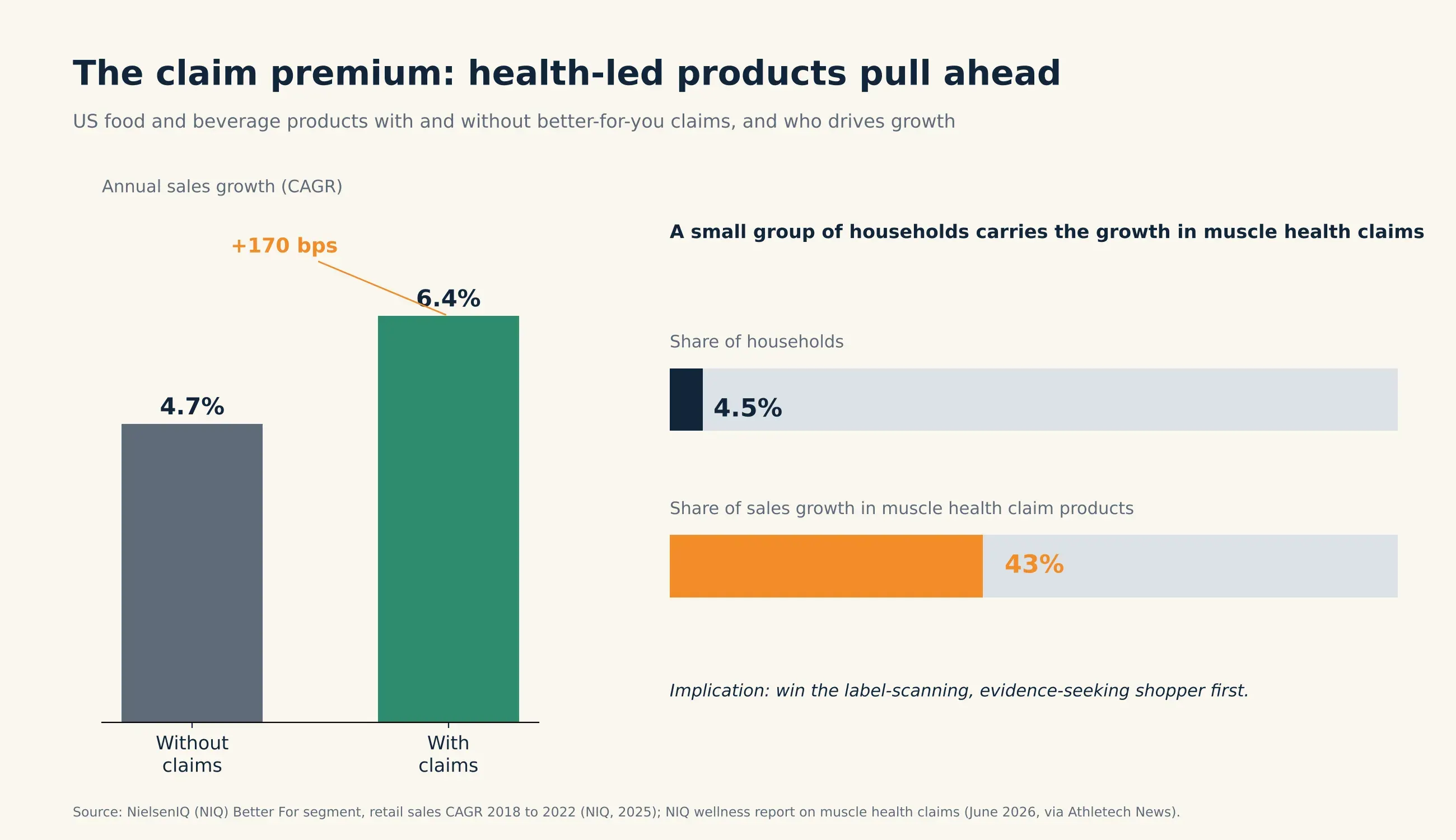
Table 1: Where shopper signals are strongest
| Claim territory | Signal | Source |
| Muscle health and protein | 4.5% of households drove 43% of sales growth in claim-carrying products | NIQ, 2026 |
| Gut health | Prebiotic soda dollar sales grew an estimated 245% in tracked US channels, 2022 to 2024 | 5W research, 2026 |
| Fibre and protein, UK | One in four households names health as its top priority for 2026; shoppers are shifting spend toward fibre and protein | NIQ UK, February 2026 |
| No and low alcohol, UK | No and low cider sales up 28%, no and low spirits up 8% | NIQ UK, February 2026 |
| GLP-1 adjacent nutrition | About 80% of GLP-1 users buy performance and health nutrition products versus roughly 67% of the general population | FTI Consulting, 2026 |
The squeeze on the middle of the shelf
Wellness is rising at the same time as a structural shift in price tiers. Across 26 measured markets, NIQ reports that the mainstream tier's share of global CPG value sales fell by one percentage point to 43% in the year to 14 June 2026. Premium gained 0.6 points to 40% and discount gained 0.3 points to 18%. The middle is being squeezed from both ends.
Exhibit 3: Mainstream is losing share to both ends
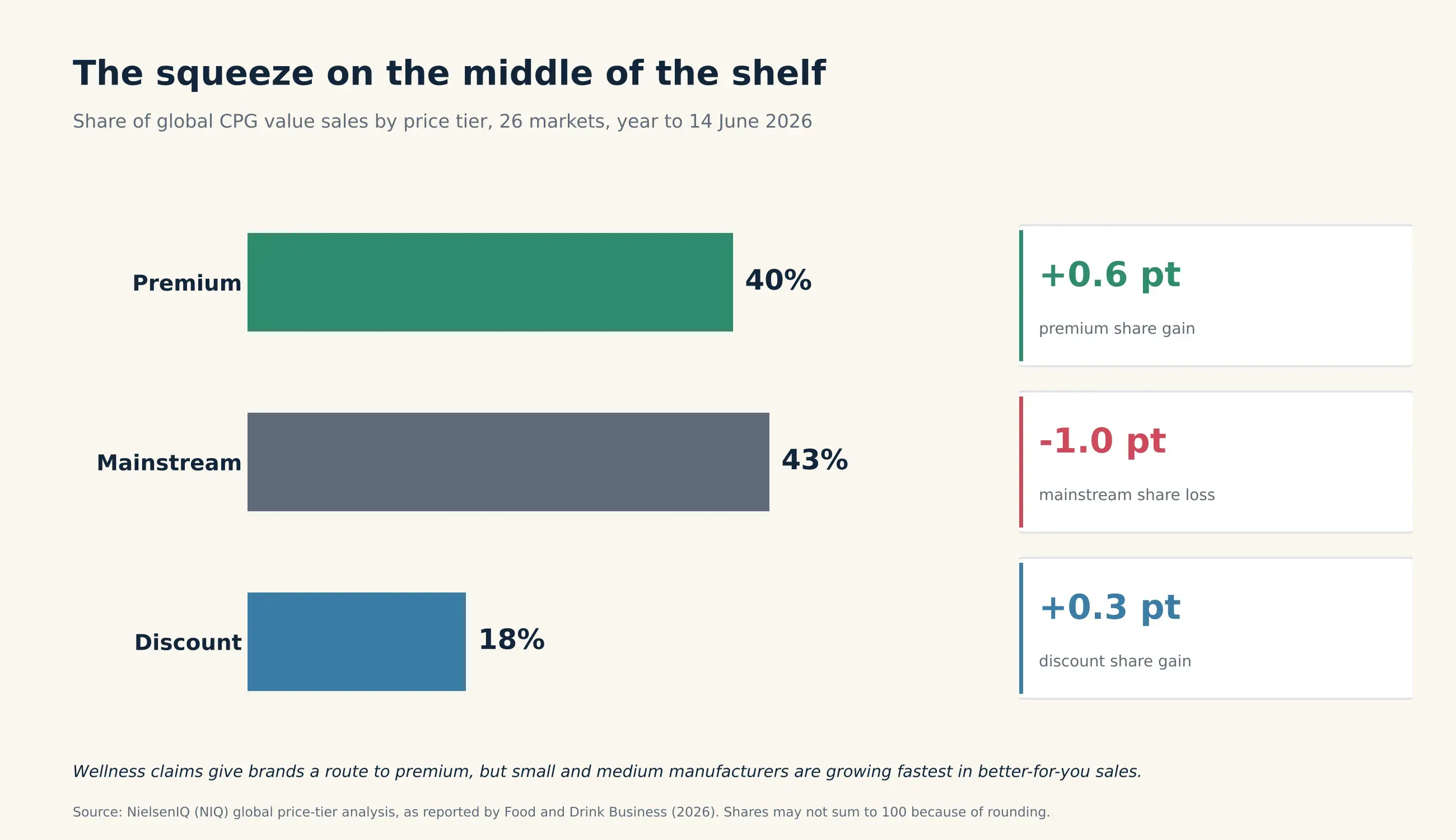
This matters for wellness because a credible health position is one of the few justifications for a premium price that shoppers accept even when budgets are tight. It also changes who can win. NIQ's earlier analysis of the US better-for-you segment found that small and medium manufacturers were growing fastest, even though large manufacturers hold most of total food and beverage sales. Scale is helpful, but it is not decisive in a market where proof, focus and speed to a new claim carry weight.
Buy, build or fade: wellness dealmaking in CPG
Large CPG groups have answered the pressure with their chequebooks. In 2025 alone, PepsiCo agreed to buy prebiotic soda brand poppi for $1.95 billion, Celsius bought Alani Nu for about $1.8 billion, Keurig Dr Pepper took a 60% stake in Ghost for a reported $990 million, and private equity firm Gryphon bought sparkling water brand Spindrift for roughly $650 million. Flowers Foods added Simple Mills to its better-for-you range.
Exhibit 4: Big CPG is buying its way into wellness
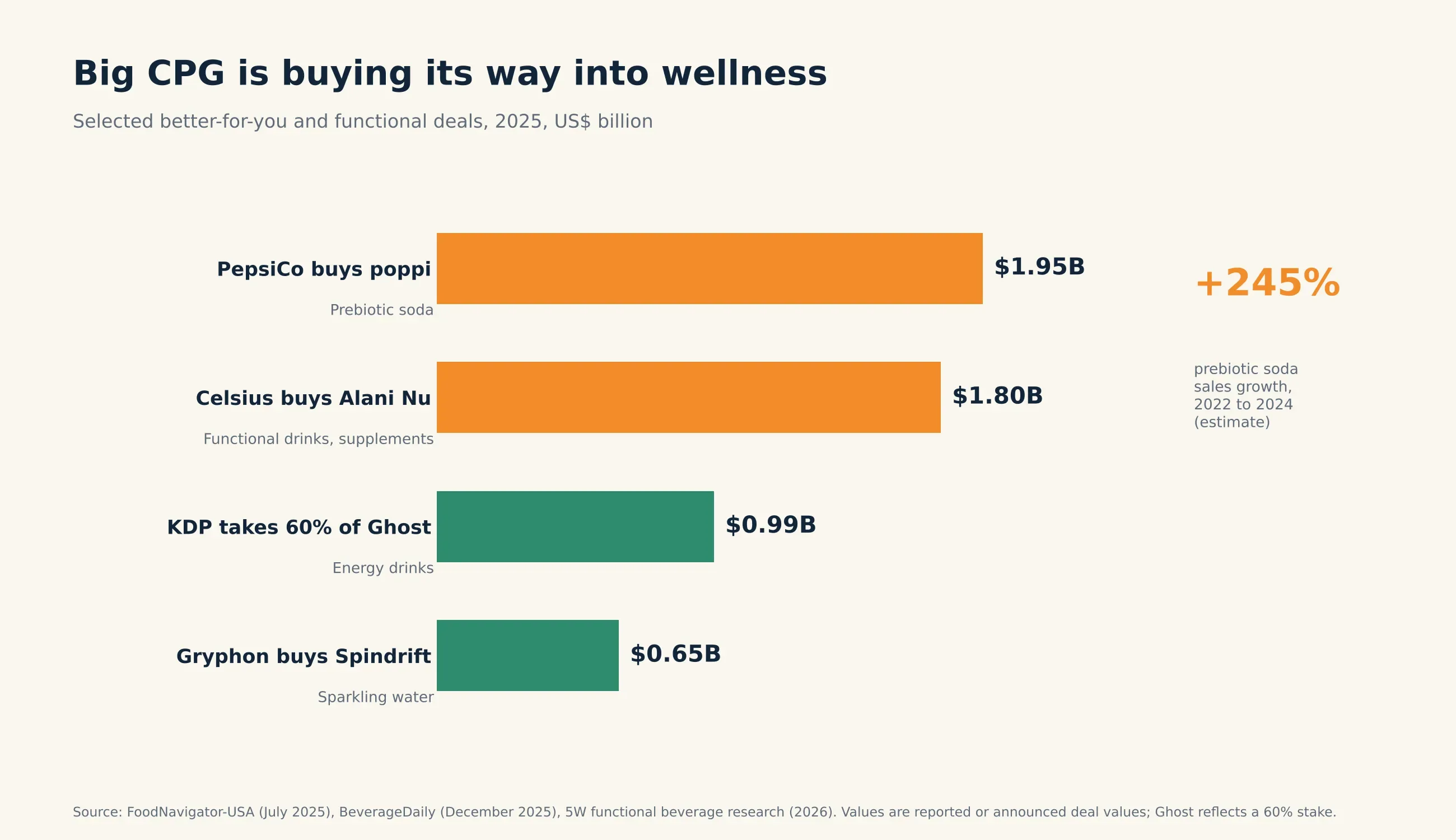
Table 2: What the buyers were really purchasing
| Buyer | Target | Value | What the deal buys |
| PepsiCo | poppi | $1.95B | A gut-health brand and a younger shopper, plus a path out of declining core soda |
| Celsius | Alani Nu | About $1.8B | A female-focused functional brand with room to move into snacks and bars |
| Keurig Dr Pepper | Ghost (60% stake) | $990M | Credibility with performance-nutrition and energy consumers |
| Gryphon Advisors | Spindrift | About $650M | A clean-label sparkling water brand built on simplicity |
The deals share a pattern. Acquirers are buying proven consumer relationships and credible health positioning, then adding their own distribution. The risk is that the claim does not survive scrutiny. In 2025, poppi agreed to an $8.9 million settlement fund for consumers amid litigation over its health positioning, a reminder that buyers inherit claim risk along with brand equity.
GLP-1 and the pantry: smaller baskets, higher standards
GLP-1 weight-management medicines have turned a pharmaceutical trend into a category force. FTI Consulting's spring 2026 survey found that about 18% of US adults use a GLP-1 drug, up from around 14% a year earlier, and estimates that about $95 billion of US packaged food spend is at risk by 2030 under current trajectories. A Cornell University study found that households cut grocery spending by an average of 5.3% within six months of adoption.
The effect is not uniform. Users are trading out of indulgence categories and into protein, produce and portion-controlled formats, and CPG companies have started to respond with dedicated lines and labels.
Table 3: The GLP-1 effect on CPG categories
| Category | Direction | Evidence and CPG response |
| Sweet treats | Down | 61% of GLP-1 users buy fewer (PwC, June 2026) |
| Savoury snacks | Down | 56% of GLP-1 users buy fewer (PwC, June 2026) |
| Frozen food | Down | Largest single CPG category effect, with a three-point drop in dollar spend over the first year of use (FTI) |
| Fresh produce | Up | 44% of users buy more (PwC, June 2026) |
| Packaged and fresh protein | Up | 35% and 34% buy more; Danone reports double-digit growth in high-protein lines |
| Yogurt, nutrition bars, meat snacks | Modest gain | Among the few categories to rise in the Cornell household study |
| Brand responses | New lines | Nestle's Vital Pursuit frozen range and Conagra's On Track badge on Healthy Choice target GLP-1 users directly |
Dietitians cited in Indian business media warn that a GLP-1 label can become a marketing phrase. The sustainable play is to publish clear protein, fibre and sugar numbers and let shoppers judge, rather than rely on a badge that any competitor can copy.
Discovery moves to the algorithm and the app
The path to purchase for wellness products now runs through search, retailer apps and chatbots as much as through the aisle. NIQ data for the UK show e-commerce as the fastest-growing FMCG channel, with value growth of 9.0% and a market share of 14.2% in early 2026. A joint NIQ and Kearney analysis reports that challenger brands are gaining share as AI reshapes innovation and product discovery.
Consumers also lean on AI for health questions. KFF found that about 32% of US adults used AI for health information in the past year, yet West Health and Gallup polling suggests only about a third of recent users trust its accuracy. For CPG brands the lesson is practical. Ingredient panels, claim substantiation and nutrition data must be machine-readable and consistent across every listing, because an inconsistent label is both a trust problem and a ranking problem.
India: from health foods niche to FMCG roadmap
India's FMCG leaders have moved wellness from the margins to the centre of their innovation plans. Tata Consumer Products, for example, anchors innovation on five health platforms: gut health, metabolic health, iron fortification, protein and sugar reduction. In its 2025-26 annual report, health and wellness made up 55% of its 80 new launches, 44 in total. Its growth businesses expanded 40% in the second quarter of FY27 and now account for 38% of its India business, while coffee grew about 20% and ready-to-drink beverages about 23% in recent quarters.
Exhibit 5: Wellness shapes the India FMCG roadmap
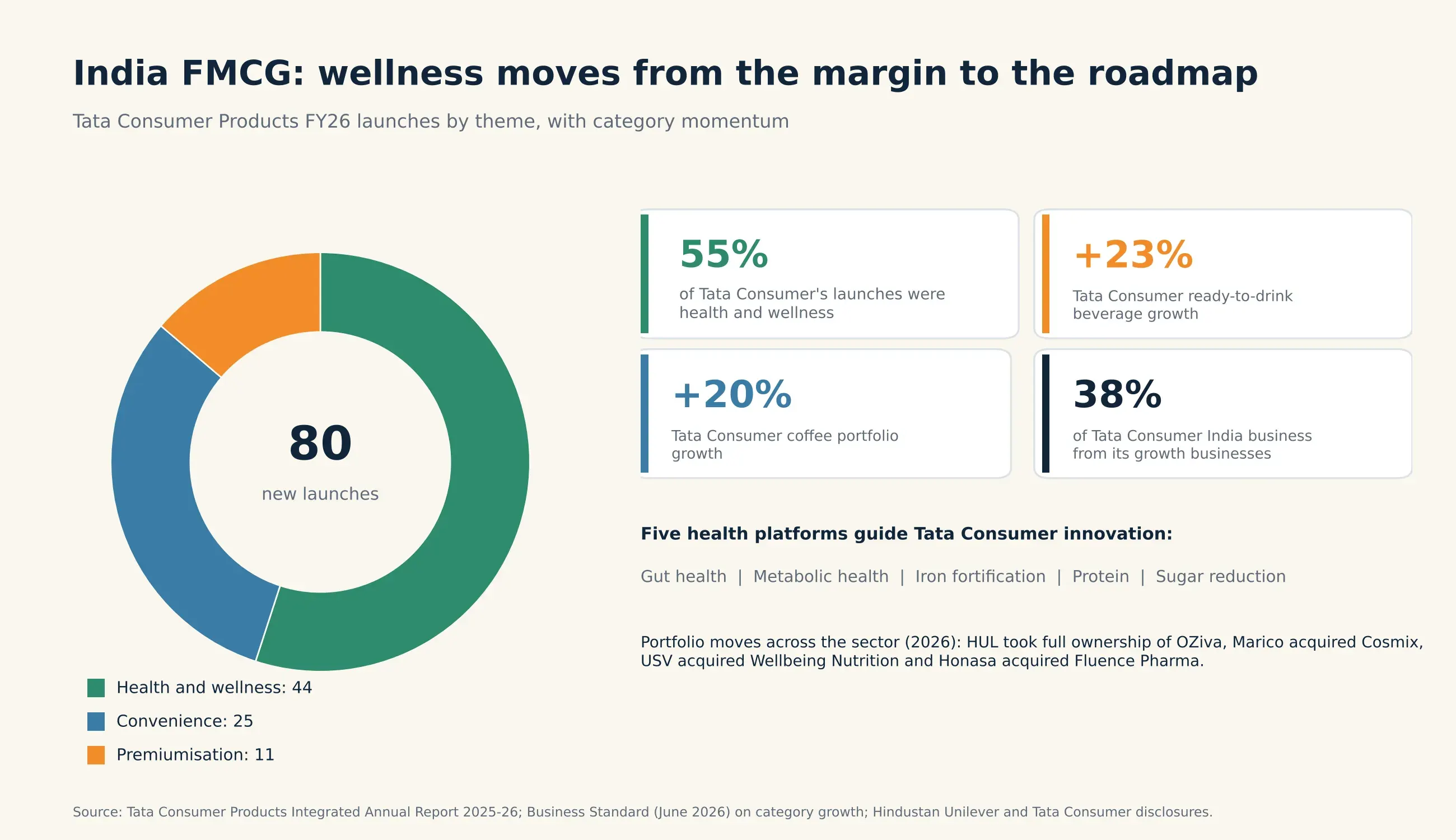
Table 4: How Indian CPG is moving
| Company | Move | Signal |
| Tata Consumer | Five health platforms; 55% of FY26 launches in health and wellness | Wellness as the innovation engine |
| Hindustan Unilever | Full ownership of OZiva; double-digit growth in Horlicks and Boost; protein-based ready-to-drink | Buy and build |
| Marico | Acquired plant-based protein brand Cosmix (2026) | Entry into plant protein |
| ITC | Aashirvaad Multigrain Protein Atta and a wider protein-rich portfolio | Protein inside everyday staples |
| Amul | Protein lassi, buttermilk, paneer and whey powder | Dairy leader goes protein-first |
| USV and Honasa | Wellbeing Nutrition (USV) and Fluence Pharma (Honasa) | Pharma and personal care converge on nutrition |
Three features set India apart. First, protein is being mainstreamed through staples such as atta, dairy and snacks, not just supplements; IMARC Group sizes India's protein supplements market at $912.9 million in 2025, growing at 6.27% a year to 2034. Second, acquisitions are crossing industry lines, with pharma and personal care companies buying nutrition brands. Third, one industry executive quoted in trade media described the nutraceutical sector as growing 10% to 12% a year, a pace that attracts FMCG groups with slower core categories.
The Cervicorn Claim-to-Cart framework
Pulling the evidence together, we propose a simple framework for CPG leaders. A wellness claim only becomes revenue when four disciplines work in sequence: Proof, Portfolio, Price and Placement.
Exhibit 6: The Cervicorn Claim-to-Cart framework
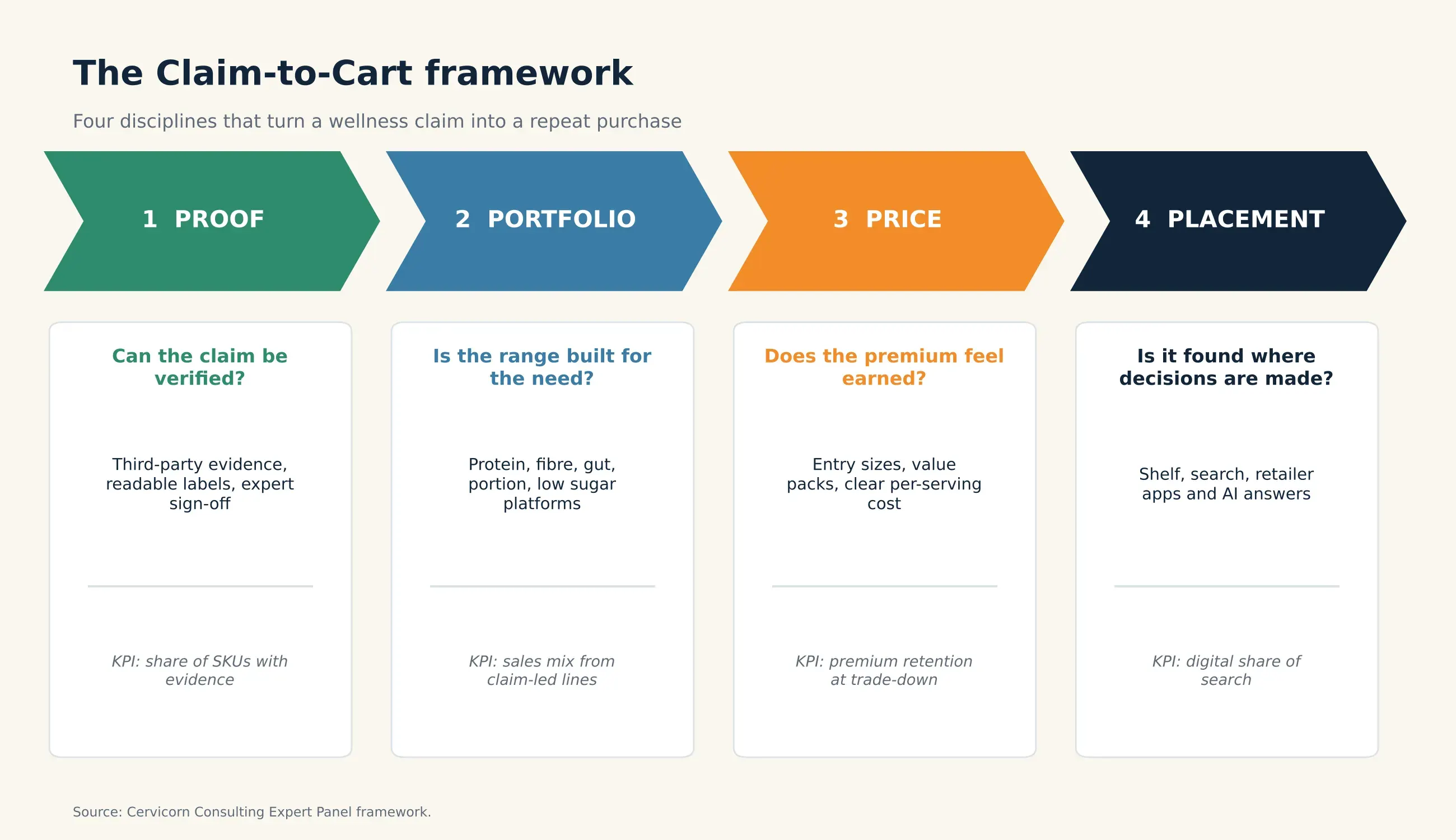
Table 5: Applying Claim-to-Cart
| Pillar | What good looks like | KPI | Common failure |
| Proof | Independent evidence, readable labels, expert sign-off, and the same facts on every listing | Share of SKUs with third-party evidence | Claims that outrun the science |
| Portfolio | Range built around needs such as protein, fibre, gut and portion, not around line extensions | Sales mix from claim-led lines | A health halo on an unchanged product |
| Price | Entry sizes, value packs and clear per-serving cost so the premium feels earned | Premium retention during trade-down | Premium pricing with no visible reason |
| Placement | Strong presence on shelf, in retailer apps, in search and in AI answers | Digital share of search | Great product, invisible online |
A screen for investors and acquirers
- Is the claim backed by evidence that would survive litigation or a regulator's review?
- Does revenue depend on one shopper segment, one retailer or one ingredient trend?
- Can the brand hold price when the middle tier is under pressure?
- Will the product still make sense in a GLP-1 world of smaller portions?
Risks to watch
- Claim liability. Functional and health claims invite scrutiny from regulators, plaintiffs and increasingly from AI systems that repeat criticisms.
- Volume erosion. GLP-1 adoption can shrink volumes in snacks, sweets and quick-service categories faster than new lines can replace them.
- Hype cycles. Prebiotic sodas, protein add-ons and similar trends can attract crowded entry and margin compression.
- Definition drift. Market sizes differ by scope. Brands should anchor plans on a consistent definition of their addressable market.
- Data and privacy. Personalised nutrition depends on shared health data, and many consumers remain concerned about how it is used.
Conclusion
A $6.16 trillion market growing past $10 trillion is not a trend for CPG to watch. It is the environment in which every portfolio now operates. The shelf is shifting toward claims that can be verified, price tiers are polarising, deals are consolidating credible brands, and discovery is moving to places where a label must speak for itself.
The Claim-to-Cart framework offers a practical test. For every product, ask whether the proof is real, the portfolio fits the need, the price feels earned and the brand can be found where the decision happens. Companies that can answer yes on all four will turn wellness from a marketing theme into a durable source of growth.
For research inquiries covering the humanoid robot market, robotics technologies, competitive intelligence, market entry strategies, and industry opportunities, contact sales@cervicornconsulting.com.