Biofuels Market Size, Growth, Forecast 2026 to 2035
The global biofuels market size was recorded at USD 143.84 billion in 2025 and is expected to exceed around USD 277.25 billion by 2035, growing at a compound annual growth rate (CAGR) of 6.94% over the forecast period 2026 to 2035. The biofuels market is witnessing strong growth, supported by rising government mandates, increasing renewable fuel consumption, and expanding production capacities worldwide. In 2024, global biofuel production surpassed 187 billion liters, reflecting an increase of nearly 8% compared to 2023, with ethanol accounting for over 65% of total output. The International Energy Agency estimates that biofuel demand is expected to expand by nearly 38 billion liters between 2024 and 2028, driven by transportation decarbonization goals.
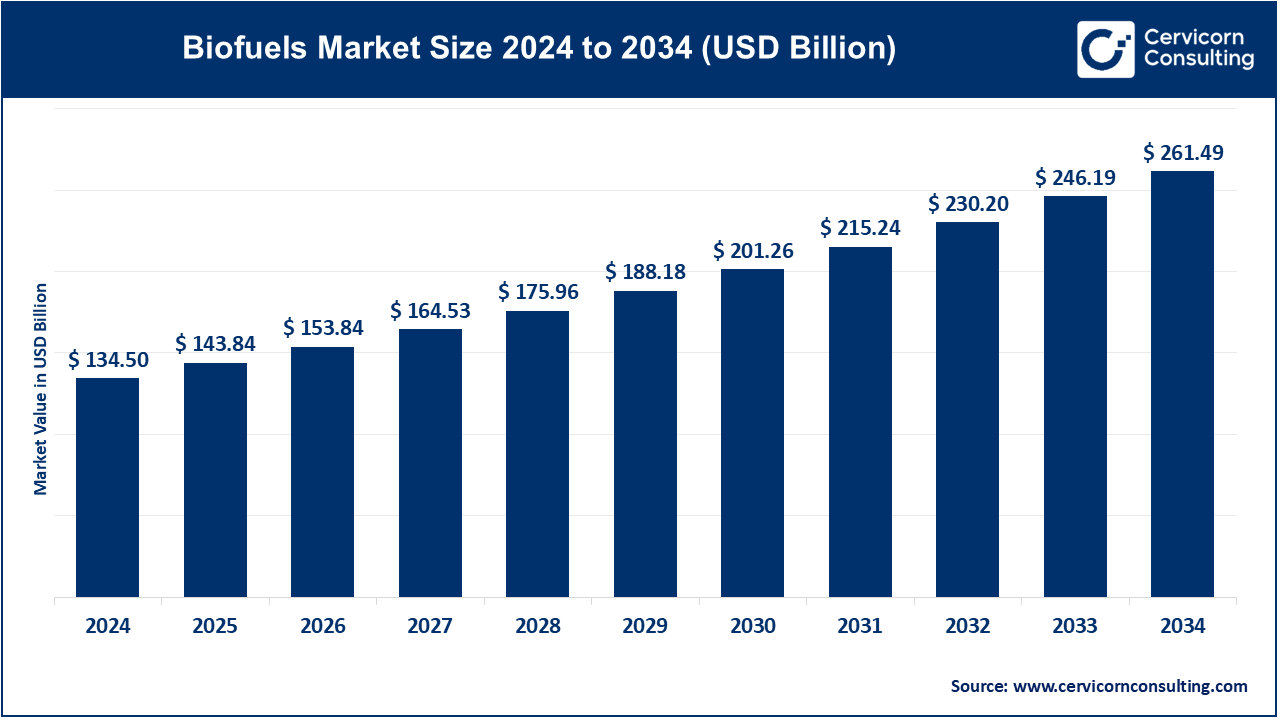
Additionally, advancements in biofuel technology, such as second and third-generation biofuels (derived from non-food crops, algae, and waste materials), are expected to boost market growth by improving fuel efficiency and sustainability. From a market perspective, biofuels have significant growth potential, particularly in emerging economies like India, China, and Latin American countries, where demand for clean energy solutions is on the rise. The increasing focus on reducing carbon emissions and improving air quality has opened up opportunities for biofuels in sectors like aviation, agriculture, and industrial applications.
Biofuels are renewable energy sources derived from organic materials such as plants, algae, and waste. They are considered environmentally friendly alternatives to fossil fuels, as they help reduce greenhouse gas emissions. There are several types of biofuels, including ethanol, biodiesel, biogas, and bio-jet fuel. Ethanol is produced from crops like corn and sugarcane, while biodiesel is made from vegetable oils, animal fats, and waste oils. Biogas, primarily made from organic waste, is used for heating and electricity generation. Bio-jet fuel is used in aviation, derived from feedstocks like algae and non-food crops. These biofuels are used in various sectors, including transportation, energy production, and industrial applications.
Global Production, Manufacturing and Consumption Data
- World biodiesel production will hit nearly 57 billion litres in 2025, but only 28 billion litres of renewable diesel, an increase from almost nothing last year.
- The share of sustainable aviation fuel (SAF), an advanced biofuel type, in world biofuel production grew from 2% in 2024 to 1% for this year and then is projected to jump more than twofold to 2% in 2026.
- Advanced biofuels will hit 10% of the world's total output and this is where future growth will occur, driven mostly by an expected 134% jump in advanced biofuel output this year to about 189 billion litres. Transport continues to swallow most of the world's output, 78% this year.
- More than $70 billion in bio-refinery investments have been committed in between now and the next two years globally with half of them for advanced biofuel technology and feedstock in Europe.
- Biofuel refining capacity worldwide has increased significantly from 2024, at the expense of growing only marginally next year, despite an anticipated rise of just less than a quarter in biodiesel production to just under 57 billion liters.
Report Highlights
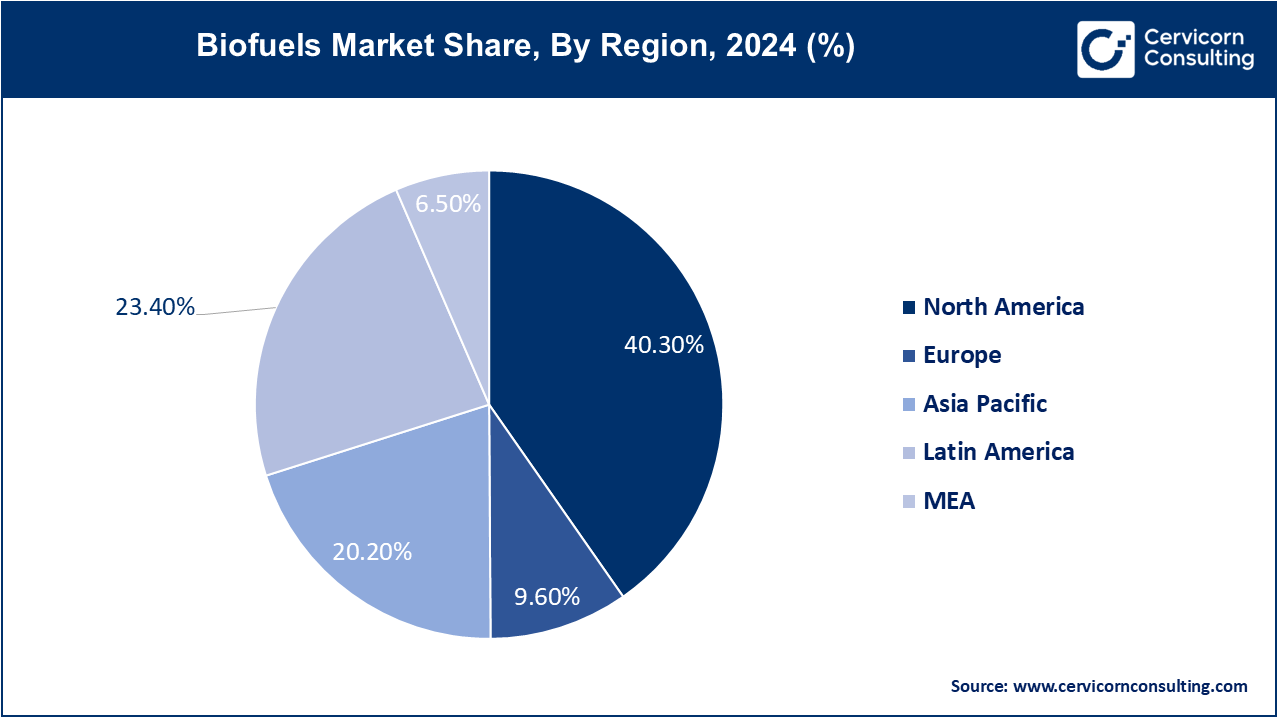
- By Region, North America has registered highest revenue share of 40% in 2025.
- By Region, Latin America has captured revenue share 23% in 2025.
- By form, liquid biofuels segment has held revenue share of 44% in 2025.
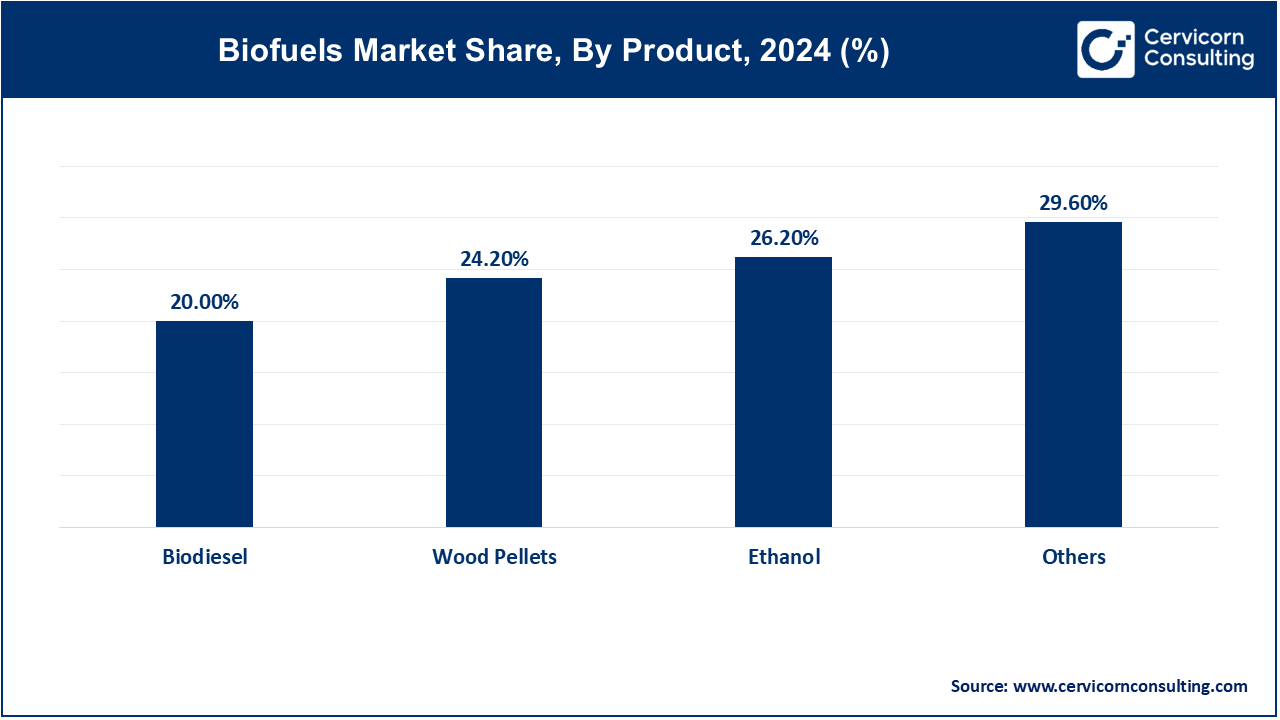
- By product, ethanol segment has accounted revenue share of 26% in 2025.
- By feedstock, others segment has dominated in 2025 with revenue share of 48%.
- By application, transportation segment has accounted revenue share of 70% in 2025.
Biofuels Market Growth Factors
- Environmental Regulations and Policies: Stringent regulations aimed at reducing carbon emissions drive demand for biofuels as cleaner alternatives to conventional fossil fuels. Government incentives and mandates promoting renewable energy sources further bolster market growth.
- Technological Advancements: Continuous innovation in biofuel production processes, such as enzymatic hydrolysis and microbial fermentation, enhances efficiency and reduces production costs. Advancements in feedstock cultivation and conversion technologies expand biofuel availability and competitiveness.
- Energy Security: Biofuels contribute to energy diversification and security by reducing dependence on imported fossil fuels. This aspect is particularly crucial for countries seeking to mitigate geopolitical risks and ensure stable energy supplies.
- Market Expansion in Transportation: Increasing adoption of biofuels in the transportation sector, driven by mandates and consumer preference for sustainable fuels, accelerates market growth. Biofuels, such as ethanol blends in gasoline and biodiesel in diesel engines, are becoming mainstream alternatives.
- Investment and Funding: Growing investments from both private and public sectors in biofuel research, infrastructure development, and commercial-scale production facilities support market expansion. Funding initiatives aimed at scaling up biofuel technologies and expanding market reach contribute to sustained growth and innovation in the industry.
Biofuels Market Trends
- Emergence of Sustainable Aviation Biofuels: There is a rising trend towards the development and adoption of sustainable aviation biofuels (bio-jet fuels) to reduce carbon emissions in the aviation sector. This trend is driven by regulatory pressures and airline commitments to achieve carbon neutrality.
- Shift Towards Advanced Biofuels: The biofuels market is witnessing a shift towards advanced biofuels, including second and third-generation biofuels derived from non-food sources such as algae, agricultural residues, and waste oils. These biofuels offer higher energy efficiencies and lower carbon footprints compared to conventional biofuels.
- Integration of Circular Economy Principles: Increasing focus on circular economy principles within the biofuels sector involves utilizing waste streams and by-products from biofuel production processes to enhance sustainability and economic viability.
- Expansion in Emerging Markets: Opportunities exist for biofuel market expansion in emerging economies where there is growing energy demand and increasing governmental support for renewable energy initiatives.
- Biorefinery Development: Investing in integrated biorefineries that produce a range of bio-based products alongside biofuels presents an opportunity to diversify revenue streams and enhance overall economic viability of biofuel production.
Report Scope
| Area of Focus |
Details |
| Market size in 2026 |
USD 153.84 Billion |
| Market size in 2035 |
USD 277.25 Billion |
| Market Growth Rate |
CAGR of 6.94% from 2026 to 2035 |
| Largest Region |
North America |
| Fastest Growing Region |
Asia-Pacific |
| Segment Covered |
By Feedstock, Form, Generation, Product, Application, Region |
Biofuels Market Dynamics
Drivers
Volatility in Crude Oil Prices:
- Fluctuations in global crude oil prices significantly impact biofuels competitiveness and market demand. During periods of high oil prices, biofuels become more attractive as cost-effective alternatives, driving increased adoption and production. Conversely, stable or lower oil prices can pose challenges, affecting biofuels' economic viability and market growth strategies.
Consumer Awareness and Demand:
- Growing consumer awareness and demand for sustainable and renewable energy sources drive market growth. Increased environmental consciousness among consumers, coupled with preferences for cleaner fuels, incentivizes governments and industries to invest in biofuels infrastructure and technologies. Consumer demand also pushes for policy support and incentives that promote biofuels adoption and development across various sectors, contributing to market expansion and innovation.
Restraints
Feedstock Availability and Competition:
- Limited availability and competition for feedstocks such as corn, sugarcane, and vegetable oils can constrain biofuels production scalability. Price fluctuations and supply chain disruptions in agricultural commodities can affect biofuels' cost-effectiveness and production stability.
Infrastructure and Distribution Challenges:
- The biofuels market faces infrastructure limitations and distribution challenges, including inadequate storage facilities, blending infrastructure, and transportation networks. These constraints can hinder the widespread adoption and market penetration of biofuels, particularly in regions where fossil fuel infrastructure dominates and investment in biofuels infrastructure is lacking.
Opportunities
Technological Advancements in Conversion Processes:
- Ongoing advancements in biofuels production technologies, such as improved enzymatic hydrolysis and fermentation processes, present opportunities to enhance efficiency, reduce costs, and expand the range of feedstocks used. Innovations in biofuel conversion methods could unlock new sources of biomass and improve overall biofuels' competitiveness.
Policy Support and Incentives:
- Increasing government support through policies, incentives, and subsidies aimed at promoting renewable energy sources, including biofuels, provides significant growth opportunities. Fiscal incentives for biofuels production, renewable fuel standards (RFS), and carbon pricing mechanisms encourage investment in biofuels infrastructure and stimulate market demand, fostering a conducive environment for industry expansion and innovation.
Challenges
Land Use and Food Security Concerns:
- The use of agricultural land for biofuel feedstock production raises concerns about competition with food crops, potentially impacting food security and driving up food prices. Balancing biofuels production with food production needs careful management to mitigate these risks and ensure sustainable land use practices.
Technological and Economic Viability:
- Despite advancements, some biofuel technologies still face challenges in achieving economic competitiveness with conventional fossil fuels. High production costs, including feedstock procurement and processing expenses, pose barriers to wider adoption and profitability in the biofuels sector. Achieving cost-effective production remains critical for biofuels to become a viable long-term alternative to traditional fuels.
Biofuels Market Regional Analysis
Why North America is dominating in the biofuels market?
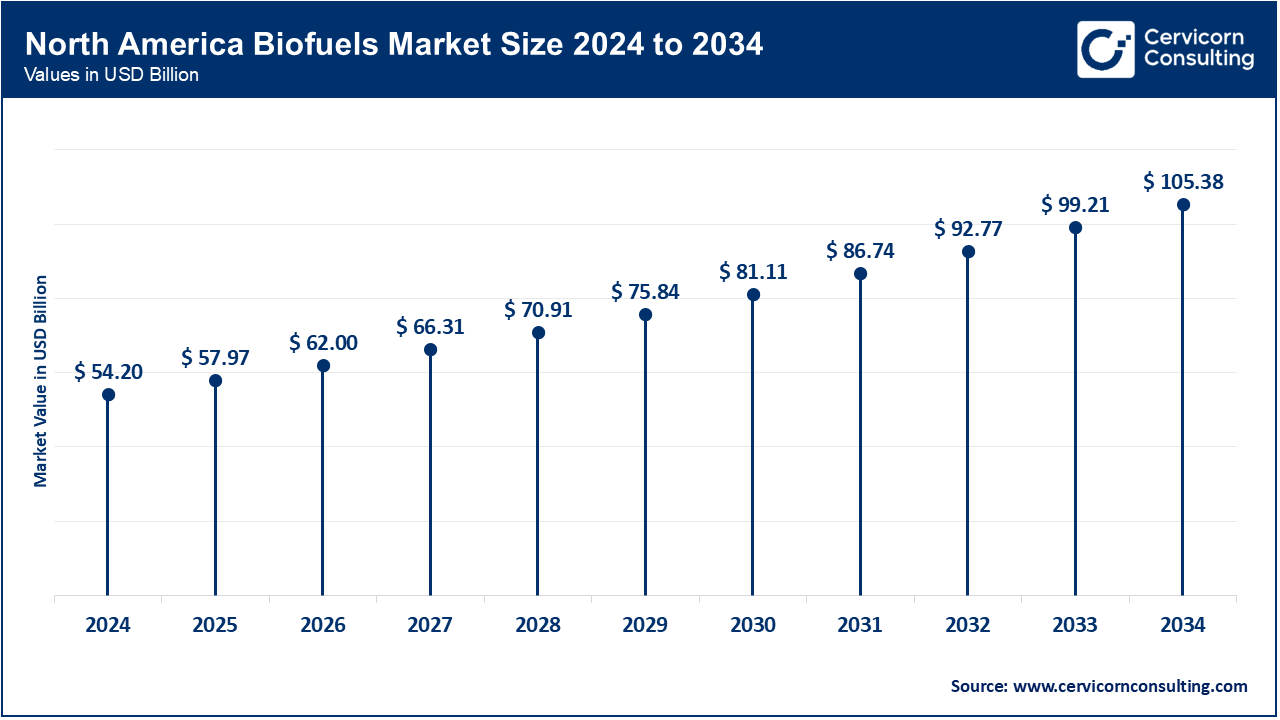
The North America biofuels market size is expected to hit around USD 110.90 billion by 2035 and expanding at a CAGR of 6.98% over the forecast period, driven by strong regulatory support and mandates for renewable fuel standards. Trends indicate a growing investment in advanced biofuels, particularly cellulosic ethanol and algae-based fuels. The U.S. and Canada are focusing on increasing biofuel production capacities and improving feedstock supply chains. Innovations in genetic engineering and biotechnology are also enhancing the efficiency and yield of biofuel production in the region.
U.S. Biofuels Market Analysis
The U.S. continues to lead the globe as the world's largest producer of biofuels, with output now exceeding 67 billion liters per year and accounting for 36% of worldwide production.
The country has more than 198 operational ethanol production facilities with combined annual capacities exceeding 18.5 billion gallons. Corn remains the dominant source of U.S. ethanol production, supported by the Renewable Fuel Standard (RFS) which mandates the blend of over 22 billion gallons per year of renewable fuel. The U.S. also represents a rapid-growth region for both sustainable aviation fuel (SAF) and renewable diesel, with major capacity expansions planned by such companies as Chevron Corporation, Marathon Petroleum Corporation, and Valero Energy Corporation.
Europe Biofuels Market Trends
The Europe biofuels market is propelled by stringent environmental regulations and climate targets. The European Union's Renewable Energy Directive (RED) mandates significant use of biofuels in transportation. Trends include the development of advanced biofuels from waste and residue feedstocks, and a focus on reducing land-use impact. The region is also seeing increased collaboration among countries to create a unified market for biofuels, promoting cross-border trade and innovation.
Germany Biofuels Market Analysis
Germany stands as one of the most significant biodiesel and renewable diesel markets in Europe, producing more than 3.6 billion liters per year. Due to stringent European Union carbon emission reduction requirements, demand for waste-derived biofuels and more advanced fuels in Germany has seen increased growth.
Fuel suppliers face stricter regulations under the German greenhouse gas quota, which was elevated to 10.6% for 2025, driving the growth in domestic demand for such fuels. Investments in e-fuels, green methanol, and advanced biofuels are on the rise, and Germany continues to become a center of innovation for the region’s renewable fuel transition.
Why Asia-Pacific region is experiencing rapid growth in the biofuels market?
The Asia-Pacific biofuels market size is calculated at USD 28.77 billion in 2025 and is expanding around USD 55.45 billion by 2035, experiencing rapid growth is driven by increasing energy demand and government initiatives to reduce carbon emissions. Trends highlight significant investments in biodiesel and bioethanol production, especially in countries like China, India, and Thailand. The region is focusing on utilizing agricultural residues and non-food crops for biofuel production to ensure food security and sustainability. Technological advancements in bio-refineries are also playing a crucial role in this growth.
India Biofuels Market Analysis
One of the most rapidly developing markets globally, India is advancing quickly in the biofuel space due to a strong governmental focus on its national ethanol blending program.
By the close of 2025, India has progressed toward its 20% blending target by reaching 18.4% national ethanol blending for petrol and production is nearing 1,700 crore liters on the strength of increased sugarcane, damaged grain, and maize feedstock. India is also rapidly scaling its production of compressed biogas (CBG) under its SATAT scheme, a program aiming to support the build-out of more than 5,000 CBG plants.
LAMEA Biofuels Market Trends
In the LAMEA region, biofuels are gaining traction as a means to diversify energy sources and boost rural economies. Trends show a strong emphasis on ethanol production in Brazil, one of the world's largest producers, using sugarcane as a primary feedstock. In the Middle East and Africa, biofuel initiatives are emerging to address energy access and sustainability challenges. Innovations in biomass conversion technologies and regional collaborations are driving the biofuels market forward in LAMEA.
Biofuels Market Segmental Analysis
Feedstock Analysis
Corn: Corn is a primary feedstock for biofuel production, especially ethanol. Corn-based ethanol dominates the U.S. biofuel market due to its abundance and established agricultural infrastructure. Trends indicate a growing shift towards genetically modified varieties to increase yields and efficiency. Despite debates over its sustainability and impact on food prices, technological advancements aim to enhance its eco-friendliness and energy output.
Sugarcane: Sugarcane is a vital feedstock for ethanol production, particularly in Brazil, where it serves as a key biofuel source. The high sugar content and efficient conversion process make it economically viable. Trends show an increasing adoption of advanced agricultural techniques and biotechnologies to boost yields and reduce environmental impact, aligning with global efforts to promote renewable energy and reduce carbon footprints.
Vegetable Oils: Vegetable oils, including palm, soybean, and canola oil, are crucial for biodiesel production. They offer a renewable alternative to fossil fuels with relatively high energy content. Trends in this sector focus on sustainable sourcing and reducing deforestation linked to oil production. Innovations in second-generation biofuels and waste oil recycling are emerging to improve sustainability and reduce competition with food resources.
Others: Other segment has dominated the market with revenue share of 48% in 2025. Other feedstocks for biofuel production include algae, agricultural residues, and municipal waste. These sources offer diverse advantages, such as high yield per acre for algae and waste reduction for residues. Trends highlight increasing research and development in converting non-food biomass to biofuels, aiming for higher efficiency and sustainability. These alternatives are gaining attention as part of a broader strategy to diversify energy sources and mitigate climate change impacts.
Form Analysis
Solid Biofuels: The solid biofuels segment has captured market share of 20% in 2025. Solid biofuels, such as wood pellets, agricultural residues, and organic waste, are renewable energy sources used for heating and power generation. These fuels are gaining popularity due to their carbon neutrality and cost-effectiveness. The market is expanding as advancements in processing technologies and increasing environmental regulations drive demand for cleaner energy alternatives.
Liquid Biofuels: The liquid biofuels segment has dominated the market with highest revenue share of 44% in 2025. Liquid biofuels, like biodiesel and ethanol, are produced from crops, waste oils, and algae. They serve as renewable substitutes for petroleum-based fuels in transportation. The market is growing due to government mandates, technological innovations, and rising interest in sustainable practices, aiming to reduce greenhouse gas emissions and reliance on fossil fuels.
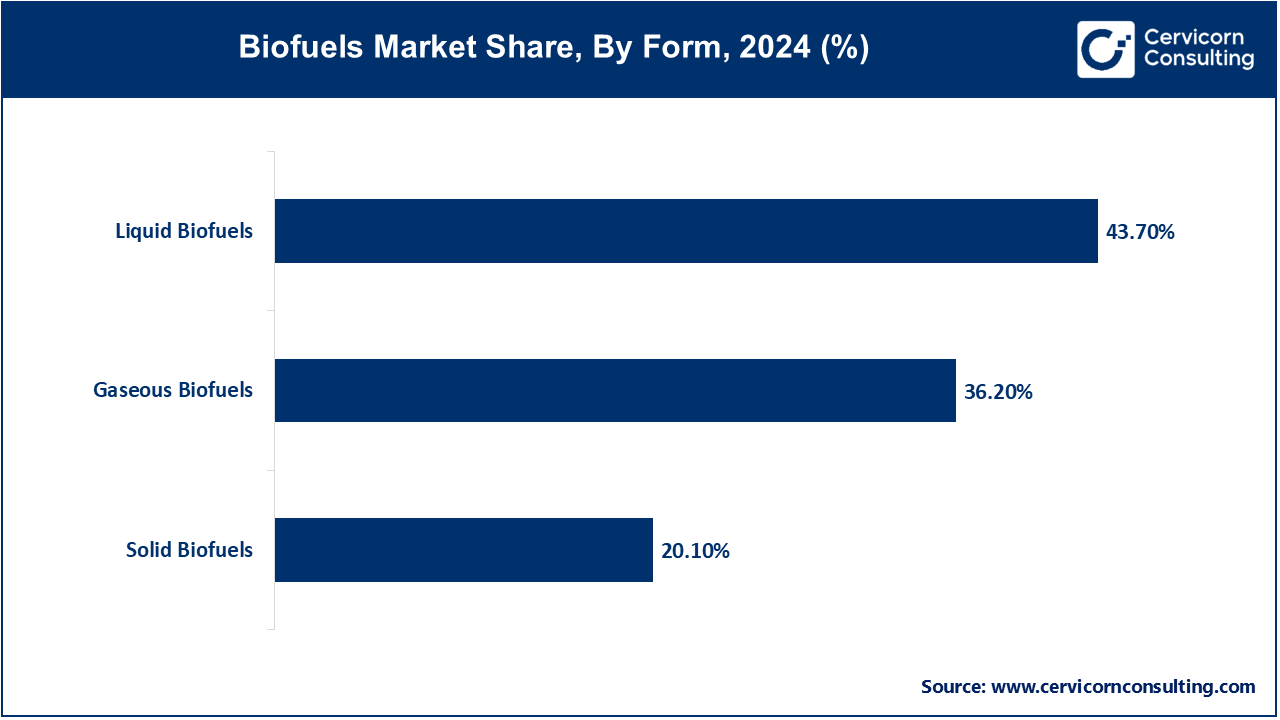
Gaseous Biofuels: Gaseous biofuels, including biogas and biomethane, are derived from organic matter through anaerobic digestion. These fuels are used for heating, electricity, and as vehicle fuel. The market is expanding due to increasing investment in renewable energy infrastructure, waste management solutions, and policies promoting carbon neutrality.
Other Biofuels: Other biofuels include advanced biofuels like biohydrogen and algae-based fuels, representing the next generation of renewable energy sources. These fuels have the potential for higher efficiency and lower environmental impact. The market for these advanced biofuels is emerging, driven by research and development efforts and the quest for sustainable, low-carbon energy alternatives.
Generation Analysis
First Generation Biofuels (Conventional Biofuels): First Generation Biofuels are derived from food crops such as corn, sugarcane, and soybeans. They include ethanol and biodiesel and are produced through conventional fermentation and transesterification processes. Despite their popularity, they raise concerns about food security and land use. The biofuels market sees a steady demand for these fuels, driven by renewable energy policies and blending mandates, though growth is constrained by sustainability issues.
Second Generation Biofuels (Advanced Biofuels): Second Generation Biofuels are produced from non-food biomass, including agricultural residues, wood chips, and energy crops. These advanced biofuels use more complex processing technologies like gasification and fermentation. They offer improved sustainability over first-generation biofuels, addressing food vs. fuel debates. The market trend shows increasing investments and research, aiming to enhance efficiency and lower costs, with significant interest from both governments and private sectors.
Third Generation Biofuels (Algae Fuels): Third Generation Biofuels are derived from algae, which can be grown in various environments and have high oil content. These biofuels offer potential for higher yields and lower environmental impact. The market for algae fuels is emerging, driven by advancements in cultivation and extraction technologies. Trends indicate growing interest in algae biofuels due to their scalability and minimal competition with food crops, although commercialization is still in its nascent stages.
Product Analysis
Biodiesel: This segment has captured 20% revenue share in 2025. Biodiesel is a renewable fuel made from biomass materials, such as vegetable oils or animal fats, through a process called transesterification. It can be used in diesel engines with little or no modifications. The biodiesel market is growing due to increasing demand for sustainable energy, government mandates for cleaner fuels, and technological advancements in production. There's a notable shift towards using non-food feedstocks to enhance sustainability.
Green Diesel: Green diesel, also known as renewable diesel, is produced through hydrotreating plant oils or animal fats. Unlike biodiesel, it is chemically similar to petroleum diesel and can fully replace it in engines. Green diesel is gaining popularity for its compatibility with existing diesel infrastructure and engines. Investments in advanced refining technologies and increased governmental support for low-carbon fuels are driving market expansion.
Ethanol: The ethanol segment has accounted market share of 26% in 2025. Ethanol is a renewable fuel made primarily from corn or sugarcane through fermentation. It is commonly blended with gasoline to increase octane levels and reduce emissions. Ethanol's market is expanding due to renewable fuel mandates and its role in reducing greenhouse gas emissions. Innovations in cellulosic ethanol, derived from non-food plant materials, are also contributing to market growth.
Wood Pellets: The wood pellets segment has held market share of 24% in 2025. Wood pellets are a type of biomass fuel made from compressed sawdust or other wood waste. They are used primarily for heating and electricity generation. The demand for wood pellets is increasing due to their use in renewable energy production, particularly in Europe. Sustainable forest management practices and advancements in pellet production technology are supporting market growth.
Aviation Biofuel (Bio-jet Fuel): Aviation biofuel, or bio-jet fuel, is a sustainable alternative to conventional jet fuel, produced from biomass feedstocks such as algae, plant oils, or waste materials. The aviation biofuel market is driven by the aviation industry's commitment to reducing carbon emissions. Research and development in feedstock diversity and production processes are enhancing the viability and scalability of bio-jet fuel.
Biomethane: Biomethane is a renewable natural gas produced from organic materials like agricultural waste, manure, and food waste through anaerobic digestion or gasification. The biomethane market is expanding due to its role in reducing methane emissions and providing a renewable energy source. Policies promoting waste-to-energy solutions and advancements in purification technologies are boosting market growth.
Syngas: Syngas, or synthesis gas, is a mixture of hydrogen, carbon monoxide, and carbon dioxide produced from gasifying biomass or waste materials. It is used as a fuel or as an intermediate for producing chemicals. The syngas market is growing due to its versatility in generating electricity, heat, and synthetic fuels. Innovations in gasification technology and increased focus on waste-to-energy solutions are key drivers.
Green Hydrogen: Green hydrogen is produced through electrolysis of water using renewable energy sources like wind or solar power. It is a clean fuel that emits only water when used. Green hydrogen is gaining traction as a key component in the transition to a low-carbon economy. Investments in electrolyzer technology and large-scale production projects are driving market expansion.
Others: Other biofuels include advanced biofuels like bio-oil, biobutanol, and renewable natural gas (RNG), produced from diverse biomass sources and innovative conversion technologies. The market for other biofuels is characterized by ongoing research and development to improve efficiency, reduce costs, and enhance sustainability. Supportive policies and growing environmental concerns are fostering growth in this segment.
Application Analysis
Transportation: The transportation segment has measured highest revenue share of 70% in 2025. Biofuels are widely used in transportation as an alternative to traditional fossil fuels. They reduce greenhouse gas emissions and dependency on oil imports. Recent trends highlight the growing adoption of biodiesel and ethanol blends in vehicles, driven by environmental regulations and technological advancements. The push for sustainable mobility and the development of advanced biofuels, such as algae-based fuels, are shaping the future of biofuels in transportation.
Aviation: In aviation, biofuels are being explored to decrease the industry's carbon footprint. Sustainable aviation fuels (SAFs), derived from biomass, are gaining traction. Recent trends include increased investments in bio-refineries and partnerships between airlines and biofuel producers. Innovations in feedstock, such as waste oils and agricultural residues, are being researched to make biofuels more economically viable and environmentally friendly for the aviation sector.
Energy Generation: Biofuels play a significant role in energy generation, providing a renewable source of power. They are used in biopower plants to produce electricity and heat. Current trends focus on integrating biofuels with other renewable energy sources, like wind and solar, to enhance grid stability. Advances in biomass conversion technologies and government incentives are propelling the adoption of biofuels in the energy sector, promoting a cleaner energy mix.
Heating: Biofuels are utilized for residential and industrial heating, offering a sustainable alternative to conventional heating fuels. Trends indicate a rise in the use of bio-oil, biogas, and pelletized biomass for heating purposes. Innovations in heating technologies, such as more efficient boilers and stoves, are improving the performance and cost-effectiveness of biofuels. Policy support and consumer awareness are key drivers in the increasing use of biofuels for heating.
Biofuels Market Top Companies
Recent Developments
- In December 2025, FincoEnergies launched GoodFuels B15, a new 15% FAME-based drop-in biofuel blend designed specifically for inland and coastal shipping markets. The product was developed in partnership with Argent Energy and provides shipowners with an immediate decarbonization solution without requiring any engine modifications or infrastructure changes. The blend contains 15% fatty acid methyl ester (FAME) and 85% conventional diesel, while fully complying with Dutch inland shipping specifications and EN590 fuel quality standards.
- In 2023, Petrobras is testing a B24 bio bunker fuel blend on a ship at the Rio Grande Terminal, chartered by Transpetro. The vessel will be fueled with 573,000 liters of this biofuel blend, aiming to enhance sustainable maritime operations.
- In 2023, Neste and ITOCHU have signed a licensing agreement where ITOCHU will distribute Neste MY Renewable Diesel in Japan. This collaboration aims to enhance availability of sustainable fuel options in Japan, contributing to efforts in reducing carbon emissions in the region.
- In 2023, Equilon Enterprises LLC, a Shell subsidiary, and Green Plains Inc. have partnered to integrate Shell Fiber Conversion Technology (SFCT) with Fluid Quip Technologies' processing tech. This collaboration aims to enhance Green Plains' biorefinery capabilities, potentially boosting efficiency and product diversification.
- In 2023, LanzaJet has completed a construction milestone for its ethanol-based alcohol-to-jet sustainable aviation fuel production plant in Soperton, Georgia. Scheduled to commence commercial operations in 2024, it marks a significant step in advancing sustainable aviation fuel technologies.
- In 2023, Green Plains Inc., United Airlines, and Tallgrass have formed Blue Blade Energy to develop Sustainable Aviation Fuel (SAF) using ethanol. The joint venture plans to build a pilot facility in 2024, with a full-scale operation potentially starting by 2028 pending successful trials.
- In 2022, Cargill has inaugurated its first advanced biodiesel plant in Ghent, Belgium, converting waste oils and residues into renewable fuel. The facility aims to supply sustainable biodiesel for the maritime and trucking sectors, supporting efforts to mitigate carbon emissions in transportation activities.
Market Segmentation
By Feedstock
- Corn
- Sugarcane
- Vegetables Oils
- Others
By Form
- Solid Biofuels
- Liquid Biofuels
- Gaseous Biofuels
- Other
By Generation
- First Generation Biofuels (Conventional Biofuels)
- Second Generation Biofuels (Advanced Biofuels)
- Third Generation Biofuels (Algae Fuels)
By Product
- Biodiesel
- Green Diesel
- Ethanol
- Wood Pellets
- Aviation Biofuel (Bio-jet Fuel)
- Biomethane
- Syngas
- Green Hydrogen
- Others
By Application
- Transportation
- Aviation
- Energy Generation
- Heating
- Others
By Region
- North America
- APAC
- Europe
- LAMEA