Pharmacy Management System Market Size, Growth, Forecast 2026 to 2035
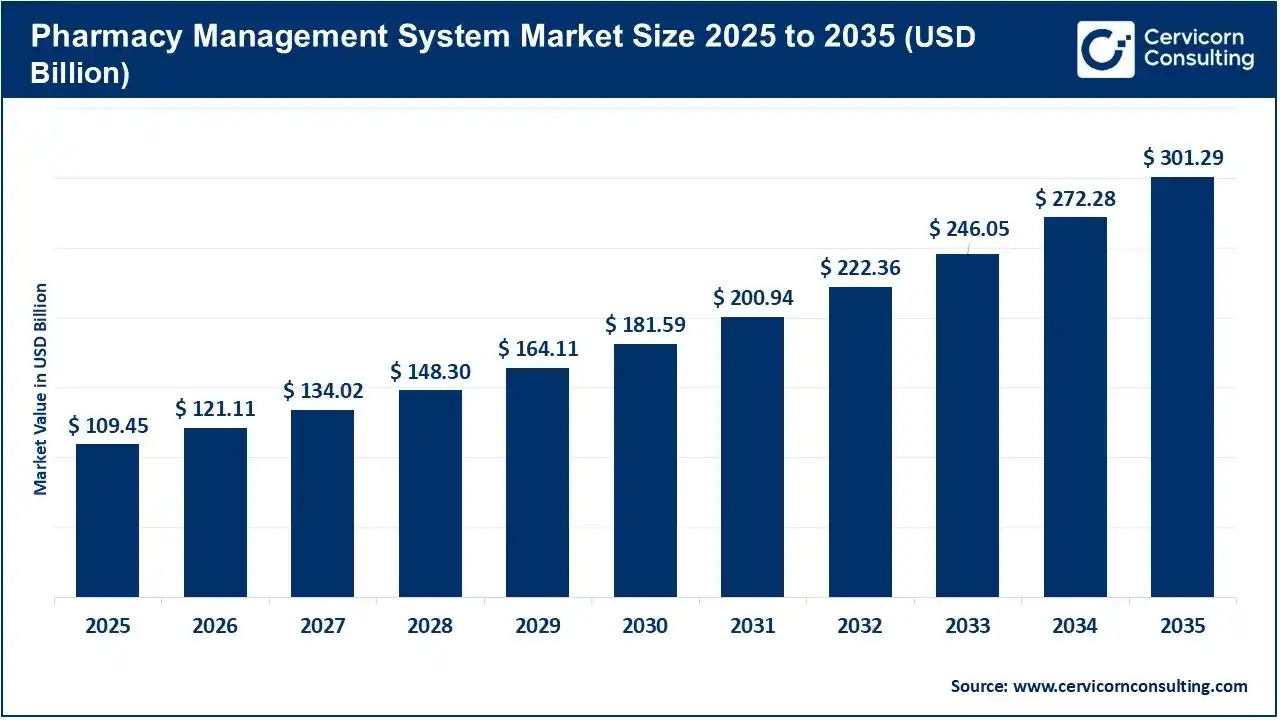
The global pharmacy management system market size was valued at USD 109.45 billion in 2025 and is projected to grow from USD 121.11 billion in 2026 to nearly USD 301.29 billion by 2035, registering a CAGR of 10.7% over the 2026 to 2035 period. As more pharmacies use digital technology to expedite prescription processing, inventory management, invoicing, patient records, and medication tracking, the market for pharmacy management systems is growing. Pharmacies and healthcare organizations are investing in sophisticated pharmacy management solutions due to the growing demand for automated workflows, increased operational efficiency, reduced prescription errors, and improved patient care.
In June 2026, Hourscript announced the opening of early access to its AI-native pharmacy management system, designed to integrate AI-driven workflows into pharmacy operations, including prescription intake, filling, safety checks, and audit trails. This highlights the growing adoption of intelligent and automated technologies in pharmacy management.
Report Highlights
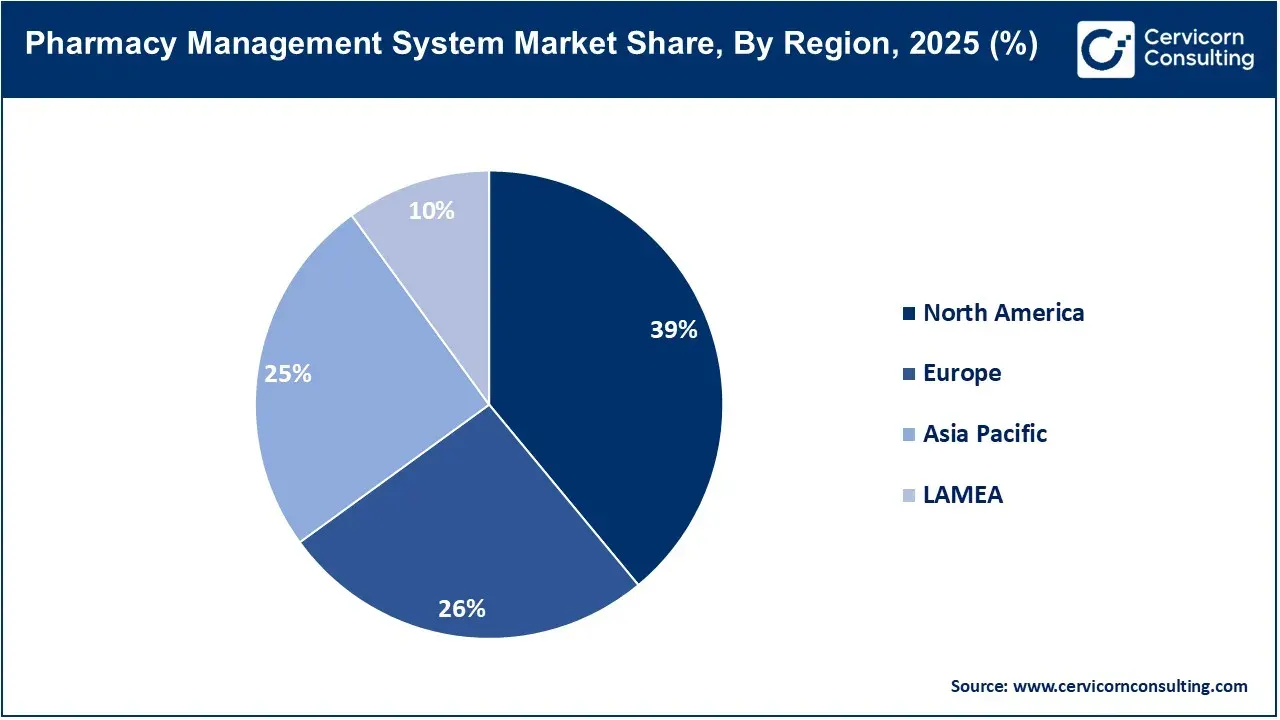
- By region, North America dominated the pharmacy management system market in 2025, supported by advanced healthcare infrastructure and digital adoption.
- By region, Asia Pacific is expected to register the fastest growth, driven by healthcare digitization and expanding pharmacy networks.
- By component, Solutions dominated the market in 2025, supported by rising demand for pharmacy management software.
- By component, Services are expected to register the fastest growth, driven by increasing implementation and support needs.
- By deployment, Cloud-Based solutions dominated the market and are expected to register the fastest growth, driven by demand for scalable and flexible solutions.
- By organization size, Independent Pharmacies dominated the market in 2025, supported by growing digital adoption.
- By organization size, Chained Pharmacies are expected to register the fastest growth, driven by centralized pharmacy management needs.
- By end user, Retail & Community Pharmacies dominated the market in 2025, supported by high prescription volumes.
- By end user, Long-Term-Care & Specialty Pharmacies are expected to register the fastest growth, driven by demand for advanced medication management.
Recent Trends
- Cloud-based adoption: Pharmacies are increasingly moving to cloud platforms for easier access, faster updates, and flexible operations.
- AI integration: AI is being used to improve prescription handling, predict inventory needs, and support faster decision-making.
- Automation of routine tasks: Automated dispensing, billing, prescription processing, and stock management are helping pharmacies reduce manual work.
- Better system connectivity: Pharmacy systems are increasingly being connected with hospitals, clinics, EHRs, and other healthcare platforms for smooth data sharing.
- Focus on patient experience: Modern systems are supporting digital prescriptions, refill reminders, medication tracking, and more personalized pharmacy services.
- Stronger data security: Growing digitalization is increasing the focus on protecting patient information and maintaining secure pharmacy operations.
Market Dynamics
Driver – Increasing Digitalization and Automation
The need for pharmacy management systems is being driven by the increasing use of digital tools in pharmacies. By automating common tasks such as inventory management, billing, and prescription processing, these systems help pharmacies operate more efficiently and accurately. Pharmacies are being encouraged to use automated solutions by the rising volume of prescriptions and the growing need to reduce medication errors. Additionally, digital systems enhance the overall quality of patient care while helping pharmacy employees manage their daily workloads more effectively.
- In May 2026, CVS Health announced that its AI-driven prescription interpretation and instruction standardization technology was recognized with a 2026 Newsweek AI Impact Award. The technology is integrated into pharmacy dispensing workflows to improve prescription accuracy and medication safety.
Restraint – High Implementation and Integration Costs
As pharmacies may need to invest in new software, infrastructure, system integration, staff training, and ongoing technical support, the implementation of pharmacy management systems can be challenging. Smaller pharmacies may find these requirements particularly difficult to manage. Compatibility issues can make implementation more challenging, while transitioning from outdated systems to more modern platforms may also require additional time and investment. Some pharmacies may therefore choose to continue using existing procedures or postpone technology upgrades due to these costs.
- In December 2025, Omnicell launched Titan XT, an enterprise automated dispensing system designed to combine automation and intelligence to improve medication management. The launch demonstrates the significant technology and infrastructure involved in moving toward more automated pharmacy operations.
Opportunity – AI and Cloud-Based Pharmacy Management
The expanding use of AI and cloud technology is allowing pharmacy management companies to offer more intelligent solutions for automated processing, real-time data exchange, analytics, and decision support. Pharmacies can use AI to predict inventory needs, identify prescription-related issues, and improve workflow management. Additionally, cloud-based solutions can facilitate faster system updates and easier access to pharmacy data from multiple locations. These technologies are expected to create opportunities for smarter, more flexible, and more connected pharmacy operations.
- In 2026, Inovalon announced the scaling of ScriptMed on Oracle AI Database to support pharmacy operations, combining pharmacy management software with cloud and AI capabilities to improve pharmacy workflows and data-driven decision-making.
Regional Analysis
North America Pharmacy Management System Market: Established Digital Infrastructure Supports Market Leadership
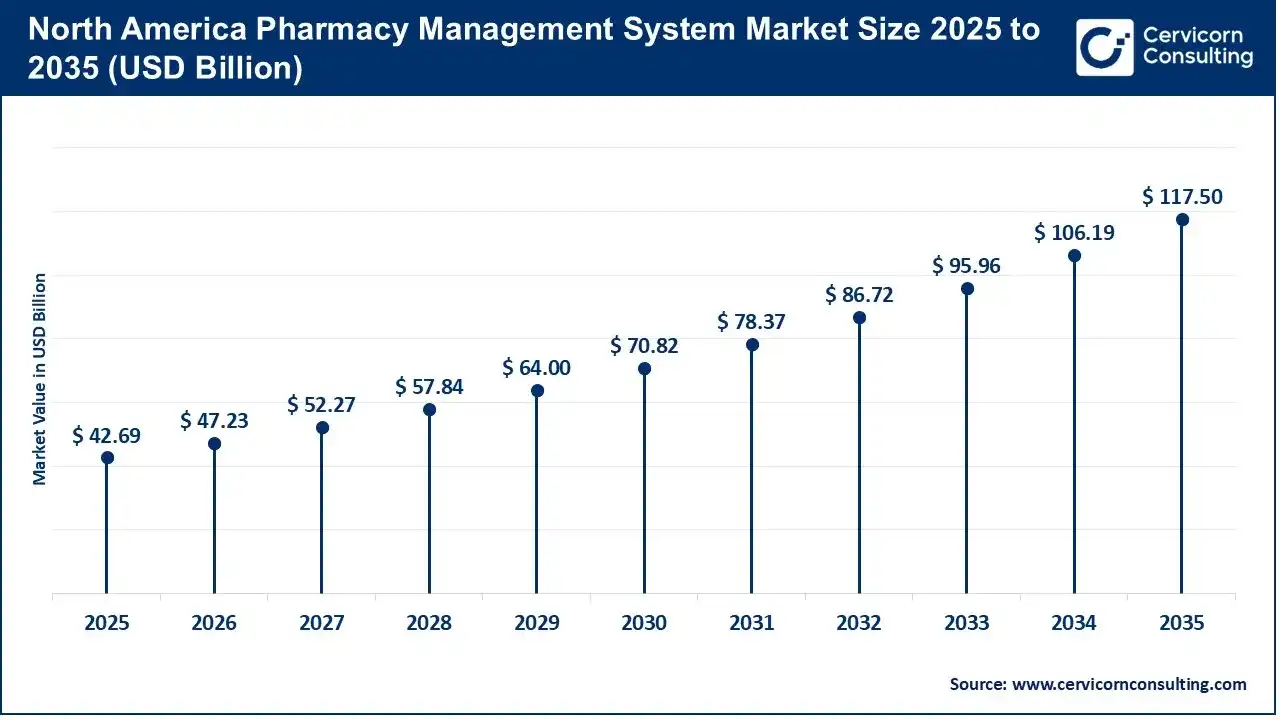
The North America pharmacy management system market size was valued at USD 42.39 billion in 2025 and is expected to surpass USD 117.50 billion by 2035. North America dominated the market because of its sophisticated healthcare IT infrastructure, widespread use of digital pharmacy technologies, well-established pharmacy networks, and strong focus on medication management. Pharmacies in the region are increasingly implementing cloud-based technologies, automation, integrated software, and electronic prescriptions to improve operational efficiency. The region's dominant position is further supported by the presence of established healthcare technology providers and ongoing investments in healthcare digitization.
- United States: Strong adoption of pharmacy automation, electronic prescribing, cloud-based pharmacy software, and integrated healthcare IT systems is supporting demand for advanced pharmacy management solutions.
- Canada: Increasing healthcare digitization, modernization of pharmacy operations, and adoption of connected medication-management technologies are creating opportunities for pharmacy management system providers.
Asia Pacific Pharmacy Management System Market: Healthcare Digitization Creates High-Growth Opportunities
The Asia-Pacific pharmacy management system market size was estimated at USD 27.36 billion in 2025 and is projected to hit USD 75.32 billion by 2035. Asia Pacific is expected to be the fastest-growing region because of the modernization of healthcare infrastructure, expansion of pharmacy networks, increasing adoption of cloud technologies, and growing healthcare digitization. Countries such as South Korea, China, Japan, and India are progressively implementing digital solutions to enhance pharmacy operations and medication management. The growth of organized and online pharmacies, along with increasing demand for efficient healthcare services, is creating significant opportunities for pharmacy management system providers.
- China: Rapid healthcare digitalization, expansion of organized pharmacy chains, online pharmacies, and investments in smart healthcare infrastructure are driving adoption of pharmacy management technologies.
- India: Expansion of organized and online pharmacies, increasing use of digital prescriptions, and growing healthcare IT adoption are supporting demand for pharmacy management systems.
- Japan: An aging population, advanced healthcare infrastructure, and strong adoption of automation and digital technologies are encouraging pharmacies to modernize medication-management and operational systems.
- South Korea: High digital connectivity, advanced healthcare infrastructure, and increasing integration of digital health technologies are supporting the adoption of sophisticated pharmacy management solutions.
Segmental Analysis
Component Analysis
The solutions segment dominated the pharmacy management system market as pharmacies increasingly adopt integrated software to handle inventory, prescriptions, purchases, billing, compliance, and other daily tasks. These solutions help pharmacies reduce manual labor, streamline workflows, enhance operational visibility, and support improved medication management. The increasing digitization of pharmacy operations and the growing need for centralized pharmacy information are supporting the adoption of pharmacy management solutions.
The services segment is expected to witness rapid growth because pharmacies require implementation, customization, integration, maintenance, training, and technical support for pharmacy management systems. Professional and managed services are becoming increasingly important for seamless implementation and ongoing system performance as pharmacy software advances and becomes more integrated with other healthcare technologies. As a result, the increasing use of digital pharmacy platforms is creating greater demand for supporting services.
Deployment Analysis
Cloud-based deployment is gaining strong adoption in the pharmacy management system market because it reduces reliance on extensive on-site IT infrastructure while providing pharmacies with flexible access to software and data. Cloud platforms also facilitate scalability, automated software updates, centralized management, and easier integration across multiple pharmacy locations. The growing demand for affordable and easily accessible digital solutions is expected to further support the expansion of cloud-based pharmacy management systems.
The on-premise segment continues to be adopted by pharmacies that prefer greater control over their software, infrastructure, security, and data management. These systems are suitable for organizations with specific infrastructure requirements because they can provide greater customization and direct control over the IT environment. However, many pharmacies are moving toward cloud-based solutions due to the growing demand for scalability, remote access, easier maintenance, and lower infrastructure requirements.
Organization Size Analysis
The independent pharmacies segment dominated the market as these pharmacies increasingly implement management systems to enhance patient information management, billing, inventory control, prescription processing, and regulatory compliance. Independent operators can improve productivity, automate repetitive tasks, and maintain greater control over their operations with the help of digital pharmacy solutions. Independent pharmacies are increasingly adopting technology due to their growing need to compete with larger pharmacy chains and provide efficient customer service.
The chained pharmacies segment is expected to be the fastest growing as centralized systems are becoming increasingly necessary for pharmacy chains to manage operations across multiple locations. Through integrated platforms, pharmacy management systems enable chains to coordinate purchasing, inventory, prescriptions, reporting, and customer data. The growth of organized pharmacy networks and the rising need for centralized and scalable technology solutions are also supporting the development of this segment.
End User Analysis
The retail and community pharmacies segment dominated the market because these pharmacies handle a large number of prescriptions, medication sales, inventory activities, billing, and patient interactions. Retail and community pharmacies can automate prescription workflows, track stock levels, manage billing, and maintain patient data with the help of pharmacy management systems. The growing demand for convenient pharmacy services and the ongoing digitalization of community pharmacy operations are supporting the segment's dominant position.
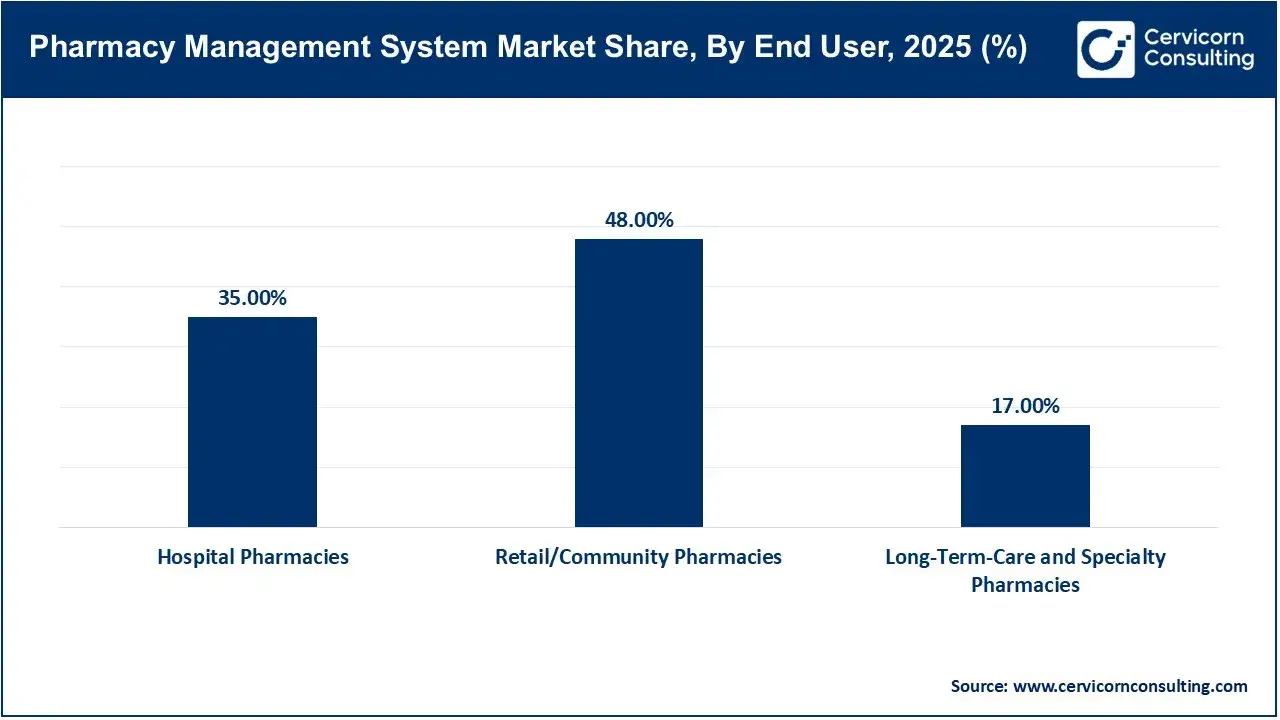
The long-term-care and specialty pharmacies segment is expected to be the fastest growing because specialized pharmacy services and advanced medication management are becoming increasingly necessary. These pharmacies serve patients who require ongoing medication support, complex treatment, and specialized medications, increasing the need for accurate and integrated digital systems. Rising demand for specialty medications and improved medication-management capabilities is expected to further stimulate adoption in this segment.
Recent Developments
- In April 2026, Omnicell announced its first-quarter 2026 results and highlighted its continued focus on autonomous medication management technologies. The company reported engagement with pharmacy leaders around its technology portfolio, reflecting continued investment in automation and digital pharmacy solutions.
- In May 2026, CVS Health announced that Aetna had expanded its AI platform to accelerate claims processing, demonstrating the company's broader investment in AI-powered healthcare workflows. The development highlights the increasing use of artificial intelligence to improve efficiency across healthcare and pharmacy-related operations.
- In September 2026, Walgreens announced that updated COVID-19 vaccines were available at its pharmacies, with pharmacy services supported through walk-in and scheduling options. The development reflects the continued expansion of digitally enabled and convenient pharmacy services for patients.
Government Initiatives
- In June 2025, the growth of ABDM as the digital foundation of the healthcare system was emphasized by the Indian government. The program facilitates easy access to healthcare information and supports the creation and connection of digital health records through ABHA accounts. Pharmacy systems may be better able to connect with larger healthcare networks and provide more effective digital services as a result.
- In November 2025, the Indian government emphasized the importance of ABDM in digitally connecting healthcare facilities throughout India. Through digital platforms, the initiative seeks to establish an integrated digital health infrastructure that connects various healthcare stakeholders. Digital records, e-prescriptions, pharmacy management systems, and coordinated drug services can all benefit from this interconnectedness.
- In June 2026, the Indian government emphasized ABDM's continued growth and its integrated digital healthcare ecosystem. In addition to supporting teleconsultation and connected healthcare services, the mission allows patients to securely store and access digital medical records. Pharmacies and other healthcare organizations are expected to adopt more interoperable digital management systems as this ecosystem continues to grow.
Key Companies
Segments Covered
By Component
- Solutions
- Inventory Management
- Purchase Order Management
- Supply-Chain Management
- Regulatory and Compliance Information
- Clinical and Administrative Performance
- Other Solutions
- Services
By Deployment
By Organization Size
- Independent Pharmacies
- Chained Pharmacies
By End-User Industries
- Hospital Pharmacies
- Retail/Community Pharmacies
- Long-Term-Care and Specialty Pharmacies
By Geography
- North America
- Europe
- Asia-Pacific
- Middle East
- South America