Gluten-free Products Market Size and Growth 2026 to 2035
The global gluten-free products market size was valued at USD 8.22 billion in 2025 and is anticipated to surpass around USD 19.19 billion by 2035, expanding at a compound annual growth rate (CAGR) of 8.85% during the forecast period from 2026 to 2035. The gluten-free products market is driven by factors such as the increasing prevalence of celiac disease and gluten intolerance, rising consumer awareness of digestive health, the growing adoption of healthy eating trends, and the expansion of gluten-free product portfolios by manufacturers to meet diverse dietary preferences and lifestyles.
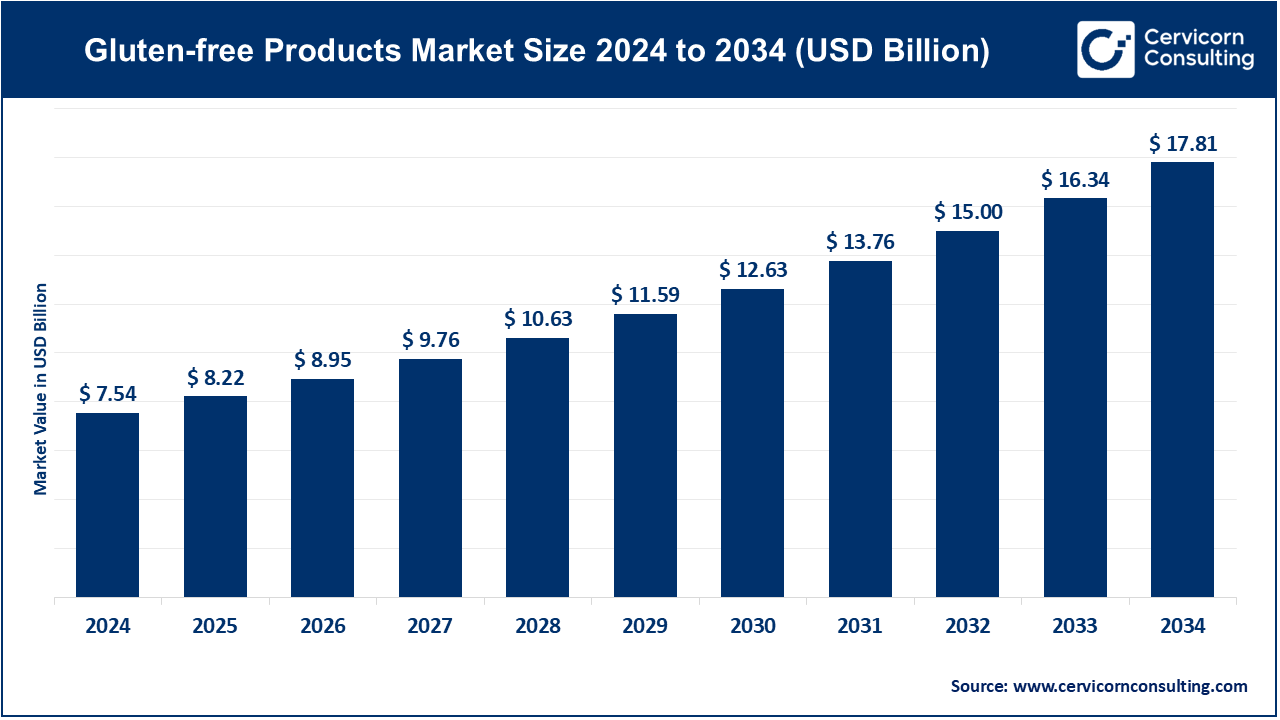
Gluten-free products are those food and beverage items that have been especially formulated to avoid containing gluten, a type of protein found in wheat, barley, rye and their products. These products are mainly consumed by people suffering from celiac disease or who are gluten sensitive as well as wheat allergic because they develop worst digestive problems and other health issues after consuming gluten. However, gluten-free products are increasingly becoming popular among health-related consumers who prefer clear, allergen-free food. They range from bread, pasta, snacks, drinks, and confectionery, made from alternative grains like rice, quinoa, millet, and sorghum, that have nutritional and safe consumption benefits for those with gluten intolerance.
Report Highlights
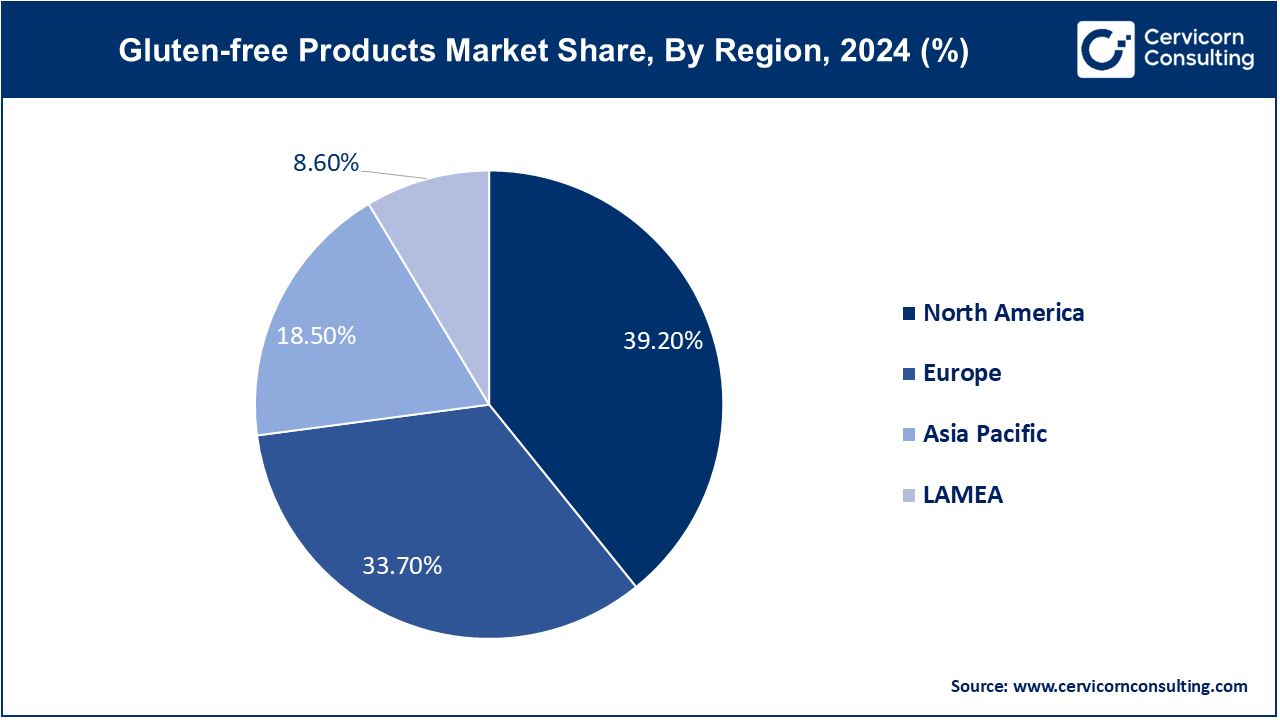
- North America dominated the revenue share at 39.20% in 2025 led by heightened consumer awareness towards gluten intolerance and celiac diseases, wide availability of GF products across all retail formats, and constant product innovations from leading food manufacturers.
- European region dominated the revenue share at 33.70% in 2025 led by the increasing diagnoses of gluten-related disorders and increasing demand of clean label products along with strict food labeling regulations supporting the use of gluten-free products.
- By product, the bakery products segment accounted for a major revenue share at 28.40% in 2025, consumers were seeking alternative options for conventional bread, cake, cookie, muffin, and other baked goods in order to prevent their intolerance to gluten without compromising on their taste and nutrition value.
- By distribution channel, the supermarket & hypermarkets segment dominated the revenue share at 29.10% in 2025 led by the availability of a broad range of products, excellent brand presence, the comfortable shopping experience offered to the consumers, and increased space offered for the specific diet products.
- By form, the solid form segment was the leading segment in the market and occupied a revenue share of 78% in 2025, because of majority of GF foods such as bakery products, snacks, cereals, pasta, Ready-to-eat products are available in a solid form due to their easy consumability and better shelf life.
Statistics - Adoption, Bakery Products and Organic Product Sales
- In 2023 global sales of organic food, which the Research Institute of Organic Agriculture (FiBL) reports as exceeding $145 billion, offer tremendous opportunities for makers of organic gluten-free products.
- Sales of organic food exceeded $69 billion in the U.S. in 2023, making the country the largest global market for organic foods.
- Over 50% of health-conscious consumers make multiple claims (gluten-free, organic, non-GMO, clean-label) in the food products that they purchase.
- Sales of organic packaged foods reached more than €54 billion in Europe in 2023, supported by the continued strong growth in demand for organic, natural foods from consumers.
- Gluten-free products that also boast an organic claim on the package grew by approximately 15% from 2021 to 2024, outpacing launches of mainstream gluten-free products by about 15% as well.
- Over 60% of organic food consumers in developed nations fall within the Millennial and Gen Z generations, suggesting key demographics for organic gluten-free brand marketers.
- Between 6% and 13% of the global population may experience symptoms associated with non-celiac gluten sensitivity.
- Celiac disease affects approximately 3 million Americans, with millions more avoiding gluten voluntarily, in addition to the large number experiencing non-celiac gluten sensitivity.
- Over 30% of Americans say that they are actively trying to eat less gluten or avoid gluten-containing foods entirely (according to recent consumer health surveys).
- In the last decade, more than 80% growth in the number of gluten-free food products launched globally suggests a strong and growing market for these items, and the significant investments being made in innovation attest to continued rapid growth prospects.
- Specialty dietary foods (like gluten-free products) are among the fastest growing product categories in the overall health and wellness food market, which exceeded $1.8 trillion in consumer spending in 2024.
- The U.S. Department of Commerce reports that U.S. e-commerce sales will exceed $1.19 trillion in 2024, which translates to growth for sales of specialty foods like gluten-free products through online channels.
- Global online grocery sales were in excess of $680 billion in 2024, and specialty dietary foods are among the categories growing the fastest at the digital shopping cart.
- A survey indicates that consumers with special dietary needs and food intolerances shop online for specialty foods more than 65% of the time due to wider selection availability compared to the brick-and-mortar store.
- Major online players like Amazon, Walmart, Thrive Market and others have each added hundreds of new gluten-free products to their virtual shelves over the last five years.
- Globally, gluten-free baked good launches have increased over 12% from 2022 to 2024 (according to food innovation databases tracking packaged food launches), as this is the primary and favorite type of food enjoyed across almost all consumer demographics, including many who avoid gluten.
- Bakery items represented over 25% of all global gluten-free food launches between 2022 and 2024, the highest performing product category for this product niche.
Growth Factors
- Increase in health-consciousness and adoption of gluten-free diets by non-celiac individuals: Not only among celiac patients, but various people are also adopting gluten-free diets as part of health and wellness lifestyle. Gluten-free products are associated with better digestion, less inflammation, and more energy; This trend is most visible among fitness enthusiasts and consumers who prefer cleaner, allergen-free eating habits. The growing awareness of the health impact of gluten is causing more consumers to seek gluten-free options, which in turn opens the market to customers beyond its traditional target group. Manufacturers are responding with innovative products that are driving the market.
- Growing Demand for Clean Label and Organic Foods: Clean Label focuses mainly on transparency, reduced additives, and quality ingredients. That resonates perfectly with the gluten-free market, considering consumers prefer more organic, non-GMO, and minimally processed products; the demand will grow for clean-label gluten-free foods. This trend, however, finds its major pull from millennials to Gen Z. The increasing growth in the market is contributed to by products which are organic or sustainably sourced, and appealing to healthy consumers. Retailers and manufacturers are milking this trend and increasing gluten-free offerings in the clean-label segment.
- Gluten-free products by advances made in e-commerce platforms: E-commerce has really improved the level of accessibility and availability of gluten-free products. The advantage that consumers have obtained from online platforms is having a view of different kinds of gluten-free products and niche items not readily available in stores With digital marketing and subscription-based services, e-commerce has also given manufacturers a way to target the correct customer group. What is now making online sites the marketplace for sales of gluten-free products in the areas where this retail channel has been weak, are the very detailed descriptions of the products themselves, reviews of other customers and delivery options.
Recent Trends
- Increasing demand for hybrid products, plant-based and gluten-free: Consumers are seeking food products that cater to multiple dietary preferences, such as gluten-free and plant-based options. Hybrid products, like gluten-free vegan protein bars or plant-based gluten-free pizzas, are on the rise. This trend is influenced by the growing popularity of flexitarian and vegan lifestyles, which go hand in hand with gluten-free eating habits. This dual demand is used by manufacturers to innovate products for the larger audience while positioning themselves at the intersection of several high-growth markets.
- Gluten-free beer and alcoholic drink: Gluten-free alcoholic drinks include beers, spirits, and hard seltzers. They have high adoption within the beverage market. Gluten-sensitive consumers and followers of gluten-free diets demand non-threatening options with no compromise in taste. Brewers are investing in new ways to brew beers, like using sorghum, millet, and rice, to produce beers that are gluten-free.. This evolving market segment in the alcoholic beverage sector is drawing consumers' interest toward the gluten-free product. Also, this is adding to the total acceptance of gluten-free products.
- Increased need for allergen-free, multifunctional, and gluten-free products: Today's consumer is looking at multi-purpose products that cater to their dietary requirements of being free from allergens. Increasingly, people sensitive to more than one type of food are looking at products that not only are gluten-free but also free from dairy or nuts as well. It has a high appeal to family groups, where planning meals is straightforward and safe for all. Making these versatile ones cater to more varied dietary demands is a significant factor fueling manufacturers to extend their portfolios in gluten-free products.
Report Scope
| Area of Focus |
Details |
| Market Size in 2026 |
USD 8.95 Billion |
| Expected Market Size by 2035 |
USD 19.19 Billion |
| Projected CAGR 2026 to 2035 |
8.85% |
| Dominant Region |
North America |
| Fastest Expanding Area |
Asia-Pacific |
| Key Segments |
Source, Type, Form, Distribution Channel, Region |
| Key Companies |
Vitrolife AB, Cook Medical, Merck KGaA, Thermo Fisher Scientific, Inc., Esco Micro Pte Ltd, Genea Limited, Ferring Pharmaceuticals, Hamilton Thorne, Inc., Nidacon International AB, Rocket Medical plc, EMD Serono, Kitazato Corporation, IVFtech Aps, Zeiss Group, Labotect GmbH, Esco Medical, The Baker Company, Inc., Boston IVF, Invitrocare Fertility Laboratories Pvt. Ltd., EMD Serono, Inc. |
Market Dynamics
Market Drivers
- Market/Health awareness around gluten-free foods: Health becomes one of the key factors moving the trend to gluten-free market. Today with a rise of healthy habits around the consumption habits, health issues from gluten in digestion and not facing bloating also become quite famous.A majority of the current gluten-free diets suggest that this diet needs some energy boosts for performance. These consumers are encouraged by advertising and celebrity endorsement in social media on the supposed goodness of gluten-free products about their ordinary counterparts. Thus, innovative offers of gluten-free products across the categories have still been on an upward demand scale.
- Increasing Diagnosis of Celiac Disease: This is one of the main drivers of gluten-free products with the rising diagnosis of celiac disease in the world. Improved diagnostic tools and rising medical awareness helped diagnose this auto-immune disorder. Even a little exposure to gluten has been known to cause severe damage to the intestine, and with this estimated population of 1% diagnosed with celiac disease, the demand for safe gluten-free food products has increased. Increased awareness regarding celiac disease among healthcare professionals and the public has boosted the acceptance of gluten-free diets, which in turn has fueled growth in the market.
- The increasing cases of celiac disease and other food intolerance products are highly influencing the gluten-free products market: The increasing cases of celiac disease, along with greater awareness about food intolerance, result in earlier and more accurate diagnoses because of advanced diagnostic technology. Celiac disease affects about 1% of the population and food intolerance continues to grow in prevalence, hence the need for gluten-free products. Such products are therefore depended upon by consumers who have gluten sensitivity or wheat allergies in controlling their symptoms. Further efforts by the regulatory bodies towards improving food labeling have encouraged consumers to embrace gluten-free diets, which has spurred market growth.
Market Opportunities
- Growing middle-class populations in emerging markets: Countries with rising disposable incomes and growing urbanization will offer considerable growth opportunities for gluten-free products. Middle-class populations in India, China, and Brazil, among others, are increasingly adopting global dietary habits, including a gluten-free diet. Manufacturers could exploit these previously untapped markets by offering competitively priced gluten-free products, along with localized marketing strategies.
- Increase gluten-free products in the vegan and organic lines: The coming together of three demand factors including gluten-free, vegan, and organic products is an attractive opportunity for manufacturers. A significant number of people who seek organic and vegan foods also seek gluten-free foods. Combining these attributes puts manufacturers in contact with niche but fast-growing markets, thereby expanding their customer base. Organic gluten-free pasta or vegan baked goods are innovative product developments that attract consumers sensitized toward a green environment and better health.
- Regional flavors: Incorporating regional and ethnic flavors in gluten-free product lines can allow expansion of consumer groups. For example, gluten-free tortillas made authentic to the real Latin American cuisine and gluten-free pasta inspired by the Mediterranean would interest consumers searching for authenticity about their diets. Brands distinguish themselves as one of many with this uniqueness.
Market Restraints
- Gluten-free product production is highly costlier as compared to a regular product: Gluten-free production requires specialized sources of ingredients, and manufacturing must be done to avoid cross-contamination. Some ingredients such as almond flour, quinoa, and sorghum are way costlier as compared to traditional wheat; therefore, its cost of production becomes high. Generally, gluten-free products require superior testing and certification, which incurs additional cost. Most of these costs are passed down to the consumer, which makes gluten-free food unaffordable and not adopted as much in price-sensitive markets.
- Less awareness of celiac disease in underdeveloped areas: The underdeveloped regions still have very minimal awareness about celiac disease and gluten intolerance. Underdeveloped diagnostic infrastructures and low levels of healthcare contribute to a reduced number of cases diagnosed, making the market even smaller for gluten-free products. In other places, there are cultural diets, which emphasize wheat-based diets, and so the demand for gluten-free diets is less, which creates barriers to the entry and growth of markets.
- Competition from other dietary trends, such as keto or paleo diets: The gluten-free market faces competition from other popular dietary trends like the ketogenic and paleo diets, which often emphasize low-carb or high-protein consumption. These trends divert attention from gluten-free products, particularly among health-conscious consumers. Additionally, some consumers mistakenly view gluten-free diets as less effective for weight management compared to other diets. This competition poses a challenge to manufacturers to position their products effectively and to maintain market share.
Market Challenges
- Educating consumers on the health benefits of gluten-free diets: While there is increasing awareness, many consumers still perceive gluten-free diets as a fad or associate them with celiac disease. The public needs to be educated on the potential digestive and health benefits of gluten-free diets to increase the market. Manufacturers and retailers need to invest in awareness campaigns and collaborate with healthcare professionals to promote the right information about gluten-free living, especially in regions where knowledge is limited.
- Mass-market appeal: To sustain long-term growth, the gluten-free market needs to go beyond those who have been diagnosed with celiac disease or gluten sensitivity. Superior taste, texture, and nutritional value will allow the products to compete with traditional offerings. More effective marketing must be invested to communicate the more general benefits of gluten-free products- clean-label attributes and suitability for a variety of health-conscious consumers.
Regional Analysis
North America, Europe, Asia-Pacific, and LAMEA (Latin America, Middle East, and Africa) are some of the key regions included in the gluten-free products market. Each of these has been covered in detail
Why does North America dominates the gluten-free products market?
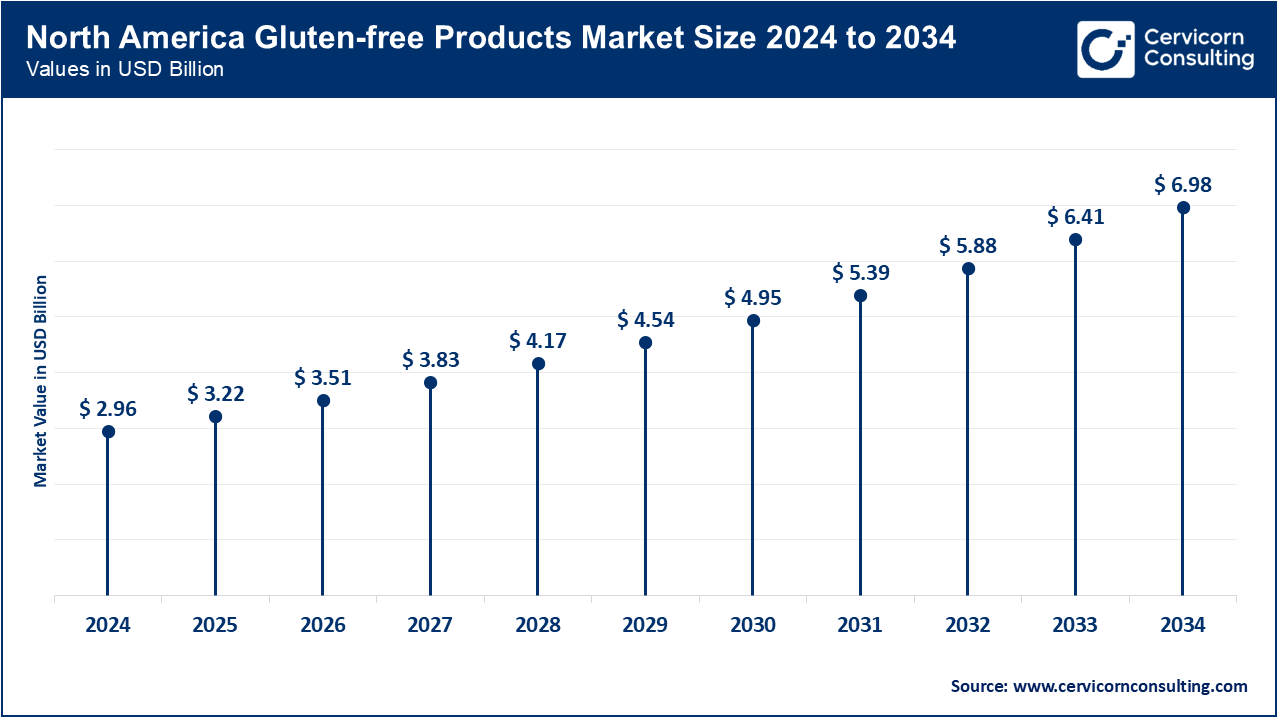
- The North America gluten-free products market size was valued at USD 3.22 billion in 2025 and is expected to hit around USD 7.52 billion by 2035.
North America is dominating the market due to high prevalence of celiac disease, gluten intolerance, and strong consumer awareness regarding the health benefits of gluten-free diets. The U.S. and Canada lead the region, with an increased demand for gluten-free bakery items, snacks, and ready-to-eat products. Retail giants and specialty stores of this region are accepting gluten-free offerings, increasing its accessibility. Robust promotion campaigns and the support of government policies for food labeling regulations also foster growth in this market.
What are the driving factors of Europe gluten-free products market?
- The Europe gluten-free products market size was estimated at USD 2.77 billion in 2025 and is projected to surpass around USD 6.47 billion by 2035.
There is a healthy percentage of this market share present in Europe mainly due to surging health concerns and an amplified diagnosis of sensitivity to gluten in people. A majority of demand comes from such highly developed food processing industries like those of the UK, Germany, and Italy. There are still a lot of gluten-free pizzas, pasta, and pastries, which the population here is in huge demand for. Plus, there is strict regulation over labeling products so that consumers know exactly what they're getting.
Why Asia-Pacific hit high growth in the gluten-free products market?
- The Asia-Pacific gluten-free products market size was accounted for USD 1.52 billion in 2025 and is forecasted to grow around USD 3.55 billion by 2035.
In the Asia-Pacific region, high growth is happening in the market because of increasing urbanization, disposable income, and growing awareness of gluten-related disorders. Countries like China, Japan, and India are driving demand for gluten-free snacks, baked goods, and beverages. The main growth drivers have been the increase in popularity of Western-style diets and the entry of international gluten-free brands into the market. The biggest challenge to consumer education remains the lack of understanding of gluten sensitivity in rural areas.
Why is LAMEA an emerging market for gluten-free products
- The LAMEA gluten-free products market was valued at USD 0.71 billion in 2025 and is anticipated to reach around USD 1.65 billion by 2035.
LAMEA is an emerging market, driven mainly by increasing health awareness and urbanization. The whole Latin America region is growing in Latin America countries, of which Brazil and Argentina are the most significant. In the Middle East and Africa, improvement in economic conditions and a growing retail network supports expansion. However, limited availability of products and lesser awareness about gluten intolerance in some regions have been acting as deterrents to market growth. Nonetheless, the region provides unexplored opportunities for market players.
Segmental Analysis
Form Analysis
Solid: The solid segment captured a significant market share of 78% in the gluten-free products market in 2025 due to the wide availability of gluten-free bakery items, snacks, cereals, pastas and ready-to-eat food products in the solid form. Most consumers favor solid gluten-free products due to their ease of storage and consumption. Moreover, variety in the form of solid gluten-free product options is much wider than in other forms and consumers have better choice across the retail segment.
Liquid: The liquid segment is projected to register healthy growth during the forecast period on account of the growing demand for gluten-free beverages, nutraceutical drinks, plant based milk alternatives, soups and functional health drinks. Growing consumer preference for health and digestive health solutions is propelling demand for liquid gluten-free products.
Source Analysis
Animal Source: The animal-source-based gluten-free products include the products like gluten-free cheese, yogurt, and processed meat. They help meet the need of protein-wealthy diet free from gluten to those in whom specific diet is required. Increasing awareness regarding gluten intolerance necessitates manufacturers ensuring the absence of gluten cross-contamination during the process of processing such products. Animal-sourced gluten-free products are also in demand among low-carb or ketogenic diet followers, which increases their demand. Their appeal is somewhat limited among vegetarians or vegans, thus offering opportunities for diversification in product offerings.
Plant Source: With wide applicability and consumer preference for natural, wholesome ingredients, plant-based gluten-free products led the market. Other demanding products included gluten-free flours such as almond, rice, or sorghum, as well as vegan snacks with variations of typical snacks and non-dairy alternatives for vegan dairy applications. With increasing clean-label trends, the plant-derived gluten-free products that ensure nutritional completeness drive more sales. It is due to the adaptability and sustainability of the plant-based gluten-free product that makes it the core of the gluten-free market, providing potential for limitless innovation.
Type Analysis
Bakery Products: Gluten-free bakery products, including bread, cakes, and pastries, form a huge market. These are for the consumers who are in search of a gluten-free alternative to the traditional baked products made from wheat. The food technology revolution has made it possible for the gluten-free baked product manufacturers to leave the gluten-free ones nearly inconspicuous from the latter. These are bakery products in high demand among consumers suffering from celiac disease, those who have gluten intolerance, and other people who adopt gluten-free diets for health reasons.
Snacks & RTE Products: Snacks & RTE products would focus on healthy & easy-to-eat snacks that are gluten-free, such as chips, protein bars, and granola, etc. Those snacks would help fast-moving consumers to have some gluten-free options while they eat on the go. Innovation here is nutrient-rich snack options, that is, those with high protein and fiber for those who are health-oriented.
Pizzas & Pastas: Several consumer demand for the comfort foods indulgent alternatives, free of gluten, gave an immense boost to the market for gluten-free pizzas and pastas. These goods are mainly prepared using rice flour, quinoa, or chickpea flour, which very nearly resemble 'traditional' wheat-based offerings in their taste as well as texture. Increased visibility on retail shelves and restaurant chains have enhanced growth a lot.
Condiments & Dressings: Gluten-free condiments, dressings, and sauces are developed to satisfy consumer demands about removing hidden sources of gluten from diets. Such products include gluten-free soy sauce, ketchup, as well as salad dressings. Consumers positively respond to a growing demand from consumers for everyday meal preparation involving allergen-free options.
Seasonings & Spreads: Gluten-free seasonings and spreads are spice blends, peanut butter, jams, and other spreads without gluten thickeners or additives. Such products are in very high demand among consumers who would like to flavor their foods without risking gluten contamination.
Desserts & Ice Creams: Such desserts and ice creams are in more demand today since the indulgent treats of a consumer with gluten intolerance are deemed in consideration.The varieties of them include gluten-free brownies, cakes, cookies, and different ice cream flavors. Manufacturers come up with innovative, appealing replacement versions that do not deprive the dessert of its richness.
Rice: Due to the natural composition of rice flour, rice noodles, and rice-based snacks, these products are now gaining popularity because of their gluten-free origin. Rice as a versatile, affordable staple gains appeal to diverse consumers, starting from gluten-sensitive patients to those adhering to the gluten-free diet.
Others: They are specialty gluten-free products, including soups, drinks, and special flours. Thus, this category includes other forms of specialty gluten-free products, which include products concerning special dietary requirements, with both general and gourmet kitchen needs.
Distribution Channel Analysis
Convenience Stores: The convenience stores segment captured a notable share in the gluten-free products market in 2025, owing to increasing availability of gluten-free snacks, beverages and ready-to-eat products in local convenience stores. Consumers that seek quicker purchases and immediate consumption have fueled demand in convenience stores.
Supermarkets & Hypermarkets: The supermarkets & hypermarkets segment occupied the highest market share of 29.10% in 2025 due to availability of vast product assortment, brand visibility, and competitive pricing of gluten-free products under one roof. Dedicated section for health and specialty foods, in most of the supermarket stores provides better choice.
Gluten-free Products Market Revenue Share, By Distribution Channel, 2025 (%)
| Distribution Channel |
Revenue Share, 2025 (%) |
| Convenience Stores |
17.60% |
| Supermarkets & Hypermarkets |
29.10% |
| Specialty Stores |
19.80% |
| Online |
23.70% |
| Others |
9.80% |
Specialty Stores: The specialty stores segment held a significant market share in 2025 because most celiac diseases patients or people that are allergic to gluten and follow strict diets favor specialty stores where they find all the necessary food products and the choice of products available is huge and certified.
Online: The online segment is expected to grow at a rapid rate in the forecast period as e-commerce continues to expand and more consumers utilize doorstep delivery benefits for their purchases. Consumers are more likely to access a broader range of gluten-free products online than they can find in brick and mortar stores. Factors like easy to compare products and competitive pricing also encourage the demand for online purchase.
Top Companies
Recent Developments
- In February 2024, GOODLES, renowned for reinventing mac and cheese, unveiled its first gluten-free products: GLUTEN-FREE VEGAN BE HEROES and GLUTEN-FREE CHEDDY MAC. These nutrient-packed offerings provide all the flavor without gluten, featuring protein, fiber, prebiotics, and 21 plant-based nutrients, just like the brand's other mac and cheese varieties.
- In January 2023, Warburton expanded its gluten-free bakery range with the launch of Gluten-Free Cinnamon & Raisin Fruity Buns. These four-pack buns are made with a brioche base and infused with cinnamon, mixed spices, and caramelized sugar, offering a delicious gluten, wheat, and milk-free option. Enjoy them toasted or untoasted.
Market Segmentation
By Source
- Animal Source
- Plant Source
- Rice & Corn
- Oilseeds & Pulses
- Others
By Type
- Bakery Products
- Dairy/ Dairy Alternatives
- Snacks & RTE Products
- Pizzas & Pastas
- Condiments & Dressings
- Seasonings & Spreads
- Desserts & Ice Creams
- Rice
- Others
By Form
By Distribution Channel
- Convenience Stores
- Supermarkets & Hypermarkets
- Specialty Stores
- Online
- Others
By Region
- North America
- APAC
- Europe
- LAMEA