Fruits and Vegetables Market Size and Growth Outlook 2026 to 2035
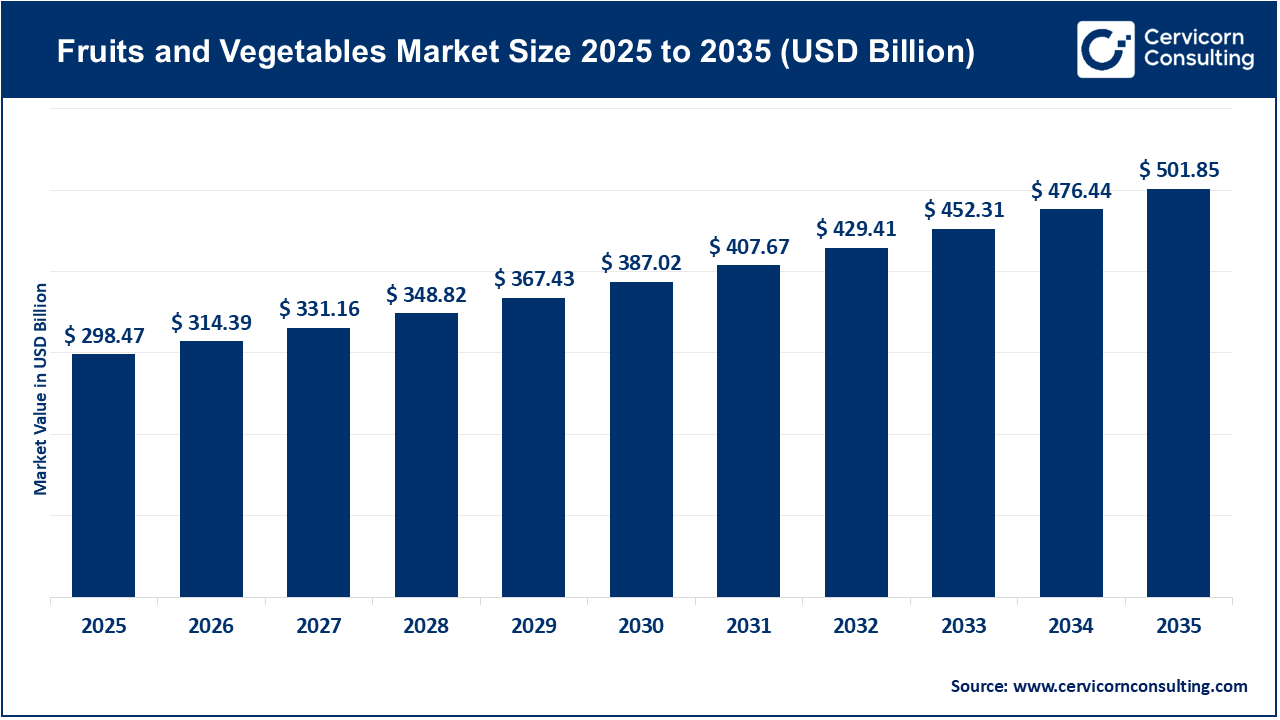
The global fruits and vegetables market size was valued at USD 298.47 billion in 2025 and is expected to exceed around USD 501.85 billion by 2035, exhibiting at a compound annual growth rate (CAGR) of 5.4% over the forecast period 2026 to 2035. The growth of the global fruits and vegetable market is primarily driven by a fundamental shift in consumer dietary behavior, commonly referred to as the "Preventative Health" movement. As more scientific evidence supports that a diet high in fruits and vegetables lowers the risk of cardiovascular diseases and some cancers, encouraging consumers to replace processed carbohydrates with fresh produce, demand increases. Urbanization also pushes the market forward, as populations migrate from lower-nutrient diets toward nutrient-rich produce, which drives market growth along with a shift toward more structured and integrated commercial agri-food value chains. This transition fosters a new market relationship between urban consumers and their understanding of the value of convenient access to quality whole fruits and vegetables per capita.
From a statistical perspective, in the United States, the vegetable sector is expected to see a slight increase in fresh market vegetable production in 2023, supporting healthy volume growth in 2024. Globally, in certain crop categories, aggregate production often dominates smaller or sustainable commodity segments. For example, Turkey accounted for 55.9% of the total 375 thousand tons of global fig production as of 2024. Additionally, growth in frozen produce and e-commerce segments signals a market pivot toward convenience and waste reduction. This analysis further explores the roles of adopting precision agriculture, government infrastructure improvement schemes, and evolving trade regulations in shaping the future market outlook.
Report Highlights
- Asia Pacific holds the largest share of the global fruits and vegetables market at around 40%, due to its large population, strong agricultural production, and growing modern retail networks.
- Vegetables account for the biggest product segment at 54%, driven by daily consumption, staple use, and their role in processed foods.
- Fruits are the fastest-growing segment at 46%, supported by increasing health awareness, plant-based eating habits, and rising demand for tropical and exotic varieties.
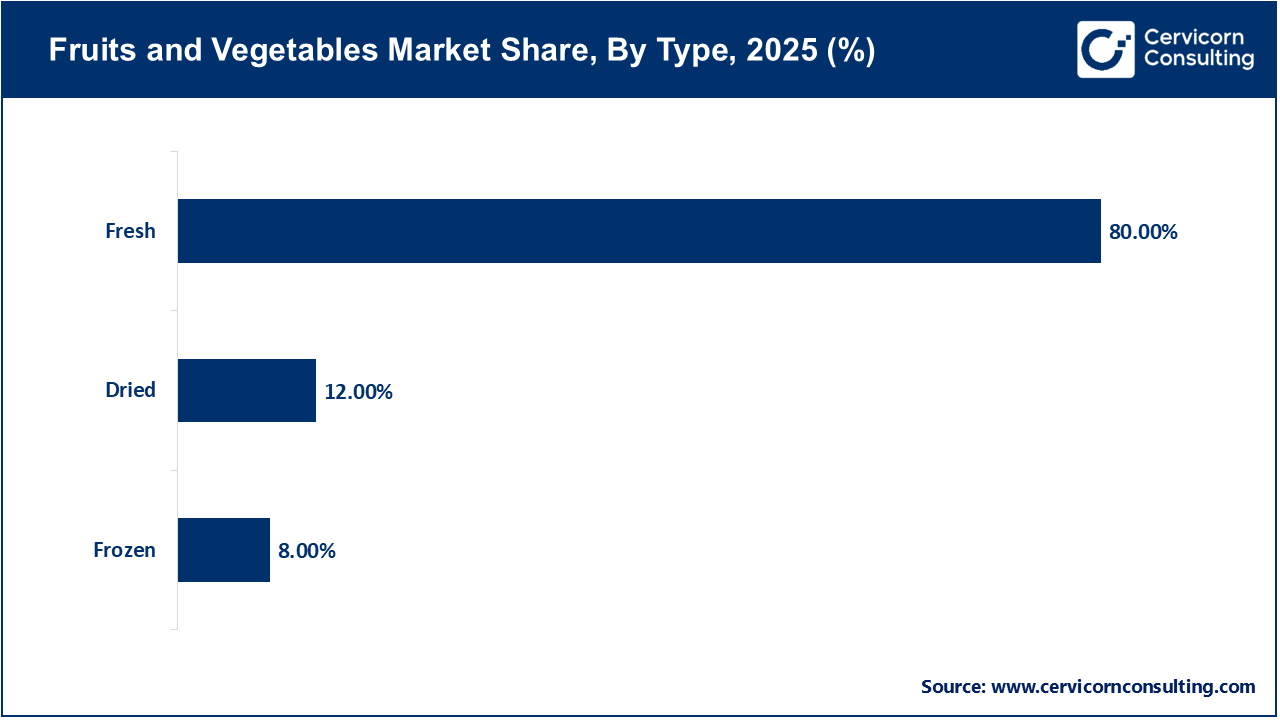
- Fresh produce dominates with a 80% share, as consumers prefer minimally processed, high-quality items and convenient ready-to-eat options.
- Supermarkets and hypermarkets lead distribution with 63% of the market, fueled by convenience, reliable cold-chain logistics, and expanding urban retail presence.
Technology Integration into Operations of Precision Agriculture
The rapid expansion of precision agriculture is a pillar of growth across the horticultural production sector. Precision Agriculture integrates Industry 4.0 technologies such as the Internet of Things (IoT), Artificial Intelligence (AI) applications, and remote sensors to improve production methods throughout each stage of the growing cycle. By utilizing GPS technology, seeders can now use equipment that enhances plant establishment in the soil, while remote sensors can estimate yields of horticultural crops in real-time, thereby increasing efficiency and reducing environmental impacts. The development of autonomous agricultural robots for specialty crops has the potential to significantly improve the precision of harvests by 2025, providing immediate solutions to labor shortages in labor-intensive crops and bringing the industry closer to a steady supply of high-value crops.
Recent Major Milestones
1. Corporate Investments in Infrastructure Are Expanding
The growth of corporate investment into increased production capacity and technology infrastructure expanded its market in 2024. For example, significant corporate investments have gone into large-scale automated greenhouses and vertical farms, particularly in regions facing extreme weather conditions. These advanced farming models enable climate-resilient production capabilities, producing 10-20 times more than traditional open-air farming. In Ukraine, there has been development and investment in strawberry vertical farms paired with shared freezing and storage warehousing. This helps stabilize supply and create price stability in a volatile market. These capabilities allow companies to overcome seasonal limitations of traditional growing practices and deliver high-quality produce to their retail partners every day.
2. Government Resilience Programs, National Security and Controlled Environment Production
Around the globe, there is increasing recognition of the horticulture sector as an important aspect of national economic security and export growth. In early 2024, the Government of Uzbekistan launched a significant initiative to expand agricultural precision across an additional 500,000 hectares, focusing on local supply chain optimization and resilience efforts. Meanwhile, in Botswana, a SWOT analysis of the horticultural sector has led to government policies aimed at broadening opportunities in wildlife and horticulture to address production and distribution constraints. Both of these countries will need government-led initiatives to attract capital and meet regulatory requirements for smallholders and large-scale producers to adopt modern, resilient agricultural practices.
3. New Cold Chain Innovations
Preservation of perishable foods remains a long-standing challenge; however, major advancements in the preservation of agri-food products occurred in 2024-2025. The integration of blockchain technology into cold chain logistics marks a new milestone for food safety and traceability, enabling real-time monitoring of temperature and humidity from farm to consumer. Organizations can also monitor that their "cold chain" is maintained from the farm gate or production facility until the consumer. The commercialized innovations in advanced freezing technologies, such as Individual Quick Freezing (IQF), will dramatically change this segment of frozen produce. IQF allows fruits and vegetables to be quickly frozen while better preserving cellular structure than frozen bulk products. Frozen produce has now become a highly viable high-quality substitute for fresh produce, especially when consumed out of season.
4. Global Trade Policy and Export Milestones
A significant milestone for the overall trade of fruits and vegetables continues to be trade liberalization and strategic agreements. In 2024, a major milestone was the implementation of the Serbia-China Free Trade Agreement (FTA), targeting the agri-food sector to improve export strategies and market access. This is an important agreement for many countries, as it creates pressure demand, expands their markets, and reduces their overall dependence on traditional regional partners. Additionally, the global market continues to adjust to stricter regulatory environments, such as the EU's reduction targets for pesticide residues. As a result, exporting countries have destinations that demand cleaner production methods to continue accessing markets that pay more for produce. These types of process regulations will serve as a beneficial change for adopting sustainable agricultural practices globally.
Report Scope
| Area of Focus |
Details |
| Market Size in 2026 |
USD 314.39 Billion |
| Market Size in 2035 |
USD 501.85 Billion |
| CAGR 2026 to 2035 |
5.40% |
| Dominant Region |
Asia-Pacific |
| Key Segments |
Product, Type, Distribution Channel, Region |
| Key Companies |
Dole Food Company, Fresh Del Monte Produce, Chiquita Brands International, Total Produce plc, Greenyard NV, Driscoll’s, Bonduelle Group, General Mills, Taylor Farms, SunOpta, Sunkist Growers, Calavo Growers, Mission Produce, Zespri International, Naturipe Farms |
Market Dynamics
Market Drivers
- Rising Consumer Movement to Plant-Based Diets: Growing awareness of health and nutrition is reshaping consumer food choices, driving strong demand for fresh fruits and vegetables. Demographics of health-conscious consumers, with clear purchasing power, are prioritizing preventative health by incorporating more nutritionally dense foods into their diets to mitigate conditions attributed to lifestyle diseases. For example, flexitarianism and veganism position vegetables as a core part of daily caloric intake rather than just a side dish. Additionally, interest in plant-based diets and superfoods such as avocados, kale, and blueberries for their antioxidant and vitamin benefits continues to support market growth.
- Technological Advances in Cold Chain Logistics and Preservation: Technological advances in cold chain logistics have revolutionised the distribution of perishables by decreasing both production and consumption. The adoption of Industry 4.0 technologies now includes Iot-enabled refrigeration and tracking sensors that deliver real-time data on transport conditions. These technological improvements have opened new export routes that were previously limited by the short shelf life of sensitive tropical fruits. Additionally, recent innovations in post-harvest preservation, utilising plant-metabolite nanoparticle synthesis, offer sustainable alternatives to chemical treatments.
Market Restraints
- High Perishability and Significant Post-Harvest Lose: Despite advances in agricultural and logistics technologies, the limited shelf life of fresh fruits and vegetables remains a significant obstacle for supply chain efficiency. In regions, post-harvest food waste exceeds 90% of total food waste during this phase of the food supply chain, indicating the need for improved storage and handling infrastructure. Post-harvest losses are a financial hit to growers and retailers, but also an increase in global food insecurity.
- Complex International Trade Regulations and Phytotoxicity Standards: The trade of fresh produce across international borders has become more complex due to strict phytotoxicity regulations and trade policies. These mandates, especially in high-demand markets such as the European Union, help prevent pests from spreading and promote food safety, but they often create compliance challenges for LAMEA and Asia Pacific exporters. These regulations involve extensive investments in testing, certification, and traceability, which placing pressures on smaller producers. In addition, geopolitical uncertainties and trade agreements can disrupt established supply chains and limit market access.
Market Opportunities
- Innovate with Value-Added and Convenient Products: The growing "convenience economy" represents an strong growth opportunity for fruits and vegetables through value-added products such as pre-cut, washed, and ready-to-eat fruit and vegetable packages. These products attract urban consumers willing to play a premium for time savings solutions. The rising trend of "snack-ready produce" favors these types of products for fresh produce, as they now compete with processed items in convenience stores. In addition, Innovations like "meal kit" components and functional produce such as low-glycemic potatoes and high-antioxidant berries allow to consumers to seek produce with evolving their health, dietary and lifestyle needs.
- Leverage Precision Agriculture and Smart Farming Technologies: Precision agriculture and smart farming technologies offer powerful ways to increase resource efficiency and crop yields. Data-driven insights enable farmers to better manage water, fertilizers, and pesticides to minimize environmental impact and reduce production costs. Additionally, technologies such as satellite imaging, soil sensors, and AI-enabled predictive analytics provide improved forecasting of harvest timing and quality outcomes. The use of controlled-environment agriculture (CEA), like vertical farms, eliminates seasonality constraints. The food industry must leverage technology to meet societal demand for high-quality, sustainable products.
Market Challenges
- Continual Labor Shortages on Harvests and in Distribution Centers: The fruit and vegetable industry continues to be primarily dependent on seasonal manual labor to processing and harvesting. The industry is highly susceptible to on-going labor shortages due to changes in immigration policies, changing politics, and an aging rural population. Although the adoption of robotic harvesters is developing machines that can preserve delicate fruits without damaging them, such as strawberries or grapes. This constraint will increase costs of production, which may lead to unharvest crop, and potential losses in the fields.
- Food Safety Risk & Traceability Requirements: Ensuring food safety and traceability in the global supply chain can prove immensely challenging, especially amid today's high levels of market uncertainty. A multi-state outbreak of foodborne illnesses can lead to large-scale product recalls and significant brand reputational damage and loss of investment. A rise in consumer desire for integrated "Smart-Tag" packaging and block chain platforms will create greater risk management efficiencies for consumers. In addition, effective Traceability risk management depends on seamless digital integration across supply chain stakeholders.
Fruits and Vegetables Market Regional Analysis
The fruits and vegetables market is segmented by region into North America, Europe, Asia-Pacific, and LAMEA. Here is a brief overview of each region:
Asia-Pacific Fruits and Vegetables Market: Driven by Urbanization & Disposable Income Growth
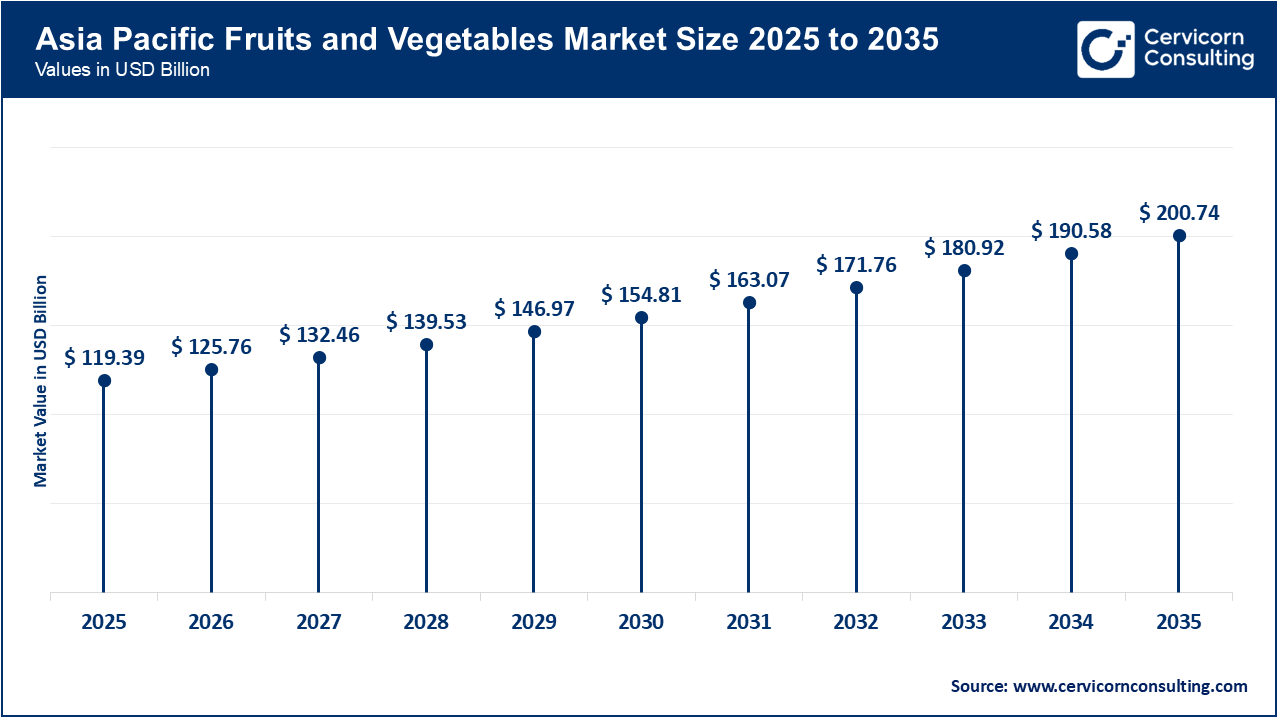
The Asia-Pacific fruits and vegetables market size was valued at USD 119.39 billion in 2025 and is predicted to grow around USD 200.74 billion by 2035. The Asia Pacific region is the largest share of the market, mainly driven by the explosion of urbanisation and the growing middle class in China and India. Rapid urbanization is decreasing wet markets in favour of organized retail and supermarkets to ensure quality control and access to global verities. The increasing economic growth in disposable incomes in the APAC region has created a high demand market for premium and "exotic" fruit integrations into the gift-giving culture of the market. Efficient e-commerce platforms connecting smallholder farmers to the national supply chain will increase their market access, reduce waste, and engage them.
Recent Developments:
- Driscoll’s Asia is introducing new high‑flavor berry varieties and expanding presence in Southeast Asian markets.
- Vietnam and Thailand are increasing fruit exports to neighboring countries, boosting regional trade volumes.
North America Fruits and Vegetables Market: Driven by Premiumization & Health cum Consumption
The North America fruits and vegetables market size was estimated at USD 83.57 billion in 2025 and is forecasted to surpass around USD 140.52 billion by 2035. The North American market has shown very strong demand for premiumization and health-centric functional consumption. United States and Canadian consumer trends are leading the "clean label" and organic-certified high-value market segments. An exclusive driver in North America has been the integration of "Produce Prescriptions" together with the health insurance plans to subsidize fruits and vegetables to prevent long-term health and reduced diet-related chronic disease. The convenience model of fruit and vegetable purchases is driving major expansion in the pre-packaged salad kit and ready-to-eat fruit snack segments.
Recent Developments:
- Fresh Del Monte Produce expanded pre‑cut fruit processing capacity across North America to meet rising fresh‑cut demand.
- Mission Produce is developing a new avocado packing facility in Guatemala to strengthen supply into the U.S. market.
Europe Fruits and Vegetables Market: Driven by EU Green Deal and the "Farm to Fork" strategy
The Europe fruits and vegetables market size was reached at USD 68.65 billion in 2025 and is projected to hit around USD 115.43 billion by 2035. In the European market, the EU Green Deal and the "Farm to Fork" strategy represent strong species mandates that reduce pesticide usage and increase organic farming. European consumers have the highest levels of sustainability, prioritize local, and in-season produce to minimize their carbon footprint. These mandates boost demand in sustainable packaging innovation and transparency along the supply chain. Several of the larger European countries have already committed to banning plastic packaging for small-count fruits and vegetables by the years 2024-2025.
Recent Developments:
- Greenyard introduced sustainable mixed vegetable packs in Europe, reducing plastic usage per pack.
- Ongoing regulatory shifts are prompting increased adoption of recyclable and eco‑friendly packaging solutions.
Fruits and Vegetables Market Share, By Region, 2025 (%)
| Region |
Revenue Share, 2025 (%) |
| Asia Pacific |
40% |
| North America |
28% |
| Europe |
23% |
| LAMEA |
9% |
LAMEA Fruits and Vegetables Market: Driven by Agricultural Export Development and Infrastructure Investment
The LAMEA fruits and vegetables market was valued at USD 26.86 billion in 2025 and is anticipated to reach around USD 45.17 billion by 2035. The LAMEA (Latin America, Middle East, and Africa) region, a significant driver of the market, is driven by the professionalisation of agriculture and the expansion of export corridors. Countries such as Peru, Chile, and Kenya are focused on high-value products such as avocados, blueberries, and citrus to meet the Northern Hemisphere's year-round demand. Development of value chains and agro-processing facilities is needed to improve competitiveness in the international market, while investment in port infrastructure and development of "Green Corridors" are help these regions to overcome geographic and transit challenges.
Recent Developments:
- Saudi Public Investment Fund partnered with AeroFarms to expand indoor vertical farming across North Africa and the Middle East.
- Dole Food Company teamed up with Minecraft to encourage healthier eating habits through interactive, game-based campaigns in MEA and Latin America.
Fruits and Vegetables Market Segmental Analysis
The fruits and vegetables market is segmented into product, type, distribution channel, and region.
Product Analysis
Vegetable segment leads the global product market due to its universal consumption across cultures, serving as a fundamental dietary component for billions of people. Major vegetables such as potatoes, onions, and tomatoes are core items consumed by billions of people as part of their daily caloric intake. In the United States, fresh market vegetable production has remained steady, with modest sales volume growth in 2023 despite rising input costs. The vegetable segment remain stable, as significant share of production is directed beyond fresh consumption into processed formats such as canning, freezing, and juice-making, to fulfill different consumer needs.
Fruits and Vegetables Market Share, By Product, 2025 (%)
| Product |
Revenue Share, 2025 (%) |
| Vegetables |
54% |
| Fruits |
46% |
The fruit segment is the fastest growing in the market, supported by increasing revenue and strong consumer demand for daily consumption. Rising preference for convenient snack foods and exotic nutrient-rich items such as avocados, blueberries, and mangoes are creating demand in the fruit industry that is becoming an increasingly critical segment of the global trade. Advancements in genetic engineering and breeding programs focused on improving flavor composition, shelf life, and functional benefits, such as antioxidants. As consumer continue to reach for more natural sweetness, along with convenience to ease the demands of health and well-being.
Type Analysis
Fresh type is the largest portion of the global vegetables and fruit market, primarily driven by sensory experience of taste, texture, and aroma, which processed alternatives struggle to replicate. Consumers also feel that fresh produce is more "natural" and healthier than other alternatives. Retailers actively support this segment by positioning fresh produce to locating their fresh departments at the entrance of any retail establishment. However, fresh produce itself is known for high perishability, meaning the supply chain must handle high amounts of waste, which researchers are trying to resolve through improved supply chain efficiency and innovation solutions such as edible coatings to extend shelf life and reduce waste.
Frozen segment is the fastest-growing segment in the market because of advanced in preservation technology and changing consumer perceptions. The adoption of IQF (Individually Quick Frozen) technology enables produce is frozen at the optimal level of ripeness, helping retain essential vitamins and minerals. In addition, it is important to consider the "freshness paradox," in which the carbon footprint of air-freighting fresh berries, such as blueberries, and other crops is more problematic. Frozen produce reduces food waste, supports year-round consumption of seasonal items, and manages food costs.
Distribution Channel Analysis
Supermarkets and hypermarkets represent the primary distribution channel for the fruit and vegetable market, due to their ability to provide "sensory verification" through touch and smell, and to assess freshness while purchasing. These Large grocery stores can also take advantage of advance logistics networks for fruit and vegetables, allowing them to offer a wide variety of domestically-sourced and imported produce at a competitive price point. Additionally, many supermarkets are focused on adopting "urban agriculture" concepts, such as in-store hydroponics farming, to promote a heightened focus on freshness and sustainability, and quality, further strengthening their dominance in the market.
Fruits and Vegetables Market Share, By Distribution Channel, 2025 (%)
| Distribution Channel |
Revenue Share, 2025 (%) |
| Supermarkets/Hypermarkets |
63% |
| Grocery Stores |
22% |
| Online |
10% |
| Others |
5% |
Online is the fastest growing distribution segment in the market because of the digital transformation of the grocery sector. The rise of quick commerce, where produce can be delivered in less than 30 minutes, has possibly removed the "immediate need" barrier that made online sales of produce challenging. Consumers continue to become more comfortable using a mobile app and digital finance to purchase perishables items. Curbside pickup and home delivery have now become standard, with the online segment continuing to take market share away from classic brick and mortar stores right through 2025.
Fruits and Vegetables Market Top Companies
Recent Developments by Major Companies
- In October 2025, Dole Food Company partnered with Minecraft to launch the "Make the World a Healthier Place" campaign, encouraging healthier eating habits through interactive gaming.
- In February 2025, Bonduelle Americas introduced a new range of ready-to-eat Lunch Bowls—including Spanish Fusion, Southwest Fusion, Mediterranean Fusion, and Indian Fusion. These plant-powered, shelf-stable meals provide over 10 grams of protein, designed for consumers on the go.
- In September 2025, Mission Produce opened a large ripening center in the UK to improve distribution of "ready-to-eat" avocados across Northern Europe.
Market Segmentation
By Product Type
- Fruits
- Citrus Fruits
- Berries
- Tropical Fruits
- Apples & Pears
- Grapes
- Others
- Vegetables
- Leafy Greens
- Root & Tuber Vegetables
- Cruciferous Vegetables
- Alliums (Onion, Garlic)
- Legumes
- Others
By Form
- Fresh
- Frozen
- Canned
- Dried
- Processed (juices, purees, ready-to-eat packs)
By Nature
By Distribution Channel
- Supermarkets & Hypermarkets
- Convenience Stores
- Online Retail / E-commerce
- Specialty Stores
- Foodservice (Hotels, Restaurants, Catering – HoReCa)
- Direct Sales / Farmers Markets
By End-User
- Household Consumption
- Food Processing Industry
- Foodservice Industry
- Institutional Buyers (Hospitals, Schools, Corporate Cafeterias)
By Region
- North America
- APAC
- Europe
- LAMEA