AI in Cybersecurity Market Size, Growth, Forecast 2026 to 2035
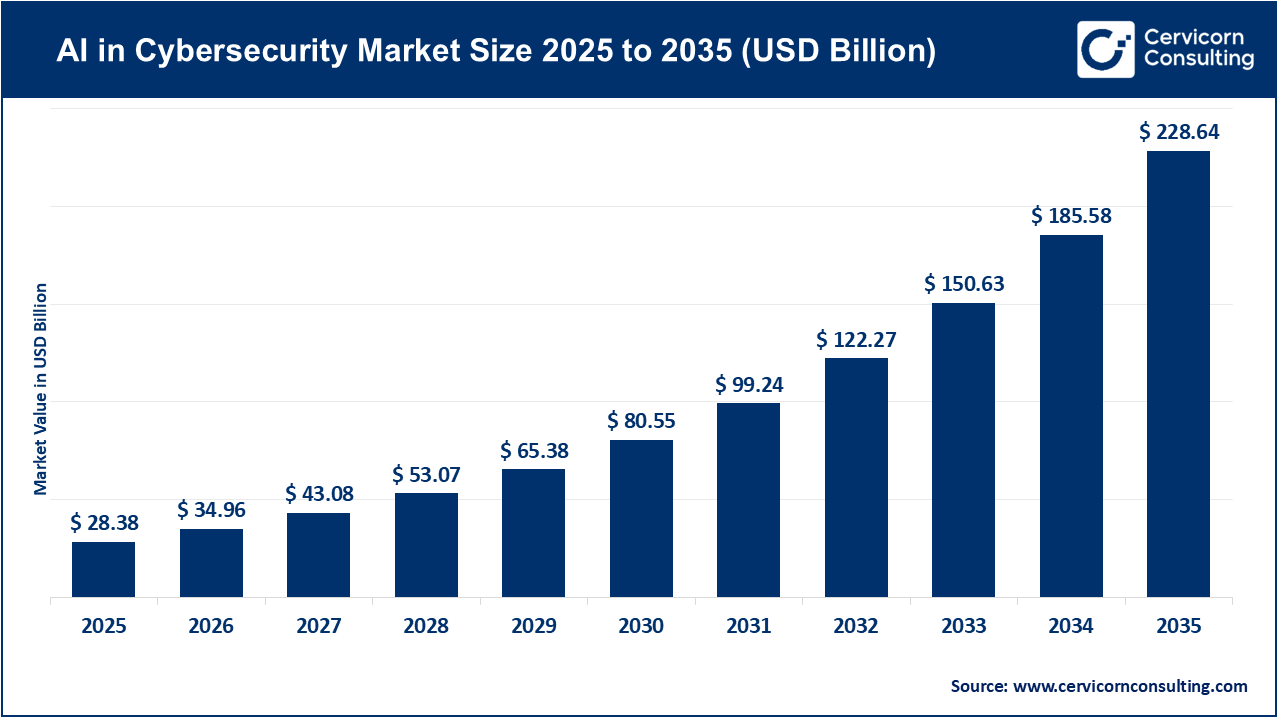
The global AI in cybersecurity market size was valued at USD 28.38 billion in 2025 and is expected to be worth around USD 228.64 billion by 2035, expanding at a compound annual growth rate (CAGR) of 23.2% over the forecast period from 2026 to 2035. The AI in cybersecurity market is experiencing rapid growth, mainly driven by the need for human analytics in a "big data" security landscape. According to reports, this market continued to expand rapidly from 2025, driven by the adoption of AI across sectors such as finance, healthcare, and critical infrastructure. The primary growth factor is the increasing volume and speed of security logs generated by modern organizations, which surpass human analytical capabilities. AI acts as a force multiplier for security teams, analyzing vast amounts of data to identify even the smallest signs of compromise that humans might overlook.
Another factor fueling growth is the economic impact of data breaches. Data indicates that organizations utilizing AI can identify and contain breaches approximately 100 days quicker than those without AI tools. Moreover, the shift to decentralized work settings, propelled by edge computing adoption, has widened the attack surface—heightening the demand for AI-driven security systems that function autonomously across dispersed locations.
Report Highlights
- North America dominates with 38% market share, backed by early AI adoption and high cybersecurity spend.
- Solutions lead the market with 56% share, driven by AI-based threat detection and response platforms.
- Infrastructure security account for 47% share, reflecting strong demand for core system protection.
- Machine Learning dominates the technology segment with 52% share, enabling real-time anomaly detection.
- Threat Intelligence holds 23% share, supported by predictive and proactive security needs.
- Fraud Detection represents 21% share, fueled by rising digital payments and online fraud.
- BFSI leads end-user adoption with 27% share, due to regulatory pressure and high-value transactions.
Cybersecurity Adoption and Deployment Statistics
- Global cybercrime damage is expected to reach $10.5 trillion per year by 2026, with cyberattacks identified as one of the biggest economic threats around the globe, the need for AI-powered threat detection systems will only increase.
- Organizations were impacted with average weekly cyberattacks of 1,876 weekly (up 17% year-on-year) in early 2026 with ransomware and phishing the primary vectors.
- Ransomware increased by 37%+ in 2025 with the average ransomware demand now $2.3 million+ per incident, leading enterprises to invest more heavily into AI-enabled incident response.
- The cost of global data breaches jumped to $4.88 million (in 2025) and more than $10.9 million for the healthcare sector, boosting interest in predictive security solutions.
- A shortage of 4.8 million professionals across the global cybersecurity industry is prompting companies to deploy AI automation for their security operations centers.
- In 2026, more than 69% of the world’s largest businesses have implemented at least one AI-powered security technology for their organization, a stark increase from just 41% in 2022 and highlighting rapid commercialization.
- Approximately 58% of Security Operations Centers (SOCs) now utilize AI for their day-to-day security operations and have focused their investment on anomaly detection, threat triage and incident prioritization as their teams remain stretched.
- Those that employ AI for automated security have cut the time taken to detect and contain breaches by nearly 108 days on average, a reduction which translates into a much smaller bill to address the issue.
- More than 43% of endpoints within enterprises are now covered by AI-based EDR/XDR solutions, an increase on previous years and a clear signal of demand, spurred by more prevalent zero-day threat activity.
- The rate at which security organizations have adopted AI to cover workloads for protection, detection of misconfigurations and the analysis of identity risks within their cloud deployments is more than 62%.
- 72% or more of the world’s banking and financial services institutions have added AI-powered security solutions for transaction monitoring and fraud detection in their systems given increases in cyber financial crime.
- In excess of 75% of Fortune 500 businesses utilize AI technologies in order to secure their email streams, with increasing rates of phishing and business email compromise attacks a primary driver of this uptake.
AI Cybersecurity Vendor Landscape
| Vendor |
Primary AI Cybersecurity Focus |
Key AI-Enabled Capabilities |
Major Product / Platform |
Primary Customer Segments |
| Microsoft |
AI-powered SecOps, endpoint, identity, cloud and AI security |
AI threat detection, automated investigation, security copilots, agentic defense, identity analytics |
Microsoft Security Copilot, Defender, Sentinel, Entra |
Large enterprises, government, BFSI, healthcare, SMEs |
| Palo Alto Networks |
Network, cloud, SOC and AI security |
AI-driven threat detection, autonomous SOC, AI application/runtime security, exposure management |
Cortex XSIAM, Prisma AIRS, Prisma Cloud |
Large enterprises, government, BFSI, telecom |
| CrowdStrike |
Endpoint, cloud, identity and AI security |
AI detection and response, threat intelligence, autonomous response, AI-agent security |
Falcon Platform, Falcon for AI / AIDR |
Enterprises, government, financial services, healthcare |
| Fortinet |
Network, endpoint, cloud and OT security |
AI-assisted threat detection, behavioral analytics, automated response |
FortiAI, FortiGate, FortiXDR, FortiSIEM |
Enterprises, telecom, government, industrial organizations |
| Securonix |
AI-powered SIEM and security analytics |
AI-driven detection, investigation, threat hunting and automation |
Securonix Unified Defense SIEM |
Enterprises, MSSPs, government |
| Sophos |
Endpoint, network and MDR security |
AI-assisted malware detection, behavioral analysis and automated response |
Sophos Central, Sophos MDR, Sophos XDR |
Mid-market, enterprises, managed-security customers |
| BlackBerry / Cylance |
Endpoint and AI-based threat prevention |
Machine-learning malware detection and endpoint protection |
Cylance cybersecurity portfolio |
Enterprises, government, regulated industries |
| Wiz |
Cloud and AI security |
Cloud risk analysis, AI security posture management and exposure detection |
Wiz Cloud / AI security capabilities |
Cloud-first enterprises |
Microsoft: AI-Driven Threat Detection Case Study
Microsoft has been one of the best examples for us to see what AI in security looks like. The company ingests 65 trillion security signals every day from across its extensive footprint of cloud services, applications, devices, email services and identity platforms.
The data collected comes from solutions such as Microsoft Defender, Azure Security, Microsoft Entra ID, among others, and it gives Microsoft a global-class AI threat intelligence foundation that’s among the most sophisticated out there.
The technology, Microsoft says, can enhance analyst speeds up to nearly 22%, boost accuracy when analyzing security incidents up to 30%, and alleviate work in overloaded Security Operations Center environments. It's a comprehensive approach to a security world under ever-increasing pressure that's helped make Microsoft a prime example for what many organizations are hoping to accomplish with AI-based security.
Increasing Use of AI-Powered Predictive Analytics to Anticipate Cyber Threats
One of the key trends in the AI in cybersecurity market is a shift from reactive detection to predictive intelligence. Businesses have historically taken a reactive approach, and few existing security models still focus on responding to known threats. However, AI algorithms generate predictive insights by monitoring vast amounts of global threat data and identifying trends and patterns over time. Platforms like these enable security teams to gain insights that help them anticipate attackers and potential attack vectors before they are exploited, allowing to proactively strengthen their systems. These predictive models analyse historical breach data and other contextual event logs to estimate the likelihood that a business will encounter specific threats, thereby helping organisations allocate resources more effectively. The trend towards predictive intelligence is evident in the increasing adoption of AI-powered threat intelligence platforms that leverage unstructured data from the dark web and social media to provide early warnings of emerging campaign attacks.
Rising Global Cybersecurity Spending Accelerating Market Growth
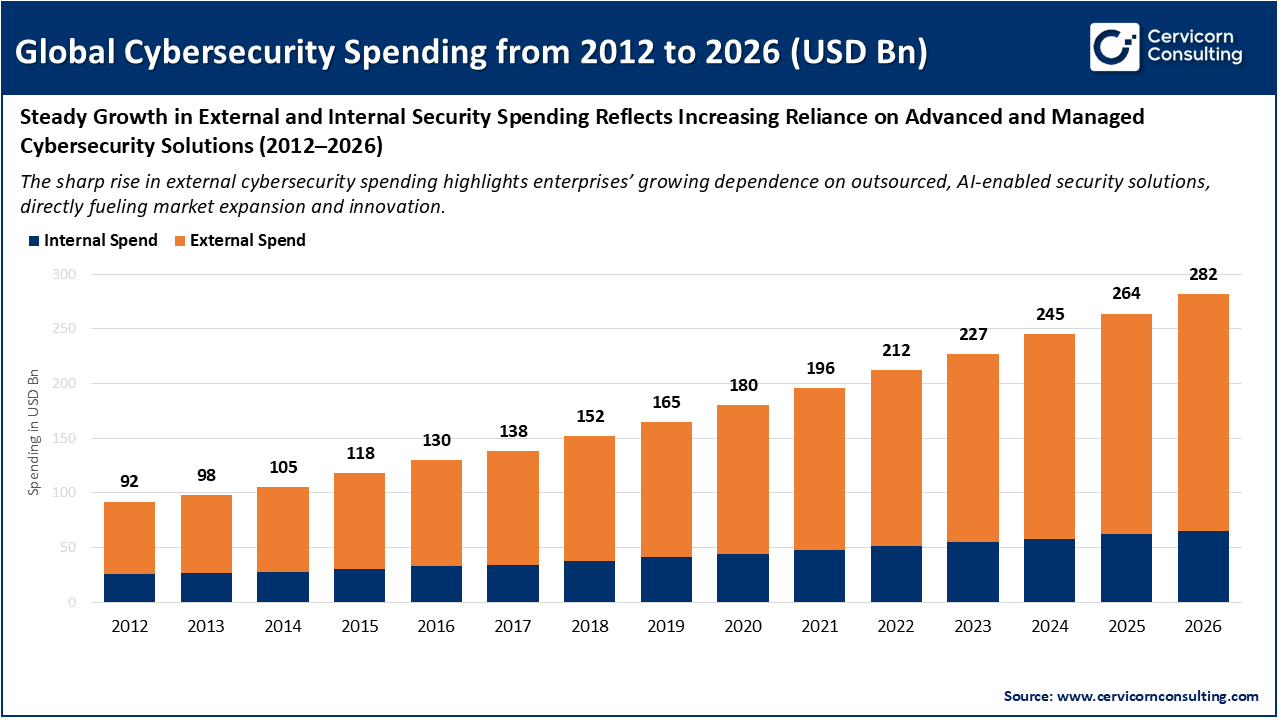
The data highlights a strong and sustained increase in global cybersecurity spending, driven primarily by rapid growth in external spending.
Internal Spend: Spending on in-house cybersecurity resources such as internal security teams, infrastructure, and operations.
External Spend: Spending on third-party cybersecurity solutions and services, including software, managed security, and consulting.
As cyber threats become more complex and frequent, organizations are increasingly outsourcing security functions to specialized vendors offering AI-driven, scalable, and continuously updated solutions. The faster growth of external spend compared to internal spend indicates a shift toward managed and technology-led security models, directly fueling expansion of the cybersecurity market and encouraging innovation among solution providers.
Major Government Initiatives
| Country |
Initiative / Program |
Key Highlights |
| United States |
Executive Order on Safe, Secure, and Trustworthy AI & National Cybersecurity Strategy |
The U.S. government has expanded AI-driven cybersecurity investments through agencies like CISA, DARPA, and the Department of Defense. |
| European Union |
EU AI Act & NIS2 Directive |
The EU has mandated stronger cyber resilience requirements across critical sectors while regulating AI use in cybersecurity. NIS2 impacts over 160,000 organizations across Europe. |
| India |
CERT-In AI Security Expansion & National Cybersecurity Strategy |
India increased cybersecurity allocations by over 18% in FY2026, while CERT-In expanded AI-based malware detection, financial fraud analytics, and cyber incident monitoring. |
| China |
AI Security Governance Framework & Cybersecurity Law Expansion |
China has integrated AI into national cyber defense and surveillance systems, with annual cybersecurity spending exceeding USD 20 billion. State-backed AI security labs continue expanding. |
| United Kingdom |
National Cyber Strategy & AI Safety Institute |
The UK committed over GBP 2.6 billion under its cyber strategy, including AI threat modeling and critical infrastructure defense. The AI Safety Institute now actively researches cyber-AI threats. |
Recent Major Milestones
1. Recency of Corporate Technological Advances
In March 2025, NVIDIA made a significant announcement regarding an expansion of their Morpheus framework to incorporate real-time LLMs to monitor and detect data leakage and prompt injection attacks for enterprise-level AI applications. Following this announcement in June, Intel launched its latest processor line with hardware-level AI security to help provide silicon-based protection against advanced persistent threats. Finally, Microsoft rolled out general availability of its AI-native security platform, marking a significant step toward a unified cloud security ecosystem. These developments in hardware and software are increasingly being fused together to harness the computational power necessary for real-time AI-mediated defence.
2. Government Cybersecurity Policy Frameworks and Initiatives
Government actions have played a significant role in providing the regulatory certainty needed to develop markets. A key milestone was the full enactment of the EU AI Act, which will come into effect in late 2025, providing clear guardrails for the use of AI across critical infrastructure and cybersecurity efforts. This regulatory framework sets a high standard for data quality and human involvement and influences how global AI security tools are developed. Additionally, in 2024 and 2025, several North American government agencies established AI security consortiums to develop standardised threat-sharing protocols. These consortiums demonstrate the use of governance in technology to develop AI security methods in a trust-based manner, fostering a more cooperative global security landscape.
3. Strategic Capital Investment and Funding Rounds
The financial trajectory of the AI in Cybersecurity Market is driven by record capital investments. Important milestones, such as Cisco's acquisition of Splunk in January 2025 (a multi-billion dollar deal representing shifts in strategic capital toward consolidated data and AI platforms), highlight this trend. This acquisition, along with several others, reflects a pattern of market consolidation through legacy vendor acquisitions of AI-native startups to enhance analytical capabilities. Additionally, record funding rounds for startups in 2024 and 2025 in both "AI-for-Security" and "Security-for-AI" demonstrate investor confidence in the future importance of autonomous defense systems. These funding rounds provide the essential momentum to move from proof-of-concept and prototype development to enterprise-critical infrastructure.
4. Global Security Collaborations and Ecosystems
Collaborative efforts among multiple countries and industries have become a key milestone in strengthening global defenses. In late 2025, a major initiative was introduced to facilitate cross-border threat intelligence sharing focused on AI anomaly detection, enhancing understanding of threats within software-defined networks. Such collaborations are essential for proactively monitoring countries that harbor actors moving across jurisdictions. Additionally, the use of open-source AI security frameworks is expanding rapidly among smaller organizations. Open-source adoption offers these groups access to the collective knowledge of global security practitioners. As the ecosystem grows, AI-driven security must extend beyond large enterprises, contributing to a more resilient and inclusive digital economy.
Report Scope
| Area of Focus |
Details |
| Market Size in 2026 |
USD 34.96 Billion |
| Market Size in 2035 |
USD 228.64 Billion |
| Market CAGR 2026 to 2035 |
23.20% |
| Key Region |
North America |
| High-growth Region |
Asia-Pacific |
| Key Segments |
Offering, Security Type, Technology, Application, Vertical, Region |
| Key Companies |
NVIDIA, Intel, CrowdStrike, Palo Alto Networks, Fortinet, Check Point Software Technologies, Vectra AI, SentinelOne, Cybereason, Microsoft, IBM, Cisco, Symantec, Sophos, Zscaler |
Market Dynamics
Market Drivers
- Rising Frequency and Sophistication of Cyberattacks: The rapid increase in advanced cyber threats such as ransomware, zero-day attacks, and AI-powered malware is a major driver of the AI in cybersecurity market. Traditional rule-based security systems struggle to detect complex and evolving threats in real time. AI-driven cybersecurity solutions enable continuous monitoring, behavioral analysis, and anomaly detection, allowing organizations to respond faster and more accurately to emerging attacks.
- Growing Need for Predictive and Proactive Security: Organizations are increasingly shifting from reactive security models to proactive and predictive approaches. AI enables predictive threat intelligence by analyzing historical data, threat patterns, and external intelligence sources such as the dark web. This capability helps enterprises anticipate potential attacks, prioritize risks, and strengthen defenses in advance, driving adoption of AI-based cybersecurity solutions.
Market Restraints
- High Implementation and Operational Costs: The deployment of AI-based cybersecurity solutions requires significant investment in advanced infrastructure, skilled personnel, and continuous model training. Small and medium-sized enterprises often find these costs prohibitive, limiting widespread adoption. Additionally, ongoing expenses related to system maintenance and updates further restrain market growth.
- Lack of Skilled AI and Cybersecurity Professionals: The effective use of AI in cybersecurity depends heavily on professionals with expertise in both artificial intelligence and security operations. The global shortage of such skilled talent makes it difficult for organizations to deploy, manage, and optimize AI-driven security platforms, thereby slowing market adoption.
Market Opportunities
- Expansion of Cloud Computing and Remote Work: The growing adoption of cloud platforms, hybrid environments, and remote work models has significantly expanded the attack surface for organizations. This creates strong opportunities for AI-powered cloud security, endpoint protection, and identity management solutions that can dynamically adapt to changing environments and user behaviors.
- Increasing Demand for AI-Driven Fraud Detection: Industries such as BFSI, retail, and e-commerce are witnessing a surge in digital transactions, leading to higher fraud risks. AI-based cybersecurity solutions offer real-time fraud detection and behavioral analytics, enabling organizations to prevent financial losses and improve customer trust, thereby opening new growth avenues for market players.
Market Challenges
- Data Privacy and Ethical Concerns: AI cybersecurity solutions rely on large volumes of sensitive data for training and analysis. This raises concerns related to data privacy, regulatory compliance, and ethical use of AI. Ensuring transparency, data protection, and compliance with regulations such as GDPR remains a significant challenge for vendors and users.
- Risk of AI Model Manipulation and False Positives: AI systems can be vulnerable to adversarial attacks, data poisoning, and biased training data, which may lead to inaccurate threat detection or excessive false positives. Such issues can overwhelm security teams and reduce trust in AI-driven systems, making reliability and accuracy a critical challenge for market growth.
AI in Cybersecurity Market Regional Analysis
The AI in cybersecurity market is segmented into various regions, including North America, Europe, Asia-Pacific, and LAMEA. Here is a brief overview of each region:
North America AI in Cybersecurity Market: Technological Advancement and Large Cybersecurity Budget
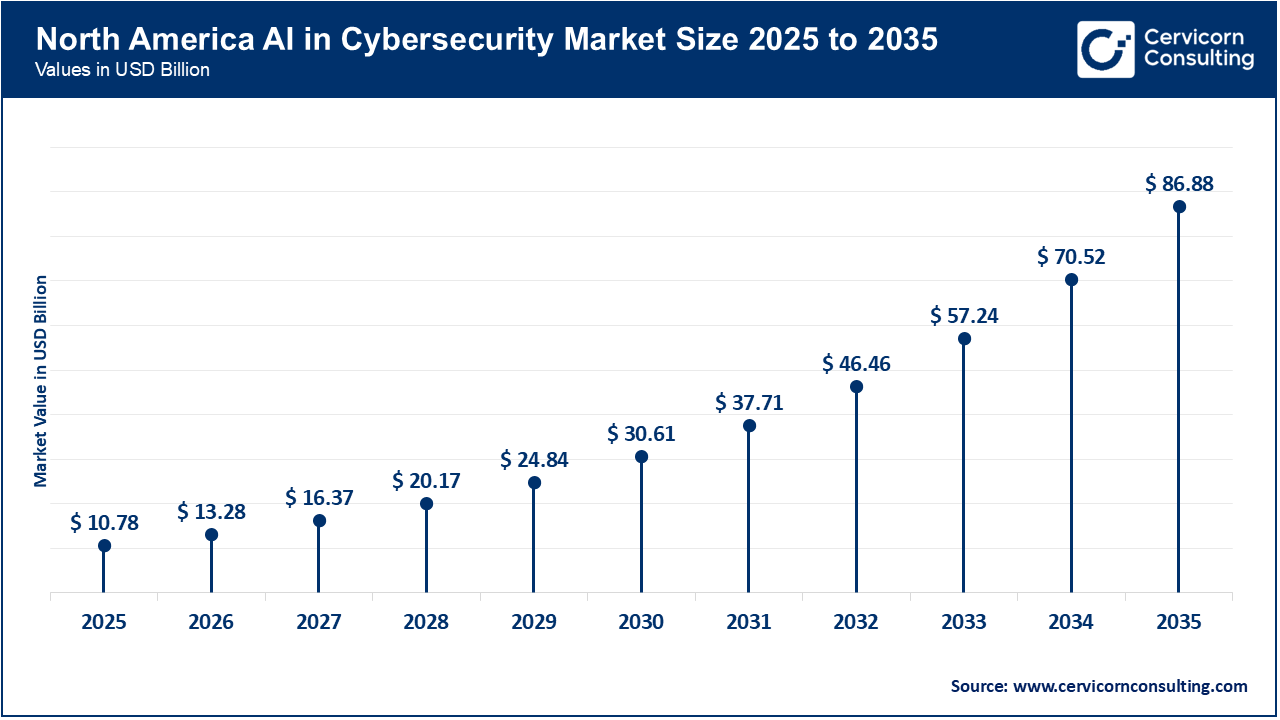
The North America AI in cybersecurity market size was valued at USD 10.78 billion in 2025 and is predicted to attain around USD 86.88 billion by 2035. North America currently holds the largest share of the market. The region's dominance is driven by a high concentration of technology providers and cybersecurity start-ups. It consistently invests in both private and federal sectors. For instance, the US government prioritizes AI for national defense, funding numerous AI-driven security projects. The market’s early adoption of cloud-native technology and swift AI model integration into corporate governance further support this leadership. Large enterprises use AI not only for prevention but also for risk management and automating compliance, fueling the development of advanced AI security solutions that are often exported globally.
Recent Developments:
- CrowdStrike announced an agreement to acquire SGNL to strengthen continuous identity privilege and access controls for human and non-human (including AI) identities.
- Palo Alto Networks completed the acquisition of Protect AI to expand protection across the AI lifecycle (model, data, and pipeline security).
United States AI in Cybersecurity Market Analysis
The U.S. remains one of the most significant markets for AI in cybersecurity because of its large cybersecurity spending base, extensive digital infrastructure and high volume of cybercrime. FBI Internet Crime Complaint Center (IC3) data shows that the U.S. received 859,532 complaints in 2024, involving reported losses of $16.6 billion, representing a 33% increase in losses from 2023. The 2025 IC3 report also recorded more than 3,600 ransomware complaints, with reported losses exceeding $32 million.
Government policy is increasingly connecting AI capabilities with national cybersecurity. In June 2026, the U.S. administration issued an executive order directing federal agencies to increase access to AI-enabled cybersecurity tools and services for federal, state and local authorities and critical-infrastructure operators. The order also called for an AI cybersecurity clearinghouse, AI cyber capability benchmarking and expanded federal cybersecurity hiring and funding opportunities.
Asia-Pacific (APAC) AI in Cybersecurity Market: Rapid Digital Transformation and Increasing Security Budgets
The Asia-Pacific AI in cybersecurity market size was estimated at USD 8.51 billion in 2025 and is projected to surge around USD 68.59 billion by 2035. APAC is the fastest-growing market. This expansion is driven by rapid digital transformation in emerging economies like India, China, and Southeast Asia. These nations are digitizing their economies and expanding digital sectors, attracting cybercriminals and state-sponsored hackers, which increases the need for advanced security measures. Additionally, the region shows growing signs of international cooperation as countries aim to strengthen their security capabilities. With its mobile-first economies and the rollout of 5G networks, APAC will have more opportunities for AI-powered security at the edge. The large user base and increasing number of state-sponsored threat actors will further propel market growth in the region.
Recent Developments:
- Accenture agreed to acquire CyberCX to expand cybersecurity services capabilities across Asia-Pacific.
- Trend Micro expanded its strategic alliance with Google Cloud to support multi-cloud, AI-first security and sovereignty requirements.
India AI in Cybersecurity Market Analysis
India is a high-growth space for AI-enabled cyber security due to its exploding digital economy and large volume of cyber incidents. CERT-In registered over 2.94 million cyber-incidents (against, for example, the over 1.53 thousand alerts, 390 vulnerability notes, and 65 advisories issued by it.
India's IT security spending, predicted to reach $3.4 billion by 2026, is a rise of 11.7 percent against 2025 expenditure, and during 2026 the IT and Cyber security authority conducted two additional exercises in connection with AI-driven threats involving 1,470 participants (345 entities), a result confirming a rise in institutional application of AI security capabilities.
The volume of threat scenarios is driving up need for AI-enabled threat intelligence, identity security, automated incident management, and vulnerability assessment; over 9.2 lakh attempts at cyberattack registered in the banking and health sectors in India between the start of 2025 and mid 2026, and at $255 million, (15.9 percent higher than in 2025) the average cost for a data breach in India was around INR 25.5 crores in 2026 and average around 39,500 record compromised at each incident.
In that 2026 IBM report it was highlighted that malicious breaches generated with the use of AI accounted for 26% of intrusions into corporate and government facilities in India compared to 32% enterprises having fully leveraged the advantage of AI based security solutions.
Europe AI in Cybersecurity Market: A Regulated Market with Growing Adoption of Continued threats
The Europe AI in cybersecurity market size was reached at USD 6.81 billion in 2025 and is expected to hit around USD 54.87 billion by 2035. The European market is distinguished by its heavy regulation. Laws such as the General Data Protection Regulation (GDPR) and the recent EU AI Act have created a legal framework for data privacy and the ethical deployment of artificial intelligence in the Cybersecurity Market. As organizations are required to adopt highly accurate and transparent AI tools to avoid significant penalties, these regulations will drive the demand and expansion of AI technology. European companies are also emphasizing "sovereign AI" and local data processing to ensure compliance with data residency requirements. Several initiatives are in progress to support research and development efforts aimed at positioning the European Union as a unified response to cyber threats. Market growth will be driven by high demand for AI solutions that are privacy-by-design, considering individual rights while also safeguarding against advanced security threats.
Recent Developments:
- WALLIX acquired Malizen to accelerate its AI strategy in privileged access/security operations.
- Orange Cyberdefense partnered with Qevlar AI to strengthen detection services using AI-driven alert analysis and remediation support.
AI in Cybersecurity Market Share, By Region, 2025 (%)
| Region |
Revenue Share, 2025 (%) |
| North America |
38% |
| Europe |
24% |
| Asia-Pacific |
30% |
| LAMEA |
8% |
LAMEA AI in Cybersecurity Market: New Digital Economies Driving the Growth of Threats
The LAMEA AI in cybersecurity market was valued at USD 2.27 billion in 2025 and is anticipated to reach around USD 18.29 billion by 2035. LAMEA presents a significant emerging market. In the Middle East, particularly among Gulf Cooperation Council (GCC) countries, governments are actively diversifying their economies through technology, investing heavily in smart cities and digital government services. This diversification has heightened the awareness of cybersecurity needs as part of the digitization of critical infrastructure. In Latin America and Africa, growth will be driven by investments in fintech and greater access to affordable cloud services. These regions face challenges such as income disparities, varying levels of technological maturity, and economic instability. Nevertheless, adopting AI-driven security offers an opportunity to overcome existing security challenges. With an expanding threat landscape, the demand for scalable, AI-powered security solutions in LAMEA will continue to increase.
Recent Developments:
- Help AG (e& enterprise) expanded its partnership with Securonix to enhance Cloud SOC capabilities using AI-powered SIEM and automation.
- DXC Technology partnered with 7AI to launch an AI-driven security operations service (AI-powered SOC) in the Middle East.
AI in Cybersecurity Market Segmental Analysis
The AI in cybersecurity market is segmented into offering, security type, technology, application, vertical, and region.
Offering Analysis
Solutions dominate the AI in cybersecurity market due to their central role in threat detection, prevention, and response. AI-powered software platforms integrate machine learning, analytics, and automation to monitor networks, endpoints, and cloud environments in real time. Enterprises increasingly prefer unified security solutions that offer scalable deployment, continuous updates, and centralized visibility. The growing need for real-time threat intelligence, automated incident response, and compliance management continues to drive strong demand for AI-based cybersecurity solutions across large enterprises and regulated industries.
AI in Cybersecurity Market Share, By Offering, 2025 (%)
| Offering |
Revenue Share, 2025 (%) |
| Hardware |
14% |
| Solutions |
56% |
| Services |
30% |
Services represent the fastest-growing offering segment as organizations seek expert support to deploy and manage complex AI-driven cybersecurity systems. Managed security services, consulting, and incident response services are gaining traction, especially among small and mid-sized enterprises lacking in-house expertise. The rising complexity of cyber threats, combined with skill shortages, has increased reliance on service providers for continuous monitoring, model tuning, and threat analysis, accelerating growth in this segment.
Security Type Analysis
Network security dominates the AI in cybersecurity market as organizations prioritize protecting core digital infrastructures from advanced and persistent threats. AI-driven network security solutions enable real-time traffic analysis, anomaly detection, and automated threat mitigation. With the increasing volume of data traffic and interconnected systems, enterprises rely heavily on AI to identify suspicious patterns and prevent breaches. The widespread adoption of AI-based intrusion detection and prevention systems has reinforced network security’s leading market position.
AI in Cybersecurity Market Share, By Security Type, 2025 (%)
| Security Type |
Revenue Share, 2025 (%) |
| Infrastructure Security |
47% |
| Data Security |
24% |
| Application Security |
18% |
| Others |
11% |
Cloud security is the fastest-growing security type segment due to the rapid adoption of cloud computing, hybrid IT environments, and software-as-a-service platforms. AI-powered cloud security solutions provide continuous monitoring, automated compliance enforcement, and adaptive threat detection across dynamic cloud workloads. As organizations migrate critical data and applications to the cloud, the demand for AI-enabled visibility, risk assessment, and threat prevention in cloud environments continues to rise at a high growth rate.
Technology Analysis
Machine learning dominates the AI in cybersecurity market as it forms the foundation of most modern security solutions. ML algorithms are widely used for behavioral analysis, anomaly detection, malware identification, and threat classification. Their ability to continuously learn from new data and adapt to evolving attack patterns makes them essential for real-time cybersecurity operations. The maturity, scalability, and proven effectiveness of machine learning technologies have resulted in widespread adoption across multiple security applications.
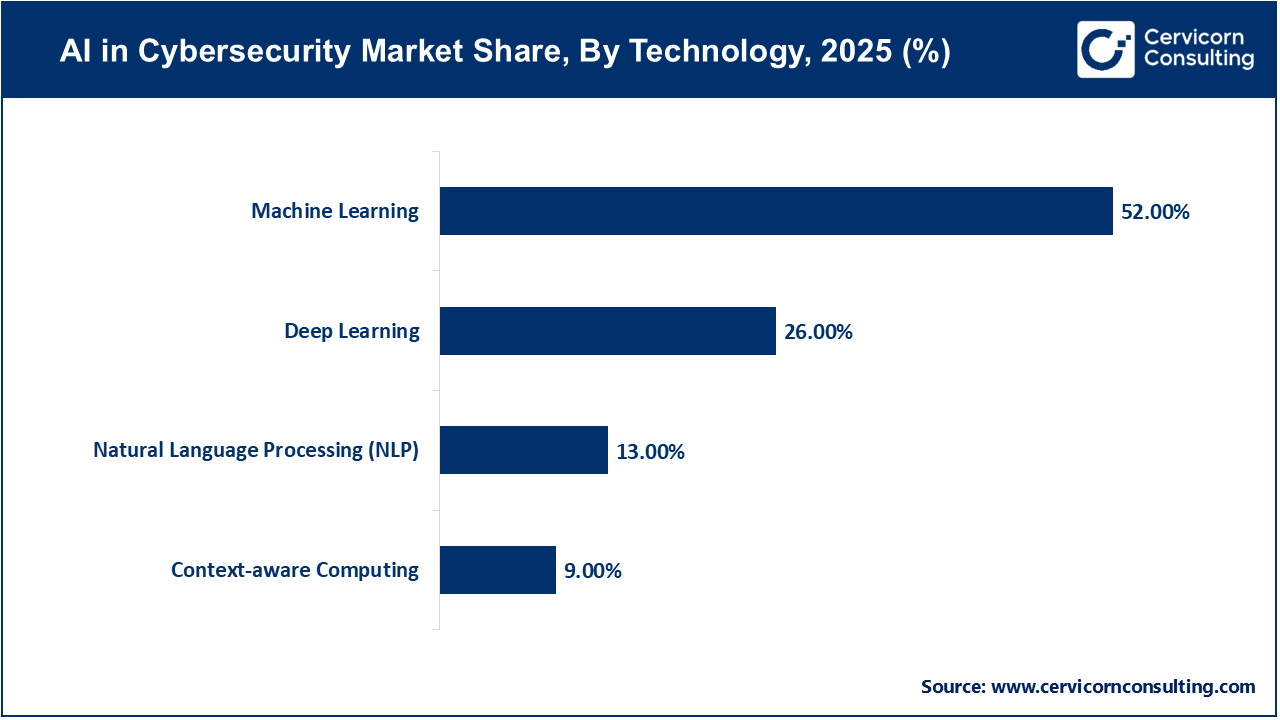
Deep learning is the fastest-growing technology segment due to its ability to analyze complex and high-dimensional data. Deep neural networks are increasingly used for detecting zero-day threats, advanced malware, and sophisticated attack techniques. Their superior accuracy in recognizing subtle patterns within large datasets makes them ideal for modern cybersecurity challenges. As computational capabilities improve and cyber threats become more complex, deep learning adoption is accelerating rapidly.
Application Analysis
Threat intelligence dominates the application segment as organizations prioritize proactive detection and prevention of cyber threats. AI-driven threat intelligence platforms analyze vast datasets, including historical attack data, threat feeds, and external sources, to provide real-time insights. These solutions enable security teams to identify emerging threats, understand attacker behavior, and respond quickly. The growing need for predictive and contextual threat awareness has made threat intelligence a core application of AI in cybersecurity.
AI in Cybersecurity Market Share, By Application, 2025 (%)
| Application |
Revenue Share, 2025 (%) |
| Identity & Access Management (IAM) |
17% |
| Data Loss Prevention (DLP) |
15% |
| Unified Threat Management (UTM) |
14% |
| Fraud Detection / Anti-Fraud |
21% |
| Threat Intelligence |
23% |
| Others |
10% |
Fraud detection is the fastest-growing application segment, driven by the rapid expansion of digital payments, online banking, and e-commerce. AI-powered fraud detection systems use behavioral analytics and real-time transaction monitoring to identify suspicious activities with high accuracy. Increasing incidents of financial fraud and identity theft are pushing organizations to invest in advanced AI solutions, fueling strong growth in this segment across BFSI and retail sectors.
Vertical Analysis
The BFSI sector dominates the AI in cybersecurity market due to its high exposure to cyber threats and stringent regulatory requirements. Financial institutions manage vast volumes of sensitive customer and transaction data, making them prime targets for cybercriminals. AI-driven cybersecurity solutions help BFSI organizations detect fraud, prevent data breaches, and ensure regulatory compliance. Continuous digital transformation and rising online transactions further reinforce BFSI’s leading market share.
AI in Cybersecurity Market Share, By Vertical, 2025 (%)
| Vertical |
Revenue Share, 2025 (%) |
| BFSI |
27% |
| Government & Defense |
15% |
| IT & ITES |
19% |
| Healthcare |
11% |
| Manufacturing |
8% |
| Retail & E-Commerce |
7% |
| Telecommunications |
6% |
| Automotive & Transportation |
5% |
| Others |
2% |
Healthcare is the fastest-growing vertical in the market as the sector rapidly digitizes patient records and adopts connected medical devices. The increasing frequency of cyberattacks targeting healthcare systems has heightened the need for advanced security solutions. AI helps healthcare organizations detect anomalies, protect sensitive patient data, and ensure system availability. Regulatory pressures and the critical nature of healthcare operations continue to accelerate adoption in this vertical.
AI in Cybersecurity Market Top Companies
Recent Developments by Major Companies
- In March 2025, NVIDIA announced several upgrades to its Morpheus AI framework, including real-time monitoring of Large Language Models (LLMs) to prevent data leaks and prompt injection attacks. The company also emphasised defining specific autonomy levels for AI agents, emphasising safety that could lead the industry.
- In October 2024, CrowdStrike introduced major updates to' Charlotte AI," its generative AI security analyst. This tool enables users to conduct thorough threat hunting and vulnerability assessments within days or weeks, using natural language commands.
- In April 2025, Microsoft announced that' Copilot for Security' had reached widespread adoption, especially among large Fortune 500 firms. By embedding security intelligence directly into Windows and Azure, Microsoft provides a level of visibility that is difficult to match.
Market Segmentation
By Offering
- Hardware
- Solutions
- Services
By Security Type
- Infrastructure Security
- Network Security
- Endpoint Security
- Cloud Security
- Others
- Data Security
- Application Security
- Others
By Technology
- Machine Learning
- Deep Learning
- Natural Language Processing (NLP)
- Context-aware Computing
By Application
- Identity & Access Management (IAM)
- Data Loss Prevention (DLP)
- Unified Threat Management (UTM)
- Fraud Detection/Anti-Fraud
- Threat Intelligence
- Others
By Vertical
- BFSI (Banking, Financial Services & Insurance)
- Government & Defense
- IT & ITES
- Healthcare
- Manufacturing
- Retail & E-Commerce
- Telecommunications
- Automotive & Transportation
- Others
By Region
- North America
- APAC
- Europe
- LAMEA